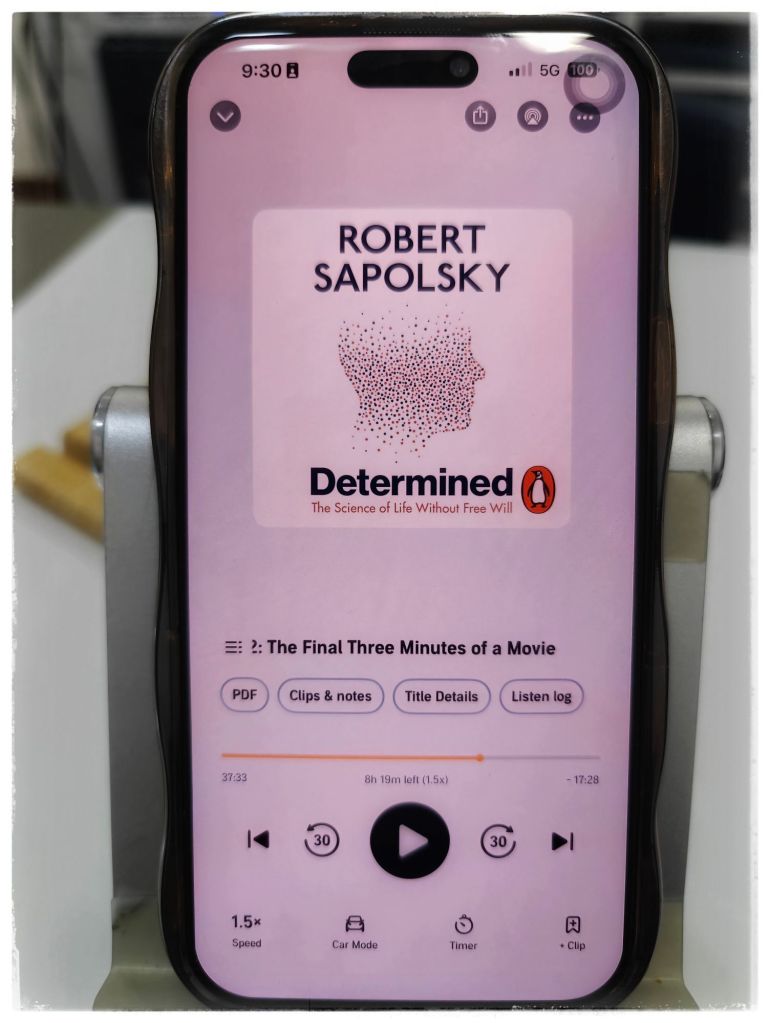
The novel Determined by Robert Sapolsky tells about how some genes Cheat!
Why they do that is because there are some organelles which were having a serious and possibly original and independent past!
Mitochondria and chloroplasts are the primary cell organelles believed to have once been free-living bacteria! So while the animal cell has taken them and formed then a part of their cellular structure; they have not forgotten their ‘origins’ or ‘ROOTS’! They still keep their ‘original’ codes alive by ‘Cheating’!
These genes which do the cheating are the Transposons or the JUMPING Genes!
Transposons “cheat” the DNA replication process by exploiting the host cell’s own replication machinery to increase their copy number without needing to undergo their own independent, energy-intensive replication process.
They achieve this through several “cut-and-paste” or “copy-and-paste” mechanisms that increase their presence in the genome during S-phase.
The S-Phase “Cut-and-Paste” Cheat is used by most Class II DNA transposons and they time this movement to coincide with S-phase to gain an extra copy.
Then you have the Replicative Transposition in which some transposons, like the bacterial Tn3 family, do not cut themselves out entirely but perform a “replicative integration,” where only one strand is processed, joining the donor DNA and target DNA to form a cointegrat!
Then you have the alternative Transposition, Replicating via “Rolling Circle” and finally Using Host Repair Tools!
In many ways these Transposons make sure that some genetic material is SAVED or TRANSFERRED to the next generation at the cost of the host! All these so that the final cell does not forget its ROOTS! And that is at the cellular level! Imagine then the fight for ROOTs at the human level!
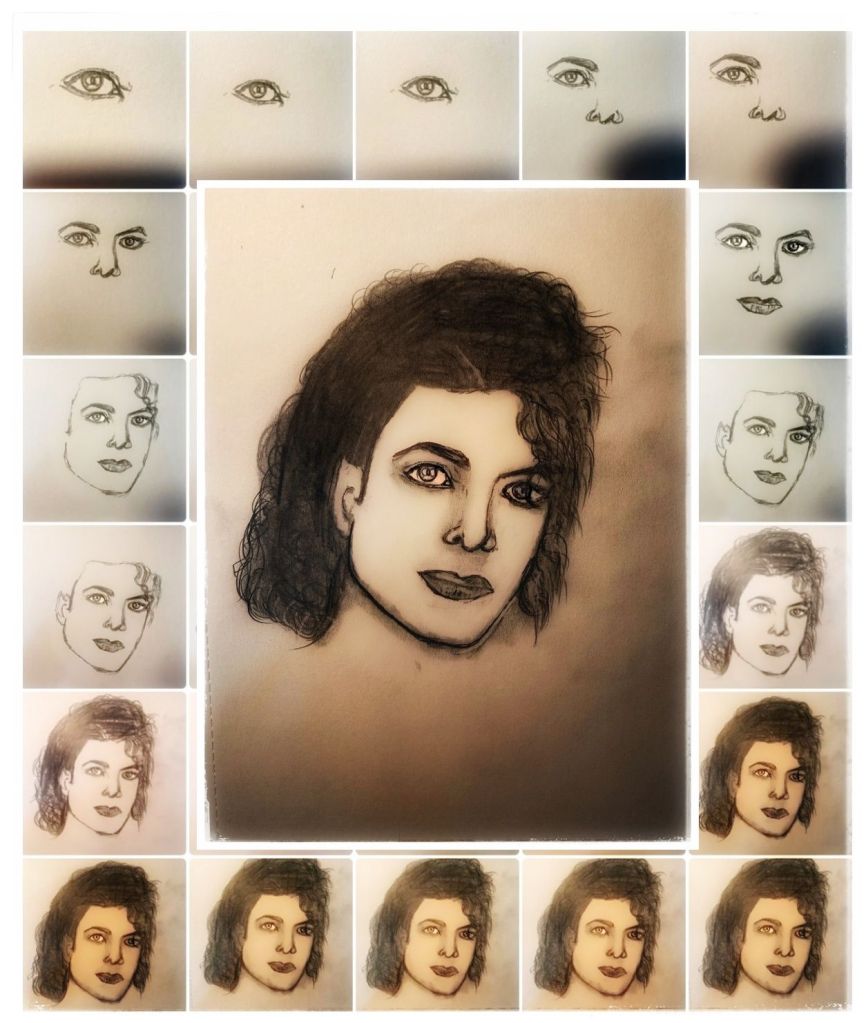
Then again watching the movie Michael; I was pretty amazed at how the JUMPING and SINGING gene of MJ has been TRANSFERRED to JAAFAR! An inspiring movie of a pop icon whose posters were the only ones I ALLOWED to be put up on MY ROOM walls!
The novel Determined by Robert Sapolsky has an associated e book along with the audiobook and this has an extensive bibliography with author notes!
In one of the references, Robert makes an interesting observation on a well known proverb!
The proverb is about locusts!
“Locusts have no king, yet they advance together in ranks”
This proverb actually highlights unity, teamwork, and orderly movement without a central leader.
It emphasizes that, despite being small, they are “exceedingly wise” by operating collectively, mirroring an army’s, structure.
This is based on the observation that while normally solitary, locusts enter a “gregarious phase” when stressed, moving in massive, coordinated swarms!
This symbolism is often used to demonstrate how a team or community can achieve massive goals through collaboration and unity, rather than relying on a single leader!
In fact the context has been extended to many other animals and insects like ants, rock badgers, and spiders that demonstrate significant, instinctive efficiency while working as a team!
The quote is thus frequently used as a metaphor for organized, collaborative action!
But; well you knew a BUT was coming!
As Robert states in the end with a question which he answers himself!
It goes like this’ “Oh, and by the way, why do locusts march?”
With all the philosophy and lore; the answer is actually pretty shocking!
“Each locust marches forward because the locust immediately behind is trying to eat it!”
So the real reason Locusts march in coordinated bands mainly is to avoid cannibalism by hungry, overcrowding neighbors!
When populations surge, the insects switch from solitary to gregarious behavior, creating massive, dense groups that march to find food and escape being eaten by the locusts immediately behind them, creating a relentless “forced march”!
Of course even that is philosophical! MOVE or I will eat you!
But if someone does try to do that you can go to court! Or try Rajat Sharma and his Aap Ki adalat!
The other day discussing about Pink Floyd made me remember the song Comfortably Numb!
It was a real life narration of being injected with a drug!
But this blog is not about that song!
But another similar song called Thorazine Shuffle!
Neurologists will know the terminology and of course the treatment! I was glad to learn a new thing (story of my life everyday!)
In the novel called Determined by Robert Sapolsky; he talks about two mental conditions where you have the interplay of Dopamine!
In fact it is an interesting problem which according to Robert is subtle and cool, in an abstract sort of way!
So, in schizophrenia, there appears to be an excess of dopamine in parts of the brain related to logical thought, and a key treatment is to throw in a drug that blocks dopamine signaling. All good so far!?
Now come to Parkinson’s!
So Parkinson’s disease is a neurological disorder in which sufferers have trouble initiating movement, where the core problem is a loss of dopamine in a completely different part of the brain, and a key treatment is to give people a drug (most often L-DOPA) that will boost dopamine signaling!
See the problem here! Just like nectar; even more is not good!
Now here comes the interesting part!
We do not inject any of these drugs directly into the relevant brain region. Instead, you take the drug systemically (e.g., by mouth or by injection), which means it gets into the bloodstream and has its effect all over the brain.
Give someone with schizophrenia a dopamine receptor blocker, and you decrease the abnormally high levels of dopaminergic signaling in the “schizophrenic” part of the brain back to normal; but at the same time, you decrease the normal levels elsewhere to below normal!
Give L-DOPA to someone with Parkinson’s, and you raise dopamine signaling in the “Parkinsonian” part of the brain to normal but boost signaling to above-normal levels elsewhere in the brain!
So if you treat someone with Parkinson’s using high and/or prolonged doses of L-DOPA, do you increase their risk of a psychosis? Yes!
In the same way if you treat someone with schizophrenia using high and/or prolonged doses of a dopamine receptor blockers, do you increase their risk of a Parkinsonian movement disorder? Yes!
The problem in this case or the complication is called “tardive dyskinesia,”!
Which brings us back to the Thorazine Shuffle! This is the slang name for “tardive dyskinesia,”!
The Southern rock band Gov’t Mule has a song about it called “Thorazine Shuffle,” whose final lyrics are “Ain’t no need to worry today, Thorazine shuffle make everything OK.”
The phrase was common in mental health contexts during the mid-20th century to describe the visible side effects of heavy medicating!
Just when you thought that music is all noise and when you actually end up supporting noise!
Knowledge Knowledge everywhere just stop and think!
Now you need medication only when you do not have much devotion! Whether you believe in God or not; a simple meditation or concentration would calm your mind without any drugs! Watch some old serials like the Ramayana starring Dipika Chikhlia as Mata Seetha and you would be calmed!
A LONG veritable summary of the book to get the essence!
The author is also the author of the book; Behave: The Biology of Humans at Our Best and Worst (2017) which is a comprehensive exploration of why humans act the way they do, from acts of extreme violence to incredible kindness.
Behave was the book I listened before this and of course you have overlaps!
They both are different though but it is better to read or listen to Behave first or at least read my blog which summarizes the novel.
According to neuroscientist Robert Sapolsky, every human action is entirely determined by a seamless chain of biological and environmental factors, leaving no room for free will.
Sapolsky argues that behavior cannot be explained by a single cause. Instead, he analyzes it through a reverse-chronological lens:
One Second Before: The brain’s immediate reaction, specifically the conflict between the emotional amygdala (fear/aggression) and the rational prefrontal cortex (logic/self-control).
Seconds to Minutes Before: Sensory cues in the environment, such as a person’s facial expression or even the presence of certain smells.
Hours to Days Before: Hormonal influences, such as testosterone (which amplifies status-seeking rather than just aggression) or oxytocin (which increases in-group bonding but can fuel out-group hostility).
Weeks to Decades Before: Childhood and adolescent experiences, where brain architecture is wired based on environment and stress levels.
Centuries to Millennia Before: Cultural, geographical, and evolutionary factors that shaped the genetic predispositions of a society!
Robert Sapolsky tells about free will and how most do not have it!
In all of these he uses various scientific paper starting from the famous turtle joke!
The story goes like this;
William James was an American philosopher and psychologist and once after explaining the Earth orbits the sun, an elderly lady tells James the world rests on a turtle!
James then politely asks a woman what the earth stands on after she claims it rests on a turtle! She replies, “on another turtle,” and when pressed, concludes, “It’s no use, Mr. James, it’s turtles all the way down!”.
The story highlights the concept of infinite regress—the failure to find a foundational, ultimate cause!
The chief emphasis is on a study which questioned free will in the first place. This study has been detailed and modifications have been mentioned many times in the novel.
The Libet experiment found that unconscious brain activity, known as “readiness potential” (RP), begins ~500 milliseconds before a person consciously decides to move. This suggests the brain initiates actions before the conscious mind is aware of the decision, challenging traditional notions of free will and suggesting consciousness reports on actions rather than causing them!
Robert states this tests and argues for the lack of free will adding the fact that the modifications of the tests also show similar finding.
Then you have some more summaries and findings as in the novel
Us vs. Them: Our brains are hardwired to categorize people into “in-groups” and “out-groups” almost instantaneously, but these categories are flexible and can be changed through exposure and reframing.
Sapolsky argues that as we learn more about the biological determinants of behavior, the space for traditional “free will” shrinks, which he suggests should lead to a more compassionate and less punitive justice system.
The same hormone or brain region can produce opposite behaviors depending on the situation (e.g., oxytocin can make you kinder to your “Us” but meaner to a “Them”
Then there was interesting point about Doctors!
Are you planning for an emergency surgery!? Just make sure that it is not the Surgeon’s birthday!
Of course, when we go for a Surgery, we think and plan and discuss a lot of things! But when it comes to Emergency, there is no time! One thing you may need to find out is the lead Surgeon’s birthdate!
Robert Sapolsky here mentions this interesting information!
Apparently studies show a 23% higher mortality rate for emergency surgeries performed on a surgeon’s birthday compared to other days!
This is thought to be due to distractions from birthday celebrations, causing surgeons to rush or be less attentive, particularly affecting elderly patients undergoing emergency procedures!
The Surgeon also may make decisions which leads to faster outcome, but not the ideal outcome. This means that the Surgeon may try to finish the case earlier and may not select the best protocol, but fastest!
A key finding on Surgeon’s Birthday vs. Normal Days is that Patients are more likely to have complications within 30 days if their emergency surgery is done on their surgeon’s birthday. The likely causes included distractions from personal plans, birthday messages, or potential reduced care following the procedure! Remember that the elevated risk was observed for emergency surgeries, but not for elective (scheduled) procedures. The Studies though primarily analyzed older Medicare patients.
Even doing the surgery is not freewill you see!
Then you have an interesting point about ants!
This needs more explanation!
Robert among other things, talks about how ants get food!
Actually, the numbers would shock you! Depending on the size of an average and colony, it would take 360,000 ways if there are 10 sites to get food.!
Do you know what happen if there are 15 sites!? There is at least 80 billion ways of getting the food!
So how do ants get it?
They do and very effectively in fact! When this is used to solve problems it is called swarm or ant optimisation!
Ant Colony Optimization (ACO) is a nature-inspired metaheuristic algorithm used to solve complex computational problems by finding optimal paths through graphs.
It was introduced by Marco Dorigo in the early 1990s and is a key part of the broader field of swarm intelligence.
The algorithm mimics the foraging behavior of real ant colonies. When searching for food, ants initially wander randomly. Once food is found, they return to their nest while depositing a chemical substance called pheromone on the ground.
Other ants are attracted to these trails. Shorter paths allow ants to return faster, leading to a quicker buildup of pheromones, which in turn attracts more ants.
Over time, the pheromone trails evaporate. This “forgetting” mechanism prevents the colony from getting stuck on a single suboptimal path and encourages the discovery of new, potentially better route!
ACO translates these biological behaviors into a computational framework using “artificial ants”.
This actually has many common applications!
Like the Traveling Salesman Problem (TSP)! one can use Ant Colony Optimization (ACO) to find the shortest route to visit multiple cities and return home!
We can also use it for Network Routing by Optimizing data traffic and identifying the fastest paths in communication networks!
Another area is for Scheduling! You can assign tasks or resources efficiently (e.g., job-shop or hospital scheduling).
The Ant Colony Optimization (ACO) can also be used for vehicle Routing and to determine the best paths for a fleet of delivery vehicles!
See what a colony of ants can do? They can make sure your Amazon prime delivery comes on time!
Then you have this interesting ‘fact’ about judges! I have actually read the same in his earlier book and several other non fictions!
In this though Robert Sapolsky mentions the famous study on judicial decisions.
The study known as the ‘lunchtime effect’ is a 2011 study on judicial decision-making (often referred to in behavioral economics), there is a significant, albeit unintentional, relationship between the timing of a bail hearing and the likelihood of bail being granted!
The Research indicates that judges are more likely to grant parole or bail at the beginning of the workday or immediately after a break (like lunch), while the likelihood of a favorable ruling drops significantly as the session progresses!
As judges hear more cases without a break, decision fatigue sets in!
They become more likely to choose the default, lower-effort decision, which is often to deny bail and keep the accused in custody (the “safe” option).
Now officially “Bail is the Rule, Jail is the Exception”: but despite legal principles stating that bail is a right and detention should be the exception, this psychological trend suggests that environmental factors (like hunger or fatigue) can influence the administration of justice!
So the optimal Timing is usually after a good lunch!
The study found that favorable decisions dropped from roughly 65% to nearly zero over the course of a session, returning to 65% immediately after a food break!
So you want to case to be in your favour then maybe send his or her favourite food to the judge!?
Then he talks about culture! Did you know that everyone has some culture! Even animals by the way! Robert here tells about about bacterial culture by the way!
Now research indicates that the composition, diversity, and sheer amount of bacteria in your gut (the microbiome) can significantly influence your behavior, mood, and personality.
While they do not completely control you like a “puppet master,” microbes in the gut communicate with the brain, impacting stress levels, anxiety, sociability, and even cognitive functions!
Apparently the gut contains a “second brain”—the enteric nervous system—which is composed of around 100 million neurons and is in constant, two-way communication with the brain via the vagus nerve! It also produces the vital bullets of our mood guns! The neurotransmitters! Gut bacteria manufacture, or signal the body to produce, more than 90% of the body’s serotonin (which regulates mood) and significant amounts of dopamine and Gamma-aminobutyric acid (GABA), which helps manage anxiety!
A more diverse gut microbiome is generally associated with lower stress and anxiety, while reduced diversity or an unhealthy balance (dysbiosis) is linked to higher anxiety and depression. Microbes may even influence your eating habits by producing neuroactive compounds that trigger cravings for sugar or fat, encouraging the growth of the bacteria that thrive on those specific foods.
Research has also shown that changing the gut microbiome via diet can alter social decision-making, such as increasing a sense of fairness in financial games. A high-fiber diet with natural prebiotics and probiotics (e.g., fermented foods) supports a diverse and healthy gut, which is linked to better mood and behavior!
Then you have sections on connections and dopamine and serotonin!
Then you have the amygdala and the adolescence taken from Behave!
You also have sections on prejudices with a whole list and a table!
There is a 112 page PDF with these points and the reference section is a gold mine of information!
Do check it out! Or not! It is your free will! Or is it!?
Everyone knows about the Bacon number or about the six degrees of Kevin Bacon!
But do you know ERDOS number!?
I know; you ‘forgot’ what is Bacon number or for that matter who is Kevin Bacon! Which is why you must read my blogs! Kidding!
So Kevin Bacon is the guy from Footloose! He had a show in which celebrities were asked to link themselves to Kevin Bacon! Now Kevin himself would have a Bacon number of 0! But someone like Tom Cruise who acted with him in A Few Good men would have the number 1!
Now we come to the ERDOS number!
Just like the Bacon Number for celebrities you have the ERDOS number for mathematicians!
The lower the number; the more respected or ‘acknowledged’ you are as a mathematician!
So Erdős numbers measure the “collaborative distance” between researchers and influential Hungarian mathematician Paul Erdős based on co-authorship of mathematical papers.
Just like the Bacon numbers; Erdős has a number of 0!
co-authors have 1, and those who co-authored with a “1” have a 2, creating a collaborative network!
Basically an Erdős number is the smallest number of steps (co-authorship) needed to connect a person to Paul Erdős!
Why Erdos you may ask? I can already see your ERDOS number slipping just for asking that question!
With over 1,475 academic papers, Erdős collaborated with hundreds of scientists, making the number a widely known “badge of pride” in mathematics!
The Structure: 0: Paul Erdős. 1: People who co-authored a paper directly with Paul Erdős. 2: People who co-authored with an Erdős number 1 person.
A low Erdös number is a point of pride among mathematicians. There is, of course, only one person with an Erdös number of 0 (i.e., Erdös); the most common Erdös number is 5 (with 87,760 mathematicians), with the frequency declining with a power-law distribution after that.
Many mathematicians have low numbers, and some, like IT researcher Stefan Szeider, have an Erdős number of 2!
This is not limited to mathematicians though! You even have Famous Examples!
Like Actress Natalie Portman has an Erdős number of 5, while former NFL player John Urschel has a 4!
By the way there is also a collab! The Erdős-Bacon Number!
This combines the Erdős number with a “Bacon number” showcasing connections between academic collaboration and film!
Erdős-Bacon Number shows connection between academic and entertainment world! If you have a low score in both then not only are you intelligent, you are also famous!
There are people with both a low Bacon number and a low Erdös number!
The record, 3, is shared by two people. There’s Daniel Kleitman (who published with Erdös and appeared in the movie Good Will Hunting as an MIT mathematician).
And there’s mathematician Bruce Reznick (also a 1-Erdös-er who, oddly, was an extra in what was apparently an appallingly bad movie, with a Rotten Tomatoes score of 8 percent, called Pretty Maids All in A Row!).
By the way you also have something called the Flacco number! But then that is a slog…I mean blog for another number…err…day!
So much talk about celebrity! Am sure you would have seen this one but do not know his name! Its Bharat Kapoor! But do not ask me what is his Bacon Number!
It is the view that there are statements which are both true and false. More precisely, it is the belief that there can be a true statement whose negation is also true.
Such statements are called “true contradictions”, dialetheia, or non dualism Ambiguous situations may cause humans to affirm both a proposition and its negation.
People who believe this are called Dialetheists!
Dialetheists argue that certain persistent puzzles are best explained by accepting them as true contradictions!
Now read this statement; “This statement is false.”
If the above statement is true then it is FALSE! But if the statement is false then it is TRUE!
Then you have the typical teen or the adolescent being! He or she can be both “an adult” and “not an adult”!
Another common example used is the transition!
The moment a person leaves a room. At the exact instant of crossing the boundary, a dialetheist might argue they are both “in” and “not in” the room. In fact in the Vishnu Avatara of Narasimha; the DOORWAY is neither in nor out! Which is why Bhagwan selects that place to slay the Asura! Which is why while growing up our grandmothers used to tell us not to sit on the doorway! Even now we are told not to receive or give anything to anyone on the doorway! Either you get in or come out!
So though the term was coined in 1981 by Graham Priest and Richard Sylvan, the roots of the idea appear throughout history as above!
In fact in ancient Indian and Buddhist logic (specifically the Catuskoti) often allowed for four possibilities, including a statement being “both true and false”!
The Jain philosophical doctrine of anekantavada—non-one-sidedness—states that all statements are true in some sense and false in another!
Simply put what looks like six to you may be nine to someone else! In the end it’s a point of view!
Then again some points of view are true no matter who says them! Like Raghu Rai was a great photographer!
He will be missed…
Now subh ratri for those in this side of the world! Suprabhatam for those on the other side!
Did you know there was a fire which burned for over four days and almost destroyed a city!?
It was also the inspiration (at least one of the inspiration!) for a very famous nursery rhyme!
It was way back in 1666!
Called the Great Fire of London, it was a catastrophic four-day blaze that swept through the central parts of the City of London from Sunday, 2 September to Thursday, 6 September 1666.
It destroyed approximately 80% to 85% of the medieval City, including 13,200 houses and 87 parish churches, and left roughly 70,000 to 100,000 people homeless!
The fire began after midnight at Thomas Farriner’s bakery on Pudding Lane.
Lord Mayor Sir Thomas Bloodworth initially dismissed it, reportedly saying a “woman might piss it out”! The original words may have been much more crass! But I guess bureaucracy is legendary!
Then driven by strong east winds, the fire spread into the financial heart of the city, reaching Lombard Street and the Royal Exchange.
The most destructive day were the third and fourth days during which the fire jumped the River Fleet and reached St. Paul’s Cathedral, destroying it!
Finally on Day 4 & 5 the wind dropped and the firebreaks took effect. By Thursday, the main conflagration was extinguished, though some debris smoldered for months!
Thomas Farriner was the king’s baker whose shop was the origin point of the fire.
King Charles II was the one who personally directed firefighting efforts and helped man the pumps alongside his brother, James, Duke of York.
Officially, only six to nine deaths were recorded, but modern historians believe the true number was much higher, likely in the hundreds or thousands, as many victims’ remains were incinerated or went unrecorded.
Damages were estimated at £10 million at a time when the city’s annual income was only £12,000!
It also lead to Scapegoating when a French watchmaker named Robert Hubert was falsely convicted and executed for starting the fire, despite evidence that he was at sea when it began! Blaming the innocent ‘other’ is always the easy way out!
Finally London was rebuilt using brick and stone instead of timber to prevent future fires and New regulations also required wider streets!
Got the nursery Rhyme? A famous bridge got burnt and they were urged to Build it up with Brick and stone!?
Then again you can build legacy which cannot be burnt or destroyed!
What happens when your hands do not listen to you!?
You get the anarchic hand syndrome or Dr Strangelove syndrome!
The premise here was that in spite of being Americanised now from the whole body, one part (here the hand!) still remained a nazi!
So once in a while the hand would give a nazi salute!
Now the whole thing is a part of a fictional movie but the characters are taken from real people who had drifted from Nazi team to the Allied team!
Anarchic hand syndrome, and the closely related “alien hand syndrome,” is sometimes called “Dr. Strangelove syndrome”—for the titular character in the 1964 Stanley Kubrick movie.
The Character’s Origin or the chief character Dr. Strangelove, the wheelchair-bound former Nazi scientist turned U.S. adviser, is an amalgamation of several real-life figures!
As far as three key influences have been recognized!
Wernher von Braun: A German V-2 rocket scientist who was brought to the U.S. after World War II to work on the space program (via Operation Paperclip).
Edward Teller: Known as the “father of the H-bomb,” who held similar, arguably extreme, views on nuclear strategy.
Other influences: Elements of the character were drawn from scientists like John von Neumann and CIA expert Herman Kahn!
The character’s involuntary Nazi salutes, which he tries to hide with his black-gloved hand, represent the persistent, destructive “Death Drive”!
Now most medical students may actually know the Medical Salute but then like Nazi files; it is also top secret!
Now what about the Nazi salute which is interesting? Apparently this involuntary movement of the affected hands happens even in patients with stroke in the Supplementary Motor Area or (SMA). This is a functional region of the motor cortex, located in the dorsomedial frontal lobe, critical for planning and initiating voluntary movements, particularly complex, self-generated, or bimanual actions.
Patients in this case have hands which spontaneously grabs food or other things for that matter without the actual intent of the patient! Many times the patient may hold the ‘affected’ hand with the normal in control hand!
Like how Robert states in Determined; free will is non existent! But the power of the brain, well; that is limitless!
Also the talent of Arijit Singh is limitless! Why he had to stop singing is beyond my brain capacity to understand!
Then again in many functions you need one to start! Then everyone or at least most will join!
Now have you heard of a woman who danced for a week!
And that she made close to 400 people dance like or with her! Many till they dropped dead!
It is not fiction!
It is history!
So it was many many years ago!
It was called the Dancing Plague of 1518! The bizarre phenomenon of “dancing mania” that gripped the city of Strasbourg (then part of the Holy Roman Empire) between July and September 1518!
It started with a woman named Frau Troffea who began dancing fervently in a narrow street. She continued for nearly a week despite exhaustion and bloody feet!
Within a month, the “epidemic” grew to an estimated 400 people. The dancers were often in a trance-like state, flailing and convulsing rather than performing a joyful dance.
While controversial, contemporary accounts and modern historians like John Waller suggest that at its peak, up to 15 people died per day from heart attacks, strokes, and sheer exhaustion!
The first ‘cure’ suggested was to DANCE IT OUT!
Believing this the city council built wooden stages, cleared guild halls, and even hired professional musicians to keep the dancers moving!
When encouraging the dance only drew more victims, the council banned music and sent the worst-afflicted to a shrine dedicated to St. Vitus! There, they were given blessed red shoes and prayed for absolution!
Scientists and historians still debate the cause of the mania with no clear consensus as usual!
The leading theory, popularized by the National Center for Biotechnology Information, suggests it was stress-induced mass hysteria.
Strasbourg had recently suffered from extreme famine, disease (syphilis and smallpox), and severe social anxiety.
Some suggest the dancers ingested bread tainted with ergot fungus, which has hallucinogenic properties similar to LSD. However, critics like John Waller argue in the Lancet that ergotism usually makes it physically impossible to dance for days due to restricted blood flow!
The one thing which was noticable was that the ‘DANCERS’ did not need any music! Nor did they follow any specific pattern!
So if you do see someone like that in the middle of a street; please think a little before you join him or her!
The last time though I danced on the street was when India won the world cup in 2011! It was with music and fun! That was a dream for our birthday boy Sachin!
So maybe you can think of that and the latest cup victory and dance! But make sure there is a reason!
Determined Robert Sapolsky tells about free will and how most do not have it!
One such subset are people with some forms of Epilepsy where during the attack or episode they are seen to be having no control or free will.
At least now they are treated as normal individuals but the history of Epilepsy is full of stigma and misconception.
Historically, epilepsy stigma stems from ignorance and fear, with seizures long misunderstood as demonic possession, divine punishment, or contagious disease, leading to intense social isolation and discrimination.
In many cultures, seizures were thought to be caused by spirits or demons. Ancient Romans sometimes believed the disease was contagious, leading them to refuse to eat from the same plate as someone with epilepsy! And this was all over the world!
Here also while some cultures viewed it as divine, others, associated it with evil spirits.
In the Middle Ages, the smell of burnt food or a patient’s breath was thought to transmit the condition!
In the 19th century, epilepsy was frequently mischaracterized as a “degenerate disease” or form of “madness,” causing people to be confined to asylums along with criminals!
Which is why patients or their caregivers used to hide the condition further hiding to mistrust when the disease becomes apparent.
Until the mid-20th century, many U.S. states prohibited people with epilepsy from marrying, and some states enacted eugenic sterilization laws!
Public facilities, including restaurants, could legally deny service to people with epilepsy until the 1970s!
With the advances in modern sciences, there has been good control and treatment of all forms of epilepsy.
All which is required is the removal of stigma which like most bad things takes time…
For now listen to some good things like a song sung by Sistla Janaki!