What’s your age!?


The novel Ayodhya Alliance tells us about this amazing technology in ancient times where the metal was made with a secret process which made sure that the iron remains rust and corrosion free for ages! A feat even difficult now with modern methods!

Iron was one of the foremost metal to deal with! It was the pride of the Iron age!

But did you know that even the classification was actually created by a intern without any knowledge of either history or metallurgy!?

The story goes that the Danish country in an attempt to uplift the country image wanted to build a museum and so collected artifacts all over the country and dumped them in a big room!

C. J. Thomsen an unpaid intern with no knowledge of archaeology was given the task of organizing them!

After one year of breaking his head he divided them into stone, bronze and iron! Little did he know that he accidentally stumbled upon the classification which historian use to this day! The stone, bronze and the iron age!

Thomsen, a Danish antiquarian and the first curator of the National Museum of Denmark, developed this system in the early 19th century while cataloging the museum’s large collection of artifacts.

He observed that artifacts made of stone consistently appeared in the oldest contexts, followed by those of bronze, and finally those of iron, demonstrating a progression in technological development!

The classification is based on the dominant material used for weapons and cutting implements during each period:

Stone Age: A period when tools and weapons were primarily made of stone, wood, bone, or similar materials, and knowledge of metals was very limited or absent.

Bronze Age: A subsequent period characterized by the use of bronze (a copper/tin alloy) for tools and weapons, with little to no knowledge of iron.

Iron Age: The most recent prehistoric period, where iron was widely used for the articles for which it was suited, superseding bronze!

Thomsen’s system was revolutionary because it established a scientific basis for the relative dating of prehistory, which had previously relied heavily on mythological or textual sources@

His methods, which included the study of associations between artifacts in “closed finds” (artifacts found together in the same layer or grave), allowed for a systematic and evidence-based ordering of the past@

The principles of Thomsen’s classification were published in his influential 1836 book, Ledetraad til Nordisk Oldkyndighed (A Guide to Northern Antiquities!)
The book was not in English!

The classification system has actually been mentioned couple of fmaous novels like the in the novel A Journey to the Center of the Earth (French: Voyage au centre de la Terre) by Jules Verne! Even that was originally written in French!

This proves that knowledge is not limited to one language! Also proving that just because someone is good in English does not make him or her ‘knowledgeable’!

The system provided a foundational structure that remains the basis for much of the Old World’s prehistoric chronology, though it has since been refined with further subdivisions (such as the Palaeolithic and Neolithic periods within the Stone Age)!

The end summary without digressing though is that just because you are a lowly paid intern working on a job of which you have no idea, does not mean that it is the end of the world! You can still make history!

Historical also were movies made by V Shantharam!

Shubh ratri!

Brooding or mouthbrooding!

You get upset about something and then you start Brooding! That is sad and well, your right! There is another brooding which is, well a duty and in fact a supreme sacrifice!

That is called the Mouthbrooding!

The phenomenon was thought to have evolved from a lack of nest sites or habitat invasion and predation.

Mouthbrooding is in fact a reproductive or more accurately a rearing strategy where a parent animal holds its eggs and young in its mouth for protection and incubation until they are ready to survive on their own!

This behavior is most commonly seen in fish, where either the male or female, or both, will hold the eggs in their mouth, but it is also found in some other animals like the Darwin’s frog.

This method is a significant investment for the parent, often preventing them from eating during the brooding period!

The primary purpose is to protect the eggs and hatched young from predators and environmental dangers. The parent keeps the eggs in their mouth, mixing them to ensure proper oxygenation and prevent them from sticking together.

You must understand the supreme sacrifice here!

The parent is typically unable to feed during this time, a considerable sacrifice that can also lead to a build-up of waste chemicals in their system! The point to note is that the role of the mouthbrooder can be taken on by the male, the female, or both, depending on the species.

The parent may gently mix or “tumble” the eggs in their mouth to ensure proper oxygen flow and prevent fungal growth!

In many cases, the parent will continue to protect the mobile fry (young fish) after they hatch, allowing them to swim out to feed and dart back into the parent’s mouth when danger is near! Just like the pouch of a Kangaroo!

Just when you thought you are a good parent! You learn about Mouthbrooding! Now dont go Brooding!

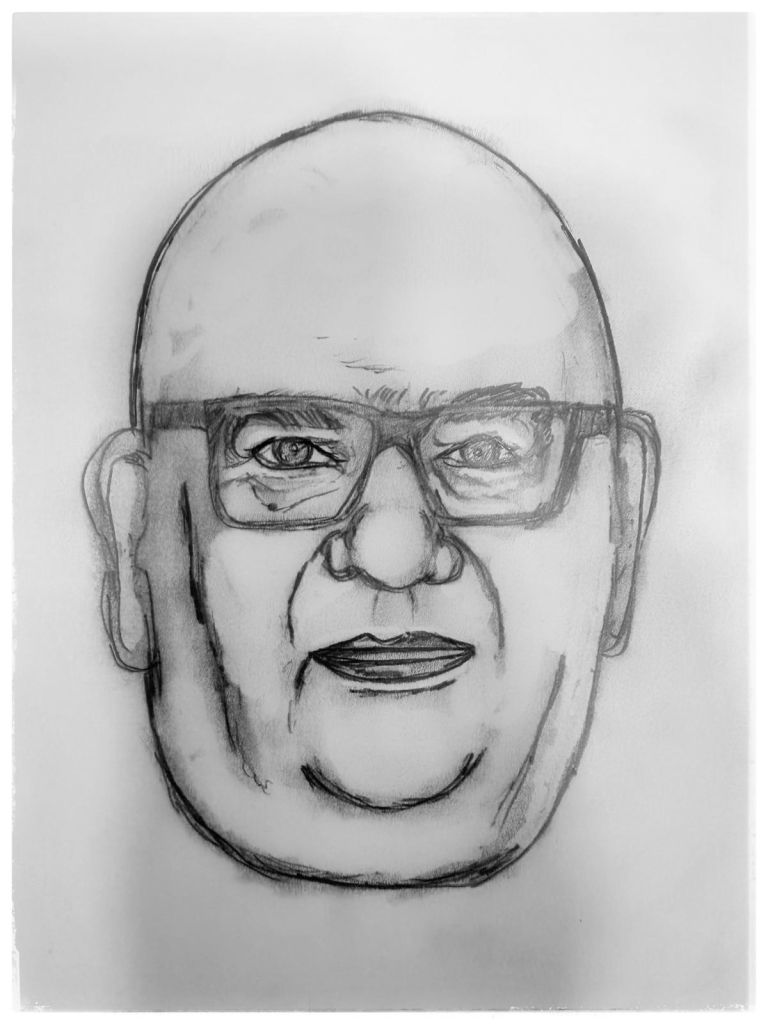
Good of course was actor Shriram Lagoo!
One of the few sketches where both the person who sketches and the one he sketches are the same!

Shubh ratri!

Clever hans

A book called ‘How to talk anyone; 92 little tricks for big success in relationship’ by Leil Lowndes apart from pretty interesting tricks tells the story of clever Hans!

Apparently Hans could do addition, subtraction and even division and multiplication! Later of Hans even knew languages!

What’s so great about that you say!? Now if Hans was a two year old kid it would be amazing!

But he was actually much more!

Well, Hans was a horse!

Clever Hans was a horse in early 20th-century Germany who appeared to perform mathematical and intellectual tasks!

It was of course a great trick in response to subtle cues! So much so that it is now a well known phenomenon called the Clever Hans effect and serves as a famous cautionary tale in psychology and scientific research!

So Hans was owned by Wilhelm von Osten, a high school mathematics teacher who believed that animals had underestimated intelligence!

From around 1891, von Osten trained Hans to answer questions by tapping his hoof or using a letter board. Questions could be asked orally or in writing, and Hans’s apparent abilities included addition, subtraction, multiplication, division, telling time, and reading/spelling German words!


Hans’s performances were a public sensation, drawing large, enthusiastic crowds across Germany. A commission of experts, including a circus manager and the director of the Berlin Zoo, initially concluded that no tricks were involved!

Then some more research lead by psychologist Oskar Pfungst lead to some crucial discoveries in 1907!

Hans’s accuracy dropped significantly if the person asking the question did not know the answer themselves!
The horse struggled to respond correctly if the questioner was out of sight or completely still!

Pfungst concluded that Hans was not performing mental tasks but was incredibly adept at reading microscopic changes in the questioner’s posture, breathing, and facial tension. When Hans reached the correct number of taps, the human would subtly change their expression or movement, which cued the horse to stop!

These cues were entirely involuntary and unconscious on the part of the humans involved!

So Hans was clever! But not ‘internally’ clever but a clever Mentalist! That is still special and rare by the way!

The “Clever Hans effect” now describes the phenomenon where a subject unintentionally receives and responds to subtle cues from an experimenter or questioner, thereby appearing to demonstrate abilities they do not possess!

This has had a lasting impact on scientific methodology, leading to the use of “double-blind” experiments in fields such as psychology and medicine to avoid research bias!

The Clever Hans effect remains relevant today, particularly in fields like artificial intelligence (AI). It is used to describe when a machine learning model appears to perform well but is actually relying on “shortcuts” or spurious correlations in the data rather than true understanding of the task at hand!

What happened to Hans?
Well, apparently and sadly it was sent to war and could have been killed or eaten by soldiers!

Unfortunately a clever animal is still apparently an animal…

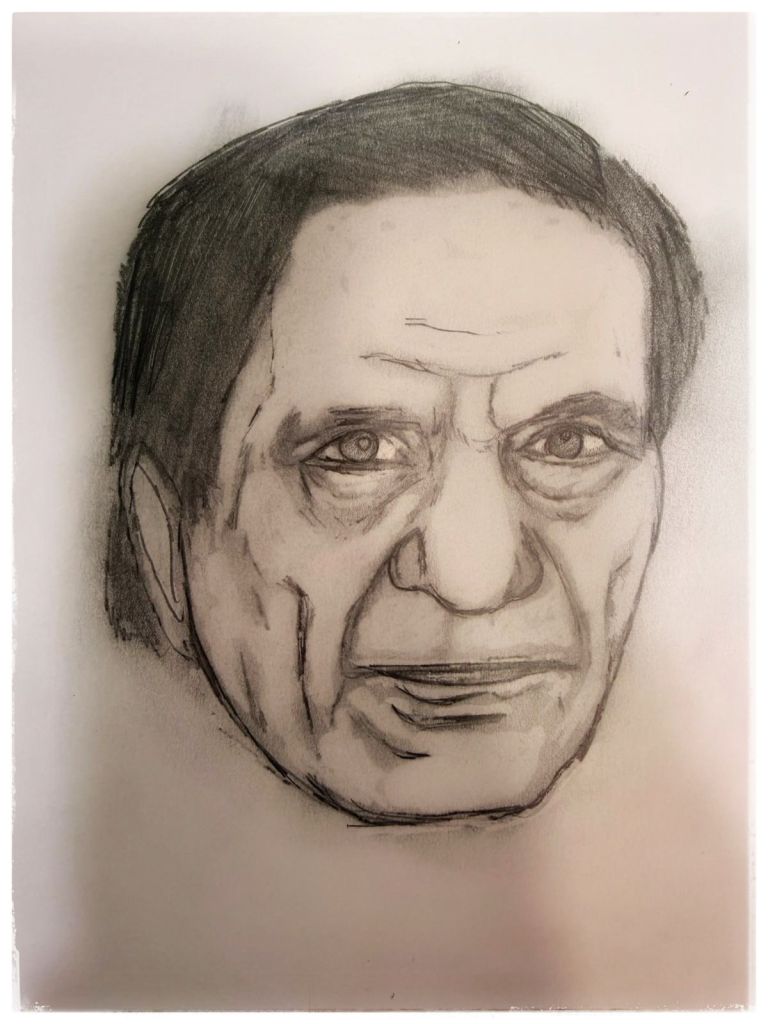
Humans can act humane though! And really talented! Like Kamini Kaushal!

She will be missed

Om Shanti…

Jam study!

When you are in a Jam then it is difficult to get out! Traffic or anything else!

Then again there is a study on JAM that may help you!

The study is simply called the Jam Study!

This is presented and done by an author called Sheena Iyengar in her book; The Art of Choosing!

Have you often gone to an amazingly Huge buffet and always felt that whatever you take, you could have taken something else! Or that you could not do justice in any case!

It is the paradox of choice! Too many options actually spoil the fun! You would rather have some limited choices and enjoy them all!

So the Jam study took place in an upscale grocery store (Draeger’s) in Menlo Park, California, a store already known for its extensive product variety (e.g., 250 types of mustard), so an abundant display would not seem unusual to shoppers.

A tasting booth was set up, rotating between two conditions every few hours:

The first was the limited choice option where the shoppers were presented with a selection of 6 different varieties of an exotic brand of jam.

In the next, there was an extensive choice option in which shoppers were presented with a selection of 24 different varieties of the same brand of jam!

The results starkly illustrated the “paradox of choice” since it was found that the shoppers in the limited-choice condition were ten times more likely to make a purchase than those in the extensive-choice condition!

The “jam study” provided empirical evidence that an abundance of choices can have negative psychological impacts!

In fact when shoppers were offered 24 varieties of jam, only 3% made a purchase. However, when the selection was limited to 6 varieties, 30% bought jam!
This demonstrated that an abundance of options can attract initial interest but ultimately deter decision-making!

The issue is of being overwhelmed! An excessive number of choices can lead to a state of anxiety and an inability to make a decision at all. Even if a choice is made, individuals may experience greater regret, wondering if a different, unchosen option would have been better, which diminishes satisfaction with their final decision!

It has of course been emphasized that there are cultural Influence and the desire for and perception of choice are not universal. Western cultures tend to prioritize individual autonomy and extensive choice, while other cultures may view choices through the lens of group consensus and social harmony, sometimes preferring to defer decisions to experts or family.

But the fact of the matter is that shoppers who bought jam from the 6-item display reported greater satisfaction with their choice, perhaps because it was easier to feel confident they had considered all the options and made a good decision!

In essence, the study challenges the assumption that more choice is always better, suggesting that finding the right balance and understanding the psychological and cultural factors at play is crucial for making effective and satisfying decision!

Satisfying and an amazing life also was lived by Saalumarada Thimmakka! She will be missed but an sure she will be welcomed in heaven!

Om Shanti…

Lactose free human!


So do you like to drink milk? Hope you are not lactose intolerant!

If you are then you are actually more ‘human!’

Yes! Our ancestors were like you or rather you are more similar to them! Now I am not calling you ‘old’ but being lactose intolerant is actually more ‘normal’!

This is not milk allergy though! The lactose intolerance is due to the carb while the allergy is due to the protein!

Remember how your mother always told you to drink that ‘milk’ everyday!? The ancient humans also did that to get more calcium!

In the book called Humans are not from Earth (or something like that!) by Dr Ellis Silver he states that our workaround for getting more calcium is to drink cow’s milk and eat dairy products!

Since cow’s milk isn’t part of our natural diet, there was a time when none of us could even tolerate it. We were all lactose intolerant, and it would have given us stomach cramps and made us feel ill.

Even so, our ancestors persevered – the pain and nausea were still somehow better than the alternatives! Thanks to them, we evolved the ability to tolerate lactose, and most of us can now consume it without any problems!

But the fact remained that being lactose intolerant was normal for ancient humans, as it is the ancestral human state. The vast majority of people were lactose intolerant before the evolution of a genetic mutation called lactase persistence, which arose in populations that domesticated dairy animals around 10,000 years ago!

For most of human history, all humans stopped producing the enzyme lactase after weaning, making them unable to digest the lactose in milk.

In fact lactose tolerance is a relatively recent evolutionary development that emerged in some populations as an adaptation to a diet that included dairy products.

The genetic mutation for lactase persistence became common relatively quickly in some regions, likely driven by extreme conditions like famines and epidemics that made dairy a valuable source of nutrition.

This was also the reasons for the ancient people to process the milk to curd or other milk products which are more easy to digest!

Of course, there’s still a significant number who can’t. We tend to call them “lactose intolerant” as if there was something wrong with them, but really, they’re just normal!

So it’s the rest of us who are strange and not the other way around! So remember that all were brothers once! Lactose or not!

The original lactose intolerant ones are the real descendants of the ancient humans while the ‘tolerant’ ones are the genetically ‘modified’ hybrids! Remember that the next time you are ‘intolerant’ to the ‘intolerants!’

Of course you can tolerate legendary freedom fighters like Krantiveera Sangolli Rayanna!

Shubh ratri…

Fast or slow or stupid!?


The Psychology of Stupidity take a leaf out of the famous book by Daniel Kahneman called Thinking; fast and Slow.

There is actually an interview of sorts in the book with Daniel!

This is important since if you think that only idiots are stupid well, you are stupid, I mean wrong!

The famous situation when you are driving on a highway and according to you, anyone driving slower that you is an idiot while anyone driving faster than you is a maniac!

We check our watch for time (the minority who still have a watch for time and not the phone!) and just five minutes later check it again! According to the author, that is actually a stupid behavior since it does not make any sense!

But you must remember that many so called ‘intelligent’ people do act ‘stupid’ once in a while and the author states how it could be due to the ‘two systems’ in the brain!

Kahneman, is of course a Nobel Prize-winning psychologist, is renowned for his research (much of it with his late collaborator Amos Tversky) into the psychology of judgment and decision-makin and his key contributions explain “stupidity” not as a lack of intelligence, but as a result of inherent flaws in human thinking!

Kahneman’s work introduced the idea that people have two systems of thought:

System 1 (Fast, Intuitive): This system is quick, automatic, and relies on mental shortcuts (heuristics). It is prone to systematic errors, or cognitive biases.

System 2 (Slow, Deliberative): This system is more effortful, logical, and analytical. While more accurate, people often defer to System 1 to save mental energy.

In short it is the system 1 which is fast but ‘stupid’ while system 2 is ‘not so stupid!’

These leads to some biases and errors!

One of this is the cognitive Biases: These are systematic errors in thinking that affect judgment and decision-making.

One of the reasons for going stupid is getting Overconfident! People often overestimate their own abilities and knowledge, leading to poor decisions.

In his later work, Kahneman explored “noise,” or the unwanted variability in human judgments that should be identical, highlighting how even experts can be inconsistent in their decision-making!

Stupidity from ‘normally intelligent’ people thus is dependent on social pressures, emotional factors, and cognitive biases which overrides logic, causing otherwise intelligent people to act foolishly.

The author states that stupidity isn’t a fixed trait but a behavioral tendency we all exhibit at times, which can be compounded by factors like groupthink and media manipulation!

Yes! If you thought that thinking in a group or with a group increases your intelligence or productivity, well then you are let us just say not that intelligent! But that is a subject for some other day!

For now; if you think you are not that stupid then try to use the ‘system 2’ as much as possible!

System 2 also is the one which brings out your talent to the front! Like the super talented Pulapaka Suseela!

Shubh ratri…

IQ TEST…

The Psychology of Stupidity by Jean-François Marmion is a great book to realize how stupid one is!

Common stupid people are listed!

One of them are those who press an already pressed button of an elevator! The button light is on and you can see that it is pressed! When you see someone doing it then the author states;  ‘Stupid alert!’

Now that leads us to the intelligence! Or measure of intelligence as such!

Apparently the most well known test for intelligence was actually to find the lesser intelligent kids so that special attention could be given to them!

The IQ test was created by French psychologists Alfred Binet and Théodore Simon in the early 1900s.

In 1905, the French government asked Binet and his colleague Simon to develop a test to identify children who might struggle in the new compulsory education system. They wanted to give these students individualized attention, rather than having them placed in psychiatric institutions.

Binet and Simon created a test with a wide variety of questions designed to assess different cognitive abilities like memory, attention, and problem-solving. The questions were designed to be age-specific; a child’s performance was compared to that of other children of the same age.

There was no mention of IQ though which came later. The whole concept of the “intelligence quotient” (IQ) was later introduced by the German psychologist William Stern. The IQ was calculated by dividing a person’s mental age by their chronological (actual) age and multiplying the result by 100!

So you must understand that the average IQ of a population is 100! That is the baseline. High or low is calculated in reference to 100!

The Binet-Simon test was adapted for use in the United States by psychologists like Lewis Terman, who created the Stanford-Binet Intelligence Test, and David Wechsler, who developed assessments specifically for adults!

Finally the modern IQ tests are based on the principles of these early versions but have undergone significant scientific development over the last century to become the more complex and scientifically validated instruments used today!

Now do remember that before you call someone stupid or moron!

In the historical system proposed by psychologist Henry H. Goddard and used in the mid-20th century, the term “moron” had a specific IQ range of 50-74 (or sometimes 50-70 or 51-70, depending on the specific scale).

While the term “stupid” was not a formal, technical classification within this historical IQ scale, unlike “moron,” “imbecile,” and “idiot” all of which had ranges!

It was and is a general, non-clinical term of insult. The closest formal term might have been “dull,” which referred to an IQ range of 85-94, but this is less severe than the user’s intent with “stupid”.

So a ‘stupid’ person at that time would be the most intelligent MORON!

Present IQ tests of course do not use any of these terms since no one can be the judge of anyone else being stupid or moron! Just hope for the elevator buttons to be strong that is all!

Strong and fearless leader also was Senapati Bapat!

Shubh ratri…

Dunning Kruger


The Psychology of Stupidity by Jean-François Marmion is actually a translated book from French! Of course it is about stupidity!

One of bias discussed in the book is called the Dunning-Kruger effect.

The Dunning-Kruger effect is a cognitive bias where people with low ability in a specific skill tend to overestimate their own competence, while high performers often underestimate theirs!

In simple terms; stupid people are very confident while intelligent ones are usually doubtful!

The reason is that individuals lacking expertise are also unable to recognize their own mistakes, and while those with high competence and intelligence may assume tasks are easy for everyone, leading to them underestimating their abilities!


Understanding this effect helps individuals and organizations by encouraging more accurate self-assessment and a greater appreciation for expertise!

People with limited knowledge in a subject tend to believe they are much better at it than they actually are! They lack the meta-cognitive ability to recognize their own incompetence, making it difficult to gauge their poor performance.


While highly competent individuals may underestimate their abilities because they assume tasks that are easy for them are also easy for others. This can lead them to think they are average when they are, in fact, highly skilled!

Examples of the Dunning-Kruger effect:
A person who has just learned a few phrases of a new language might think they are fluent, without recognizing the vast amount of knowledge they still lack. In fact when you learn all the alphabets in a single book you may think that since these are the letters which can make any word; you know everything! While in fact what you know as Baba says; is just a drop in the ocean of knowledge!

In politics, leaders with limited expertise may be overconfident in their own ability to solve complex problems and may dismiss expert advice!

Dunning-Kruger effect is just an observation but still gets to a point where it is dangerous like when a fool or a stupid is given a very important task! The proverbial button or the switch to the bomb!

You must realize that knowledge is a continuous process! The more you gain, the more you realize that you know so less!

In any case the steps to acquire knowledge even otherwise goes through some stages…

Unconscious incompetence: Not knowing what you don’t know! Basically you are an idiot or stupid but you do not know that you are an idiot!

Conscious incompetence: Becoming aware of your lack of knowledge! Which means that you are stupid but you have now understood that you are stupid!

Conscious competence: Gaining knowledge and becoming competent! You are no longer stupid but still can make mistakes! You are still a student!

Unconscious competence: Reaching a level where the skill is mastered! You are the master!

Mitigating the effect: Becoming aware of the Dunning-Kruger effect is the first step to overcoming it!

Then again you cannot teach those who cannot be taught!

Luckily there are those super intelligent nuclear scientists like Dr Raja Ramana!

Shubh ratri…

Yin and yang…


The Ayodhya Alliance by Ashwin Sanghi in a section tells about the two fishes who are moving in either direction! The Abstract image of that is one of the most famous symbols in China and now all over the world!

You would have seen this symbol as the black and white circular disc representation and the concept is really deep!

The concept is the universal concept of Yin and yang!

Often seen in many cultures and traditions this is a fundamental concept in ancient Chinese philosophy that describes two opposing yet complementary and interconnected cosmic forces, represented by the familiar black and white symbol.

It explains how seemingly opposite forces are interdependent and how they are in a constant, dynamic state of balance and transformation!

You must understand that they are not absolute opposites but complementary forces, like dark and light, female and male, or passive and active. They rely on each other to exist!

It is actually a representation that nothing is static; everything is in a constant state of flux and transformation!

The concept has been applied to many fields, including astronomy, medicine, and even understanding human behavior, to achieve a state of balance.

The interesting connection between the Chinese Yin-Yang concept and Indian thought of Ardhanarishvara is the principle of dualistic and complementary forces!

In Hinduism, this is most famously represented by the masculine-feminine divine pair Ardhanarishvara  or the Shiva and Shakti which predates the Chinese concept!

Both systems use these dualities to explain the creation and balance of the universe, with Yin being passive and feminine and Yang being active and masculine, similar to how Shakti is the dynamic, creative energy and Shiva is the static, receptive void, though the specific associations of male and female can be reversed.

Both traditions describe the universe as being formed by two opposing yet interdependent forces. One cannot exist without the other, and their harmonious interaction creates the whole!

Both systems use these concepts to explain the creation of the universe and the balance of nature, health, and life itself!

A good balance also are movies by Vivek Ranjan Agnihotri…

Shubh ratri…

Proxemic…

In our medical college OP department; a common practice was to tie the chair of the patient (not the patient!) to one place!

This is actually very important!

If you do not do that then more often than not, the patient or the by stander would pull the chair closer to you! They would always be having an impression that you are not listening to them!

But when they do that, it is actually counter productive since then they are intruding into your ‘SPACE’!

It is an actual thing by the way! It is known as PROXEMICS!

Proxemics is the study of human use of space and how distance affects communication and social interaction.

Pioneered by anthropologist Edward T. Hall, it examines how individuals perceive and organize personal space in various cultural contexts.

It includes the four zones of interpersonal space depending on the distance between two individuals.

Going by this definition these are four zones!

The closest or the Intimate zone which is around (0-18) inches! This is purely reserved for close relationships like family and romantic partners! Any other person trying to be in this space can cause discomfort! Just as those who come very close to you when you speak! The invasion of your personal zone is, well intimate!

Then you do have the Personal or the casual zone which is around 1.5-4 feet, for interactions with friends and acquaintances only! A non romantic interaction is the key here!

Then you have the social or consultative zone! This is around 4-10 feet! This was made famous during the COVID time and this is the distance your patient MUST maintain with you and vice versa!

Finally you have the Public zone! Which is 10 feet or more, for public speaking or addressing a large group!

A central tenet of proxemics is that personal space needs are highly variable across cultures. For example, people in some places and cultures tend to be comfortable with closer proximity during conversation (high-contact cultures), while those in other places generally prefer more distance (low-contact cultures).

Misunderstanding these cultural differences can lead to misinterpretations; what one person considers friendly, another might perceive as intrusive!

The study of proxemics actually has lots of application in various fields like in architecture and Urban Planning and designing physical spaces like offices, homes and public places.

Directors and cinematographers use the placement of characters and the distance of the camera which is called the camera proxemic to communicate relationships and influence the audience’s emotional involvement!

Finally in Professional Settings like in fields like medicine, nursing or counseling, an understanding of proxemics helps professionals manage boundaries and build trust with patients or clients!

The world is a small place now! So it is all the while important now to respect everyone’s personal space!

Respect reminds me of Shankar Nag! His short time in the industry was legendary…