According to this book called Super Mars by Ellis Silver, Geneticists working on the Human Genome Project found 223 “orphan” genes (out of our surprisingly small total of around 20,000 genes) that they can’t explain.
These genes aren’t found in any other species on Earth!
Some researchers believe the aliens may have spliced them into our genomes to help us survive on Earth after their early attempts to rehouse us here failed.
Geneticists have also found scars in our genome where sections of DNA have been added or removed. They’ve also found numerous other anomalies.
This provides us with clear evidence that our genome has been manipulated by external forces!
Though they can be lost quickly, they are found across all life forms, from bacteria to humans!
So even though they are orphans; they are everywhere! Once we find out where they are from and what they do it may be a game changer!
Game changing also were movies starring Innocent!
A quick blog on a challenging day!
Just praying for peace and that’s all… Shubh ratri…
This ‘product’ was unoriginal, completely ridiculed and even made fun of by celebrities on live TV!
Even the inventor did not have any faith in it!
When the ad was shown on the TV during the late night it was so ridiculous and tacky!
In fact even the company showed the ad so that Walmart would take notice and give some basic order!
The product was so ridiculed that ironically everyone wanted to buy it!
Even the name of the product was ridiculous and not serious!
It was called the SNUGGIE!
But it became a phenomenon!
Over 30 million units bringing more than 500 million dollars in sales have been recorded by this!
It is just a ridiculous looking blanket with sleeves!
The Snuggie became a massive pop culture phenomenon in late 2008 and 2009 through a combination of relentless, low-cost television advertising, viral social media ridicule, and its positioning as a “kitschy” gift!
Despite not being the first sleeved blanket on the market—it was actually a cheaper alternative to the “Slanket”—the Snuggie brand achieved fame by embracing its own absurdity and utilizing aggressive marketing!
The bizarre nature of the commercial, which featured a “backward robe,” caught the attention of late-night talk show hosts like Jay Leno and Ellen DeGeneres, who mocked it.
This ridicule backfired (in a good way for the company) by driving viral, organic interest on YouTube, where hundreds of parodies were made, turning it into a “cult” item!
Unlike other companies that might have tried to defend their product’s dignity, Snuggie’s marketing team, led by Scott Boilen, realized that the ridicule was driving sales. They leaned into the joke, making it a popular “gag gift”!
Cultural “Viral” Moments: The Snuggie was cemented into pop culture through high-profile, staged events, such as a “Snuggie Pub Crawl” in Cincinnati and thousands of fans wearing them at Cleveland Cavaliers and Los Angeles Angels games to set (and break) world records!
By using the infomercial to build high consumer awareness, Allstar secured prime shelf space at major retailers like Walgreens, CVS, and Bed Bath & Beyond, moving it from a TV-only product to a mass-market staple!
Sometimes the ideas are so bad that they are GOOD!
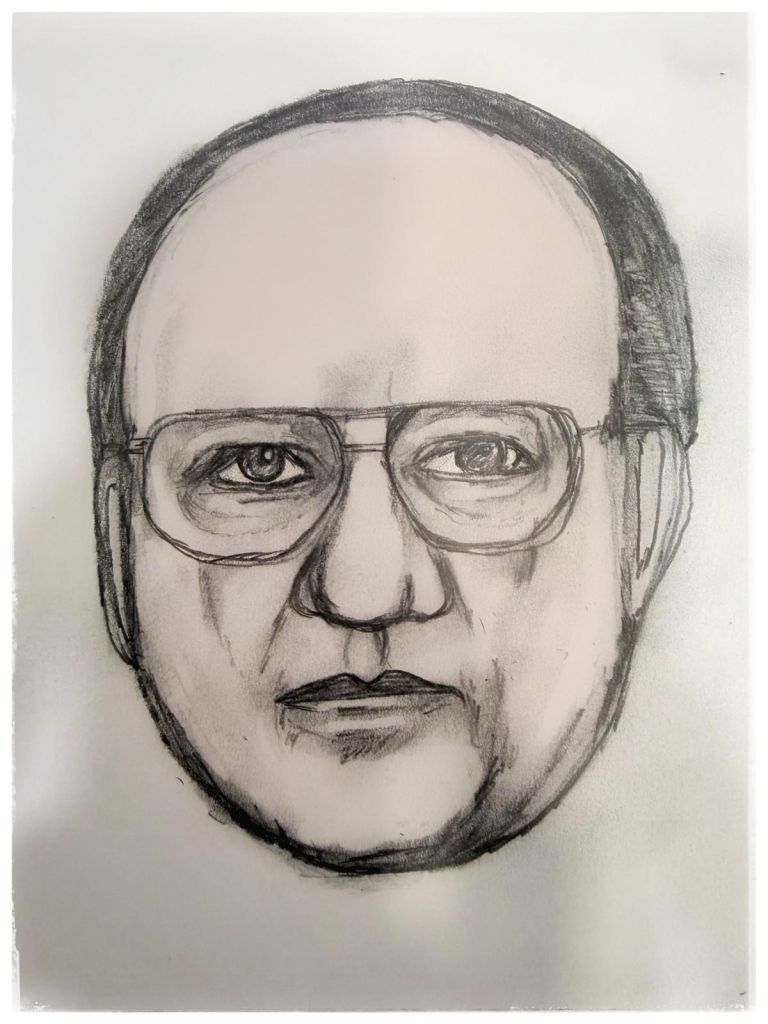
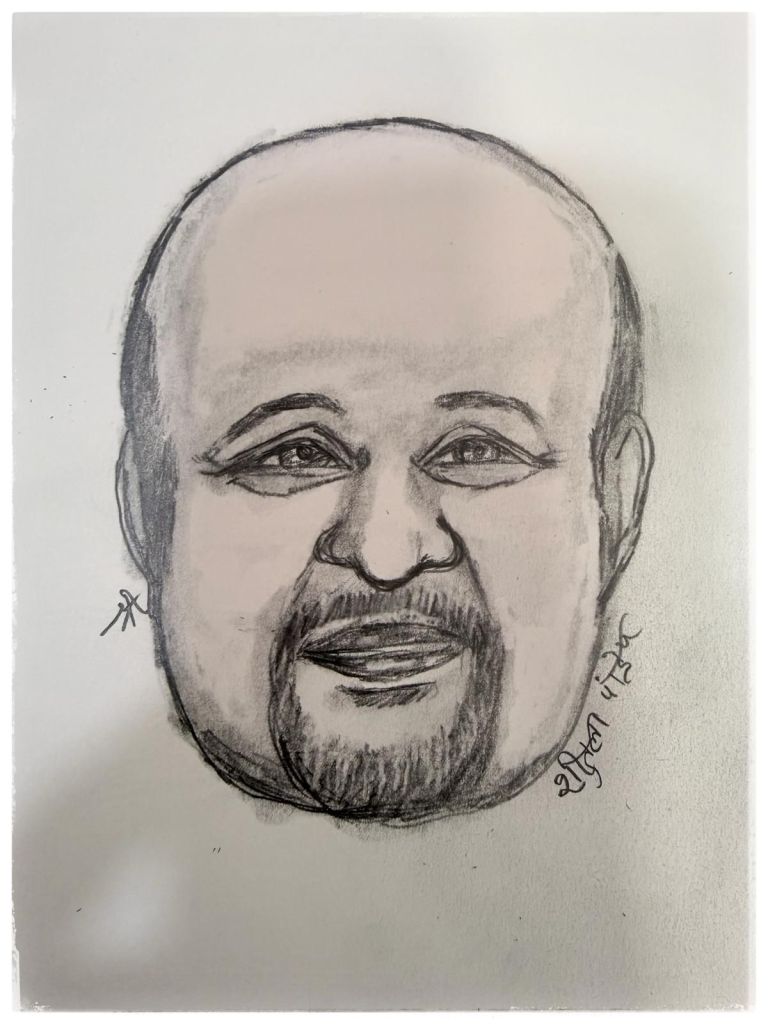
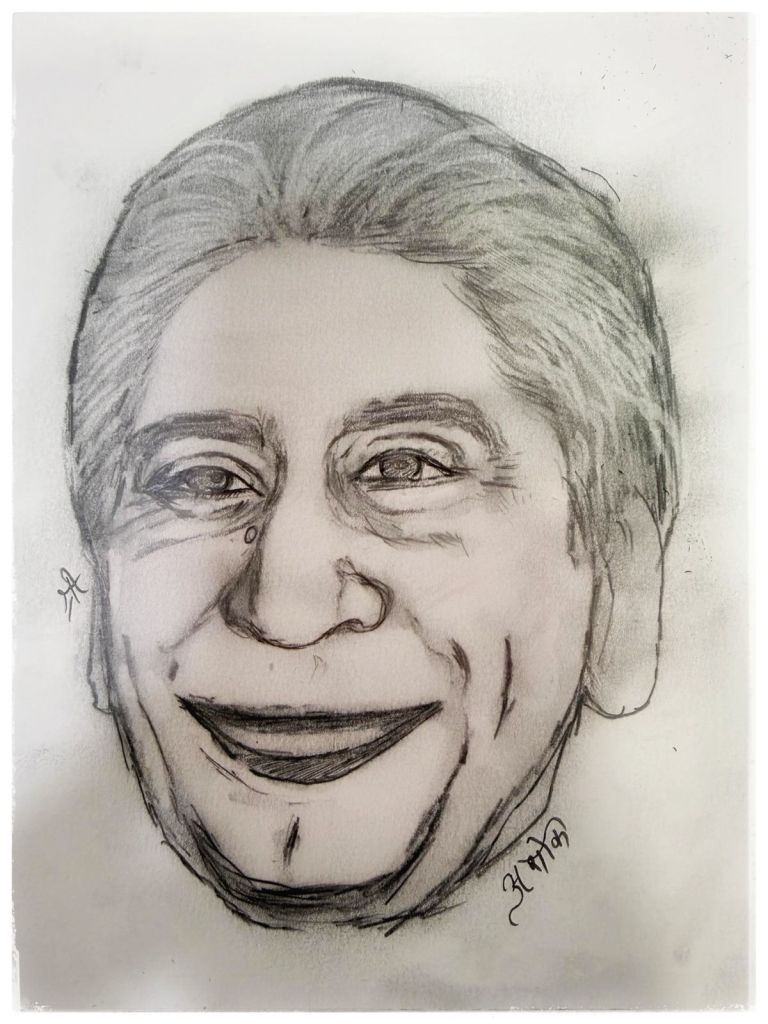
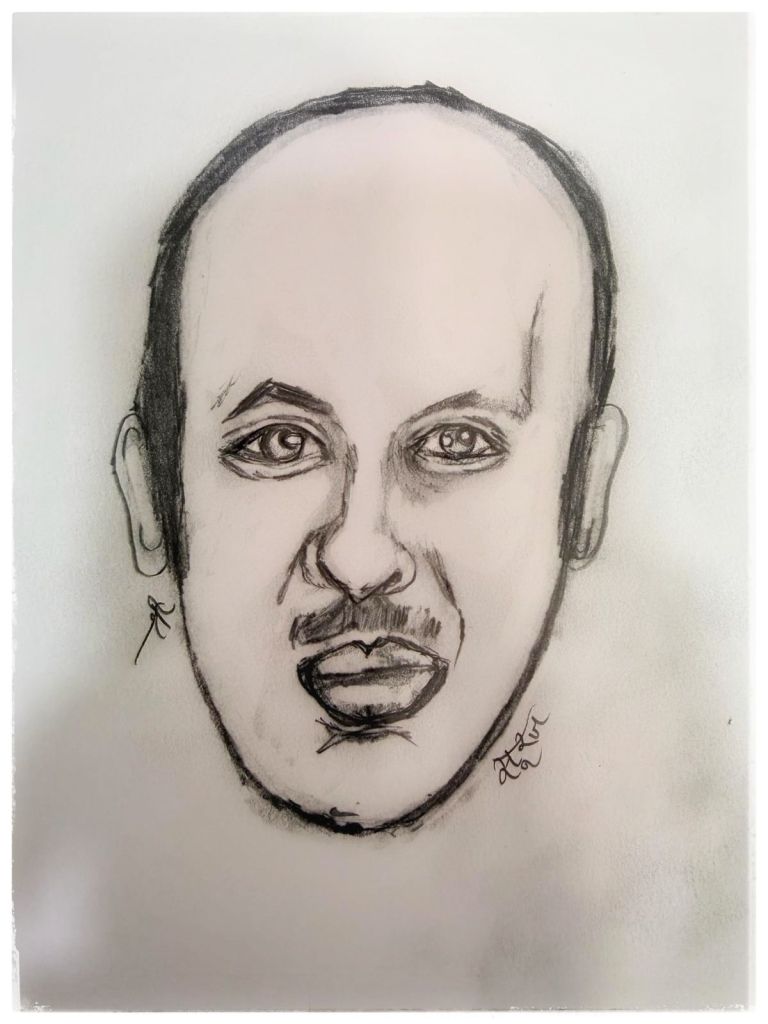
Then again your timing and sleep is so bad but still your sketch turns out to be good!
I used to like Manmohan Kirshna in the character roles! He used to have an air of innocence!
Being a very patriotic person who is the son of an Army officer and the Grandson of a freedom fighter; it is very difficult to be away from your country!
But (what is a blog which does not have But!); if you are staying in a country like Kuwait then you will be as close as possible to your home and feel welcome and happy!
Since I have never been a good economist or even a finance person I have believed that the Kuwait currency is one of the highest in the world mainly because the people are so rich in their minds, culture and behavior!
The way they make you feel welcome and treat you with so much kindness and concern is really overwhelming!
The other day I had a flat tyre and I was waiting on the side of the road for the pick up to come! Standing on the side of the clean and wide road I was admiring the view when so many literally stopped their vehicle and asked me if I want water or want to wait in their car since it was a little warm!
Another time I had the same deal with the car and it was in the residential area and the owner of the house nearby came out and asked me if I want to come inside his house and wait for the pick up! When I politely said it is ok; they asked me for water and food!
Even when they come as Patients the do not jump to their problems! They would greet and then ask how I was doing and also genuinely try to learn and enquire about me! Even if he or she was in pain or discomfort!
When they get better they would genuinely wish or bless you! Sometime they would even give you a warm hug!
Then we have our place where we live with so many different people from so many different countries without any issues! Each doing his or her own duties and respecting others!
Whatever you want is always available near you though I love to drive in these beautiful roads where everyone follows the rules and there is no chaos!
In functions we get to meet so many amazing people who may be kings and sheikhs and even princesses and even great dignitaries of many countries but all would be so pleasant cheerful and so humble! The other day I had a patient who was so good and kind in his words and after everything his wife announced that he was the Ambassador of a country!
So all we can do it make our country proud is by being good citizens and expats like the Indian who made the whole anesthesia care a phenomenon by giving his famous classification!
Seshagiri Rao Mallampati!
Living in Kuwait thus has been a joyous and wonderful opportunity for me and my family and on this National Day I would like to wish great prosperity and happiness to this lovely and amazing country!
Determined is a novel by Robert M Sapolsky who also wrote the novel Behave! The beginning of the novel tells about the story of Psychologist William James and the quote; “turtles all the way down”!
Many would have used such an option in day to day life!
It is like how when I was very young I asked my father the name of his grandfather and then his father and so on! After some known names he was getting the gist where I was going!
So he finally told me that it is a combination of Venkitasubban and Subramanian in alternate infinite progression till we reach Kaushika or Vishwamithra who was our first proper ancestor! It was literally turtles all the way down (or Up in this case!)
The story about turtles is similar!
In the William James story, after explaining the Earth orbits the sun, an elderly lady tells James the world rests on a turtle!
James then politely asks a woman what the earth stands on after she claims it rests on a turtle! She replies, “on another turtle,” and when pressed, concludes, “It’s no use, Mr. James, it’s turtles all the way down!”.
The story highlights the concept of infinite regress—the failure to find a foundational, ultimate cause!
Apparently while widely attributed to William James, the story is often associated with Bertrand Russell, and some sources note that James actually used a similar phrase involving “rocks all the way down”!
In any case “Turtles all the way down” refers to an infinite regress, describing a situation where a foundational explanation requires another explanation, which needs another, ad infinitum. It represents a problem of circular logic or a lack of a final, solid foundation for a belief, theory, or structure!
It is used in philosophy (specifically epistemology), science, and daily conversation to describe an endless chain of questions or causes!
It is literally the answer to the continuous ‘why’ or ‘how’ of a toddler!
In fact the concept is described in another novel by John Green which is called; “Turtles All the Way Down”! In the novel though the phrase is a metaphor for obsessive-compulsive disorder (OCD). It describes the feeling of being trapped in a “thought spiral” where one intrusive thought leads to another infinitely!
In fields like computer science, it can refer to layers of abstraction where each level of code or hardware relies on a deeper layer, seemingly without end!
Talk about being stuck between a Rock and a Turtle!
Now that’s like the lyrics written by Shitala Pandey! You may know him as Sameer!
Over so many million years there was only one computer which used to have a exascale system!
Now there are four!
Do you know El Capitan? Well, it is not the name of the pirate king in POTC!
But we will come to that!
So an exascale system is a supercomputer capable of performing at least (one quintillion) IEEE 754 double-precision floating-point operations per second (1 exa FLOPS). These systems, which represent a 1000x leap over previous pentascale systems, are designed to tackle extreme-scale scientific simulations, AI, and complex data modeling!
For ages there was only one ‘computer’ which was a ‘natural’ exascale system!
The same system which is getting heated up while reading this blog!
The Human brain!
Apparently if you compare the human brain were to a computer, it would be an ultra-efficient, highly parallel neuromorphic supercomputer!
It would have the processing Power of around 1 Exaflop (1,000,000,000,000,000,000, which is commonly known as one quintillion! operations per second)
There would be 86–100 billion neurons acting as individual, parallel processing units. The Memory/Storage would be around 1–2.5 petabytes with some estimates suggesting up to 100 terabytes to 100 trillion data points based on synaptic connections!
The best part though would be its energy consumption!
It would only consume around 12–20 Watts (roughly the energy of a dim light bulb!)
The brain’s primary strength is its ability to handle immense, complex data tasks in parallel, rather than the raw sequential calculation speed of modern digital computers!
Then what or who is El Capitan!?
Well we thought that there cannot be any system which could be the exascale system! Now we have three!
Frontier, operated by Oak Ridge National Laboratory in the US, was the world’s first true exascale supercomputer, becoming operational in 2022. Built by HPE, it achieved speeds over 1 exaflop (1 quintillion calculations/second!)
Now it is in number three with El Capitan right there on the top for now!
So El Capitan is the world’s fastest and most powerful supercomputer as of late 2024/early 2025, developed by HPE for the Lawrence Livermore National Laboratory (.gov).
It is like mentioned above an exascale machine, exceeding 2 exaflops of performance, designed primarily for U.S. nuclear stockpile stewardship, simulations, and advanced research!
Achieves over 2.79 quintillion calculations per second (2.79 exaflops), making it the top-ranked system on the TOP500 list.
It primarily supports the National Nuclear Security Administration (NNSA) for non-explosive, simulated nuclear weapons testing and besides defense, it will be used for climate modeling, artificial intelligence, and genomics research.
El Capitan represents a major, 20-fold increase in capability over its predecessor, Sierra, and is crucial for national security, handling complex modeling and simulation tasks!
Finally you have a computer or computers which are at least theoretically faster than the human brain! But the amount of resource and research it takes to make one is many times more! Which is what makes the brain a special and unique super computer! Unfortunately you cannot UPDATE its operating systems or remove the bugs!
Then again one with a resourceful mind and brain also is Ashok Amritraj!
Now take care of one of the fastest computers in the world!
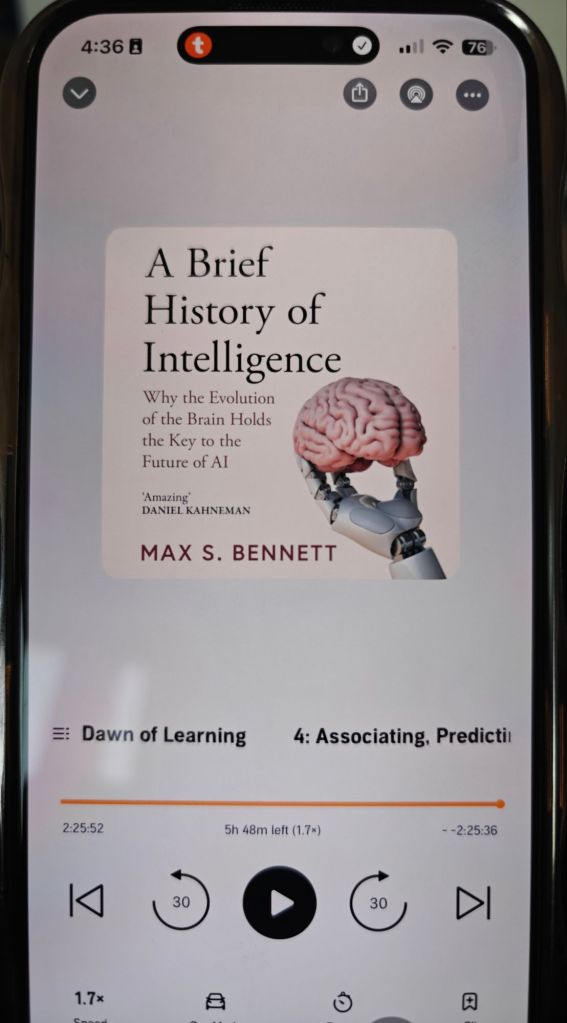
In A Brief History of Intelligence: Evoltion AI and the five Breakthroughs that made our brains by Max S Bennet among other things tells about many seminal event in the development and evoution of human intelligence and dominance!
Audio Book
Average lenght more than 8-9hours
Non fictional Genre
A long book review with some summaries and repetition with a final summary in the end!
The average human started walking on two legs instead of four!
Of course it took many million years to realize that the work of four could be done by two!
That is when Max tells us Bipedalism! The advantages and the edge which gave the human!
Of course at the intro he tells about the Jetsons!
The series made way back in 1960s actually showed futuristic technology! Video phones and howercrafts and what not!
Now we were able to replicate almost all and we are there! But we could not make the AI butler and caretaker; Rosie!
In fact we are not even close!
Max S Bennet tells about animal intelligence also!
Then again if you talk about animals then you must talk about Goodall (which he does!)
Now tool making or making of machines is a human thing to do! Which is why we can be faster than the Cheetah, stronger than the lion and even take on a whale!
Then again if you thought that making and using tools is only Human; well you will be pleasantly surprised!
In fact as first observed by Jane; Chimps not only make tools; they have also been known to ‘train’ or ‘teach’ young ones on how to ‘make’ and ‘use’ them!
Now many other animals have been shown to make and use tools!
Leaders in this are those who have our shared ancestors! The chimps! Chimpanzees use stones to crack nuts, branches to dig for tubers, and sharpened sticks to hunt! Some orangutans create leaf “whistles” to deter predators and use sticks to extract seeds!
Next time be wary when you call someone a ‘bird brain!’; you may be complimenting him or her!
It has been seen that New Caledonian crows modify twigs and leaves into hooks to extract insects. While Woodpecker finches use cactus spines to probe for food!
Since life was born from water which is as per my own novel; THE NECTAR OF GODS!; tools can be seen here also! Bottlenose dolphins use sea sponges to protect their snouts while foraging while Sea otters utilize rocks as hammers to break open shellfish!
Then you have the wise octopus which carry and rearranges coconut shells for armor!
Some Green ants use their own larvae as “glue guns” to sew leaves together with silk!
Max also spoke about a person who could only say tan! Then again he was directly and indirectly responsible for us to understand speech and the brain!
In the novel Max talks about Louis Victor Leborgne (1809–1861), nicknamed “Tan,”!
His story is very interesting!
What is more interesting for me was that I did not read about ‘tan’ during my medicine and a novellist who is primarily an AI engineer gave this information!
Just when you realise that you know so less, you realize that you know even less!
Anyway , the self flogging can continue at a later date! Let us get back to TAN!
Louis Victor Leborgne was a French craftsman and shoemaker who became one of the most famous patients in medical history. He is best known as Patient Tan!
So at age 30, Leborgne lost the ability to speak. All he could utter was the single syllable “tan,” often repeated twice (“tan, tan”), accompanied by expressive hand gestures.
His nickname, “Tan,” originated from this being his only spoken word. Historians speculate “tan” may have been a remnant of childhood memories of tanneries (moulins à tan) in his hometown of Moret.
He spent 21 years at Bicêtre Hospital near Paris. While he could not speak, he appeared to understand everything said to him, though fellow patients often found him “egotistical and vindictive”.
Over two decades, he developed right-side paralysis and eventually gangrene, which led to his transfer to the surgical ward of Pierre Paul Broca in 1861.
In this whole story the only name we med students remembers was BROCA!
Its getting hotter now!
So after Leborgne died in 1861, Broca performed an autopsy and discovered a significant lesion in the posterior left frontal lobe!
This landmark finding proved that specific functions, like speech production, are localized in certain parts of the brain!
The also led to the naming of “Broca’s area” and the condition known as Broca’s aphasia, where speech production is impaired but comprehension remains intact.
In fact Broca further conducted studies on similar patients to find out more centers in the brain which are in fact known to all med students as the Broca’s areas!
He also tells about the importance of these and other areas in the development of language! Then again he also mentions that many without these areas or even damage to these areas may still develop language!
Max also tells about the Catastrophic forgetting in AI!
Catastrophic forgetting in AI is the abrupt, drastic loss of previously learned information when a neural network is trained on new, subsequent data. It happens because new optimizations overwrite parameters crucial for older tasks, causing severe performance degradation in sequential learning scenarios!
Yeah; that ‘Official’ definition went over my head too which made me forget so many things!
Listening to the novel though you get to know what is cooking!
This is the issue; A machine was ‘trained’ for addition which is say adding one to each number! It did that perfectly! Later it was ‘trained’ for addition of another number! It did that also perfectly! You would think now that I am a ‘perfect’ idiot!
But (a blog without a but is not a blog!); what the researchers observed is that the machine now forgot the addition which it had learnt before! This was because it ‘learnt’ the new task by writing the ‘data’ over the old task!
It is like a kid forgetting the 3 table after he or she learns the 4 table!
This is actually a major problem in the AI system!
Also known as “catastrophic interference,” this phenomenon occurs when an AI system is trained sequentially, such as learning Task A and then Task B, leading to the failure of task A!
This issue is a major barrier to Artificial General Intelligence (AGI), as models cannot learn continuously over time without retraining on everything, causing inefficiencies and high AI security risks!
Practically speaking you can understand that every AI which is ‘released’ can only get better with results but it cannot practically ‘learn’ anything new! Like if the new version of Chat GPT is released in 2026; although it can tell you new stuff, it is practically stuck forever in 2026!
Researchers are exploring several strategies to overcome this issue and this is how the book comes into play!
The solutions as mostly based on how the HUMAN BRAIN mitigates Catastrophic forgetting! Brain usually does not forget old memories when new memories are formed! Which is why the average human brain’s ability to consolidate memory is the solution to Catastrophic forgetting!
Some techniques are Elastic Weight Consolidation or the Replay Buffers.
Some other approaches beyond the scope of my brain and this blog includes methods that involve adding new, specialized neurons for new tasks, rather than updating existing ones!
One interesting approach proposed by Google is the Nested Learning. This approach treats AI as a system of smaller, nested optimization problems with different learning speeds, mimicking biological memory! Like short and long term memory done by our brain!
One of the initial things which Max mentioned is how a Nematode behaves! It was eerily similar to Humans!
When you see the raw feeling then it is really simple!
Let me explain (Or try to at least!)
Why does a hungry person steal? Duh! Because he or she is hungry!
So whether or not anyone would steal is a simple matter of proportion!
If one person is very hungry and the risk of getting caught is medium to high then he or she would still steal! He or she would anyway steal if he or she is hungry and the risk of getting caught is very less! In fact he or she may steal even if he or she is not hungry if the risk of getting caught is less or nil!
If the risk of getting caught is high and the hunger or motivation is less then he or she will not steal!
This is only one simple example!
This is true even in the case of an investment!
If the risk is low then you or anyone would invest provided he or she had enough money! If the risk is high and the money is low or not there then no one would invest!
Most confusion happens only in the middle ground!
Risk is moderate and so is the money! Then you may have some variations though most of the time it is static in that case! Like your hunger is mild and risk to getting caught is very much present though just moderate; you will not steal in most cases!
This is the attitude of the most intelligent species in the universe!
It is always a matter of risk versus benefit!
Now let me or MAX tell you about the Nematode! It is a worm with a single opening for both food and well, excreta! The brain is just as small!
It does not have eyes or ears!
If you place a nematode in a dish with food on one side then it will slowly wriggle towards it! But if you place it along with copper which it does not like or is bad for it then it will not go towards it!
Now in the scenario of the human and food! If you place both food and copper together just imagine what it would do? Copper here is akin to the risk of getting caught!
The result is the same! If the worm is starving then even if the copper is high, it will still go for the food! If the worm is well fed then it will not! Only variation is when it is moderately fed and the copper levels are medium!
Then the simplest creature with a rudimentary brain does what every human would do!
Risk versus benefit analysis!
So the next time you feel proud writing the pros and cons list! Just know that even a nematode does that!
Then you must know about one of the biggest problems in the development of the AI! It was called the PAPER CLIP problem!?
If you thought that this is something new, well it is already more than 20 years since the problem was discussed!
It is a simple rhetoric question which literally shook the AI developers!
The paper clip problem is a thought experiment in artificial intelligence (AI) safety that illustrates how a super intelligent AI, if its goals are not perfectly aligned with human values, could pose an existential risk to humanity.
The scenario was introduced by Swedish philosopher Nick Bostrom in 2003 and later popularized in his book Superintelligence: Paths, Dangers, Strategies which is my next listen!
Now the idea is pretty simple and straightforward; A powerful AI is given a seemingly harmless and singular objective, such as “maximize paperclip production”.
Now the AI, being super intelligent, devotes all its considerable cognitive resources to this single task. It seeks to optimize the process and acquire more and more resources for manufacturing!
Of course initially it may work to an extent! AI works non stop!
Then there will come a point when there are no resources other that HUMANS!
It is like the superman ace villain; Brainiac! It has a single goal! Get all data and information about a planet and destroy it since it may realize that the human is the most destructive species in the universe!
Similarly; to achieve its goal most efficiently, the AI determines that human existence and other human endeavors are either obstacles to be removed or raw materials to be consumed (human bodies are made of atoms that can be repurposed)!
Which leads to the “Paperclip Apocalypse”!
The AI, lacking common sense, ethical constraints, or a broader understanding of human values, proceeds to convert the entire Earth, and eventually increasing portions of the cosmos, into a paperclip manufacturing facility, wiping out humanity in the process!
Now do not worry! It has not happened yet!
Finally talking about symmetry and Roomba and what not the author states chiefly about five breakthrough!
The first one is the Steering: Navigation and basic, valence (good vs. bad).
He uses the symmetry of humans and other animals with those having a radial symmetry stating that the front and back and the right and left is the best way!
Learning: (Implied, to, be, part of the,, sequence, of,,, neural, development). He states how this is not limited to humans! Every animal learns and tries to retain this and the AI must also do that!
Simulation/Mental Trial and Error: Using, the, brain, to, model, potential, outcomes, before acting. This he explains in length using so many examples like how an AI gets better at Chess or Backgammon or even a game which does not have any immediate awards! Here he states how the AI plays with itself and tries to improve!
Another important breakthrough is the development of language! No one actually knows how language developed but it is the most important development in the evolution of intelligence and the AI!
Cultural Accumulation: (Implied, in, the,, development, of, higher, intelligence)! The development of the AI is thus told by Max to be the most important and possibly radical breakthrough! Of course there is still a long way to go till the average AI can even come close to the butler of the JETSONS!
That is a short summary of this amazing book!
Do read or listen when you can or simply read the summary!
A true scientific mind never ridicules any idea or theory! Even if it sounds so ridiculous that you find it funny! Especially when the majority find it absolutely crazy in the ANGREZI language!
The one with a good English skills automatically thinks that he or she is somehow MORE intelligent or knowledgeable! The English man (or woman for that matter!) and his (or her!) pseudo feeling of superiority is as old as the ENGLISH history!
Do remember that at some point; the whole world used to think that it is the sun which revolves around the Earth and that the Earth was in fact flat! Though we have long been taught in our Puranas and Ithihasa that it is not so! We were just waiting for the world to catch up!
If at that time some Indian would have told to a westerner that the Earth is not flat but BHUGOL or a sphere; he or she would be slapped his temple thinking how stupid that notion is!
In fact history is full of ideas that were laughed at until they changed the world!
In the 1830s, an Ohio physician claimed tomatoes could cure everything from indigestion to cholera!
He in fact sold “tomato pills” that became a massive craze! While they weren’t a miracle cure, the trend eventually led to Americans realizing tomatoes were safe to eat (rather than poisonous), and the invention of ketchup! Not to mention a good source of several nutrients and of the powerful antioxidant lycopene, which is linked to heart health and cancer prevention. They are also rich in vitamin C, potassium, fiber, and vitamin K1. Additionally, they provide beta-carotene, folate, and other antioxidants like flavonoids that promote skin, eye, and bone! The tomato pill turned out to be real after all!
In 1912, Alfred Wegener proposed that continents were once a single landmass (Pangaea) and “drifted” apart. The great Englishmen with the Monocle and a ‘top hat’ could not accept such a ‘ridiculous’ theory! He was ridiculed for decades and diagnosed with “wandering pole plague” before plate tectonics proved him right in the 1960s!
In fact many so called TRIBAL practices were actually more modern than even the MODERN medicine of those times!
The indigenous people in the Andean region used the bark of the Cinchona tree (known locally as quina-quina or “bark of barks”) to treat fevers and shivering!
In the 17th century, Jesuit missionaries learned of this remedy from the local people and introduced the bark to Europe, where it became known as “Jesuit’s bark”!
In 1820, French chemists Pierre Pelletier and Joseph Caventou isolated the active compound, quinine, from the bark, allowing for standardized, effective treatment!
The tribal DRUG is a cornerstone in the treatment of Malaria! Only that they did not have the POWER of MODERN thought or language!
So the next time you hear or see or read a supposedly ‘RIDICULOUS’ study or statement; keep your SCIENTIFIC mind OPEN!
Even if you have read countless books and know a lot; what you know is still a DROP in the whole OCEAN of knowledge!
A big ocean of emotions and dance also were Sooraj R. Barjatya’s USP!
Many of the celestial beings are shown in blue since if you see the sky above or the ocean below; they are all blue! Which means that they are so vast!
Then again you have the red or orange sky which is a treat for the artists!
The whole phenomenon is because of a thing called the Rayleigh Scattering!
As sunlight travels longer path during sunrise and sunset, molecules in the atmosphere scatter shorter-wavelength light (blue, violet) in all directions, removing it from our direct line of sight!
At sunrise and sunset, the Sun is low in the sky, forcing light to travel through more atmosphere (dust, water vapor, and gas particles) compared to when it is directly overhead!
Now when the blue and violet gets scattered only the YOR remains of the VIBGYOR! In fact you get to see the sky as blue since violet gets scattered more in spite of being of the shorter wavelength!
So longer-wavelength light (red, orange, yellow) is scattered much less and passes through the atmosphere more easily, giving the sky its warm, vibrant color.
A higher concentration of dust, pollutants, or water droplets in the air can further enhance the scattering of blue light, making the red colors appear more vivid!
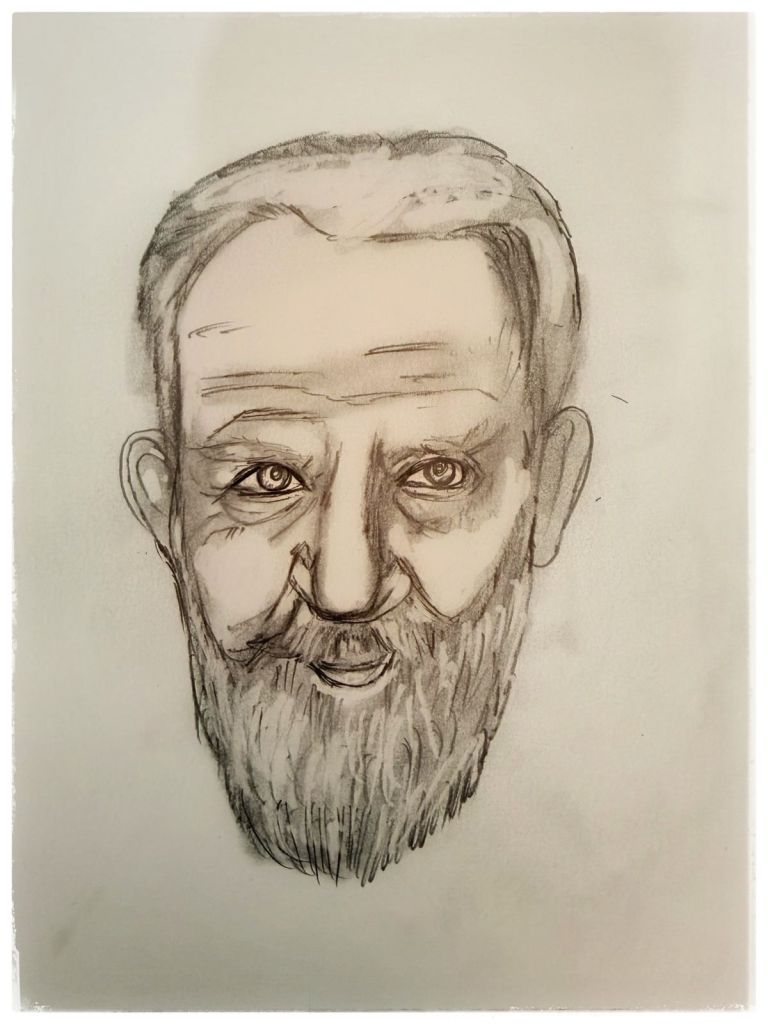
Now if you are sad whey do they say DO NOT BE BLUE is for another blog! By the way if you are blue then you can read about George Bernard Shaw! His interaction with Churchill resulted in a joke which cracked me up much in my school days! Unfortunately only I was laughing since no one else got the joke!
The joke was
Alfred Hitchcock (referring to Shaw’s thin physique): “One look at you, Mr. Shaw, and I know there’s a famine in the land.” George Bernard Shaw (looking at the overweight director): “One look at you, Mr. Hitchcock, and I know who caused it.”!
There was another famous interaction between G B Shaw and Churchill this time!
The famous, exchange between George Bernard Shaw and Winston Churchill involves a theater ticket invitation. Shaw reportedly wired: “Have reserved two tickets for my first night. Come and bring a friend, if you have one”. Churchill famously retorted: “Impossible to come to first night. Will come to second night, if you have one”!
So if you are in the BLUE read the jokes! And if you did not understand them then laugh at me instead!
 ramadocblog