Two is better!

अनन्तविजयं राजा कुन्तीपुत्रो युधिष्ठिरः । नकुलः सहदेवश्च सुघोषमणिपुष्पकौ ।

Do you know the most precious and in demand people for any research in the world?

They also form amazing storylines and great movie plots!

If they are more than two then it is the best thing ever which happens to a research team!

The book called Behave by Robert Sapolsky also tells us how these people are like the literal lottery for researchers!

Now now, do not get impatient!

The best people for any research are TWINS!

This is because twins have the same genetic built if they are monozygotic and even if they are dizygotic ones; they share at least 50 percent of the genetic trait!

So  if you want to study the effect of environments then you have two or more of the same human in different situations! The way they react is the perfect fodder for proper research!

Some of the most famous tests and research studies done on twins include the landmark Minnesota Study of Twins Reared Apart and the unique NASA Twins Study with the Kelly brothers.

The Minnesota Study of Twins Reared Apart (MISTRA): Conducted from 1979 to 1990 by Thomas J. Bouchard Jr. and colleagues at the University of Minnesota, this landmark study involved over 100 pairs of separated identical and fraternal twins from around the world!

The study assessed the relative contributions of genetics (nature) and environment (nurture) to a wide range of traits, including personality, intelligence (IQ), personal interests, and even mannerisms.

They found that identical twins reared apart showed remarkable similarities in personality, behavior, and IQ, suggesting a strong genetic influence on these traits. The famous “Jim twins” (James Lewis and James Springer) were a prominent example, sharing numerous coincidental life details!

In fact the result of this study are constantly seen in movies and stories where twins separated at birth and reared by different parents and environment may have some differences but share some common ‘quirks’ or ‘habits’!

The NASA Twins Study: A unique 2015-2016 study that compared the physical and mental changes of astronaut Scott Kelly during a year in space with his identical twin brother Mark Kelly, who remained on Earth as a control subject!

Now you know TED talk! Do you know TED study!?

The TED study or Twins Early Development Study is one of the largest ongoing twin studies in the world, based in the UK, following more than 13,000 twin families since the mid-1990s!

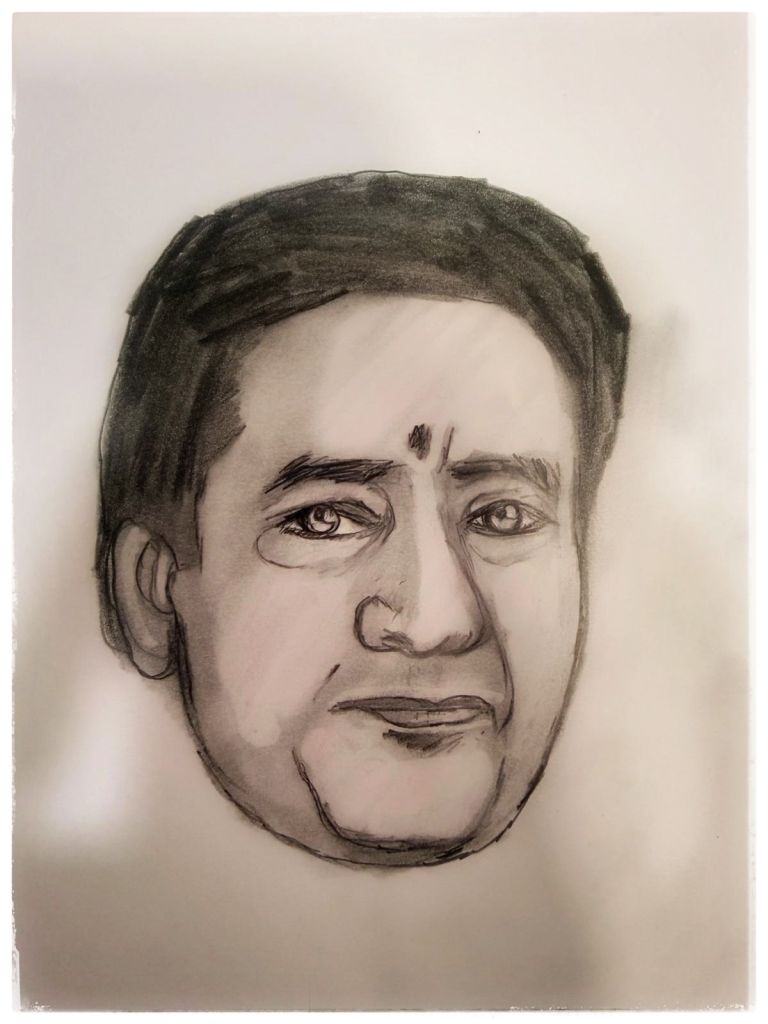
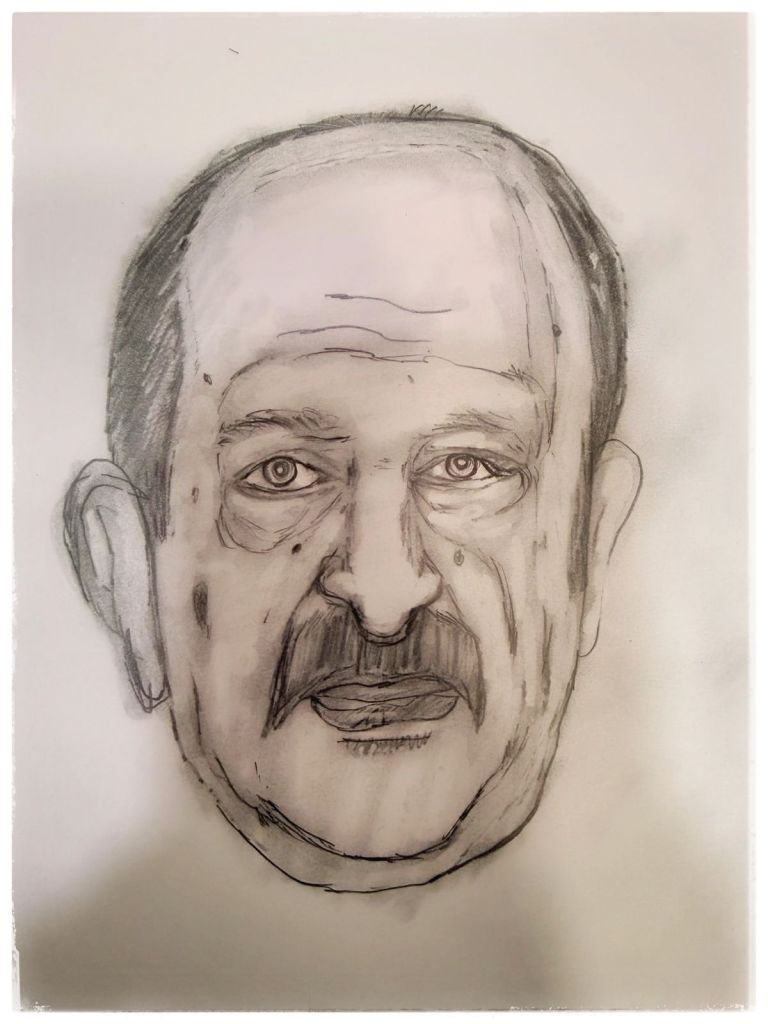
Be happy you are not a twin! Sometimes only one is enough! Reasons do not matter! Like the great Humanist Ramaswamy Venkataraman!

Now stop remembering stories of the evil twins and sleep!

SHubh ratri!

What’s your scale!??

अहं सर्वस्य प्रभवो मत्तः सर्वं प्रवर्तते

What is common between Acidity, sound and Earthquake!?

It has been said that the simplest explanation is the best!

Even in neurology which is actually a complex science, Neurologists always have to explain the lesions in the simplest possible way! So all the signs of weakness and the ‘palsies’ must be explained by the least number of lesions in the brain!

But the answer to the above three is not simple!
In fact even though mathematics was my favorite subject in school; this was one topic which I used to loath since I hardly understood much!

The answer is that acidity, sound and Earthquake are all measured in a scale which is LOGARITHMIC!

A logarithmic scale is a nonlinear scale that compresses a wide range of values into a more manageable and compact form by plotting them on a scale where each unit of distance represents a multiplication by a constant factor, not an equal addition.

Unlike a linear scale where the distance between 1 and 2 is the same as between 99 and 100, on a logarithmic scale, the distance between 1 and 10 is the same as between 10 and 100.

There are different ways on how it works like

While in a linear scale, each interval is the same size (e.g., adding 10 each time: 10, 20, 30). In a logarithmic scale however, each interval is a multiplication by the base (typically base 10). This means the values are spaced exponentially (e.g., 10, 100, 1000, 10000).

A logarithmic scale can make data that is widely spread out easier to visualize on a single graph, showing both large and small values more clearly.

So even in our practice as physicians or Otologists, we use this scale.

The decibel scale uses a logarithmic scale to represent the vast range of sound intensities our ears can perceive. A 10 dB increase is 10 times the intensity, a 20 dB increase is 100 times, and so on! So when we give an average loss in terms of Log scale it is not in terms of percentage which is a common misconception!

Even your standard scale of Acidity or the pH scale is logarithmic; a change of one unit represents a tenfold change in acidity! Imagine that! The difference between a pH of 6 and 7 is not so little!

Of course there are many other places where you use the Log scale like finance and sales but the one which is probably most famous around the world would be the one to measure Earthquakes! Or the  Richter scale!

The Richter scale is logarithmic, so an earthquake with a magnitude of 6.0 is 10 times more intense than a magnitude 5.0 earthquake, and 100 times more intense than a magnitude 4!

Do you understand how the small increment in the scale is actually a huge exponential leap? That is Log for you!

A huge leap also from chocolate boy to a serious guy is Jimmy Sheirgill!

Shubh ratri…

Don’t worry about results…

“कर्मण्येवाधिकारस्ते मा फलेषु कदाचन”

If you read non fictions and self help books then you would have certainly heard about the Marshmallow test!

In the recent times I have come across two novels which have mentioned the test and drawn their own interpretations!

The test is mentioned in Robert Sapolsky’s book Behave and In the book called Algorithms to live by; The computer science of Human Decisions by Brian Christian and Tom Griffiths.

First get to know about the test.

Before you read about the test, know that the Human being is the ONLY species in the UNIVERSE who can reject an immediate smaller reward in anticipation of a bigger later reward!

The marshmallow test was a psychological study on delayed gratification led by psychologist Walter Mischel in the late 1960s and early 1970s at Stanford University. The experiment explored children’s ability to exercise self-control and resist an immediate reward for a larger one later.

In the classic procedure, a preschool-aged child was brought into a room with a treat (often a marshmallow, but sometimes a cookie or pretzel stick) placed on a table in front of them.

The researcher told the child they could eat the single treat immediately.

But if the child could wait for about 15 minutes until the researcher returned to the room, they would receive a second treat, for a total of two!

The child could signal the researcher back at any time by ringing a bell, but they would then only receive the single, immediate reward.

The researchers observed the children’s various strategies for resisting temptation, such as covering their eyes, singing, talking to themselves, or inventing games.

The beauty of the study is the long term follow up! This the key to a great study!

Initial follow-up studies, conducted years later, found strong correlations between the children’s ability to delay gratification and positive life outcomes. Children who waited longer tended to have:

Higher SAT scores and better academic performance.
Lower body mass indexes (BMI) and fewer substance abuse issues in adulthood.
Better social skills and greater ability to manage stress.
These findings led to the popular belief that self-control was a critical, stable trait for lifelong success that could even be taught.

Recently though more research, using larger and more diverse samples and employing stricter statistical analyses, has challenged the original study’s strong conclusions.

A major 2018 replication found that a child’s socioeconomic background and home environment were more significant predictors of later life outcomes than their performance on the marshmallow test itself.

Children from less reliable or lower-income environments may rationally choose the immediate marshmallow because experience has taught them that promises for future rewards are often broken!

Other studies have demonstrated that children’s ability to wait is heavily influenced by their trust in the experimenter to deliver the second reward!

A 2020 study co-authored by Mischel and other researchers found that the test’s performance does not reliably predict adult outcomes when controlling for other factors like the child’s general self-regulation skills across their life.

In conclusion, while the ability to delay gratification remains important, modern science suggests it is a flexible skill influenced by environment and trust, rather than a fixed personality trait that determines destiny

Two other important findings are also concluded in the novels mentioned above; The first one is that thinking about the reward actually increases the frustration and actually delays the gratification! So it is opined that the best results are obtained when you do not think about the reward! The results seemed to indicate that not thinking about a reward enhances the ability to delay gratification, rather than focusing attention on the future reward!

While Robert Sapolsky states that the test is a small piece of a much larger puzzle. Sapolsky argues that no single gene, brain region, or experience can fully explain any given behavior. Instead, behavior arises from a combination of influences, from our genes and hormones to our environment and evolutionary history!

So practically all you can do is, do your work or duty and not worry about the result! 

Like how virus aka boman says! So what!

Shubh ratri…

Karmanye va

“कर्मण्येवाधिकारस्ते मा फलेषु कदाचन”

If you read non fictions and self help books then you would have certainly heard about the Marshmallow test!

In the recent times I have come across two novels which have mentioned the test and drawn their own interpretations!

The test is mentioned in Robert Sapolsky’s book Behave and In the book called Algorithms to live by; The computer science of Human Decisions by Brian Christian and Tom Griffiths.

First get to know about the test.

Before you read about the test, know that the Human being is the ONLY species in the UNIVERSE who can reject an immediate smaller reward in anticipation of a bigger later reward!

The marshmallow test was a psychological study on delayed gratification led by psychologist Walter Mischel in the late 1960s and early 1970s at Stanford University. The experiment explored children’s ability to exercise self-control and resist an immediate reward for a larger one later.

In the classic procedure, a preschool-aged child was brought into a room with a treat (often a marshmallow, but sometimes a cookie or pretzel stick) placed on a table in front of them.

The researcher told the child they could eat the single treat immediately.

But if the child could wait for about 15 minutes until the researcher returned to the room, they would receive a second treat, for a total of two!

The child could signal the researcher back at any time by ringing a bell, but they would then only receive the single, immediate reward.

The researchers observed the children’s various strategies for resisting temptation, such as covering their eyes, singing, talking to themselves, or inventing games.

The beauty of the study is the long term follow up! This the key to a great study!

Initial follow-up studies, conducted years later, found strong correlations between the children’s ability to delay gratification and positive life outcomes. Children who waited longer tended to have:

Higher SAT scores and better academic performance.
Lower body mass indexes (BMI) and fewer substance abuse issues in adulthood.
Better social skills and greater ability to manage stress.
These findings led to the popular belief that self-control was a critical, stable trait for lifelong success that could even be taught.

Recently though more research, using larger and more diverse samples and employing stricter statistical analyses, has challenged the original study’s strong conclusions.

A major 2018 replication found that a child’s socioeconomic background and home environment were more significant predictors of later life outcomes than their performance on the marshmallow test itself.

Children from less reliable or lower-income environments may rationally choose the immediate marshmallow because experience has taught them that promises for future rewards are often broken!

Other studies have demonstrated that children’s ability to wait is heavily influenced by their trust in the experimenter to deliver the second reward!

A 2020 study co-authored by Mischel and other researchers found that the test’s performance does not reliably predict adult outcomes when controlling for other factors like the child’s general self-regulation skills across their life.

In conclusion, while the ability to delay gratification remains important, modern science suggests it is a flexible skill influenced by environment and trust, rather than a fixed personality trait that determines destiny

Two other important findings are also concluded in the novels mentioned above; The first one is that thinking about the reward actually increases the frustration and actually delays the gratification! So it is opined that the best results are obtained when you do not think about the reward! The results seemed to indicate that not thinking about a reward enhances the ability to delay gratification, rather than focusing attention on the future reward!

While Robert Sapolsky states that the test is a small piece of a much larger puzzle. Sapolsky argues that no single gene, brain region, or experience can fully explain any given behavior. Instead, behavior arises from a combination of influences, from our genes and hormones to our environment and evolutionary history!

So practically all you can do is, do your work or duty and not worry about the result! 

Like how virus aka boman says! So what!

Shubh ratri…

Quit horsing around…

The novel called Horse, the Wheel, and Language by David Anthony talks about language and culture and of course linguistics!

Did you know that the average horse which is an amazingly majestic animal was actually a source of food!

In fact the domestication of the horse was a pivotal technological and social innovation that enabled the rapid mobility and expansion of Proto-Indo-European (PIE) speakers from the Pontic-Caspian steppe, thereby spreading their language and transforming ancient civilizations!

Anthony’s work focuses heavily on archaeological evidence, particularly in horses’ teeth, to date and trace the origins of horseback riding and its societal impact.

Even in the Ithihasa Mahabharata; it has been told that Horse riding is a pivotal strength! Among the pandavas; Nakula was considered an expert in horse breeding and training, and during the Pandavas’ thirteenth year of incognito exile, he disguised himself as a horse trainer and stable hand named Granthika in the kingdom of Virata. His skill was so great that it was rumored he could ride a horse at full speed through a rain shower without a single drop of water touching him!

This increased Domestication of the horse greatly increased the mobility of steppe herding societies, allowing them to manage larger herds and cover vast distances!

This increased mobility, combined with the invention of the wheeled vehicle (ox wagon and later the warrior’s chariot), provided a significant advantage in both resource gathering and warfare. It facilitated the movement of people and ideas, turning the steppes into a major corridor for trade and cultural exchange!

The horse was also a status of wealth (even now it is!). This form of “mobile wealth,” led to new social structures and hierarchies, including patron-client relationships and increased potential for conflict over grazing land!

Ultimately, the horse was not just a tool but a catalyst for the profound cultural and linguistic changes that shaped much of the modern world!

So if you want to be known as both modern and tough ‘man’; horse riding is a requisite! But my trainer at our horse riding club in Secunderabad though used to make me ride a mule most of the time and one fine day decided it is time to get on a real horse! He thought it was best to quit horsing around and get ‘evolved’!


Evolved also are singers! Like Udit Narayan!

Shubh ratri…

Locksports!


The Midnight Lock is a novel written by one of my favorite authors; Jeffery Deaver (Not Archer!; though I actually bought my first Jeff Deaver novel called The Blue Nowhere thinking it was written by Archer! which turned out to a pleasant mistake!)

So do you know what are Tension wrench, Hook Pick, Ball Pick and Rake pick to name a few!

Or do you know who is a Locksmith? Or what is a Locksport?

Well just like you have ethical Hackers (yes! they Hack for ethical reasons!); there are a group of people who break locks internally or pick locks officially or ethically also! That profession is called Locksmithing!

In the novel though, the Locksmith was not ‘ethical’!

So Lock picking of course is the practice of unlocking a lock by manipulating the components of the lock device without the original key.

Although lock-picking is usually associated with criminal intent, it is an essential skill for the legitimate profession of locksmithing, and is also pursued by law-abiding citizens as a useful skill to learn, or simply as a hobby (locksport!).

In fact there are competitions held where complicated locks are presented to the professional Lock Pickers and they are timed! Like any sports, you are allowed to use your equipment or tools and points are awarded if you use as minimum tools as possible though most points are for the time!

In some countries, such as Japan, lock-picking tools are illegal for most people to possess, but in many others, they are available and legal to own as long as there is no intent to use them for criminal purposes.

One of the cool tools which I used to love to listen was the skeleton key!

Now like everyone else, I used to think that it was made up of the bones of a skeleton which could change the shape according to the lock!

In reality though, the warded pick, also known as a skeleton key, is used for opening warded locks. It is generally made to conform to a generalized key shape relatively simpler than the actual key used to open the lock; this simpler shape allows for internal manipulations!

The history of lock development, particularly modern locks, is largely one of an arms race between lock pickers and lock inventors. Just like the war between the creators of a Virus and the anti virus!

Today’s anti-picking methods in standard pin tumbler locks include the use of sideward which obstruct the keyway and “security pins” or “carnival pins”.

These are shaped like a spool, mushroom, or barrel, with the effect that they feel as though they have set when in fact they have not.
Security pins can also have the effect of resetting other pins when adjusted.

For any Lock Picker though the challenge is to pick the most secure locks in the world which include Fort Knox!

If by any chance, you want to break into Fort Knox, you need to pass through several obstacles and not just locks! It is like a hacker’s challenge to break into a goverment site! Your expertise is to break without being caught apparently to show your ‘skill’! Of course all of these are illegal!

You can of course learn Lock Picking to ‘pick’ a lock in emergencies with proper permission and more importantly ‘good intent’ though!

Good intent and content is also songs by Vani Jairam…

Shubh ratri…

Behave like Sandeep…

In Robert Sapolsky’s book Behave; he has tried to explain why we behave the way we do!

One interesting observation is that when you are brave then you are truthful!

There is a famous joke on this!

One man saw another man drowning and the next moment he jumped in to save him!

After pulling him ashore that man who had saved ran to the crowd and started searching! Everyone was congratulating him and all he said was, “That is all ok! I just want to know who pushed me!”

This is very true! Apparently in many cases where you see such acts of bravery is performed; when you ask them, they would in all honesty say that they were not thinking at all! They just did it!

Bravery makes you truthful! Your filters are lost for a while and you simply become both Humane and human immeditely after an act of bravery!

Which is probably why you love superheroes! They are not only brave, they are also truthful!

The book delves into the complex question of why humans do the things they do, exploring the myriad factors that influence our actions, from biology and genetics to culture and environment, across various timescales!

Sapolsky dissects how different brain regions, hormones, and biological processes influence behavior, from a second before an action to thousands of years of evolution.

The book actually examines the roots of goodness, cooperation, empathy, and altruism.

Sapolsky discusses instances of extraordinary bravery and compassion that defy simple explanation. He tells us how an interplay of different regions of the brain make you what you are! In that he tells about the Pre frontal cortex which is probably our emotional accelerator or brake according to situation.

In the instance of bravery, there are times you do not think! You just do! You may even later realize that what you did was highly risky and may not have been your plan! Plus the brain removes all filters immediately after the act so that you can be as truthful as possible!

Of course some people are really brave and truthful always! Like Sandeep Unnikrishnan…
We are proud of you…


Shubh ratri…

Buzz da backslide!

Do you know what is ‘the buzz’?  or how about ‘the backslide’?

It is not a technical term or a new ride in the Disney world!

Actually both of these are dance moves!

In fact you will know the moves since it was popularized and is now firmly associated with one performer!

Suspense of the dance move is a ‘thriller’!

Yes! The performer is Michael Jackson and the dance move is now known as the Moonwalk!

Now while he did perfect and make it more popular, he actually did not invent it!

He learned it from street dancers and perfected it for his iconic 1983 performance at the Motown 25 television special!

The move, originally known as “the backslide” or “the buzz,” existed long before Michael Jackson performed it!

In fact in the 1930s, Jazz bandleader Cab Calloway performed similar sliding steps and called it “The Buzz”!

Later on in 1955; Tap dancer Bill Bailey performed a version of the move on film while exiting a stage!

Even later on The “backslide” was a common move among street dancers and performers on shows like Soul Train in the 1980s!

Finally Jackson was introduced to the move by dancers and singers, with sources citing Jeffrey Daniel of the R&B group Shalamar and street dancers Geron “Caszper” Canidate and Cooley as his teachers!

Jackson never claimed to have invented the move, stating in a 1993 that he learned it from “these beautiful children, these black kids who live in the ghetto” and that he simply “enhanced the dance”.

He of course refined the move into the smooth, seemingly effortless illusion of walking backward that the world now recognizes!

His debut of the move during “Billie Jean” at Motown 25 brought it to a massive global audience, making it his signature and one of pop culture’s most iconic dance steps! It takes practice and a good deal of footwork to get it done! I would recommend socks and a clean floor!

Music and dance can go amazing with cool lyrics and deep poetry!
The prototype of such poetry is Harivansh Rai Bachchan…

Shubh ratri…

To kill a mockingbird…

Harper Lee’s To Kill a Mockingbird is maybe one of the top novels for many ardent readers! The theme of racism and the court scenes still gives you goosebumps!

After his argument when Atticus comes out of the court, all those who were watching get up as a mark of extreme respect! Nothing is told and no words are spoken but even if you are watching the movie or reading the novel you may feel like getting up and giving him a big salute!

Now there are so many such incidents which are notable in the novel but my favorite one is how an innocent girls innocent and true remarks dispels a mob! There was a video circulated recently which may or may not be true where a Robber goes to rob a store and take the money after hitting the owner! Then the owner’s daughter innocently gives him her candy! The thief then suddenly changes into a human being! Returns the money and leaves!

The same thing happens in the novel!

The young girl, Scout Finch, protects her father, Atticus, and Tom Robinson from a lynch mob through her innocent conversation and personal connection with one of the men, Walter Cunningham.

Unaware of the gravity of the situation, Scout runs into the middle of the tense semi-circle of men surrounding her father outside the jailhouse! In fact if you read the novel or watch the movie, you will be definitely on edge!

The whole sequence of mob dispersal is like a sequence which could be used to dispel a mob sometimes!

It starts with recognizing a Familiar Face! Scout searches the unfamiliar faces in the mob and recognizes Mr. Walter Cunningham Sr., the father of her classmate!

She then engages in Innocent conversation! Scout strikes up a friendly, one-sided conversation with Mr. Cunningham about his legal “entailment” and his son, Walter. She mentions that she goes to school with his son and asks him to “say hey” to Walter for her!

This whole scene then Humanizes the Situation!

This personal interaction forces Mr. Cunningham to see Atticus and the situation not as an anonymous conflict, but within the context of their shared community and personal relationships. Her innocence reminds him of his own family and responsibilities as a father!


By addressing Mr. Cunningham as an individual rather than a faceless member of a hostile group, Scout breaks the mob’s collective anonymity and hostility. This breaks the Mob Mentality!

In fact when confronted by a guileless child, Mr. Cunningham becomes embarrassed and ashamed of his violent intentions. He eventually tells the other men to leave, and the entire mob disperses peacefully.

Scout’s actions demonstrate the power of empathy and how seeing others as individuals can defuse even the most volatile situation!

Of course it may not work all the time!

Atticus also tells that it’s a sin to kill a mockingbird because they are harmless and only bring good things to the world by singing. He explains that while they can shoot other birds like blue jays (I do not agree with this also though but different time period so let it go!), they should protect mockingbirds since they do not harm anyone, and their only purpose is to make music!

Those statements now have become legendary! A true Legend also was shri
Hemant Kamlakar Karkare…

Your bravery will inspire many!

Shubh ratri…

Be alert…


Do you know who were the anti tank dogs?

Of course the description is in the name but they were more famous as the dogs you know! The Pavlov’s dogs!

Everyone knows or would have at least heard about the Pavlov’s dogs!

The experiment is a classic one in the field of classic conditioning!

The Pavlov’s dog and bell experiment involved conditioning dogs to associate the sound of a bell with food, causing them to salivate at the sound alone.

This process, known as classical conditioning, demonstrated that a neutral stimulus (the bell) could become a conditioned stimulus after being repeatedly paired with an unconditioned stimulus (food). The experiment showed how behaviors can be learned through association!

But the research did not end there! They were planned for military!

The Soviet military, faced with a shortage of anti-tank weaponry, devised a program to turn dogs into mobile mines!

The dogs were intentionally kept hungry and then trained to associate the underside of a tank with food. Their food bowls were placed under stationary tanks.

Over time, the training was made more realistic by having the tanks’ engines running and adding battle-related distractions like sporadic gunfire, conditioning the dogs to run under the vehicles even in chaotic environments!

The goal was to create a conditioned response where a dog would instinctively run under any enemy tank it encountered on the battlefield in search of food!

Once deployed, each dog was fitted with a harness carrying explosives and a wooden lever that would trigger the detonation upon contact with the tank’s underbelly. This made the mission a one-way, suicide operation for the dog!

It was a dog’s life indeed!

Luckily for them the program was a big failure!

The dogs were trained in sterile conditions and often panicked under actual battlefield fire!

The dogs could not differentiate between friend and enemy tanks!
The Soviet forces primarily used diesel-powered tanks for training, while the German tanks they encountered in battle were mainly petrol-driven. The dogs’ sensitive noses often led them back to friendly Soviet tanks, where the explosives detonated, causing casualties among their own side!

Also the German troops quickly learned of the tactic and issued orders to shoot any dog on the battlefield, further reducing the program’s effectiveness!

Now you know why dogs bark when they hear any bell!

Of course that means they are alert always! Alert also was the legendary police Tukaram Omble AC who gave his life but got the terrorist…

You will always be a hero sir…

Shubh ratri…