Shield like Google!

“The whisper in the wind gives it away
some secrets are not there to stay!
You may not say anything ’cause you shy!
But I know it all! Don’t you cry!”

For years this gland used to come in the way of surgeon! They used to feel that this shield like organ has no function whatsoever! So much so that the most renowned surgeon of the time, Kocher told that, ““Surgeons had simply assumed that the gland has no function whatever…”;!

Now of course both ENT and Other surgeons fight to handle this gland!

Later on of course it was found to be involved in almost all aspects of metabolism in the body! It even turned out to be responsible for multiple chief functions in the body such as fertility and mental alertness!

Read on about the gland which was thought to be just another appendix! (By the way, maybe some time in the future some one may come up with a big revelation that even appendix is important!)…

This description of a malady of this gland has not been added to the annals of medicine and history!

It is by Sir William Withey Gull in 1873 and is produced verbatim below;

“after the cessation of the catamenial period, became insensibly more and more languid, with general increase of bulk… Her face altering from oval to round, …the tongue broad and thick, voice guttural, and the pronunciation as if the tongue were too large for the mouth (cretinoid)… In the cretinoid condition in adults which I have seen, the gland was not enlarged. …

There had been a distinct change in the mental state. The mind, which had previously been active and inquisitive, assumed a gentle, placid indifference, corresponding to the muscular languor, but the intellect was unimpaired… The change in the skin is remarkable. The texture being peculiarly smooth and fine, and the complexion fair, at a first hasty glance there might be supposed to be a general slight oedema of it… The beautiful delicate rose‐purple tint on the cheek is entirely different from what one sees in the bloated face of renal anasarca.”!

Yes! He was describing a condition which was previously thought to be limited to skin and hence called Myxoedema! But essentially it was reduced function of one of the most important glands in the body! The Thyroid!

Myxedema was first treated successfully in 1891 when George Redmayne Murray diagnosed a 46-year-old woman with the disease. He prescribed an extract from sheep thyroid. The patient improved significantly within a few weeks and lived another 28 years while taking the sheep thyroid extract!

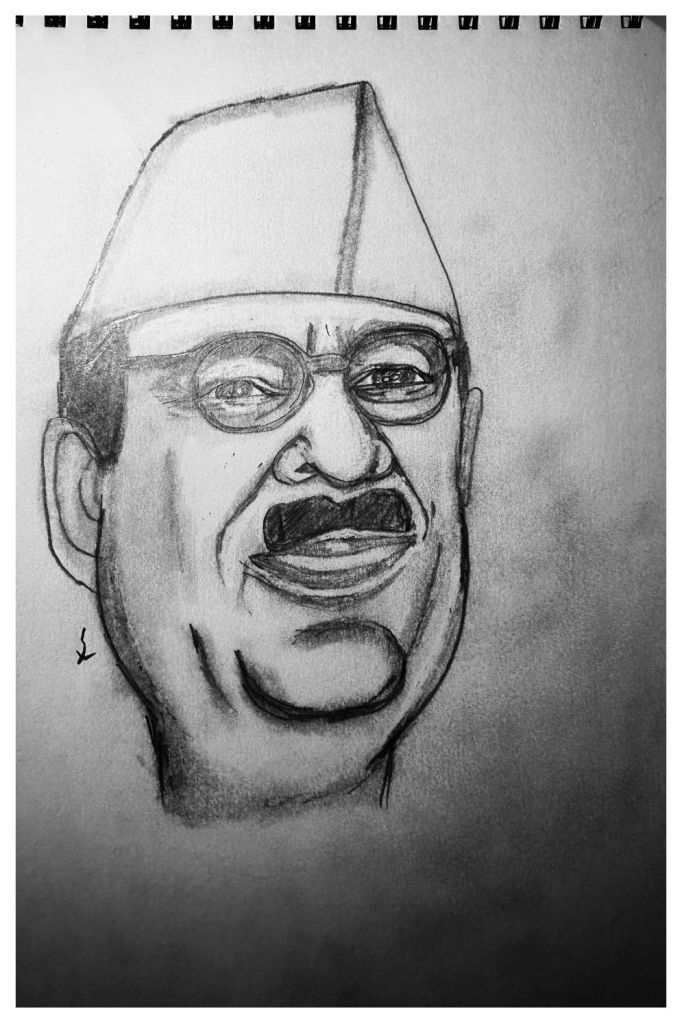
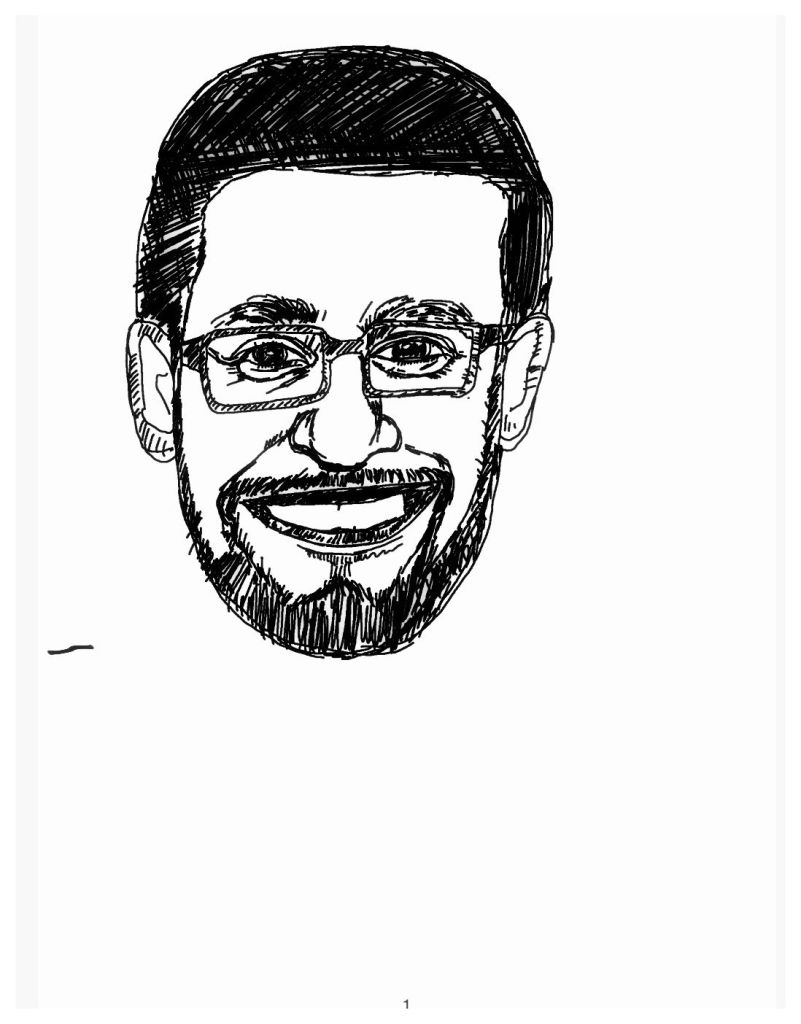
Later of course it was found to be GRAVEly important! (Those who know thyroid will get the pun; others can GOOGLE it!). Thinking of Google (I think we are always thinking of Google!); reminds me of Birthday celebrity, our own Pichai Sundararajan or Sundar Pichai! A quick scribe due to limited time!

Now search for How to fall asleep in Google and sleep!
Shubh Ratri!
MarBellous!

“He twist his fingers and bends his thumb!

He stretches them far till they feel numb! 

Then like a trigger it goes and gets a hit!

It’s not war, just a game of marble you twit!”

If you were a student of the Kendriya Vidyalaya especially in the north then you would have definitely played this game which is one of the oldest games in the world!

Now you can use many materials to play this game but the most preferred and famous is the one which you play using these small balls made of glass! 

Boys used to love playing with these especially because of the double entendre!

Yes! Marbles!

When we were young(er!) we had a big supply! There were guys who had marbles in big bottles! They were the champions who had won countless games of marbles!

I was fascinated by the little glass miracles! It is a fact that no two marbles may be exactly the same! The best of course were the slightly bigger ones and one of the most prized possessions were the ones which have got cracks inside but the crack is not reached the surface which is still round and smooth!

These cracked marbles used to have such beautiful designs especially when you place it towards the sunlight! Blue marbles were the common ones so other colours were so much in demand for being rare!

The common ones were actually dirt cheap but the real prize of a marble player were the marbles he or she had won by his game!

There were those who used to use their fingers as mini catapults to propel marbles and shoot! It was like watching a live T20 match since in the limited time of lunch break we had to finish our lunch, arrange the game, win a few and rush before the bell rings again! It was literally a rush and race against time!

It has been said as one of the world’s oldest games!

The game is played with colored balls that are about 5/8 inch (1.6 centimeters) in diameter. Marbles may be made of clay, glass, plastic, or agate. Particular marbles may be known for their use (shooters); their original material (alleys were once made of alabaster); or their appearance (cloudies and cat’s eyes)!

The object of marble games is to roll, throw, or drop against an opponent’s marbles—often to knock them out of a prescribed area. If the game is played for fair, the winner is the one who shoots the most marbles out of the circle. In a game for keeps, each player is allowed to keep all the marbles won!

Of course we had different versions of making use of the marble and since I was really poor in the actual game, we used to play the game on board with the marble! 

Apparently there are different version all over the world! 

In taw, ringtaw, or ringer, players attempt to shoot marbles (sometimes arranged in a cross) out of a ring as much as 6 to 10 feet (2 to 3 meters) in diameter. In this game the shooter, which is held between the index finger and the outside of the thumb, is propelled forward by snapping the thumb. If knuckling is called for, at least one knuckle of the shooting hand must touch the ground!

In a game known as hit and span, players try to shoot or roll marbles either against an opponent’s marbles or a hand’s span from them. In various pot games (a pot is a small hole in the ground), including moshie, players try to pitch their own marbles or knock opponents’ marbles into a hole! This is so similar to the ones we used to play! Our own version of the Golf!

In bridgeboard, or nine holes, a board with several numbered arches is set up, and players try to shoot their marbles through the arches. Apparently Local, regional, and national tournaments are held in many countries on this! 

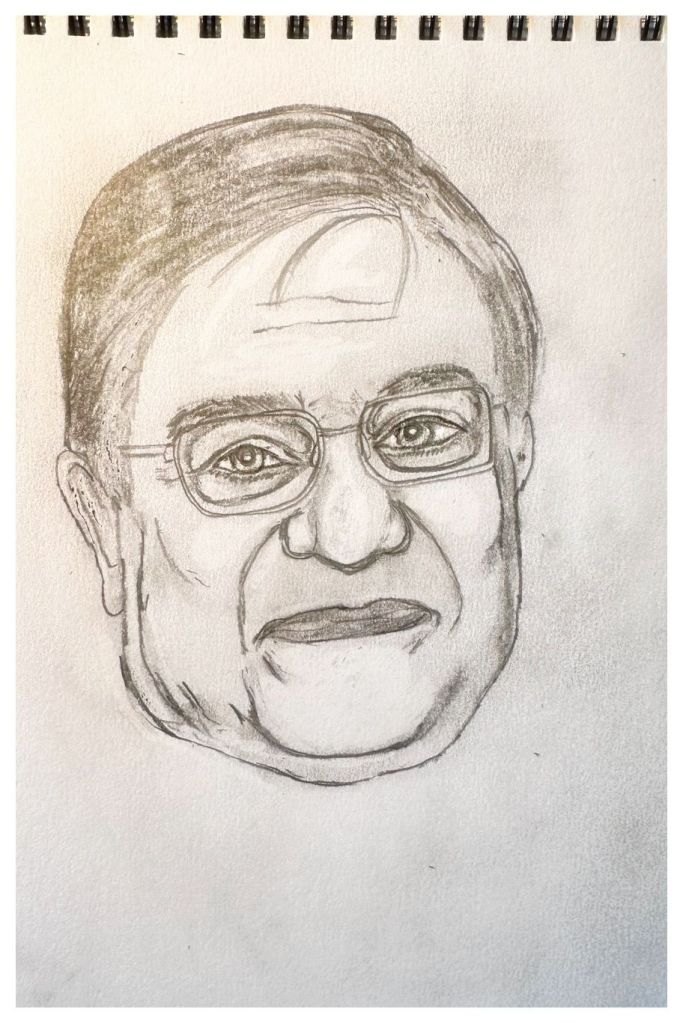
Our marble playing though was limited to the lunch break in the KV! Another break activity was discussing movies! There was one movie which was very popular among girls which had Vijayshanthi! The movie was based on the birthday celebrity, a former tennis player who became the first woman in India to join the officer ranks of the Indian Police Service. The movie was in telugu called Karthavyam and was based on the life and times of Kiran Bedi who has been an inspiration to many women to join the IPS! 

A quick kindle scribe sketch without any shading or erasing! 

Now stop playing with marbles in your daydreams and sleep!

Shubh ratri!

Got a cold? Well laugh it away!

“The poor bloke was saying for all to hear!
I had a malady and but no fear!
The doc cured me for a while!
But the meds were useless! What worked was his smile!”

One of the most common good compliments a patient can tell a doctor is. “when I speak to you and see your cheerful and smiling face or just your positive spirit makes half of my troubles to simply disappear!”

Of course this does not happen many times since the doctor is also human and affected by the things around him or her! It is rare to find a doctor who is always smiling or cheerful and if you do then do check if he or she is real or not!
Nevertheless it has been found that just a pleasant demeanour is what is required most of the time for the patient to be happy!

It has been said that the mere act of smiling can make a huge difference in your state of mind! Countless books on management and etiquette have even told sales people who make calls to smile when they make the call! Even if the person on the other end of the call cannot see you, the effect of the smile is seen!

That brings us to laughter therapy!

Apparently it was King Solomon who gave us one of the earliest recorded accounts regarding the healing power of humour and laughter!

It has also been seen that the ancient Greek physicians prescribed for their patients to visit the hall of comedians. They would send their patients to the theatre to be entertained as part of the healing process!

Early Native Americans had clowns who worked with Witch Doctors. They too realized the powerful effects of laughter and humor in healing, The 3rd most important person in the tribe was the clown! Now do not ask about who were the first two!

In the 1300’s, surgeon Henri de Mondeville reportedly told jokes to his patients in the recovery room! Of course he did that only when the surgery was successful!

We have also seen in many great civilisations like even in Bharat, court Jesters like Tenali Raman (Raman is what people call me many times but I am not that funny!) were hired to relieve the royalty’s stress from their governing duties! They used humour to give wisdom and many times their jokes were possible advice and real opinions!

In the 1600’s educator Richard Mulcater recommended laughter for those suffering from head colds!

However, the most significant recording of the benefits of humour and laughter came from Norman Cousins in his book ‘Anatomy of an illness.’
In 1964, Dr. Cousins was diagnosed with a crippling and extremely painful inflammation of his body, which doctors diagnosed as Anklyosing Spondilitis.

He checked himself out of the hospital, hired a nurse and moved into a hotel! Then he watched comedy movies such as Candid Camera, the Marx Brothers, Laurel and Hardy and many other comedy movies!

He later wrote. “I made the joyous discovery that 10 minute of genuine belly laughter had an anesthetic effect and would give me at least 2 hours of pain-free sleep.

He recovered from the condition and spent 20 years teaching about the merits of humour and laughter in healing!

Experts now agree, laughter is good for you. It boosts your immune system, it relieves pain, tension and stress, it stimulates the heart, lowers blood pressure and much more!

So practically Laughter therapy is a kind of cognitive-behavioral therapies that could make physical, psychological, and social relationships healthy, ultimately improving the quality of life.
Laughter therapy, as a non-pharmacological, alternative treatment, has a positive effect on the mental health and the immune system. In addition, laughter therapy does not require specialized preparations, such as suitable facilities and equipment, and it is easily accessible and acceptable.

Laughter decreases serum levels of cortisol, epinephrine, growth hormone, and 3,4-dihydrophenylacetic acid (a major dopamine catabolite), indicating a reversal of the stress response. Depression is a disease, where neurotransmitters in the brain, such as norepinephrine, dopamine, and serotonin, are reduced, and there is something wrong in the mood control circuit of the brain. Laughter can alter dopamine and serotonin activity. Furthermore, endorphins secreted by laughter can help when people are uncomfortable or in a depressed mood.

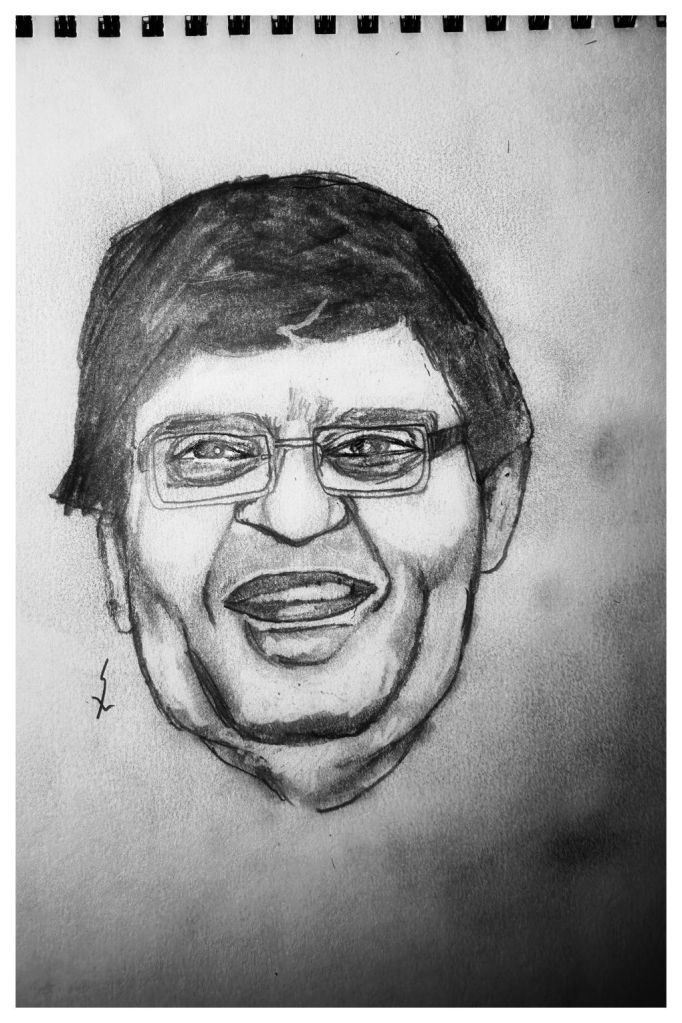
Mention laughter and you have to remember birthday celebrity Rajendra Nath Malhotra! In fact he was so famous that his character called Popatlal is now a trademark!

Now stop laughing without any reason lest someone mistakes you for being insane and sleep!
Shubh Ratri!

Under pressure!

“The graphite was black and dull

His twin the diamond was bright and shiny! 

But the sketch on the paper loved the former!

The latter was actually not too sharp and very whiny!”

So when you are a Harvard dropout you may feel disheartened! Add to this big failure you somehow get a great idea and start a new company! 

Then how about when the first company you started is a big failure! 

That is full stop for most but this guy went on to become one of the wealthiest dude in the world!

So apparently State and local governments frequently used to perform traffic surveys with a pneumatic road tube traffic counter some time before the tech was available or developed!

Rubber hoses were stretched across a road and wheels of passing vehicles create air pulses that are recorded by a roadside counter!

In the 1970s the counts were mechanically recorded on a roll of paper tape! The time and number of axles were punched as a 16-bit pattern into the paper tape! This was the way data used to be collected at that time!

Cities would hire private companies to translate the data into reports that traffic engineers could use to adjust traffic lights or improve roads! 

This guy who had just dropped out of Harvard his friend were previously high school students at Lakeside School in Seattle. 

The Lakeside Programmers Group got free computer time on various computers in exchange for writing computer programs!

These two thought they could process the traffic data cheaper and faster than the local companies by building a computer that could process all the traffic tapes using the Intel 8008 processor!

The goal was to sell such machines to states and local governments as a time and cost-saving tool!

The next step was to build a device to read the traffic tapes directly and eliminate the tedious manual work. The Intel 8008 microprocessor was announced in 1972 and they realized it could read the tapes and process the data. 

Finally with a couple of members they went to talk to Paul Gilbert, another electrical engineering student, who worked in the high-energy tracking laboratory. It was there that Paul Gilbert was approached by the duo to become a partner in this company called the Traf-O-Data!

That year Gilbert, piece by piece, wire-wrapped, soldered, and assembled from electrical components the working microcomputer!

The two original dudes wrote the software! 

Now there were many reasons why the company failed but the chief ones were that the company had done zero market research and lacked any real business model!

Finally the State of Washington offered free traffic processing services to cities, ending the need for private contractors, and all three principals moved on to other projects!

Of course big failures sometimes give more experience than even successes! The failure gave the duo lessons which they would use in their new venture which was of course a big success! The other dude is Allen while the Harvard dropout is a dude you may have heard about in passing!

A geeky guy called Bill Gates! 

The real contribution of Traf-O-Data was the experience that Gates and Allen gained, skills they used to write Altair BASIC for the MITS Altair 8800 computer! So it has been said that even though Traf-O-Data wasn’t a roaring success, it was seminal in preparing them to make Microsoft’s first product a couple of years later. They taught themselves to simulate how microprocessors work, using DEC computers, so they could develop software even before their machine was built! 

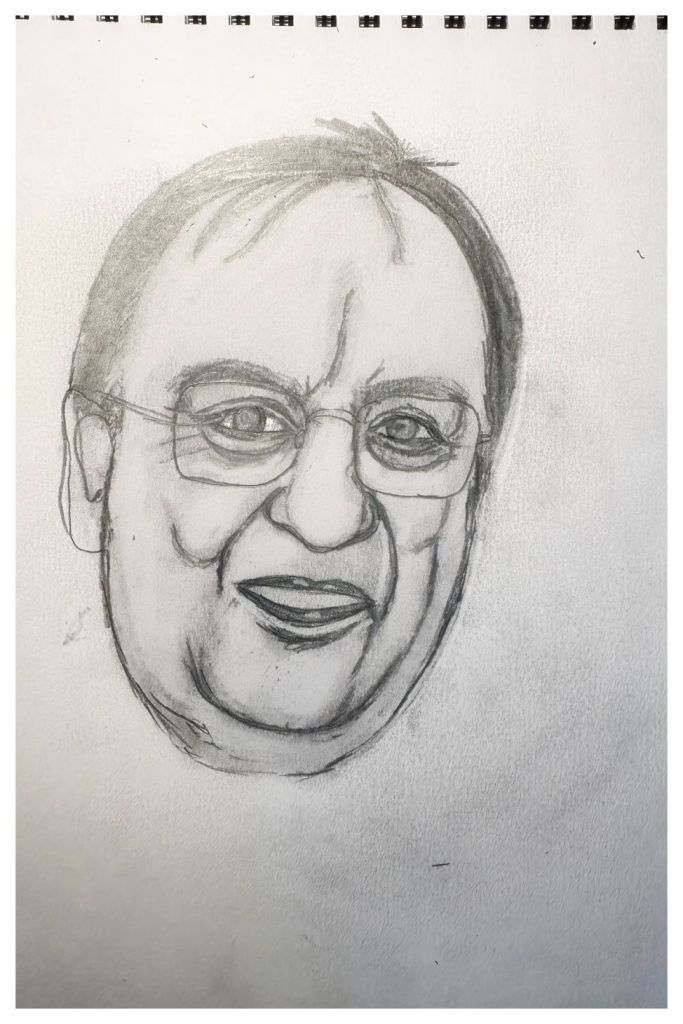
The earlier failures gave them valuable lessons for future success! There is a similar anecdote in birthday celebrity Ashok Saraf’s initial days as a comedian! Once when he was going to Kolhapur for the shooting of his first film, the policemen recognized him, however they made fun of the actor saying that their life is better than that of the actor. After this Ashok Saraf hid his face under the blanket! Later on of course he became a super star of Marathi and Hindi cinema!

Now turn off the computers and sleep!

Shubh ratri!

Once upon a time!

“He bawled like a baby and laughed for fun!

He had just heard a story and another one! 

The once upon a time now gave him laughter!

’cause he knew ’twas real life and no happy ever after!”

All of you would have heard the amazing story of Margarete von Waldeck! 

Yes, the name may not be familiar but as you read the story you will get glimpses of the tale you have been told and the truth which was kept on hold!

Read on!

So Margarete von Waldeck, was a 16th century Bavarian noblewoman. 

Margarete’s stepmother, despising her, sent the beauty, Her strict stepmother and father sent her first to her uncle’s house, and then to the court of Mary of Hungary, where she was pursued by Prince Philip. Alas, their relationship was doomed, as Philip was a Catholic and Margaretha a Lutheran!

His father, the king of Spain, opposing the romance, dispatched Spanish agents to murder Margarete. They surreptitiously poisoned her.

Margaretha’s letters to her father before her death speak of failing health and the Waldeck chronicles suggested that she had been poisoned, dying at the age of 21.

So, does the story ring a bell? Look in the mirror perhaps!

Yes! This is the original story of the snow white and the seven dwarfs!

Now where are the dwarfs you may ask!

Well Margarete grew up in Bad Wildungen, where her brother used small children to work his copper mine. Severely deformed because of the physical labor mining required, they were despairingly referred to as dwarfs!

The poison apple is also rooted in fact; an old man would offer tainted fruits to the workers, and other children he believed stole from him!

Another interpretation does not involve the apple, in this the Wicked Queen tries both to suffocate Snow White by giving her a lacy bodice and then tightening the laces and to stab her in the head with a poisoned comb. The Queen gets her comeuppance at her step-daughter’s wedding, when the prince orders the her to wear a pair of red-hot iron slippers and to dance in them until she drops dead!

Other versions in other countries have Snow White taking refuge with robbers rather than dwarfs, or staying in a haunted castle or a house on the seashore, rather than in a forest! Other variants include an enchanted dress, poisoned stockings or deadly flowers, rather than poisoned apple, or Snow White being called Ermellina and running away from home by riding an eagle who takes her away to a palace inhabited by fairies!

Other versions have evil older sisters, rather than a stepmother, and Ziricochel (as our heroine is called in this Italian version) taking refuge with the Moon, who also plays the role of the magic mirror! The sisters send an astrologer to kill Ziricochel, who, after several failed attempts, turns her into a statue using an enchanted shirt. All comes good in the end, however, when the prince’s sisters remove the shirt and revive Ziricochel!

So convinced are the residents of the mine’s location – the village of Bergfreiheit – that they now call the village Schneewittchendorf (Snow White village)! Like they say it takes a village to make things happen! Maybe this is the reason why they are called fairy tales since only in them you have the ‘Happily ever after!’. Real life of course no fairy tale like the life of birthday celebrity Sunil Dutt who had struggles with his son but still came out shining because of resilience and determination which is what required and not any Prince charming’s kiss!

Now read some fairy tale to your kids and sleep!

Shubh Ratri!

It’s always ding dong!

“The bell has to go ding dong!

Any other way is wrong!

The horse may not dance and hop!

But the Hooves always go clip clop!”

Any speaker of basic english (like most of us!) actually follow this rule without a thought! Now just think for yourself! When you describe the clock, you would always say tick tock! Have you ever said or hear anyone say tock tick?! How we always say Fiddle-faddle and never faddle fiddle?

There are numerous examples all over and we just follow it! It is always Chit Chat! No one usually says Chat chit! The big gorilla is King Kong and never Kong King! Unless of course you are master Yoda that is!

This rule is called the Ablaut reduplication!

READ ON!…

How does Ablaut reduplication work?

So, to explain the rule: if you have three words, then the vowel order has to be I, A, O. In the case of two words, the first is almost always an I and the second is either an A or O. For example, Mish-mash, chit-chat, dilly-dally, tip-top, hip-hop, flip-flop, tic tac toe, sing-song, ding-dong, King-Kong, ping pong! 

Another interesting grammar rule that we implement subconsciously applies when we describe things such as the name “little red riding hood”. Adjectives in English absolutely have to be in this order: opinion-size-age-shape-colour-origin-material-purpose-noun. 

Here are some examples! They have a lovely old red post-box! or I bought some charming Victorian silver ornaments at the flea market! If you try to change the order (try it mentally!), it may still convey the meaning you want like a toddler learning to speak! But it does not feel right! 

This explains why we would say little green men instead of green little men!

There are exceptions to the adjective rule as the I-A-O rule takes priority over everything else. An example: Big bad wolf. This rule is deeply rooted in our language, and it defies logic too. If we think about it, a horse’s four hooves make exactly the same sound as they hit the ground but to describe the sound we say clip-clop. Or It is always The little Red Riding hood! Never any other way! 

Now of course this rule is not only in English but in most languages! This is because the Ablaut reduplication isn’t seen just in English. This is because of the letter e! This is the most commonly used letter in the English language! 

So taking that into consideration, the letter e and the various derivations of the sound e are also essential in Indo-European languages. English also belongs to this language group. The words within this language group, generally speaking, follow specific patterns – usually consonant – vowel – consonant. So this rule also applies in Indo-European languages, and it also behaves similarly. 

Here we also should know what are known as the Ablaut grades. 

So Ablaut is the name of the process whereby the core vowel, which is almost always an e as mentioned above, would either be lengthened, altered to an o, altered and lengthened, or completely removed, known as the zero grade (an example of a zero grade: does not – doesn’t). 

This results in five ablaut grades overall: full grade (e), altered grade (o), lengthened grade (ee), altered length grade (oo), and zero grade (nothing). The first vowel is almost always a high vowel. This is then followed by the repetition of a lower vowel in relation to the first vowel. This is why the order is I, A, O! 

These grades give us patterns like sing-sang-sung outcomes in English, although we don’t use this process anymore to make new words but these matter when you use reduplication!

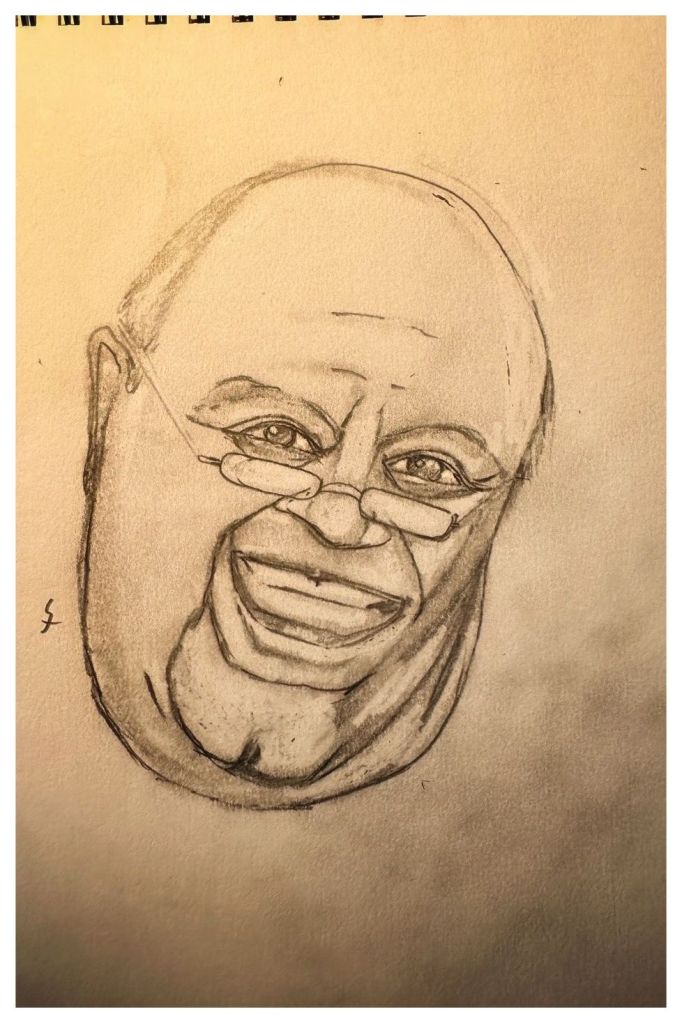
You will never eat a Kat Kit bar. The bells in Frère Jaques will forever chime ‘ding dang dong’! There are similar unwritten rules to be followed when telling things like black and white! It cannot be white and black! Does not sound right! Like the name of today’s birthday celebrity is Dinyar Contractor and not Contractor Dinyar! Still remember his spectacle movement scenes with the simultaneous movement of ears! It used to be so smooth and funny!

Now brush your teeth and sleep! Not the other way around!

ratri shubh…I mean Shubh Ratri!

Be Noble by being Nobel!


“The words he said she did not decipher
The meaning may be low, or they may be hyper!
But the way he said it was the real deal!
His sweet voice! The smooth note and his enthusiastic zeal!”


The cycle of destruction and creation has been described in every major place! Be it the mighty epics or even physics! Even one of the theories of the origin of the universe begins with a bang!

So for every creation there has to be a destruction! You have to level the ground to build a big building! The levelling of any structure or even controlled blasting is now dependent mainly on the discovery of Dynamite and its later successors! For all the practical purposes the dynamite changed the construction industry!
Now the discovery of dynamite and the change of hearywere two accidents!

Read on!

In the mid-19th century, Swedish chemist and engineer Alfred Nobel worked with nitroglycerin, a highly volatile and explosive liquid. He attempted to find a safe and manageable way to harness nitroglycerine’s explosive power for construction and mining purposes and control its detonation.

Alfred suggested to his father that they focus their attention on making nitroglycerine on a large scale. Immanuel Nobel did not need much convincing because his factory in St. Petersburg, which had been very profitable during the Crimean War, now faced bankruptcy.

The family moved back to Sweden and set up a factory to produce nitroglycerine. Almost immediately tragedy struck when an explosion killed Emil, the youngest son. The nitration of glycerine was a dangerous business. So dangerous that in some cases the workers who monitored the reaction were made to sit on one-legged stools so that they would immediately wake up should they doze off!
You would expect someone who is working in front of a bubbling kettle frothing with brown fumes of nitrogen oxides, containing the most powerful explosive known to mankind would not sleep but then sleep is a pretty strong motivator!

Making nitroglycerine wasn’t the only problem. How to detonate it was an even bigger concern. Alfred solved this problem with his invention of the mercury fulminate blasting cap.

He had long considered the idea of mixing nitroglycerine with some solid material with the hope of decreasing its shock sensitivity. This lead to the first accident!

One day, Nobel was working with the substance when a vial fell to the floor and smashed. But it didn’t explode, due to the contact it had made with a pile of sawdust, which helped to stabilize it!
Nobel later perfected the mixture by using kieselguhr, a form of silica, as a stabilizing substance. The production of a niroglycerin/kieselguhr combination was the beginning of what we now know as dynamite!

The sticks of dynamite could now be safely transported and would only explode when triggered with a blasting cap. Dynamite would change the world. It would allow even the Panama Canal to be built!

The invention of dynamite forever changed construction, mining, and demolition fields, making large-scale projects more feasible and efficient.

Then the second accident happened!
Nobel wasn’t in the best of health but he knew he wasn’t dead! So when he found his obituary, prominently featured in the morning newspaper was a shock indeed!
What was even more shocking was that not only had the newspaper killed him off prematurely, it had described him as a man who “became rich by finding a way to kill more people faster than ever before.” In other words he was remembered as ‘The merchant of Death!’

The French press service that provided the story had made a mistake or an accident!

It was actually Alfred’s older brother Ludvig who had died while vacationing in Cannes but a reporter had gotten the brothers mixed up!

Now though it was a mistake and an accident, it was a rude awakening for Nobel who immediately set upon making a prize which would be sponsored by the very money he earned from his scary invention! The most coveted prize in the world right now! The Nobel Prize! The circle continues! The destruction lead to creation! Though we may have to wait a long time for another singer like birthday celebrity Sripathi Panditaradhyula Balasubrahmanyam though…
He will be missed…

Now listen to Jote Joteyalli song by SPB and sleep!
Shubh ratri!

Art of the matter!

“One saw the skies so blue and the sun so bright and red!

Another one saw the forest maybe in the shade or in his head!

The flight of imagination may throw some potshot!

It was just the repercussion of abstract art!” 

The concept of art became clear to me when I saw the first Bonsai tree! When I was young (er!), my mother had attended a Bonsai cultivation training in which they were trained in the cultivation and production of these small ornamental trees which looked just like the real big tree! 

They were not dwarf of the tree which we will discuss later but smaller version of the whole tree! They were not like the bigger trees which were more stable but needed more tending and caring just like a small plant but they were more resilient! We had a Non flowering non fruiting Bonsai tree which did survive for a long time! 

Now of course it did not give any flower or fruit or shade! It looked nice and did not give anything (in material or measurable terms that is!) in return! That was art for me! 

Like mentioned above, they are not dwarf trees! The practice of bonsai is sometimes confused with dwarfing, but dwarfing generally refers to research, discovery, or creation of plants that are permanent, genetic miniatures of existing species. Plant dwarfing often uses selective breeding or genetic engineering to create dwarf cultivars. Bonsai does not require genetically-dwarfed trees but rather, depends on growing small trees from regular stock and seeds. Bonsai uses cultivation techniques like pruning, root reduction, potting, defoliation, and grafting to produce small trees that mimic the shape and style of mature, full-size trees!

Looking at the wiki history we see that Bonsai is officially the Japanese art of growing and shaping miniature trees in containers, developed from the traditional Chinese art form of penjing!

While both penjing and bonsai involve the cultivation of miniature trees, they differ in that penjing overall aims to showcase “wilder,” more naturalistic scenes and encompasses a wider range of styles and designs, and may include various elements such as rocks, water features, and figurines, creating a more elaborate and dynamic scene; on the other hand, bonsai is more restrictively focused on a single tree or a group of trees of the same species, with a higher level of aesthetic refinement!

Purposes of bonsai are primarily contemplation for the viewer, and the pleasant exercise of effort and ingenuity for the grower.

In contrast to other plant cultivation practices, bonsai are not grown for the production of food or for medicine though apparently you can still eat the fruit of the Bonsai tree and if your expectations of size and tastes are low, you are safe!

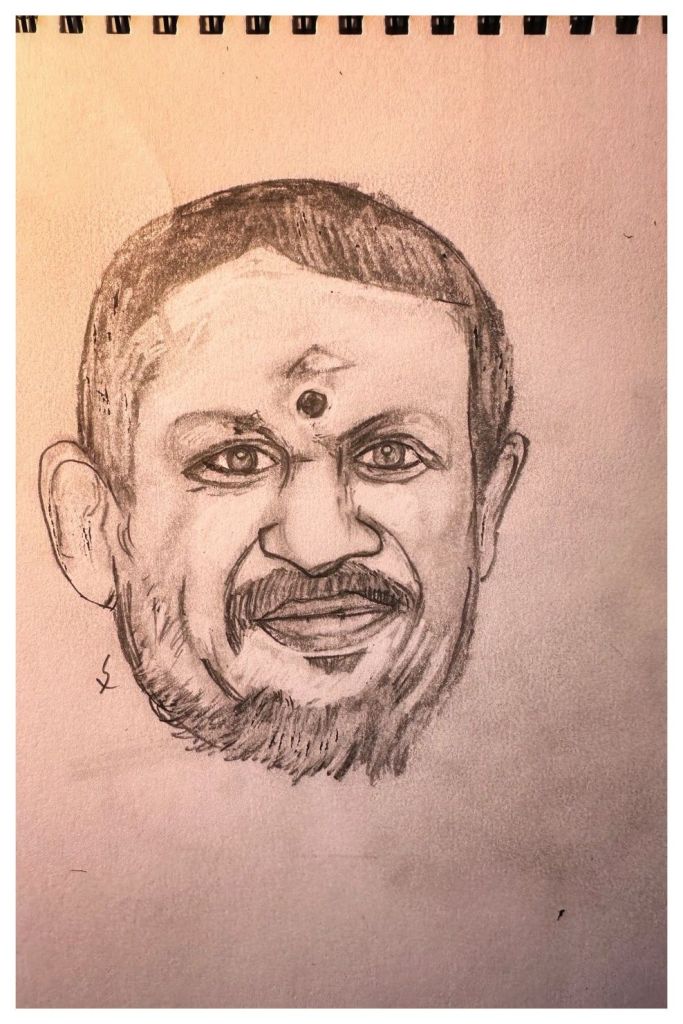
Some say that looking at the Bonsai or tending for it makes you calm or serene but then I think a book would do the same to me! Or better yet, some melodious music! Apparently even the trees and plants like them but then that is the blog for another day! Of course if you mention music then you have to mention birthday celebrity R. Gnanathesigan aka Ilaiyaraaja! His achievements are huge and not dwarf or Bonsai! 

Now listen to the Melodious song ‘Ilaya Nila’ and sleep!

Shubh Ratri!

Turn back time!


“FB steals it from you and you feel it’s free!
You tube takes another chunk without a bell or chime!
Whatever is left is taken by the Gram, WhatsApp and the (e) X!
Not talking about money but your precious Time!”

I am a gadget lover! I would buy anything with a bluetooth! I have bluetooth speakers, watch, lamp, table, neck massager, keyboards and mouse! Not to mention a bluetooth helmet! And my prized possessions; my Bluetooth sunglasses and reading glasses! I can simply wear them and listen to the phone or even speak in WhatsApp and no one would get to know!

The next gadget I have always loved since the time I was young (er!) is the watch! My nephew also has this obsession with the clock! Though clocks also are high in my list of things to buy and own; the wrist watches are a big thing for me!

My first watch which used to work like a normal watch was an HMT classic! Before that as kids we used to love wearing the plastic watches and showing around! Of course those watches only showed one time! We used to ask our elders the latest time and ‘adjust’ it with our fingers every time! The bigger plastic hand was usually the first one to fall and later the smaller one followed! The flimsy plastic strap used to break and all the rubber bands in the world could not keep the watch from literally disintegrating to pieces! That was time lost in every sense!

The HMT was my prized possession till one day one of my relatives gently mentioned that it was a ladies watch! Of course since my wrists were small (they still are!); it would be odd wearing watches which were big and bulky! The battle between wearing a ladies watch versus wearing a big one was finally won when the young skinny me got an electronic watch!

I distinctly remember how my parents told us to stay in our room in the transit camp of Guwahati and they went to buy the digital watch from the ‘Chinese market’ there!

Our imaginations were flying high and I soon wanted a digital watch with a calculator and a maybe with a speaker and a feature to call! By the way that was in 1988-89!

Of course I was heartbroken when I got a single line bulky digital watch which showed only time! How boring! Later of course it was a great possession for showing off till the battery gave away and those days once the battery is dead it may not be replaced for some time!

For a long time then I never had a watch till the Board exams when my dad got us the HMT watches and this time they were men’s! They were of course standard size which in my case were too big for my skinny wrists!

The standard metal straps were soon replaced by better looking ones and I held on to that watch for a pretty long time till I got into the medical college!

Now those watches were a joy to have since you have to put the key every night! They used to get ‘recharged’ by turning the crown till you get a resistance! If you need to change the time you need you pull the crown a little and change the time! If you keep the crown in the same position then the watch will stop! And if you twist the crown too much then the spring inside will not function properly!

It was this time when there were guys who had the automatic watches which did not have to be ‘charged!’ The movement of your hands would charge the spring inside! My dad had one such watch and they were the ones which made you wide eyed with wonder!

Then came the digital and the smart watches and that is a blog for another day!

Even though they are not comfortable or common, I adore pocket watches! For now of course my Apple Watch can call, has calculator and even GPS and heart rate measuring capacity! Even then my dream is to one day get a limited edition pocket watch and when someone asks for the time, take it out of my pocket and tell him or her! Of course it may be the wrong time but I am sure by then the person would not mind so much about the time! One can only dream or think about the lovely moments of childhood! One of them was Wagle ki Duniya starring birthday celebrity Anjan Srivastav! Oh those were the days when the time was slow and steady and fun!

Now tell Alexa or Siri or yourself to set the alarm and sleep!
Shubh ratri!

Game of life!!


“Sing along and say your name!
Dance the way you want ain’t no shame!
Scream and laugh and make everyone insane!
Be like a child always! ’cause life is a nice game!”

This may be one of the first game every child plays! One of the few games which is so simple to learn and can be played without any limitation of age!
The amazing thing is that even an illiterate person can play the game and win it! Though some amount of luck is required to win it, most of the time simple strategies and placing the first point makes or breaks the game!

You can play it on paper or without one!
Rich or poor, everyone has to play the same way and this may be one game which is seen all over the world with variations in name and points used!

You would have played it with your father and child or even grand father!
The very simple but interesting game called; Tic-tac-toe!

Now the very first traces of tic-tac-toe go back to Egypt, which has remnants of 3×3 game boards on roofing tiles from 1300 BCE. Other variations included the terni lapilli
(three pebbles at a time) from the Roman Empire, three men’s morris from various
parts of Asia, and Picaria from Native Americans.

The game’s grid markings have been found chalked all over Rome. Another closely related ancient game is three men’s morris which is also played on a simple grid and requires three pieces in a row to finish and Picaria which is a game of the Puebloans.

The first print reference to “noughts and crosses” was as a British name which appeared in 1858, in an issue of Notes and Queries.
While the first the first print reference to a game called “tic-tac-toe” occurred in 1884, but referred to “a children’s game played on a slate, consisting of trying with the eyes shut to bring the pencil down on one of the numbers of a set, the number hit being scored”.
“Tic-tac-toe” may also derive from “tick-tack”, the name of an old version of backgammon first described in 1558.

In 1952, OXO (or Noughts and Crosses), developed by British computer scientist Sandy Douglas for the EDSAC computer at the University of Cambridge, became one of the first known video games. The computer player could play perfect games of tic-tac-toe against a human opponent!
Of course as mentioned in an earlier blog, ‘Tennis for two’ was the official first video game though in 1948, ten years before Higginbotham’s Tennis for Two, Thomas T. Goldsmith Jr. and Estle R. Mann patented the “Cathode-Ray Tube Amusement Device,” making this currently the earliest-documented video game predecessor! OXO could be the practical second video game ever produced! Then again it is more popular as a non video game!

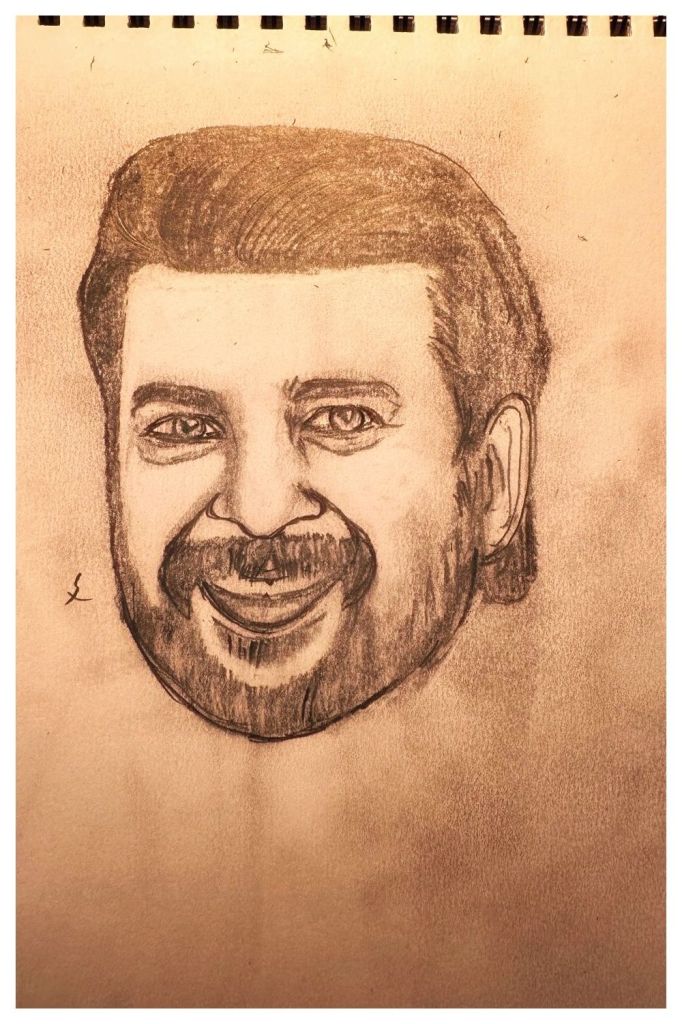
In 1975, tic-tac-toe was also used by MIT students to demonstrate the computational power of Tinkertoy elements. The Tinkertoy computer, made out of (almost) only Tinkertoys, is able to play tic-tac-toe perfectly! On a dull day our school book’s last pages were full of these games! Youth of course were spent listening to the songs! One such album was Alaipayuthey starring birthday celebrity Ranganathan Madhavan! Recently saw the movie Shaitaan starring Maddy! The ending was good but I felt that he would have been better in the role of Ajay and Ajay should have played Maddy’s role!

Now listen to some old Maddy songs and sleep!
Shubh Ratri!