Life is not a game!

“The life was hanging in a delicate balance
The health was left only for the sake of name!
The boss was beating him black and blue!
Fret not! It’s not real yet! It’s only a video game!”

Many older folks may have the memory of playing this game in the computer which is one of the oldest video games ever! Not the Prince of Persia which used to come shipped with the old Windows computers by default! I have played the modern versions of Prince of Persia starting from the Prince of Persia 3D and later ones like the Sands of time but even now the first game is one of the most difficult ones to finish! The Prince dies so many times even before you finish the first level!

But the game I mention here is not that! This game involves just a bad with a ball! Of course later on there have been so many versions of the game!
But the basic premise is of a bat in the lower end of the screen and a ball coming from above! You had to hit the ball and there were many challenges along the way! In the later modifications of the game and copies of the game you had the bat getting magnetic or sticky or getting multiple balls and so forth! That first game which has the distinction of being the very first video game is called the Pong!

But even though it is one of the first video game, there has been much debate over the identity of the first video game.
Now Pong was the first commercially available video game and launched a revolution that has seen the industry become enormously successful in the modern age.!
But a similar game had two bats which was called Tennis for Two and may also have the honour of being the first game since it had arrived on the gaming scene much before pong but did not have a general public release!

But even here the story does not end since there was another game which was sort of like a precursor to even the Tennis for Two and this was basically the cathode ray tube amusement device!

This machine used to let players control a light beam from a cathode ray tube using a knob. The player was tasked with lining the beam up with an object on the screen, often added using an overlay sheet in a similar fashion to how the Magnavox Odyssey operated. This device received its patent in 1948, a full decade before the creation of Tennis for Two and almost 24 years before Pong made an appearance. Yet the device is rarely credited as the first game by any but the most dedicated gamers! The uncredited inventors were Thomas T. Goldsmith Jr. and Estle Ray Mann!
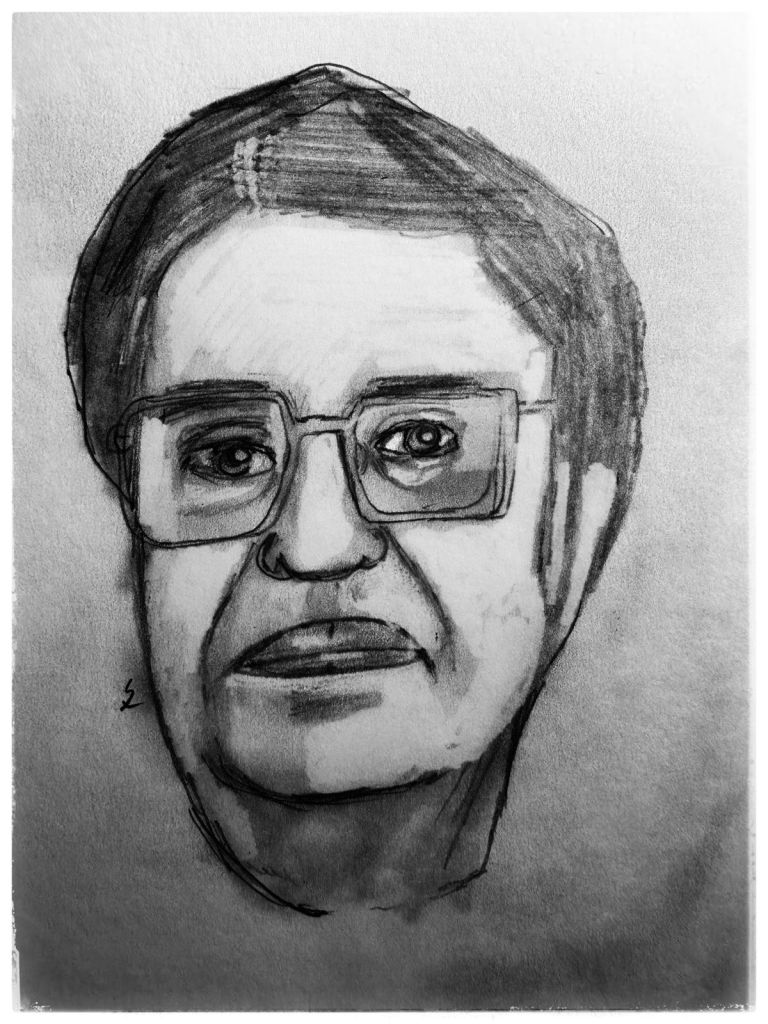
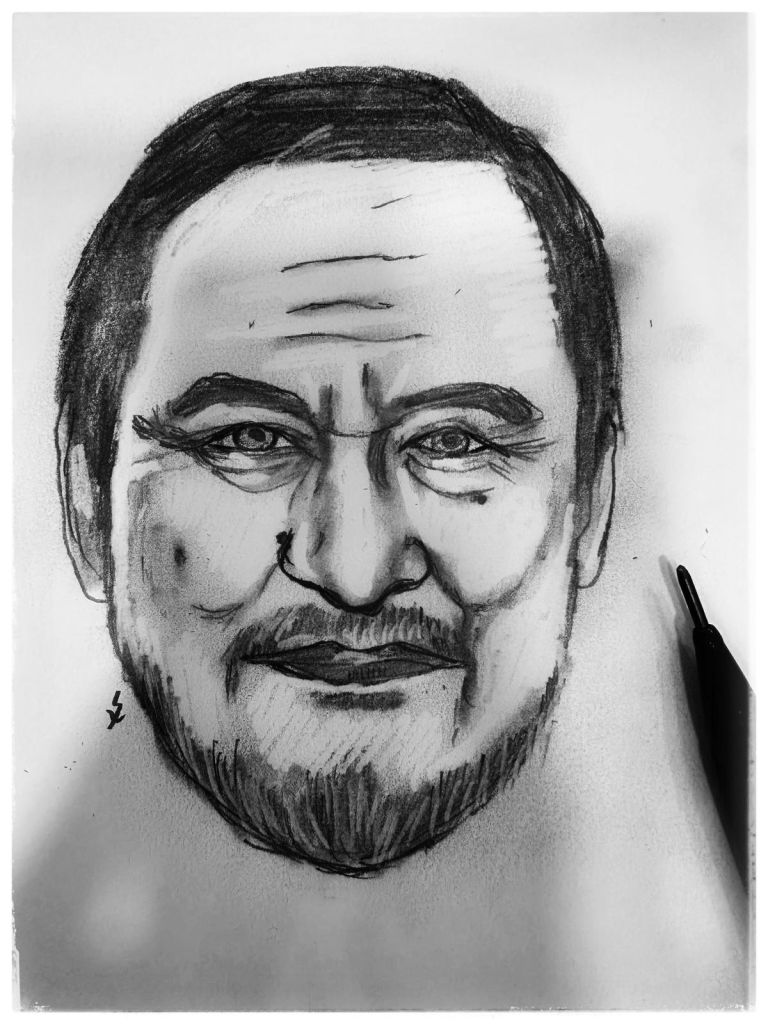
Now of course the first or the rest does not matter if the game is the best! First time a telugu actor became a chief minister and a good one at that also is the example of birthday celebrity Nandamuri Taraka Rama Rao!

Now stop playing video games and sleep!
Shubh ratri!

Animalcule!

“They hit him with pain and agony!

And they sat back and watched in glee!

All he could do was cough and cough!

They were the enemies you can’t see!”

With all the wild imaginations we see nowadays, I wonder the time when someone many centuries back imagined that there are small organisms which are not visible to the naked eyes which actually cause disease! 

The amount of imagination required for this would be immense! Remember that he or she has not seen any organism but theorized that they are all over us and cause disease!

Of course the description may not be accurate at first but the first step was very essential! They were initially called the ‘Animalcule!’ 

Read on!

So Animalcule (Latin for ‘little animal’; from animal and -culum) is an archaic term for microscopic organisms that included bacteria, protozoans, and very small animals. 

Though it gained momentum only later, the concept seems to have been proposed at least as early as about 30 BC, as evidenced by this translation from Marcus Varro’s Rerum Rusticarum Libri Tres:

“Note also if there be any swampy ground, both for the reasons given above, and because certain minute animals, invisible to the eye, breed there, and, borne by the air, reach the inside of the body by way of the mouth and nose, and cause diseases which are difficult to be rid of!”

The person though responsible for seeing these for the first time and later called the father of Microbiology was not even a science guy but a person who had special interest in the making of lens! 

Antonie Philips van Leeuwenhoek was raised in Delft, Dutch Republic, and worked as a draper in his youth and founded his own shop in 1654. He became well-recognized in municipal politics and developed an interest in lens making. 

Using single-lensed microscopes of his own design and make, Van Leeuwenhoek was the first to observe and to experiment with microbes, which he originally referred to as dierkens, diertgens or diertjes.

He was the first to relatively determine their size. Most of the “animalcules” are now referred to as unicellular organisms, although he observed multicellular organisms in pond water. He was also the first to document microscopic observations of muscle fibers, bacteria, spermatozoa, red blood cells, crystals in gouty tophi, and among the first to see blood flow in capillaries. Although Van Leeuwenhoek did not write any books, he described his discoveries in letters to the Royal Society, which published many of his letters in their Philosophical Transactions!

Leeuwenhoek was one of the first to conduct experiments on himself. It was from his finger that blood was drawn for examination, and he placed pieces of his skin under a microscope, examining its structure in various parts of the body, and counting the number of vessels that permeate it! 

Leeuwenhoek diligently began to search for his animalcules.He found them everywhere! In rotten water, in ditches and on his own teeth! Which made him rub his teeth with salt every morning! 

Van Leeuwenhoek has been recognized as the first person to use a histological stain to color specimens observed under the microscope using saffron!

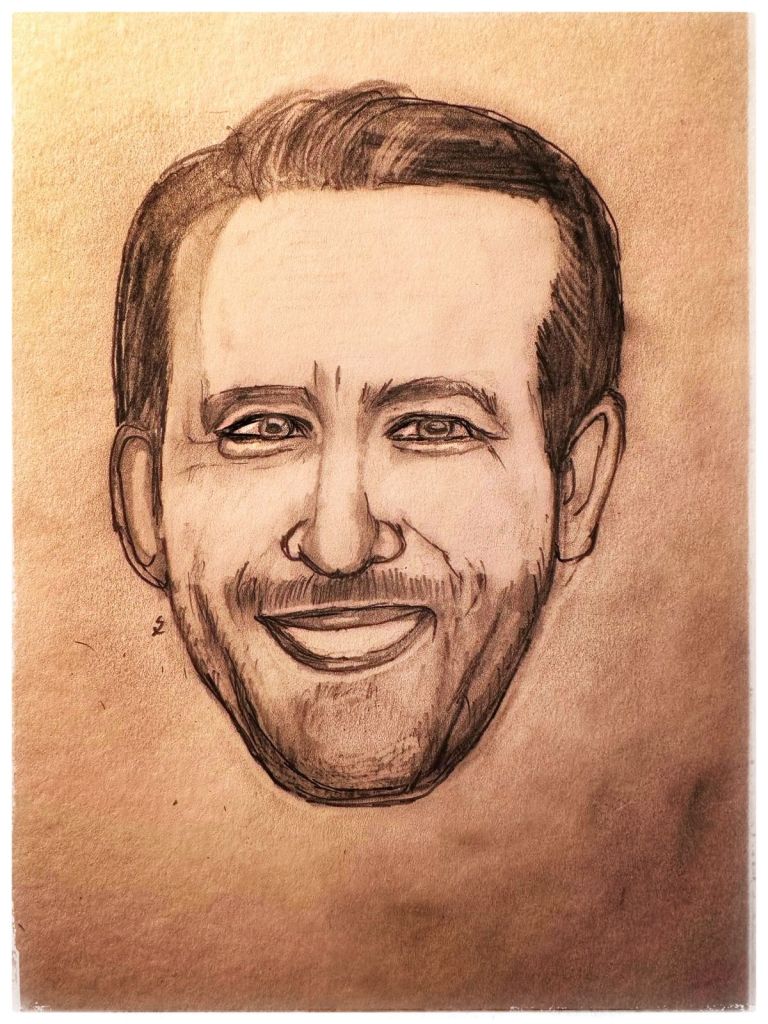
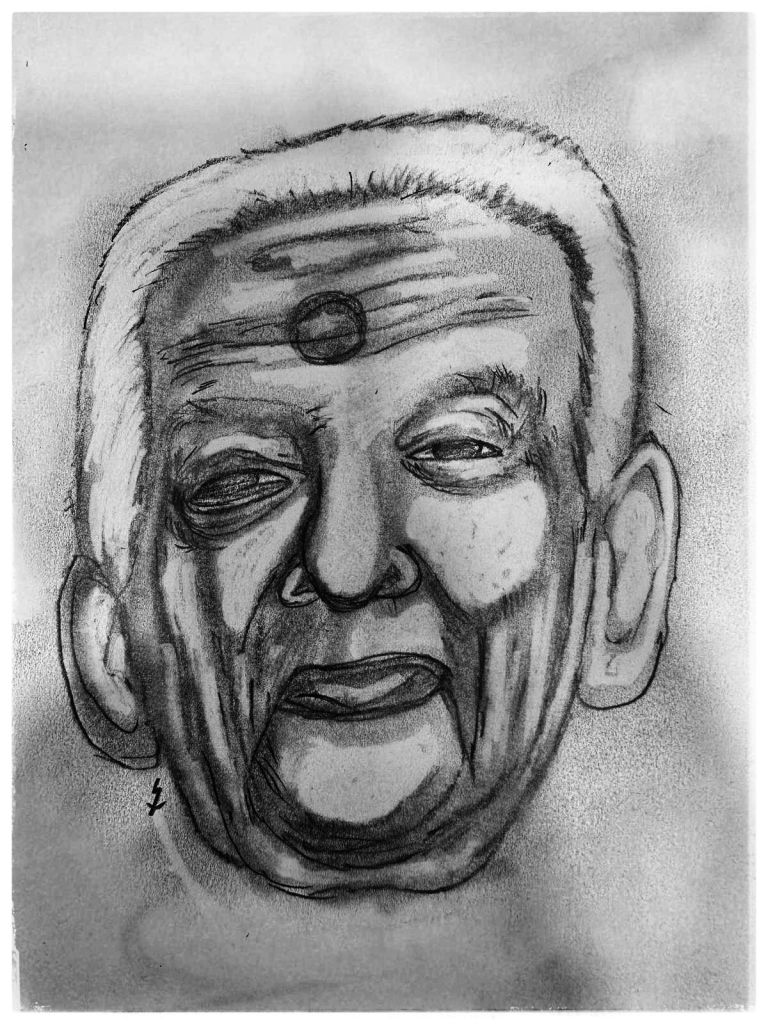
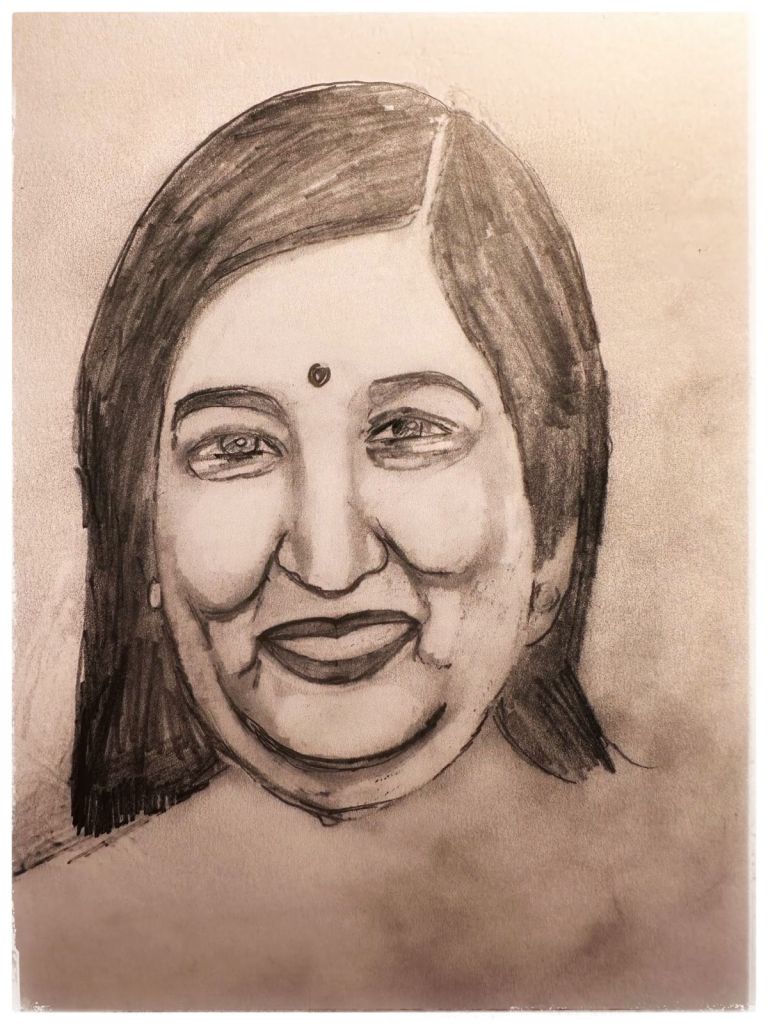
Even during the last weeks of his life, Van Leeuwenhoek continued to send letters full of observations to London. The last few contained a precise description of his own illness. He suffered from a rare disease, an uncontrolled movement of the midriff, which now is named van Leeuwenhoek’s disease! He died at the ripe old age of 90! His contributions to Microbiology though are immeasurable!  Immeasurable also are the contributions to cinema by birthday celebrity Gopishantha aka Manorama who had done over 1000 movies in her lifetime!

Now reduced the animalcules in your mouth by brushing your teeth and sleep!

Shubh ratri!

Shake your hands!

“He lifted his hands to shake! 

But it was dipped in red

He now had no enemies now!

Only friends which he dread!”

How often you shake your hands with anyone you meet and how would you feel that this is one of the biggest mode of submission in the history of the Homo Sapiens! The very act of bending down and moving your hand forwards has roots in an act of bending or bowing down by a weak Gorilla to the alpha male of the pack! It is ok! You can still shake your hands since even the person who is shaking it with you does not know what it signifies!

Read on! 

In the book The Naked Ape by Desmond Morris; he talks about the extreme posturing of animals to show their anger or dominance over his group! You may have noticed that normally I would always write His or her! But in animals the posturing and dominance is exclusive to the males!

The male of a group especially the primate like the Gorilla or the chimp have to assert their dominance by an open challenge! The posturing can be a loud noise or thumping or in some animals, standing on two legs to increase height! In some they make the hair stand out or the wings out! The mean posturing is supposed to look scary and overwhelming to the opponent!

A fear is generated and this is enough most of the times since an actual fight is not going to be beneficial to any of the party!

A show of might or more power is all that is required!

If the animals do fight then it can lead to the severe injury and even death of one but even the winner gets hurt and may not recover many times! So for all the parties concerned even in animal world, most of the times, warning does the trick! It works most of the time because the thumping, growling and the scream is so scary with some animals standing tall and high to show their increased height! Some other animals and birds increase their wingspan or plumage to make them seem more huge and menacing and most of the times it works!

Then there is submission! 

The act of submission is indicated by different methods and it can differ from species to species! In fact in some species, the tail is literally deposited between the legs and the animal beats a hasty retreat! Reminds me of a Santhosh Pandit dialogue from his first malayalam movie!

As far as our ancestors are concerned; chimpanzees appease by holding out a limp hand towards the dominant individual. We actually share this gesture with them, in the form of the typical begging or imploring posture. 

Like mentioned above we have also adapted it as a widespread greeting gesture in the shape of the friendly handshake!

Friendly gestures often grow out of submissive ones!

Other response can be a timid smile or laugh both of which, incidentally, still appear in appeasing situations as the timid smile and the nervous titter which are also submissive!

Handshaking occurs as a mutual ceremony between individuals of more or less equal rank, but is transformed into bowing to kiss the held hand when there is strong inequality between the ranks!

With increasing ‘equality’ between the sexes and the various classes, this latter refinement is now becoming rarer, but still persists in certain specialized spheres where formal dominance hierarchies are rigidly adhered to! 

In certain instances handshaking has become modified into self-shaking or hand-wringing.

In some cultures this is the standard greeting appeasement, in others it is performed only in more extreme ‘imploring’ contexts.

There are many other cultural specialities in the realm of submissive behaviour, such as throwing in the towel or showing the white flag!

Now of course the handshake has existed in some form or another for thousands of years and this is  one explanation! 

Other popular theory is that the gesture began as a way of conveying peaceful intentions. By extending their empty right hands, strangers could show that they were not holding weapons and bore no ill will toward one another. Some even suggest that the up-and-down motion of the handshake was supposed to dislodge any knives or daggers that might be hidden up a sleeve! Yet another explanation is that the handshake was a symbol of good faith when making an oath or promise. When they clasped hands, people showed that their word was a sacred bond!

Now, remember the other part of the submission especially when it involves two party where one party was all ready to spend his or her anger! If the anger then is not spent on the person then the things like vase or a nearby glass gets the brunt! The author say that when a wife is breaking a vase in anger, it actually was originally directed to the Husband’s skull! It is in fact the Husband’s skull which is lying in pieces on the kitchen floor! 

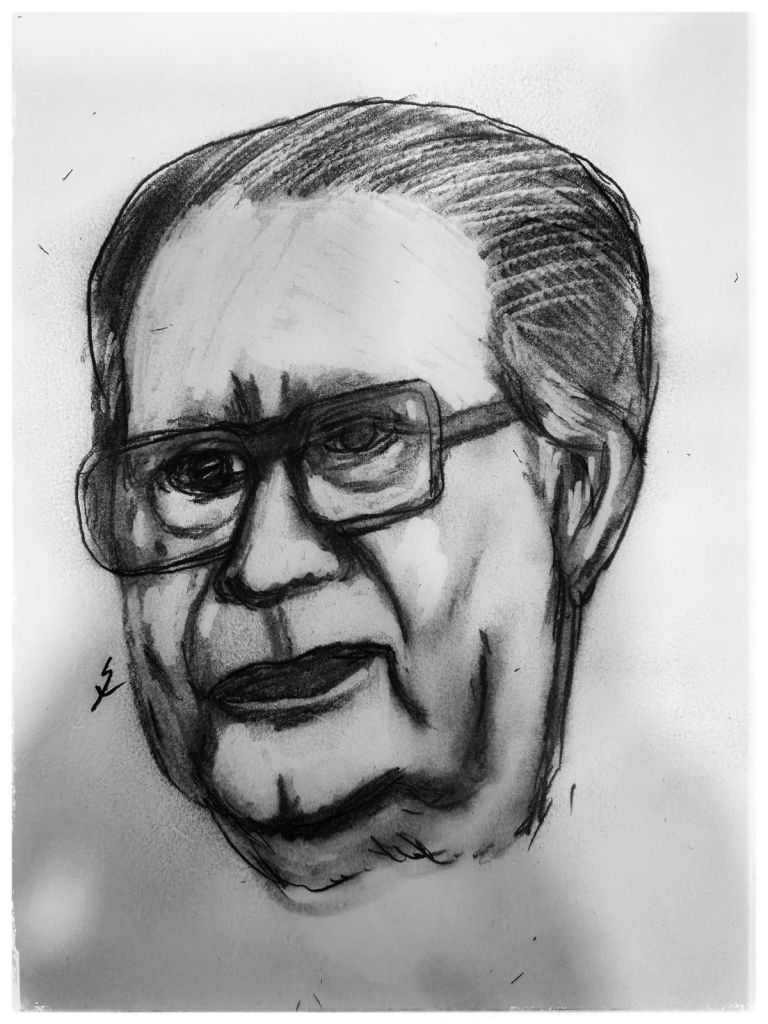
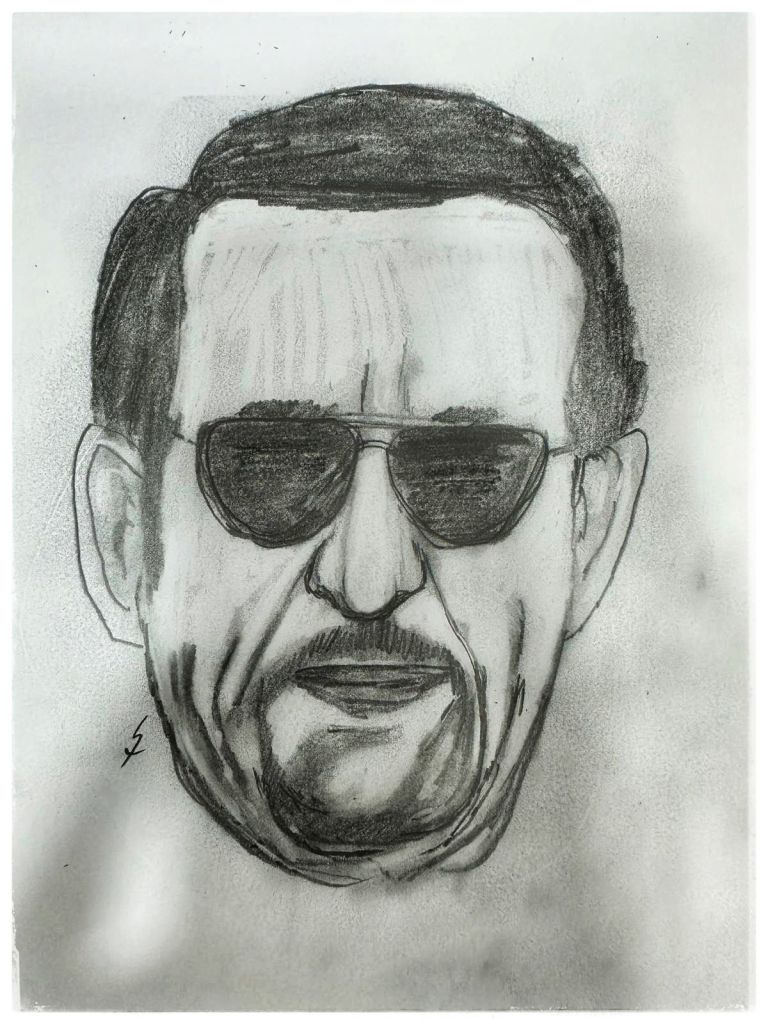
Think about that when you have an angry wife or husband! Hand over a vase and run away! Now with all these it may be better to just say namaste and not fight with the wife! Just like how birthday celebrity Dilip Joshi aka Jethalal does! 

Now submit yourself to the dream and sleep!

Shubh Ratri!

Double trouble!

“He was looking at the sky happy and sad!

Delirious with joy ’cause it drove him mad!

She was riding in the wheels made by him!

He forgot though to install the brake in a whim!”

Most researchers or inventors want to invent to discover something by which they will be remembered for ages! Some though are plagued by bad discoveries and may not want the world to remember them by those!

One is Alfred Nobel who discovered Dynamite but made amends by pledging his wealth to make the coveted Nobel Prize!

Another such inventor may want the world to forget he invented this or discovered not only one but two inventions which are now destroying us! The first one destroyed the environment while the second one almost destroyed the planet! 

Read on!

One fine day ages back, inventor Thomas Midgley Jr. poured a lead additive over his hands and then proceeded to inhale its fumes for about a minute! 

Big mistake! 

Midgley was this prolific inventor! Super intelligent and a genius but unfortunately he could not predict how his inventions would cause more harm than good!

Very soon Midgley needed medical treatment for chemical inhalation and respiratory issues!

Basically though his intention behind the invention was really good! 

One of the biggest issues plaguing the automobile industry was the issue of knocking. So engine knocking, or tiny explosions in car engines used to happen due to the low quality of gasoline that resulted in an annoying sound and potential damage. 

Under the direction of Charles Kettering, another influential American inventor and head of research at GM, Midgley worked his way through thousands of substances — including arsenic, sulfur and silicon — in a quest to find one that reduced knocking when added to gasoline.

He eventually landed on tetraethyl lead, a lead derivative that was marketed simply as Ethyl. 

It did solve the problem of knocking but it knocked the lungs of those who inhaled it for long especially children! 

In spite of the toxic effects, it was banned only slowly and by that time the harm was done. In fact only in 2021 Algeria the last country to use lead banned it! The damage this has done to the environment is yet to be accounted completely…

Just when you thought it cannot get any worse, his next invention did!

Here also the invention was to make things better! Midgley was asked to find a solution to a problem: the need to replace the noxious and flammable gases used in refrigeration and air conditioning. 

He found that CFCs, or chlorofluorocarbons, were an ideal substitute and harmless to humans. Of course everyone now knows about the harmful effects of the gases to the ozone! They turned out to be deadly to the ozone in the atmosphere, which blocks dangerous ultraviolet radiation that can cause skin cancers and other health problems, as well as harming plants and animals.

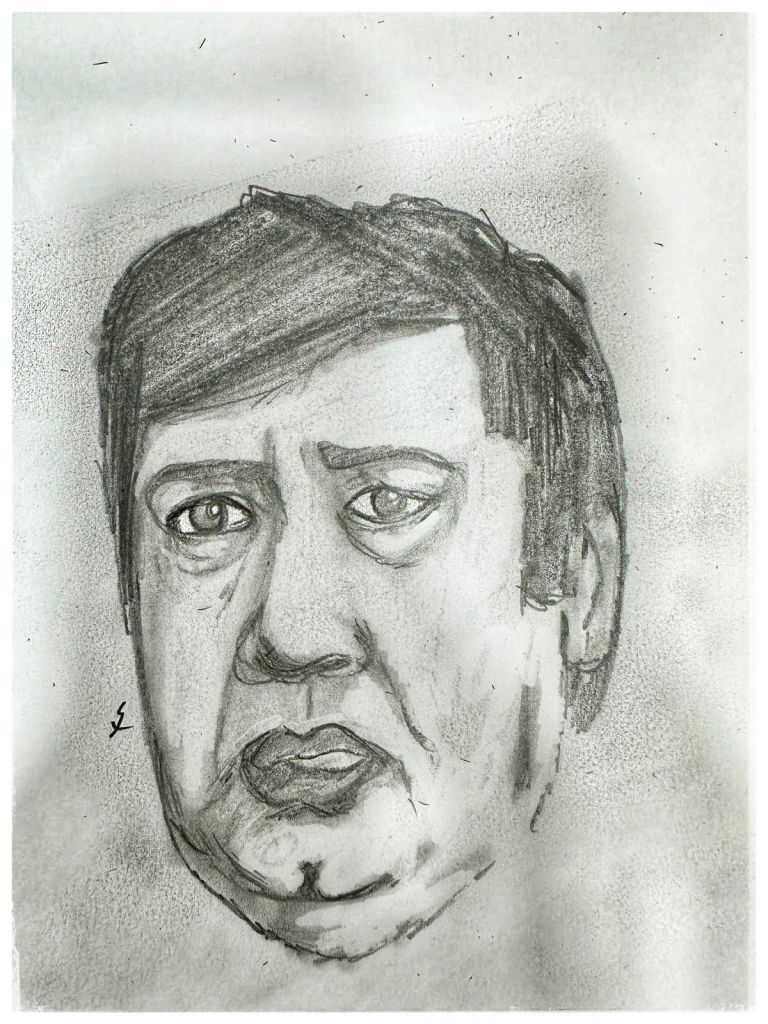
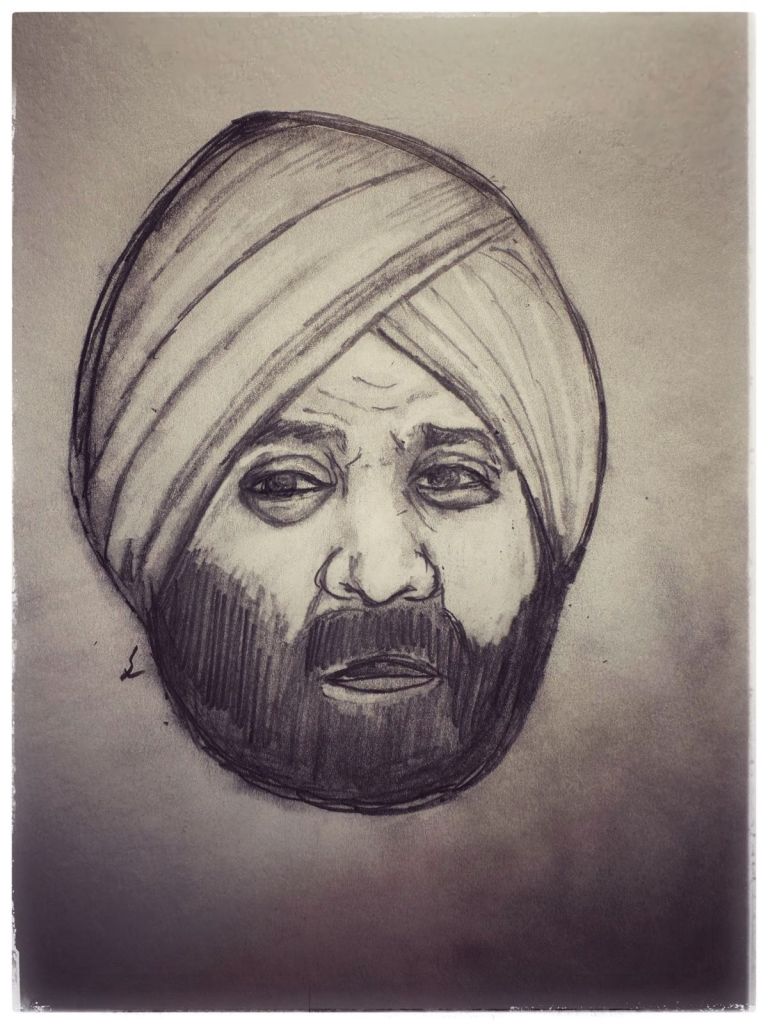
One hundred years after that stunt before the press in 1924, the planet is still recovering from the ill effects of both of Midgley’s inventions. The ozone layer will need another four decades to heal fully, and because leaded gasoline was still sold in parts of the world until 2021, many continue to live with the long-term effects of lead poisoning. So remember that when you feel bad that you do not invent or discover something! It is better to not discover something so dangerous! That of course does not take away the fact that Midgley is a great discoverer of two innovative things! Two reminds me of the two sons of Sivakumar, one of them who is the birthday celebrity Karthik Sivakumar known as Karthi!

Now turn off or reduce that non CFC AC and sleep!

Shubh Ratri!

Agar art!

“Everyone liked it so much it was epic!

The colour, the rendition ’twas magic!

He clapped along with all to be safe!

Though he did not understand which was tragic!”

Being a Portrait sketch artist (self proclaimed!); abstract paintings and sketches are not usually my cup of coffee (I drink coffee everyday and like to keep my tea on special days!). 

Now you have a group of art which are not only abstract but also have their culture! Bacterial culture by the way! In fact there is a whole group of people who use bacterial culture for abstract art in petri dishes! 

It is known as Agar art! 

Read on!…

Now firstly have you heard of Agar Agar? Well those are the common culture media used in labs all over the world! 

So Agar has a long tradition in food applications. 

The discovery of it being a culture media itself is a story like the discovery of Penicillin! 

Apparebntly, in the 17th century, a Japanese innkeeper named Minoya Tarazaemon, noticed that some leftovers of a seaweed soup gelled, after being thrown away during a cold winter night. 

Its industrialization as a dry and stable product started, in Japan, at the beginning of the 18th century. Later, in the first years of the 20th century, it was introduced into the West and its production by industrial freezing was initiated! 

In the beginning, the agar industry mainly relied on naturally grown biomass while now, cost-effective cultivation of red seaweeds enabled the expansion of agar and carrageenan industries. About 90% of the agar produced is for food applications, the remaining 10% being for bacteriological and other biotechnology uses!

We all (most at least!) know how the agar is used for the culture and growth and study! Well starting from Alexander Fleming himself, the culture is now used as an art!

Creators use either naturally colorful microbes, like the red bacteria Serratia marcescens, or genetically modified microbes, like the yeast Saccharomyces cerevisiae transformed with violacein genes, as ‘paint’ and various types, shapes and sizes of agar as a ‘canvas.’ In fact, the original agar artist was none other than Alexander Fleming himself!

In order to preserve a piece of microbial art after a sufficient incubation, the microbe culture is sealed with epoxy.

Microbe species can be artistically chosen for their natural colors to form a palette. Suitable species of bacteria, Yeast species – which are fungi – used in microbial art include Saccharomyces cerevisiae (yellow–white) Aspergillus flavus (yellow–green spores), Aspergillus ochraceus (yellow), Aureobasidium pullulans (black), Candida albicans (whitish buff) and Protist species used in microbial art include Euglena gracilis (photosynthetic, green) and Physarum polycephalum (yellow–green)! 

The biochemist Roger Tsien won the 2008 Nobel prize for chemistry for his contributions to knowledge of green fluorescent protein (GFP) that has been used to create art-like works! In fact just like the normal art competition, there are many Agar Art competition all over the world! Now that may be music for many microbiologist all over or may make some normal people sick! Music of course reminds me of birthday celebrity Rajesh Roshan!

Now reduce the bacterial culture in your mouth by brushing your teeth and sleep!

Shubh Ratri!

Don’t sweat too much!

“His hands were wet and the eyes too!

The whole body was also heating up!

Fret not he was just eating some fries!

With hot and spicy chilli ketchup!”

Do you sweat and feel bad about it sometimes? Well, don’t! Your sweating makes you human! Now do not start panting like a dog just like our ancestors did!

Most furry mammals pant to regulate their body temperature. Other animals, like ectotherms — lizards, amphibians, and insects — have other behaviors that help keep them cool. Many mammals—among them, dogs, cats, and rats—perspire through the footpads on their paws; chimpanzees, macaques, and other primates are covered in sweat glands. Even horses and camels slick their skin in the heat!

We are the only mammal that relies on secreting water onto the surface of our skin to stay cool! But apparently in humanity’s past, we, too, likely panted to thermoregulate. Our closest primate relatives — chimpanzees and gorillas — dump excess body heat by panting, so it stands to reason that early human ancestors would have panted, too! 

Detailed studies of sweating responses in our species have revealed that the whole process is a complex response as told by Desmond in his book The Naked Ape. 

Most areas of the body surface begin to perspire freely under conditions of increased heat, and this is undoubtedly the original, basic response of the sweat-gland system. 

But certain regions have become reactive to other types of stimulation and sweating can occur there regardless of the external temperature. 

The eating of highly spiced foods, for example, produces its own special pattern of facial sweating!

Emotional stress quickly leads to sweating on the palms of the hands, the soles of the feet, the armpits and sometimes also the forehead, but not on other parts of the body!

There is a further distinction in the areas of emotional sweating, the palms and the soles differing from the armpits and the forehead. The first two regions respond well only to emotional situations, whereas the last two react to both emotional and to temperature stimuli! 

The moistening of the palms and soles during stress appears to have become a special feature of the ‘ready for anything’ response that the body gives when danger threatens. 

Spitting on the hands before wielding an axe is, in a sense, the non-physio-logical equivalent of this process.

So sensitive is the palmar sweating response that whole communities or nations may show sudden increase in this reaction if their groups security is threatened in any way!

Apparently during a political crisis, when there was a temporary increase in the likelihood of nuclear war, all experiments into palmar sweating at a research institute had to be abandoned because the base level of the response had become so abnormal that the tests would have been meaningless! 

The author concluded that having our palms read by a fortune-teller may not tell us much about the future, but having them read by a physiologist can certainly tell us something about our fears for the future! Of course if the person reading you is a detective like Byomkesh Bakshi like birthday celebrity Rajat Kapur then he may tell you much more!

Now sweat, I mean sweet dreams!

Shubh ratri!…

I am not a BOT!


“The tin man wanted a heart from the wiz!
He had lots of gloom which he did not know!
Oh to be born a human and have emotions!
To laugh at the sun and play with the snow!”

In the Novel called Origin by Dan Brown we are introduced to a character called Winston! This novel was released in 2017 and if you have not yet read it and are planning to read it in the future (really?!!) then do not read the blog further since there are spoilers ahead!

So in the novel when a tech wiz is killed in spite of having end stage disease a whole cascade of events unfold and finally it is revealed that the killer is none other that Winston! What is so surprising you would ask?

Well, Winston is not a man (or woman for that matter!) but an AI! The AI is so clever that he creates a person or an entity and even an organisation called the Regent and kills his own boss!

In the recently released Mission impossible movie also (again; not seen then do not read!) the chief antagonist is an AI!

The movie I, Robot and also movies like Terminator also tell us about AI and how in the future it will be us (us is human beings and not US!) vs them!

All these fear of the AI brings us to the man who was known as the Godfather of AI!

This is because of his new learning procedure called the back-propagation, for networks of neuron-like units.

In simpler terms (yes, I also did not understand it fully!) the ability to create useful new features distinguishes back-propagation from earlier, simpler methods such as the perceptron-convergence procedure (yes; even this is floating above my simple brain!).

So the Godfather is Professor Geoffrey Hinton tells how the concept of a universal basic income amounts to the government paying all individuals a set salary regardless of their means!

His concern was that AI would increase productivity and wealth but the money would go to the rich and not the people whose jobs get lost!

He had concluded that whether AI goes rogue and tries to take over, is something we may be able to control or we may not, we don’t know!

Like in the novels and movies we see above Hinton was also concerned how these AIs can autonomously make the decision to kill people!

Even the latest trend in AI like Chat GPT and OpenAI, which has a history of ethical flip-flopping; are not perfect models for the future! So much time and research has been spent to make the AI as human as possible that the average human has been made more Robotic!

Previously the Turing test was a great discovery! For the uninitiated; Turing Test is a method of determining whether a machine can demonstrate human intelligence! If a machine can engage in a conversation with a human without being detected as a machine, it has demonstrated human intelligence! That means this is a test which a machine has to pass! Here the AI must behave so much like a human that the human at the other end would not realise that he or she is actually interacting with a bot!

The biggest irony now is that in most websites you have to prove to a bot that you are a human! And more insulting thing is that you actually pass many of these tests because you make mistakes unlike a bot! Your imperfections are the ones which are making you pass the test designed by a human but asked by a bot to prove you are a human! Feeling Smart?!

Now anyway as far as I am concerned, let it be known that I was always rooting for the AI, unless of course the Humans win! Then I was always rooting for the Homo Sapien! This is something which only a human can do and not a bot! Also there are somethings which only some selected humans can do! Like act like birthday celebrity Kesavan Venugopal aka Nedumudi Venu!

Now make sure the alexa microphones are switched off and sleep!
Shubh Ratri!

The Naked Ape by Desmond Morris

The Naked Ape: A Zoologist’s Study of the Human Animal is a 1967 book by English zoologist and ethologist Desmond Morris

Long review!

No spoiler!

I would like to think of myself as an avid book reader but every other day someone somewhere tells of a famous book which I have not read! I feel so let down at that! Then again, you cannot do everything!

The review here is a preview for those who still have not read it and a summary for those who may not read it!

Now this book was a revolution of sorts released in the year 1967 and though it was a long time ago; this is like a grand father of books which have recently become very famous like the Homo Sapiens and Guns germs and steel!

The narrative is straight forward without any attempt to be serious or give scientific evidence like most boring history books!


The fact that the only species of Ape which is naked! That is the line which gets your attention and keeps you hooked!

He states that the only ape who has all his weakness or genitalia so exposed is the Homo Sapiens. So much so that whatever little hair he or she has is also the hair is soft and sparse!

He also states how that is a connection to our other mammalian ancestors like the whale who also have no hair just like us! And how that can also explain our hairy head which bob’s out of water!

Among the many difference he says about the Naked Ape, he states how they never get fleas but at least here the Naked Ape is like other ! And that was primarily due to two things apparently! Now we do get the occasional flea bite which form rare diagnosis but those are accidental fleas!

The basic point, is that carnivores have fleas but primates do not.
So Monkeys and apes are plagued by lice and certain other external parasites but, contrary to popular opinion, they are completely flealess!
To understand this, it is necessary to examine the life-cycle of the flea.
This insect lays its eggs, not on the body of its host, but amongst the detritus (waste or debris of any kind) of its victim’s sleeping quarters!
The eggs take three days to hatch into small, crawling maggots.
These larvae do not feed on blood, but on the waste matter that has accumulated in the dirt of the den or lair!
After a couple of weeks they spin a cocoon and pupate and remain in this dormant condition for approximately two more weeks before emerging as adults, ready to hop on to a suitable host body! This means that they like some specific people of some specific species who take so much time to get ready!

So for at least the first month of its life a flea is cut off from its host species!
It is clear from this why a nomadic mammal, such as a monkey or ape, is not troubled by fleas! Even if a few stray fleas do happen on to one and mate successfully, their eggs will be left behind as the primate group moves on, and when the pupae hatch there will be no host ‘at home’ to continue the relationship. Fleas are therefore parasites only of animals with a fixed home base, such as the typical carnivores!

Then a whole chapter is dedicated to the the sexual act and motion including the erotic areas of male and female and the very act of copulation described in vivid details! You can read about it yourself!

Another observation is about the the feeding technique which is most effective! Now, apparently mothers who feed on the left side or holding the baby on the left side feel that the baby gets comforted more faster! This phenomenon was actually studied further and they also found similar finding! If you feed the baby in the left side then the baby gets comforted faster than the right and in fact even if you do not feed and simply hold the baby on the left side the baby gets more comfort and finds more pleasure (read; stops crying!!).

One theory put forward was that the left side of the body of the mother is having the heart at least in most cases since we can safely rule out the very rare condition called the dextrocardia! Now everyone knows that the heartbeat is heard on the left side and there is a nation that the rhythmic movement of the heart or the heart beat is a pleasant music for the infant! It is of course the constant sound which he or she heard in the womb with the beating of the heart!
Desmond also says how even the growing teens who are away from their parents influence also get influenced by the rhythmic music which is similar to the beat of the heart like the rock or pop music! Exceptions aside, most normal people like the rhythmic beats and try to synchronize the beat with their body which is actually they trying to match the beat of the heart!

He tells about the balance between two emotions or Neophilia or love of new things to Neo Phobia which is fear of the new! The child is actually so curious that you have to restrain him or her!

Then he tells about food and the famous sweet tooth of the Naked ape!
How we start out meals with a sweet and end with one!
How we gobble up sweets as soon as we see them somewhere and how we have sweet shops and no sour shops! Now this novel was written 1967 and now we actually have sour shops too! The taste is more varied now and the range is huge! Though sweet still remains top in the list!
During Puberty the preference for fruity and sweet odours falls for flowery oil and musky ones! The juvenile weakness for sweet though can be easily exploited and is frequently is!

The male of a group especially the primate like the Gorilla or the chimp have to assert their dominance by an open challenge! The posturing can be a loud noise or thumping or in some animals, standing on two legs to increase height! In some they make the hair stand out or the wings out! The mean posturing is supposed to look scary and overwhelming to the opponent!
A fear is generated and this is enough most of the times since an actual fight is not going to be beneficial to any of the party!
A show of might or more power is all that is required!

Then there is the act of submission which is universal and this behaviour is reflected even in human behaviour. When Humans divide the sections of a house in to different smaller rooms or when they in an act of submission hand their back! A Gorilla in an act of submission may offer his hand to be bitten! How sitting in the car when a cop approaches is counter productive! How religion and belief in a supreme power is actually an act of submission! How little the naked ape has changed like how even if we touch a member of the opposite sex by accident we apologize!

Of course exceptions to every rule is there apparently! Like individuals who are professionally concerned making large number of contacts or people with behavioral defects that make them abnormally shy or lonely!

Also it has been seen that old habits die hard and even in choices by children who like tall animals like Giraffe or elephant it is because we like things which are long tall and straight! Even dogs are made to sit upright so that we like them more!

Then a whole section on temperature response, there is one particular aspect of sweating that should be mentioned. Detailed studies of sweating responses in our species have revealed that they are not as simple as they may first appear. Most areas of the body surface begin to perspire freely under conditions of increased heat, and this is undoubtedly the original, basic response of the sweat-gland system. But certain regions have become reactive to other types of stimulation and sweating can occur there regardless of the external temperature. The eating of highly spiced foods, for example, produces its own special pattern of facial sweating. Emotional stress quickly leads to sweating on the palms of the hands, the soles of the feet, the armpits and sometimes also the fore-head, but not on other parts of the body. There is a further distinction in the areas of emotional sweating, the palms and the soles differing from the armpits and the forehead. The first two regions respond well only to emotional situations, whereas the last two react to both emotional and to temperature stimuli. The moistening of the palms and soles during stress appears to have become a special feature of the ‘ready for anything’ response that the body gives when danger threatens. Spitting on the hands before wielding an axe is, in a sense, the non-physio-logical equivalent of this process! So sensitive is the palmar sweating response that whole communities or nations may show sudden increase in this reaction if their groups security is threatened in any way!

As a result of this during a recent political crisis, when there was a temporary increase in the likelihood of nuclear war, all experiments into palmar sweating at a research institute had to be abandoned because the base level of the response had become so abnormal that the tests would have been meaningless.
The author concludes that having our palms read by a fortune-teller may not tell us much about the future, but having them read by a physiologist can certainly tell us something about our fears for the future!

Now the only way to keep skin clean of parasites and later on disease is to keep the ticks and other infestations under check. If there are areas which cannot be reached by the primate then the only solution is social grooming, the development of a friendly mutual-aid system! This can be seen in a wide range of both bird and mammal species, but it reaches a peak of expression amongst the higher primates!

So apparently special grooming invitation signals have been evolved here and social ‘cosmetic’ activities are prolonged and intense.
When a groomer monkey approaches a groomee monkey, the former signals its intentions to the latter with a characteristic facial expression. It performs a rapid lip-smacking movement, often sticking its tongue out between each smack! The groomee can signal its acceptance of the groomer’s approach by adopting a relaxed posture, perhaps offering a particular region of its body to be groomed. This lip-smacking action has evolved as a special ritual out of the repeated particle-tasting movements that take place during a bout of fur-cleaning! Apparently whatever comes out of the grooming session is rapidly put in the mouth! It can be some dust or some tick or even parts of food and even faeces! By speeding them up and making them more exaggerated and rhythmic, it has been possible to convert them into a conspicuous and unmistakable visual signal! I am never looking at lips again!

A whole section about domestication has been discussed with special focus on most ancient symbiont in our history which is undoubtedly the dog!
He says that they cannot be certain exactly when our ancestors first began to domesticate this valuable animal, but it appears to be at least ten thousand years ago! The story is apparently a fascinating one!
The wild, wolf-like ancestors of the domestic dog must have been serious competitors with our hunting forebears. Both were co-operative pack-hunters of large prey and, at first, little love can have been lost between them. But the wild dogs possessed certain special refinements that our own hunters lacked. They were particularly adept at herding and driving prey during hunting manoeuvres and could carry this out at high speed. They also had more delicate senses of smell and hearing. If these attributes could be exploited in exchange for a share in the kill, then the bargain was a good one. Somehow an inter-specific bond was forged. It is probable that it began as a result of young puppies being brought in to the tribal home base to be fattened as food! The value of these creatures as alert nocturnal watch-dogs would have scored a mark in their favour at an early stage. Those that were allowed to live in a now tamed condition and permitted to accompany the males on their hunting trips would soon show their paces in assisting to track down the prey. Having been hand-reared, the dogs would consider themselves to be members of the naked-ape pack and would co-operate instinctively with their adopted leaders. Selective breeding over a number of generations would soon weed out the trouble-makers and a new, improved stock of increasingly restrained and controllable domestic hunting dogs would arise. It has been suggested that it was this progression in the dog relationship that made possible the earliest forms of ungulate prey domestication. The goats, sheep and reindeer were under some degree of control before the advent of the true agricultural phase, and the improved dog is envisaged as the vital agent that made this feasible by assisting large-scale and long-term herding of these animals.

The author also puts in side notes about food and how the unchecked population of the naked ape would turn out to be disastrous one day and then all other species would be wiped! He says how we have eaten every possible species and by some wonder simply differentiated them into routinely edible or not like the fish and the goldfish!
We have selectively wiped out so many species that have either not been useful to us or come in our way!
The only other solution is to find some other planet to migrate!


The novel ends with references to the theories and opinions given in the book. All in all a very interesting read!

Lips are inviting or are they!?

“He could do anything to see her smile!

He could jump into the deepest sea!

But he couldn’t tolerate her smile when he fell!

The way she twisted her lips with impish glee!”

In the Book The Naked Ape; Desmond talks about the lip smacking of Primates and then humans after which it is difficult to look at lips!  I Am sure you would not look at lips the same way again!

Everyone would have seen how a monkey pair removes the ticks and I still remember how my mother used to tell me when that she would make a monkey remove lice from my cousin’s long hair since she used to move too much! She used to say that the Monkey will knock with his knuckles on her head if she moved and of course eat whatever insect comes out as a quick snack! 

How are these two connected? Read on!

Now the only way to keep skin clean of parasites and later on disease is to keep the ticks and other infestations under check. If there are areas which cannot be reached by the primate then the only solution is social grooming, the development of a friendly mutual-aid system! 

This can be seen in a wide range of both bird and mammal species, but it reaches a peak of expression amongst the higher primates!

So apparently special grooming invitation signals have been evolved here and social ‘cosmetic’ activities are prolonged and intense. 

When a groomer monkey approaches a groomee monkey, the former signals its intentions to the latter with a characteristic facial expression. It performs a rapid lip-smacking movement, often sticking its tongue out between each smack!  The groomee can signal its acceptance of the groomer’s approach by adopting a relaxed posture, perhaps offering a particular region of its body to be groomed. 

This lip-smacking action has evolved as a special ritual out of the repeated particle-tasting movements that take place during a bout of fur-cleaning! Apparently whatever comes out of the grooming session is rapidly put in the mouth! It can be some dust or some tick or even parts of food and even crap! 

By speeding them up and making them more exaggerated and rhythmic, it has been possible to convert them into a conspicuous and unmistakable visual signal! 

his was written in 1967! Now the new research has come up with new findings about lip smacking!

According to the Primate Rescue Center in Kentucky, lip-smacking is a social behavior that brings about friendly interactions between monkeys in a social group. Most of the time, a monkey will lip smack to a more superior monkey as a sign of submission. It can also be a sign of affection or contentment. 

Moreover, the researchers mentioned that lip-smacks were more likely to be done when the risk of discontinuation of the interaction by the recipient was high! For example, chimps would lip-smack when grooming vulnerable body parts. The researchers said that groomers were also more likely to lip-smack during face-to-face grooming, where the visual facet of the gesture could be perceived.

In another new study, researchers established that “lip-smacking,” of chimps, happens in the same timing range as human mouths when they speak! 

It was previously observed in other ape species that their lip-smacking movements were measured at around five hertz, whereas spoken words from different human languages fall somewhere between two to seven hertz.

The researchers observed that whenever a chimpanzee was grooming another it was somewhat similar to a hairdresser interacting with its customer! 

This, along with what Desmond says means that the Human Behaviour of Lip movement or blowing kisses is actually an invitation to groom or eat the parasites on your body! That is lip service for you! A great service though to the film industry especially the Malayalam film industry is by the birthday celebrity Mohanlal Viswanathan! Or Laletan as we all call him!

Miss his early movies though but like his recent comeback with movies like Dhrishyam. Keep up the good work!

Now apply some lip balm and sleep!

Shubh Ratri! 

Bitter sweet!

“I loved you so much and took you in!
You stuck with me be it thick or thin!
Then why do you destroy me you brute!
Cried the decaying sweeth tooth!”

In the book The Naked Ape by Desmond Morris an interesting topic is mentioned! Food and the famous sweet tooth of the Naked ape!

How we start out meals with a sweet and end with one!

How we gobble up sweets as soon as we see them somewhere and how we have sweet shops and no sour shops! Now this novel was written 1967 and now we actually have sour shops too! The taste is more varied now and the range is huge!

Though sweet still remains top in the list!

During Puberty the preference for fruity and sweet odours falls for flowery oil and musky ones! The juvenile weakness for sweet though can be easily exploited and is frequently is!

Yuval Noah had mentioned a similar thing in his novel Homo Sapiens! He mentioned that it is not because in the early twenty-first century we must gorge on ice cream and chocolate in order to survive! Rather, it is because when our Stone Age ancestors came across sweet fruit or honey, the most sensible thing to do was to eat as much of it as quickly as possible. It is basically a survival instinct! The instant energy and chiefly the gratification the sugar gives and the fact that who knows about tomorrow!

Even in India, evey household and every area has its own sweet! Our sadya or festival meal starts and ends with a sweet!
The more variety you have, the better it is apparently! Children love them and adults join in gladly albeit slowly!

Desmond says that for adults the food is having more range and they have more options that they are overwhelmed! Indirect and direct sweet is a big temptation!
In fact the choice is so much that they have a whole gamut of people and dieticians who crop up and tell them to eat more or this and less of that!

What the poor adult must do and this is actually a very simple solution! Eat everything you want! But (every time there is a but; rest assured that whatever comes after wards is not pleasant! even if you have won the Nobel Prize, it there comes a but; run!) the crux of the matter here is that, eat everything you want, but eat LESS!

Foods that stimulate the reward system in your brain, like sugar and other foods that spike your blood sugar, can lead to cravings. Foods that are hyperpalatable (those that are sweet, salty, creamy and easy to eat) can also trigger hormones that contribute to cravings—such as insulin, dopamine, ghrelin and leptin.

Another group also states that the sweet tasting foodstuff are generally non toxic or not spoilt! Many food stuff become bitter or taste bad when they are spoilt while in the natural good state they are sweet! So we are programmed to accept sweet as a good unspoilt food whole heartedly!

It is a wonder how we can eat Bitter Gourd though I really do like some dishes made out of this awesome but non sweet vegetable! Some food stuffs being bitter is a good balance for all the excess unhealthy sweet out there! A non sweet balanced movie also is the trademark of Birthday celebrity Balu Mahendra!

Now if you want to sleep, drink some bitter Gourd juice!
Shubh Ratri!