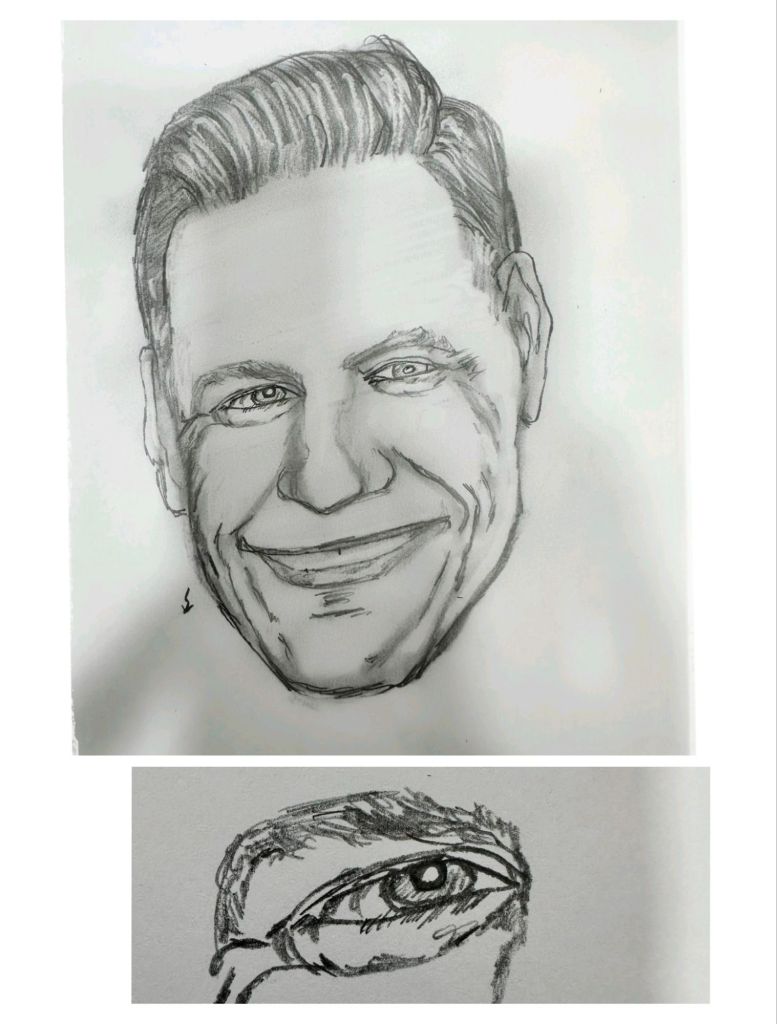
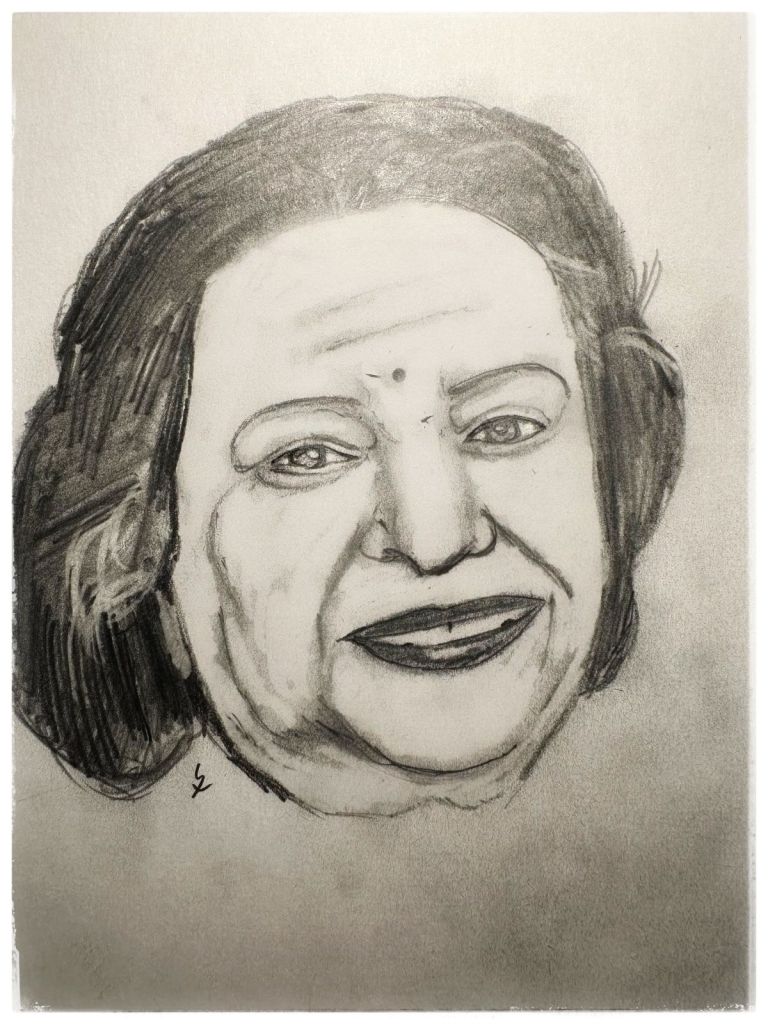
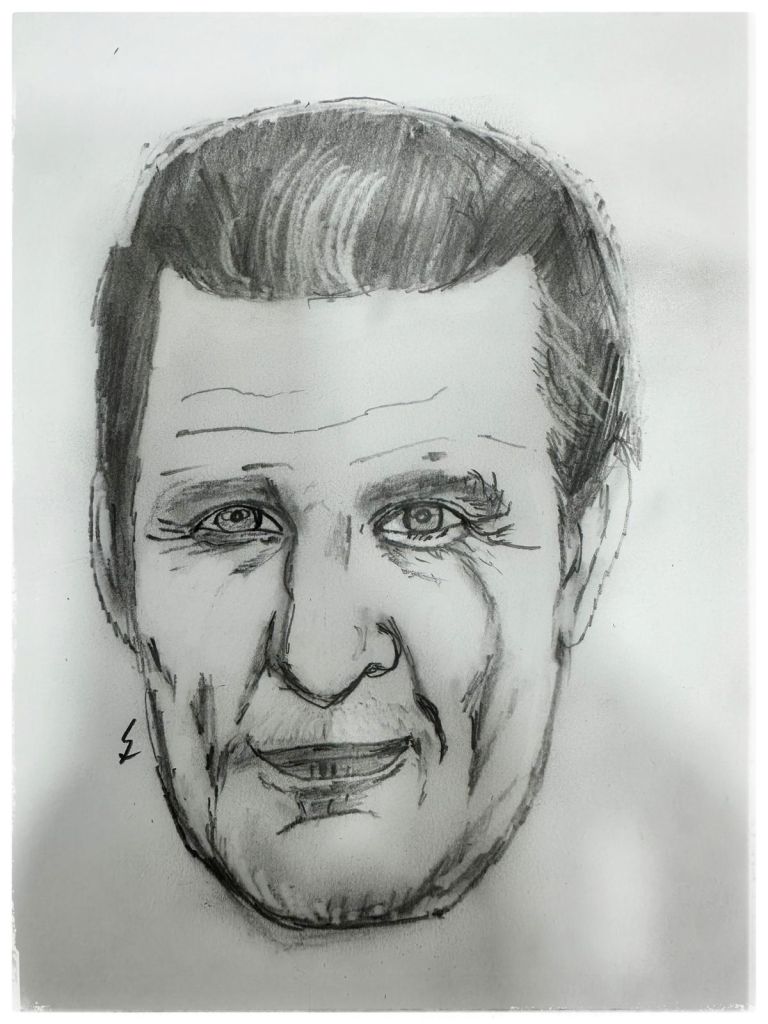
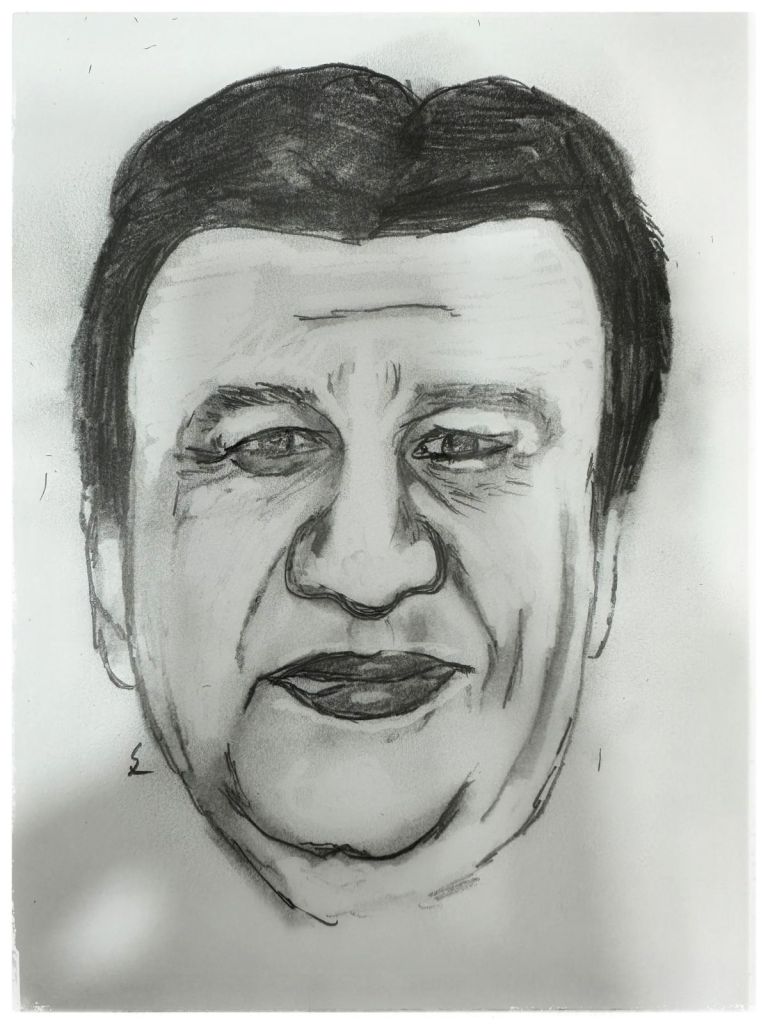
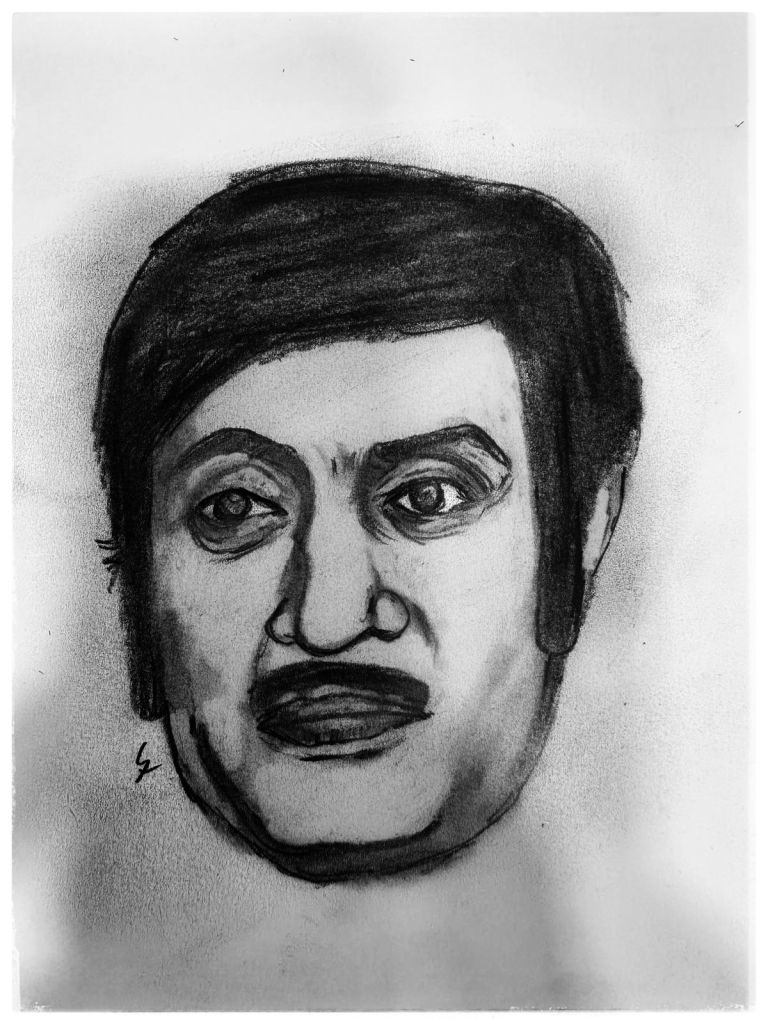
Under pressure!

“The graphite was black and dull

His twin the diamond was bright and shiny! 

But the sketch on the paper loved the former!

The latter was actually not too sharp and very whiny!”

So when you are a Harvard dropout you may feel disheartened! Add to this big failure you somehow get a great idea and start a new company! 

Then how about when the first company you started is a big failure! 

That is full stop for most but this guy went on to become one of the wealthiest dude in the world!

So apparently State and local governments frequently used to perform traffic surveys with a pneumatic road tube traffic counter some time before the tech was available or developed!

Rubber hoses were stretched across a road and wheels of passing vehicles create air pulses that are recorded by a roadside counter!

In the 1970s the counts were mechanically recorded on a roll of paper tape! The time and number of axles were punched as a 16-bit pattern into the paper tape! This was the way data used to be collected at that time!

Cities would hire private companies to translate the data into reports that traffic engineers could use to adjust traffic lights or improve roads! 

This guy who had just dropped out of Harvard his friend were previously high school students at Lakeside School in Seattle. 

The Lakeside Programmers Group got free computer time on various computers in exchange for writing computer programs!

These two thought they could process the traffic data cheaper and faster than the local companies by building a computer that could process all the traffic tapes using the Intel 8008 processor!

The goal was to sell such machines to states and local governments as a time and cost-saving tool!

The next step was to build a device to read the traffic tapes directly and eliminate the tedious manual work. The Intel 8008 microprocessor was announced in 1972 and they realized it could read the tapes and process the data. 

Finally with a couple of members they went to talk to Paul Gilbert, another electrical engineering student, who worked in the high-energy tracking laboratory. It was there that Paul Gilbert was approached by the duo to become a partner in this company called the Traf-O-Data!

That year Gilbert, piece by piece, wire-wrapped, soldered, and assembled from electrical components the working microcomputer!

The two original dudes wrote the software! 

Now there were many reasons why the company failed but the chief ones were that the company had done zero market research and lacked any real business model!

Finally the State of Washington offered free traffic processing services to cities, ending the need for private contractors, and all three principals moved on to other projects!

Of course big failures sometimes give more experience than even successes! The failure gave the duo lessons which they would use in their new venture which was of course a big success! The other dude is Allen while the Harvard dropout is a dude you may have heard about in passing!

A geeky guy called Bill Gates! 

The real contribution of Traf-O-Data was the experience that Gates and Allen gained, skills they used to write Altair BASIC for the MITS Altair 8800 computer! So it has been said that even though Traf-O-Data wasn’t a roaring success, it was seminal in preparing them to make Microsoft’s first product a couple of years later. They taught themselves to simulate how microprocessors work, using DEC computers, so they could develop software even before their machine was built! 

The earlier failures gave them valuable lessons for future success! There is a similar anecdote in birthday celebrity Ashok Saraf’s initial days as a comedian! Once when he was going to Kolhapur for the shooting of his first film, the policemen recognized him, however they made fun of the actor saying that their life is better than that of the actor. After this Ashok Saraf hid his face under the blanket! Later on of course he became a super star of Marathi and Hindi cinema!

Now turn off the computers and sleep!

Shubh ratri!

Once upon a time!

“He bawled like a baby and laughed for fun!

He had just heard a story and another one! 

The once upon a time now gave him laughter!

’cause he knew ’twas real life and no happy ever after!”

All of you would have heard the amazing story of Margarete von Waldeck! 

Yes, the name may not be familiar but as you read the story you will get glimpses of the tale you have been told and the truth which was kept on hold!

Read on!

So Margarete von Waldeck, was a 16th century Bavarian noblewoman. 

Margarete’s stepmother, despising her, sent the beauty, Her strict stepmother and father sent her first to her uncle’s house, and then to the court of Mary of Hungary, where she was pursued by Prince Philip. Alas, their relationship was doomed, as Philip was a Catholic and Margaretha a Lutheran!

His father, the king of Spain, opposing the romance, dispatched Spanish agents to murder Margarete. They surreptitiously poisoned her.

Margaretha’s letters to her father before her death speak of failing health and the Waldeck chronicles suggested that she had been poisoned, dying at the age of 21.

So, does the story ring a bell? Look in the mirror perhaps!

Yes! This is the original story of the snow white and the seven dwarfs!

Now where are the dwarfs you may ask!

Well Margarete grew up in Bad Wildungen, where her brother used small children to work his copper mine. Severely deformed because of the physical labor mining required, they were despairingly referred to as dwarfs!

The poison apple is also rooted in fact; an old man would offer tainted fruits to the workers, and other children he believed stole from him!

Another interpretation does not involve the apple, in this the Wicked Queen tries both to suffocate Snow White by giving her a lacy bodice and then tightening the laces and to stab her in the head with a poisoned comb. The Queen gets her comeuppance at her step-daughter’s wedding, when the prince orders the her to wear a pair of red-hot iron slippers and to dance in them until she drops dead!

Other versions in other countries have Snow White taking refuge with robbers rather than dwarfs, or staying in a haunted castle or a house on the seashore, rather than in a forest! Other variants include an enchanted dress, poisoned stockings or deadly flowers, rather than poisoned apple, or Snow White being called Ermellina and running away from home by riding an eagle who takes her away to a palace inhabited by fairies!

Other versions have evil older sisters, rather than a stepmother, and Ziricochel (as our heroine is called in this Italian version) taking refuge with the Moon, who also plays the role of the magic mirror! The sisters send an astrologer to kill Ziricochel, who, after several failed attempts, turns her into a statue using an enchanted shirt. All comes good in the end, however, when the prince’s sisters remove the shirt and revive Ziricochel!

So convinced are the residents of the mine’s location – the village of Bergfreiheit – that they now call the village Schneewittchendorf (Snow White village)! Like they say it takes a village to make things happen! Maybe this is the reason why they are called fairy tales since only in them you have the ‘Happily ever after!’. Real life of course no fairy tale like the life of birthday celebrity Sunil Dutt who had struggles with his son but still came out shining because of resilience and determination which is what required and not any Prince charming’s kiss!

Now read some fairy tale to your kids and sleep!

Shubh Ratri!

It’s always ding dong!

“The bell has to go ding dong!

Any other way is wrong!

The horse may not dance and hop!

But the Hooves always go clip clop!”

Any speaker of basic english (like most of us!) actually follow this rule without a thought! Now just think for yourself! When you describe the clock, you would always say tick tock! Have you ever said or hear anyone say tock tick?! How we always say Fiddle-faddle and never faddle fiddle?

There are numerous examples all over and we just follow it! It is always Chit Chat! No one usually says Chat chit! The big gorilla is King Kong and never Kong King! Unless of course you are master Yoda that is!

This rule is called the Ablaut reduplication!

READ ON!…

How does Ablaut reduplication work?

So, to explain the rule: if you have three words, then the vowel order has to be I, A, O. In the case of two words, the first is almost always an I and the second is either an A or O. For example, Mish-mash, chit-chat, dilly-dally, tip-top, hip-hop, flip-flop, tic tac toe, sing-song, ding-dong, King-Kong, ping pong! 

Another interesting grammar rule that we implement subconsciously applies when we describe things such as the name “little red riding hood”. Adjectives in English absolutely have to be in this order: opinion-size-age-shape-colour-origin-material-purpose-noun. 

Here are some examples! They have a lovely old red post-box! or I bought some charming Victorian silver ornaments at the flea market! If you try to change the order (try it mentally!), it may still convey the meaning you want like a toddler learning to speak! But it does not feel right! 

This explains why we would say little green men instead of green little men!

There are exceptions to the adjective rule as the I-A-O rule takes priority over everything else. An example: Big bad wolf. This rule is deeply rooted in our language, and it defies logic too. If we think about it, a horse’s four hooves make exactly the same sound as they hit the ground but to describe the sound we say clip-clop. Or It is always The little Red Riding hood! Never any other way! 

Now of course this rule is not only in English but in most languages! This is because the Ablaut reduplication isn’t seen just in English. This is because of the letter e! This is the most commonly used letter in the English language! 

So taking that into consideration, the letter e and the various derivations of the sound e are also essential in Indo-European languages. English also belongs to this language group. The words within this language group, generally speaking, follow specific patterns – usually consonant – vowel – consonant. So this rule also applies in Indo-European languages, and it also behaves similarly. 

Here we also should know what are known as the Ablaut grades. 

So Ablaut is the name of the process whereby the core vowel, which is almost always an e as mentioned above, would either be lengthened, altered to an o, altered and lengthened, or completely removed, known as the zero grade (an example of a zero grade: does not – doesn’t). 

This results in five ablaut grades overall: full grade (e), altered grade (o), lengthened grade (ee), altered length grade (oo), and zero grade (nothing). The first vowel is almost always a high vowel. This is then followed by the repetition of a lower vowel in relation to the first vowel. This is why the order is I, A, O! 

These grades give us patterns like sing-sang-sung outcomes in English, although we don’t use this process anymore to make new words but these matter when you use reduplication!

You will never eat a Kat Kit bar. The bells in Frère Jaques will forever chime ‘ding dang dong’! There are similar unwritten rules to be followed when telling things like black and white! It cannot be white and black! Does not sound right! Like the name of today’s birthday celebrity is Dinyar Contractor and not Contractor Dinyar! Still remember his spectacle movement scenes with the simultaneous movement of ears! It used to be so smooth and funny!

Now brush your teeth and sleep! Not the other way around!

ratri shubh…I mean Shubh Ratri!

Be Noble by being Nobel!


“The words he said she did not decipher
The meaning may be low, or they may be hyper!
But the way he said it was the real deal!
His sweet voice! The smooth note and his enthusiastic zeal!”


The cycle of destruction and creation has been described in every major place! Be it the mighty epics or even physics! Even one of the theories of the origin of the universe begins with a bang!

So for every creation there has to be a destruction! You have to level the ground to build a big building! The levelling of any structure or even controlled blasting is now dependent mainly on the discovery of Dynamite and its later successors! For all the practical purposes the dynamite changed the construction industry!
Now the discovery of dynamite and the change of hearywere two accidents!

Read on!

In the mid-19th century, Swedish chemist and engineer Alfred Nobel worked with nitroglycerin, a highly volatile and explosive liquid. He attempted to find a safe and manageable way to harness nitroglycerine’s explosive power for construction and mining purposes and control its detonation.

Alfred suggested to his father that they focus their attention on making nitroglycerine on a large scale. Immanuel Nobel did not need much convincing because his factory in St. Petersburg, which had been very profitable during the Crimean War, now faced bankruptcy.

The family moved back to Sweden and set up a factory to produce nitroglycerine. Almost immediately tragedy struck when an explosion killed Emil, the youngest son. The nitration of glycerine was a dangerous business. So dangerous that in some cases the workers who monitored the reaction were made to sit on one-legged stools so that they would immediately wake up should they doze off!
You would expect someone who is working in front of a bubbling kettle frothing with brown fumes of nitrogen oxides, containing the most powerful explosive known to mankind would not sleep but then sleep is a pretty strong motivator!

Making nitroglycerine wasn’t the only problem. How to detonate it was an even bigger concern. Alfred solved this problem with his invention of the mercury fulminate blasting cap.

He had long considered the idea of mixing nitroglycerine with some solid material with the hope of decreasing its shock sensitivity. This lead to the first accident!

One day, Nobel was working with the substance when a vial fell to the floor and smashed. But it didn’t explode, due to the contact it had made with a pile of sawdust, which helped to stabilize it!
Nobel later perfected the mixture by using kieselguhr, a form of silica, as a stabilizing substance. The production of a niroglycerin/kieselguhr combination was the beginning of what we now know as dynamite!

The sticks of dynamite could now be safely transported and would only explode when triggered with a blasting cap. Dynamite would change the world. It would allow even the Panama Canal to be built!

The invention of dynamite forever changed construction, mining, and demolition fields, making large-scale projects more feasible and efficient.

Then the second accident happened!
Nobel wasn’t in the best of health but he knew he wasn’t dead! So when he found his obituary, prominently featured in the morning newspaper was a shock indeed!
What was even more shocking was that not only had the newspaper killed him off prematurely, it had described him as a man who “became rich by finding a way to kill more people faster than ever before.” In other words he was remembered as ‘The merchant of Death!’

The French press service that provided the story had made a mistake or an accident!

It was actually Alfred’s older brother Ludvig who had died while vacationing in Cannes but a reporter had gotten the brothers mixed up!

Now though it was a mistake and an accident, it was a rude awakening for Nobel who immediately set upon making a prize which would be sponsored by the very money he earned from his scary invention! The most coveted prize in the world right now! The Nobel Prize! The circle continues! The destruction lead to creation! Though we may have to wait a long time for another singer like birthday celebrity Sripathi Panditaradhyula Balasubrahmanyam though…
He will be missed…

Now listen to Jote Joteyalli song by SPB and sleep!
Shubh ratri!

Art of the matter!

“One saw the skies so blue and the sun so bright and red!

Another one saw the forest maybe in the shade or in his head!

The flight of imagination may throw some potshot!

It was just the repercussion of abstract art!” 

The concept of art became clear to me when I saw the first Bonsai tree! When I was young (er!), my mother had attended a Bonsai cultivation training in which they were trained in the cultivation and production of these small ornamental trees which looked just like the real big tree! 

They were not dwarf of the tree which we will discuss later but smaller version of the whole tree! They were not like the bigger trees which were more stable but needed more tending and caring just like a small plant but they were more resilient! We had a Non flowering non fruiting Bonsai tree which did survive for a long time! 

Now of course it did not give any flower or fruit or shade! It looked nice and did not give anything (in material or measurable terms that is!) in return! That was art for me! 

Like mentioned above, they are not dwarf trees! The practice of bonsai is sometimes confused with dwarfing, but dwarfing generally refers to research, discovery, or creation of plants that are permanent, genetic miniatures of existing species. Plant dwarfing often uses selective breeding or genetic engineering to create dwarf cultivars. Bonsai does not require genetically-dwarfed trees but rather, depends on growing small trees from regular stock and seeds. Bonsai uses cultivation techniques like pruning, root reduction, potting, defoliation, and grafting to produce small trees that mimic the shape and style of mature, full-size trees!

Looking at the wiki history we see that Bonsai is officially the Japanese art of growing and shaping miniature trees in containers, developed from the traditional Chinese art form of penjing!

While both penjing and bonsai involve the cultivation of miniature trees, they differ in that penjing overall aims to showcase “wilder,” more naturalistic scenes and encompasses a wider range of styles and designs, and may include various elements such as rocks, water features, and figurines, creating a more elaborate and dynamic scene; on the other hand, bonsai is more restrictively focused on a single tree or a group of trees of the same species, with a higher level of aesthetic refinement!

Purposes of bonsai are primarily contemplation for the viewer, and the pleasant exercise of effort and ingenuity for the grower.

In contrast to other plant cultivation practices, bonsai are not grown for the production of food or for medicine though apparently you can still eat the fruit of the Bonsai tree and if your expectations of size and tastes are low, you are safe!

Some say that looking at the Bonsai or tending for it makes you calm or serene but then I think a book would do the same to me! Or better yet, some melodious music! Apparently even the trees and plants like them but then that is the blog for another day! Of course if you mention music then you have to mention birthday celebrity R. Gnanathesigan aka Ilaiyaraaja! His achievements are huge and not dwarf or Bonsai! 

Now listen to the Melodious song ‘Ilaya Nila’ and sleep!

Shubh Ratri!

Turn back time!


“FB steals it from you and you feel it’s free!
You tube takes another chunk without a bell or chime!
Whatever is left is taken by the Gram, WhatsApp and the (e) X!
Not talking about money but your precious Time!”

I am a gadget lover! I would buy anything with a bluetooth! I have bluetooth speakers, watch, lamp, table, neck massager, keyboards and mouse! Not to mention a bluetooth helmet! And my prized possessions; my Bluetooth sunglasses and reading glasses! I can simply wear them and listen to the phone or even speak in WhatsApp and no one would get to know!

The next gadget I have always loved since the time I was young (er!) is the watch! My nephew also has this obsession with the clock! Though clocks also are high in my list of things to buy and own; the wrist watches are a big thing for me!

My first watch which used to work like a normal watch was an HMT classic! Before that as kids we used to love wearing the plastic watches and showing around! Of course those watches only showed one time! We used to ask our elders the latest time and ‘adjust’ it with our fingers every time! The bigger plastic hand was usually the first one to fall and later the smaller one followed! The flimsy plastic strap used to break and all the rubber bands in the world could not keep the watch from literally disintegrating to pieces! That was time lost in every sense!

The HMT was my prized possession till one day one of my relatives gently mentioned that it was a ladies watch! Of course since my wrists were small (they still are!); it would be odd wearing watches which were big and bulky! The battle between wearing a ladies watch versus wearing a big one was finally won when the young skinny me got an electronic watch!

I distinctly remember how my parents told us to stay in our room in the transit camp of Guwahati and they went to buy the digital watch from the ‘Chinese market’ there!

Our imaginations were flying high and I soon wanted a digital watch with a calculator and a maybe with a speaker and a feature to call! By the way that was in 1988-89!

Of course I was heartbroken when I got a single line bulky digital watch which showed only time! How boring! Later of course it was a great possession for showing off till the battery gave away and those days once the battery is dead it may not be replaced for some time!

For a long time then I never had a watch till the Board exams when my dad got us the HMT watches and this time they were men’s! They were of course standard size which in my case were too big for my skinny wrists!

The standard metal straps were soon replaced by better looking ones and I held on to that watch for a pretty long time till I got into the medical college!

Now those watches were a joy to have since you have to put the key every night! They used to get ‘recharged’ by turning the crown till you get a resistance! If you need to change the time you need you pull the crown a little and change the time! If you keep the crown in the same position then the watch will stop! And if you twist the crown too much then the spring inside will not function properly!

It was this time when there were guys who had the automatic watches which did not have to be ‘charged!’ The movement of your hands would charge the spring inside! My dad had one such watch and they were the ones which made you wide eyed with wonder!

Then came the digital and the smart watches and that is a blog for another day!

Even though they are not comfortable or common, I adore pocket watches! For now of course my Apple Watch can call, has calculator and even GPS and heart rate measuring capacity! Even then my dream is to one day get a limited edition pocket watch and when someone asks for the time, take it out of my pocket and tell him or her! Of course it may be the wrong time but I am sure by then the person would not mind so much about the time! One can only dream or think about the lovely moments of childhood! One of them was Wagle ki Duniya starring birthday celebrity Anjan Srivastav! Oh those were the days when the time was slow and steady and fun!

Now tell Alexa or Siri or yourself to set the alarm and sleep!
Shubh ratri!

Game of life!!


“Sing along and say your name!
Dance the way you want ain’t no shame!
Scream and laugh and make everyone insane!
Be like a child always! ’cause life is a nice game!”

This may be one of the first game every child plays! One of the few games which is so simple to learn and can be played without any limitation of age!
The amazing thing is that even an illiterate person can play the game and win it! Though some amount of luck is required to win it, most of the time simple strategies and placing the first point makes or breaks the game!

You can play it on paper or without one!
Rich or poor, everyone has to play the same way and this may be one game which is seen all over the world with variations in name and points used!

You would have played it with your father and child or even grand father!
The very simple but interesting game called; Tic-tac-toe!

Now the very first traces of tic-tac-toe go back to Egypt, which has remnants of 3×3 game boards on roofing tiles from 1300 BCE. Other variations included the terni lapilli
(three pebbles at a time) from the Roman Empire, three men’s morris from various
parts of Asia, and Picaria from Native Americans.

The game’s grid markings have been found chalked all over Rome. Another closely related ancient game is three men’s morris which is also played on a simple grid and requires three pieces in a row to finish and Picaria which is a game of the Puebloans.

The first print reference to “noughts and crosses” was as a British name which appeared in 1858, in an issue of Notes and Queries.
While the first the first print reference to a game called “tic-tac-toe” occurred in 1884, but referred to “a children’s game played on a slate, consisting of trying with the eyes shut to bring the pencil down on one of the numbers of a set, the number hit being scored”.
“Tic-tac-toe” may also derive from “tick-tack”, the name of an old version of backgammon first described in 1558.

In 1952, OXO (or Noughts and Crosses), developed by British computer scientist Sandy Douglas for the EDSAC computer at the University of Cambridge, became one of the first known video games. The computer player could play perfect games of tic-tac-toe against a human opponent!
Of course as mentioned in an earlier blog, ‘Tennis for two’ was the official first video game though in 1948, ten years before Higginbotham’s Tennis for Two, Thomas T. Goldsmith Jr. and Estle R. Mann patented the “Cathode-Ray Tube Amusement Device,” making this currently the earliest-documented video game predecessor! OXO could be the practical second video game ever produced! Then again it is more popular as a non video game!

In 1975, tic-tac-toe was also used by MIT students to demonstrate the computational power of Tinkertoy elements. The Tinkertoy computer, made out of (almost) only Tinkertoys, is able to play tic-tac-toe perfectly! On a dull day our school book’s last pages were full of these games! Youth of course were spent listening to the songs! One such album was Alaipayuthey starring birthday celebrity Ranganathan Madhavan! Recently saw the movie Shaitaan starring Maddy! The ending was good but I felt that he would have been better in the role of Ajay and Ajay should have played Maddy’s role!

Now listen to some old Maddy songs and sleep!
Shubh Ratri!

A man’s best friend is a woman’s better one!

“He listens to me with a stare so cute!

He tries to catch his tail like a race!

He may not tell me what is going on inside his mind!

But I know what my pet feels; just look at his face!”

In the whole history of Human civilization, the Homo Sapien has the distinct honor of domesticating fully only one animal! Of course other animals are also domesticated but the complete domestication means that this animal has the life and time completely dependent on the human! 

Yes! The dog! The menace of stray dog notwithstanding which is a different matter altogether, all said and done, many of the modern dog species cannot survive without a human feeding clothing and vaccinating! Cats do come close but you can never actually ‘Tame’ a cat or ‘bell’ a cat! In fact in one of the recent comments by an experienced observer was of a sketch of a cat and the first thing which was asked was how did the cat allow the ‘collar’!

Both Yuval and Desmond in their books have mentioned about this the way how these wild species finally became the best friend of the man (or woman!) is an interesting story!

It is not certain exactly when our ancestors first began to domesticate this valuable animal, but it appears to be at least ten thousand years ago! 

The wild, wolf-like ancestors of the domestic dog must have been serious competitors with our hunting forebears. Both were co-operative pack-hunters of large prey and, at first, little love can have been lost between them. But the wild dogs possessed certain special refinements that our own hunters lacked. They were particularly adept at herding and driving prey during hunting maneuvers and could carry this out at high speed. They also had more delicate senses of smell and hearing. 

If these attributes could be exploited in exchange for a share in the kill, then the bargain was a good one. So an association with them would be beneficial to both! A perfect symbiosis if there ever was one!

Somehow an inter-specific bond was forged. It is probable that it began as a result of young puppies being brought in to the tribal home base to be fattened as food! Yes! Even the cute dog puppies you like to love and cuddle nowadays would have been eaten by the early Homo Sapien! 

Then the value of these creatures as alert nocturnal watch-dogs would have scored a mark in their favor at an early stage! Those that were allowed to live in a now tamed condition and permitted to accompany the males on their hunting trips would soon show their paces in assisting to track down the prey. Having been hand-reared, the dogs would consider themselves to be members of the naked-ape pack and would co-operate instinctively with their adopted leaders!

Selective breeding over a number of generations would soon weed out the trouble-makers and a new, improved stock of increasingly restrained and controllable domestic hunting dogs would arise. Basically the old adage of get in line or get out!

It has been suggested that it was this progression in the dog relationship that made possible the earliest forms of ungulate prey domestication. The goats, sheep and reindeer were under some degree of control before the advent of the true agricultural phase, and the improved dog is envisaged as the vital agent that made this feasible by assisting large-scale and long-term herding of these animals!

During more recent times, intensified selective breeding has produced

a whole range of symbiotic dog specializations. The primitive all-purpose hunting dog assisted in all stages of the operation, but his later descendants were perfected for one or other of the different components of the overall behavior sequence. So now we have specialized dogs, their contribution being confined largely to their skill sets like rounding up of domesticated prey are the sheepdogs while others, with a superior sense of smell, were inbred as scent-trackers (hounds). Then again we have the those with an athletic and were employed to chase after prey by sight have now become racing dogs like the greyhounds!

Another group were bred as prey-spotters, their tendency to ‘freeze’ when locating the prey being exploited and intensified (setters and pointers). Yet another line was improved as prey-finders and carriers (retrievers). Small breeds were developed as vermin-killers (terriers). The primitive watch-dogs were genetically improved as guard-dogs (mastiffs!)

Now you also have the guide dogs and the K9 units all over the world who aid their best friends in many possible ways! Of course the most common ones are the cute and cuddly ones who are just happy to see you and wag their tail and fetch! With their keen sense of smell and the relation with the humans these amazing creatures are truly the super star of pets! A true super star of the Telugu Film industry also was birthday celebrity Ghattamaneni Siva Rama Krishna Murthy aka Krishna! If you think Mahesh Babu looks good, you must check out his stylish and smart father Krishna and you will realise that the apple did not fall too far from the tree!

Now check out some old Krishna hits (actor or God, your choice!) and Sleep!

Shubh ratri!

The master and the pet!

“You get food for him, you take him places!

You love his face and the tail he chases!

He gets the best food and a cosy bed u bet!

You may be the master, but he is your pet!”

In the book The Naked ape by Desmond an interesting analysis was done about the favourite animal which bought into light many findings!

This was based on a survey done for both boys and girls in different groups and the results were surprising! 

If you split the age groups from young to old it has been seen that the favourite animals change as the age progresses! 

The chief determinant here is unexpectedly not the ‘cute’ or ‘sweet’ criteria but the size! Yes size apparently does matter! So the younger children prefer the bigger animals and the older children prefer the smaller ones!

To illustrate this we can take the figures for the two largest of the top ten forms, the elephant and the giraffe, and two of the smallest, the bushbaby and the dog. The elephant, with an overall average rating of 6 per cent, starts out at 15 per cent with the four-year-olds and then falls smoothly to 3 per cent with the 10-14 year-olds. 

The giraffe shows a similar drop in popularity from 10 per cent to 1 per cent!

The bushbaby, on the other hand, starts at only 4.5 per cent with the four-year-olds and then rises gradually to 11 per cent with the fourteen-year-olds. The dog rises from 0.5 to 6.5 per cent. The medium-sized animals amongst the top ten favourites do not show these marked trends!

In all these the medium sized normal routine animals remain constant! 

The authors had an interesting conclusion on these findings which may or may not be relevant for today!

They proposed two principles. 

The first law of animal appeal states that ‘The popularity of an animal is directly correlated with the number of anthropomorphic features it possesses.’ 

The second law of animal appeal states that ‘The age of a child is inversely correlated with the size of the animal it most prefers.’!

In simpler terms the preference is based on a symbolic equation and the simplest explanation is that the smaller children are viewing the animals as parent-substitutes and the older children are looking upon them as child-substitute!

So a young kid would like an animal which is big and possibly strong like his or her father while an older kid would like a animal to treat as a ‘child’ or ‘pet!’

When the child is very young, its parents are all-important protective figures. They dominate the child’s awareness. They are large, friendly animals, and large friendly animals are therefore easily identified with parental figures!

As the child grows it starts to assert itself, to compete with its parents. It sees itself in control of the situation, but it is difficult to control an elephant or a giraffe.

The preferred animal has to shrink down to a manageable size!

The child, in a strangely precocious way, becomes the parent itself! The animal has become the symbol of its child. The real child is too young to be a real parent, so instead it becomes a symbolic parent!

The author has advised that parents should be warned from this that the pet-keeping urge does not arrive until late in childhood! So it is a grave error to provide pets for very young children, who respond to them as objects for destructive exploration, or as pests! 

We have seen this too often when a child simply grabs the tail of any grab worthy part of the pet and it can actually lead to serious issues if the pet is not docile or domestic enough! Then again this was in 1960s! The amount of reels of young kids with pets may paint a different picture! Now thinking of picture reminds me of birthday celebrity K. S. Ravikumar  and his very entertaining movies!

Now pet…I mean put yourself to sleep!

Shubh Ratri!

As tall as Everest!

“The little mouse tells to the tall mountain!

Oh how tall you are! Reaching for the sky!

The mountain replied sadly!

Oh what I would not give to move like you, let alone fly!”

At one point in the world, Kangchenjunga, was the official tallest mountain of the world! At the height of  8,586 m, it stood kissing the skies!

I still remember the view of the majestic Himalayas from the flight on the way to Ladakh! Words can’t describe the view!

So coming to the tallest mountain!

In the 19th century the Great Trigonometric Survey of British India, identified “a stupendous snowy mass” through surveying instruments from above the hill resort of Darjeeling, over 140 miles away!

The peak was initially named “Gamma” and then subsequently changed to “peak b” in 1847; it was suspected that “peak b” also called “XV ” might be the highest mountain in the world!

During the time the mountain was allowed to be measured by the surveyor General of India who unfortunately was not Indian or Nepali! So in 1831, George Everest, the Surveyor General of India, was in the pursuit of a mathematician who had specialised in Spherical Trigonometry, so that they could be a part of the Great Trigonometric Survey which could calculate the actual height of this tall mountain and officially claim the feat to be the tallest in the world! 

Everest had begun his search for a mathematician, and soon enough, John Tytler, a professor of Mathematics at the Hindu College, now known as the Presidency College, recommended his 19-year-old pupil, Radhanath Sikdar!

Radhanath, a student of the college since 1824, was one of the first two Indians to read Isaac Newton’s Principia and by 1832; he had studied Euclid’s Elements, Thomas Jephson’s Fluxion and Analytical Geometry and Astronomy by Windhouse! 

Radhanath started measuring the height of mountains. The brilliant mathematician, who had perhaps never seen Mount Everest compiled data data about Mount Everest from six observations and he eventually came to the conclusion that it was the tallest in the world!

It was during the computations of the northeastern observations that Radhanath had calculated the height of Peak XV at exactly 29,000 ft (8839 m)! , but his senior Waugh added an arbitrary two feet because he was afraid that the Sikdar’s figure would be considered a rounded number rather than an accurate one!

He officially announced this finding in March 1856, and this remained the height of Mount Everest till an Indian survey re-calculated it to be 29,029 ft or 8848 m in 1955! 

From the plains of India it is only one among many conspicuous peaks, and its distance from the Indian frontier across the whole width of Nepal often prevents its being seen at all. The first names proposed were the Nepalese names Devadhunga and Gaurisankar. The first, however, was found to be non-existent as a peak name in Nepal, and the second belongs to another peak. There was no entry of the surveyors into Tibet in those days, and, in the lack of Indian and Nepalese names, it was necessary to find a title for the peak. 

In the early 20th century, the acclaimed Swedish explorer Sven Hedin uncovered the centuries-old Tibetan name of Cha-mo-lung-ma,” which in fact had been published on a map in Paris in 1733 by the geographer D’Anville! Therefore, the historic, local Tibetan name for Mount Everest is Chomolungma, also spelled Qomolangma, meaning “Goddess Mother of the World.” Chomolungma is pronounced “CHOH-moh-LUHNG-m?.” 

The Nepali name for Mount Everest is Sagarmatha, meaning “Goddess of the Sky.” Some refer to the entire massif of peaks as Qomolangma (Everest, Nuptse and Lhotse), reserving the name Mount Everest for the highest peak!

The name “Mount Everest” nevertheless persists as the most universally recognized name throughout the world and of course it was done in 1865 by naming it after Sir George Everest, of the Trigonometrical Survey of India! 

Now of course it feels bad that it was not given a local name and fame but it has been told that even Everest did not want the peak to be named after him but with a local name instead! Then again, the mountain is the tallest in the world, whatever you may call it! Sometimes fame does not even need or is not even dependent on a name! Some people though have fame which is as tall as the Everest and maybe more! One such is the birthday celebrity Malavalli Huchchegowda Amarnath known by his screen name Ambareesh!

Now start preparing for Sagarmatha or Everest base camp by sleeping well!

Shubh Ratri!