reductionism…what’s that!?…

In the series of lectures called Being Human by Robert Sapolsky; there was one section which went way over my head!

Not that everything else what he said made sense! But this one was particularly complicated!

It still is!

The statement was this ‘Currently, the most exciting realm of biology is the notion that behavior is determined by genetics’.

So far so good! Then Robert introduces this word and it becomes complicated!

This is the heart of Western science’s focus on reductionism, the notion that to understand a complex system, you need to understand its component parts!

Robert Sapolsky argues that classical reductionism fundamentally fails to explain complex biological systems and human behavior.

Now first look at Sapolsky’s Definition of Classical Reductionism!

Sapolsky defines classical reductionism as the philosophy that if you want to understand a complex system, you break it down into its component parts.

In a purely reductionist framework we can assume that the parts can simply be added back together linearly to understand the macro-system!

Robert now tries to tell how or why Reductionism Fails in Biology!

Sapolsky uses the analogy that biological systems are “clouds, not clocks.” You can fix a broken clock by examining its individual gears. You cannot fix or predict a cloud by isolating individual water molecules.

Here you have two primary disruptors of reductionism!

The first is the role of Chance wherein non-linear biological systems are heavily influenced by random events at micro-levels. For example, the unequal distribution of mitochondria during the very first cell division of identical twins creates biological divergence that a reductionist blueprint could never predict!

Another is the social complexity which is with respect to behavioral biology,  we know that studying individuals in isolation fails to predict how they will behave in a larger group. Group dynamics create unpredictable social hierarchies that defy linear summation!

Sapolsky uses a multi-disciplinary approach to build a strictly deterministic argument against free will! He argues that human behavior is entirely shaped by an unbroken chain of biological and environmental factors—ranging from neurochemistry seconds before an action, to hormone levels days prior, to evolutionary pressures millennia ago.

So reductionism will not work for biology and there is no such thing as FREE WILL!

Then again if you have a good taste in music then your will enjoy Ilaiyaraaja’s songs with your complete free will!

Now try to understand the blog and sleep!

Shubh ratri…

Being human parasite!

Being Human: Life Lessons from the frontiers of Science is a series of lectures by; Not Salman Khan but by Robert Sapolsky!

You see ‘Being Human’ and if your brain is still stuck in the 1990s teenage mode then you may think Sallu Khan! Or it may be Toxoplasma Gondii THINKING!

In one series of lecture, Robert talks about parasites like Toxoplasma Gondii! This blog is not about Toxoplasma though!!

It is about other equally interesting PARASITES! Now just like Humans even Parasites have to live and propagate!

Even the simplest virus to the HUMANs who are parasitic! Remember that once a species is Parasitic then it will think only about its survival and nothing else! Whatever be the cause! Even if it has to damage or destroy the HOST, a PARASITE will not hesitate!

Think about the Rabies virus! It has a limited window to spread once it is in the circulation! So the affected animal is made to secrete more saliva and be ready to INJECT! The brain chemistry is changed to permanent aggression so that it is always ready to bite and spread! How did a microscopic virus achieve that!?


Then there is a parasite that moves between a species of fish and a species of waterbird as part of its life cycle! But when it is in the fish, it disturbs the functioning of the gills so that the fish has to swim closer to the surface to get
more oxygen and is, therefore, more readily eaten by the waterbird,
which eventually excretes the parasite! The parasite then falls back
into the water and is eaten by another fish, and the cycle continues!

One type of barnacle parasitizes a sand crab by injecting estrogenic (female) hormones. When injected into a male crab, the male starts having female-typical crab behavior, including digging a nest in the sand to lay its eggs. Because the male crab is not going to be laying any eggs, the barnacle can do so at that point!
So what would happen when the barnacle interacts with female crabs, it does the same thing, but first it castrates the female, destroying her ovaries, which is called parasitic castration! The parasite here not only makes sure its progeny survives but also DESTROYS the HOST progeny!

Finally (not by a long shot! but as far as this blog is concerned this is the last example!)

Why does the pinworm itch!

The eggs are laid on the fur of a rodent and it is very itchy! The rodent gnaws and itches and inadvertently swallows the eggs! The gut of the rodent is the best place for the eggs to reproduce!

Which is why you must not scratch every itch! If you do, then make sure to wash your hands!

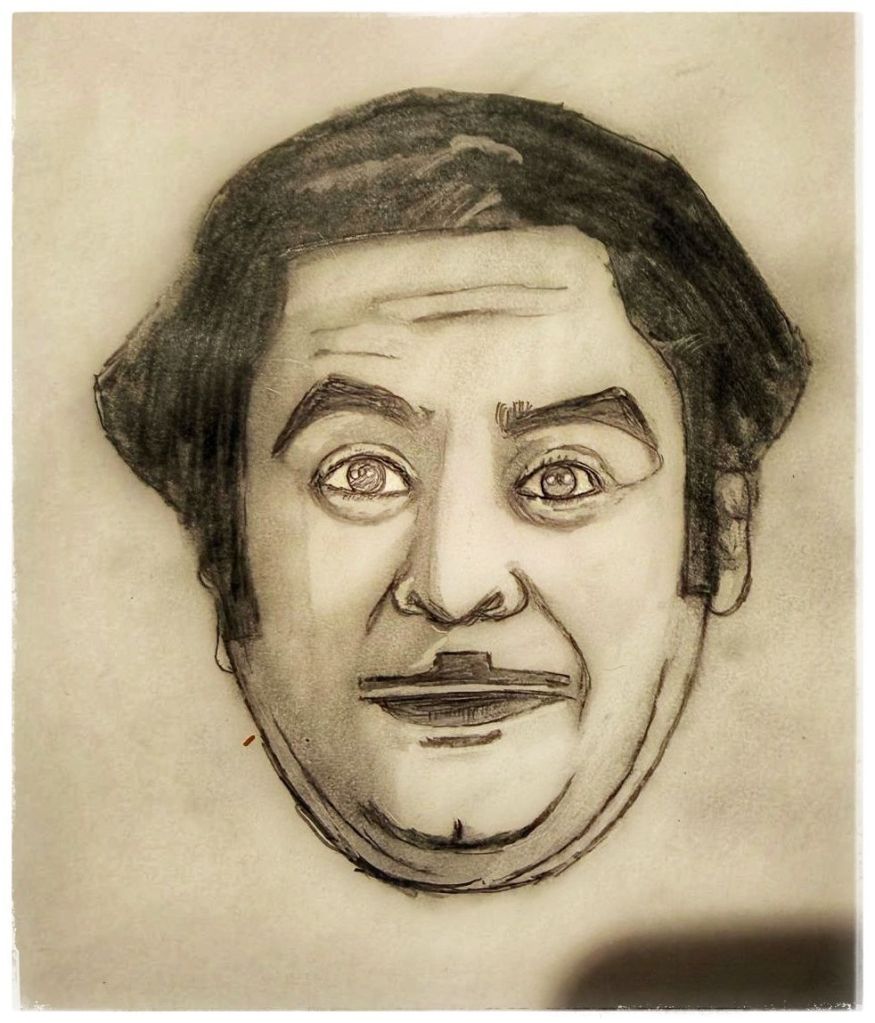
Then again if it’s an itch to see a nice movie then you can watch a movie made by K. S. Ravikumar!

Shubh ratri…

Being Human: Life Lessons from the frontiers of Science by Robert Sapolsky

Being Human: Life Lessons from the frontiers of Science

Robert Sapolsky, The Great Courses

Audiobook

Self help book

Basically a collection of lectures by Robert from his experiences and lots of overlap from his different novels like Behave and Why Zebra do not gets ulcers to name a few.


The first topic is of course what is so special about Being Human! You have gang wars and baboon with predominantly female leaders leading to peace!

Then you have tool making as DISCOVERED by Jane Goodall!

Even here the girls shine while boys play around!

Humans are prosocial but in a recent studies; so are Chimpanzees!

Vasopressin and monogamy! Then you have oxytocin and its affect on human behaviour! Pretty interesting stuff!

He tells about the most exciting realm of biology called Reductionism!


Second lecture is Junk food monkeys!

Becoming a farmer from Hunter Gatherer reduced life and height! then the worst was to get the westernized diet away from the more healthy traditional diet!

The study presented was a company of baboons who had a naturally predominantly vegan diet and were healthy! Till they chanced upon the garbage of the national park and got free JUNK FOOD!

Life was never the same again!

Lecture three is called The Burden of Being Burden free

Here comes the context of his novel Why Zebra where he tells about how acute stress is good! So this lecture is basically a summary of his novel Why Zebra don’t get ulcers! Including the mentioning of Norwegian military recruits and stress!

Bugs in the brain in the fourth lecture which is about ; well bugs in the brain!


Lecture 5
Being poor and autopsy and SIDS! This has been elaborated in his other novels also and is an extension of the disease Sudden infant death syndrome which was attributed to an enlarged Thymus which lead to radiation which lead to Thyroid cancer! Finally it was concluded tha the Thymus is normal!

Lecture 6
Why we dream and the role of PFC and dream
The role of Limbic system in dreams!


Lecture 7
Pleasures and pain of maybe talks about PFC and dopamine
Dopamine increases not when you get the reward but in the anticipation of reward
So Dopamine is not about happiness but the pursuit of happiness

Lecture 8
How the other half heals
MS and RA and the concept of hospitalism! How some diseases affect the poor while some are selective to the rich!

Lecture 9

Why we want the bodies back
An emotional rendition of how in many cultures the bodies are sacred

The last three lectures like the brain and bad mood, metaphors and sushi and middle age tells about the complexity of the brain and the inability to adapt after a certain age!

It was like a special class on brain function and since I am currently also currently listening to his other novels; all the topics went into the brain pretty easily!

An amazing series of being not only a Human but also an Intelligent One!

Biomechanics…

How many times you have seen a spider or an ant and tried to crush it and feel superior about it!?

That is only because of the size! But if you compare the capability relative to size and weight, then that spider and ant is actually stronger than you (and me of course!)

Then again, Physics has made this other animal the strongest in terms of size and capacity to lift!

So a very exceptional spider including certain small species possess the highest grip and structural strength among arachnids, capable of supporting or pulling up to 170 to 173 times their own body weight!

While an average ant can carry objects weighing up to 50 times its own body weight with its jaws!

As you go up the ladder you get to meet the Rhinoceros Beetle which can lift up to 850 times its own body weight!

In spite of that, this is not the strongest beetle!

That undisputed champion is the dung beetle (Onthophagus taurus), which can pull up to 1,141 times its own body weight. This is equivalent to an average human pulling about 80 tons (or six double-decker buses)!

Feel insignificant yet!?

If not then there is a competitor to the Dung Beetle also! And this true ‘animal’ uses complex biomechanics to lift!

The tropical oribatid soil mite! Technically known as Archegozetes longisetosus, this mite is actually the true record holder, capable of generating a holding force of up to 1,180 times its own body weight!

While the horned dung beetle holds the crown for the strongest insect, this microscopic mite (measuring under 1 mm and weighing just 100 micrograms!) technically beats it out for the title of the strongest animal overall relative to its mass!

The two creatures achieve their record-breaking forces through different mechanical actions:

The Mite achieves a 1,180x vertical holding force on rough surfaces using its specialized claws and exceptionally strong claw-closer muscles. Its horizontal pulling force is roughly 530 times its weight!

The Dung Beetle achieves a 1,141x horizontal pulling force. This is typically measured as the beetle fights rivals or pushes heavy balls of dung through underground tunnels!

So all you need is to replicate what these tiny animals do and make machines which can lift buildings! Of course you need to read and understand biomechanics!

Then again if you are wondering who is the strongest land animal and are looking for raw, absolute lifting power rather than relative weight, the African bush elephant is the strongest!

It can carry up to 6,000 kg (its own weight) and its trunk contains over 40,000 muscles capable of lifting 350 kg! All with a diet of grass and leaves! Who said salads do not make you strong!?

Strong and huge were also the achievements of Ghattamaneni Siva Rama Krishna Murthy aka Krishna! His movie Alluri Seetarama Raju gave a distributor share of one crore way back in 1974! How’s that for a record!?

NOw do no lose sleep over the strenght of the cockroach below your bed!

Shubh ratri!

Real estate problem of your brain!…

Imagine you are having something nice and suddenly you see an image of something disgusting or get a bad rotten smell! More often than not, you will transfer the disgust to what you eat or see and may even lose your appetite!

That is because of a space issue involving your Insula!

Now that is not the name of a brand new Insulin for ADULTS, but an area of your brain!

The concept is pretty interesting and it involves a standard real estate problem!

In the Novel Behave and in some of his lectures Stanford neuroscientist Robert Sapolsky highlights the insular cortex (or insula) as a prime example of evolutionary improvisation.

He uses it to demonstrate how the human brain borrows primitive neural plumbing—originally designed for physical survival—to process abstract concepts like morality, tribalism, and social judgment.

This is according to the Concept of “Neural Double-Jobbing”. So in most mammals, the insular cortex serves a purely metabolic function: gustatory and sensory disgust.

It activates when an animal eats toxic, rotten food, triggering an automatic, visceral response to spit it out or throw up to save its life!

So when humans evolved the capacity for complex, abstract metaphorical thought around 50,000 years ago, the brain did not evolve a brand-new region to handle moral transgressions!

Instead, evolution repurposed the old insula to handle moral disgust.

Because the brain uses the exact same hardware for both tasks, humans cannot easily distinguish between a literal physical experience and a metaphorical one!

The areas are so close to each other that they have a cross connection!

Then you have the Visceral Side of Morality in which Sapolsky points out that when we encounter an act or symbol that is “morally disgusting,” the insula activates as if we just swallowed rancid meat!

This is why intense moral revulsion leaves us feeling physically queasy, sick to our stomachs, or with a bad taste in our mouths!

While this mechanism helps humans forcefully reject bad behavior, Sapolsky warns that it carries a massive social cost!

Once the insula registers moral disgust, it immediately sounds the alarm to the amygdala, the brain’s headquarters for fear, aggression, and threat detection.

Because moral disgust is deeply context-dependent and subjective, the insula easily misinterprets things that are merely different (e.g., unfamiliar cultural practices, dietary habits, or lifestyles) as being disgustingly wrong!

This is when you get the complication of US vs THEM!

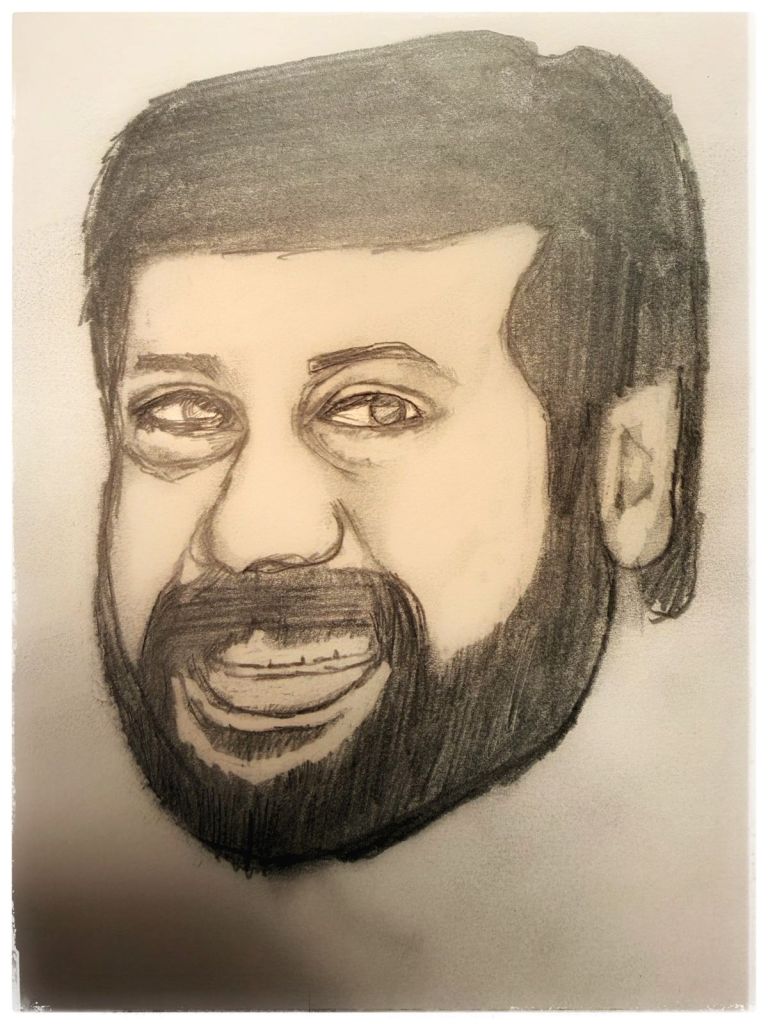
Then again it’s no complication when you say that Paresh Rawal is a great actor!

For now simply give rest to all the real estate of your brain!

Shubh ratri…


You can’t do this… To youself!

The next time someone challenges you then you can challenge him or her to do this thing which no one can ever do!

But you can do to him or her!

Most of the times that is!

Robert Sapolsky in a series of lectures about the human and other private behaviour tells about this one thing which no one can do to oneself!

But he or she can do it do others and get done by others!

All right; will not tease or tickle you for long!

Yes! It is tickling!

You can never TICKLE yourself!

We are of course assuming that your brain and mental status is good when you read or assess or think about my blog so if you see a monkey tickling itself and laughing then that is not an exception!

For the rest of the HUMANS; you simply cannot tickle yourself!

Primarily this is because your brain anticipates your own movements.

When you initiate a tickle, the cerebellum predicts the exact sensation, sending signals that cancel out the ticklish feeling before it registers. This built-in “sensory prediction” prevents your nervous system from reacting to your own touch.

Tickling is highly dependent on surprise and the feeling of vulnerability!

Every time you decide to move, a part of your brain (the cerebellum) sends out a motor command. Alongside this, it sends a preemptive message to the rest of the brain detailing exactly where and how you will touch yourself.

Because your brain already knows the touch is coming, it “dials down” your sensory response. This process, known as sensory attenuation, is why you don’t jump when you accidentally brush against your own arm, but you would if someone else touched you! Particulalry if it is that SPECIAL someone!

So when someone else tickles you, your brain cannot anticipate the movement or the exact location of their touch. This unexpected contact triggers the tickle reflex and makes you laugh!

Of course the degree of being able to be tickled by others is variable from person to person! Some are very tickish while many have a thick skin!

Now do not try to tickle yourself! You are not a monkey! If you want to smile or laugh instead you can catch up a
Robin McLaurin Williams movie!

Now tickle your itching nose and sleep!

Subh ratri…

You are not alone…

8,295,623,810…

As of 28th May 830 PM KST that is the population of the world!

Even then you will find somebody who is all alone and well, more accurately Lonely. Then again even amongst them you will find those who have reached at such a level of stress in their life that even when they know what to do; they simply do not do anything!

The technical term is called Learned Helplessness…

If you listen to the talk by Robert Sapolsky about Learned Helplessness then you will get the medical version!

Stanford neurobiologist Dr. Robert Sapolsky utilizes the psychological framework of learned helplessness to bridge the gap between chronic environmental stress and the neurological mechanics of major clinical depression!

Sapolsky focuses heavily on the underlying biology and explains how a lack of control and predictability over stressful events fundamentally rewires the brain, destroying motivation and the capacity for joy!

Learned helplessness occurs when an organism is subjected to repeated, uncontrollable stressors.

The subject transitions from trying to cope to realizing that nothing they do alters the outcome! They become so frustrated with a small failure after failure than they simply stop trying!

It becomes a point when the mantra or in this case, the curse becomes’ “What is the point?”

In the novel ‘Why Zebra don’t get ulcers’ Sapolsky translates this psychological state into cellular neuroscience, specifically highlighting how chronic stress damages brain architecture!

Uncontrollable stress causes a massive, sustained release of cortisol (and other glucocorticoids). High levels of these hormones over long periods are toxic to neural structures especially the hippocampus which is responsible for learning and memory.

Prolonged exposure physically atrophies dendrites here. This impairs an individual’s ability to cognitively process new contexts, anchoring them to past helplessness!

You also have Dopamine Depletion and also in a state of learned helpless
ness, the brain depletes its norepinephrine reserves, leading to psychomotor retardation! This is the term where simple physical and cognitive tasks require immense effort!

Sapolsky views major depression as the ultimate pathological extension of learned helplessness. He argues it is a profoundly biological disorder—comparable to juvenile diabetes—rather than a failure of personal willpower!

Now tackling this head on is a complex problem which needs proper and ‘EXPERT’ measure but like how simple small steps can cause it to develop; simple small successes consistently done over a period of time can actually reverse the process!

Robert suggests many methods including exercise and meditation! Even a silent prayer can work wonders!

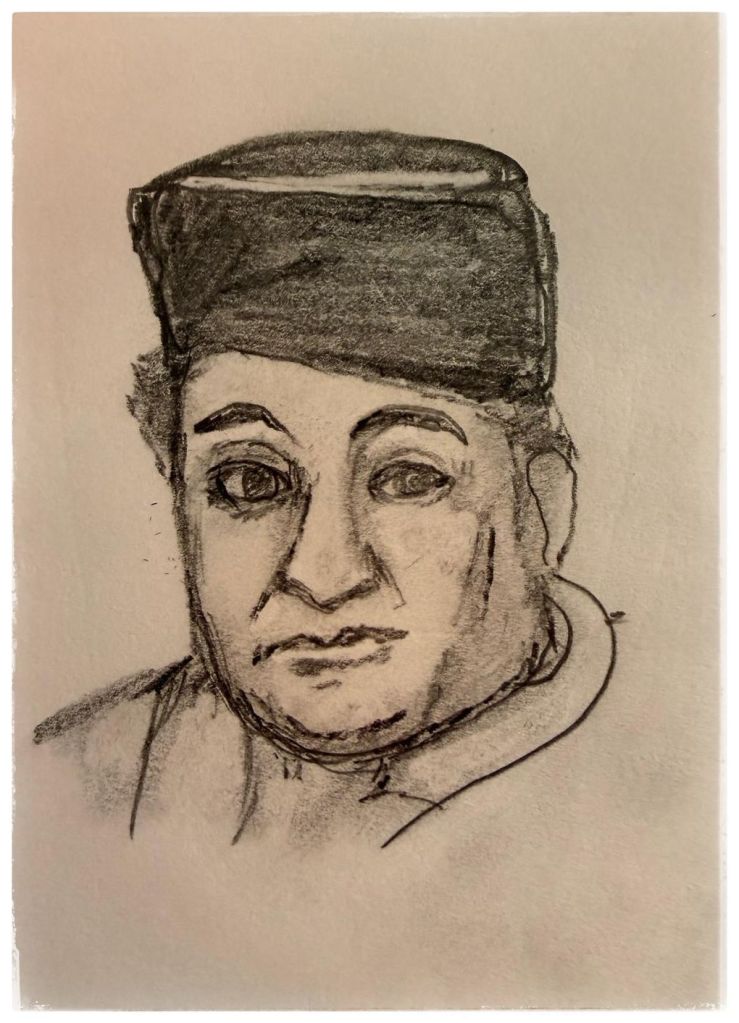
Or simply watch an old movie! I would recommend Maya Bazaar! Do check out who plays Shri Krishna in the movie!

SHubh ratri…remember as Michael says; “You are not ALONE!”…

Jatinga bird suicide or??…

Jatinga is a small village in Dima Hasao District of Assam. Like other hill stations it is blessed by nature and scenes which can adorn any photograph or painting! 


However, what differentiates Jatinga from any other normal travel getaway in India is the bird suicide mystery!

Now I know many places in Assam like Missamari or Rangapara which many would not have heard of but this was one place which was new even for me!

The Jatinga Bird Suicide mystery is a click bait since according to this story, it is believed that birds from several geographical locations come here not to mate, migrate or do something else but to commit suicide.

This strange phenomenon has caught the interest of scientists and ornithologists alike!

Interestingly this happens in a narrow area between August and November, where hundreds of local and migratory birds tragically plummet to their deaths at night!


Now of course research has shed some LIGHT on the real cause of this phenomenon.

This mass mortality happens when dense fog and reverse winds disorient the birds, causing them to crash into artificial lights and trees, where villagers previously struck them down.

The phenomenon occurs along a narrow 1.5-km strip in Jatinga, a village in the Dima Hasao district of Assam, India.

It predominantly happens on foggy, moonless nights between 7:00 PM and 10:00 PM, usually when air currents and monsoon rains reverse.

Nocturnal and diurnal species, particularly juveniles, become disoriented by strong winds and the village’s bright lights, causing them to plummet toward the glow!

Extreme weather and sudden changes in barometric pressure disrupt the birds’ natural navigational and biological rhythms. The artificial lights also add to the confusion! Drawn to the lights of the village as a refuge, the birds fly low and become dazed.

Historically, locals mistook these nighttime avian drops for evil spirits, prompting them to knock the disoriented birds out of the sky with bamboo poles!

Finally wildlife officials, ornithologists, and conservation groups have actively educated the villagers.

Superstitions have largely been dispelled, and mass killings have significantly dropped. Today, authorities encourage observing and studying this fascinating natural occurrence rather than harming the wildlife!

Knowledge has literally given a new light to the amazing phenomenon! Behind any such ‘magic’ is the knowledge which is just waiting to be gained!


Magic also was the acting prowess of Gopishantha aka Manorama!

Hope you learnt something today!

Shubh ratri…

Hospitalism…

One of the most important factors to be healthy is your economic status! That is the most blunt way of putting it but that is the raw truth!

Some papers have even found that first responders from ‘POOR’ areas do not even try to resuscitate or try HARDER to revive emergency calls! Sounds sad and cruel but that is the reality!

As Robert Sapolsky mentioned in one of his lectures; even in countries with SOCIALISED medicine; there have been been a difference of care and health between the poor and the rich!

The famous adage WHEN EVERYONE IS POOR; NO ONE IS! Is actually never a reality! You will always find a gradation! There will be a one eyed person among the blind!

Then again this blog is not about that!

This blog is about a condition in which it was detrimental if you are RICH!

This was a situation in which if you are rich and can afford a good private hospital then your child is more likely to have a one way trip!

The term was called hospitalism!

There are two distinct meaning as far as the history goes and in both cases they are not good for the patients!

Originally coined in the 1860s, it referred to the spread of fatal infections within hospitals! By the 1930s, it evolved into a pediatric term describing severe physical and psychological deterioration in institutionalized infants deprived of maternal care!

Initially used in Britain, “hospitalism” described the unsanitary environment of early hospitals, which were believed to absorb and circulate infections, causing high mortality rates!

As far as the blog is concerned the latter meaning is the one which used to affect the RICH!

Pediatricians began using the term specifically to describe infants in orphanages and foundling homes who wasted away despite receiving adequate nutrition.

Psychoanalyst René Spitz popularized the term. Through landmark studies in 1945, he documented how babies in institutions who lacked human contact and “maternal love” suffered from stunted growth, developmental delays, and high mortality—a condition later linked to anaclitic depression!

Spitz’s research directly influenced modern healthcare. It spurred a global shift away from long-term institutionalized orphanages and changed hospital visitation policies, eventually leading medical professionals to prioritize parental presence and emotional bonding in pediatric care!

In simple terms, the rich did not have love to give which the POOR had plenty to give! Most of the times all you NEED IS LOVE! The warmth of a human touch especially a mother’s touch can give better results than the latest and priciest medications!

So you must only be that rich that you know people love you for you and not your money!


Hope that makes you laugh like jetha bhai!

Shubh ratri…

A dream come true…

Inception is probably one of the best movies when it comes to sleep! With Nolan leading the way with the research you knew that you are in for a sleepy ride!

In a series of lectures by Robert Sapolsky about sleep you get try to understand why we sleep and fail! Then you try to understand why we dream and why our dreams do not have any limits!

Now how do you know it is dream or real life?

According to the movie you have some clues!

The movie relies on several concrete rules and clues to differentiate dreams from reality:
Dreamers use items called Totems! A totem’s weight or balance is meant to feel normal only in the real world. If the physical properties feel altered, the character knows they are dreaming!

Then the most important clue is “How did we end up here?”
In real life, people are conscious of how they arrive in a location, but dreams typically start abruptly in the middle of the action!

In real life though what you can do in a dream is only what you can DREAM of in real life!

If you have walked up to this person or even your boss with confidence and told him or her off! Of you have done a sky diving from a chopper! Or you are driving a Chopper! Or going simple; you speak exactly what is there in your mind!

Then you are in a dream!

Do you know what keeps us doing all these things in real life!?

The BRAKE of your brain! The part of the brain which is most developed! The part of the brain which is still to be developed in Teens (which to a certain extent can explain why they ACT without thinking!)! The most complex part of your brain!

The FRONTAL CORTEX!

Now we do now know why we sleep! But one finding is that the frontal cortex is surprisingly inactive during sleep! It is like a class where the teacher has gone out or is sleeping! Which is probably why without the limit or class monitor FRONTAL CORTEX telling you NO or NOT to do the nonsense which you are planning to do; you simply let it GO!

In one novel by Ashwin Sanghi; it was told that you are one half of another person living in some other part of the world! So what you are doing in your dream is what the other person is actually doing in his or her real life in some other part of the world! Now that is the creative FRONTAL CORTEX again!

All said and done; the next time you see your boss and DO NOT slap him or her; do remember to thank your FRONTAL CORTEX, before you sleep!


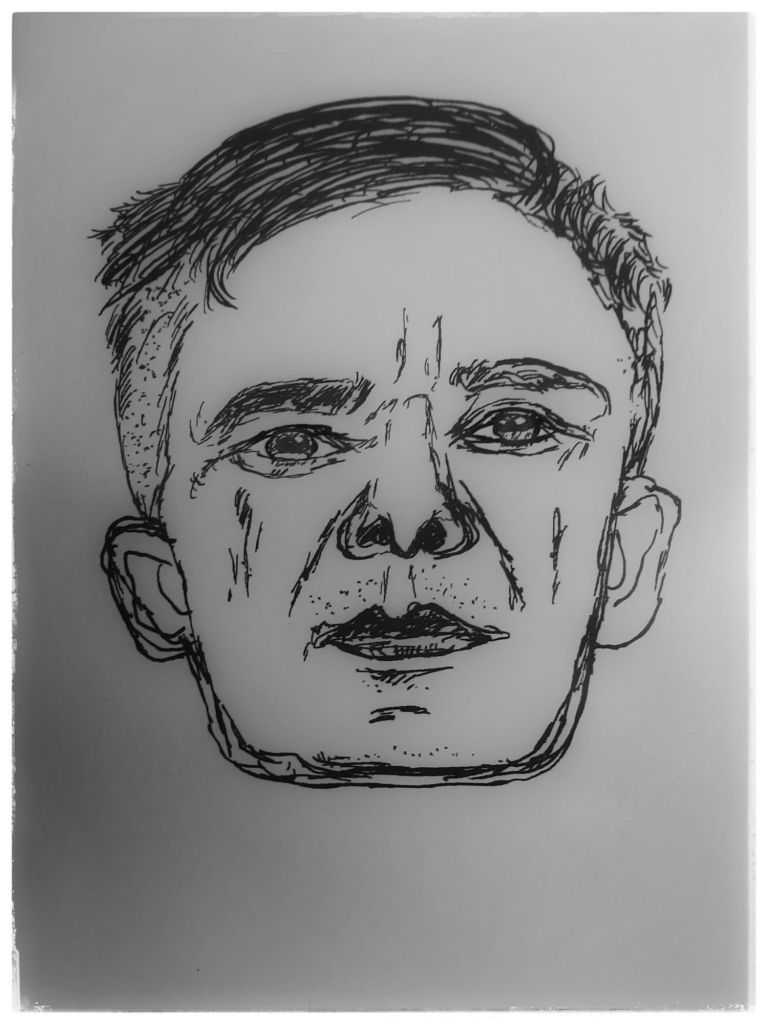
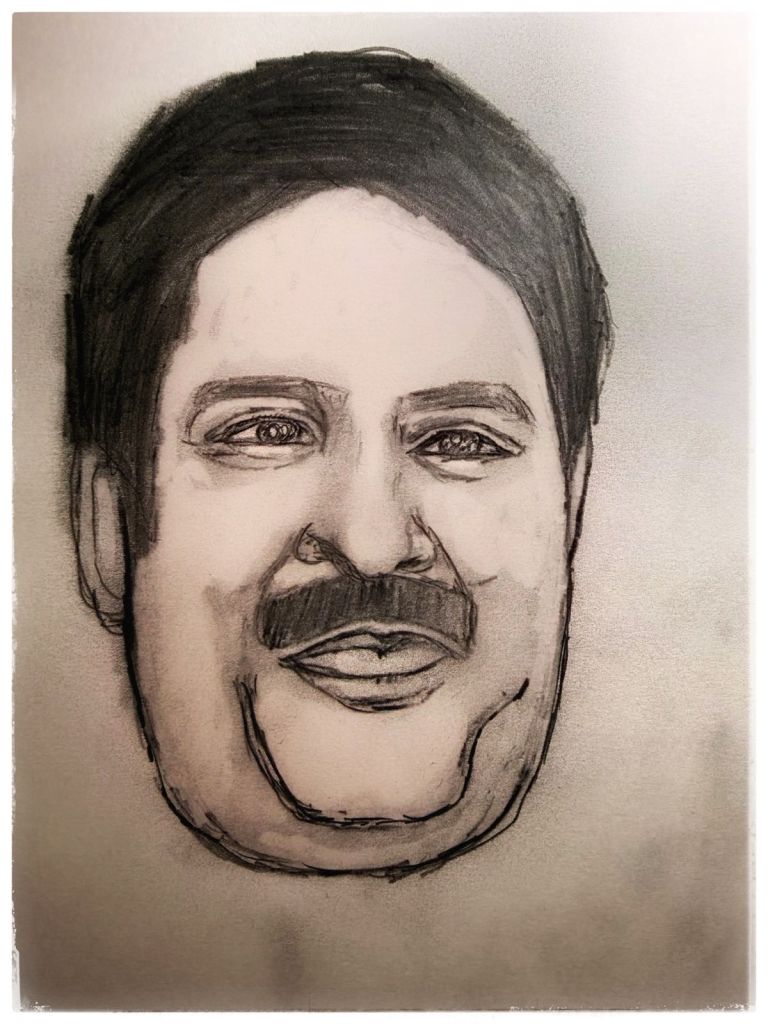
Of course some have amazing frontal cortex like revolutionaries like Rashbehari Bose! The reason why I sketched him apart from being his birthday is that my Mom used to Live in Rashbehari avenue in Kolkata and when I went I shared some fond memories through her!

Her old house and the street shops!
A nostalgic memory…

Shubh ratri…