Jimmy Jimmy spy!

This was a song made by an Indian composer sung in Russia and used to identify an American Spy!

Sounds like a Ken Follet novel in the tune of the Man from St Petersberg!?

First we must know if you know the song or not!

More importantly the second line!

One of the first major hits of Mithun Da; this movie song picturised on him did not even have him singing or dancing!

In our KV days the name called out in the song was one of the most common name for a pet dog! We used to tease that the lead actress was calling out to Mithun da like we call a pet!

It was such a famous song that even those who do not know hindi knew the song! At least that was the case in KV! That too at least the first two lines!

The movie is Disco Dancer and no! The song is not Disco dancer which is also a famous peppy number though!

The song you have to think of is “Jimmy Jimmy Aaja Aaja” by the legendary Indian composer Bappi Lahiri (affectionately known as Bappi Da).

Everyone know’s Jimmy Jimmy! I think!
Of at least heard of it!

But you may not know that the song became a cult in Russia in the 1980s! If you were in Russia during that time then you will know the song!
It was actually a cultural phenomenon!

The song, sung by Parvati Khan for the 1982 Bollywood movie Disco Dancer, became a massive sensation in the Soviet Union after the film was released there in 1984. It sold over 120 million tickets, and virtually everyone in the country knew the track by heart!

Now comes the very interesting SPY TEST!

According to a famous piece of cultural folklore, locals and guards would allegedly use the song to spot American or foreign spies!

Because the song was so ubiquitous, if someone sang out “Jimmy Jimmy” to a stranger, a native Soviet citizen would instinctively know to respond with “Aaja Aaja”.

If a person failed to respond or looked confused, it was used as a clue that they had not grown up in the USSR!

So if you want to know if someone is a SPY; simply say JIMMY JIMMY!

He or she has to reply aja aja by the way…
Made you smile! Just like how Jatin Kanakia used to!

In any case you can listen to songs from Disco dancer! Your sleep may not come though!

Shubh ratri!

The dolphin walk!

The novel Greatest show by Richard Dawkins tells about how in spite of being an animal in the ocean; the dolphin is actually more related to the human being!

It is all in the walk!

Not catwalk! The again when you talk about catwalk!

The term “catwalk” combines physical structure and feline grace: it refers to both the physical narrowness of the elevated stage—originally modeled after precarious industrial or maritime bridges—and the smooth, precise “foot-after-foot” walk models use to showcase clothing on it!

But here the focus is not on the ramp but the walk!

The Dolphins actually do not SWIM in the conventional sense! They actually Gallop in the water!

Unfortunately they do not have land so they use the water!

They also do it for Energy Efficiency! Leaping out of the water and diving back is called “porpoising and is actually easier and faster than swimming entirely underwater when going at high speeds, because air creates less drag than water!

Dolphins also use this motion to cover long distances quickly. Also since they are actually Mammals it also helps them in ‘breathing’! Breaking the surface allows them to easily grab a breath of air while moving at top speed!


Then you have an animal which does not have water so it uses the land!

The snake!

A snake does not gallop or walk on land, in fact it remembers it’s ancestor in water and actually swims on land! So the water snake or the sea snake is not an exception! They are actually aquatic creatures! They later LAND snakes arrived on land but did not FORGET to swim! Which is what they do even now!


Then again they have developed so many modifications of the swim!

The first is the Serpentine or Lateral Undulation movement where the snake curves its body into an S-shape. It pushes off objects (like rocks or branches) to propel itself forward! Then you also have the Concertina or the Accordion like movement, the Rectilinear or Straight Line movement and finally the Sidewinding which is used primarily by desert snakes to travel on loose, slippery sand!

Then you have those who mix and match!

Like the crocodile which mostly swims or walks like a lizard but sometimes it apparently gallops and it does it fast! And then you have an amalgamation of all the walks!

It is all in the walk!

Swimming is thus an act! And a necessary skill! So if a snake is chasing you (it is unlikely though!); try SWIMMING on land!

Like how your tongue swims in the oral cavity! Speaking of tongues reminds me of the polyglot PV N Rao who could speak over 17 languages!

Then again it’s better to walk the talk!

Just getting the WALK in the last line that’s all!
Hope you don’t get a dream of a swimming snake!

Shubh ratri…

Warm female!


You of course know that women are cool while men are; no no! Not fool! But hot; ok ok, warm!

Then again I am not writing about the human species!

Apparently the chief thing which determines whether this species would be a male or female is the temperature of incubation!

Mind blown!?

It is not science fiction but a common observation!

Only if Poghat sir had known about this then he would have tried to be cool or warm to get a son! May not work for humans though!

The phenomenon is seen in the GECKOS!

This process is called Temperature-dependent Sex Determination (TSD).
The moment you have a fancy ‘scientific’ name to a phenomenon then you have a GUT feeling that it may be true!

So apparently the ambient temperature the egg experiences during its incubation window dictates whether the hatchling develops as a male or a female!

So if you are ‘incubating’ your pet GECKO you may start taking notes!

For popular pet geckos, like Leopard Geckos, the breakdown is as follows:

Cool Temperatures (26 degrees  – 30 degrees ) produces predominantly females. In fact if you manage to maintain a temperature of 26 degrees, you will get nearly 100\% females!

Then you have the Warm Temperatures which is between 32 degrees to 32.5 degrees which produce mostly males!

Like I said before Males are warm! If you go above this temperature then it is HOT and that is again; FEMALES!

Which means that High Temperatures (34 degrees – 35 degrees) producea mostly females (often referred to as the “high-temperature females”)!
You can also call them the super hot models of the Lizard community!

The ‘Scientific’ research from the Tokyo University of Science shows that during a specific developmental window, temperature activates either male-linked or female-linked genes within the embryo!

This is the reason for the embryo to develop into males or females which in this case is dependent on the temperature!

However, temperature isn’t the only factor for all geckos; some species rely on genetic sex determination, and hormones can sometimes override incubation temperatures!

So even if Males can be cool or Hot while females can be just warm! Gecko ones of course!

Then you have the extremely WARM and story rich movies directed by Krishnaswamy Bhagyaraj! It was a pleasure to watch them though sometimes you cannot watch them with the whole family! Story was the key point and how!

Like how Thalaiva Rajni told in some function about the Three ‘Rajas’ who redefined the Tamil Movie industry in the 1980-90s! Bharathiraja, Ilayaraja and Bhagyaraj!

We lost Bharathiraja recently and the loss of Bhagyaraj is a big one indeed. He will me missed. Heartfelt condolences to the legend

Om Shanthi…

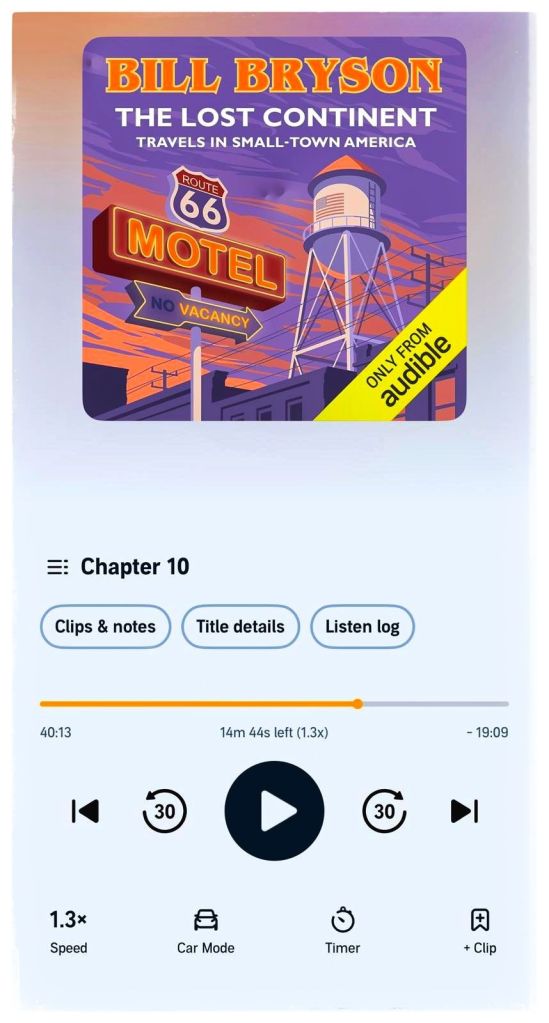
Why Zebras Don’t Get Ulcers by Dr. Robert Sapolsky

Why Zebras Don’t Get Ulcers by Dr. Robert Sapolsky

Audiobook

Self help book

A landmark book to say the least!

The biological differences in how humans and wild animals experience and process stress determine why humans suffer from stress-related illnesses like stomach ulcers, while zebras generally do not.

A zebra only experiences short-term physical emergencies. When a lion attacks, the zebra’s fight-or-flight response activates immediately. This floods its body with glucose and raises its blood pressure to help it run away. Once the danger is gone, the zebra immediately calms down and returns to eating grass. Its stress response shuts off completely.

Humans can activate the exact same physiological stress response simply by thinking or worrying. Psychological stressors—like job insecurity, paying bills, traffic, or relationship conflicts—persist for months or years. Humans live with sustained, low-to-mid-level panic that rarely shuts off completely


When the fight-or-flight system is constantly activated by psychological worries, the human body suffers severe physical wear and tear!

During emergency stress, the body stops digesting food to conserve energy for running or fighting. If you are constantly stressed, your stomach’s natural defense mechanisms and tissue repair functions remain paused.

The stomach lining continuously defends itself against corrosive gastric acids. Prolonged stress diminishes the stomach’s ability to secrete protective mucus and maintain healthy blood flow, making the lining vulnerable to eroding and forming an ulcer.

Chronic stress releases hormones like glucocorticoids (cortisol) that suppress the immune system over time. This makes it incredibly difficult for the human body to fight off Helicobacter pylori, the primary ulcer-causing bacteria!

Ultimately, the evolutionary stress response was designed to save an animal’s life during a 5-minute chase on the savanna. Humans make themselves sick by keeping that emergency system running continuously for purely psychological reason!

This is the short summary!

Then if you have follwed or listened or read his ealier books or rather later books like Behave or heard his lecture you would know the effect of stress!


The Robert takes about control which is more important than the stress itself!

Now imagine this situation;

You are placed in a room and presented with a sound at a particular loudness which is supposed to induce stress!

By default it would induce stress!

Then you are given a Lever or a shown a button and informed that you can press the button and the sound will get better or less loud!

As expected the presence of the button reduced the stress levels!

The more interesting thing here is what is revealed next!

The button does nothing!

Even if the button does nothing; the mere thought that you have some control over your stress is ENOUGH to reduce your stress!

That is the crux of the matter!

We get stressed on things which we do not have control on or cannot control! But the moment we believe that we can control the situation; the stress reduces or goes away!

There has been similar experiments on rodents with similar results!

This reminds me of the famous flow chart of stress or problem where it was advised that if you CANNOT do anything about it then just let it go and STOP worrying about it!

Robert Sapolsky argues that the core driver of psychological stress is not the stressor itself, but the loss of control!

When we face difficult circumstances, the lack of predictability, outlets for frustration, and social support turns acute biological reactions into chronic, health-damaging stress.

Of course the most easiest non stressful job is to give advice to others! While the most difficult stressful task is to follow your own advice!

It is all in the control!

If you want to win in elections then you can use an aerosol version of this drug and people may be incined to vote for you!

Of course they have to like you in the first place!

The drug only gently NUDGES them in your direction!

The ‘drug’ is VASOPRESSIN!

He also mentions how this drug is responsible for Monogamy and also how it is oxytocin which is reponsible for stress!

Then he tells about the role of stress in the causation of Ulcer!

This story is famous among the GE of the world!

GE  here stands for Gastroenterologists and not Genius though many may be!

Anytime you have an ulcer you know even your mother would tell you that you have STRESS!

That was the primary hypothesis till this bacteria came along!

No scientist would ever think an infection would cause ulcer! They would immediately tell how the strong acid would kill all the bacteria and no bacterium would ever survive that! Till there occured an accidental mistake!

So from the land down under you had Dr Barry Marshall successfully culturing this bacteria over an Easter weekend after ‘mistakenly’ leaving plates in the incubator, a fortuitous mistake that revealed the bacteria’s need for longer, specific growth conditions!

While pathologists had observed spiral bacteria in gastric tissues as early as 1893, it was thought to be contamination!

In 1982, Robin Warren observed the bacteria in gastric biopsies!

Officially then both Barry Marshall and Robin Warren speculated that Helicobacter pylori is the primary cause of stomach ulcers and gastritis!

Of course the GE community was not impressed! They dismissed the whole idea till Marshall made another BRAVE MISTAKE!

Due to skepticism from the medical community, Marshall drank a broth containing H. pylori to prove it caused illness! Many called it a STUPID MIstake! It could have been a GRAVE one for sure!

Then again LUCKILY he developed severe gastritis (vomiting, bad breath) within days!

This confirmed his hypothesis and validating the infectious cause of ulcers

Of course even this was not accepted soon by the GE community till many such reports got reported and an eradication of this Bacteria caused a cessation of ulcers!

It was a victory of persistence!

Now research shows H. pylori has existed in humans for at least 100,000 years, migrating out of Africa with its host, and is present in nearly half the human population, though not always causing disease.H. pylori is now understood to live in the harsh, acidic environment of the stomach by producing the enzyme urease, which neutralizes acid and allows it to colonize the mucus layer!

Their discovery overturned the long-held medical belief that ONLY stress and diet caused ulcers, proving instead they were also  infections treatable with antibiotics which earned them the Nobel Prize in 2005.

This is ONE of the SEVERAL cause for your ulcers!

So even if it present it may not cause ulcers since like all infections it is an interplay of agent host and environment!

So he tells about the role of stress in the causation of ulcers, heart conditions, reduced immunity and in general a short life span!

Even in the case of diseases like cancer he tells how more stress is worse! The he tells about the famous Dutch winter in which the starvation among pregnant women produced children who were like sponge!

In the end he also tells how you can reduce stress! Medication and meditation being on the top of things!

An extensive analysis of stress and the glucocorticoids and also how the whole system was developed to protect you in the short term! But if it persists then you are in a world of strain or stress!

All in all a very non stressful book to handle stress!

Cannot stress that enough!

Type 2 Fun!


Everyone knows what is Type 2 Diabetes! At least most medicos do!

Now do you know that there is a type of fun which is called the Type 2 fun!  You also have type 3 fun by the way!

It is no fun to wait for it though!

Now you know what is fun! Chiling and not working for it too much! Of course the definition of fun for everyone is different but then it is more or less similar!

The specific type 2 fun refers to an activity that is miserable, difficult, or uncomfortable while you are doing it, but becomes highly enjoyable, rewarding, and memorable in retrospect. It generally involves stepping outside your comfort zone, pushing your physical or mental limits, and overcoming a significant challenge!

So this brings us to the fun scale! Yes! Everything has a grade! Even FUN! That if of course the best way to take FUN out of everything!

The concept originated in the mountaineering community to categorize activities based on how they are experienced over time!

Type 1 Fun: Fun both while it is happening and later (e.g., eating pizza, laughing with friends)! Or in my case simply lying on a comfortable bed and watching a nice movie with the whole family in my home theatre!

Then you have the Type 2 Fun: Not fun at all in the moment, but deeply satisfying to look back on! We will get back to this!

Type 3 Fun: Not fun while happening and a miserable memory you never want to repeat (e.g., getting hypothermia, surviving a disaster!). It is a nice memory which is good only because you survived it but you do not want this to happen again!

So in this Type 2 fun is the one in question!

While often associated with wilderness and survival activities, Type 2 fun can apply to anything that requires grit and determination!

In outdoors it can be running a marathon, backcountry hiking in a rainstorm, or surviving a tough camping trip!

It can even be in everyday life! Learning a difficult instrument, building a complex piece of furniture, or pushing through a brutal workout! I still remember the IKEA bed which we as a family FIXED! It took the whole day and our backs were sore for a couple of days! But boy was it worth it!

So despite the temporary suffering, many people actively seek out Type 2 fun because it builds deep resilience, creates the best stories, fosters powerful bonding with others, and teaches you what you are truly capable of! It is like you WORK for the fun and this is why you feel it is valuable!

So what type of fun is reading this blog!? Please do not tell it is TYPE 3!


Then again simple type 1 fun is listening to music especially made by the super talented Madan Mohan Kohli!

Now go for the standard type 1 fun! Aka Sleep!

Shubh ratri!

Caloric value of Grass!

Do you know the nutritional value of grass?

It was announced at one time on the radio!

It is a tragic story indeed!

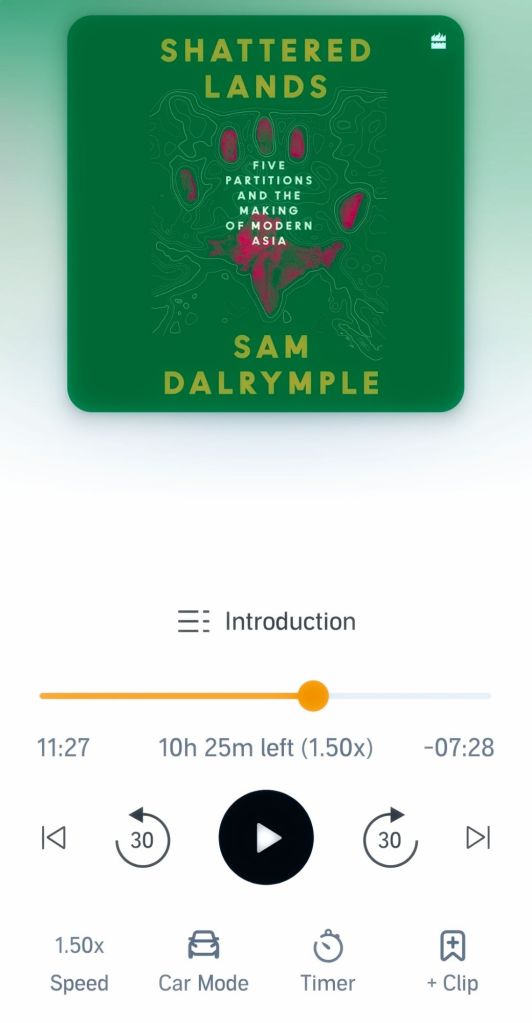
The novel Shattered lands by Sam Dalrymple tells about the partition of the British India and among other things tells about the Bengal famine.

Many historians try to whiteswash the history when it does not suit them which is why this tragedy which killed more than 2 million people is still not known to many!

The 1943 Bengal Famine was a catastrophic humanitarian crisis in the Bengal province of British India that resulted in the deaths of an estimated 2 to 3.8 million people. Occurring at the height of World War II, it stands as one of the deadliest man-made disasters of the 20th century, deeply tied to British colonial governance and wartime economic policy.

Now though ocalized factors like a 1942 cyclone and a fungal crop disease reduced regional rice yields slightly, modern research and economists have proven that there was no absolute shortage of food supply in 1943.

Instead, structural failures and deliberate policies precipitated the mass starvation.

The first was the  “Denial Policy”: Fearing a Japanese invasion after the fall of British Burma in 1942, authorities implemented a scorched-earth strategy. They confiscated and destroyed tens of thousands of local boats—the primary transport for food and the livelihood of rural fishermen.

The other CHIEF cause was one man! The British government under Prime Minister Winston Churchill systematically prioritized stockpiling grain for military forces and European reserves over feeding the civilian population. More than 70,000 tons of rice were exported out of India during the first half of 1943 alone!

Severe wartime spending and panic hoarding triggered a massive spike in rice prices (skyrocketing from 2 rupees to 40 rupees). This economic shock priced agricultural laborers, rural artisans, and fishermen completely out of the food market.

The crisis decimated the social fabric of rural Bengal. Millions of starving, impoverished families dissolved as men sold off tiny plots of land to find work and women and children migrated en masse toward cities like Calcutta, begging for standard grain water.

Winston Churchill’s wartime cabinet repeatedly denied urgent requests for relief food shipments and medicine from British officials stationed in India.

Official colonial records from the era reveal deeply unsympathetic attitudes, with Churchill famously blaming Indians for the crisis by stating they were “breeding like rabbits” and asking why Gandhi had not died yet!

There was so much starvation and desperation that even the radio started announcing the Nutritional value of GRASS!

During the Bengal Famine, starving populations consumed wild grasses and aquatic weeds (like khesari or grass peas, shama grass, and water hyacinth) out of desperation.

While grasses provided a temporary, bulky sense of fullness, their nutritional value for humans was incredibly poor and hazardous.

Virtually Zero Caloric Energy: Human digestive tracts lack the enzymes (cellulase) required to break down the tough cellulose and lignin fibers that make up the bulk of wild grasses. As a result, the body could not extract digestible carbohydrates or glucose from them.

The extremely high, indigestible fiber content often led to severe bowel obstruction, intense bloating, and fatal dysentery!

One HUMAN was reduced to eating grass simply because another HUMAN lost his HUMANITY…

Which is why we need money! And rich people who spend because at the end of it all; every donation counts! Just like the massive ₹60,000 crore (approximately $7.7 billion) to be utilized for various social causes by Adani! This monumental endowment is one of the largest corporate philanthropic commitments in Asia, dedicated to enhancing healthcare, education, and skill development!

You can eat more than just Grass with that!

Think about that though when you are wasting your food though…

Shubh ratri…


Ant surgeon!


While we used to read about the history of medicine or surgery, most of the times it used to start with this book called the Sushruta Samhita! One of the things mentioned in this legendary book was the use of ants in suturing!

We used to feel that it is a wonder that this could be done! Or may be imagination!

Recently while listening to the book by Robert Sapolsky called A Primate’s Memoir; the author describes an incident involving the army ants!

Now having an encounter with a couple of them is ok but if a swarm gets you then you are in trouble! The issue is that once they bite you, they will not let go! Which is of course dangerous but the tribes of Africa understood this nature of the ants and have modified their behaviour for their benefit! Wound Suturing!


Using ant jaws as sutures is a traditional first-aid technique used historically by indigenous cultures in Africa and South America. It involves using large-jawed ants (like army or leaf-cutter ants) to act as natural surgical staples.

What they do is that the edges of the cut are held tightly together and then a live ant is held by the body and its jaws are positioned perpendicular to the wound!

The ant instinctively bites down, clamping the flesh between its large mandibles! Then comes the twist! The ant’s body is carefully twisted or snapped off, leaving only the head and the locked jaws in place!

The process is repeated so that additional ants are used along the length of the wound as needed!

Finally once the wound has healed, the ant heads naturally fall off or are gently removed!

Only species with exceptionally strong mandibles and a locking mechanism are suitable. The most common are the Army Ants: (e.g., Eciton in South America, Dorylus/Driver ants in Africa), the Weaver Ants: (e.g., Oecophylla in India and Southeast Asia) and the Bullet Ants: Used in certain tropical regions!

This method dates back centuries. It was first famously recorded in the ancient Indian medical text, the Atharva Veda (circa 1000 BC) and Sushruta Samhita, and was primarily a quick, life-saving measure to stop bleeding in remote areas!

In modern contexts, it is not recommended if medical supplies are available. The ants themselves or their mandibles can introduce bacteria into the skin, increasing the risk of infection!

So the next time you visit a tribal area in Africa and see a chief with some ants in his bag; that may simply be his Suturing set!
And he may be an Expert ‘ant surgeon’!

Expert in music also is M. S. Viswanathan!

Now stop dropping sugary stuff all around if you aren’t planning to learn suturing and sleep!

Shubh ratri…

It’s loud!

Imagine you are in a deep dense jungle and suddenly you hear the sound of a machine gun fire or a repid fire of the artillery!

You can then stop imagining! Then again it may not be the army!

It may just be a bird!

Still stop imagining!

That very typical loud and scary sound is produced by the Shoebill stork!

The primary sound of a shoebill stork is a loud, mechanical “bill-clattering” that mimics the rapid firing of a machine gun or an automatic weapon. Instead of vocalizing using their vocal cords, adult shoebills produce this intense sound by rapidly snapping the upper and lower mandibles of their massive, hollow, shoe-shaped bills together!

This is a loud sound! But then if you are like me you would wonder if that is the loudest sound made by an animal! Well, of course it isn’t!

Now to get an idea of the loudness understand that any sound over 85 decibels over a period of time can damage your ears while any sound over 120 decibels can do that damage instantly!

The loudest animal can create a sound more than 230 decibels while there is an animal which can create a sound energy which can produce the same heat as the sun!

The sperm whale is the loudest animal in the world, producing echolocation clicks reaching up to 230 decibels (dB). This is louder than a jet engine taking off (around 150 dB) and is powerful enough to rupture human eardrums at close range!

Luckily it is produced in the oceans so we are safe!

Now while the sperm whale creates the loudest individual sound, the blue whale’s low-frequency pulses can carry for hundreds of miles, making it the loudest sustained animal call!

Coming to land; size does matter! Here also it goes to the Africans!

The loudest land animal is the African Elephant with sounds up to 117 dB and their powerful trumpeting calls can be heard by other elephants up to 5 miles away!

The Howler Monkey is the loudest primate on land, reaching around 140 dB due to a specialized resonating throat chamber! Here also humans are not the first!

Among the insects you have the African Cicada which produces sounds up to 107 dB using vibrating membranes called tymbals to attract mates!

Then again for those who feel that the size does not matter you have the loudest Small Animal (Relative to Size) which is the Tiger Pistol Shrimp which produces the sound in the level of 200+ dB!

This tiny crustacean snaps its specialized claw so fast that it creates an imploding bubble. The resulting shockwave stuns prey and briefly reaches temperatures hotter than the sun! So this loud barking SHRIMP does bite and burn!

Of course that sound on land would have made you deaf or blind! That reminds me of the amazing movie Andhadhun by Sriram Raghavan!

Now stop imagining loud animals and sleep!

Shubh ratri…

Chaturanga!

This game is the precursor of at least 8 other games and is also named after a Yoga pose or they may be named after each other!

The term is CHATURANGA!

Chaturanga Dandasana (Four-Limbed Staff Pose), often called the “yogi push-up,” is a foundational arm-balancing posture in vinyasa and power yoga. It requires intense core strength and stability, bridging the transition from a high plank to a low hover!

Even in dreams if I think of Chaturanga Dandasana, I will end up with a cramp!
Then again the other Chaturanga is also not my cup of tea (or filter coffee for that matter!)

This ‘Chaturanga’ is the earliest known ancestor of modern chess, originating in India around the 6th century during the Gupta Empire!

The Sanskrit term translates to “four divisions of the military”—infantry, cavalry, elephants, and chariots. These four branches served as the direct predecessors to chess’s modern pawns, knights, bishops, and rooks!

Chaturanga was originally played on an uncheckered 8×8 grid called an ashtāpada. Each piece possessed its own unique movement

Raja (King): Moved one square in any direction, identical to the modern king.

Mantri (Counselor/Minister): Moved exactly one square diagonally (the precursor to the modern queen).

Gaja (Elephant): Moved two squares diagonally in any direction and could leap over other pieces.

Ashva (Horse): Moved in the familiar “L-shape” and is the only piece to retain its exact original movement.

Ratha (Chariot): Moved any number of squares horizontally or vertically, exactly like the modern rook.

Padati (Foot Soldier): Moved one square forward and captured diagonally, similar to a modern pawn.

Around the 7th century, the game traveled along the Silk Road to Persia, where it was called Chatrang (and later Shatranj in Arabic).

The Persians adopted the game, and many modern chess terms stem directly from this era:

Shah (King)
Shah Mat (The King is dead/helpless), which evolved into the term Checkmate!

Over the centuries, the rules underwent major shifts. In 15th-century Europe, the weak Counselor piece evolved into the powerful Queen, and the Elephant was transformed into the Bishop, resulting in the fast-paced, complex game we know as modern chess!

Then again since the origin is Indian; the champions even of the modern Chess are indians especially the younger generation! Guess it has come a full Chaturanga circle!

Even the role of Amrish Puri came a full circle! Starting with character actor to villain then back to character actor!

Now stop playing mental Chaturanga and sleep!

Shubh ratri…

The Samurai and the respect…


There is a crab and then there is a Samurai!

Then again this Crab which looks like a Samurai finds itself in the middle of the evolutionary debate!

The biological name of this crab is Heikea japonica or Heikeopsis japonica

It is a relatively small species of marine crab native to East Asia, most famous for its carapace which naturally mimics the scowling face of an angry human warrior!

The samurai is famous due to the well known legend of the Fallen Samurai!

The crab’s cultural significance stems from a pivotal moment in Japanese history: called the Battle of Dan-no-ura! This historical naval battle marked the tragic defeat of the powerful Taira (Heike) clan by the Minamoto (Genji) clan, leading to the mass drowning of samurai warriors and the child Emperor Antoku!

According to local folklore recorded in The Tale of the Heike, the ghosts of the drowned samurai were reincarnated into these small crabs, eternally wearing a mask of fury on their shells!

Even if you Google the name samurai crabs you can see those ‘ancient’ warriors giving you the stare of FURY!

Because of this legend, coastal Japanese fishermen traditionally throw these crabs back into the ocean out of respect and fear for the fallen spirits! So the Japanese who normally EAT everything do not eat the Samurai crabs!

Of course the Scientific explanation is a combination of couple of theories!

The “samurai face” as such is a textbook example of pareidolia, where the human brain visualizes familiar patterns—like a face—in completely random structures.
Simply speaking your eyes would see only which is there on YOUR MIND!

Then you have the artificial Selection theory by evolutionary biologist Julian Huxley and later Carl Sagan.

They popularized a theory that human superstition drove the crab’s evolution. They argued that fishermen threw back crabs that looked like faces, allowing those specific crabs to reproduce. Over centuries, artificial selection inadvertently perfected the samurai likeness!

Whatever be the reason; they are a great example of the mysteries and beauty of nature and many times you must not worry about the how and the why! Just enjoy!

Then again the Samurai crab and the Samurai are well known and respected and revered in Japan!

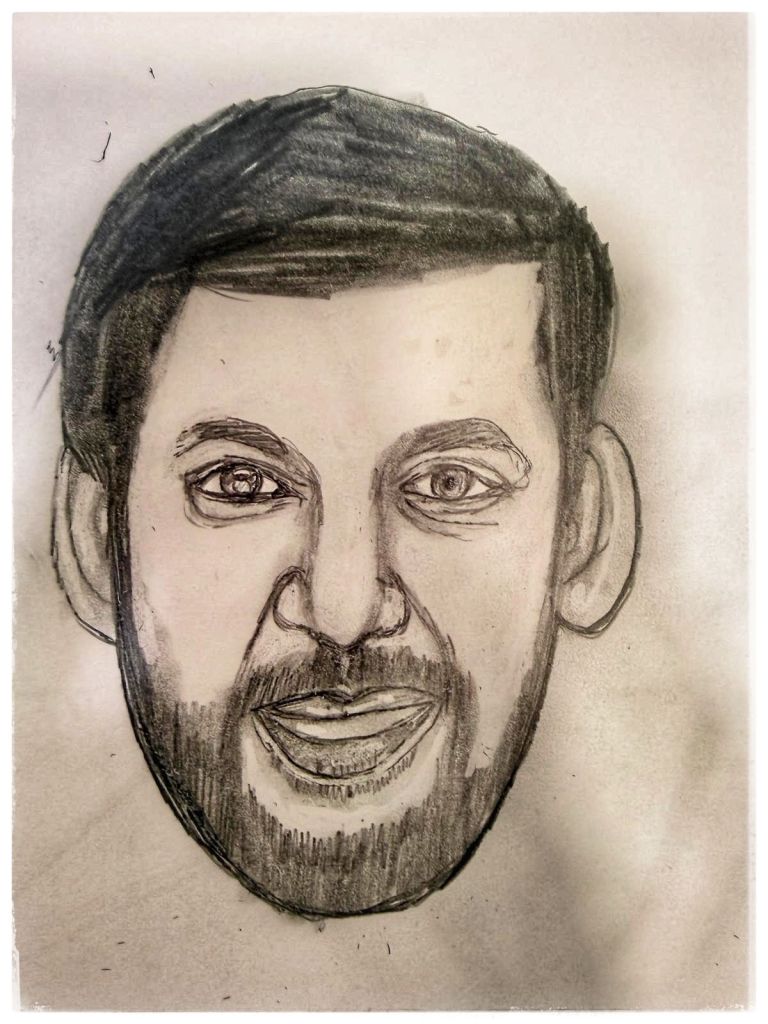
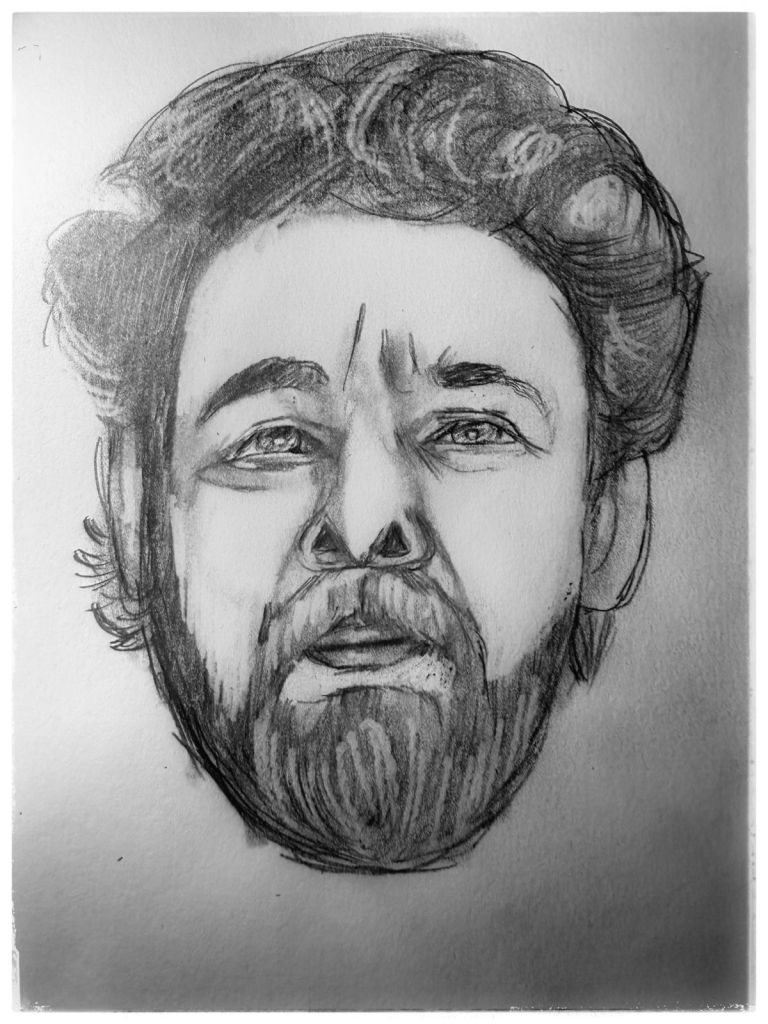
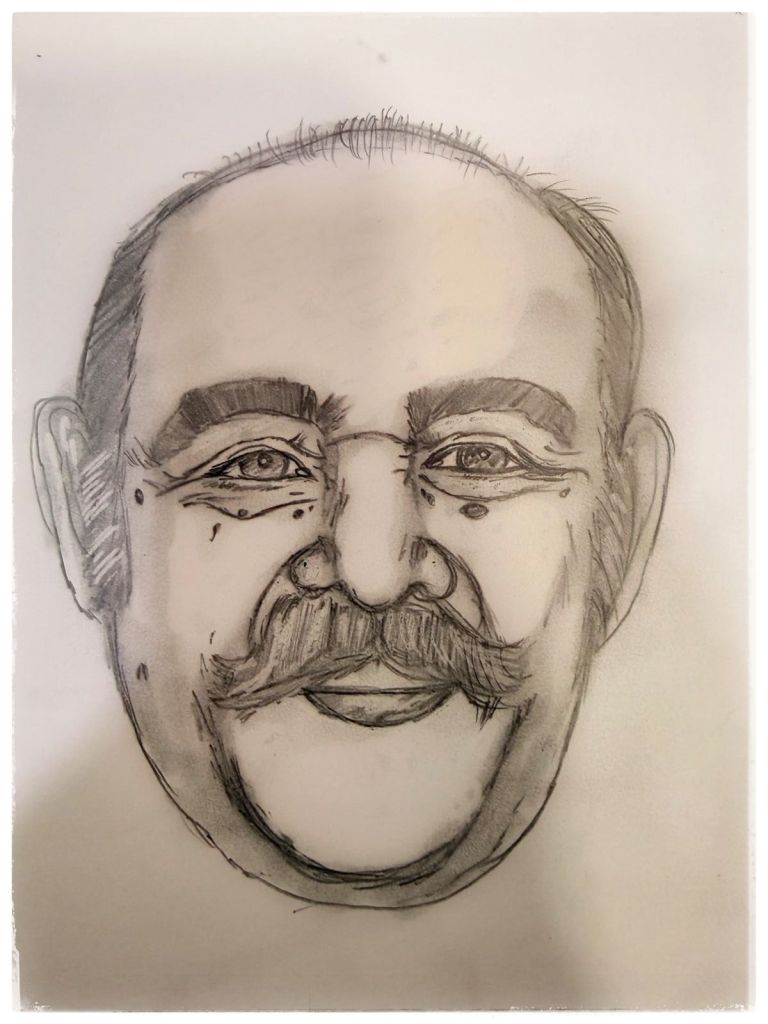
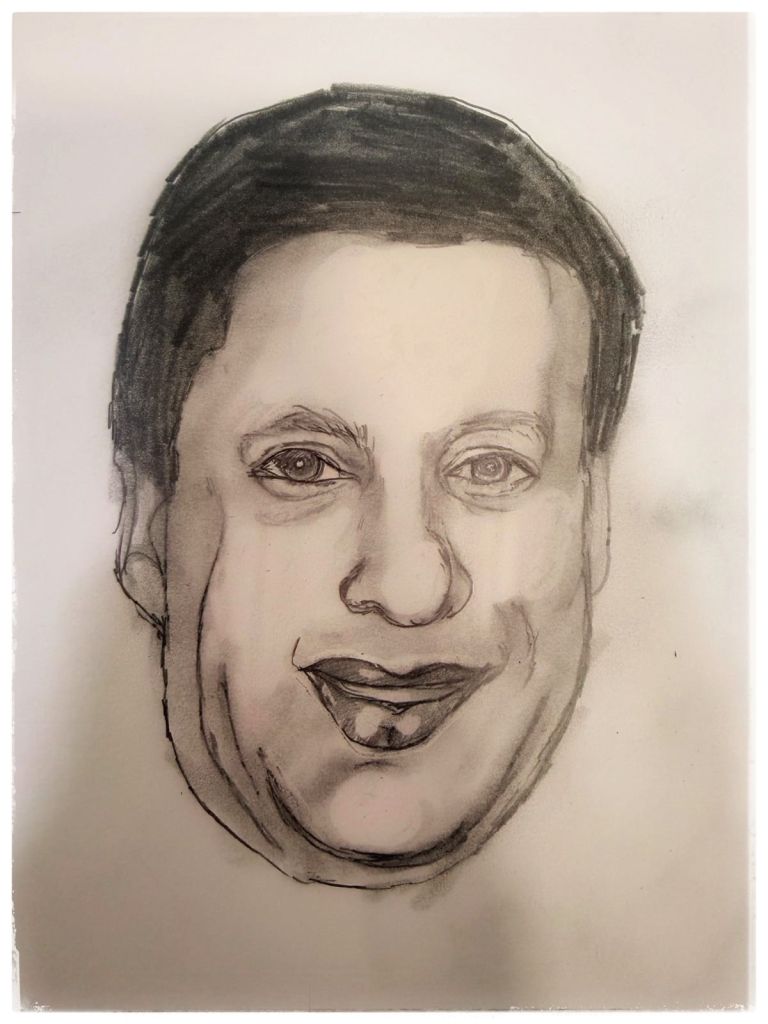
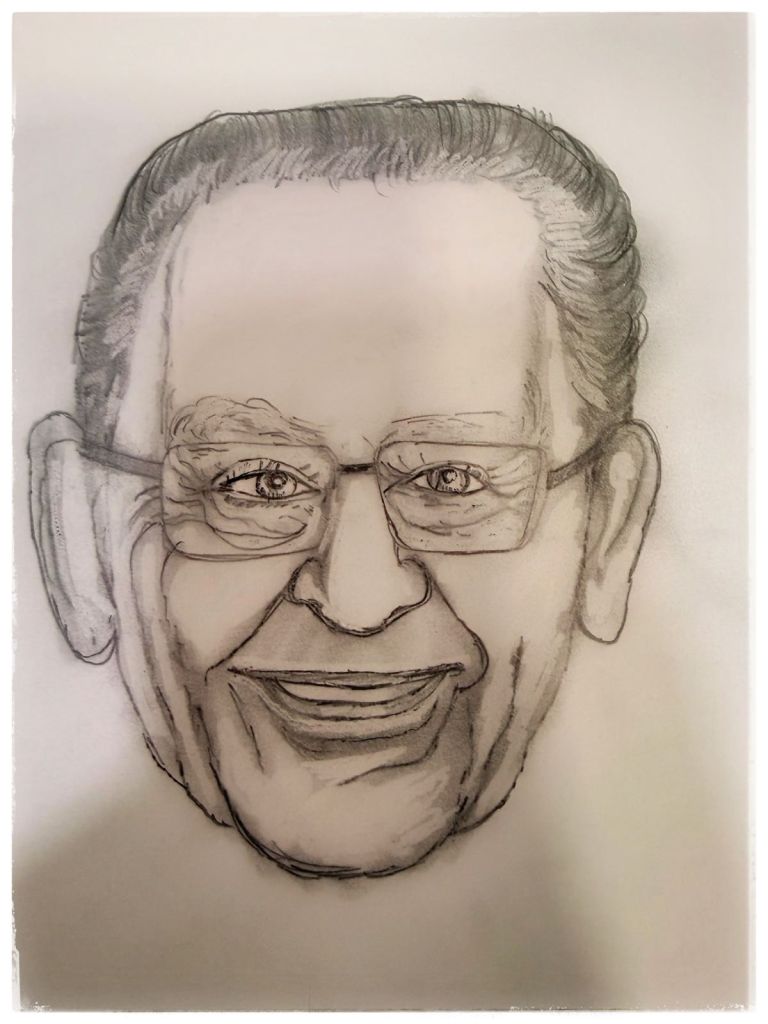
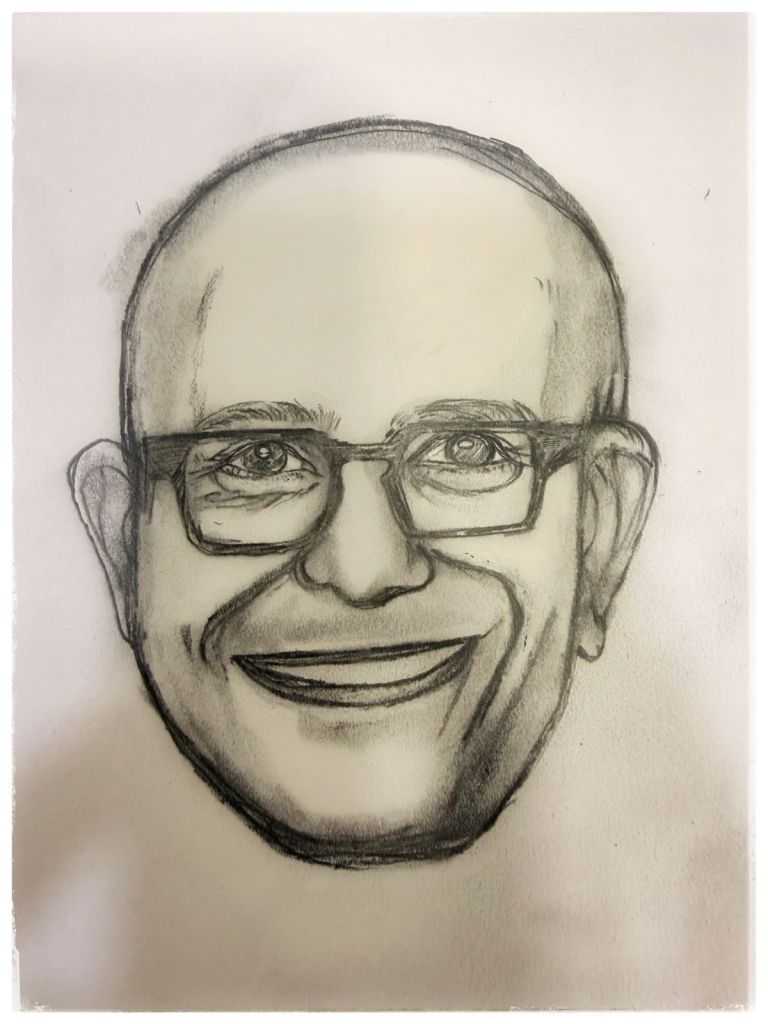
On this father’s day I am also proud to have the best DAD in the world! My mother used to love and adore and have so much respect for her Father which is why my sketch of the day is of my Grand Father! He was a Freedom fighter and a member of the INA with Subhash Chandar Bose! Now that is another legendary father!

A big shout out to all those amazing father’s of the world! You Rock!

Shubh Ratri…