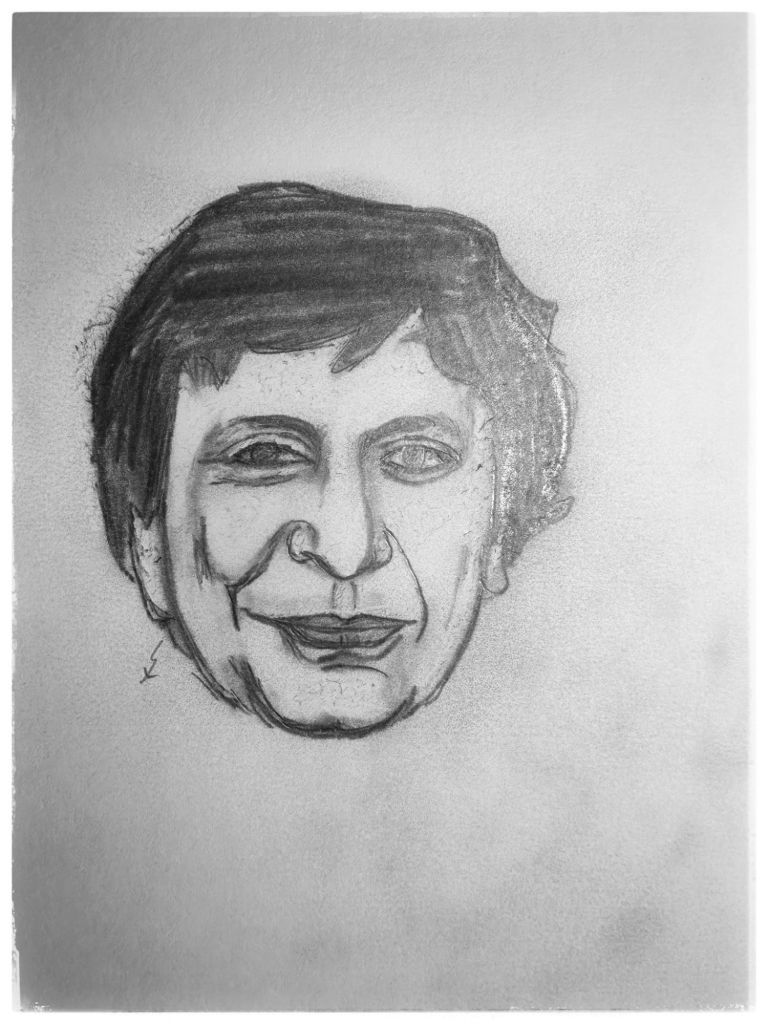
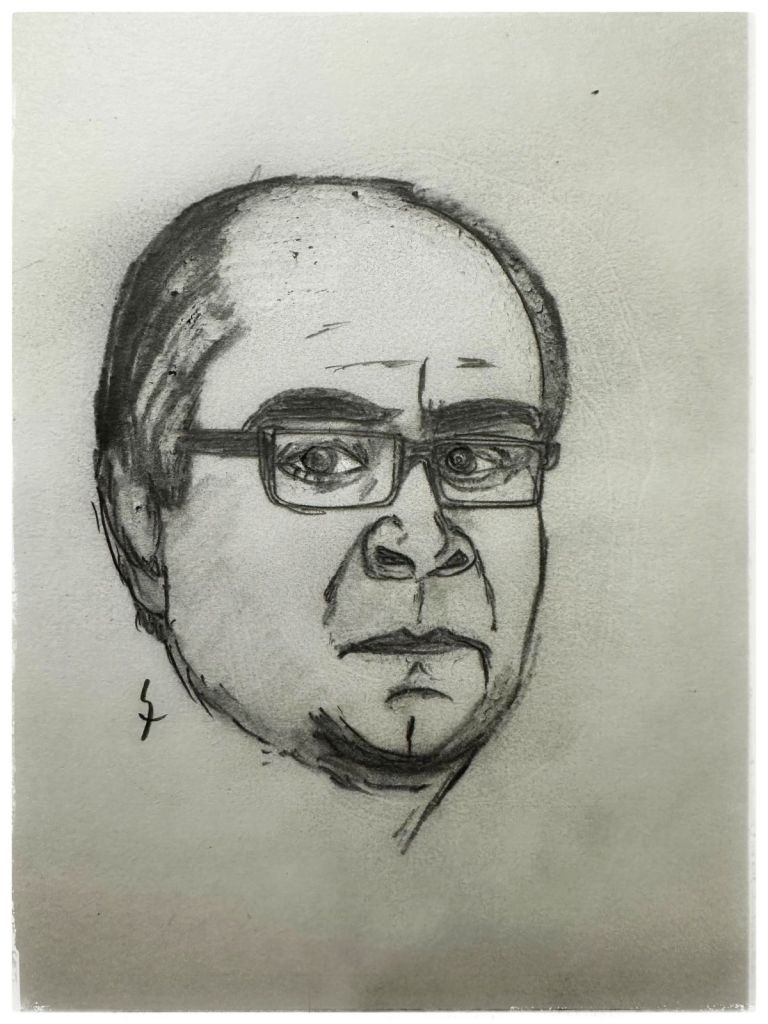
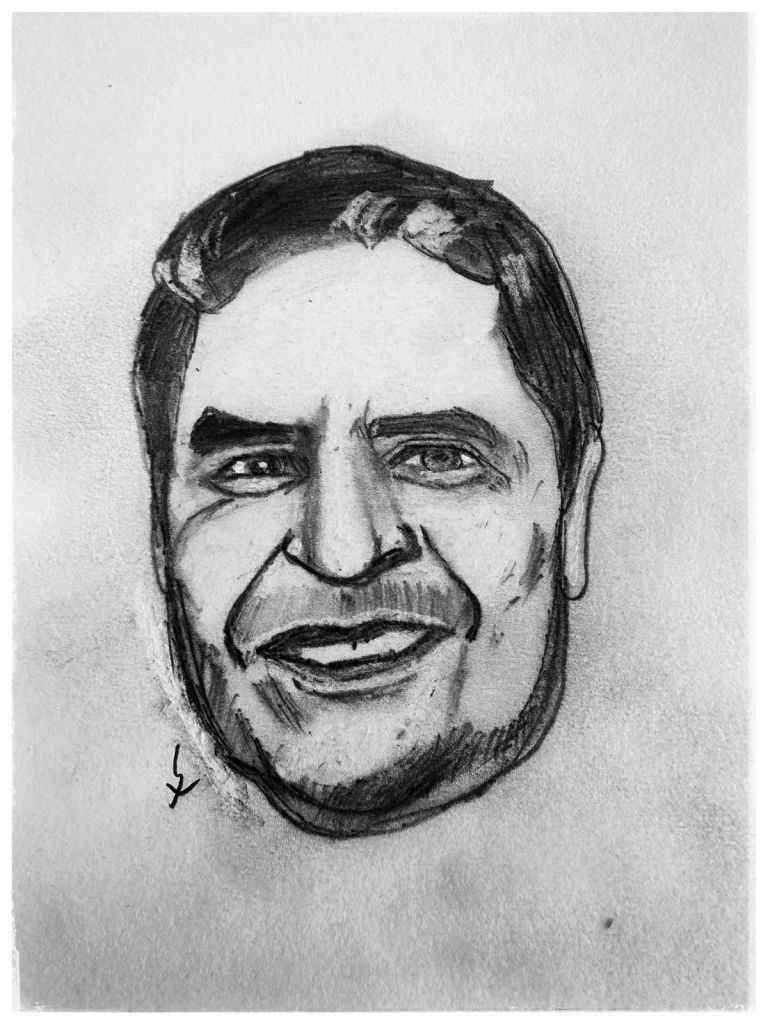
From dead livestock to saving life!

In the 1920s, a mysterious disease was killing livestock

In the 1920s, cattle and sheep just bled to death with small wounds! Some of them started vomiting blood and simply died! Many previously healthy animals who were posted for routine and simple veterinary procedures simply bled to death!

The common point was that they did not stop bleeding!  A small nick became a flood and a bleeder was tsunami!

With so much blood in their hands (literally!), an investigation of sorts was ordered though only some took it seriously. One of them was a young Canadian Vet called Frank Schofield who took it upon himself to get to the root of the matter with sweat and blood!

He found that those animals who had previously or at some time fed on a bunch of moldy sweet clover hay (he may not know they were sweet though!) were the ones who had this issue! 

Frank Schofield, concluded that the moldy hay contained an anticoagulant that was preventing their blood from clotting! 

In 1940, scientists at the University of Wisconsin, led by biochemist Karl Link, had isolated the anticoagulant compound in the moldy hay! A particularly powerful derivative of the compound was patented, named after the Wisconsin Alumni Research Foundation (WARF) that funded its development. Yes you guessed it! Warfarin! 

Now since it causes internal bleeding and was very effective in killing animals, it was first used to kill the animal which was the most troublesome pest! Rat! In 1948, it was officially approved as a rat killer or rodenticide! 

Then in 1955 President Dwight D. Eisenhower suffered a heart attack and it was found that he suffered from plaques which used to increase stoppage or stasis of blood or clotting! Blood should always flow and not stop, because if it slows or stops then it clots! Then the anti clotting property of warfarin came into limelight and he was treated with the previously effective rat poison! Of course he was not the first person to get the drug! But he was amongst the early patients! The fact that he was getting rat poison was not informed to him of course since the dose was less! 

So from moldy hay to the president’s heart! Feels like the screenplay of a movie like the one starring birthday celebrity Oduvil Unnikrishnan in a supporting but amazing role!

Now, like the blood, you must keep moving!

Bheja fry!

This story as picked up from a tabloid looks like a story straight out of the latest episode of a crime thriller! 

It’s the 21st March 1998, the first day of spring, and four men are having lunch in a restaurant.

A waiter serves one of them some cranberry juice,  chosen for dessert. This man, immediately after the first sip, suddenly gets up as if he’s gone crazy, he holds his hands around his neck, he loses his breath, runs out into the parking lot, collapses to the ground and pronounces his last words “they poisoned me”!!

Steve Robinette, the lead detective on the case, collected the testimonies of everyone in the parking lot, including the final disturbing words of a man immediately identified as Stanley Meyer, a citizen of Grove City. His brother Stephen was one of the four at the table, and he heard the words spoken at the end of his life. Robinette is not one for interminable investigations. He performed a toxicology analysis, which gave no significant results, and he also spoke to the coroner, who attributed his death to a brain aneurysm, compatible with previous episodes of hypertension. In just three months, he closed the case file, sealed it wrote on the cover “death by natural causes”. Formally, the case was now resolved!

Stephen Meyer claimed that one week after Stanley’s death, unidentified people had stolen the Stanley’s car from his garage!

Now why is this so suspicious you may ask?!

Well Stanley Meyer had claimed to have invented the very first working car which could run on water! Yes, WATER!

Meyer thought that the way to get out of oil dependency was through water propulsion. He created a fuel cell, based on the principle of splitting water atoms into its elemental form, burning hydrogen to create energy and releasing oxygen, along with water residues, through the exhaust pipe, thus generating harmless emissions! 

After a few months he managed to develop his water-powered engine, mounting it onto a dune buggy painted with the conspicuous writing: “water powered car”! 

Meyer claimed his vehicle was able to travel 180 km. With just 4 litres of water, and nothing else! Forty-five kilometres with just a litre of something that cost hardly anything is unbelievable! Even now!

Stanley had previously stated that he had been threatened many times by representatives from oil companies from around the world. He also claimed he had been offered the hyperbolic sum of a million dollars (some even say a billion dollars) to kill all evidence of his technology, and that he had refused!

Now, that is a mystery we can never get an answer to! Whether it was an accidental death or…

There may be so many inventions which have been kept under wraps and many mysteries like this which always raises questions like how!

Now don’t fry your brain thinking about it! Fried brain or Bheja Fry brings into mind the movie Bheja Fry with the birthday celebrity Rajat Kapoor!

Now charge your brain with some warm water and sleep!

Good Night!

Don’t believe everything you think by Joseph Nguyen

Audiobook

Narrated by the author

The voice of the author is so serene and simple and mellow that the book has the risk of putting you to sleep! In any case it does calm you! 

The author states that this book will change you! But do not try to intellectualize what you learn! He says that your life will transform in ways you could not even imagine!

What he tells will be simple and your brain and ego will prevent it from accepting it!

It may lead to an increase in wealth by many times! You may end up more happy and have a better health! These are his bold promises!

Truth is always simple is his starting line and he says that thinking is the only thing which is stopping you! This is the core point of the book; do not think! Bad thoughts or in fact any thoughts are not good for you! 

He says how children are happy all the time since they do not think!

In a way he begins by giving gratitude to the listener for giving time to the author and yourself!

The author tells the listener to come with him on a journey to find out the root cause of suffering!

The Budha and the two arrows! The parable here is that any time we suffer misfortune, two arrows fly our way. Being stuck with the first is the issue and the second arrow which is more painful is to think about the suffering! Basically it means that the first arrow is inevitable and cannot be avoided but the more painful second arrow is basically our thought about it! Which can be avoided!

The author tells about his journey to find the solution to his problems including diet meditation, structured living and the author claims that if there is something to do, he would have probably done it!

Still he felt helpless and hopeless! Then in the darkest of times he found the light and the coach who told him that one who looks around him is intelligent but one who looks within him is wise!

And finally he realized the answer was clear! Thinking is the cause of all suffering!

Then the story of the Monk who used to get angry when he tried to meditate and his mentor finally made him realize that he is not angry at others but himself! Or rather his reactions to the people and situations which caused him to be angry! And like the Panda in Kung fu Panda, found his inner peace! 

Mind is always to keep us alive while our consciousness is for fulfilment! We must try to reach out for the consciousness! 

Here he talks about how everyone is connected to everyone else and the universe and about the Universal mind by Sidney Banks! 

This universal mind is the Divine inspiration and this no boundary no limit. I liked section since it is similar to the Hindu philosophy! God is everywhere and within us!

Every few times he makes you pause! He will ask you a question like what is your happiness? or what made you happy? Or what were you doing the last time you were happy? and so on. He deliberately tells you to stop and think about these before you answer! 

Faith and trust is the only way to realise this inner peace which you can call 

Inner feeling or gut feelings or intuition or GOD!

Think what you want is enough! Not how or what! Think that you will get it and the universe will handle the rest! 

Thoughts in our minds are not facts! The problems are only in our thoughts! So even grammatically speaking, Thinking and thought are not the same!

We are part of the universe and connected to one another and thinking prevents the download of universal consciousness! 

Universal intelligence is there everywhere! We are the source and part of Infinite intelligence! All you need to do is trust your intuition and do not think!

We are only always one thought away from peace love or joy! If you not think like how a child does then you get back to the factory default setting full of love and joy and part of infinite intelligence!

Make space in your mind so that the infinite intelligence can get in! The story of the monk and the new student has been told to reinforce this! Here the monk wants to teach a new student who had so many doubts. He offered him tea and poured it to the brim but did not stop! When the tea dripped over, the student exclaimed, “Stop! There is no space left in the cup to receive more tea!” The Monk then smiled and said, “Your brain also is like the full cup of tea! make some space for it to receive and then come back to me!”

Framework to stop thinking- realise that thinkin is the root cause of all problems! Do not be afraid to be alone with your thinking! and finally 

Allow yourself to enjoy the positive feelings by not thinking!

In the conclusion the author has mentioned how you can do this by Maintaining a journal or Divide into categories  and slowly but steadily come to your true potential. 

He has also advised to use his methods available for download from his website and also partner with him in case you have any explosive idea!

Read it if like me you think a lot and are over anxious! It may help!

Take the blue pill Neo!

Do you know what’s Panpsychism?

Don’t believe everything you think by Joseph Nguyen (when you pronounce his name, the N is silent!); is a book where the author promises you that your life will not be the same after you read the book! Luckily I am listening to the book so I am hoping it may not be applicable to me!

One of the things he talks about is the Universal mind! Or Panpsychism! It refers to the the view that mind (psyche) is found everywhere (pan)!

Panpsychism is one of the oldest of all philosophical doctrines extant and was put forth by the ancient Greeks, in particular Thales of Miletus and Plato. Philosopher Baruch Spinoza and mathematician and universal genius Gottfried Wilhelm Leibniz, who laid down the intellectual foundations for the Age of Enlightenment, argued for panpsychism, as did philosopher Arthur Schopenhauer, father of American psychology William James, and Jesuit paleontologist Teilhard de Chardin. It declined in popularity with the rise of positivism in the 20th century.

A revival of sorts was by Sydney Banks who similarly told about the power of mind! Sydney Banks first formulated what has come to be known as the three principles understanding (aka Inside-Out Understanding, Innate Health, & Health Realization), in the 1970s. 

The 3 Principles of Mind, Consciousness and Thought, in his words are that the MIND is the universal intelligence behind life, consciousness creates an awareness of what we call reality, and thought is the power to create our moment to moment existence!

If that is too philosophical then the idea of mind or consciousness being fundamental to the Universe has often taken center stage in the field of even quantum physics! (which is the study of sub-atomic particles and one of the chief contender for explaining the origin of Universe!). 

Max Planck, who is the father of Quantum Theory and received the 1918 Nobel Prize in Physics had this to say: “I regard consciousness as fundamental. I regard matter as derivative from consciousness. We cannot get behind consciousness. Everything that we talk about, everything that we regard as existing, postulates consciousness.”

Now the critical part of this theory for its practical application is Banks’ view that people’s behavior is perfectly aligned with how the three principles interact for them as individuals. In other words, whether we are saints or sinners, our everyday behavior is perfectly synchronized with the way we create our personal reality via the three principles. If we can change our psychological state from the inside out, we can change our behavior at the same time!

In essence, the model states that we create our own psychological and emotional reality via our thoughts from the inside out, and that fresh thought is available in any given moment. This means we are constantly creating new realities although we may not be aware of it.  For people suffering with addictions, mental health issues or repeated unhealthy behaviors it means that they are no longer under the control of powerful emotions associated with past events!

Now all these make you feel like Neo in the Matrix and you may think that there is a Morpheus who has the answer to all your questions! If that confuses you then read about today’s birthday celebrity Dattātreya Rāmachandra Bēndre! 

A multidisciplinary genius, his library is said to have held books spanning 102 subjects, including Quantum Physics, Mathematics, and Physiology. From very early on, Bendre published his poetry as Ambikātanayadatta (lit. ’Datta, son of Ambika’). Often mistaken for a pseudonym or pen name, Bendre described Ambikatanayadatta as the “universal inner voice” within him that dictated what he, Bendre, then presented in Kannada to the world! 

Like it is said in the movie Baba (which I later found out that it was initially quoted by Isaac Newton!) and which is one of my favorite quotes, ‘What we know is a drop, what we don’t know is an ocean’!

Now calm your mind and sleep!

Good Nigth!

Same as ever by Morgan Housel

“Same as ever” by Morgan Housel the author of Psychology of money

Audio book
Running length around 5-6 hours

Narrated by the author

This is second book after the very successful book called the Psychology of money. Though not in series it’s a good idea to read that book first.

Or at least read that book summary first!

https://ramadocblog.wordpress.com/2022/03/27/the-psychology-of-money-by-morgan-housel/

Long post warning!

This is non fiction book on financial planning so the review is a summary for those who don’t want to read or listen to it and a preview for those who may read in the future.

There are some stories which are told in third narration and some points of inspiration.

One of the first stories is of Warren Buffet who was asked about the change and about things which are constant. He tells about how Snickers being the best chocolate for ages!

He then tells about Jeff Bezos who had realized that in spite of so many things which may or may not change, people will always prefer discount or low pricing and fast shipping! That will not change so he used to place his focus on these things!

The author then tells about his own story of his narrow escape by just a small decision of avoiding the ski and not getting trapped in the avalanche which kills his friends. A decision he made without any thought and only luck which saved him.

He tells objectively how risk is what you do not see! If you know something then that’s not risk! By definition risk is unexpected and unknown!

How economists can’t predict the stock collapse since it happens once in a while though over a period of time, every stock will collapse and will rise!

How over the billion of minutes of the life of humans you can have things happen once in a million! (A similar analogy was given by Carl Sagan!)

How Yuval is a famous author because he is a good story teller and not necessarily a good anthropology expert! So evey success is accepted if there is a good story.

How the famous I have a dream speech was an accident and not intended that way! Martin had another speech written and when flew, his assistant nudged him to tell about the I have a dream! And then of course as they say; rest is history!

How Dale Carnegie wrote his book! It was not a complicated thing but only a summary of routine things but with a story! People love stories!

He also tells about a person who survived because he had less hope and less optimism since then the failure is expected while those who had lot of hope had more failure!

How parking so many cars, a dent is actually highly probable! Most of us may escape a dent in the car but the author was offical Parker and with the huge volume involved, it was natural to have more incidents of dent! With such a huge number it’s just a law of averages!

How though many consider 1950s to be good or the best of times, it was in comparison actually a very bad time! High interest, low income, no house, no job but since the comparison was less it was great!
This whole section tells about comparison and how that’s the key to happiness or satisfaction many times!

So the essence here was comparison!
How Truman is counted as a great president now was actually thought to be a bad choice but the matter changed because of lowered expectations! Truman is actually now counted as one of the best presidents ever!

Sometimes some things which are not measurable are important! Human behaviour for one is a quantity which cannot be calculated with accuracy!

The one thing which they did not count on was the irrational behavior of Hitler! A logical deep thinking person would have surrendered long ago but this was desperate and irrational Hitler! Completely unpredictable! Just the fact that the war went on for so long shows the unpredictability of human behaviour!


He talks about the endless cycle of happiness and grief! How an economist Minsky talks about optimism leading to debt leading to recession leading to growth!

He also talks about unlimited growth also is bad! Case in point was Starbucks! Starbucks started opening branches like a rabbit multiplying! That led to drop in quality and service and finally they were forced to close many branches and lay off many people. Then they only do a controlled expansion now.


Complex to make simple to break! I loved this simple but profound take on complicated things which are so difficult to make but so easy to break!
Good things are things that did not happen while bad ones are those which did! Like you cannot quantify or grade a good thing like say a bomb which did not go off! Even some very complex things like a peace talk can break with a simple grudge! Peace is complex, while it’s simple to break into war!


Short cut does not pay; in this section the author talks about the fishes in warm water and cold. He tells about being patient, about having more pessimism which is actually good for the future!
Here he tells about the Donner party which took an unknown supposed short cut which actually turned out to be more long and tortuous. Time and supply was lost and they ended up in bad terrain at the peak of winter. Ending up in survival crisis and even cannibalism!

Enduring the pain when necessary rather than assuming there is a hack for everything is not right! Basically it means that there is no shortcut to success! In fact, success is supposed to be hard!

Free time is the best motivation was an important observation in the life of many successful people! In this context he tells about Warren Buffet and even Elon Musk who have used their free time to declutter their brain and come up with new ideas!

Of course he also mentions that one of the best ways to get a work done is to have incentives which is one of the biggest motivators! In fact he states that it is one of the most powerful force in the world!

In various chapters he also talks about expectations versus reality and how overnight tragedies if endured can lead to long term miracles!

For all the craze for a life hack! There actually isn’t any! Basically it means that you have to work and wait! There is no fast and constant success!
The best way to get what you want is to deserve what you want!

Scientific discussions are necessarily complex to make them sound intellectual while in fact most complex things can be broken up into simple understandable things! In fact the author tells that most of the financial literature essentially focusses on more saving, less spending and long term goal! Rest everything is just data!

He also talks about how wounds heal but scars remain in context of world war survivors and extrapolates it to the financial world in that people who have had big tragedy are normally reluctant to make risky decisions or take risk.

In the end the author asks some key questions which are like a revision of what you have leant and the message the author is trying to convey!

Starts with a discussion of Roosevelt with his wife just before the D Day. “To be nearly 60 and still rebel at uncertainty is ridiculous isn’t it was her reply!”

The author says how instead of worrying about future he started reading more about history!

The final chapter is a list of questions based on the book and is like a summary of what you can learn and teach yourself. The book may or may not help you in answering these questions but the questions are pertinent in finance and otherwise!

Who has the right answers but I ignore because they are not articulate?
Which of my current views I would disagree with if I was born in a different country or generation?
What do I desperately want to be true so much that I want it to be true when it is clearly not?
Problem which only applies to other country, industry, careers which will eventually hit me?
What do I think is true but is actually just good marketing?
What haven’t I experienced that leaves me naive about something?
What looks unsustainable but is actually a new trend which we have not accepted yet?
Who do I think is smart but is actually full of it?
Am I prepared to handle risk I cannot even envision?
Which of my current views would change if my incentives were different?
What are we ignoring today that will seem shockingly obvious in the future?
What events nearly happened that would have nearly changed the world I know if they had happened?
How much of things outside my control contribute to things I take credit for?
How do I know if I am being patient which is a skill or stubborn which is a flaw?
Who do I look up to that is secretly miserable?
What hassle I am trying to avoid which is actually the cost of success?
What crazy genius I aspire to emulate is just crazy?
What strong belief do I hold that is most likely to change?
What is always been true and What is SAME AS EVER!!?

All in all a good book to read after ‘psychology of money’; easy to listen and easy to comprehend! Somethings are just SAME AS EVER!


80-20 principle…

In the book Same as ever, Morgan Housel says how some of the most or all of the most complicated things can actually be broken up into simple understandable points! In fact he indirectly says that for all the finance books and management courses out there, they all are an amalgamation and extension of simplest things like; spend less, earn more and save for long term! These three rules are in one way or the other the chief cardinal rules of your financial decisions! 

This is very similar to another rule in the economic world called the 80-20 rule or the Pareto principle. 

In 1941, management consultant Joseph M. Juran developed the concept in the context of quality control and improvement after reading the works of Italian sociologist and economist Vilfredo Pareto, who wrote in 1906 about the 80/20 connection while teaching at the University of Lausanne. In his first work, Cours d’économie politique, Pareto showed that approximately 80% of the land in the Kingdom of Italy was owned by 20% of the population!

Similar observations have been seen in many areas and they essentially point to the fact that roughly 80% of outcomes come from 20% of causes! Some observations which support this hypothesis are 20% of a plant contains 80% of the fruit! and 

80% of a company’s profits come from 20% of customers and 20% of players (like in a game like say cricket) result in 80% of points scored!

Even in highly successful situations, almost 80 percent of the work is actually done by 20 percent of people! 

It has been suggested that you can get 80 percent of the outcome by simply doing 20 percent of the important task! In other words if you concentrate on that 20 percent, then almost 80 percent of your work is done! In finance, this principle is to identify an entity’s best assets and use them  efficiently to create maximum value!

If you are in charge of a team or overseeing a project, using the Pareto Principle can help you identify your team’s high-priority tasks.  The 80/20 Rule assumes that even if your team spends an equal amount of time on each task on the to-do list, only two of those tasks will carry the bulk of the results for the project!

The 80/20 Rule can help you make tough business decisions, too! If you have a list of projects for several different clients, but you’re running short on time. You’ll want to focus your time and efforts on pleasing and developing solid relationships with the 20% of your clients who yield the most results for you!

Even in studies and examinations you know that almost 20 percent of important topics or subjects will form around 80 percent of the questions! So you can concentrate your 80 percent effort on those 20 percent!

The most important thing to note here is that 80 and 20 are not absolute numbers! Life and decisions are not statistics! It does not mean that you concentrate only on the 20 percent and ignore the 80! It is simply a methodology to prioritize your effort for maximum efficacy! Of course numbers may be misleading since almost 80 percent of movies made and directed by birthday celebrity Priyadarshan have made 100 percent profits! Pareto cannot work everywhere!

Now have only 80 percent of the food as dinner as you intended to have and have a 100 percent peaceful sleep!

Good Night!

Data is the new Oil!

In the Book Homo Deus by Yuval Noah Harari, he talks about a term called Dataism. 

Dataism is a term that has been used to describe the mindset or philosophy created by the emerging significance of big data. It was first used by David Brooks in The New York Times in 2013. In art, the term was used by Albert-Laszlo Barabasi to refer to an artist movement that uses data as its primary source of inspiration.

In the book Yuval  calls it an emerging ideology or even a new form of religion, in which “information flow” is the “supreme value”.

Dataism operates under the belief that the universe is connected by the flow of data and that the value of anything, human or otherwise, can be determined by its ability to process data. Dataism negates the core values of humanism, valuing raw data over human experience. Rather than lifting humanity over all other beings, Dataism connects all animals and breaks down the barrier between organic and inorganic entities! 

By focusing solely on statistical information, Dataists believe they can connect everything from music to economics using data patterns, creating a common language that everyone can relate to. 

As far as Dataism is concerned, with the amount of data available, Humans are in no position to compute or analyze the data and that job must be left in the electronic hand and brains of devices with higher computing power while our work is only relegated to being data entry operators! 

The simplest brief according to Yuval is that we will soon be in a position where big data algorithms will know people better than they know themselves. A website such as Amazon will track data relating to your purchasing habits – the sorts of things you buy, search, wish list, or even talk about with friends online – and use these to curate your recommended list to you with almost perfect precision!

In fact this has already happened in scales which an average human cannot even fathom! For a machine which is either your phone or your search engine, all you are is a set of data point! Like in the latest Mission Impossible movie (though even an AI cannot predict what Tom Cruise would do!), every decision you make, every answer you give; the AI gets to know more and more about you! 

The only saving grace is probably the improbability or unpredictable behavior of the human mind! Not everyone is a straight shooter like birthday celebrity Colonel Rajyavardhan Singh Rathore!

Now go for screensaver mode of your body ie Sleep!

Good Night!

Razor Sharp by Ashwin Sanghi

Razor Sharp by Ashwin Sanghi
e-book
fictional murder mystery
No spoilers here!

Fist of a new series starring a new detective and suspended cop; known as Kutta Kadam since he catches the scent of criminals or case!
This is a different Ashwin than his Bharat series, and I was fond of those series! His magicians of Mazda was a well researched book almost as good as his Rozabel line which is by far his best till now.
This is a departure from those in that the whole premise is changed and here the spotlight is on the murders.

There is a suspended cop who has a daughter who is a lawyer and then his wife who has been shown to have left him. You may have felt sympathy for him initially but then when you get to know why and how she left, there is a conflict of emotions.
The novel at times feels like the screenplay of a web series like the Asura which I had a doubt that Ashwin had ghost written!

So you have ample cuss words and every possible ‘A’ material as you can expect to see in a web series without any censorship! Personally I am not a big fan of these type of series though they are good time pass!
One by one the kills piles up and it is left to the Kutta to come up with who!?
Almost all the characters shown or described in the movie including the lead has a shady character or past or present! This is one Ashwin novel in which no one is good! Each and everyone is imperfect, shady, cunning and of course one of them is the killer!

Though you would suspect many of the characters in the beginning, there is no way you can guess who did it in spite of the character getting introduced early on! Of course that is the typical Ashwin twist! A person who is shown as dark and with suspicion may not be the culprit! But like I mentioned before, no one is shown to be nice or even decent!

Of course since it is written by Ashwin, some Ithihasa and purana and beliefs are thrown in the mix especially in the end when they find out with a shock who the next victim might be! That was a big shock in a typical Ashwin twist!
The series is like Ashwin’s Private series with the only difference that it is based in Mumbai with more fluid characters with weak morals.

This book is recommended only for mature audience, I may not be mature enough to digest some sections of the novel but then it is my personal issue. The world is changing and Ashwin is changing with the times, maybe we need to get on the train and join the crowd! A simple language with a straight narrative with a mix of characters will make your reading smooth without much hassles or confusion.

Regular Ashwin readers will accept it anyway and those who liked his Private series;
I will not be surprised if this comes as a web series in Amazon or Netflix!

What is bad can actually be worse!

In the novel Pale blue dot, Carl Sagan tells about the Marsh of Kamarina! 

Kamarina was an ancient city on the southern coast of Sicily. It was founded by Syracuse in 599 BC, but destroyed in 552 BC.

In the 5th century BC, the Kamarinians were plagued with a mysterious disease. There was a marsh which sorrounded the city and like most marshes, it was stinky!  It was suspected that the marsh was the source of the strange illness and the idea of draining the marsh to end the epidemic became popular . The town oracle was consulted who advised the leaders not to drain the marsh, suggesting the plague would pass with time. But the discontent was widespread and the leaders opted to drain the marsh against the oracle’s advice. They went ahead and drained it and razed it to the ground! Unfortunately they did not realize that the smelly stinky and wet marsh was the only thing which was protecting the city! Once it was dry, there was nothing stopping the Carthaginian army from advancing. They marched across the newly drained marsh and razed the city, killing every last inhabitant!

The marsh of Kamarina is thus a necessary bad but tolerable thing which we must endure so that a more bad and dangerous calamity does not fall upon us! 

It can also mean how one bad decision to avoid a small problem can actually lead to a bigger problem as described by Morgan Housel in his novel Same as ever where he tells about the Donner Party. 

The Donner Party originated from Springfield, Illinois, and departed Independence, Missouri, on the Oregon Trail in the spring of 1846, behind many other pioneer families who were attempting to make the same overland trip. The journey west usually took between four and six months, but the Donner Party made a bad decision of taking a ‘Short cut’ and not following the established route and instead crossed the Rocky Mountains’ Wasatch Range and the Great Salt Lake Desert in present-day Utah! The route turned out to be more tough and more long! By early November, the migrants had reached the Sierra Nevada but became trapped by an early, heavy snowfall near Truckee Lake (now Donner Lake) high in the mountains. They were supposed to cross this by fall and not peak of winter. What happened later is a gut wrenching account of human survival; killing, looting and even cannibalism…

So as Morgan Housel says, some things in life cannot be hacked! There is no life hack for success! There is work and then some. Like the sketch of birthday celebrity Shreyas Talpade who actually does not have many recognizable features is a work in progress which I could attempt only after consistent practice and persistence!

Now to get over a bad thing of not getting sleep, do not start doing a worse thing like watching reel! 

Put that phone down or read a blog!

Music or Noise? Your choice!

Have you ever had a situation where you are listening to music and someone comes and tells you to either reduce the volume or stop it!
Now of course the reason is that one persons music may actually be another person’s noise! In fact there are some hard rock noise which many people enjoy as music!
There are those who even like music which is so bad that it is good!

You may even have people who say that they do not like this particular type of music though they prefer some other type like classical or devotional or religious.

Some may listen to music just for the lyrics while may listen to it may be because the video accompanying the music is good! Many popular songs are universally liked by all and mostly everyone enjoys it in his or her own way!

Now that is normal! But there are a group of people who absolutely do not like any type of music! Not even poetry! Now this is rare but it is seen in a neurological condition called the “musical anhedonia” which was first used in 2011. It was originally used to describe the selective loss in emotional responses to music following damage to the brain. It has now come to mean, more generally, a selective lack of pleasurable responses to music in individuals with or without brain damage. This has led to the recognition of two different types of musical anhedonia in which in the first type there is actually no neurological damage and its incidence in the general population is low: between 3% and 5%. While the second type in which the incidence is even lower develops as a result of brain damage.

There is another condition where the person cannot recognize music! That is called Musical Agnosia and it is the “inability to recognize music in the absence of sensory, intellectual, verbal, and amnesic impairments”.

There is still one more disorder related to music or sound. You hear your spouse breathing nearby and you instantly get angry! Your 6-year-old yawns and it triggers a fight-or-flight reaction in you! You avoid restaurants because you can’t stand the sound of chewing. Sounds other people don’t even seem to notice, drive you up a wall.
This condition is called misophonia in which people are affected emotionally by common sounds — usually those made by others, and usually ones that other people don’t pay attention to. The examples above (breathing, yawning, or chewing) create a fight-or-flight response that triggers anger and a desire to escape!

As far as I am concerned, I love music! Each and every kind or type of music and like each type for different reasons!
Music can lift you up and make you compassionate and stir your emotions in ways you may even not realise! It can literally propel you like a rocket! Thinking of rocket, I am reminded of the Rocket man A. P. J. Abdul Kalam on this republic day!
Happy Republic day!

Now listen to soft instrumental music and sleep!