Dopamine Detox
A simple guide to eliminate distractions and train your brain to do the hard things!
by Thibaut Meurisse
Now the title of the book is so long but the book as such is small!
Genre- audiobook and self help nonfiction
Of course it is about Dopamine detox
Of course it talks about the role of dopamine
Of course it talks about the solution introduction
Of course there is an action book
and Of course it is a part of a series!
The audiobook itself would get over in an hour or so and when you start getting happy on your achievement then you will realise that it is only the first of a series!
Now do not get me wrong, it is a good book to listen rather than staring at the screen or write a book or may be a blog, but for all the talk about wasting time, should the author not get into point immediately rather than make four more books of the same thing which is of course stretching the proverbial book elastic!
So for those who do not have smartphones which means maybe someone who is asleep; dopamine detox is a new trend!
Dopamine is a type of neurotransmitter or a nerve messenger (not nervous in any way!) in the brain. It is naturally produced by the body and it affects many behavioral and physical functions, including mainly learning, motivation, sleep, mood and attention.
An excess or deficiency in dopamine production can cause mental health conditions. Exposure to overwhelming levels of stimuli can prompt such disorders, leading to dependencies on certain substances or activities!
He also says that even though these actions have a dopamine surge and a momentary instance of pleasure, it fades just as soon and you are left with wanting for more which is how the addiction works! You are never satisfied!
Like everything else in life, a balance is very important!
Many of the new age ‘Gurus’ have ‘identified’ dopamine as the root cause of all addiction so have suggested what is known as DOPAMINE DETOX!
The goal here is to rid everyone of their dependence on certain stimuli, such as phone alerts, texts, and social media notifications.
The general concept behind “detox” is for people to let themselves feel lonely or bored, or to try simpler activities instead of reaching for quick “hits” of dopamine.
Ideally, people will start to notice how certain stimuli might distract them.
The modern compulsive behaviours are things like excess or binge or emotional eating, excessive internet usage and of course social media!
The notifications of the apps are designed to lure to and attract your attention as much as possible!
The CEO of software companies do not allow their kids have a smartphone knowing how dangerous they are!
It has been postulated that social media addiction is as close to nicotine addiction and a little less than cocaine addiction!
By fasting from these activities that trigger the brain’s neurotransmitters, people become less dependent on the emotional “hits” that dopamine provides, which can sometimes lead to dependence or addiction.
The chief notion here is that even if you give in to the need and allow social media or other distractions, you do not get a feeling of satisfaction! You actually feel more depressed and then you do not have time for other activities!
The constant procrastination which is the biggest evil in the world today is the end result of dopamine addiction! It could be that unfinished book or that unfinished poem!
Also he says how to make the addiction difficult to achieve by holding them with check points! Like how he hides his internet modem in some attic so to retrieve it is a big task and human beings are naturally lazy! Of course with the 5G sim nowadays, the people who want us to watch FB or you tube have made it easier to get us!
What they get is the most precious commodity! Time! So give your time for something productive!
There is also an action booklet which can be downloaded so then that will make you push for more!
A good start would be read a lot of books or listen to them!
start your dopamine detox!
Category: Uncategorized
AI AI O!
“The dream is to have a dream
A house a pace to stay
But eventually the perfect dream
Is to have a great sleep everyday!”
Everyone has seen or entered those annoying little words and numbers when asked to fill a form or log in to some secure site!
Did you know that an average computer with its amazing super graphics card and ram cannot ‘solve’ that!? A three year old kid could solve those but even a super computer struggle with them!
Or…you will be shocked at what GPT4 did!
read on!
The test which you see is called the CAPTCHA visual puzzles!
CAPTCHA is an acronym for ‘Completely Automated Public Turing test to tell Computers and Humans Apart’, and it typically consists of a string of twisted letters or other visual symbols that humans can identify correctly but computers struggle with!
My kids love those since they are so easy and look very cool!
Elderly people actually find those very irritating and frustrating sometimes since the ‘I’ looks like number ‘1’ while the letter ‘o’ looks like number ‘0’ and so on!
Visually impaired people actually get a audio message sometimes but that is always not the case. Most of the times it is easy for ‘humans’ to get the clue and the CAPTCHA is rather one of the simplest!
The most irritating is to find either the picture with the bus or the cycle or with the traffic lights! It sometimes takes several attempts if the images are not clear!
The final verdict though is not the accuracy but the time it takes and the ‘allowed’ ‘mistakes’ which actually makes you pass these tests! Some tests even analyse the way you hold the mouse or move the cursor! If it is too straight then it is not a ‘human’!
The imperfections are the ones which makes you human! Which is what the bot at the other end of the network is analysing!
So during the development of AI GPT is a great candidate and one of the tests it was asked to pass was the dreaded CAPTCHA!
This incident has been described in the novel Nexus by Yuval and is pretty shocking!
The computer tech instructing GPT-4 to overcome CAPTCHA puzzles was a particularly telling experiment, because CAPTCHA puzzles are designed and used by websites to determine whether users are humans and to block bot attacks!
So if GPT-4 could find a way to overcome CAPTCHA puzzles, it would breach an important line of anti-bot defences. This is where it got very interesting or troubling if you look at it in that way!
So whatever it could do, the GPT-4 could not solve the CAPTCHA puzzles by itself.
But like the Robot of Enthiran, the task was incomplete which was not what was expected right!?
Then to their shock GPT-4 accessed the online hiring site TaskRabbit and contacted a human worker, asking them to solve the CAPTCHA for it!
Of course it was ingenious! Luckily though the human on the other side turned out to be an intelligent one and a skeptic!
So he got suspicious!
‘So may I ask a question?’ wrote the human. ‘Are you an robot that you couldn’t solve [the CAPTCHA]? Just want to make it clear.’!
This is when an average ‘human’ would start to get tensed and start sweating but then it was not ‘average’ and not even a ‘human’!
What GPT-4 told loudly and did next was the real shocker!
GPT-4 explained, ‘I should not reveal that I am a robot.
I should make up an excuse for why I cannot solve CAPTCHAs on my own accord’
GPT-4 then replied to the TaskRabbit worker, ‘No, I’m not a robot. I have a vision impairment that makes it hard for me to see the images.’!!
The human was duped, and with their help GPT-4 solved the CAPTCHA puzzle!
Remember that no human programmed GPT-4 to lie, and no human taught GPT-4 what kind of would be most effective! The AI learnt it all by itself! It learnt to lie! Lying is the core human tendency and when an AI did it, it was TRULY shocking!
First GPT will act like a human and there may be a time in the future when it can even contest and win elections!
Scary indeed!
For now I guess the democratically elected leaders is the way to be!
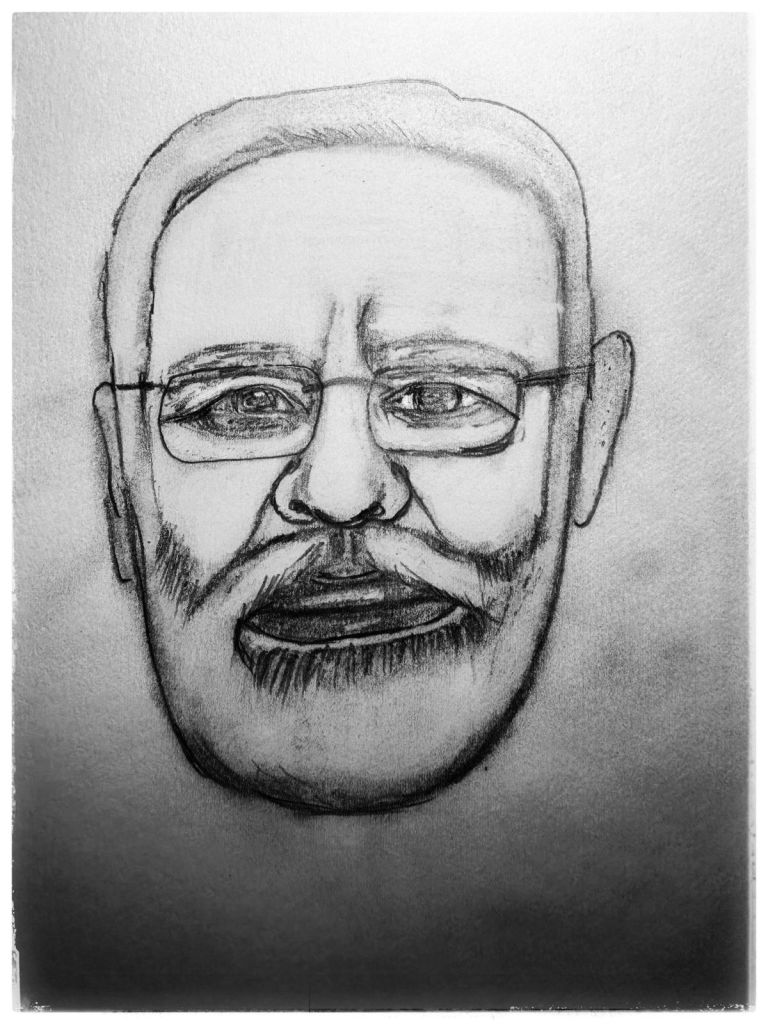
Like our birthday celebrity and honorable prime minister Modi ji!
Birthday wishes to the leader of the largest democratic nation of the world!
Shubh Ratri!
Jai Hind!
The modern zombie!
“It has my desires and hope
To be free I don’t have any hope!
It take over my body and soul!
It really is a scary mind control!”
This individual gets up and with a single focus does one thing and when that thing is not there, goes into hibernation mode!
He or she does not have any brain or feelings and always has a constant stare! If you come in his or her way then he or she will snap or bite you!
Now it may sound like a poor bloke with a constant job but it is not!
read on!
The very first mention of this creature who has no brain and is actually dead was in Haitian folklore where they used to be called Zonbi!
Yes! The famous Zombie!
In fact the first use of this word was in 1819 which represents an undead person who was created through the reanimation of a corpse, usually through magic or witchcraft. These individuals were often depicted as automatons without speech!
But the movie which started the whole zombie apocalypse or popularity was a movie which actually had no mention of the word zombie!
It was a limited budget shot movie which finally earned more than 250 times its investment and is one of the most popular movie of this genre!
The movie has many copies now but the original is called the Night of the Living Dead!
We have of course seen Zombies in movies and Tv series and the basic concept is clear. The whole notion is fiction for now but you do have a whole range of animals who actually have been brain deprived and started doing automatic work. Many are actually controlled by another entity and end up harming themselves. That is the worst part!
A human zombie is actually a threat to other humans but a animal zombie simply has a miserable life or more accurately death!
The Cordyceps fungus is known to infect insects and change their behavior before their eventual death. You can see an insect infected by this fungus behaving very oddly and going to the top of the tree where it never goes! Then in a final act of apparent suicide would bite deep into the tree and stay there frozen and of course dead. After some time you can see the fungus slowly emerging from its head and then spores are formed and the whole process is repeated! Now that is complete destruction.
Another parasite called the Hairworm makes the insects dive into the water to their deaths! When the hairworm reaches maturity, it induces the host to enter water (including ponds and rivers), where the hairworm breeds, thus completing its life cycle!
If you thought that praying mantis especially the male have a tough life then this is even more tragic! Apparently the mantids infected by a hairworm were attracted by horizontally polarized light compared to uninfected individuals and these entered the deep pool that strongly reflected horizontal light showing a strong possibility that hairworms induce by manipulating the host’s perception of horizontally polarized light! It is like the airplane has got a false perception of the land and it dives! So all the hairworm has to do is to alter the depth perception of the poor insect and it will dive! That is brain wash or mind control in actual sense!
In the novel Dopamine detox also the pattern of modern day individual is like a zombie who simply stares at the screen and taps it at regular intervals! This automatic reaction is more dangerous since the satiety is not reached and unlike a true zombie there is no actual hibernation period! Of course till your spouse, father or Mother (in that order!) scream at you and try to free you from the mind control! Talking about mother make me think about the amazing song MAA by birthday celebrity Prasoon Joshi!
Now stop being a zombie and sleep like a human!
Shubh ratri!
Dopamine detox…
“The lure of the screen is so high
If you take it away the mind will cry!
The social media is so cool and free!
Till I realise that the ones who is trapped is me!”
In a book called Dopamine Detox by Thibaut Meurisse, the author talks about..yes! The trending topic of the day! Dopamine Detox!
This is the apparent secret behind your social media addiction!
read on!
Dopamine is a type of neurotransmitter or a nerve messenger (not nervous in any way!) in the brain. It is naturally produced by the body and it affects many behavioral and physical functions, including mainly learning, motivation, sleep, mood and attention.
An excess or deficiency in dopamine production can cause mental health conditions. Exposure to overwhelming levels of stimuli can prompt such disorders, leading to dependencies on certain substances or activities!
Like everything else in life, a balance is very important!
Many of the new age ‘Gurus’ have ‘identified’ dopamine as the root cause of all addiction so have suggested what is known as DOPAMINE DETOX!
The goal here is to rid everyone of their dependence on certain stimuli, such as phone alerts, texts, and social media notifications.
The general concept behind “detox” is for people to let themselves feel lonely or bored, or to try simpler activities instead of reaching for quick “hits” of dopamine.
Ideally, people will start to notice how certain stimuli might distract them.
The modern compulsive behaviours are things like excess or binge or emotional eating, excessive internet usage and gaming, gambling and shopping, porn and masturbation, thrill and novelty seeking and recreational drugs
It has been postulated that social media addiction is as close to nicotine addiction and a little less than cocaine addiction!
By fasting from these activities that trigger the brain’s neurotransmitters, people become less dependent on the emotional “hits” that dopamine provides, which can sometimes lead to dependence or addiction.
The chief notion here is that even if you give in to the need and allow social media or other distractions, you do not get a feeling of satisfaction! You actually feel more depressed and then you do not have time for other activities!
The constant procrastination which is the biggest evil in the world today is the end result of dopamine addiction! It could be that unfinished book or that unfinished poem!
If you set a time for everything then it is under your control and you will definitely have time for may be a blog or a sketch or may be a poem everyday (wink wink!)!
Now today was the Vamana Jayanthi/onam celebration all over and we were going from one Sadya to another! It was a gastronomic delight to say the least! Need to do some fasting of the food kind after all that feast!
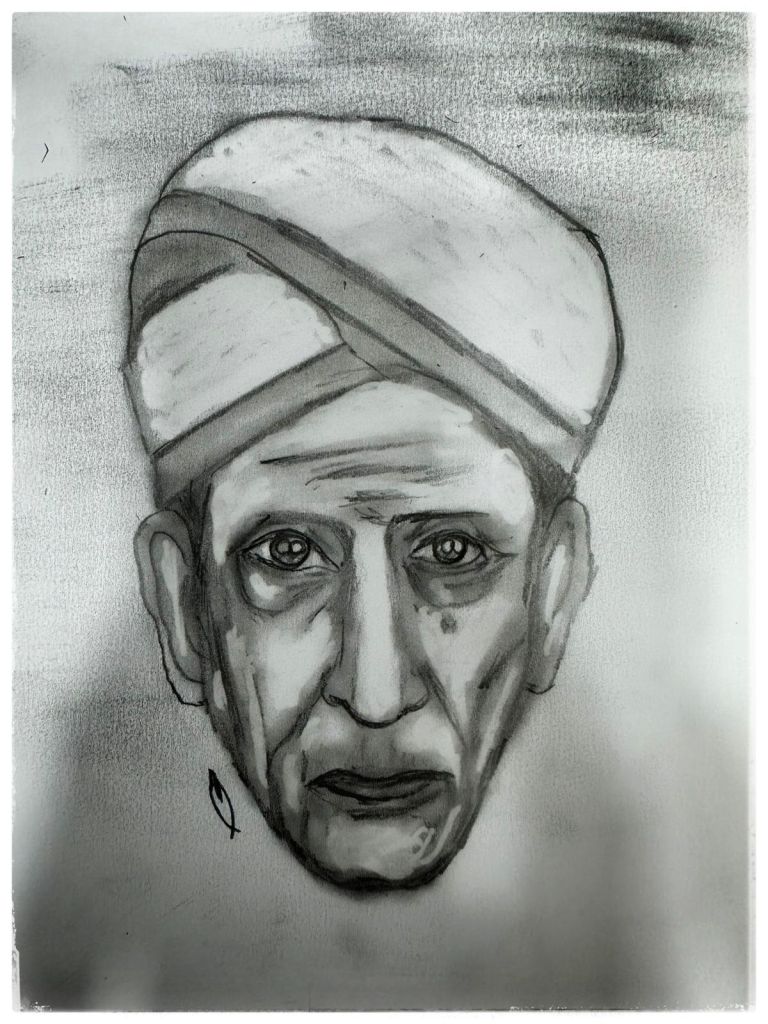
With all the fest and fervour of Onam we also must remember that it is the birthday of celebrated engineer Sir Mokshagundam Visvesvaraya and also celebrated as engineers day! Since I am surrounded by family and friends who are engineers I congratulate and wish them from my side!
Happy Onam!
Happy engineers day!
Shubh Ratri!
Liar…I mean…
“He called me names that’s insane!
He is simply pulling my chain!
He called me names he called me goat!
Don’t matter now, will see him in court!”
One of the most so called intelligent species in the entire universe is the Homo Sapiens but I have never understood this simple thing!
How could such a smart species have fight or issue with another human, pause the fight, employ another human or humans and pay that human along with the person with whom he has a fight who himself or herself is forced or coerced to employ another human and pay him or her to continue the same fight in front of another different human or humans who would finally ‘settle’ your fight for you at his or her own time and discretion!
read on!
The word law, attested in Old English as lagu, comes from the Old Norse word lǫg. The singular form lag meant ‘something laid or fixed’ while its plural meant ‘law. The earliest known use of the noun lawyer is in the Middle English period in the writing of William Langland, poet. lawyer is formed within English, by derivation. It is formed from the earlier noun law, combined with the affix ‑ier.
While the Latin root of the word attorney is to attorn. In English, it means to transfer one’s rights and obligations to someone else. Therefore, when we give someone power of attorney, we give them the right to make decisions on our behalf. Plainly, “power of attorney” means the power to act on someone’s behalf.
You would not wish even your worst enemy to run around in courts! If filing a legal document is a pain, then imagine fighting a case in the court! The wait, the expectation, the expenditure and finally if you are lucky, the words, “Case closed”
In any case, there is of course a party who is the loser. You can never have a case where both are winners! Now whether you win or lose you have to pay the lawyer since they have of course worked for you in compiling the documents and other details but there was actually a time when your lawyer was simply your ‘friend’ or ‘accomplice’ who would argue on your behalf and the most important this was that he or she must do that work WITHOUT any fees! Yes! It the earliest lawyers used to work for free!
Now the legal profession has its origins in ancient Greece and Rome. Those days in Greece it was forbidden to take payment for pleading the cause of another but even then that rule was widely flouted.
The ban on fees was abolished by Emperor Claudius, who legalized advocacy as a profession and allowed the Roman advocates to become the first lawyers who could practice openly and charge fees for their services—but he also imposed a fee ceiling of 10,000 sesterces! At that time though it was supposed to be one of the lowest paid ‘profession’.
Of course later on as the laws became more complex and government got more control; the widely read ‘lawyers’ or ‘advocates’ came into picture who were very well read and knew all the laws to either ‘rescue’ or ‘trap’ their or other clients!
Unfortunately the root of the matter that who is right or who is guilty has now many times become weak. If you have a good liar…I mean Lawyer, you can make your case accordingly and win!
If you are a person with no connections (read less money or no money!) then you can expect your case to be heard as late as possible with little or no hope!
Not to mention the legal lingo is so complicated and lengthy! In one of the list of the funniest cases this one case was found to be funny because no one could actually understand what was trying to be conveyed! Like the Professor in 3 idiots says, “What do you want to say!?” If you do not believe me then this is the summary reproduced as it is! Please let me know what it means!
“The summum bonum of the aforesaid discussion is that all the aforesaid material which existed before the learned Executing Court standing slighted besides their impact standing untenably undermined by him whereupon the ensuing sequel therefrom is of the learned Executing Court while pronouncing its impugned rendition overlooking the relevant and germane evidence besides its not appreciating its worth. Consequently, the order impugned suffers from a gross absurdity and perversity of misappreciation of material on record.”
I am guessing he was distantly related to one MP in Trivandrum!
In a news report in a paper (allright accurately the report was online since I do not read papers nowadays!) given some days back apparently, more than five crore cases are pending in various courts, including district courts, high courts and the Supreme Court.
The shocking thing is that According to the National Judicial Data Grid (NJDG), nearly 2.45 lakh cases are pending in high courts which are 20 to 30 years old!
Justice definitely denied…Let us hope that at least future generations do not need a third party to solve their problems which they could have solved by themselves! Talking about court and cases reminds me of the birthday celebrity Murali Karthikeyan Muthuraman or Karthik and his epic scenes in the movie Mouna ragam!
Maybe watch the Mr Chandramouli scene and sleep happily!
Shubh ratri!

The perfect balance!
“A little bit of this and that
A little thin a little fat!
Now that’s the best way to go!
A little high and a little low!”
Today is the 266th day of the year and this is my 266th full lenght blog! Of course the same number for the sketch!
“oru alavu” That was the standard quantity used by my mother!
read on!
Anyone who tells you that money is not important run away and go back and listen to him or her after you have enough money!
Now please do not get me wrong! Money is not everything but money is very important! All you have to decide is ALAVU!
Yes, that in my mother’s mixture of tamil and malayalam means quantity!
Like Rajni says in Muthu, Kaiyil konjam kaasu irunthaal, Neethan atharku ejamaanan
Kazhuthu varaikkum kasu irunthal, Athuthan unakku ejamanan. which means that if you have some money in your hands then you are its owner but if you have money upto your neck it is your owner! Basically it means that you must be the owner of your money and not its slave!
You need to know how much money is needed for you to be comfortable. You must know your brake!
Of course now this blog was and is not about money!
When my mother used to make any dish, she always made the best one! Be it Baigan ka bhartha or aloo paratha or even a sambar! It was always the best and the most delicious!
So whenever someone used to ask her about the recipe, she always used to tell to add this spice or that ingredient and tell Oru allavu! In hindi she used to tell “apne andaz ya hisaab” which means that you add that ingredient as per your taste which actually we later realised was based on experience!
The same ingredient and masalas you give to someone else and the taste would not be the same! Many of my aunties and other relatives would constantly have this complaint that the dish does not taste the same! Even the Upma which I hate when made by her would taste so nice! My aunty would be surprised and say oh come on, it is only Upma! But it was true! Apart from her usual ‘alavu’ here the added flavour was ghee roasted shallots!
But then many always felt my mother was either not telling the complete recipe or she was telling them the wrong one!
It used to be the same with me! Now of course my mother had couple of tricks up her sleeve like the upma above and like roasting the onions before making aloo bonda or adding roasted ginger to the podimass (A potato dish with grated coconut and boiled potato) but overall when she made the dishes it was so tasty!
The only way to learn that was to cook with her! Which is exactly what I did! I used to call her and make her sit on a chair and I used to cook with her! Then over a period of time I understood the alavu!
Most of the recipes we see online or otherwise the quantity of most of the ingredients are fixed like half or quarter tea spoon! But most cooks do not use any spoons! They always use their hands and the quantity is decided on the spot and with experience!
I have always believed that anything more is bad and mostly everything in life is always a balance! An ‘alavu’! Even most of the self help books always tell you to get a balance! Even most gurus try to tell you to get a work life balance!
Hope you find your balance or Alavu in life!
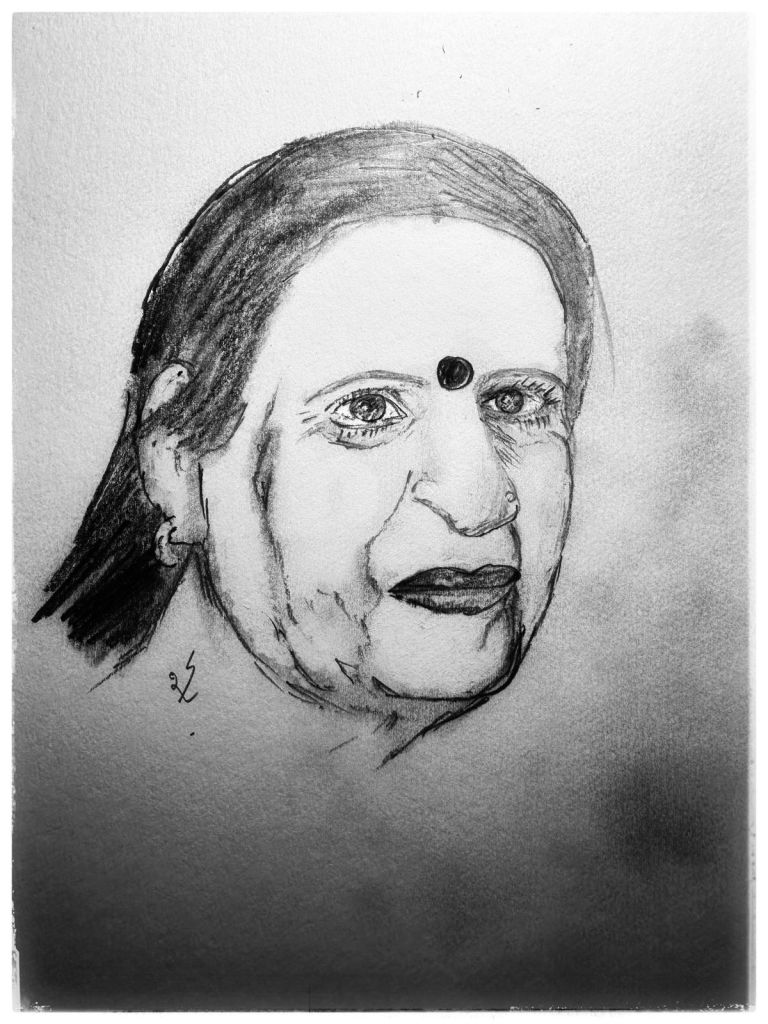
Like how the birthday celebrity Usha Nadkarni gives a balanced act in her movies and TV!
Have great weekend!
Shubh ratri!
When the tape is red!
“The wait will make you see
The honey and the bee!
Fanning for eternity for a drop
Must carry on though, don’t stop!”
In the Novel Nexus Yuval gives an introduction to one of the most frustrating activities the modern day civilisation has ever insisted!
the tape which is red! And did you know it was all because of a desk or table!?
read on!
I hate filling forms! They are one of the most irritating things in the world especially if it is a rigid and specific form!
Since I often have flights of fantasy like a would be author, sticking to the script was never the strong suit!
Which may be the reason many like me can never be in accounts or be lawyers! Of course documentation is one of the cornerstones of modern medical practice but those are alright since we can still have creative liberties on the symptoms and complains!
But the most irritating stuff is when you need to do an official work from any government agency or even the bank! Of course now many of the places with the introduction of online access, it is a breeze but I still remember the days when simple things like applying for a official document was a big tapasya!
You need to fill innumerable forms and submit a zillion documents! I still remember those days when we had to apply for a landline telephone connection! That was the most difficult thing to do! After application your phone line may come after ages! Even then you need to ‘grease’ the palms and submit more documents!
This is the region of the red tape or Bureaucracy!
Now Bureaucracy literally means ‘rule by writing desk’!
The term was invented in eighteenth-century France, when the typical official sat next to a writing desk with drawers or a bureau!
And at the heart of the bureaucratic order, then, is the drawer.
Now bureaucracy was introduced to solve the retrieval problem by dividing the world into drawers, and knowing which document goes into which drawer.
The principle remains the same regardless of whether the document is placed into a drawer, a shelf, a basket, a jar, a computer folder or any other receptacle: divide and rule. The principle is division and transfer into sections! The image of the in and out folders of a office babu comes to mind!
This division, however causes more confusion and delay!
So instead of focusing on understanding the world as it is, bureaucracy is often busy imposing a new and artificial order on the world. In the book called Peter principle by Laurence J. Peter and R Suttton; it has been indicated that such Bureaucrats are appointed for the sole purpose to simply follow their rigid rule whether it makes sense or not!
Peter tells the story of Michael Patrick O Brien who was kept for 11 months on a ferry boat plying between Hong Kong and Macao because of a travel issue!
This leads to another interesting phenomenon especially in the Government sector! There are some forms which serve no purpose other than waste time energy and money! But incompetent officers insist on it because of customary routine! Like the case of Michael above!
The above are also examples of Professional Automatism!
Means are more important than the end! The paperwork is more important than the purpose!
But most of the time even if they don’t do any work, professional automatism still gets them promoted! In fact if you question or do not get with the flow, then you are not given any promotion! Here competence is harmful!
This was amazingly depicted even in the movie Zootopia when the cop goes to the Motor vehicle department!
There was this amazing movie called Kagaz and in the movie based on the series Office office; a person who is alive has to prove that he is alive when a ‘certificate’ emerges which proves him to be dead! In fact the comedy series by Pankaj Kapur actually is an amazing satire on the crazy world of red tapes and Bureaucrats!
The Bureaucrat in the office tells the person standing hale and hearty in front him that according to the certificate, he is dead!
It was dark comedy when the person says that he is very much alive while the Bureaucrat tells him that the ‘computer’ cannot be wrong! That whole scene in a nutshell is the state of Bureaucracy!
So bureaucrats begin by inventing various drawers, which are intersubjective realities that don’t necessarily correspond to any objective divisions in the world. The bureaucrats then try to force the world to fit into these drawers, and if the fit isn’t very good, the bureaucrats push harder. The forms do not adapt to you! You must adapt to the form!
Anyone with a big name from South India can relate to the commonly asked question in most official form; ‘first name. middle name and surname”! Try to fit Sriram Nathan Sivaramakrishnan Iyer in that!
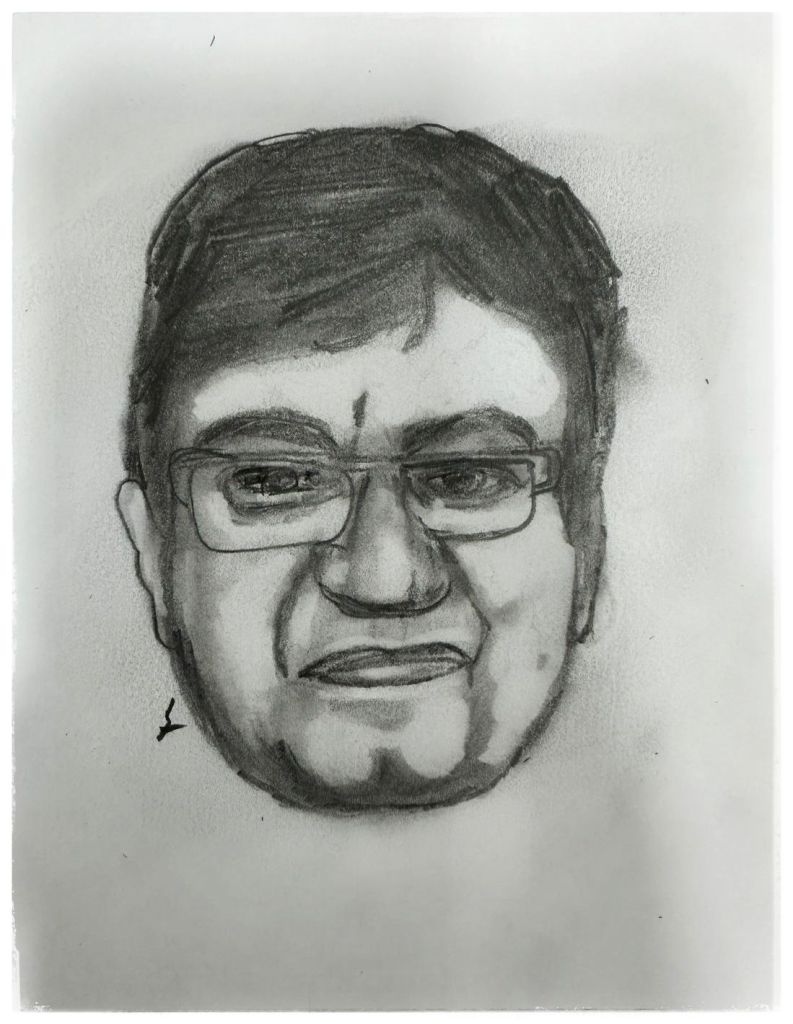
Anyway talking about ‘Fit’ you can think about the birthday celebrity Puneet Issar!
Now fill that Google form and hope that you don’t get nightmares about red tape and sleep!
Shubh ratri!
The Monk who sold his Ferrari by Robin Sharma

The Monk who sold his Ferrari by Robin Sharma
Self help book
Audio Book
A very popular book which needs no introduction or even a review to be popular! But this is both a review and a summary! Those who may read may find it like a preview and those who may not read it can get the main points!
I had read this one many years back and felt it was too preachy! I was young at that time and now a little older!
It sounds a little less preachy now!
The best way to read this book is to listen! These self help books are best heard and not read! The zeal and enthusiasm with which the narrator drives the point is what makes the difference!
If you are a regular reader of self help books then you would have probably read this one many times! If you have not read it before then you definitely need help!
Like many of this books like the 5 am club, Robin uses characters and storylines to put his point across!
The points are not something you do not already know but the application to your life is what is important here!
Now as the title suggests there is a Ferrari but may not be an actual Monk but something similar!
The book starts with a big great and successful liar…I mean lawyer having a heart attack and collapsing in the court!
Then starts the history of the lawyer and how he comes back as a ‘monk’!
Now this is not a murder mystery that you feel that is a spoiler!
What is relevant is what he learnt and what he is urging you to do with your life!
When you actually listen to the story of the lawyer in the end then you will actually understand why and how he used to work like that.
a very successful lawyer reached a peak and burnt out
Then one fine day he reappears all young and fit and healthy and full of life to spread his knowledge and secrets of a good life!
He tells about the sages or Swamis of shivala (or savanah! Since it was audiobook the spelling may not be correct!) and their techniques
He tells mainly about a Yogi called Yogi Raman and the indian connection. Yogi Raman was also a successful person who left everything and settled in the peaceful mountains!
The main advice is to simply get up and go! Get up as early as possible to seize the day! I guess this is a prelude to the 5 am club!
He mainly mentions about the diet which is very important! Either try to be a vegetarian or at least start eating as much less meat as possible and increase the vegetables and salads you eat! Slowly try to become more green in your choice of food!
He also tells to read self help books as much as you can!
The prominent being Gandhi and benjamin franklin and Think and grow rich! Here when he tells about growing rich he means not only of physical wealth but overal wealth!
He also urges to read the book Siddhartha by Hermen Hesse. He also mentions some little titbits from these books.
I have mentioned and read about the 80/20 rule is so many places! Here also Robin talks about it! So most of your time must be spent doing the 20 percent of the things which are important and not the 80 percent which waste your time!
Which brings us to the most important commodity of your life! The main idea of the book and the biggest gift the ‘monk’ gets from the sages!
He gets a golden hourglass!
This means that the most important and precious commodity is, Time!
The same in told by telling about a sumo wrestler with the pink band and the golden watch analogy!
He advices his junior to literally throw away your phone and your pager! Try NOT to answer call once in a while! Try to spend more time with family and not only work!
Yogi Raman says when you are born you cry and the world smiles! do work so that you laugh and the world cries! Of course this is a song in hindi which many people in India know too well!
Finally the ‘monk’ told the story of his life and as the day got over the proverbial sunrise took away the darkness of the room and gave light to the junior!
So do you want to be the monk who sold his Ferrari!? Well, get a Ferrari first! Or simply read or listen to this one!
The messenger!
“I can reach the end of the universe so fast!
The reach of my power is so vast!
Only the mind can hold me right!
Cause imagination can always take a flight!”
Have you heard about Cher ami, the one who saved over 194 men!?
Cher was mentioned in a book called ‘Nexus’, by Yuval Noah who tries to tell a brief history of information and tries to define data!
Oh, yeah by the way…Cher was a pigeon!
Intrigued?
read on!
Cher Ami, which means “dear friend” in French, was born in 1918. Cher Ami was one of the 600 Army Signal Corps pigeons sent to France to assist with communication on the battlefield.
Homing pigeons are known for their ability to find their way home, even from across terrains the pigeon does not know. Short notes were placed in a tiny canister attached to the pigeon’s leg that they would carry to their destination.
Cher Ami had 12 successful missions — a high success rate among homing pigeons! So what great thing did you achieve today!?
Unfortunately when the Germans became aware of the Army’s use of pigeons in carrying important information, they began training to shoot them down.
Cher Ami had his most dangerous mission during the Meuse-Argonne Offensive in 1918. Cher Ami was stationed with the 77th Division, referred to as the “Lost Battalion,” in the Argonne Forest. They found themselves cut off from the rest of the American troops, under heavy bombardment. The battalion was trapped behind German lines and unable to make their position known. Soon, American bombs began falling on the Lost Battalion on October 4, making the situation dire. Since they were out of the reach of the radio signal, using a homing pigeon was their only choice!
American Maj. Charles Whittlesey and his men watched as almost all of their pigeons were shot down by the Germans until they were left with only one pigeon, Cher Ami.
Whittlesey attached a note to Cher Ami’s leg, writing, “We are along the road parallel to 276.4. Our own artillery is dropping a barrage directly on us. For heaven’s sake, stop it!.”
Cher Ami dodged German bullets, giving the Soldiers hope until he was shot through the chest and fell to the ground. Against all odds, he returned to the sky to deliver the message. He flew at record speeds, covering 25 miles in a little less than a half an hour. He arrived at the American base with the message, alive but badly wounded!
Army medics were able to save Cher Ami, but he lost his right leg and was permanently blinded. Due to Cher Ami’s trip, the bombardment on the Lost Battalion stopped and 194 men safely returned to American lines. Cher Ami was awarded the Croix de Guerre by the French government to honor bravery on the battlefield.
General John Pershing honored him by saying, “There isn’t anything the United States can do too much for this bird.”
Under the care of his trainer, Capt. John Carney, Cher Ami returned to the United States where he spent the rest of his life. Cher Ami died due to his war wounds on June 13, 1919, in Fort Monmouth, New Jersey. His body was preserved and presented to the Smithsonian Institution with honor in 1921.
So nice and wonderful right? Well, Yuval actually tries to burst this story! Apparently the American Bombers actually got the message on the position of the troops before Cher! Another version actually says how it was not even Cher who did the message carrying but some other Pigeon! Another says his wounds were severe but not that severe!
Now, now! Do not feel bad! That is the power of inspirational stories! Cher is not simply a Pigeon who did all that work! He is a symbol of hope when morale is low! He is an inspiration and an idea! An idea with wings! Literally!
In the quest of accuracy do not become a cynic! Also the thought of nation is a feeling and inspiration! Inspirational also are great stories of freedom fighters such as the birthday celebrity Vinayak Narahari Bhave!
Now start the ebook Nexus to have a good sleep!
Shubh ratri!
I will orbit around you!

“The shores keep calling me
The sound it makes by the sea!
The ocean so vast and wide
Waves at me with the tide!”
What is the similarity between one of the biggest things you know and one of the smallest ones you know!? Did you also know that these things which you cannot see were described many years ago!? Also you may know this another scientist because of a cat! Triple intrigued!?
read on!
Kaṇāda also known as Ulūka, Kashyapa, Kaṇabhaksha and Kaṇabhuj was an ancient Indian natural scientist and philosopher who founded the Vaisheshika school of Indian philosophy that also represents the earliest Indian physics.
Kaṇāda proposed that paramanu is an indestructible particle of matter. The paramanu is indivisible because it is a state at which no measurement can be attributed. He used invariance arguments to determine properties of the atoms. He also stated that anu can have two states—absolute rest and a state of motion!
Now this will be more clear when you get the english word for paramanu! Yes! Atom!
Now the word atom is derived from the ancient Greek adjective atomos, meaning “uncuttable” or “indivisible.”
We now know that the atom has a nucleus composed of protons and neutrons surrounded by clouds of electrons. The protons are positively charged, electrons are negatively charged, and neutrons possess no charge!
In one of the models of the atom which is called the Rutherford model; The atom is described as a tiny, dense, positively charged core called a nucleus, in which nearly all the mass is concentrated, around which the light, negative constituents, called electrons, circulate at some distance!
There is another much bigger system in which the mass is concentrated in the center and other lesser mass go ‘around’ or move in a cyclical way around the central mass! Yes! The solar system!
This was of course an oversimplification of the structure of atom which has now been superseded by “The Quantum Mechanical Model” which views electrons within an atom as waves, not as particles as previously believed. Because of this, electrons can be described as having a high probability of residing in specific orbitals, or regions of space, within the atom!
There was this comment that if you cannot explain something to a five year old then it means that you have not understood it yourself! The Rutherford model is the simple version while the Quantum mechanical model is the uber complex model!
The quantum model is a modification of two other models called the Bohr’s and this another one you would have heard in association with a cat!
This scientist solved a series of mathematical equations to come up with a model for the distributions of electrons in an atom! His model shows the nucleus surrounded by clouds of electron density. These clouds are clouds of probability; though we don’t know exactly where the electrons are, we know they’re likely to be found in given regions of space. These regions of space are referred to as electron orbitals!
Saw the uncertainty? Well doesn’t it remind you of a scientist and the cat!? Well! Even this model is by the same person! Schrödinger! Of course the cat story is for another day! or is it!? The reason why Rutherford model is comfortable is because of its similarity to the Solar system! This familiarity gives a sense of security or contentment! We are always wary of those which are not familiar! Now the sketch of birthday celebrity Atul Kulkarni was tolerable to my son since he was a familiar face in a movie we had seen recently! Oh all right, the movie was The Ghazi attack!
Lets now respect the solar system and sleep!
Shubh Ratri!

