Did you know that the rage of comic which is taking over the world along with DC and Marvel is been around from the 18th century onwards!?
Or that it may be sounding like a guy but it’s got nothing to do with the homo sapien!
The comics are called the Manga!
The word “manga” comes from combining two Japanese kanji characters: man which does not mean a GUY but actually means “whimsical” or “random,”( actually that’s basically the quality of some men!)
The other word is ga which means “pictures” or “drawings”.
Together, the term translates to “involuntary pictures” or “sketches run riot”.
The term appeared in late 18th-century works, such as Santō Kyōden’s picture book Shiji no yukikai in 1798.
The famous ukiyo-e artist Katsushika Hokusai popularized the word with his famous sketchbooks, Hokusai Manga, published between 1814 and 1834
While these early 19th-century books were random sketches of everyday life, the word evolved in the late 19th and early 20th centuries to describe modern cartooning and sequential comics!
Some of the story lines are so complicated that it may not be everyone’s cup of tea or Cha as they say in Japanese!
It’s interesting and fun! Like the movies made by Siddique!
Did you know that this city in Japan which sounds so similar to Tokyo was the first CHOICE for the dreaded atomic bomb explosion!?
Or that it’s University has produced more than 12 Nobel laureates!?
Or that it was the capital of Japan for years!
Without further beating around the bush I can mention that the city in question is KYOTO!
Kyoto was the imperial capital of Japan for over 1,000 years, from 794 to 1868. The name Kyoto literally means “capital city”. It served as the heart of Japanese culture, tradition, and the home of the Emperor before the capital moved!
Also the first bomb target was Kyoto all because of its cultural value and importance!
But thankfully Kyoto was spared from the atomic bomb because U.S. Secretary of War Henry L. Stimson strongly protected it.
He argued that destroying Japan’s ancient cultural and religious capital would cause deep, lasting hatred and hurt post-war peace. President Harry S. Truman agreed and removed it from the target list!
Finally after all that, the hard working and intelligent Japanese minds got together and made the Kyoto University!
The Kyoto University has a strong global standing with 11 to 12 Nobel laureates (and up to 21 broadly affiliated individuals) who graduated from or worked as researchers/faculty at the institution!
So if you want a Nobel maybe you can apply to the KYOTO University!
Our trip of Kyoto with the amazing temples and mountains and the amazing people make me wanna dance like Bhagwan dada!
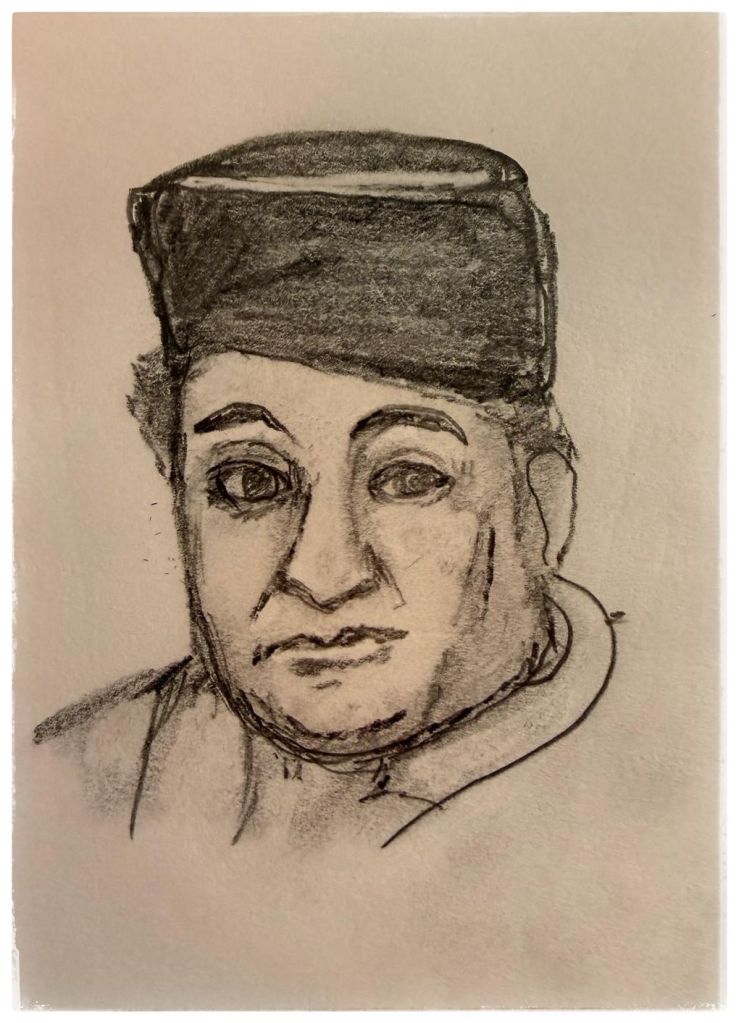
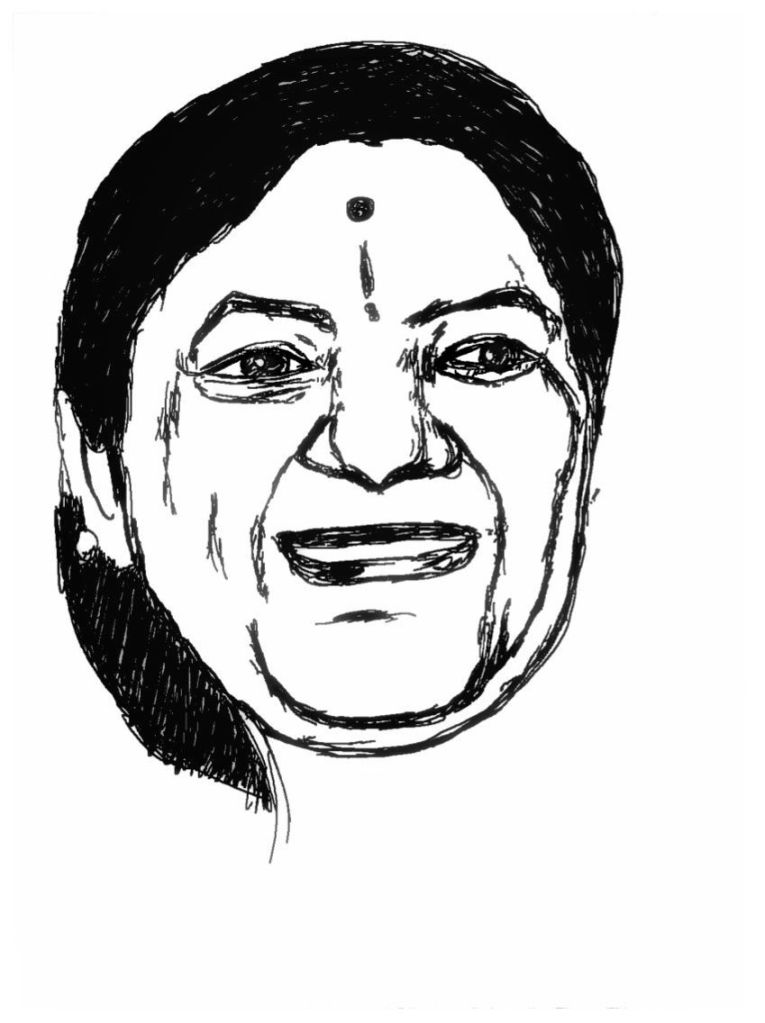
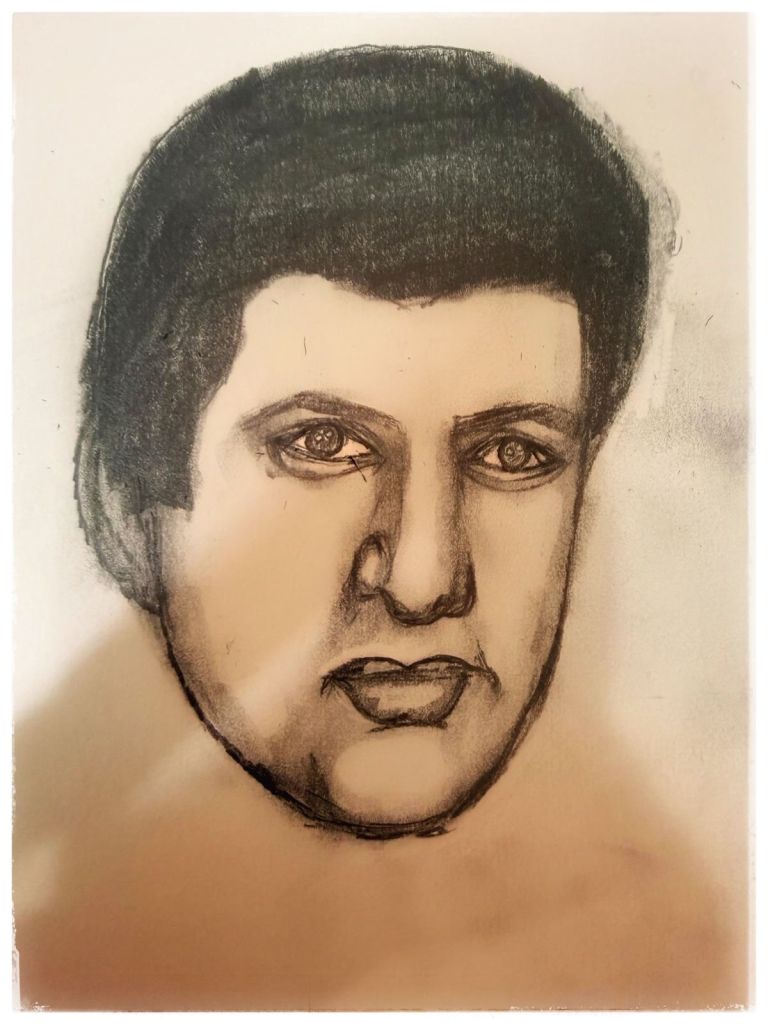
The sketch was made while traveling in a moving bus! The blog written with inputs from our Guide though!
Having grown up watching visuals of movies like An Evening in Paris or Love in Tokyo the places would automatically be in the bucket list of Indians! Especially the 70-80s generation!
Which is why the song Sayonara is known to many!
But ( what’s a blog without a but you see!); the word is actually not used in Japan that much!
When I actually used it (much to the chagrin of my kids especially my son who knows at least some Japanese words!) our guide said that we don’t say Sayonara!
Don’t worry! It’s not a cuss word! The reason is actually nice!
Sayonara is a serious good bye! Not used for routine!
By the way the routine bye sounds very similar to our occasional good bye; Jai Mata Di!
Read on! Don’t worry! Am traveling so can’t write long blogs!
Anyways Sayonara is considered sad and serious because it implies a final farewell, a long separation, or a parting where you may never see each other again!
The reason why the word feels so heavy is because of its Literal meaning!
It comes from sayo (“like this”) and nara (“if”), roughly translating to “if this is how it has to be,” which accepts a sad fate. You may say that to someone you have no chance of seeing again in future!
It’s sort of a permanent goodbye or seperation!
Since Japanese culture is deep and rich and words and behaviours are very rooted in deeper meaning the word is rarely used in daily life!
Native speakers avoid using it with friends or family because it can sound cold, dramatic, or as if you are cutting ties!
It is mostly used by children and teachers at school or in formal settings, rather than casual daily goodbyes!
What People Say Instead!? I felt words are very similar to what we hear in india!
The words used are Mata ne which means “See you later” which is used with friends!
Or you can use Jaane which is a simple and casual “Bye-bye” or “See ya”!
And finally Ja mata! (Like our Jai Mata di!) which means “Well then, until next time”
So no Sayonara! Just Ja mata!
That’s philosophical! Which reminds me of Dhanpat Rai Srivastava! The legend!
Did you know that there is a gate built to commemorate world peace!? And it overlies a shrine!
The gate is called the “Peace Torii” or Heiwa-no-Torii!
This lakeside gate was built in 1952 to commemorate post-WWII international peace treaties.
The gate is a major attraction of the Hakone shrine!
Established by the Buddhist priest Mangan on Mount Hakone to pacify local mountain spirits and a legendary nine-headed dragon in Lake Ashi!
According to local folklore, a fierce nine-headed dragon (Kuzuryu) lived in Lake Ashi and terrorized villagers.
In 757 CE, Mangan traveled to the area, stood by the lake, and prayed for three days and three nights.
He then successfully chained the dragon to an underwater rock, calming its wrath!
The tamed dragon repented and transformed into a local water deity, promising to protect the region on the condition that the people honor it with an annual prayer festival.
The terroriser then became a protector and established peace! So finally it leads to peace!
Also listening to peaceful and melodious songs can make you feel happy and serene!
A visit to this shrine today made us feel blissful!
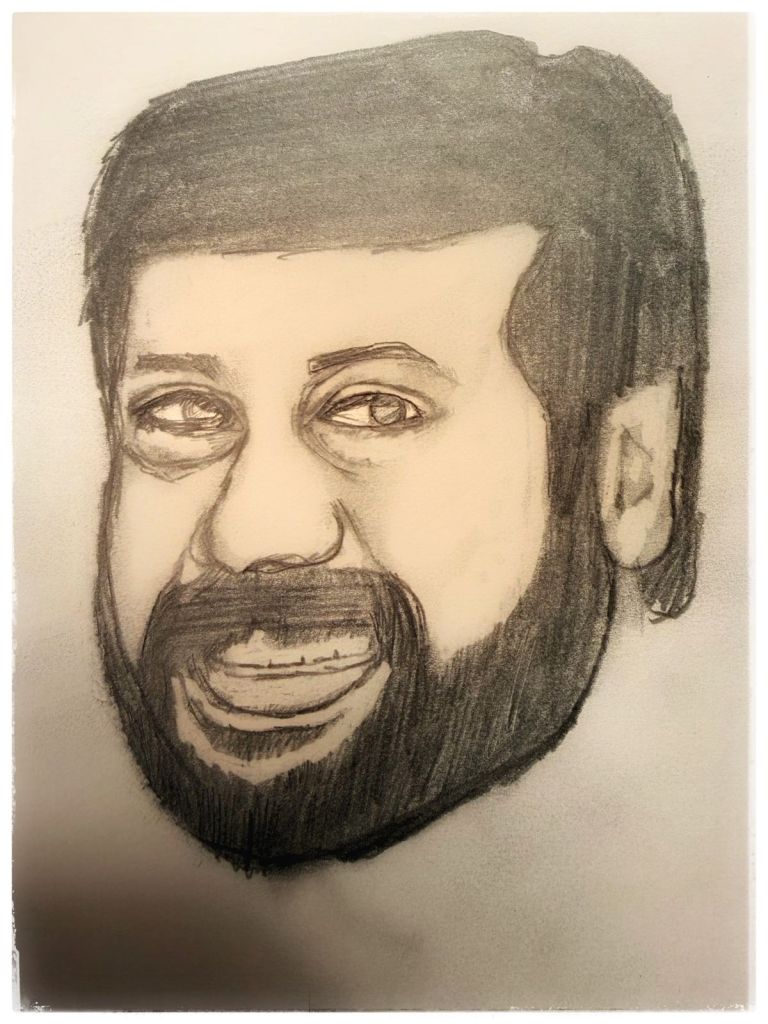
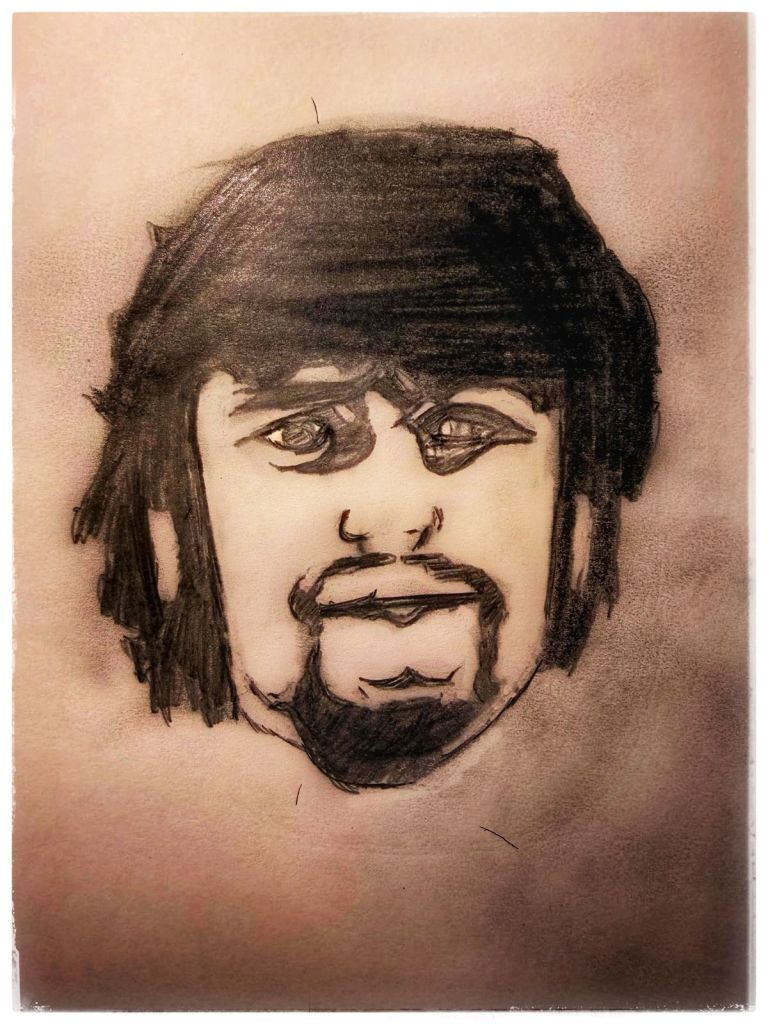
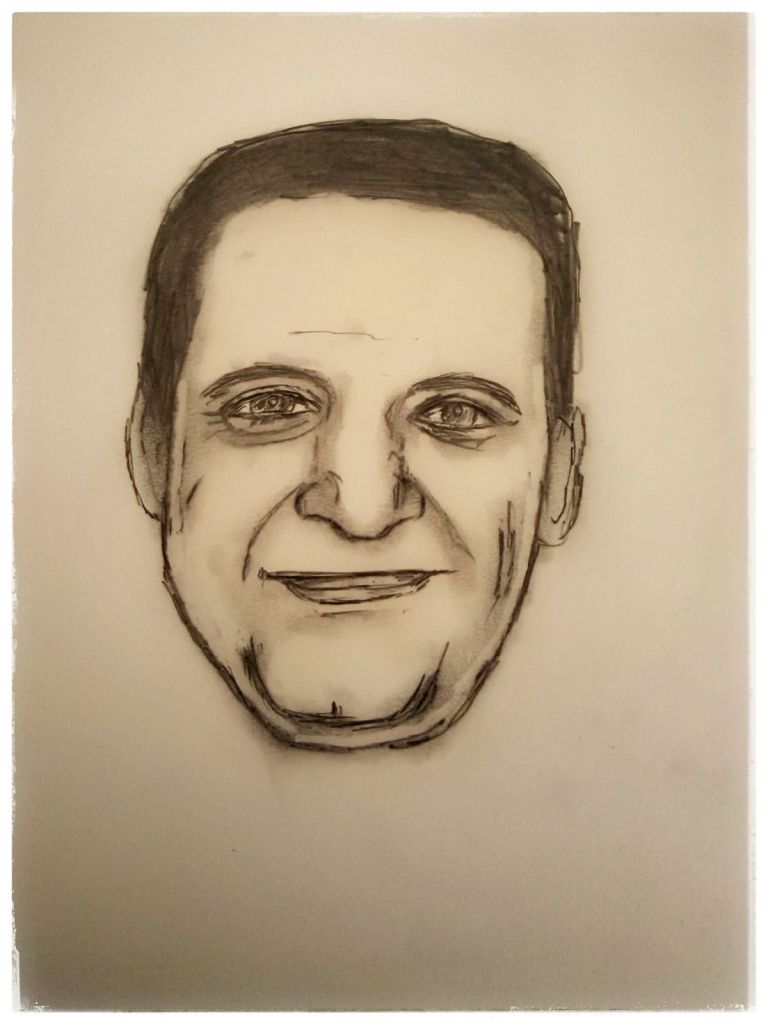
A quick silhouette sketch during travel of my favourite singer!
Do you know what is the similarity between Laika and Hachiko?
Well there are actually two similarities…
They are both amazing dogs!
Which is of course the first similarity!
The second is the fact that they are amazing dogs whose tales of valor and friendship is legendary! I knew about Laika and had even sketched and written about it.
So Laika was a Soviet space dog who became the first living creature to orbit the Earth.
A former stray rescued from the streets of Moscow, she was launched into low Earth orbit aboard the Sputnik 2 spacecraft on November 3, 1957.
It was special because it was a one way trip…
Then you have Hachikō!
There is actually a famous dog statue in Japan which honors Hachikō!
Hachikō was an Akita dog remembered for his incredible loyalty.
The bronze monument is located right outside the Hachikō Exit of Shibuya Station in Tokyo, just steps from the busy Shibuya Crossing.
The Story of Hachikō sad but shows how they are true friends!
Hachikō was owned by Hidesaburō Ueno, a professor at the University of Tokyo and every day Hachikō walked to Shibuya Station to see the professor off to work and returned later to greet him!
One fine day in May 1925, Professor Ueno died suddenly at work possibly due to a stroke and never returned to the station.
For the next nine years, Hachikō went back to the station every single day at the exact time to wait for his master till he himself died and stopped coming!
The Hachiko Statue stands at 2-1 Dogenzaka, Shibuya Cityand it serves as a major symbol of devotion and a very popular meeting place for people in Tokyo!
You will not be forgotten dear Laika and Hachikō!
Then again some bhajans sung by Anoop jalota are also unforgettable!
Say a prayer or two for Hachiko and Laika before you sleep. They have been better freinds than some Homo Sapiens!
Yes I think that’s the name but that’s not important!
In one instance in the movie the ‘Human’ tells an ‘alien friend’ that he is going to sleep! The alien is shocked!
Have you experienced this in your pets especially dogs!?
They sleep so light! The moment you touch them they are ready to attack or at least get up so fast! In the world and in the wild; it is a jungle out there!
So you have to be always prepared!
So if your pet sleeps like a baby without getting disturbed then one reason is that he or she is lazy! But the actual reason is that he or she has become so comfortable and confident about his or her security that he does not have any anxiety to sleep!
This is what the alien meant!
He tells that they never sleep alone!
Apparently they watch over each other when they sleep! Maybe even take turns!
So if you sleep soundly and make a LOUD snoring sound then of course you need to reduce weight and meet a physician but the good thing is that you are comfortable!
You are safe among your friends and family and you take a sound nap!
Now doesn’t that Sound nice!? Nice also is the voice of Chithra!
A quick blog and a 35000 feet above the ground on a flight enroute to the land of the rising sun!
Then again any healing of any fracture is not a simple thing! It is an indication of the profound social support one person has received!
It is really amazing how a fracture can be an indication of society!
A healed leg fracture in the animal kingdom reflects a profound social reality: survival of such a severe injury in nature generally requires either community care or unique metabolic and environmental conditions.
This concept is famously tied to anthropological discussions on empathy, community support, and the origins of civilization.
In the wild, a broken leg usually means an animal cannot run from predators, hunt, or reach water, making it fatal.
Some social species (like elephants, wolves, or primates) show evidence of group protection or behavioral adaptation allowing an individual to limp through recovery.
Solitary predators may occasionally survive minor fractures by relying on fat reserves if water remains accessible nearby.
The Anthropological Perspective or the the “Healed Femur” Concept was thus suggested by Anthropologist Margaret Mead! She famously suggested that the earliest sign of civilization is a healed human thighbone (femur), because it proves someone cared for the injured individual!
A healed major fracture means a community stayed behind, bound the wound, carried the person, and shared food during months of helplessness—marking the birth of human empathy and social cooperation! A healed femur is thus a sign of compassion!
Of course there are other signs of compassion but this is CARVED IN BONE!
That’s no laughing matter! Laughter though is also good in healing! Which reminds me of Mandar Chandwadkar!
Did you ever think on how the very thing the person who invented the wheel would have or should have done!?
Not patent it of course!
The very first thing he or she must have done is to invent the BRAKES!
The speed of your vehicle is not determined by that engine in the practical sense but in the capacity of your brake!
Now of course we have such a complicated and effective braking system but it all started with simple blocks!
In short Braking systems evolved from simple wooden blocks to mechanical drum brakes, and later to hydraulic and disc brakes.
This progression drastically increased stopping power and safety for vehicles!
The earliest ones were the Wooden blocks which were used on early carriages and steam cars, where a lever pressed a wood block directly against steel-rimmed wheels.
Then it shfted to the pneumatic rubber tires in the late 1890s which the wooden blocks useless because they quickly destroyed the rubber.
Then you had the Mechanical drum brakes which were invented by Louis Renault in 1902, using cables or rods to pull brake shoes against the inside of a metal drum!
The best development happened in the 1950s, utilizing a metal rotor and calipers that squeeze pads against the disc, offering superior heat dispersion and stopping performance! The DISK BRAKES!
The latest (at least for now!) are the the anti-lock brake system, better known as ABS. ABS works by sensing when a lock is about to occur and igniting a system of hydraulic valves to reduce the pressure of a brake on a single wheel.
The system revolutionized the way brakes function and is useful in providing more control for the modern driver.
Of course somethings are not in your control, like you cannot be resistant to the emotions behind the poems and prose of Shailesh Lodha!
Do you know the interesting story of an army of around 500 who defeated and took over an empire of 1 6 million people!?
There were helped by a very small helper!
So small that it had the name SMALL in its name! Yes that was a joke! It was named SMALL after a disease but it was (Still is!) really small!
Five hundred years ago, in February of 1519, the Spaniard Hernán Cortés set sail from Cuba to explore and colonize Aztec civilization in the Mexican interior.
Within just two years, Aztec ruler Montezuma was dead, the capital city of Tenochtitlan was captured and Cortés had claimed the Aztec empire for Spain!
Cortés with his 500 men then headed into the Mexican interior. This region was home to the Aztec civilization, an empire of an estimated 16 million people at this time. Through a system of conquest and tribute, the Aztecs had established the great island city of Tenochtitlan in Lake Texcoco that ruled over an area of about 80,000 square miles.
Imagine an army of 500 overpowering a country of over 16 million!
Now of course Spanish weaponry and tactics played a role, but most of the destruction was wrought by a small member of ANOTHER TEAM! This member caused an epidemics of European diseases!
After helping conquer Cuba for the Spanish, Cortés was commissioned to lead an expedition to the mainland. When his small fleet landed, he ordered his ships scuttled, eliminating any possibility of retreat and conveying the depth of his resolve!
But if it was not for that little member; it would have been a difficult mission!
The member was a virus which causes SMALL POX!
Having lived in the Americas isolated from European and Asian livestock and germs, indigenous groups had no genetic resistance to the smallpox virus! Which means that they had zero defence!
The outbreak arrived in 1520 via an infected soldier in Hernán Cortés’s force and tore through the densely populated capital of Tenochtitlan!
Historical accounts note that the virus killed between one-third and one-half of the population in central Mexico in a single year!
When the leader is dead nothing can be done! The disease killed the Aztec emperor Cuitláhuac (who had succeeded Montezuma) along with many other military commanders and nobles!
So many people fell sick at once that there was no one left to nurse the sick, bury the dead, or harvest crops, causing mass starvation!
With society paralyzed by illness and grief, the military command structure fractured, making it much easier for Cortés and his local native allies to lay siege to and conquer Tenochtitlan in Augus!
So nothing is very SMALL!
Then again some thing or people may have a short term in action but their time is remembered for long and how!
Like Master Chief Petty Officer Krishnan Madhavan Nair! His movies and actions now are legendary!
There was this Ramsay brother’s movie called Veerana! It used to give us the chills! In spite of that I had watched it so many times when I was young!
Then came the sleep less nights and all kinds of hallucinations!
After a couple of days I would decide never to watch another horror movie again! Till the next one of course!
Do you know who are adrenaline junkies and dark copers!? And do you know why some (or as my wife calls them especially me; crazy!) people watch horror movies!?
According to research It is a combination of an adrenaline rush and an opportunity to learn about dealing with scary situations in a safe environment!
Apparently the first types are called “adrenaline junkies,” while the other two are the “white knucklers” and “dark copers.
For white knucklers and dark copers, feeling fear for fun is more about self-learning and self-efficacy. White knucklers try to “lean out” of the experience by trying to find the situation funny or lessening their exposure to the scary stimuli. While Dark copers seem to use scary media to help them deal with anxieties about the world or their own lives by focusing on a more concrete threat!
The again it is actually beneficial to watch horror movies!
One is getting practice or facing your fear in a controlled manner! Viewers feel scared, but they know they are sitting safely on a couch!
These movies act as a safe practice space for dealing with dangerous situations!
The you have the relief phase! Once the scary part ends, the brain feels a strong wave of relief and happiness! Also almost all horror movies warn you that if it is dark DONT GO OUT! Also do not gift lift to strangers on roads which are close to Cemetery! Now if you need to watch Horror movie to know that then you may need much more training by the way!
Fear also causes the body to release stress hormones, making people feel more awake and energized! Also watching scary things with friends releases chemicals like oxytocin that bring people closer together!
Horror movie reminds me of the two cool scary movies starring birthday celebrity Manoj Kumar; Woh koun thi and Gumnaam! Sadhana as the girl in white saree going to a graveyard was epic scary at the time! Hope you don’t have a nightmare!
 ramadocblog
