Type 2 Fun!


Everyone knows what is Type 2 Diabetes! At least most medicos do!

Now do you know that there is a type of fun which is called the Type 2 fun!  You also have type 3 fun by the way!

It is no fun to wait for it though!

Now you know what is fun! Chiling and not working for it too much! Of course the definition of fun for everyone is different but then it is more or less similar!

The specific type 2 fun refers to an activity that is miserable, difficult, or uncomfortable while you are doing it, but becomes highly enjoyable, rewarding, and memorable in retrospect. It generally involves stepping outside your comfort zone, pushing your physical or mental limits, and overcoming a significant challenge!

So this brings us to the fun scale! Yes! Everything has a grade! Even FUN! That if of course the best way to take FUN out of everything!

The concept originated in the mountaineering community to categorize activities based on how they are experienced over time!

Type 1 Fun: Fun both while it is happening and later (e.g., eating pizza, laughing with friends)! Or in my case simply lying on a comfortable bed and watching a nice movie with the whole family in my home theatre!

Then you have the Type 2 Fun: Not fun at all in the moment, but deeply satisfying to look back on! We will get back to this!

Type 3 Fun: Not fun while happening and a miserable memory you never want to repeat (e.g., getting hypothermia, surviving a disaster!). It is a nice memory which is good only because you survived it but you do not want this to happen again!

So in this Type 2 fun is the one in question!

While often associated with wilderness and survival activities, Type 2 fun can apply to anything that requires grit and determination!

In outdoors it can be running a marathon, backcountry hiking in a rainstorm, or surviving a tough camping trip!

It can even be in everyday life! Learning a difficult instrument, building a complex piece of furniture, or pushing through a brutal workout! I still remember the IKEA bed which we as a family FIXED! It took the whole day and our backs were sore for a couple of days! But boy was it worth it!

So despite the temporary suffering, many people actively seek out Type 2 fun because it builds deep resilience, creates the best stories, fosters powerful bonding with others, and teaches you what you are truly capable of! It is like you WORK for the fun and this is why you feel it is valuable!

So what type of fun is reading this blog!? Please do not tell it is TYPE 3!


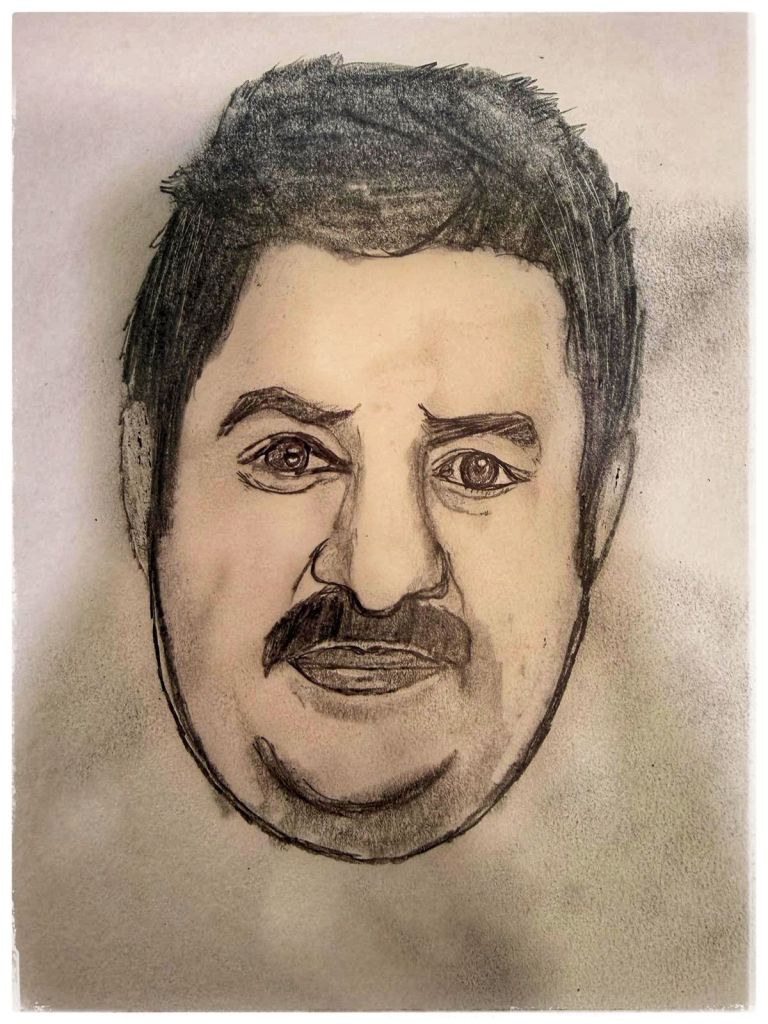
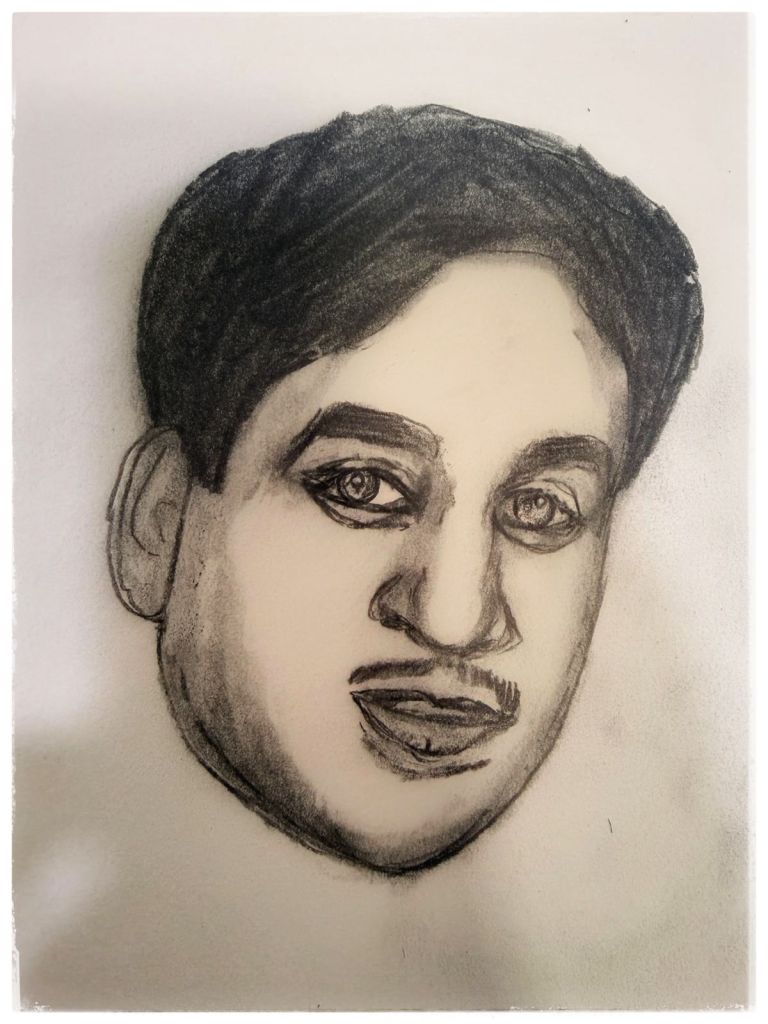
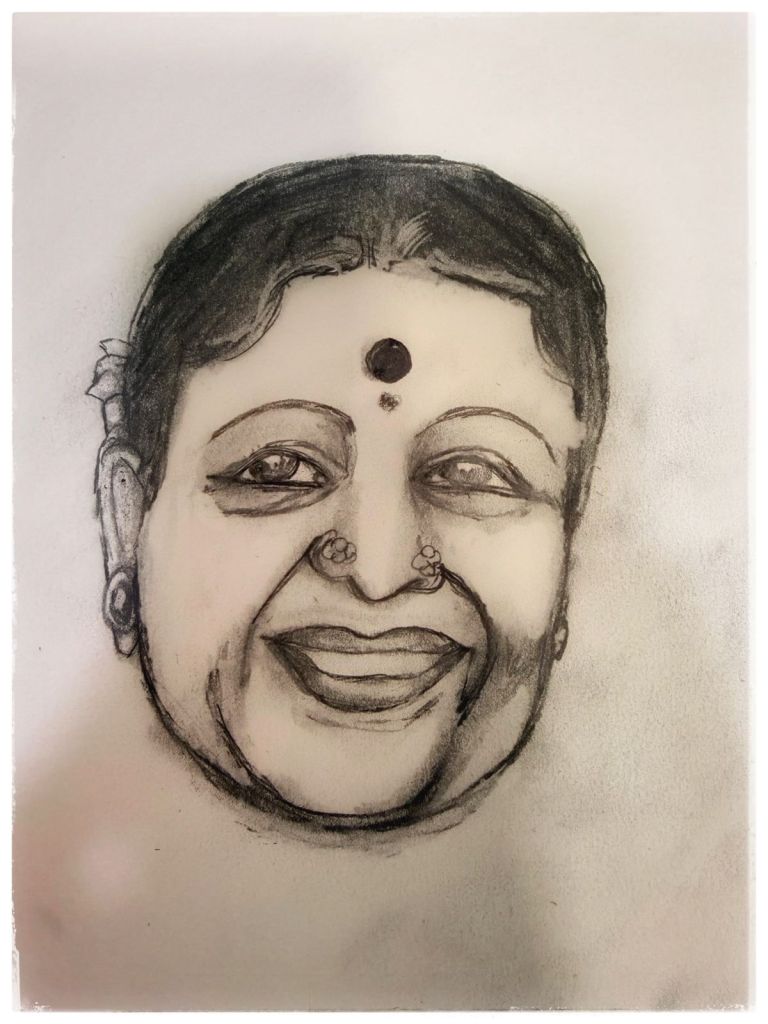
Then again simple type 1 fun is listening to music especially made by the super talented Madan Mohan Kohli!

Now go for the standard type 1 fun! Aka Sleep!

Shubh ratri!

Caloric value of Grass!

Do you know the nutritional value of grass?

It was announced at one time on the radio!

It is a tragic story indeed!

The novel Shattered lands by Sam Dalrymple tells about the partition of the British India and among other things tells about the Bengal famine.

Many historians try to whiteswash the history when it does not suit them which is why this tragedy which killed more than 2 million people is still not known to many!

The 1943 Bengal Famine was a catastrophic humanitarian crisis in the Bengal province of British India that resulted in the deaths of an estimated 2 to 3.8 million people. Occurring at the height of World War II, it stands as one of the deadliest man-made disasters of the 20th century, deeply tied to British colonial governance and wartime economic policy.

Now though ocalized factors like a 1942 cyclone and a fungal crop disease reduced regional rice yields slightly, modern research and economists have proven that there was no absolute shortage of food supply in 1943.

Instead, structural failures and deliberate policies precipitated the mass starvation.

The first was the  “Denial Policy”: Fearing a Japanese invasion after the fall of British Burma in 1942, authorities implemented a scorched-earth strategy. They confiscated and destroyed tens of thousands of local boats—the primary transport for food and the livelihood of rural fishermen.

The other CHIEF cause was one man! The British government under Prime Minister Winston Churchill systematically prioritized stockpiling grain for military forces and European reserves over feeding the civilian population. More than 70,000 tons of rice were exported out of India during the first half of 1943 alone!

Severe wartime spending and panic hoarding triggered a massive spike in rice prices (skyrocketing from 2 rupees to 40 rupees). This economic shock priced agricultural laborers, rural artisans, and fishermen completely out of the food market.

The crisis decimated the social fabric of rural Bengal. Millions of starving, impoverished families dissolved as men sold off tiny plots of land to find work and women and children migrated en masse toward cities like Calcutta, begging for standard grain water.

Winston Churchill’s wartime cabinet repeatedly denied urgent requests for relief food shipments and medicine from British officials stationed in India.

Official colonial records from the era reveal deeply unsympathetic attitudes, with Churchill famously blaming Indians for the crisis by stating they were “breeding like rabbits” and asking why Gandhi had not died yet!

There was so much starvation and desperation that even the radio started announcing the Nutritional value of GRASS!

During the Bengal Famine, starving populations consumed wild grasses and aquatic weeds (like khesari or grass peas, shama grass, and water hyacinth) out of desperation.

While grasses provided a temporary, bulky sense of fullness, their nutritional value for humans was incredibly poor and hazardous.

Virtually Zero Caloric Energy: Human digestive tracts lack the enzymes (cellulase) required to break down the tough cellulose and lignin fibers that make up the bulk of wild grasses. As a result, the body could not extract digestible carbohydrates or glucose from them.

The extremely high, indigestible fiber content often led to severe bowel obstruction, intense bloating, and fatal dysentery!

One HUMAN was reduced to eating grass simply because another HUMAN lost his HUMANITY…

Which is why we need money! And rich people who spend because at the end of it all; every donation counts! Just like the massive ₹60,000 crore (approximately $7.7 billion) to be utilized for various social causes by Adani! This monumental endowment is one of the largest corporate philanthropic commitments in Asia, dedicated to enhancing healthcare, education, and skill development!

You can eat more than just Grass with that!

Think about that though when you are wasting your food though…

Shubh ratri…


Ant surgeon!


While we used to read about the history of medicine or surgery, most of the times it used to start with this book called the Sushruta Samhita! One of the things mentioned in this legendary book was the use of ants in suturing!

We used to feel that it is a wonder that this could be done! Or may be imagination!

Recently while listening to the book by Robert Sapolsky called A Primate’s Memoir; the author describes an incident involving the army ants!

Now having an encounter with a couple of them is ok but if a swarm gets you then you are in trouble! The issue is that once they bite you, they will not let go! Which is of course dangerous but the tribes of Africa understood this nature of the ants and have modified their behaviour for their benefit! Wound Suturing!


Using ant jaws as sutures is a traditional first-aid technique used historically by indigenous cultures in Africa and South America. It involves using large-jawed ants (like army or leaf-cutter ants) to act as natural surgical staples.

What they do is that the edges of the cut are held tightly together and then a live ant is held by the body and its jaws are positioned perpendicular to the wound!

The ant instinctively bites down, clamping the flesh between its large mandibles! Then comes the twist! The ant’s body is carefully twisted or snapped off, leaving only the head and the locked jaws in place!

The process is repeated so that additional ants are used along the length of the wound as needed!

Finally once the wound has healed, the ant heads naturally fall off or are gently removed!

Only species with exceptionally strong mandibles and a locking mechanism are suitable. The most common are the Army Ants: (e.g., Eciton in South America, Dorylus/Driver ants in Africa), the Weaver Ants: (e.g., Oecophylla in India and Southeast Asia) and the Bullet Ants: Used in certain tropical regions!

This method dates back centuries. It was first famously recorded in the ancient Indian medical text, the Atharva Veda (circa 1000 BC) and Sushruta Samhita, and was primarily a quick, life-saving measure to stop bleeding in remote areas!

In modern contexts, it is not recommended if medical supplies are available. The ants themselves or their mandibles can introduce bacteria into the skin, increasing the risk of infection!

So the next time you visit a tribal area in Africa and see a chief with some ants in his bag; that may simply be his Suturing set!
And he may be an Expert ‘ant surgeon’!

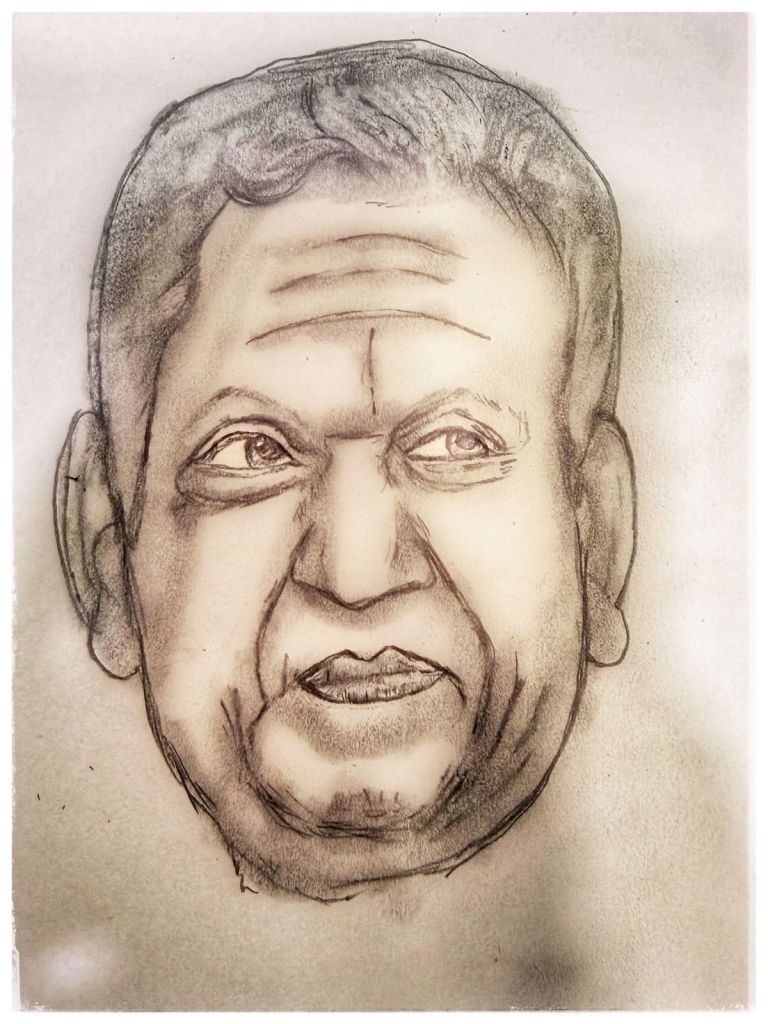
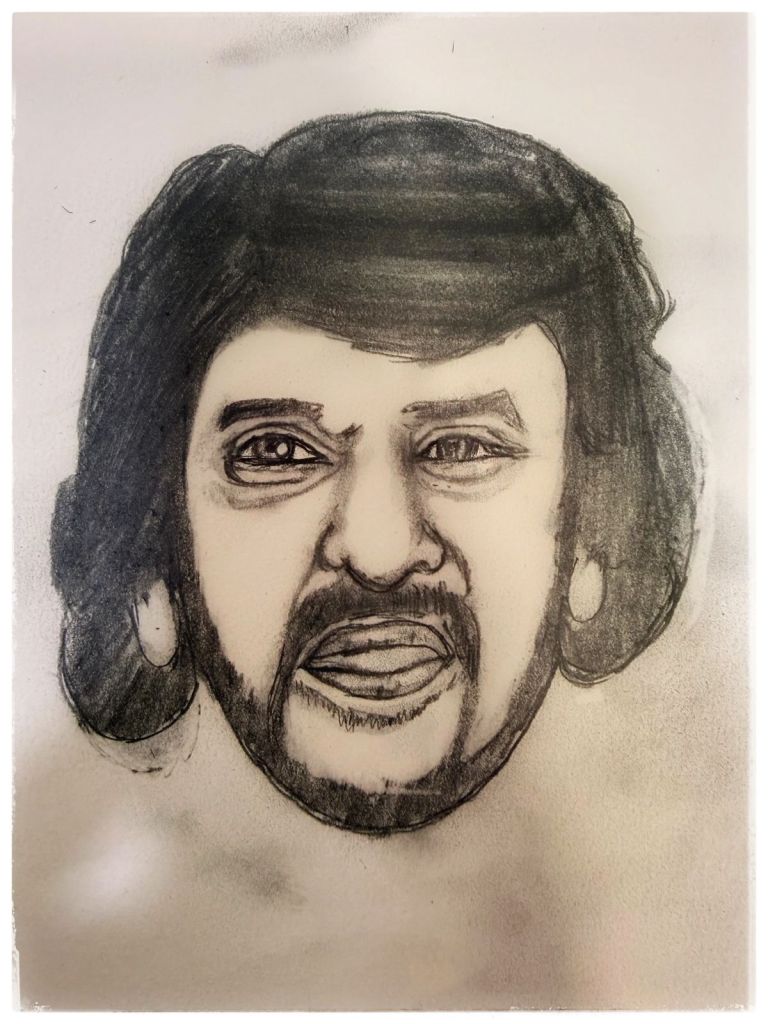
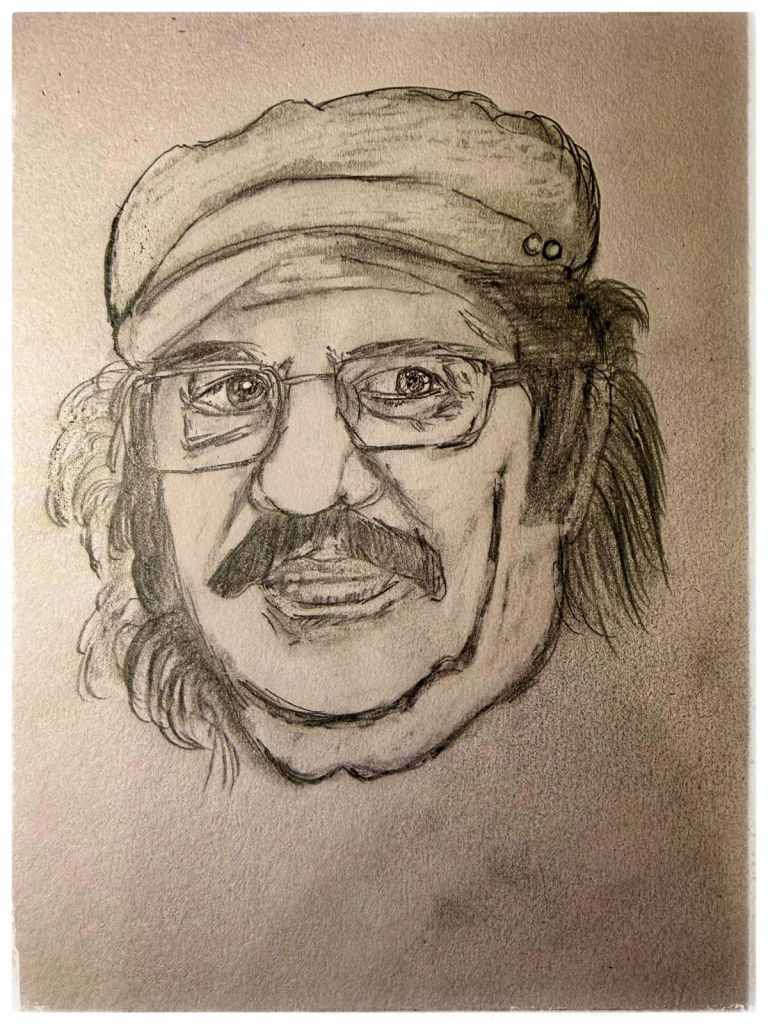
Expert in music also is M. S. Viswanathan!

Now stop dropping sugary stuff all around if you aren’t planning to learn suturing and sleep!

Shubh ratri…

It’s loud!

Imagine you are in a deep dense jungle and suddenly you hear the sound of a machine gun fire or a repid fire of the artillery!

You can then stop imagining! Then again it may not be the army!

It may just be a bird!

Still stop imagining!

That very typical loud and scary sound is produced by the Shoebill stork!

The primary sound of a shoebill stork is a loud, mechanical “bill-clattering” that mimics the rapid firing of a machine gun or an automatic weapon. Instead of vocalizing using their vocal cords, adult shoebills produce this intense sound by rapidly snapping the upper and lower mandibles of their massive, hollow, shoe-shaped bills together!

This is a loud sound! But then if you are like me you would wonder if that is the loudest sound made by an animal! Well, of course it isn’t!

Now to get an idea of the loudness understand that any sound over 85 decibels over a period of time can damage your ears while any sound over 120 decibels can do that damage instantly!

The loudest animal can create a sound more than 230 decibels while there is an animal which can create a sound energy which can produce the same heat as the sun!

The sperm whale is the loudest animal in the world, producing echolocation clicks reaching up to 230 decibels (dB). This is louder than a jet engine taking off (around 150 dB) and is powerful enough to rupture human eardrums at close range!

Luckily it is produced in the oceans so we are safe!

Now while the sperm whale creates the loudest individual sound, the blue whale’s low-frequency pulses can carry for hundreds of miles, making it the loudest sustained animal call!

Coming to land; size does matter! Here also it goes to the Africans!

The loudest land animal is the African Elephant with sounds up to 117 dB and their powerful trumpeting calls can be heard by other elephants up to 5 miles away!

The Howler Monkey is the loudest primate on land, reaching around 140 dB due to a specialized resonating throat chamber! Here also humans are not the first!

Among the insects you have the African Cicada which produces sounds up to 107 dB using vibrating membranes called tymbals to attract mates!

Then again for those who feel that the size does not matter you have the loudest Small Animal (Relative to Size) which is the Tiger Pistol Shrimp which produces the sound in the level of 200+ dB!

This tiny crustacean snaps its specialized claw so fast that it creates an imploding bubble. The resulting shockwave stuns prey and briefly reaches temperatures hotter than the sun! So this loud barking SHRIMP does bite and burn!

Of course that sound on land would have made you deaf or blind! That reminds me of the amazing movie Andhadhun by Sriram Raghavan!

Now stop imagining loud animals and sleep!

Shubh ratri…

Chaturanga!

This game is the precursor of at least 8 other games and is also named after a Yoga pose or they may be named after each other!

The term is CHATURANGA!

Chaturanga Dandasana (Four-Limbed Staff Pose), often called the “yogi push-up,” is a foundational arm-balancing posture in vinyasa and power yoga. It requires intense core strength and stability, bridging the transition from a high plank to a low hover!

Even in dreams if I think of Chaturanga Dandasana, I will end up with a cramp!
Then again the other Chaturanga is also not my cup of tea (or filter coffee for that matter!)

This ‘Chaturanga’ is the earliest known ancestor of modern chess, originating in India around the 6th century during the Gupta Empire!

The Sanskrit term translates to “four divisions of the military”—infantry, cavalry, elephants, and chariots. These four branches served as the direct predecessors to chess’s modern pawns, knights, bishops, and rooks!

Chaturanga was originally played on an uncheckered 8×8 grid called an ashtāpada. Each piece possessed its own unique movement

Raja (King): Moved one square in any direction, identical to the modern king.

Mantri (Counselor/Minister): Moved exactly one square diagonally (the precursor to the modern queen).

Gaja (Elephant): Moved two squares diagonally in any direction and could leap over other pieces.

Ashva (Horse): Moved in the familiar “L-shape” and is the only piece to retain its exact original movement.

Ratha (Chariot): Moved any number of squares horizontally or vertically, exactly like the modern rook.

Padati (Foot Soldier): Moved one square forward and captured diagonally, similar to a modern pawn.

Around the 7th century, the game traveled along the Silk Road to Persia, where it was called Chatrang (and later Shatranj in Arabic).

The Persians adopted the game, and many modern chess terms stem directly from this era:

Shah (King)
Shah Mat (The King is dead/helpless), which evolved into the term Checkmate!

Over the centuries, the rules underwent major shifts. In 15th-century Europe, the weak Counselor piece evolved into the powerful Queen, and the Elephant was transformed into the Bishop, resulting in the fast-paced, complex game we know as modern chess!

Then again since the origin is Indian; the champions even of the modern Chess are indians especially the younger generation! Guess it has come a full Chaturanga circle!

Even the role of Amrish Puri came a full circle! Starting with character actor to villain then back to character actor!

Now stop playing mental Chaturanga and sleep!

Shubh ratri…

The Samurai and the respect…


There is a crab and then there is a Samurai!

Then again this Crab which looks like a Samurai finds itself in the middle of the evolutionary debate!

The biological name of this crab is Heikea japonica or Heikeopsis japonica

It is a relatively small species of marine crab native to East Asia, most famous for its carapace which naturally mimics the scowling face of an angry human warrior!

The samurai is famous due to the well known legend of the Fallen Samurai!

The crab’s cultural significance stems from a pivotal moment in Japanese history: called the Battle of Dan-no-ura! This historical naval battle marked the tragic defeat of the powerful Taira (Heike) clan by the Minamoto (Genji) clan, leading to the mass drowning of samurai warriors and the child Emperor Antoku!

According to local folklore recorded in The Tale of the Heike, the ghosts of the drowned samurai were reincarnated into these small crabs, eternally wearing a mask of fury on their shells!

Even if you Google the name samurai crabs you can see those ‘ancient’ warriors giving you the stare of FURY!

Because of this legend, coastal Japanese fishermen traditionally throw these crabs back into the ocean out of respect and fear for the fallen spirits! So the Japanese who normally EAT everything do not eat the Samurai crabs!

Of course the Scientific explanation is a combination of couple of theories!

The “samurai face” as such is a textbook example of pareidolia, where the human brain visualizes familiar patterns—like a face—in completely random structures.
Simply speaking your eyes would see only which is there on YOUR MIND!

Then you have the artificial Selection theory by evolutionary biologist Julian Huxley and later Carl Sagan.

They popularized a theory that human superstition drove the crab’s evolution. They argued that fishermen threw back crabs that looked like faces, allowing those specific crabs to reproduce. Over centuries, artificial selection inadvertently perfected the samurai likeness!

Whatever be the reason; they are a great example of the mysteries and beauty of nature and many times you must not worry about the how and the why! Just enjoy!

Then again the Samurai crab and the Samurai are well known and respected and revered in Japan!

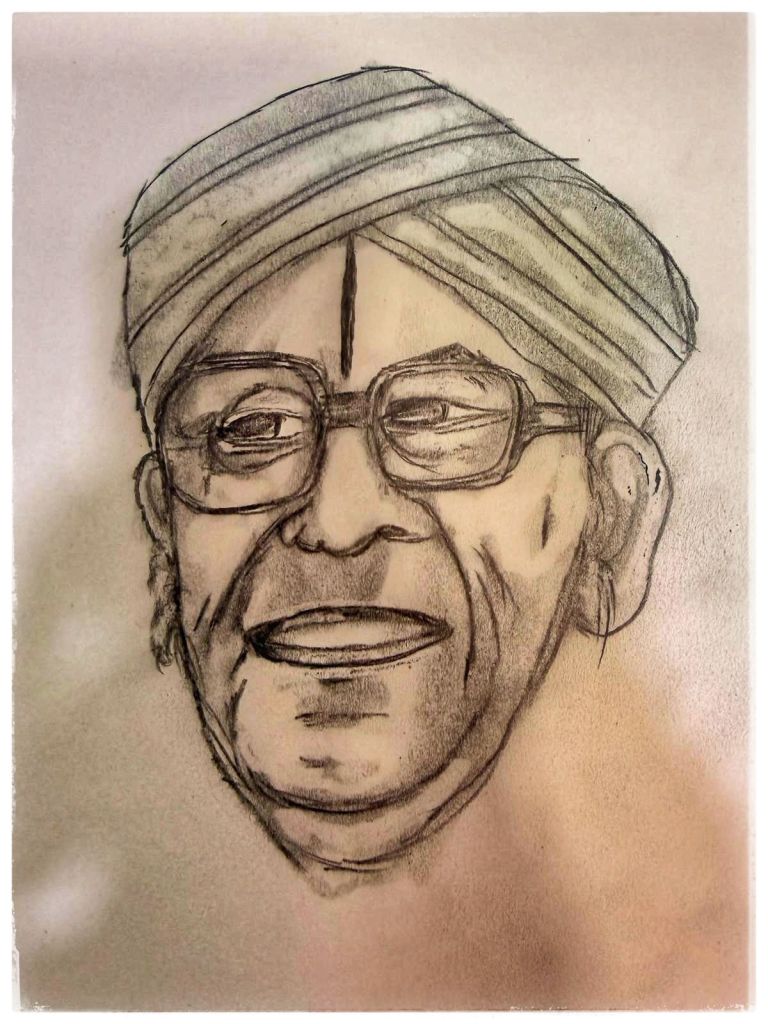
On this father’s day I am also proud to have the best DAD in the world! My mother used to love and adore and have so much respect for her Father which is why my sketch of the day is of my Grand Father! He was a Freedom fighter and a member of the INA with Subhash Chandar Bose! Now that is another legendary father!

A big shout out to all those amazing father’s of the world! You Rock!

Shubh Ratri…

The ‘American’ camel!

Would you be shocked if I ask the question; what is the common historic link between the Middle east, Asia and America!?

The shock will come when I tell the answer by the way! The common thing is ‘The CAMEL!’

Then you will think what the Camel has to do with America! No no! You cannot store Oil in its hump!

The origin of the SHIP of the desert is actually from, hold your breath; AMERICA!

What’s unique about the earliest camels, Protylopus and Poebrotherium, is that they appeared about 45 million years ago in the North American rainforests and savannahs! One of the strangest places Paracamelus (which is also an ancestor of camel) fossils have been found was Ellesmere Island in northern Canada! The temperature there at the time was often below zero, with 6-month-long winters and very few sun rays. Not the place you’d expect to find a camel at!

Camels first evolved in North America around 40 to 50 million years ago, starting as rabbit-sized animals in ancient forests.

The earliest known camelid ancestor, Protylopus, was no larger than a rabbit and lived in the open forests of present-day South Dakota!

Over millions of years, they grew larger and adapted from dense forests to open grasslands. The sheep-sized Poebrotherium emerged 35 million years ago with features much closer to modern camelids.

The Ice Age camel Camelops evolved about 3 to 5 million years ago. Standing up to 7 feet tall, these imposing herbivores roamed widely from Alaska down into Mexico!

Then started the global migration and separation!

Around 6 to 7 million years ago, camel ancestors (Paracamelus) crossed the Bering Land Bridge (connecting modern-day Alaska and Russia) into Asia. These eventually gave rise to today’s Old World camels (the single-humped Dromedary and two-humped Bactrian)!

Then about 3 to 5 million years ago, early camels migrated south across the Isthmus of Panama, eventually evolving into modern South American camelids like the llama, alpaca and guanaco.

But the original native camelids (along with other megafauna like horses and mammoths) disappeared from North America about 13,000 years ago. Scientists generally attribute this extinction to a harsh combination of shifting Ice Age climate changes and aggressive hunting by early human arrivals!

So if you can speak to the camel and ask where it originally came from, it will look at you and say; “I am originally from America Mate!” Of course his CARD may not be green!

Then again all said and done the Camel is a majestic hard working SHIP of the desert and hard workers shine no matter where they come from!

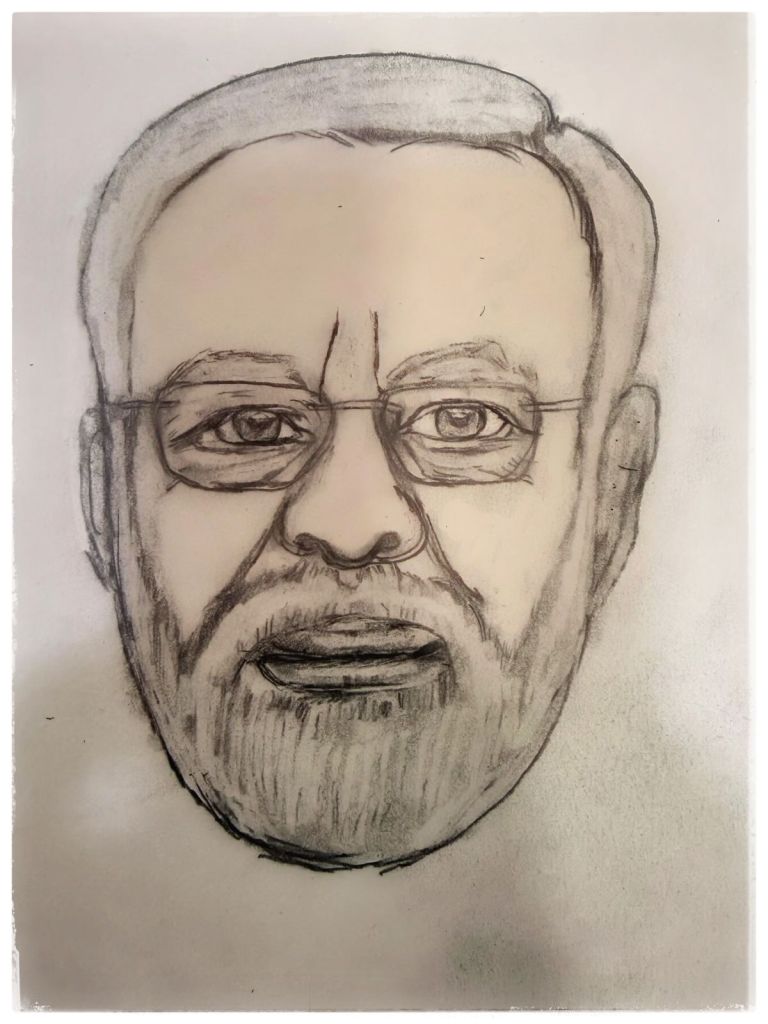
Just like our hard working president Droupadi Murmu madam!

Now sleep like a Camel or Human! You decide!

SHubh ratri…

Mirror mirror


In three of the five most famous books by Robert Greene; Robert uses the MIRROR analogy!


In the novel 48 laws of power Robert Greene explores the Mirror Effect! The law titled “Disarm and Infuriate with the Mirror Effect” is told to be used as a tool for deception, seduction, and strategic psychological control. By mimicking an opponent’s actions, values, or body language, you neutralize their strategy and disorient them!

When you mirror your enemies by doing exactly as they do, they struggle to figure out your strategy. This reflection disarms them, making it an excellent tool for defensive shielding and offensive deception.

By mimicking an opponent’s behavior and applying it back to them, you subtly mock or humiliate them. This frequently forces them to overreact, lose their temper, and make strategic mistakes!

Then in the novel The Art of Seduction, Greene notes that because humans have a narcissistic streak, mirroring someone’s body language, values, and ideas is highly hypnotic. It creates an illusion of a profound, shared connection, drawing them under your spell!


Finally outside of psychological manipulation, Greene frequently emphasizes that you must act as a metaphorical mirror to yourself. Training your mind to see yourself exactly as the world and others see you is essential for acquiring real power, understanding your true flaws, and achieving Mastery!

If you are human and if you ever cross a mirror; you would definitely stop to check yourself even if it is for an instant! Unless of course you are a Vampire or a Ghost! Then you may ask then how are Vampires so well groomed! Well they groom each other!

Then you have the Man in the mirror analogy which is my favourite! The only person you need to answer to at the end of the day is the MAN or the WOMAN in the mirror!

Show your deeds to yourself in the mirror! Like the deeds of shakthiman or Bheeshma! Which reminds me of Mukesh Khanna

Now stop staring at the mirror and sleep

Shubh Ratri…

The invisible gorilla…


Sometimes when our concentration is somewhere else; we miss the obvious!

In an experiment it was shown that in a group of people playing basketball, the ‘audience’  failed to see a GORILLA!

That famous experiment is called the Invisible Gorilla experiment (I don’t think they spent much time in NAMING the experiment though!)

Anyway, the Invisible Gorilla experiment is a landmark psychological study that demonstrates inattentional blindness—the phenomenon where we fail to notice fully visible but unexpected events when our attention is narrowly focused elsewhere!

In 1999, psychologists Daniel Simons and Christopher Chabris conducted this famous study at Harvard University.

The task was that the Participants watched a short video of six people—three in white shirts and three in black shirts—passing basketballs. Viewers were instructed to count the number of passes made by the players in white. Simple enough but here lies the catch!

The Surprise was that roughly halfway through the video, a person in a full-body gorilla suit walked into the middle of the scene, stopped, faced the camera, thumped its chest, and walked off.

The gorilla was on screen for about 9 seconds.

But did you know that  Astonishingly, about 50% of the viewers completely failed to notice the gorilla!


Do see the video but since you know the result; try to show it to someone who has not seen it before! They will be so busy counting the ball passes that they will not SEE or rather NOTICE the Gorilla!

The Key Takeaways of this famous experiment which has been repeated many times with similar results many!

On is the selective attention capability of the brain! Because our brain’s processing capacity is limited, we filter out vast amounts of visual information to focus on the task at hand. It is like if we are driving, we SEE only the road but do not NOTICE other things!

Also there is a matter of overconfidence: The experiment highlights an “illusion of attention.” Most people confidently believe they would notice a giant, unexpected gorilla!

There are so many real world implication of this like how having a cognitive blind spot can have serious consequences.
For instance, studies have shown that even highly trained experts—like radiologists reading lung scans—can miss obvious anomalies when their attention is tightly focused on searching for something specific!

It is such a simple but complicated thing! I still remember in our practical examination how we were presented with a scan with so many findings! We were to write the findings in the next station! But the very first question in the next station was; For five marks ‘What is the name of the patient?’

Most of us missed it!

So hopefully in the quest for the rare or unknown, try not to miss the OBVIOUS!

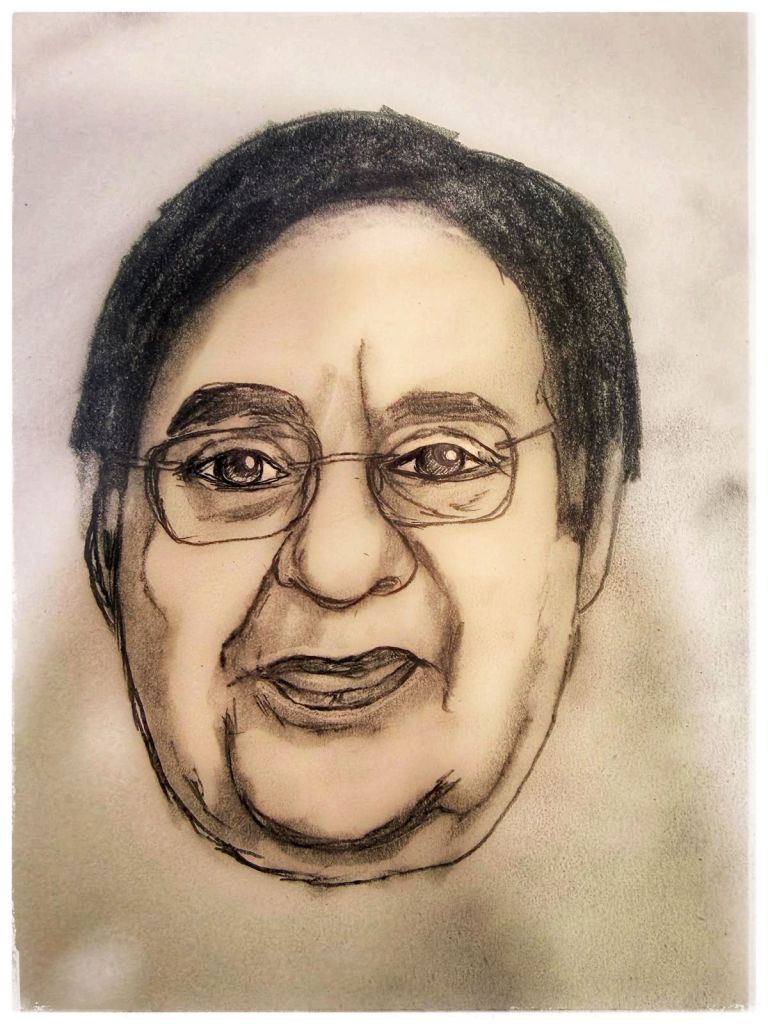
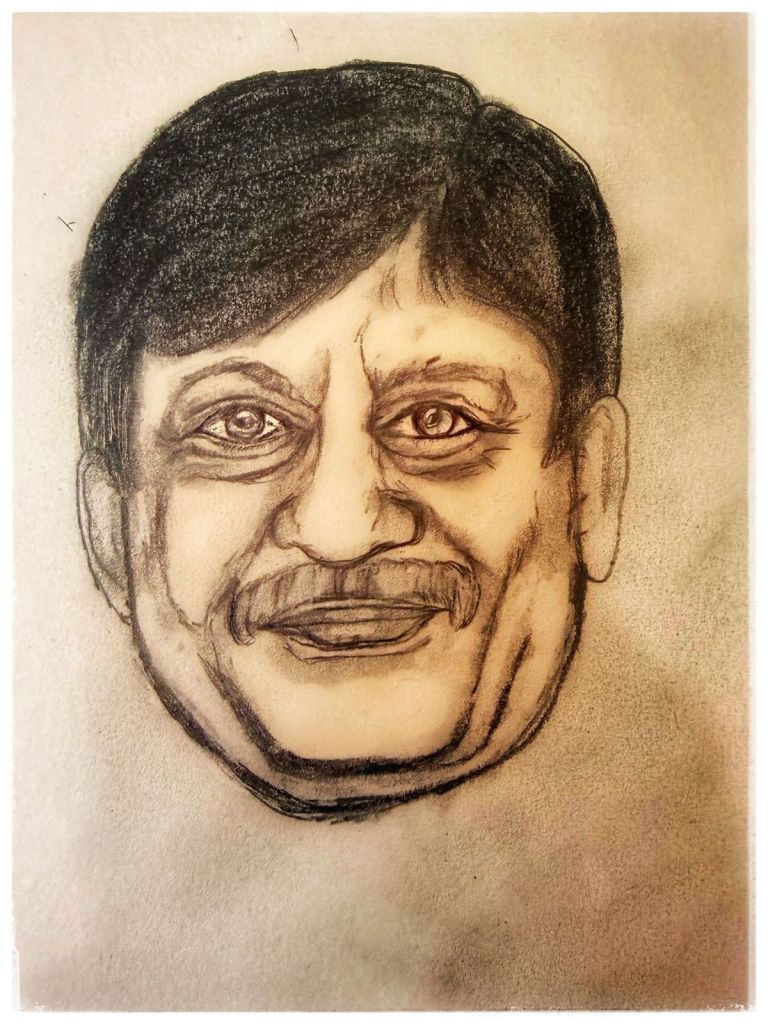
Obvious also is the fact that Sathyan Sivakumar is a good comedian!

Shubh ratri…

Have a heart!


Do you know that there is a MASCULINE bundle in your heart!

Maybe that’s why men are associated with most things ‘heart’!

Both males and females have this  ‘MASCULINE’ bundle! Of course it is only in name! The name is BUNDLE OF HIS!

Ok ok; I will not be HEARTLESS; I will tell you more about it!

The most automatic organ in the body is your heart! It has to RUN non stop and it can be RESTARTED after it stops! The question then remains from where the IGNITION or start of the heart beat occurs?

In 1839, Jan Evangelista Purkinje discovered a net of gelatinous fibres in the subendocardium of the heart. Walter Gaskell in the 1880s observed that the impulse of the heart began in the sinus venosus, and that this region had the most rhythmic ability!

Then later on conducting bundle between the atrium and the ventricle was found by Wilhelm His, Jr in 1893! (THAT’S WHY ITS CALLED BUNDLE OF HIS! NOTHING MASCULINE ABOUT IT!)


In 1906, Sunao Tawara found a “complex knoten” of tissue at the proximal end of the His bundle. He concluded that this was the inception of an electrical conducting system which continued from the AV node through the bundle of His, divided into the bundle branches, and terminated as the Purkinje fibres!


Finally the BEGINNING of the heart beat was found in the end!

Arthur Keith and Martin Flack discovered the sinus node which is the beginning of your heart beat!

The sinoatrial (SA) node is the heart’s natural pacemaker. In a healthy adult, its intrinsic resting rate is 60 to 100 beats per minute (bpm).

This specialized group of cells dictates your baseline heart rate, though it naturally adapts and increases during stress or physical exertion.

The rate of the sinus node varies depending on how the heart is functioning and the specific rhythm it produces!

If everything is normal then the heart will have a rhythm which is equal to the rate of beating of SA node! Which is why a normal beating heart is said to have the SINUS RHYTHM…

Heart rate also increases when you are excited! Or laughing! Which reminds me of that hilarious show called Dekh bhai dekh!
Which of course reminds me of Shekar Suman…

Now relax your heart and sleep!

Subh ratri…