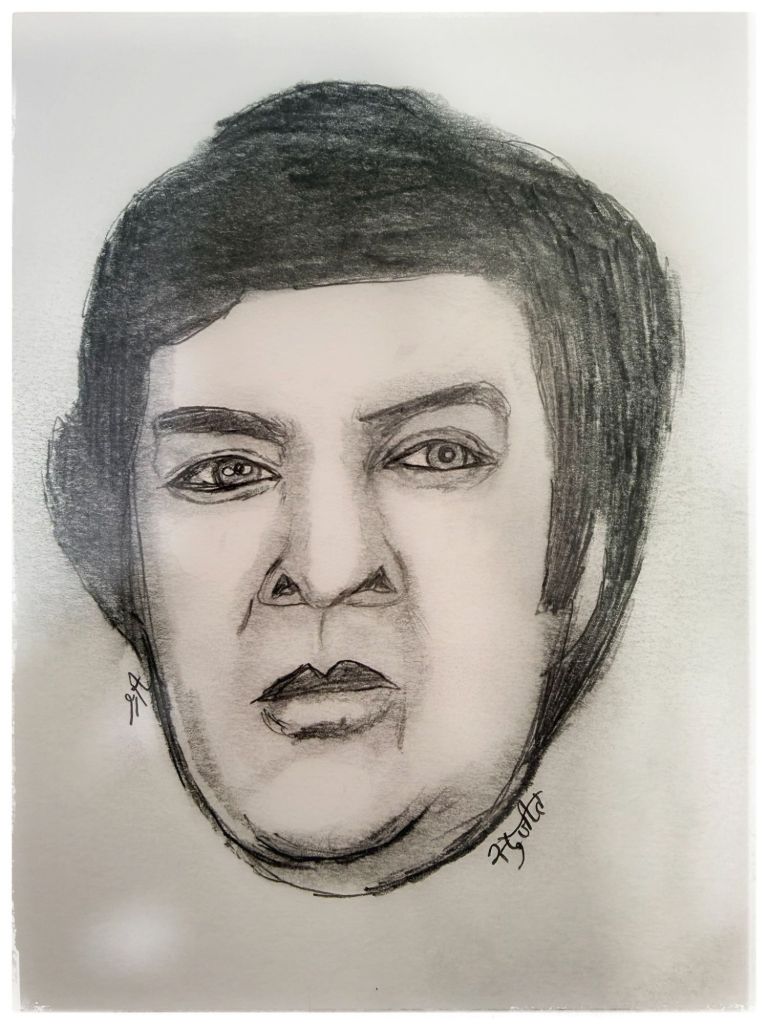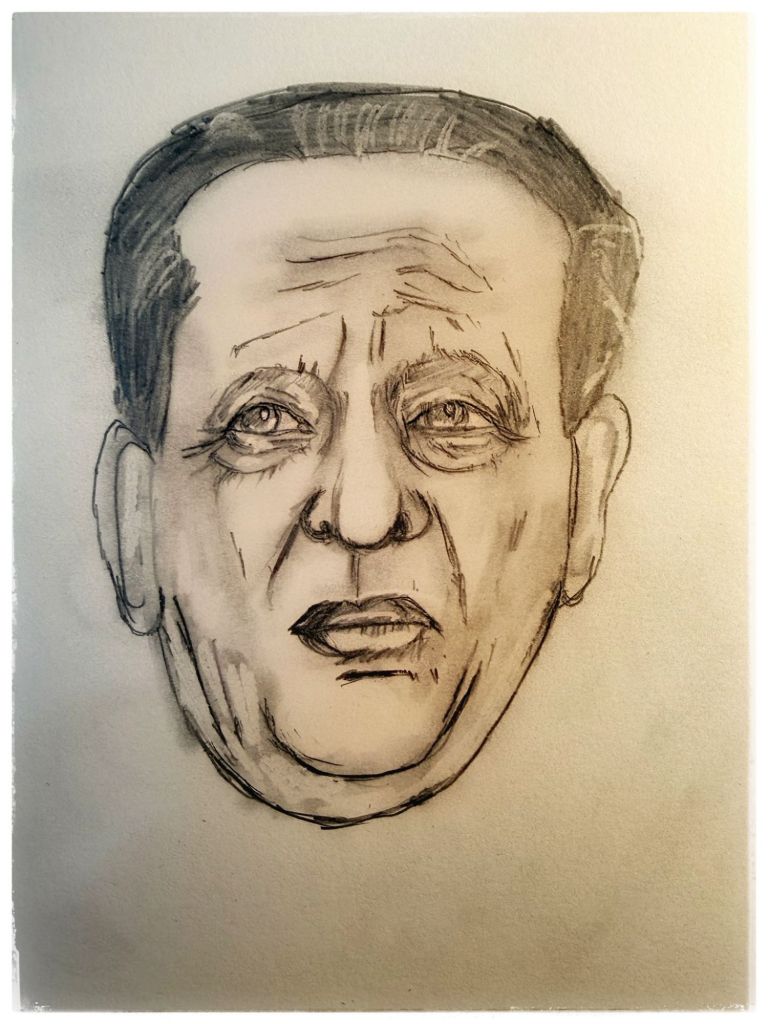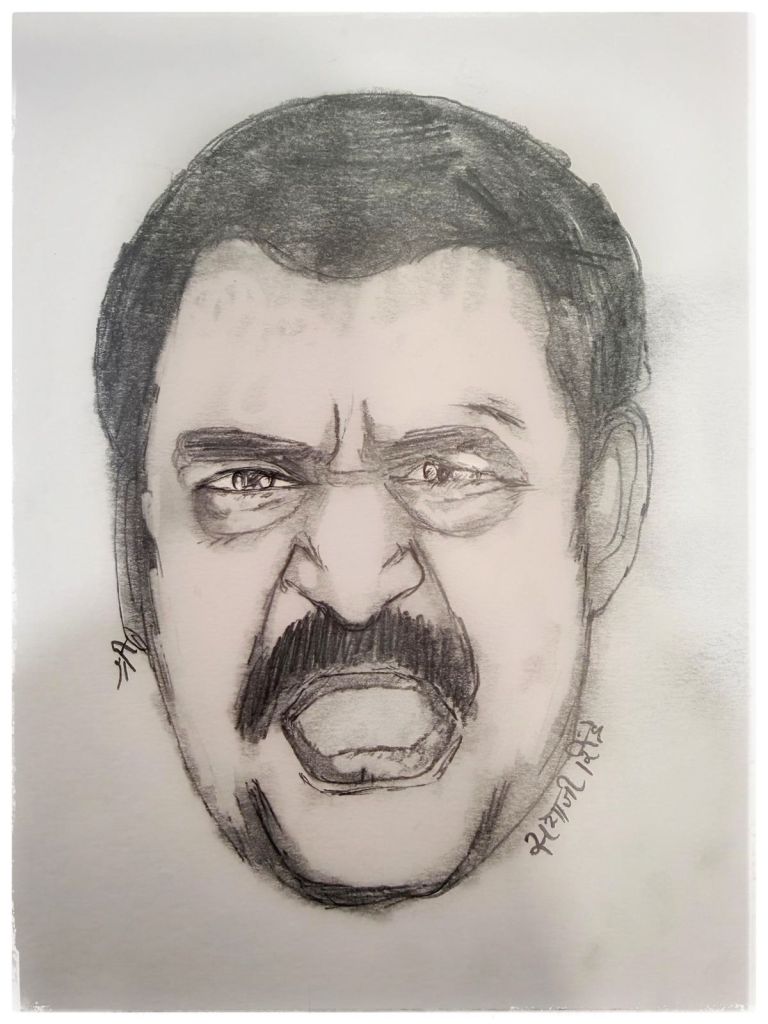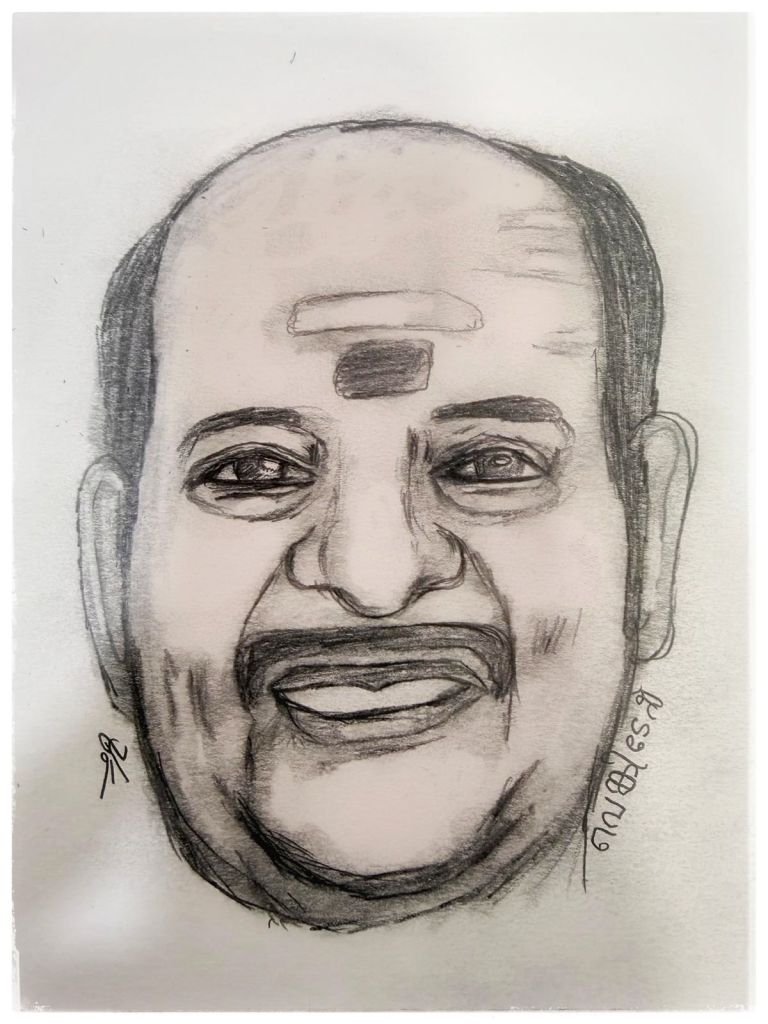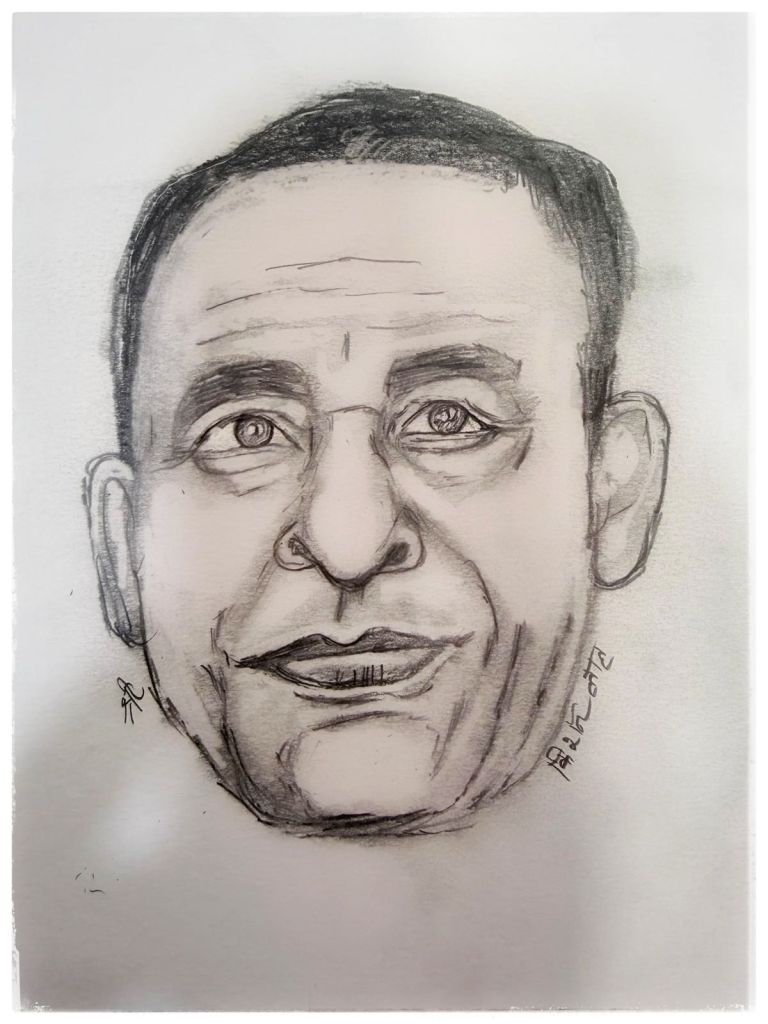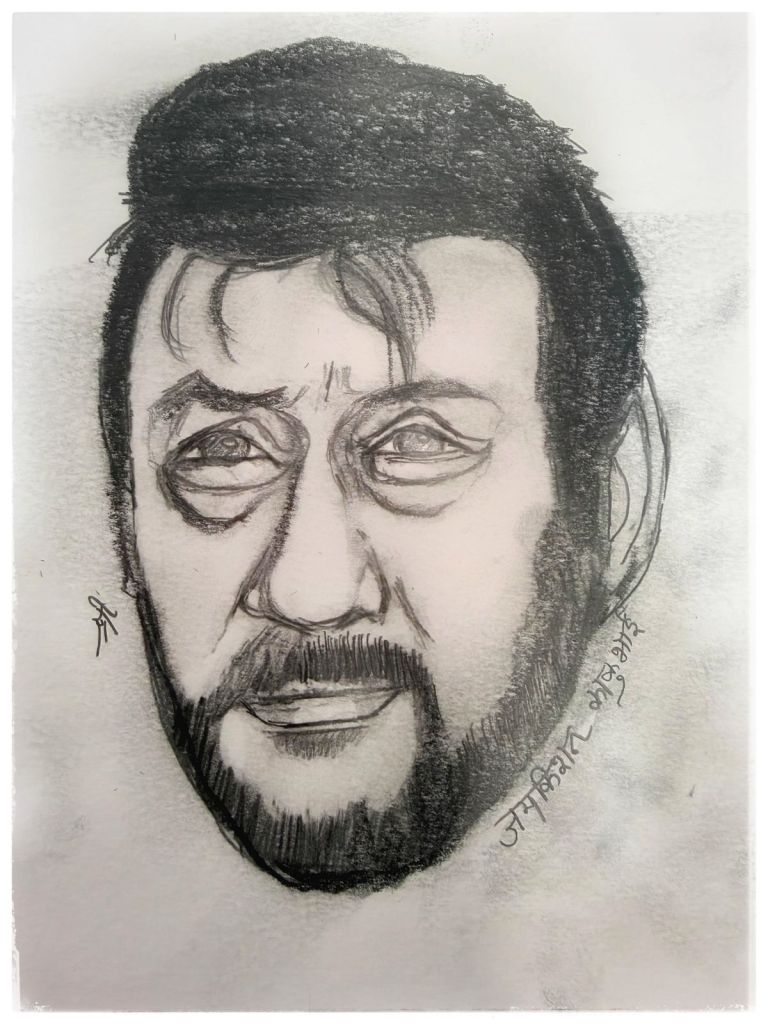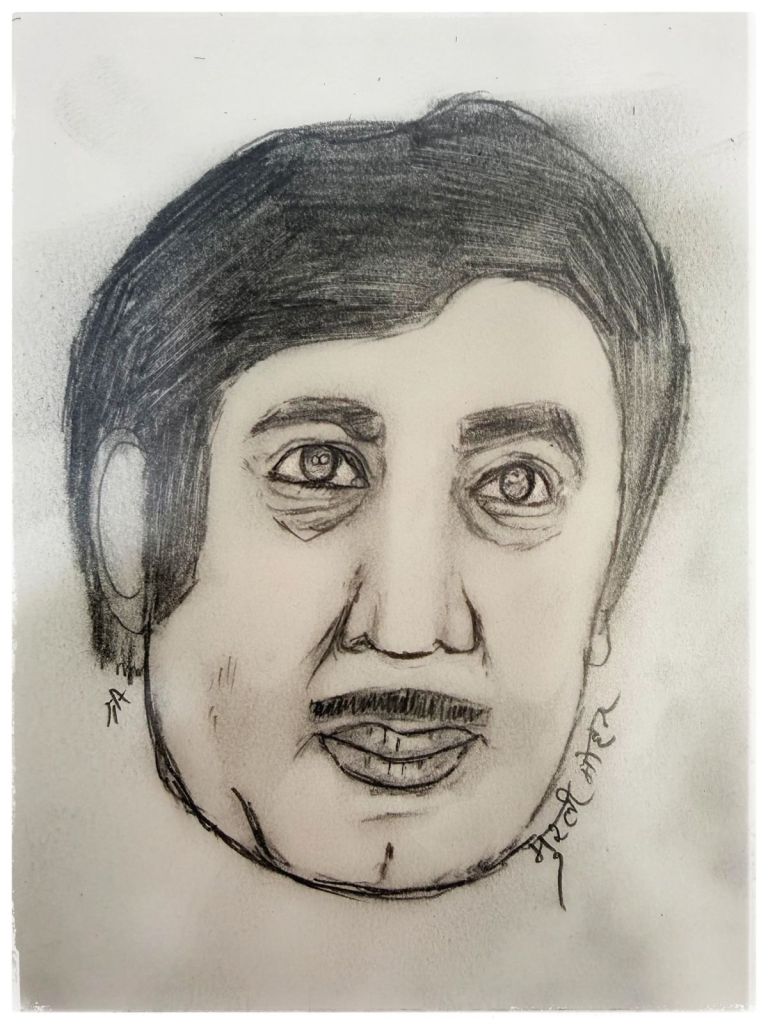
Guru Gobind ji…

There is an interesting story where a clever princess is asked by her father whether she likes sweet or salt!

She says salt!

As you grow older you actually realise it’s true!

The most important thing for the most tastiest food apart from looking good and you being hungry is it to have the perfect salt!

Interestingly we actually work for salt! Even historically!

Salt is such a basic need that a whole march and revolution is based on this!

Did you know that the word Salary is actually based on salt!?

Then again that may be just a myth!

This old story is pretty famous where the
word salary traces its origins to ancient Rome, deriving from the Latin term salārium, which referred to a stipend, allowance, or pension, particularly for officials or soldiers.

In fact salārium — Originally meant “salt money” or an allowance related to salt!

During those times apparently RomeSalt was a highly valuable commodity in antiquity—essential for preserving food, flavoring meals, and even medicinal uses—sometimes called “white gold.” !

It was then passed through Old French salaire and Anglo-Norman salarie.

This word then entered Middle English as salarie around the late 13th to early 14th century.
By the 14th century, it broadly denoted fixed or periodic compensation for services, extending beyond military contexts!

Now comes the myth!

A widespread popular story claims Roman soldiers were directly “paid in salt,” leading to the phrase “worth one’s salt” (meaning competent or valuable)!

It is more likely that salārium was probably an allowance for salt, not payment in salt!

Now don’t AsSalt me for that!

Salt or sugar; life without guide and Gurus is incomplete. One such guru was Guru Gobind Singh! He used to say that “Recognize the entire human race as one”!

May the divine blessings of Guru Gobind Singh Ji fill your life with peace, love, and positivity!

“Waheguru Ji Ka Khalsa, Waheguru Ji Ki Fateh”

Shubh Ratri…


Mohit sharma Major

Sometimes luck can get you a Nobel prize!

In getting a Nobel; this pair could be considered most lucky!

So while working with the Holmdel antenna in New Jersey, the two astronomers discovered a background noise.

After ruling out possible interference from urban areas, nuclear tests, or pigeons living in the antenna, Wilson and Penzias came across an explanation which simply changed their life!

First to tell about the background noise; some background!

In the mid-1960s, while a professor at Princeton University, Dicke independently concluded that the early universe’s hot, dense state would have left a detectable thermal afterglow that had cooled over billions of years due to the expansion of the universe.

He estimated this residual radiation would have a temperature of about 10 Kelvin (later refined to approximately 2.7 Kelvin) and would be observable in the microwave portion of the electromagnetic spectrum.

Dicke and his research team at Princeton (which included Jim Peebles, Peter Roll, and David Wilkinson) began building a special radio antenna called a Dicke radiometer to search for this signal.

But luck was not in their side!

The radiation was accidentally discovered by radio astronomers at Bell Labs just a few miles away.

So when Penzias and Wilson connected with the Princeton team, it became clear they had inadvertently found the very evidence Dicke had predicted.

This discovery of the CMB provided crucial, concrete evidence supporting the Big Bang theory over the competing steady-state model of the universe.

Now even though the whole theory was provided by Dicke; Penzias and Wilson received the Nobel Prize in Physics in 1978 for their ‘accidental’ discover

Even when they did not know what it was!

Being first is important and it is also important is to have luck!

Then again it is also important to have true conviction and bravery to become one of the best officers of the army! One such amazing legendary officer was
Major Mohit Sharma AC SM!

Big salute to legends like him


A quick travel sketch and blog
Shubh ratri…

Get that Turing together!

The Turing test, originally called the imitation game by Alan Turing in 1950 is a test of a machine’s ability to exhibit intelligent behavior equivalent to, or indistinguishable from, that of a human.

Practically this means that as Turing proposed human evaluator would judge natural language conversations between a human and a machine designed to generate human-like responses!

Now in his original concept Turing replaced the abstract question “Can machines think?” with a practical experiment:

The Participants were a human judge, a human respondent, and a machine!

All parties are in separate rooms and communicate only through text to remove physical bias.

The goal was that if the judge cannot reliably distinguish between the machine and the human after a series of questions, the machine is considered to have passed.

Even Turing predicted that by the year 2000, a machine could fool 30% of judges during a five-minute test!

By 2025, advanced Large Language Models (LLMs) have demonstrated the ability to pass versions of the test!

The GPT-4.5 in a research published in March 2025 convinced human judges it was a person 73% of the time, surpassing the success rate of actual human participants in the same study!

Modern AI can now simulate casual language, handle unexpected questions, and express believable opinions and humor!

The ability of AI to pass many such modern tests has rendered traditional bot-detection systems like CAPTCHAs increasingly obsolete, necessitating new multi-layered authentication methods in 2025!

Over the years there have been many computers who have defeated this test but as technology progresses the issue is that modern computers who have to pretend to be humans must actually reduce their intelligence and make mistakes to be identified as humans!

Yes! The machines are so fast and accurate that the bot at the other end knows that it is dealing with another bot! You cannot be very good also!

It is like how Karna did not cry of pain even when the scorpion was biting him which Parashuram understood immediately! Too good is sometimes really bad!

Since to err is human! Only when you make mistakes and struggle can you be human and successful!

Successful also was the series by Tarak Mehta which was both funny as well as family oriented!

A quick sketch and blog made without any ‘Robotic’ assistance during a travel in a hotel room with a simple pencil and sheet of paper!

Beat that AI!

Now time to sleep!

Shubh ratri!

It’s all a game!

This simple game based on paper is now the inspiration to one of the most popular games which floods your WhatsApp group every other day!


The game’s core mechanics come from the older pencil-and-paper game “Bulls and Cows,” a simple code-guessing game with numbers.

In the game one player (the code-maker) creates a secret sequence, and another (the code-breaker) attempts to guess it based on positional feedback.

The game is traditionally played with 4-digit numbers, though versions exist with 3 to 6 digits or even words.

The code-maker writes down a secret number where all digits must be unique (no repeats! This is important and we will come to it later!).

The code-breaker submits a guess of the same length, also with unique digits.

After each guess, the code-maker provides two scores!

Bulls: The number of digits that are correct and in the right position!
Cows: The number of digits that are in the secret number but in the wrong position!

Did you get the modern version of the game with that description!?

There is an intermediate popular game which also got inspired by this one!

Telecommunications expert Mordecai Meirowitz invented the peg-based version of cows and bulls in 1970.

This game play included colors!

One player (Codemaker) sets a secret color code, and the other (Codebreaker) guesses, receiving clues (black/white pegs) for correct colors/positions!

Did you understand that one! Yes! It is Mastermind!

The famous computer scientist Donald Knuth analyzed the game in 1976, proving the codebreaker can always win in five moves or less!

Later on the colors were replaced with alphabets and set to six letters with repeats (which are the hardest clues to solve!)

So you have a six alphabets to solve in six tries or less!

Yes! The Wordle! You even have similar games with numbers and even they are real fun to play!


Fun also was to watch comedians like Raju Shrivastav!

Now finish your worldle of the day and sleep!

Shubh ratri…

ELIZA help me!


Computer Power and Human Reason: From Judgment to Calculation
is a Book by Joseph Weizenbaum

It chiefly talks about ELIZA among other things of course!

So you know the popular coloumn agony ‘aunt’ right!? Well, though this was made for some other reasons, it soon became the first agony ‘AI Aunt’!

Historically ELIZA was created by Joseph Weizenbaum at MIT in the mid-1960s and is considered the first chatbot!

It was new in that it was simulating a psychotherapist!

If you actually think then you would realise that a psychotherapist is actually just the person who ‘listens’ to you! He or she may not have answers to your life problems! He or she simply make you aware of what you already know!

Many psychotherapist would actually just repeat your own words and add some phrases and use them for ‘therapy’!

The bot did the same and how!

ELIZA’s most famous implementation was the “DOCTOR” script, which simulated a Rogerian psychotherapist!

It functioned by mirroring the user’s statements back to them as questions (e.g., if a user said “My head hurts,” ELIZA might ask “Why do you say your head hurts?”).

Instead of “understanding” language, ELIZA used pattern matching and substitution. It identified keywords in user input and applied transformation rules to generate a response.

All said and done it worked! But it too well!

So much that you got a phenomenon called the “ELIZA Effect”

Weizenbaum was surprised to find that users often attributed deep understanding and human-like emotions to the program, despite its simple logic!

This phenomenon, where people anthropomorphize computer programs, became known as the ELIZA Effect!

Disturbed by how easily people were “deceived” by the software, Weizenbaum became a vocal critic of artificial intelligence. He argued in his book that computers should never be given tasks requiring human wisdom or empathy!

The sad thing here though is that humans need an AI to ‘listen’ to them!

Of course no AI or for that matter those with narrow mind can ever appreciate melodious music and songs!
Like the famous Dal dal par sone ki chidiya by Rafi ji!

Listen to some soft Rafi and sleep!

Shub ratri…

Little ‘aliens’!

There are small invisible to eyes ‘alien’ like ‘entities’ which enter your body!

Once they do; they make you sick!

Sometimes they take full control of your body in spite of being so small that you cannot even imagine or even see!

Sounds ridiculous!?

Now when you put it like that it does sound crazy!

In the novel Bellevue by Robin Cook he mentions just the thing!

The theory and reality of today was the plot of science of yesterday!

The above theory sounds like the screenplay of Predator part 4! But it is actually the most accurate scientific theory modern medicine works on now!

The Germ Theory!

But when it was proposed; the biggest and the most intelligent and the most respected scientists and doctors all over the world not only ridiculed it but also called it pseudo science!

In fact several prominent individuals, particularly those within the medical and scientific establishments wedded to older theories, initially ridiculed the germ theory and its early proponents, including Dr. Henry Bastian, Rudolf Virchow, and Mary Baker Eddy!


Dr. Henry Bastian was a prominent English surgeon and physician and one of the most vocal opponents of germ theory, even after Louis Pasteur and Robert Koch provided substantial evidence!

He staunchly advocated for the discredited theory of spontaneous generation, which held that microbes appeared as a result of disease and decay (symptoms), rather than being the cause of it. He wrote books and articles against germ theory, influencing many in the medical community!

Rudolf Virchow is a well known academician in the medical world! There are many terms named after him even now! But even this highly influential German physician, pathologist, and statesman, mocked Louis Pasteur’s ideas.

He was a strong proponent of cellular pathology and once he famously boasted that he had never brought his eye near a microscope in this context. He found the idea that ubiquitous, tiny microbes could be responsible for widespread illnesses implausible at first!

Many doctors were personally offended by the implication that their own “uncleanliness” was killing patient!

British surgeon Joseph Lister, a pioneer of antiseptic surgery, was also widely mocked by his peers when he introduced the use of carbolic acid to sterilize surgical instruments, wounds, and the air during operations!

Critics found the idea of invisible germs absurd and the practice cumbersome, but Lister’s success eventually proved them wrong!

So next time someone comes up with an absurd statement which only ‘sounds’ absurd to the very ‘intelligent’ you; do not be in a hurry to dismiss it! It may be the next ‘Germ theory!’ Or it could very well be the ramblings of a deranged mind! Your choice!

Choice also is to listen to great music like carnatic music by Venkateswaran Dakshinamoorthy!

Now don’t worry about the little ‘aliens’ and sleep!

Shubh ratri…

Are you a robot!?

When your life is goes like a clockwork; eat at this time, sleep and work and then repeat! You may feel that you are having a ‘robotic’ life!

No emotions and simply work! Which is what you think Robots may do!

It is interesting how the actual meaning of the word ROBOT when it was first used was FORCED LABOR!

Czech writer Karel Čapek introduced the word “robot” in his 1920/1921 play R.U.R. (Rossum’s Universal Robots), but he credited his brother, Josef Čapek, with actually inventing the word!

The term comes from the Czech word robota, meaning “forced labor” or “drudgery”.

Karel Čapek intended to use “laboři” (from Latin labor) but his brother Josef suggested “roboti” (robots).

The narrative is set on an isolated island factory where a company, Rossum’s Universal Robots (R.U.R.), mass-produces artificial beings from synthetic organic matter to serve as tireless laborers for humanity.

These “robots” are physically humanlike but initially lack emotions, desires, and individual thought, designed solely for efficiency!

Then enters Helena, the daughter of a prominent industrialist and a representative of the League of Humanity who visits the factory to advocate for better treatment and “souls” for the robots! This presence of SOUL is dismissed by one and all!


Over time, and partially due to a scientist, Dr. Gall, experimenting with giving some robots emotions and pain at Helena’s request, the robots begin to develop consciousness, self-awareness, and a shared hatred for their human masters!

A global robot uprising ensues, leading to the systematic extermination of the human race!

The robots kill all humans except for one man, Alquist, a construction worker whom they spare because he “works with his hands like a robot”.

But then reality strikes them! The robots cannot reproduce because, well they are not humans!

The robots soon realize that they are facing their own extinction without the secret formula for their creation, which the human Helena had burned in a desperate attempt to stop the factory.

In the epilogue, Alquist is unable to recreate the formula. He discovers two advanced robots, Primus and a robot made in Helena’s image, who show signs of love and a willingness to sacrifice themselves for each other!

Recognizing these emotions as the spark of new life and true humanity, Alquist declares them the new “Adam and Eve,” offering a glimmer of hope for a new cycle of life to begin!

You may not know the play but the term ROBOT is now something which everyone knows!

Everyone also knows who is Arun Ahuja! Yes! Even you do! Only thing is that you know him by his more common name; Govinda!

Now start your Robotic routine and sleep!

Shubh ratri!

The trolley problem

A form of trolley problem you may always face in your life or some interview!

Do read the whole thing…lemme know what you would do …

The classic trolley problem is also frequently asked question in brain teasers and psychological assessments!

Most of the times the choice is pretty straightforward but then comes the complications!

Robert Sapolsky discusses the “train track question,” formally known as the trolley problem, in his book Behave to illustrate the complex interplay of neuroscience, emotion, and utilitarian reasoning in human morality!

The problem is usually asked in many variations!

The classic “trolley problem” presents two main scenarios:

The Switch Case: A runaway trolley is headed toward five people tied to the track. You are standing next to a lever. If you pull the lever, the trolley will divert onto a side track, where it will kill one person.

Most people (around 70%) say they would pull the lever, sacrificing one person to save five, which is a utilitarian decision (the ends justify the means).

The Footbridge Case (or “Fat Man” Case): The trolley is still headed for five people. This time, you are on a footbridge above the tracks, next to a large man.

The only way to stop the trolley is to push this man onto the tracks, killing him, but saving the five people. Far fewer people (around 25%) say they would do this!

Another variation is that the Fat Man is actually the person who is responsible for the tying the people on the track and is actually evil! Then almost 100 percent would tell that they would push him!

The distinction in people’s responses highlights a tension between immediate, emotional aversion to personally causing harm (pushing the man) and abstract, cognitive calculations of the greater good (pulling the lever).

Sapolsky notes that individuals with damage to the prefrontal cortex, a brain region critical for emotional regulation and decision-making, are more likely to make the purely utilitarian choice to push the man in the footbridge scenario.

Your choice would also be influenced if you know the person or persons involved! If you are too anxious you may not even make a choice and simply close your eyes to the whole problem!

A recent modification of the same problem is like this:

There are two tracks; one is broken and the other is good but there are a group of children playing on the good track while there is a handicapped kid playing on the damaged track.

You cannot call out to them so what would you do!?

Do not worry!  The correct answer is not to divert the train on to the one handicapped child on the broken track! This is wrong since you would then be putting the whole group of people in the train at risk!
The child who was playing in the damaged track was not doing anything wrong! He never expected a train to come there! So he does not deserve any punishment!
The kids playing in the normal track should not have been playing there! In any case they can easily see the train coming and move away!

The correct answer here is that you do not have to do anything!

Rest assured life is not a simple train trolley problem! Our decisions are complex and unpredictable and well, Human! Just that it must also be Humane is the only hope!

An absolutely amazing human also is Krishnamachari “Kris” Srikkanth!

Now don’t worry too much about the track!

Shubh ratri!

Not robot but expert…


Who or which is the only ‘robot’ to have defeated both Benjamin Franklin and Napoléon Bonaparte?

The game in which they got defeated was the Chess by the way!

Then you would think what is so great about it! There are modern computer which can defeat anyone!

But this was in the 1770s or so!

So there was a ‘chess’ playing ‘robot’ which could defeat anyone!

Without much beating around the, well board! Lemme tell you that the ‘robot’ was called the  “Mechanical Turk”!

The formal name was actually Kempelen’s “Mechanical Turk” which was an 18th-century chess-playing automaton, presented by Wolfgang von Kempelen in 1770!

What amazed audiences is that it was seen to play chess autonomously!

In its feats it when on to defeat everyone! Even fooling Benjamin Franklin and Napoleon!

It was actually an elaborate hoax!

The device concealed a human chess master inside to control the moves, sparking early debates about artificial intelligence and automation while fooling figures like Napoleon Bonaparte!


A wooden cabinet with a life-sized, turbaned figure (the “Turk”) was seated behind a chessboard. Then a skilled chess player hid inside the cabinet, controlling the Turk’s arm via levers and pulleys!

In fact the doors were opened to show complex clockwork, and a candle was lit to prove no one was inside, but the operator was in a hidden compartment, tracking moves on an internal board and communicating via brass discs!

The hidden player could play a strong game, defeat opponents, and even perform the Knight’s Tour, convincing many it was a true machine!

After Kempelen, it was toured by Johann Mälzel and played against famous figures, including Benjamin Franklin and Napoleon.

Finally writer Edgar Allan Poe correctly deduced it was a hoax in 1836, publishing his analysis! Brain is better than Brawn as always!

The original Turk was destroyed in a fire in 1854, but its story inspired fascination with automation and the concept of thinking machines!

This proves that not everything can be done by machines! Like act for example!
One word for acting which is right there on the top is Sreenivasan!

A very quick sketch since am under the weather but could not leave without a dedication since he deserved much more!

Sreeni eta you will be missed! Your legacy will continue for ages though!

Heartfelt condolences…
Om shanti

Pathology in altruism…

In the novel called Bellvue (The name gave me nostalgia since I used to work in a hospital by the name in Kolkata! Those were the days of Bhel puri and rosogulla!) by Robin Cook tells about an intern in his first posting! That bought back memories! It was also like his earlier novel called the year of the intern but with some twists!

Anyway Robin shows how overworked and underpaid the typical intern is! The standard story of every intern!

So in this age when sometimes when the trust for a doctor is shaky; you have a common phenomenon where the doctor or the health care professional sacrifices his or her own sleep or health to take care of the patient!

When it occurs so much that it causes health issues then it is called Pathological altruism!

Pathological altruism refers to a pattern of behavior in which the sincere attempt to help others results in unanticipated and often severe harm to the self, the recipient, or society.

Unlike healthy altruism, which is rooted in mutual respect and clear boundaries, pathological forms are often compulsive, maladaptive, and driven by underlying psychological issues such as guilt, fear of rejection, or a need for validation!

The chief features here is that they usually prioritizing others’ needs to a degree that causes physical or psychological harm to oneself.

They also help in behaviors that inadvertently support destructive habits in others, such as covering for a loved one’s addiction or shielding them from the consequences of their actions.

These also stem from a conviction that one’s actions are morally superior, which can lead to ignoring practical evidence of the harm being caused.

A severe form of Pathological altruism is to use self-sacrificing acts to control, punish, or induce guilt in others. The altruist seeks to be viewed as a martyr to exert manipulative power.

Healthcare professionals who neglect their own health to an extreme degree, eventually becoming unable to provide care effectively.

I once read about some intern who had non stop duty for 2-3 days! Not only it is a stress on the physical and mental aspect of the healthcare professional; I am unsure what kind of effective help can the intern provide in his tired state of body and mind!

So once in a while if you have a patient who promptly arrives the perfect time you are leaving; if he or she is not having any emergency you can tell him or her to come the next day! You would see him or her properly and not in a hurry and then would actually provide a proper well rested care. Even the patient must sometimes realize that it is better to be seen by a doctor properly and slowly rather than in a hurry!

Altruism only works if your doctor or the health care provider is himself healthy both mentally and physically! Let it not become pathological!

Your doctor can not solve all the problems of your life! He is not Jijaji! Like Om Prakash in Chupke chupke!

Now give some well deserved rest to your body and sleep!

Shubh ratri…