Wanna live long!? Get married!

Do you remember that famous joke on  marriage?

It goes like this; “Do married men live longer?, NO! it only seems longer!”

The jokes on them since it has actually been found that marriage reduces stress! Especially for men!

Now it is not just an old wife’s tale but research by Neuroscientist Robert Sapolsky who categorizes the effect of marriage on stress through the lens of social support and loss of control!

Of course the catchpoint here is that the marriage just like your body and mind MUST be healthy!

A healthy, supportive marriage reduces physiological stress by providing predictability, emotional outlets, and a strong buffering mechanism against chronic external stressors.

Conversely, a toxic or chronically conflicted marriage becomes a severe source of long-term psychosocial stress!

Sapolsky’s research reveals exactly how marriage and relationships influence our stress levels and biology!

The first is the Stress-Buffering Effect. In his work on primates and humans, Sapolsky emphasizes that one of the most effective ways to lower baseline levels of glucocorticoids (stress hormones like cortisol) is having reliable social support!

A supportive spouse provides a feeling of control, reliable predictability, and an outlet for frustrations. When facing external hardships (e.g., financial strain or career pressures), a strong marriage reduces the overall “wear and tear” on the body, famously termed the allostatic load!

Then again you have the Danger of Marital Conflict in which Sapolsky states how stress kills the relationship! According to Sapolsky’s findings in Why Zebras Don’t Get Ulcers, chronic stress impairs the brain’s hippocampus (which governs memory).

Under severe chronic stress, individuals become more self-focused and less empathetic. Instead of working as a team, couples may compete for resources and begin to view each other as adversaries rather than allies!

This unresolved marital tension generates sustained activation of the sympathetic nervous system. This keeps stress hormones elevated, which over time compromises the immune system and increases vulnerability to disease!

In fact the very act of Divorce and the subsequent Social Isolation due to the dissolution of a marriage creates profound psychological and physiological disruption.

The loss of this primary social bond often removes a fundamental buffer against chronic stress, occasionally accelerating the aging process and increasing the risk for stress-related illnesses!

So you want to live a long life? Get Married!
That was not a joke!

If you want real jokes then check out some movies by Salim Kumar…

He was effortlessly funny…
He will be missed…
Heartfelt condolences…

Om shanti…

What’s ‘in’ an ekename!?

Hey Baby, Babe, Honey, and Sweetheart or Habibi, Mi Amor (Spanish), and Mon Chéri (French)!

Got your attention I guess!

By the way the one thing common to all of the above is that they are the most common nick names in the world!

Of course they are general and if you have been addressed by them then you can FEEL definitely loved but in General!

Next step would be if you have a nickname which is only for you! Which is as unique as you and is used by someone specific to DEMONSTRATE his or her love for you!

If you have a nickname then you know that you are loved!

I have a Nickname and of course only a select few know or call it! Then again different people can have a diferent Nick name for you!

By the way the word NICKNAME is not NICK’ NAME!

It has a very different origin which of course does not matter now since the idea is finally the same!

But still it is interesting!

Before surnames were widely adopted in medieval England, nicknames were essential for telling people apart. Many of these original descriptive nicknames (e.g., Brown, Russell, or Short) eventually became permanent family surnames!

Many seemingly unrelated nicknames we use today (like Dick for Richard, or Bill for William) originate from medieval rhyming slang and abbreviation practices. In the Middle Ages, writing everything by hand was tedious, so names were shortened for convenience. People then added rhyming variations (e.g., Richard → Rick → Dick) that stuck in everyday street speech!

So apparently the word “nickname” evolved from the Middle English phrase “an ekename,” which literally means “also-name” or “additional name”!

By the 15th century, a linguistic accident known as metanalysis occurred, where the “n” from “an” shifted to “ekename,” eventually changing “an ekename” into “a nickname”.

The term stems from the Old English word eac, which means “also” or “to increase”.

An ekename was exactly what it sounded like: an extra moniker used to describe someone’s physical traits, occupation, or personality.

So you can see since “ekename” started with a vowel sound, people naturally placed the article “an” in front of it (i.e., an ekename).
Over time, through rapid or casual speech, people began misdividing the syllables!

They detached the “n” from “an” and attached it to the beginning of the word, turning an ekename into a nekename, and eventually nickname!

So they NICKED the N and gave it a shorter name! NICKNAME!

Of course if you do have a nickname by which people call you, it does not have to be a good thing always!

I know many who have NICKNAMES which may put a VILLIAN of a soap opera to shame! So if you do not have a nickname, you can still be happy! It may mean you are not loved enough! But it also means that no one hates you enough to give you a nick name!

And no! I will not tell you my nickname!

By the way the actor Sunil Dutt did not have a nickname sunil! Since his actual name was Balraj Dutt!

Now ‘nick’ those mobile scrolling thoughts in the bud sleep!

Shubh ratri…

Heads up!

When you have to settle something you discuss, argue, debate, fight and finally send the drones!

Or you can simply do this!

By the way this way of SETTLING things has been there for ages and even now this is the most commonly used way to settle a matter! In fact the name of the country POLAND was determined by this method!

No matter how many times you do, the odds remain the same!

Which is why even mathematically this is the best way to SELECT!

The end of a famous novel by Jeffery Archer was settled with this!

Even Jai fooled Veeru with this!

Without tossing around too much I will tell you that it is the toss of a COIN!

The history of “Heads or Tails” (the coin toss) dates back to ancient Rome, where it was originally called navia aut caput (“ship or head”). It was used to settle disputes, make everyday decisions, and play games of chance by assigning one choice to the emperor’s portrait and the other to a ship.

In India we have the Chit-Pat (चित-पट)! Chit refers to the face up (head), while Pat refers to the back or flat side (tail)! In official modern Hindi and Sanskrit numismatics, the “head” side is known as Shinha-Mudra, referring to the Lion Capital!

There have been some pretty famous non fictional coin toss though!

In 1845, two early settlers—Asa Lovejoy from Boston and Francis Pettygrove from Portland, Maine—flipped a coin to decide what to name their new settlement in Oregon. Pettygrove won, naming it Portland!

In 1903, the Wright brothers tossed a coin on the dunes of North Carolina to determine who would pilot the Wright Flyer for their first historic flight. Wilbur won the toss, though his initial attempt failed!

The coin toss is globally recognized for offering a fair, 50/50 probability. It is formally utilized in modern sports (such as NFL football matches) to determine field positions, and is even used in some legal and political jurisdictions (like the UK) to break ties in close elections!

Even the million dollar IPL or cricket matches start with the TOSS OF A COIN!

By the way even if you get HEADS a hundred times, the probability of getting the HEAD at the one hundred and first attempt is still 50/50! Wanna bet!?

Find some other person since I never bet!

Then again I can figuratively BET that you do not need a coin to decide which songs of SPB are good! Any choice will be good!

Now Stop TOSSING around on the bed and sleep!

Shubh ratri!!

A long flight…

The world’s longest commercial non-stop flight by both distance and duration is operated by Singapore Airlines between New York (JFK) and Singapore (SIN). The journey spans 15,349 km (9,536 miles) and takes approximately 18 hours and 50 minutes to complete!

So what you would say!

Well, did you know that there is a natural flight which is around 14,000 Km and it is taken by a bird with no GPS or meal break!

Like any long haul flight even here the technical requirement is to lose excess weight and be fit!

The bird is called the BAR TAILED GODWIT! And it is a miracle of nature!

The Bar-tailed Godwit holds the world record for the longest non-stop animal migration.

Each year, these Arctic-nesting shorebirds fly up to 13,500 km (8,400 miles) across the Pacific Ocean from Alaska to New Zealand and Australia in 11 days

Just like how humans prepare for a marathon; even these birds make their prep for a long non stop journey!

Prior to departure, they bulk up at staging grounds like the Kuskokwim Shoals in Alaska. There is an Extreme Fat Loading where the birds go on a feeding frenzy on coastal mudflats, doubling their body weight until 55% of their mass is stored fat!  providing the required energy!

To reduce weight and increase efficiency, they shrink their internal organs (including the gizzard, intestines, kidneys, and liver) by up to 25%!

Then you have the Muscle Boosting! At the same time, they enlarge their heart and flight muscles to maximize oxygen and power output.

Once they land, their internal organs fully regenerate!

Unlike seabirds, godwits cannot land on water to rest. They perform an uninterrupted, continuous flapping flight across the ocean.

Alaska to Australia/New Zealand route done by the subspecies Limosa lapponica baueri is the most famous.

Now the Pioneer was this bird code named E7! In 2007, a female which first proved this incredible feat by flying 11,680 kilometers non-stop over 8 days!

Then in 2022, a juvenile godwit named “B6” set the world record by flying 13,560 km from Alaska to Tasmania in 11 days without stopping!

While the southbound flight is a direct, non-stop trans-Pacific trajectory, the northward return flight to Alaska follows a different path. They fly non-stop from Australasia to staging grounds in East Asia (such as the Yellow Sea) to rest and refuel before heading to the Arctic breeding grounds!

So the return journey is a little easier with a stop!

Then again whenever ‘man’ sees a challenge, instead of getting inspired and learn how to get it done; he starts destroying nature without bothering about the fact that the nature is for everyone and not only for humans!

Because these birds rely heavily on specific mudflats to refuel, they face severe threats. The rapid loss of intertidal habitats around the Yellow Sea due to industrial reclamation has caused a worrying drop in godwit survival rates, making international conservation efforts critical!

The bird can prepare for a long haul by hogging! It may not work for the average HUMAN though!

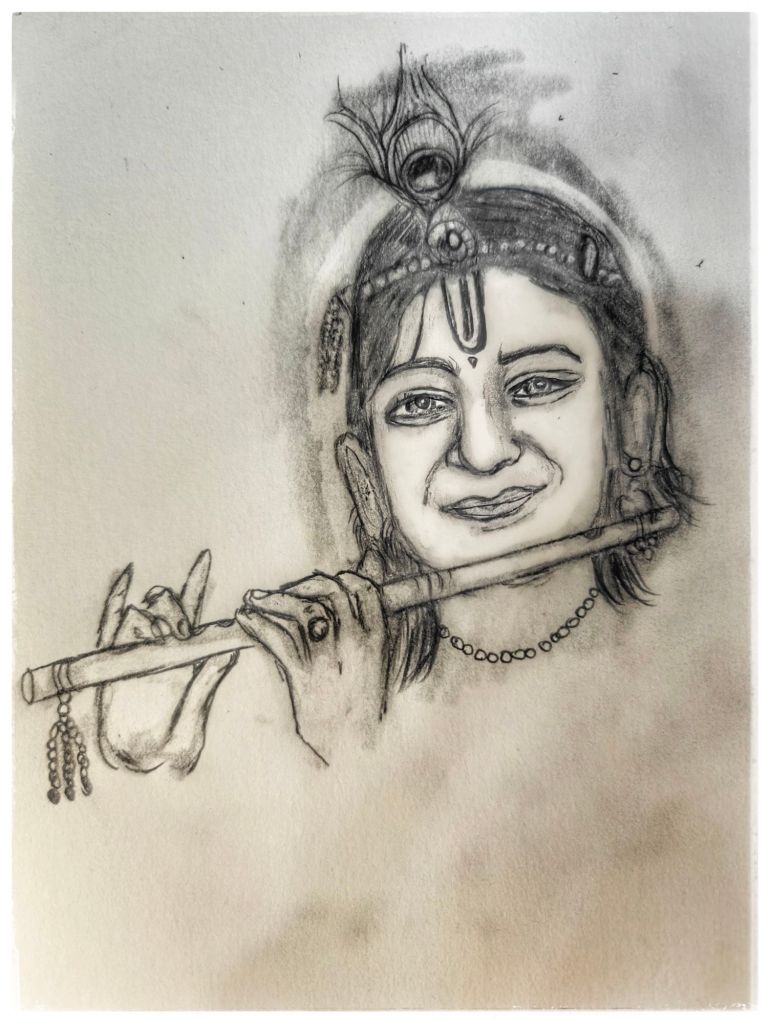
An above average human though is Nitish Bharadwaj especially when he used to play the role of Bhagwan Shri Krishna…

Now prepare for your FLIGHT to dream land!
Shubh ratri…

Prophet by Khalil Gibran


Audiobook of a bestseller

A masterpiece of prose poetry consisting of 26 poetic essays delivered by the wise man Al-Mustafa.


When a wise man is leaving a shore; the whole village gathers and asks him PEARLS of wisdom!

The narrative is back and forth like a Q and A!

These are some quotes and the book is full of them!

A preview of some the best and rare ones!

On Love & Marriage he says
“When love beckons to you, follow him, though his ways are hard and steep.”
“Love possesses not nor would it be possessed; For love is sufficient unto love.”
“Let there be spaces in your togetherness, And let the winds of the heavens dance between you.”

On Children  he says
“Your children are not your children. They are sons and daughters of Life’s longing for itself.”
“You may give them your love but not your thoughts, For they have their own thoughts.”

On Joy & Sorrow  he says
“Your joy is your sorrow unmasked.”
“The deeper that sorrow carves into your being, the more joy you can contain.”

On Giving & Friendship  he says
“It is well to give when asked, but it is better to give unasked, through understanding.”

“Your friend is your needs answered.”

When you part with your friend you grieve not
For that which you love most in him may be clearer in his absence!

On Talking  he says
“You talk when you cease to be at peace with your thoughts”
And in much of your talking, thinking is half murdered!


And as a single leaf turns not yellow but with the silent knowledge of the whole tree, So the wrong-doer cannot do wrong without the hidden will of you all.

You delight in laying down laws
Yet you delight more in breaking them! when asked by a lawyer!

Then when an astronomer asked about time he says
You would measure time the measureless and immeasurable!

Good and bad he says
Of the good in you I can speak but not of the evil!

For what is evil but good tortured by its own hunger and thirst?


Surely the fruit cannot say to the root, “Be like me, ripe and full and ever giving of your abundance.”

When told to speak of religion he says

Have I spoken this day of aught else?
Is not religion all deeds and all reflection?

For to the fruit giving is a need, as receiving is a need to the root!

About God he says

God is not a solver of problems!
He is everywhere! You simply have to look and imagine!

On True Living: “Travel and tell no one, live a true love story and tell no one, live happily and tell no one, people ruin beautiful things.”
On Forerunners: “You are your own forerunner, you the stranger passing by the gate of my garden. And I too am my own forerunner, though I sit in the shadows of my trees and seem motionless.”
On Suffering: “Out of suffering have emerged the strongest souls; the most massive characters are seared with scars.”
On Love & Relationships
On Connection: “One should not love half-lovers, entertain half friends, or indulge in the works of the half-talented.”
On Judging: “To measure you by your smallest deed is to reckon the ocean by the frailty of its foam. To judge you by your failures is to cast blame upon the seasons for their inconsistencies.”
On Wisdom & The Mind
On Learning: “I have learned silence from the talkative, toleration from the intolerant, and kindness from the unkind; yet, strange, I am ungrateful to those teachers.”
On Simplicity: “A thief is a man in need. A liar is a man in fear.”
On Faith: “Faith is a knowledge within the heart, beyond the reach of proof.”

Each and every line is a saying!

So profound and so deep!

My favourites quote is

“Yesterday is today’s memory and tomorrow is today’s dream!”

I feel it is a combination and collection of many philosophies and religion mixed into one since many quotes from other great Gurus and sages are similar!

Each and every saying is like a ray of sunshine on a dark corner where light has not fallen for ages! This one is by me though!

It ends also in a very profound way; “A little while, a moment of rest upon the wind, and another woman shall bear me”

To read and listen on a calm day with a cup of warm drink and in peace…

Impulse purchase…

That came free and then came the need!

The king of impulse purchase!

In 1891, a 29-year old William W Jr. arrived in Chicago with just $32 and launched his own business, originally focusing on soap!

Once you hear his surname you can get the product we will reach!

Unfortunately Or fortunately as you look at it; the soap had low profit margins and William added a lot of freebies to make it attractive to the merchants!

One of the freebies he offered was Baking Powder which became more popular than the soap!

So William sidetracked from selling soaps to now selling baking powder also!

To encourage retailers to buy his soap and baking powder, he included free items like umbrellas or baking powder. He eventually began packaging sticks of chewing gum as the promotional hook!

Weird it may seem but the chewing gum became more popular than the baking powder!

So In 1892, William launched with two gum brands — Spearmint and Juicy Fruit!

What was his surname or his full name!?

William Wrigley Jr!

So you got the gum! Yes! Wrigley!

So that is the first part! Now let us finally come to point!

Impulse purchase! It is not only an impulse but a science!

William Wrigley Jr. is widely credited with inventing the modern retail checkout impulse purchase. He realized that the best way to sell a low-cost item like chewing gum was to catch shoppers at the exact moment they already had their wallets out!

Here you get the amazing Countertop Real Estate!

In the early 20th century, Wrigley began designed custom tin boxes and display baskets. He distributed them to restaurants and grocery shops with strict instructions to place them right next to the cash register.

Then he introduced the “Pocket Change” Strategy where he intentionally priced a pack of gum at a single nickel. When a customer received their change from a primary purchase, it was mentally effortless to trade one of those remaining coins back to the clerk for a pack of gum!

In the 1930s, the company introduced the Wrigley’s Profit Making Change Tray. Clerks placed a customer’s cash change directly onto a glass display tray that was integrated with 24 packs of gum, making it impossible to ignore!

Wrigley didn’t just guess that the strategy worked; they spent decades proving and optimizing it!

In 1962, the Wrigley Company funded a landmark Stanford Research Institute study to quantify consumer habits.

The data proved that 51% of all supermarket purchases were unplanned, with the checkout stand being the absolute highest-converting zone!

Today the company maintains global research teams dedicated entirely to optimizing checkout lane layouts!

They treat the checkout line as an antidote to the “emotional low point” of a shopping trip, appealing to consumer desires to refresh, reward, or remind!

All this started with a GUM and it STUCK!

Another amazing success is by Nandan Nilekani the architect of Aadhaar!

Now think of some innovative product to keep on the counter top and sleep!

Shubh ratri…

reductionism…what’s that!?…

In the series of lectures called Being Human by Robert Sapolsky; there was one section which went way over my head!

Not that everything else what he said made sense! But this one was particularly complicated!

It still is!

The statement was this ‘Currently, the most exciting realm of biology is the notion that behavior is determined by genetics’.

So far so good! Then Robert introduces this word and it becomes complicated!

This is the heart of Western science’s focus on reductionism, the notion that to understand a complex system, you need to understand its component parts!

Robert Sapolsky argues that classical reductionism fundamentally fails to explain complex biological systems and human behavior.

Now first look at Sapolsky’s Definition of Classical Reductionism!

Sapolsky defines classical reductionism as the philosophy that if you want to understand a complex system, you break it down into its component parts.

In a purely reductionist framework we can assume that the parts can simply be added back together linearly to understand the macro-system!

Robert now tries to tell how or why Reductionism Fails in Biology!

Sapolsky uses the analogy that biological systems are “clouds, not clocks.” You can fix a broken clock by examining its individual gears. You cannot fix or predict a cloud by isolating individual water molecules.

Here you have two primary disruptors of reductionism!

The first is the role of Chance wherein non-linear biological systems are heavily influenced by random events at micro-levels. For example, the unequal distribution of mitochondria during the very first cell division of identical twins creates biological divergence that a reductionist blueprint could never predict!

Another is the social complexity which is with respect to behavioral biology,  we know that studying individuals in isolation fails to predict how they will behave in a larger group. Group dynamics create unpredictable social hierarchies that defy linear summation!

Sapolsky uses a multi-disciplinary approach to build a strictly deterministic argument against free will! He argues that human behavior is entirely shaped by an unbroken chain of biological and environmental factors—ranging from neurochemistry seconds before an action, to hormone levels days prior, to evolutionary pressures millennia ago.

So reductionism will not work for biology and there is no such thing as FREE WILL!

Then again if you have a good taste in music then your will enjoy Ilaiyaraaja’s songs with your complete free will!

Now try to understand the blog and sleep!

Shubh ratri…

Being human parasite!

Being Human: Life Lessons from the frontiers of Science is a series of lectures by; Not Salman Khan but by Robert Sapolsky!

You see ‘Being Human’ and if your brain is still stuck in the 1990s teenage mode then you may think Sallu Khan! Or it may be Toxoplasma Gondii THINKING!

In one series of lecture, Robert talks about parasites like Toxoplasma Gondii! This blog is not about Toxoplasma though!!

It is about other equally interesting PARASITES! Now just like Humans even Parasites have to live and propagate!

Even the simplest virus to the HUMANs who are parasitic! Remember that once a species is Parasitic then it will think only about its survival and nothing else! Whatever be the cause! Even if it has to damage or destroy the HOST, a PARASITE will not hesitate!

Think about the Rabies virus! It has a limited window to spread once it is in the circulation! So the affected animal is made to secrete more saliva and be ready to INJECT! The brain chemistry is changed to permanent aggression so that it is always ready to bite and spread! How did a microscopic virus achieve that!?


Then there is a parasite that moves between a species of fish and a species of waterbird as part of its life cycle! But when it is in the fish, it disturbs the functioning of the gills so that the fish has to swim closer to the surface to get
more oxygen and is, therefore, more readily eaten by the waterbird,
which eventually excretes the parasite! The parasite then falls back
into the water and is eaten by another fish, and the cycle continues!

One type of barnacle parasitizes a sand crab by injecting estrogenic (female) hormones. When injected into a male crab, the male starts having female-typical crab behavior, including digging a nest in the sand to lay its eggs. Because the male crab is not going to be laying any eggs, the barnacle can do so at that point!
So what would happen when the barnacle interacts with female crabs, it does the same thing, but first it castrates the female, destroying her ovaries, which is called parasitic castration! The parasite here not only makes sure its progeny survives but also DESTROYS the HOST progeny!

Finally (not by a long shot! but as far as this blog is concerned this is the last example!)

Why does the pinworm itch!

The eggs are laid on the fur of a rodent and it is very itchy! The rodent gnaws and itches and inadvertently swallows the eggs! The gut of the rodent is the best place for the eggs to reproduce!

Which is why you must not scratch every itch! If you do, then make sure to wash your hands!

Then again if it’s an itch to see a nice movie then you can watch a movie made by K. S. Ravikumar!

Shubh ratri…

Being Human: Life Lessons from the frontiers of Science by Robert Sapolsky

Being Human: Life Lessons from the frontiers of Science

Robert Sapolsky, The Great Courses

Audiobook

Self help book

Basically a collection of lectures by Robert from his experiences and lots of overlap from his different novels like Behave and Why Zebra do not gets ulcers to name a few.


The first topic is of course what is so special about Being Human! You have gang wars and baboon with predominantly female leaders leading to peace!

Then you have tool making as DISCOVERED by Jane Goodall!

Even here the girls shine while boys play around!

Humans are prosocial but in a recent studies; so are Chimpanzees!

Vasopressin and monogamy! Then you have oxytocin and its affect on human behaviour! Pretty interesting stuff!

He tells about the most exciting realm of biology called Reductionism!


Second lecture is Junk food monkeys!

Becoming a farmer from Hunter Gatherer reduced life and height! then the worst was to get the westernized diet away from the more healthy traditional diet!

The study presented was a company of baboons who had a naturally predominantly vegan diet and were healthy! Till they chanced upon the garbage of the national park and got free JUNK FOOD!

Life was never the same again!

Lecture three is called The Burden of Being Burden free

Here comes the context of his novel Why Zebra where he tells about how acute stress is good! So this lecture is basically a summary of his novel Why Zebra don’t get ulcers! Including the mentioning of Norwegian military recruits and stress!

Bugs in the brain in the fourth lecture which is about ; well bugs in the brain!


Lecture 5
Being poor and autopsy and SIDS! This has been elaborated in his other novels also and is an extension of the disease Sudden infant death syndrome which was attributed to an enlarged Thymus which lead to radiation which lead to Thyroid cancer! Finally it was concluded tha the Thymus is normal!

Lecture 6
Why we dream and the role of PFC and dream
The role of Limbic system in dreams!


Lecture 7
Pleasures and pain of maybe talks about PFC and dopamine
Dopamine increases not when you get the reward but in the anticipation of reward
So Dopamine is not about happiness but the pursuit of happiness

Lecture 8
How the other half heals
MS and RA and the concept of hospitalism! How some diseases affect the poor while some are selective to the rich!

Lecture 9

Why we want the bodies back
An emotional rendition of how in many cultures the bodies are sacred

The last three lectures like the brain and bad mood, metaphors and sushi and middle age tells about the complexity of the brain and the inability to adapt after a certain age!

It was like a special class on brain function and since I am currently also currently listening to his other novels; all the topics went into the brain pretty easily!

An amazing series of being not only a Human but also an Intelligent One!

Biomechanics…

How many times you have seen a spider or an ant and tried to crush it and feel superior about it!?

That is only because of the size! But if you compare the capability relative to size and weight, then that spider and ant is actually stronger than you (and me of course!)

Then again, Physics has made this other animal the strongest in terms of size and capacity to lift!

So a very exceptional spider including certain small species possess the highest grip and structural strength among arachnids, capable of supporting or pulling up to 170 to 173 times their own body weight!

While an average ant can carry objects weighing up to 50 times its own body weight with its jaws!

As you go up the ladder you get to meet the Rhinoceros Beetle which can lift up to 850 times its own body weight!

In spite of that, this is not the strongest beetle!

That undisputed champion is the dung beetle (Onthophagus taurus), which can pull up to 1,141 times its own body weight. This is equivalent to an average human pulling about 80 tons (or six double-decker buses)!

Feel insignificant yet!?

If not then there is a competitor to the Dung Beetle also! And this true ‘animal’ uses complex biomechanics to lift!

The tropical oribatid soil mite! Technically known as Archegozetes longisetosus, this mite is actually the true record holder, capable of generating a holding force of up to 1,180 times its own body weight!

While the horned dung beetle holds the crown for the strongest insect, this microscopic mite (measuring under 1 mm and weighing just 100 micrograms!) technically beats it out for the title of the strongest animal overall relative to its mass!

The two creatures achieve their record-breaking forces through different mechanical actions:

The Mite achieves a 1,180x vertical holding force on rough surfaces using its specialized claws and exceptionally strong claw-closer muscles. Its horizontal pulling force is roughly 530 times its weight!

The Dung Beetle achieves a 1,141x horizontal pulling force. This is typically measured as the beetle fights rivals or pushes heavy balls of dung through underground tunnels!

So all you need is to replicate what these tiny animals do and make machines which can lift buildings! Of course you need to read and understand biomechanics!

Then again if you are wondering who is the strongest land animal and are looking for raw, absolute lifting power rather than relative weight, the African bush elephant is the strongest!

It can carry up to 6,000 kg (its own weight) and its trunk contains over 40,000 muscles capable of lifting 350 kg! All with a diet of grass and leaves! Who said salads do not make you strong!?

Strong and huge were also the achievements of Ghattamaneni Siva Rama Krishna Murthy aka Krishna! His movie Alluri Seetarama Raju gave a distributor share of one crore way back in 1974! How’s that for a record!?

NOw do no lose sleep over the strenght of the cockroach below your bed!

Shubh ratri!