The Archies Movie; an alternate viewpoint!

Many have actually loved this because of its nostalgia and nothing else!

The relentless advertisements and banners and the promotions by everyone will of course make sure that this movie will be talked and seen! But is it good? As far as I am concerned, it was a big bore!

The circumstances which made us watch the movie is suspect since it was around 12 midnight! But since it was a weekend, it was still ok!

My wife knew about the Archies by their greeting card shops and nothing else while my kids knew only about Manga and Harry Potter and maybe One piece!

Of course during my teen years (which I realize now was ages ago!); Archie comics were a big craze! But that was restricted only to a select few who had access to these comics either via library or some other connections! Second hand comic book store was another place! Tinkle and other comics like Nagraj or Chacha Chowdhry were more affordable and famous especially in the north. In South, I think Champak was more popular along with Amar Chithra Katha comics.

So the moment I had to explain the characters to everyone, I knew that it was a lost cause!

The director is as confused as Archie in the movie! You have a story about Riverdale and not much scenes with the principal and Ms Grundy! Instead you make a serious movie and then make it musical! It is confusion from the first scene!

She has made a movie of a comic strip which was famous in the past and the ones who know about are grown up! In any case the comic strip was just that! Comic! It was supposed to be funny and nothing else! Serious issues may have been dealt with but it was in passing! Either you use your brain or you don’t! You cannot do both!

The fact of the matter is that it was the story of a confused teen and nothing else!
Add some of the funny adventures of Jughead and Reggie and Moose and it would have been a fun ride!

But Zoya had to make it an issue! She made some scenes Mature which changed the rating while she retained the characters still in their teens!

A better reimagination was Kuch Kuch Hota hain! (Of course it was also flawed but then…)

Now Archie was a comic about beautiful people! There was no confusion there! Sorry to say but none of the characters in the series look good! They look so dated and confused! In an attempt to recreate 1960s, they have been given the old fashion dresses but that does not mean that they have to look bad in that! Like my son exclaimed, “Only Reggie looks good! rest all look so bad!”

Some of the best and funny stories in Archie comics were the Archie Vs Reggie fights! Or how the hard working but talented Betty wins a beauty contest over the rich and spoilt Veronica!

Either you stick to the story or you change everything! If you try to ride two boats then you will drown!

The weight of the star kids would have been too much to shoulder and that is probably why most characters in an attempt to do something different end up being confused!
A better cast would have been Suhana as Betty and Khushi as Veronica!
The only thing positive is that all of them have tried! They have worked really hard to push this nonsense story/Musical!

Musicals will not work in India! A film with good music will! You cannot do a La La land here! A student of the Year like theme also would have worked! Suddenly when the characters break into a song which sound so bad, all we can to is be happy that fast forward works! Only the first song is good and that too because of repeated listening!

To top it off you have some ridiculous schemes of builder and park! Yawn!
The only good thing which happened is that I downloaded some Archie Comics and gave it to my daughter to read! She is liking them so lets see!

See for nostalgia and nothing else…

From Sony e-book reader to Kindle Scribe…

From Sony e-book to Kindle Scribe…

The very first e-book reader which I had was the one gifted to me by my brother since he knew I was an avid reader! It was the Sony e-book reader which at that time was a revolution of sorts! And one of the best gifts I ever got in my life!

It was a slim device which could hold lots of books and had a option of expansion via an SD card storage! and the best part was that it had an in built mp3 player!
Though it was not touch screen and had no light of its own so in effect it was like having a book! It was one of the best devices I had and one of my favorites! The amount of novels I have read in that book was too many to count! There were buttons for the chapters and also for the songs.
The performance was slow and it was black and white but it did the job and how! Even now if given a choice I would select that reader which unfortunately is no longer available…

One of the major issues with this was that the books need to be downloaded or loaded via the computer and unlike kindle Sony did not have any titles of its own. The e-book used to read many types of book though but since it was not in control of the book, some books had font issues! I was not able to increase some fonts while some books were not readable at all! Of course there used to be an amazing e-book convertor for windows at the time which used to solve these issues but sometimes it could not!

Also most new books were prohibitively expensive and I was forced to download books especially of the foreign authors via the net by using other sources! Slowly the number of books I could download became less and once again my focus shifted to the paperback. The Sony started misbehaving often and one fine day, it said good bye and never got on again.

Later on of course the tech was more favorable to Amazon Kindle simply because of it huge e-book library! Amazon has more than 80 percent share of the titles and with audible; there appears for now not much competition! In spite of the huge advertisements and offers, I somehow held out my own and did not get an e-book reader for years! Still the novel reading continued.

My next e-book was the Amazon Paperwhite which had touch screen and in built light and WIFI! Its shape was like a small notebook and it was just as light! Of course at the time I was getting my collection of paperback books and running out of space in my home! e-book reader was the way to go!
My constant book companion for last five years! For regular novels, it is great but if there is color or pictures then it is not at all recommended. Another irritating thing is that the Kindle does have Bluetooth and the capability to listen to audiobook! But it is region locked! So if you select UK region then these capabilities are not shown! Of course it is better to listen to audiobooks via the mobile since the control is better but still that is a choice which must be left to the consumer and not the company! That’s being APPLE!
The major issue with Kindle has always been that it is linked to your account and purchase and also it has absolutely no support for color books like comics which I also like to read occasionally. The kindle gives you a mail where you can send a specific format to read on your kindle in case you have a pdf of any e-book lying around but sometimes it will not take stating that the format is not correct. These books have no guarantee that they will be displayed correctly in Kindle and there was one novel which had everything but the last page!
Also if you like to listen to music or audiobook while reading then you need your phone! This is really frustrating since the Kindle has a Bluetooth inbuilt and the capability to perform but somehow Amazon does the Apple!
For all said and done, Kindle is slow; it takes some time for the book to load and the page turning is slow if you compare it with an iPad or any Tablet.
Since there is an inbuilt light, you can read in the night but that is the only advantage. Of course you get the Kindle only if you are an avid novel reader and that is the only thing you want to do!

So the trusty Kindle worked without a hassle for the past five years or so! No battery issue or any start up problem! In fact the only reason I upgraded the Kindle is because the cover of my old Kindle was looking dirty and to think that I have a piece of tech five years old is just not done!

My latest kindle is the Kindle Scribe which is not available in most parts of the world. The Kindle is a large tablet sized black and white device and the only good thing is that you have a pen and you can write! (Finally Amazon caught the pen train!)
I got this Kindle via import from USA and it was worth the wait or not!
This may be one of the biggest Kindle ever! It is bigger than an iPad (in some dimension at least!) and the shape is very different! I understood that the shape is like this so that you will buy the original cover and the other Generic cover will not fit! In fact even the cover was imported! The cover available in India is costlier than the Kindle Paperwhite!
Now since the screen size is big, what you get in area, you lose in speed! The start up and load time is similar to the Paperwhite which is more than five years old albeit a little bit faster but then maybe a tech guy can see the difference! I felt is was more or less the same! There is still no support for the color books and I selected UK region so audiobook and Bluetooth do not work! It is bigger and more pleasant to read but other than that, it is the same old Kindle with a hefty (very!) price tag!
The pen though is one of the best! I have the Samsung S pen which hands down is the best pen in any way! I also have the Apple Pencil which is really good but a little less than Samsung and I also have the Microsoft Surface pen which just does the job and that’s that! The Kindle Scribe pen though is not Bluetooth and does not need to be charged! It writes flawlessly and the Premium pen has an additional button which you can assign to an action and nothing else! You can take notes in a breeze and you can post notes within a novel but other than that, the pen is just an added accessory which you may not miss if it gets lost! Reading on a Kindle has always been a joy but then even Sony ten years back did the same thing!
There must be an option to read color books also where you can change the display to color or something! I am not an engineer so that is for the ones working in Amazon to think and come up with! In fact Amazon had a winner with them with the Kindle Fire tablet but somehow they did not promote it and now it is not in production.

The only reason why we buy the Kindle is the huge Kindle library support and nothing else! Even in the top five e-book readers in the world, Kindle may take only one place so buckle up!
The Scribe is hype and nothing else! Buy it only if you want to show off like me and later regret! But for serious book lovers, you can stick to regular Kindle and use the left over money (it will be a big amount too!) to buy more e-books!

John Grisham The Exchange

John Grisham The Exchange

EBOOK

Fictional Thriller

The official sequel to his block buster (frankly one of his best work!!) novel, The Firm.

Biggest disappointment of the decade for me! Since in an anticipation that the things done in the first novel was in my mind! So much so that I re read The Firm and even watched the movie for good measure! All in vain since the only connection if any is miniscule and has no bearing to the story whatsoever!

Now if this book is the second in a series then maybe it may make sense otherwise get ready to hop on despair town!

For those who have not read The Firm, you can simply stop reading the blog and read that better book! For those who have read The Firm, just be ready to be disappointed!
The Characters from The Firm are repeated here like Mitch and Abby and what supposedly happened to them after they escaped the FBI and the MOB and took a bunch of money and escaped to the Cayman or some other island to have a rich life!

Of course they did have some of that but the novel begins as Mitch being a lawyer again! How and when he achieved that great feat is left for imagination!

Instead of the FBI and the mob, you have a completely different story involving a kidnapping and Libya! Of course once that happens you do keep the pages turning to read what happens next but the thrill and the most important aspect of The Firm is missing! And that is CLOSURE!

You do have some closure in that the novel comes to an end and your patience is awarded but there are so many questions unanswered which makes me believe with conviction again that this is the second in a series and only then will it make sense!

The best part of the novel was a surprise twist in the middle but after that it just becomes a negotiation game!

In the beginning of the novel Mitch is sent to his old place for a case! That was the expectation and anticipation balloon for me! but!…

Read it to get it over with! John G; its your own fault! You write a classic like The Firm and then you give us this in The Exchange!
Simply not done!…

Ken Follet the Armor of Light

Ken Follet the Armor of Light

EBOOK

Fiction based on real incidents

Particularly loved to read this book on my new Kindle Scribe which is a huge Kindle and you can take notes! It is a beauty!

No spoilers!

The fifth book of the Kinsbridge Series which includes; A column of fire, world without end, The Pillars of the Earth, The Evening and the Morning and This one, The Armour of Light.

Though this book is a part of the series, it can be read without reading the other books since unlike the Century which had common characters in the books and continuity, there are no common characters. The pillars of Earth and World without end had some direct link between structures and characters and in fact The book The evening and the Morning is actually a Prequel to the Pillars!

If you have not started any of the novels then you might as well start with The evening and The morning! Then read Pillars then World without end then A Column of fire and finally his one!

Then again if you start with this one, you are still safe! You get a good story about incidents which you know involving people introduced by Ken!

The most surprising thing about this one though is that there is no chief Protagonist! There are a couple of antagonists (representing the wealthy traders and oppressors!) who are surprisingly given not much closure in the end! It was so sudden and unexpected!

Set in the 1700s in England the story takes on the life and times of weavers and workers.

Using characters and their life as examples, Ken weaves a web of stories showing how the workers and the labourers were treated. He touched upon the rise of Methodist groups and the influence of the rich over court and church.

How workers more or less do not have any life and union! How they could be punished for the simplest of the crimes and how even the age or nature of the crime does not make a difference especially if you are poor!

Some good people who rise slowly by hard work are shown to be better than most.

With his typical smooth flow, he shows the characters being characterless or flawed as the case may be!

One of the best things about the novel is the historical accuracy which has been maintained to a certain extent just like the Century Trilogy which was my favourite!

The battle of Waterloo and the fear of Napoleon has been shown so well! For people who live in England and similar areas this can be a soapy history revision while for people like me, it was a nice soap!

Since I read in Kindle, I did not realise how big this one is! The paperback is around 750 odd pages! To fill so many pages with stories and connection is a might feat indeed!

Ken doesn’t disappoint

The Remains of the day by Kazuo Ishiguro

The Remains of the day by Kazuo Ishiguro

Audiobook

Running length around 7 hours

Genre- Fiction and Prose

Spoilers; None

Rating- 2/5 since I am not a big fan of such Murakami like novels!

This is one of those novels where the Journey is important rather than the story!
The vivid description of the events seen as mundane and normal to normal people like me is made into a novel which started so well!

Being a strong believer of closure, it is a very disappointing thing to me when there is none in the novel! The open ending is supposed to make the reader think and maybe re evaluate his or her life!

I mean, life is so unpredictable and the only place where we can predict or give an ending is a novel or a movie! When even that is taken away form us and left to our imaginations, it is really frustrating!

In one word you can tell the novel is a serious version of P G Wodehouse’s classic Jeeves! The work of a butler and the knowledge and seriousness involved has been told very well in the novel which probably is the saving grace!

So after stories and memories and narration of the life of a butler, you are presented with the ending which frankly makes me feel Murakamised! That is what I call when the ending is sudden and there is no closure!

People who are reading literature would love this one and may come behind me with pitchforks! But with all the stories and incidents told in the novel, there is not one story or instance which gets a proper closure! Be it his own life as a Butler, his job of explaining the Bird and bees!, his father and what happens with him and finally his associate.

Even thoughts about his masters is left for open interpretation! So the reader has to do most of the work!

Of course these are the novels which go on to win the Booker Prize and stuff while the average reader like me is left with thinking where to stuff that book…er!

Till the very end though, it was a simple enough story which does keep you giving some attention and you can get to know that the Butler is made of a heart of stone with no emotion and his whole life he wants to be the best butler as if that is the best job in the world! If what he did or does is right or not is up to you to read and suffer…I mean infer!

Pashtun a contested legacy by Tilak Devasher

Pashtun a contested legacy by Tilak Devasher

Tilak was the security advisor and has written three other books about Pakistan and Baluchistan. Though this is not a series, it is highly recommended that you read this after the earlier books. Alternatively you can read my summary of those books before you read this one.

This is a very long review of the book which is non fiction so no spoilers!

In case you do read the book then it’s like a revision or preview and in case you don’t then it’s a summary with the essential points covered first hand.

A big 5/5 for the extensive analysis and research! In some places though it becomes repetitive so be patient! Its a long book but really interesting especially in the present situation.

So basically this is a book about Pashtuns who straddle an area of more than 100000 square miles! This Pashtunia is divided by British era Durand line into Afghanistan and Pakistan! So despite being the largest muslim tribal population in the world, they are without a state of their own!

So as the history goes, in 1975, Ghaffar Khan’s son, Wali Khan, the National Awami Party leader, was asked to clarify whether he was ‘a Mus-lim, a Pakistani or a Pashtun first. His famous reply was that he was ‘a six-thou-sand-year-old Pashtun, a thousand-year-old Muslim and a twenty-seven-year-old Pakistani!

What is in a name? Pakhtun vs Afghan vs Pathan vs Pashtun! The author explains the nomenclature in this! As far as the language goes, you have the language Pakhto in the north vs Pashto in the south!

Every major country has invaded this area including UK, Russia and America. They finally had to sit in the negotiation table since Pashtuns do not know defeat!
Then the author talks about the Khyber pass which can be crossed only with either lots of money or lots of force!

How Pashtuns who have migrated out have settled and made a great name for themselves like Khiljis, Lodhis and Suris is well described in the introduction.

All rulers in Afghanistan have more or less been Pashtuns! and many such leaders in Pakistan and India are Pasthuns!

The origin and the notority of Quetta and the Hindu Khush mountain pass is described as an introduction of the gloom to come!

The Origin of the pasthuns is then described with various theories of Indian and even as far as Jew origin! The belief of course if the direct link to the Holy Prophet and that has been described in detail. The author also described the original tribes of Abdali and Lodi and others.

The next chapter is the Characteristics of tribes and starts by saying that the Pasthuns are regarded as perhaps the most highly segmentary ethnic groups in the world! So each 350 tribes are composed of khels or clans who are in turn divided into family groups called Kahols! each Kahol is made up of nuclear family called Koranays!

The jirga, the assembly of adult male Pashtuns, is an indigenous institution to discuss, deliberate and mediate on specific questions and provide a mechanism for speedy conflict resolution in Pashtun so-ciety. Its decisions are based on a combination of the sharia and Pashtunwali. Key features of the jirga include people sitting in a large circle in the open to avoid even symbolic hierarchy, and hin which there is no place for the mullah; he sits on the side and prays for the success of the jirga; the mashars or spin giris (white-bearded elders), because of their knowledge and experience, play an important role in the deliberations; the jirga rules by consensus.

The term used in mediating disputes is teega that means a fixed date until which all hostilities between warring factions are to be suspended. The tribe holding the jirga then ensures the implementation of the teega. According to Akbar Ahmed, there is an interesting theory that this custom derives from a pre-Islamic Rajput practice of writing an agreement on a stone and placing it at a place selected by the tribe.

A jirga can often sanction the formation of lashkars (tribal militia) for maintenance of law and order, self-defence, along with the enforcement of the jirga’s deci-sions. The lashkar is thus the military arm of the jirga for the formation of which tribesmen are called to fight and each family contributes manpower and weapons. Lashkar, as used in the tribal sense can be employed as a crusade or a holy war!

Hope these terms can clarify so many groups which we listen in the news!

The concept of jirga has changed since the 1980s, when the emergence of the mujahideen created a new type of leadership in FATA, not based on lineage or official position.

During the anti-Soviet war, under the influence of the Arabs, a new institution came into use in Afghanistan: shura, that was an Arabic term referring to the first meetings of the Muslim ummah. There are several differences between jirga and shura. The shura is more representative in character, has a relatively permanent membership, and meets more regularly.
Jirgas, on the other hand, meet ad hoc when a problem arises.

One of the constants in Pashtun history is the abiding and intense rivalry between the Durranis and the Ghilzais. This division between these two confederacies has been at the root of centuries of conflict and intrigue in Afghanistan.

Pashtunwali; may God keep you away from the venom of the cobra the teeth of the tiger and the vengeance of the Afghans! An advice given to Alexander!
This is very important since they are born warriors!

The author talks about the unique and defining code of Pashtunwali or ‘the way of the Pashtun!’

Defending of honour with weapon!

An extreme example of this, according to Akbar Ahmed, involved a woman, the most sensitive subject where a man’s hon-our is concerned. It tells of a man who gave shelter to a couple escaping from a tribal feud and asked his oldest son to care of them. Before long, the son developed a relationship with the man’s wife. The man complained to the host, who responded by arranging a feast. At the end of it, the host asked everyone to say a prayer, then pulled out his revolver and shot six bullets into his son. After the forty days of Islamic mourning, the host called on the man to shoot his wife with the same revolver and uphold his honour. Upon her death, the host adopted the man as his own son and arranged a marriage between him and his dead son’s wife!

Giving hospitality to guest is one of the prime aspects of afghan honour! This is done without expecting anything from the guest. A recent example of this was Mullah Omar refusing to hand over Osama bin Ladin who was his guest the Americans. Or even to fellow Muslims! Here he prioritised his Pashtunwali over Islamic principle!

A whole chapter is dedicated to the struggle and backwardness of women and their oppression. Lack of opportunities and restrictions; many are known and some are elaborated by the author in detail including the role of Tablighi Jamaat and Taliban.

Language belongs to the indo-iranian branch of Indo- European family.

The history of Afghanistan from the kings to the leaders has been extensively described. He talks about Ahmed Shan Durani’s empire and his legacy

The role of British via East India Company and this area has been discussed in detail since for the British, the security of its colony in India was the primary objective and to achieve this they had to maintain peace along the North West frontier.

The various moves for primacy made by Britain and Russia in the nineteenth century in Central Asia and Pashtunistan was given the moniker of the Great Game!

The Durand Line named after Mortimer Durand in an agreement between Abdur Rahman Khan the Amir of Afghanistan and Durand who was the Foreign secretary of Indian demarcated spheres of influence between British India and Afghanistan.
The important thing to note is that NO Afghanistan government has every recognized this as the international political border. And several other controversies associated with this has been discussed in detail.

An interesting chapter on Non violence and that too much before Gandhi has been described! He talks about Ghaffar Khan or Frontier Gandhi or Badshah Khan or Baccha Khan! It was an eye opener for me especially when I read through the narration of principles of Non violence or Khudai Khidmatgar!

A complex myriad of problems in the NWFP or the province controlled by British where the muslim majority actually voted for Congress. Ghaffar Khan had the support and hope that this region will become a part of India. But a muslim majority region becoming a part of India was not comfortable to both Lord Mount Batten and Jhinnah and it was a losing battle from there.

The FATA or the federally administered tribal areas is the hinge that joins Pakistan and Afghanistan, geographically and strategically. The The author describes the division and the areas of this control. He also summarises the regions in the area. While It is possible to consider the FATA as a Single entity each of the seven agencies has its special tribal geographic socieconomic and religious characteristic.

Pakistan’s policy towards Afghanistan has been described and discussed in detail though two statements can give you an essence. One is made by Pakistan president Ayub Khan, “The Afghan are not Muslims nearly as much as they are opportunists!”
While another view from Afghan President Ashraf Ghani is, “The problem fundamentally is not about peace with Taliban. The problem is fundamentally peace between Pakistan and Afghanistan”!

A very interesting piece of history is mentioned here. When Zial Ul Haq was reeling in non cooperation from the world because of his hanging of president Bhutto; the invasion of Afghanistan by Russia was a godsend! Now the US and Saudi countries had to support Pakistan and Pakistan slowly made sure via Madrasas and other measures to increase the islamization of Afghanistan!

It was supposed to be a real Islamic state, part of a pan-Islamic revival that will one day win over the Moslems in the Soviet Union! Zia declared that Pakistan and Afghanistan would establish a confederation in which Pakistanis and Afghans could travel freely back and forth without passports! Zia’s goal was not limited to Afghanistan. But he spoke about expanding Pakistan’s sphere of influence to control Afghanistan, then Uzbekistan and Tajikistan and then Iran and Turkey!
Accordingly, Gen. Mohammed Aziz, who was involved in the Zia plan, was elevated to a key position by General Parvez Musharraf. The Taliban are not just recruits from “madrassas” but are on the payroll of the ISI!

Blowback from training Jihadis and Taliban fighters means that once the Jihad is over they will come back to Pakistan! Along with their ideology, drugs and weapons!

This gave birth to a ‘Kalashnikov culture’ in the country. Steve Coll estimates that by 1992, Afghanistan had more personal weapons per head than India and Pakistan com-bined: the Soviet Union pumped in military equipment worth between $36 billion and $48 billion, while the US, Saudis and Chinese supplied between $6 billion and $12 billion worth of aid.17 It is estimated that the US, between 2001 and 2021, supplied weapons worth $85 billion to Afghanistan, a large portion of which were left behind when they withdrew in August 2021. Many of these weapons have found their way or will find their way into Pakistan and especially into Kara-chi, where resultantly the law-and-order situation had deteriorated sharply in the 1990s. The apprehension was that a similar situation could arise again!

The whole fiasco of Afghanistan, America and Russia can be summarised in a very simple way. Initially Afghanistan wanted help from the US. But US did not want to antagonise Pakistan so they did not help!
They actually sent a hand delivered insulting note to the Afghanistan ambassador to reject and actually advise them to better the relations with Pakistan!
Afghanistan. Afghanistan took the help of Russia! Then Afghanistan thought that they could control Russia, while Russia thought they could control Afghanistan!

A whole chapter on the rise and hold of Mujahudeen has been described in detail. This is one of the best chapters in the book on the rise of groups based on personal agendas. And finally their fall!

Hekmatyar’s failure to establish himself in Kabul led Pakistan to realize the futility of continuing its support for his faction.
The ISI turned its eyes to the new force that emerged in Kandahar: the Taliban, drawn primarily from the ranks of Ghilzai Pashtuns and who had studied in Pak madrassas.

The role of US in the development and propagation of Mujahideen is very well elaborated. The US wanted to get back at Russia for their support to Vietnam against America so US in an operation code named Cyclone gave financial and technical assistance to any anti Russian fraction in Afghanistan! Along with Saudi Arabia matching the same dollar by dollar!

The creation and formation of Taliban right from a small meet of 50 people without a name as an answer to the corruption and atrocities done by the Mujahideen after the departure of Russia. To the phenomenon which it is today has been extensively discussed and is an amazing chapter.
Starting with the first major leader Mullah Omar who was initially a Mujahideen. The chief difference between Al Qaeda and Taliban was the issue of Sufi Shrines. While Al Qaeda held worship to be unislamic innovation and an insult to their Wahabi sensibilities while Mullah Omar had great regard to his Sufi teacher and his shrine.

In summary the author states concludes that Scholars have sought to make a distinction between ‘Old Taliban’, ‘Neo-Taliban’ and ‘Pakistani Taliban. The Old Taliban were Pashtuns who came to the fore out of the anarchy of the post-Soviet Afghanistan (1988-94) and established their rule in Afghanistan in 1996. They were removed in October 2001, in the post-9/11 US Operation Enduring Freedom (OEF).
Neo-Taliban were those Taliban who came to the fore during the post-9/11 US attacks on Afghanistan. Their motivation was their anger at the corrupt governance of the post-9/11 Afghanistan and the high-handedness of the US and NATO forces. The Pakistani Taliban were those who were motivated by grievances against the state!

The formation of THE TEHRIK-I-TALIBAN PAKISTAN (TTP) in December 2007 and the role of Lal Mosque has been very well explained in the next chapter.

A whole chapter has been given on drone and the drones strikes which the US has been very successful in implementing. And the role of Pakistan has been told to be duplicitous! Openly they oppose the strike, but they give ground support! A very interesting war on terrorism indeed!

15 AUGUST 2021 WILL GO down as another seminal date in the history of Pash-tunistan, when the mainly Pashtun Taliban drove into Kabul to re-establish the Islamic Emirate of Afghanistan! The resurgence of taliban 2.0 has been disused here.

The big review and the much bigger book has 20-30 percent of references! Shows the amount of research which has gone into this huge work!

Give it a go!

Sex education and OMG2!

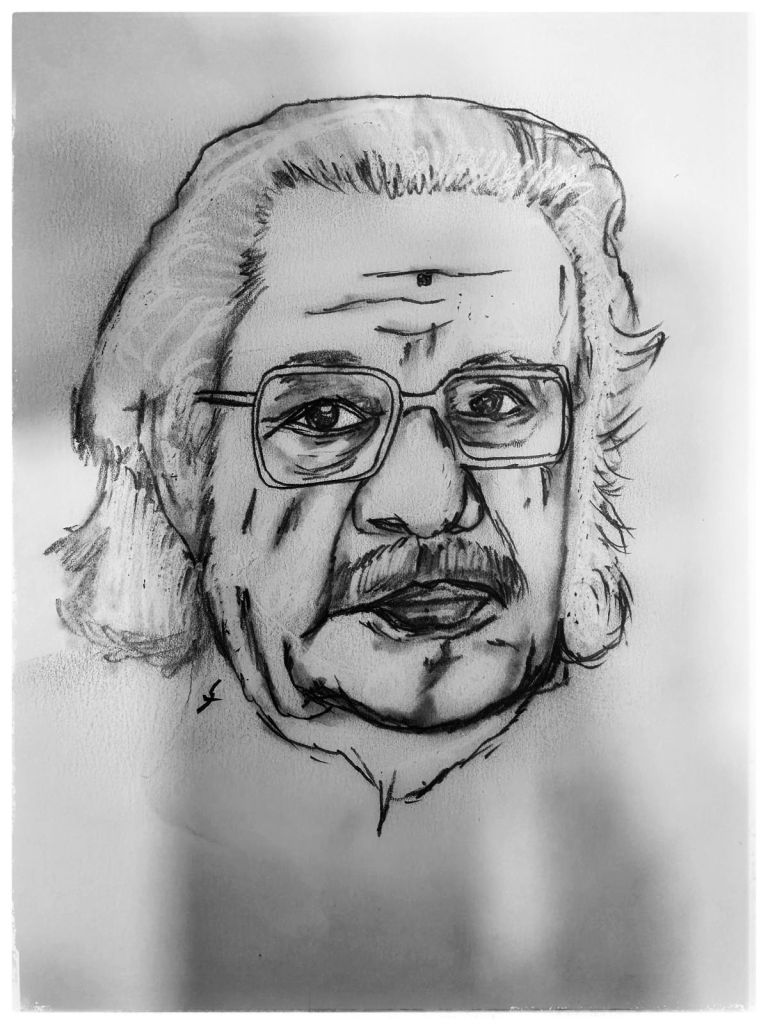
Done completely in pen in between OP!
Both the sketch and this blog are personal and dear to me.

Please go through it and let me know your honest opinions…

I remember the first time we had a class on the sex organs of the body in the 9th grade. My teacher took and easier route, she made me read the whole chapter in a straight flow while my classmates huddled together and listened with mildly suppressed smiles! No questions were allowed and no one lifted his or her head! The boys and girls sat separately and no one ever discussed this again! No questions were asked in the tests and no assignments were asked to be submitted!

That in a nutshell was the sex education we received in school when we were in the grade when most had just reached or attained puberty and had loads of questions which no one knew the answers to!
Discussions were done in hushed voices among your peers with giggles and half information and plenty of misinformation!

I am thus glad that after so many years, there comes a movie which is revolutionary!

After so many duds in the OTT and even otherwise, you get a fresh lease of life with Oh My God 2! The first movie was a masterpiece and had set a legacy which was difficult to follow, much like Munna Bhai. But the sequels in both these not only elevated the premise, but also made it better!

It is sad that the one thing which is common to each and every person in the world which is finding out about his or her own body, is the topic people get red faced to talk about!

The talks of ‘Private Parts’ are given in private and in hushed tones with caution!

So just like how Maha Kaal in the movie says, it is about your body so discuss it openly! and without fear and shame!

A mainstream commercial movie with such a big star cast talking about Masturbation and Sex organs and Good and Bad touch is a refreshing change indeed!
As Tripathi makes us realize in the movie, it is vulgar only if your thought is vulgar. It is an act which is natural and normal and there must be no shame in talking about it.

The very fact that he talks about how Sanathana Dharma has actually consistently and openly spoken about this topic shows how developed our culture was even before people in the world were waking up! How they point out books like Pancha tantra or Kama Sutra and tell about the statues in Ajantha Ellora caves shows the open mindedness of our ancient teachers and artists.

Of course the clever use of Religion in the movie along with the amazing Akshay as Maha Kaal and the symbolism is the heart and soul of the movie! But even if you think of the scenes with Maha Kaal as figment of the Tripathi’s imagination, the fact of the matter and the crux of the movie is the acceptance that sex education is a vital and necessary component of our education system. Yes, you have a ton of information on the web but that is simply too much scrambled data open to misinterpretation.

Of course the concept of sex education does not mean that you get a subscription to a porn site! It means that everyone must be taught the physiology and biology of sexual organs and how they work and what is the correct process. Just like any other subject. Tripathi also adds that only a person trained and knowledgeable in this can actually be clear on what he or she wants and he or she will have respect and understanding of the feelings of the opposite gender.

He also states how actually before the British added their dictum and modification, there was sex education teaching done in Bharat and was in fact a part of Gurukul. How they amended the education and now claim to be the modern educators of the world!

Now as shown in the movie Pankaj is a reflection of the mindset of the society and only Maha Kaal and the poor doctor (liked that part!) understand the boy! The movie then shows how first the parent and then the family and then finally the society accepts something which is the universal truth! Sex is natural and everyone must know about it. When you give titles like sin and wrong, then it becomes an issue.

Even in the movie, whether you believe in God or not, it is shown that God will only guide! The work has to be done by yourself (not withstanding couple of incidents which can be attributed to creative liberty!).
Like how the adage goes, God helps those who help themselves.

The fact of the matter though remains that it is a long road to go, but I am happy that the journey has begun!
A must watch movie with your kids especially if they are teens! Watch it with them, do not be embarrassed.

‘Tum bhi Rakho Viswas, kyu ki tum ho shiv ke paas!’
Har Har Mahadev!
Shubh Ratri…

“The Courage to Be Disliked” by Ichiro Kishimi and Fumitake Koga

“The Courage to Be Disliked” by Ichiro Kishimi and Fumitake Koga

Audiobook

Genre- Self help

Rating- 4/5 May need multiple listening to fully understand the essence of the book

Running length is around 5 hours or so

The whole book is like a Q and A between a Philosopher and a new Student. The author states that sometimes the student can be either him or anyone else.

The whole outlook of a dialogue and debate driven book is really interesting when you take into consideration that most discussion must be like a discussion and not like a sermon!

The book actually states how Socrates even though was much ahead of his time and wanted his point to be put across, he never wrote a thing and actually spent his time in discussion and open flow of ideas. In fact as mentioned in the book, it was finally his student who put the Socrates methods and teachings in a book!

Another chief genre of psychology introduced (or rather re-introduced!) is the the individual psychology of Alfred Adler, called the Adlerian Psychology! In fact the whole book is an introduction and extensions of this method.

The book goes into how it is different from Freudian methods of cause and affect and how it both Adler and Sigmund Freud were equal in terms of experience but they went their separate ways since the methodology was different.

The basic premise of separation is that while Freudian psychology puts too much importance on the situation and reasons why you performed a particular action like your childhood or financial situation. The Adlerian Psychology gives importance to the actions itself!

Like if you are getting angry, it is in fact completely in your control! You had decided to get angry and did it! What happened around you to make you angry is not relevant!

The student and the teacher go back and forth and the discussion moves on to a debate with the student not agreeing initially and later accepting it!

Apparently the most famous books like Dale Carnegie’s how to win friends and influence people and many others are based on this psychology and have in fact mentioned it!

It also mentions how you are not supposed to tell your child to do his or her work but simply tell her or him that you are there for him or her and he or she must do his role!

At one point the author says not to worry about the past and at another he tells not to think about the future much to the frustration of the student and the reader! The students asks the very questions which goes through the reader! So in that way it is an interesting ping pong match!

Some of the concepts went way over my head and it is understood that it needs another look!

All in all a very interesting and new concept and a must have self help book!

The core matter is that you must not wait for the validation of others. You cannot make everyone happy and if someone is not happy with you it is still ok!

The only way you can be happy is that at some point in spite of doing your actions or role in the society you will have the courage to be disliked and you are ok with it!

12 Rules for life; an antidote to Chaos by Jordan B Peterson

12 Rules for life; an antidote to Chaos by Jordan B Peterson


Self help non fiction book genre

Audiobook

Running length around 15 hours which can be reduced to around 9 hours or so by increasing the speed of narration. I would specially recommend that for this book since it becomes preachy in places and you will end up feeling, “Get to the point already”!

Overall rating is 1 out of 5 though the narration of his own problem with his daughter in the end deserves a rating of 5!

The introduction is really amazing which may be one of the reasons why my final rating is so low! It is a typical case of raised expectation!

There is a sequel to this apparently best selling novel and I am seriously thinking what the ### is wrong with the world!

So the author who is a psychologist by profession, starts by how one of his comments (answer) in the app QUORA got him lots of views and how a publisher reached out to him. Those points are the basis of his rules for life.

I will enumerate the rules which are more or less self explanatory.

Stand up straight with your shoulders back! Meaning you must be confident

Treat yourself like someone you are responsible for helping

Make friends with people who want the best for you

Compare yourself to who you were yesterday, not to who someone else is today

Do not let your children do anything that makes you dislike them

Set your house in perfect order before you criticize the world

Pursue what is meaningful

Tell the truth or at least do not lie

Assume that the person you are listening to might know something you don’t

Be precise in your speech

Do not bother children when they are skateboarding

Pet a cat when you encounter one on the street!


Now, most of these rules sound very good and are self explanatory and the author has made good in listing them! My opinion is that he should have left it at that and not explained too much! The reason is that unlike the amazing book 48 laws of power in which the author explains each law in detail and with examples and with counter, here the author just dives into sermon mode!

More than half the content of the book is sermons and narrations from the Bible! Every other passage a revelation from the Bible comes with a story and the author sounds like the father in the early morning church on a Sunday! Now, I have no objection in listening to the sermons from the Bible or any other holy book for that matter but if I have to listen to a sermon then I would prefer to listen to the original! I would prefer to go to the church or a temple! Why to listen to a second hand narration!?

The author tries to take examples from his personal life and practice and fails miserably! He tells the story about his friend who was lost and depressed and he could not save him! In fact he did not even try! Now why would he tell about such a depressing story in a book which is supposed to be self help?

A depressed person would become more depressed after reading the passages of this book!

And his beating around the bush to come to the point will actually increase your pressure when you have taken up self help book to calm your mind!

Many times the author is so confused that the passage is clear!

The only thing good about the whole book is the narration of his personal life and his daughter and what a great fighter she is! She is definitely an amazing girl! But the author there also injects his negativity and almost spoils it!

One of the most depressing self help book I have had the misfortune of listening to! You can torture yourself and that your rule and your life!


The Baluchistan Conundrum by Tilak Devasher

The Baluchistan Conundrum by Tilak Devasher

Tilak Devasher the author; retired from the cabinet secretariat, Government of India, as Special Secretary in 2014. During his professional career with the cabinet secretariat, he specialized in security issues pertaining to India’s neighborhood. Post retirement, he has continued to take a keen interest in India’s neighborhood with special focus on Pakistan, Afghanistan and Bangladesh. He has written articles for The Economic Times, The Indian Express and many others.

This is the third book By Tilak Devasher and is almost like a series but this can be read independently since the previous two books are not directly related to this one.

This is a non fiction analysis which can be seen as an extension of a news report! The review is thus a summary of the chief points in the book to get a gist of the whole book. No spoilers and no reveals since the references are open and freely available. Those who do not read the book will get the summary while those who do read the book will get a preview!

The author starts with the introduction and the the placement of Baluchistan like how it sits astride the straits of Hormuz, one of the choke points of Indian Ocean! and finally the the division of Baluchistan

He then explains the huge assets in Balochistan and its economic importance

He mentions about the levies and police which were A areas and B areas

Statistical analysis reveals that Balochistan is 44 percent of the landmass of Pakistan! but it has the population of only 3.5 percent!

The authors tells about the hunting of Houbara Bustard which is a rare bird and is close to extinction is slated to be a foreign policy!

“A Baloch may be born without socks on his feet but when he grows up every step he takes is on gold!” is a saying in Balochistan! Which is of course a reference to the extremely rich mineral deposits in and around Balochistan!

The disparity is obvious in this single line. “Balochistan produces 45 percent of Pakistan’s natural gas but consumes only 17 percent of it”

History and origin of Baloch itself is controversial and the author tries to give information on this with an open conclusion.

Tribal system and Sardari system has been described which makes for an interesting read.

The collective character of the Baloch is manifested in what is called, ‘Balochmayar or the Baloch code of Honour’; A Baloch would be willing to sacrifice all including his life to protect it. How this code of a Baloch chief saved Humayun and how if not for that, the whole history of Mughal India would have altered!

Baloch-Pashtun divide; it is believed that the word Pashtun or Pathan is derived from the sanskrit word ‘Prathisthan’ or people who are established and command respect in society!

He talks about the Zikr (remember in Arabic) sect and how they are different from the orthodox Muslims

Hazaras are Shia Muslims migrated from Afghanistan after being persecuted. A sad saying is that a Hazara is born in Afghanistan, grows up in Pakistan and buried in Iran.

They were amused that the author knew that uru meant village, arisi meant rice and tanni meant water even to me from distant southern India.? Interestingly, Eelam (which means’independence’ in Tamil) was the name of a Brahvi-Urdu weekly that started publication in 1960 and had exhorted the government to promote both Brahvi and Ba-lochi.

Baloch-Brahvi differences? both cite a book called Koord Gal Namik written by Akhund Saleh Mohammed where it asserts that Baloch are Kurds while Brahvis are one of the tribes of Kurds.

The earliest signs of Baloch consolidation is to the confederacy of forty four tribes under Mir Jalal Khan in the twelfth century who is regarded as the founding father of Baloch Nation. Mir Chakar Rind was another ‘Great Baloch’ describing his rule as the golden age of Baloch. Mir Ahmad Khan as the khan of Kalat for establishing the first Kalat confederacy.

Kalat state of Baluchistan counted as a Princely state but wanted to deal with the Bristish directly like Nepal. In fact as late as June 1947 Jinnah assured Kalat of the continuance and safeguard of its independent status.
Treaty or communique dated 11 august 1947 in fact states that the government of Pakistan recognizes Kalat as an independent sovereign state.
Mountbatten though did not sign the treaty which made a feel of the declaration inoperative since it does not signal the recognition of the British.

A big issue was the erroneous reporting in AIR about a comment by V P Menon while no such comment was made! The premier Khan of Kalat then being extremely upset at this dismissive manner of treatment started the negotiations with Pakistan! India was anyway busy with Kashmir and Hyderabad that they were unable to evaluate the strategic significance of a sovereign Baluchistan. A big opportunity lost!

In the brief time when Kalat was independent, they even had an embassy in Pakistan with their own flag! Then the Pakistan army conquered Kalat and the Khan was forced to sign the instrument of ascension.

The chief role of British government was in question; initially they wanted an independent Balochistan. Later, Pakistan’s position during the rise of Russia, became very important (just like how US supports Pakistan now). So they later started proceeding in such a way that Balochistan will become a part of Pakistan! A strategic move because of vested interest.

Pakistan had signed a Standstill Agreement with Kalat on 11 August 1947. It had signed a similar Standstill Agreement with the Maharaja of Kashmir in August
1947. Pakistan broke both these agreements. Its subsequent history would show similar disdain for international commitments.

Insurgencies and revolts galore in the history of Baloch. Promises made even on holy Koran were broken by the pakistan army with impunity and several such incidents are enumerated by the author.

After the creation of Bangladesh; every move by the Baloch leadership was seen with suspect so much so that all major posts and leaders were either banned or arrested and a massive anti insurgence program was instituted.
Till Gen Zia Ul Haq came and ended the military insurgency. He returned properties, terminated cases and stopped military action! The effect was two and a half decade of peace! Most leaders of the insurgency either went underground or emigrated to neighboring Afghanistan. Of course the peace was deceptive since though the insurgency was ended, the Baloch conflict remained. The four year old long insurgency had politicized populace, aroused nationalist feelings and more bitterness and above all instilled in Baloch feelings of unprecedented resentment and widespread hinger for a chance to vindicate their national honor. The claim for regional autonomy gave rise to the claim for independence.

In topic of Bureaucratic under representation it has been stated that of the 830 civil posts in Baluchistan itself in 1979 only 181 were locals and that too in the junior posts. On top of this under the Domicile quota there were many non Baloch who were occupying the post by using forged documents.

Under representation of Baloch in Pakistan army is an under statement! There are a few hundred in the whole Pakistan army! While the famous Baloch regiment has no Baloch in it!
Baloch has 750 of the 1100 km coastline but there is not a single seaman in the Navy belonging to Baloch!

Education; Tilak talks about high illiteracy and low education and he tells about low female education and Ghost schools! Apparently there are schools only on paper! 15000 teachers and 900 schools get funds and salaries every month but they do not exist!

Huge mismatch between Balochistan Potential and the policies that have been followed by the successive governments.
Main issue is the Natural Gas! Till 1955-69 the share of Balochistan in the production of natural gas in Pakistan was over 91 percent but the share of consumption is over 2 percent though now it is close to 7 percent but still woefully inadequate!

Rich in resources such as Coal and copper but underutilised. Fisheries also suffering.

The issue of water also comes up since Baluchistan supplies over 81 percent of apples produced in Pakistan but now it is on the brink of a water crisis.

low poverty and Human development index have been enumerated with data and census along with low socio economic development.

Electricity- Balochistan contributes to 2280 MW of electricity to the national grid! Ironically the province gets less than what one power plant at Uch in Balochistan generates! So despite generating so much of surplus, Balochistan would not get more than 650MW unless the transmission capacity in the province is enhanced.

Balochistan has the poorest social indicators in the country. Less educated and less urbanized. MMR is the highest in Pakistan and only around 43 percent are immunized against a national average of 78! IMR is also high which is 158 out of 1000 children; a figure even worse than the 126 in Republic of Congo!

The author has given an extensive comparison with Punjab under expected lines for everyone to see! The rates follow the same pattern like one example; The annual growth rate in Punjab is around 9.1 while in Balochistan it is -3! A result of these indices, the author concludes that the consequent feeling among the Baloch being second class citizens is thus quite natural.

Gwadar; a topic discussed in length by the author about a potential tourist destination and a reference point for what could be the future. It became a part of Pakistan in 1958 after 174 years of Omani rule. There was plans to develop it as an alternative to Karachi! Then he talks about US interest, Russian interest and finally Chinese! Water crisis is a big issue here also. So much so that an advisor asked, ‘How can you build a major port or a city when there is no water?’ Then fishing crisis! Trawlers paying bribes and depleting fish stocks! and not to be far behind Land scam! Land has been sieged by state agencies, coast guards, the navy, the paramilitaries and apparently every general has a plot in Gwadar! Then seismic concern of safety and finally whether its is military of commercial project?
Then there is Chabahar which provides India access to Afghanistan via Arabian Sea by passing Pakistan! Taking the dependence of Afghanistan on Pakistan! So if Chabhar is developed then this land and sea connection would completely by pass Pakistan and open a flood gate of trade routes between India and Afghanistan!

The China Pakistan economic corridor is a big issue starting from the route to the execution to the economic outcomes. The routes have becomes politically controversial and has no lack of consensus.
Though Former chief minister Sardar Akhtar concluded that the CPEC will turn out to be another East India Company and all will make Pakistan look not like a country but China Town! It also poses security concerns as there are over 30000 Chinese working in Pakistan! There have been several attacks on the Chinese and some successful. How many groups have targeted Chinese nationals is being described in detail which can be read by the interested reader. It was too much Gore for me to digest!

Relentless prosecution; even the security agencies including army involved in highly under reported human rights violation. Some indulging in kill and dump operations.

Voice of Baloch missing person or VBMP formed by Abdul Qadeer Reki is an important organization getting these issues to the front. Qadeer’s son was abducted and his body turned up two days later after which Qadeer formed this initiative. He is also in the ECL or exit control list which is a list of people not allowed to leave the country. Most harrowing of Human rights violations are the enforced disappearances which has been described by the author including several other Human rights violations.

It is interesting to note that only ethnic Baloch were being targeted in incidents of enforced disappearance and none of the disappeared was a ‘settler’.
Information about Sabeen Mehmud, a prominent Palistani women’s right activist who had to pay with her life.

Media; the chapter starts with this harsh reality which sets the tone for the whole chapter. Not being dead is a victory in today’s Balochistan if you are a journalist. Worse there is little or no hope of prosecuting the killers let alone sentencing them! Most deaths of journalists go unpunished as a norm. This is the price our media has to pay for keeping the torch alive…

Lack of good governance or even a proper government with local leaders with the influence of Punjab is highlighted in many places in detail.

The Baloch issue is even now handled militarily rather than politically. Three factors are important here; one is that the people of Balochistan have not accepted Pakistan whole heartedly, then the Bangladesh hangover and finally army’s refusal to recognize the ground reality. The author then describes army tactic in self explanatory headings like use of excessive force, kill and dump and enforced disappearances, Downplaying insurgency, Islamization, counter nationalist and the foreign hand. They even target families. Then the role of frontier corps and their multiple check points which are a big bone of contention and bitterness.

A conclusion of the whole situation also compares Balochistan with Bangladesh but points out that Bangladesh had a good Bengali identity and middle class support and most importantly a backing by India! While Balochistan does not have a foreign Backer.

Final conclusion is that the key factor for the future development of Pakistan would be just a solution for the Balochistan conundrum, a solution that puts the Balochistan in the centre rather than the resources of the province. Failure to do so will slowly but inexorably exacerbate the crisis in Balochisthan till it explodes with dire consequences for Pakistan.

A very interesting and detailed analysis in the recent times of the conundrum which is Balochistan!

Those who love current affairs will be pleased!