You’d think it was an April Fool’s Day prank if someone told you something designed to help the alcohol industry saved lives, wouldn’t you? Or for that matter the history of alcohol and the history of commercial milk are related to each other!
Intrigued!?
Read on!
Now people who drink milk may not see eye to eye to people who enjoy their glass of beer at least in the morning! But it is understood that milk is a routine morning drink and alcohol a typical night or evening! Unless of course there is a special occasion is what the normal reason is!
Then again people like me like only milk but even a teetotaler like me cannot take milk in its true form! I actually can drink Milk only in the form of coffee or tea or when I was young, Rose milk was my favorite! Even now I don’t mind gulping some rose milk here and there but can’t because of the high sugar level in it and the fact that it really does a number on my throat!
Now of course you have a range of milk which do not even taste or feel like the cow milk we all grew up with! Personally though in spite of the fact that my choice of milk is narrow, I would prefer a black tea to any other ‘Milk’ tea!
Now imagine you have a group of people who drink only one of these two then you may think that they have little in common! Well, they might and to help them you have the history!
Back in the nineteenth century, French scientist Louis Pasteur was commissioned by a local alcohol manufacturer to figure out why their beer and wine were turning sour!
He discovered the blame lay with organisms such as bacteria! He decontaminated the alcohol and helped that industry!
Later he used the same process to keep milk safe and fresh for some time! The method which involves heating and rapid cooling!– the same bacteria that could be destroyed by boiling then cooling liquids, a process now known as pasteurisation! The process which is used to this day for preparing and preserving milk!
All because of alcohol! Now that’s a link which produces great dividends! Thinking of produce reminds me of birthday celebrity Avichi Meiyappa Chettiar!
Or even a wire free world now that’s an order tall!”
I love bluetooth devices! It has been told before and even by me but the truth remains that tech lovers would buy anything new if it has bluetooth in it!
Another great love for the people who love tech and who have lots of such devices are cables! I get a special joy when I see a special type of cable!
Even my office bag and desk would have an assortment of cables! I am the go to guy for anyone who needs a cable! I have cables with all combinations!
read on!
Like the Cable guy movie! The craze for cable is insane! But unfortunately Cables always get tangled!
The Murphy rule is that any two cable can get tangled however far they are from each other!
All they need is to touch once and then they are tangled for life! Even if it’s a bunch of cables you have put in a box or cover, after sometime you can see how they get fused to each other like long lost cousins meeting at a wedding!
It is inevitable because different devices need different cables and if one of the device is iOS then DEFINITELY it will be different!
So now the standard would very soon be the USB C but there was a time when the standard was the micro cable! Almost all old devices and all old android phones had this standard combination which was touted to be better than the pin which we used to charge our phones!
The initial days of phone had two separate ports! One was for charging and the other for those few blokes who could connect the phone to the computer like magic!
The micro port changed that! Now the same port was for charging and also for transfer! In fact transfer from the Phone to the computer became a breeze! This was even faster than the Bluetooth transfer which was the norm those days!
Apple of course never went the normal way and there was a time when no two iPhones could exchange the cable! Even the old iPhone cables could not charge the iPads which needed a whole new cable! The most irritating thing was that the first thing to break or get broken in Apple products was the horrible charging cable which used to look so nice and white but the constant bending would break it soon!
In fact there were tutorials and web pages dedicated on how to take care of those delicate cables! Another worse part was that you cannot get adapters or non Apple certified cables or chargers to charge the phone or pad! You were forced to pay a premium for getting the proper cables and charger!
So taking a cable for Apple products without testing it was a big gamble!
Even in micro slot, in spite of the design difference, many times we may not be able to place the cable connector smoothly! Over a period, that will also break! Inadvertently we would put it upside down and scratch the phone! It was the same problem with the USB slots in the computer! The pen drive with the plastic would always be inserted wrongly first!
This itself is a big cause for the local damage to either the device or the ports!
Which is why the USB C is a super invention and with it advantages has replaced almost all the devices!
You can insert any way you want and the speed is amazing! We now even have computers and pen drives with the USB C ports and they are a breeze to use! The late comer Apple actually came to the party earlier than expected! Now all new Apple devices come with the USB C! If your device is not USB C then rest assured it is an old tech!
Now USB C is one of the best inventions ever! You can insert the cable or now even the pen drives with USB C in any direction and it will do the job! Plus it is supposed to the fast! For now with the fact that even iOS and for that matter even the latest kindle is USB C which means that it’s here to stay for a long time! Another person whose legacy is going to remain for a long time is the legacy of birthday celebrity Krishnan Nair Shantakumari Chithra!
Now charge your phone with the USB C and sleep listening to a soft melody by KS chithra!
“Fly and stop and then fly again Taking a layover is a big pain! If you miss then it’s a mess! Going direct is best I must confess!”
One fine day I was supposed to return from one country back to India and the direct flight was not available. Then my only choice was layover and I had to take two flights with layover in Abu Dhabi to return!
The surprising thing was that the flight ticket of the whole trip turned out to be cheaper than the whole flight! This is an open secret which is used and abused by frequent travellers!
read on!
The thrill of going in flights is only for maybe children and first timers! For most who have taken many flights or those who are not in business or first class, flights are now similar to a train or even a bus! Without the cheap tea and great view!
The waiting time and the excess security checks and not to mention the prohibitive cost of anything in the airport makes flights an uncomfortable options for many! Of course elderly and those with wheelchairs are given special priority and options but they have to wait and that is the whole issue!
The whole idea of taking a flight is to save time but domestic flights are now the biggest way to waste time and simply wait! For any journey less than an hour via flight it is always advisable to take a train or a bus or even drive! Now say it takes around 6 hours for you to reach a place by bus or train or car; you have to go at least two to three hours before the flight departure time to the airport! Then there is a big queue for the check in and then the luggage and then a bigger queue for security! Finally the flight itself takes it own sweet time and most of the time the airports are very far from the place you need to go either while arriving or departing!
It definitely makes more sense to use the road!
In international trip though, a direct flight is a boon and an express service which is why they are usually more costly than a layover! The first time I had an international layover, my starting flight was so delayed and then when it did start my connecting flight was on time! I had to run from one corner of the airport to another with my bags to cross the security and reach! The same thing happened in the above flight also! When I reached the layover airport, there was another round of checking and security and my connecting flight was ready to leave!
I really never want to write a blog on how I missed my flight ever!
But this layover and connecting flights tend to be cheap because the flights are concentrated on one important place. Like going to Thailand, many flights from India have a layover in Malaysia! We spent close to six hours roaming that airport!
Some people have now become clever especially if they are alone and they do not have any carry on luggage! They book connecting flights cheap and skip the connection! It goes like this, and the term is called Skiplagging which involves booking a longer journey with a stopover as the intended destination to save money!
So it is like this
Desired Flight: B (origin) to C (destination) Cheaper Flight: A (origin) to B (transit) to C (destination) Skiplagging: B (transit becomes origin) to C (destination)
Attempting skiplagging with checked baggage can lead to significant delays and consequences. Airlines dislike skiplagging due to loss of revenue and potential increase in overbookings!
Several times we have seen that airlines go on calling people to their flight but those people do not show up! They have simply skipped the flight since their intended destination is reached! Of course you cannot do that frequently since then you can be penalised and it is actually illegal.
This got me thinking how people can do the opposite of skiplagging in train! Now when we have trains which stop at several places and since the train fare is calculated on final destination then how about you book a ticket to a stop which is some stops before your final stop and you pay less and then get down at your intended stop! Since am sure the TT would be checking the tickets only in the initial part of the journey! Of course you may not save much but then it is theoretically possible and I am sure someone would have definitely done it! I just wanted to coin a term for it thats all! May be Skiptracking!
Now that’s being innovative! Just like how innovative birthday celebrity Shanmugasundaram, known by his stage name A.V.M. Rajan was!
Now stop thinking about how to cheat the system and sleep! Shubh Ratri!
Vacation is a break from work but many times you need a break from vacation!
Most itineraries of any trip is dotted to the last minute!
When this happens, you are like a machine who has to eat sleep and get up in a different time zone!
Even all the diet you work around goes for a six! You eat what you get and when you get it!
I am not even telling about the back pack trips or the trekking to a mountain base! But even the most routine tourist spots nowadays need you to be physically and mentally fit!
Any tour for more than 4-5 days will make you tired hungry and remind you that you have amazing pain sensitivity!
Plus the fact that the whole ‘bathroom cycle’ will be upside down!
A big issue which many ‘indians’ may have is the lack of a bidet faucet!
The use of ‘Tissue’ becomes a big ‘Issue’!
In fact without the faucet you simply do not feel clean! That feeling of an incomplete wipe always remains!
The first time I went to a European country was Germany and that is where I had the first experience of no water to wash! I did not even know that you could flush the Tissues! I used to see these signs in many hotels stating that you Must NOT flush the Tissues!
The first couple of days I did not even eat that well to get enough for the tissue! Plus being a vegetarian the options were left only to the sympathy of the chef and bread! Both would not make much to use the tissue if you get my drift!
The same thing is in Georgia! The Germany experience made it easier to get used to the tissue but kids were still not comfortable!
Of course after a couple of days we have sorted out the issue of the tissue!
We can’t wait though to rush home soon and wash again!
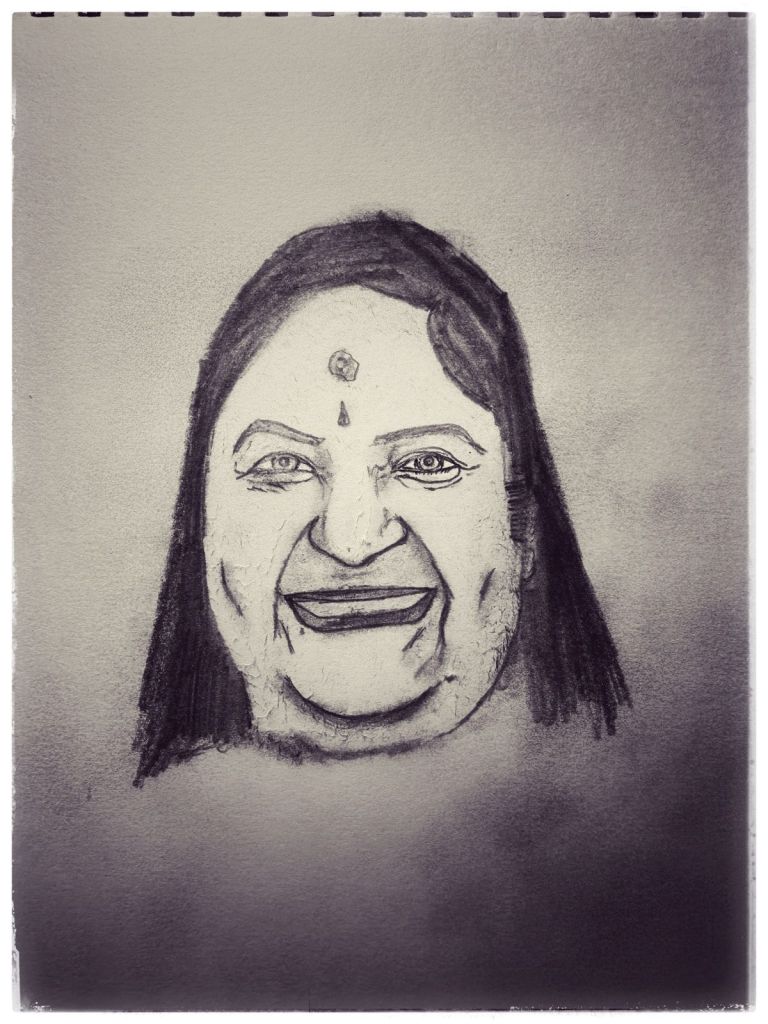
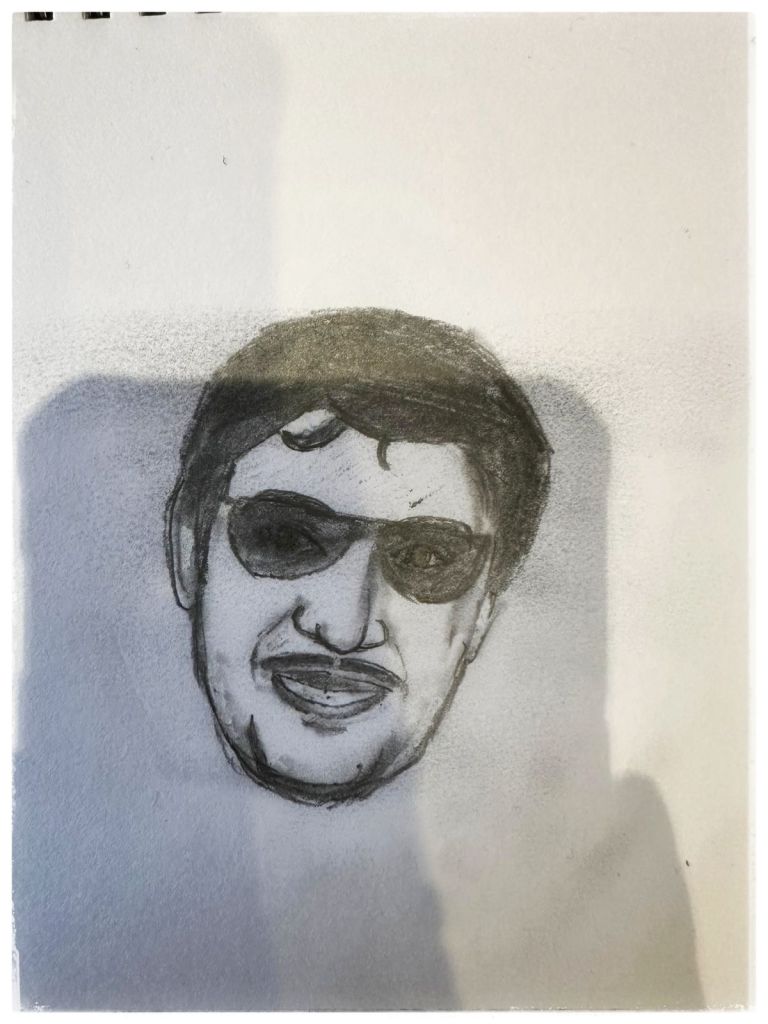
Sketched the birthday celebrity Master Chief Petty Officer Krishnan Madhavan Nair, better known by his stage name Jayan in a rush!
We went to this place in Georgia today and the old guy was riding this awesome vehicle!
We immediately wanted to ride it!
It was an ATV!
So all-terrain vehicle (ATV), also known as a light utility vehicle (LUV), a quad bike or quad (if it has four wheels), as defined by the American National Standards Institute (ANSI), is a vehicle that travels on low-pressure tires, has a seat that is straddled by the operator, and has handlebars. As the name implies, it is designed to handle a wider variety of terrain than most other vehicles!
It is like the smaller version of the army Jeep which are 4 wheel drive vehicles.
These little vehicles look so cool and small and you would immediately want to drive them!
I remember sitting on an ATV in Manali and the driver took us across small rivers and tough terrain! Some places there was no path but we went boldly!
After trip we were getting down and the drivers were discussing how a new ‘Pilot’ which is what they call themselves was having trouble navigating the path!
I heard that and thought to myself how hard it could be!
Well, not easy is what I would say!
The instructions were simple! You have break and accelerator and strictly you must not press them both!
So my son sat behind me and I bravely pushed the full throttle and charged!
Only thing was that it was not listening to me! The vehicle was going in a different direction! It was going to the ditch and there were times when we almost toppled!
Then the guide from behind asked whether I need a guide! Now driving is my passion! I love driving! And also my male ego was hurt at that suggestion!
So I listened to him more carefully! He told me to hold the handle bar straight and steady! And throttle must be pressed slowly!
Again we did the same! Almost fell into pits and ditches and canals! Never got the road and was way off the course!
Then we had a break! In the break my back and leg was hurting but the pride was hurt more!
So return journey I decided to be more firm! After a session of snaps which were beautiful by the way, we started slowly!
And this time we took whatever the terrain can throw at us! I drove in line but slow! The guide was driving in parallel! Later on he even increased his speed ( he was going slow to be with me!) and I also had a race with him!
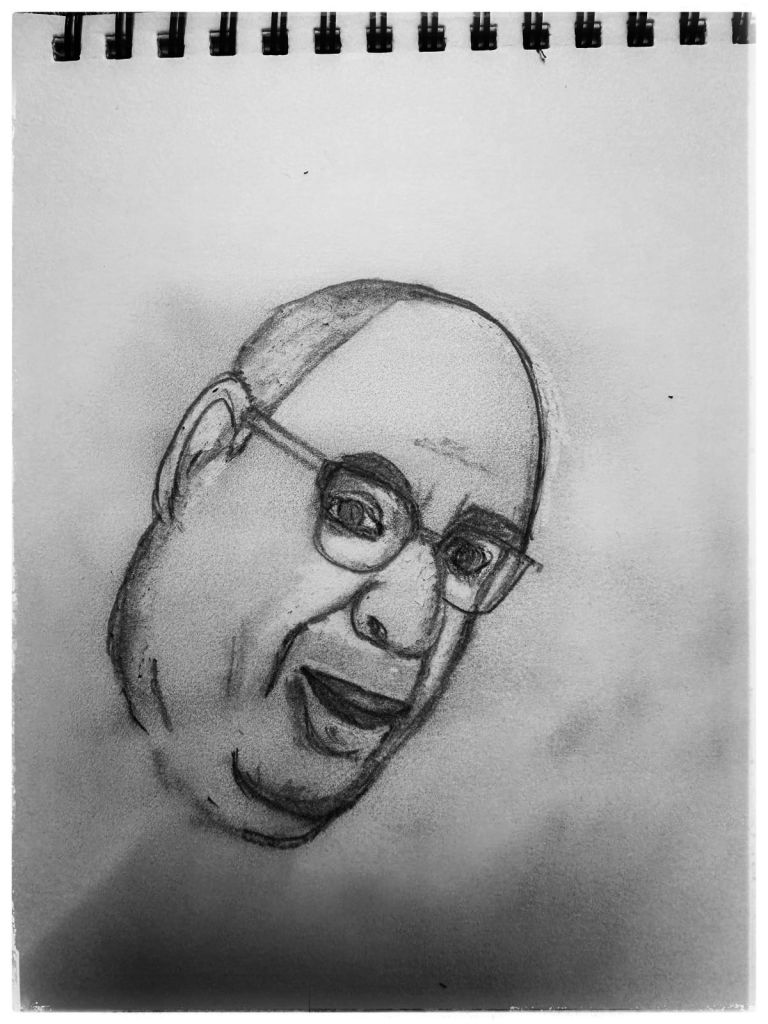
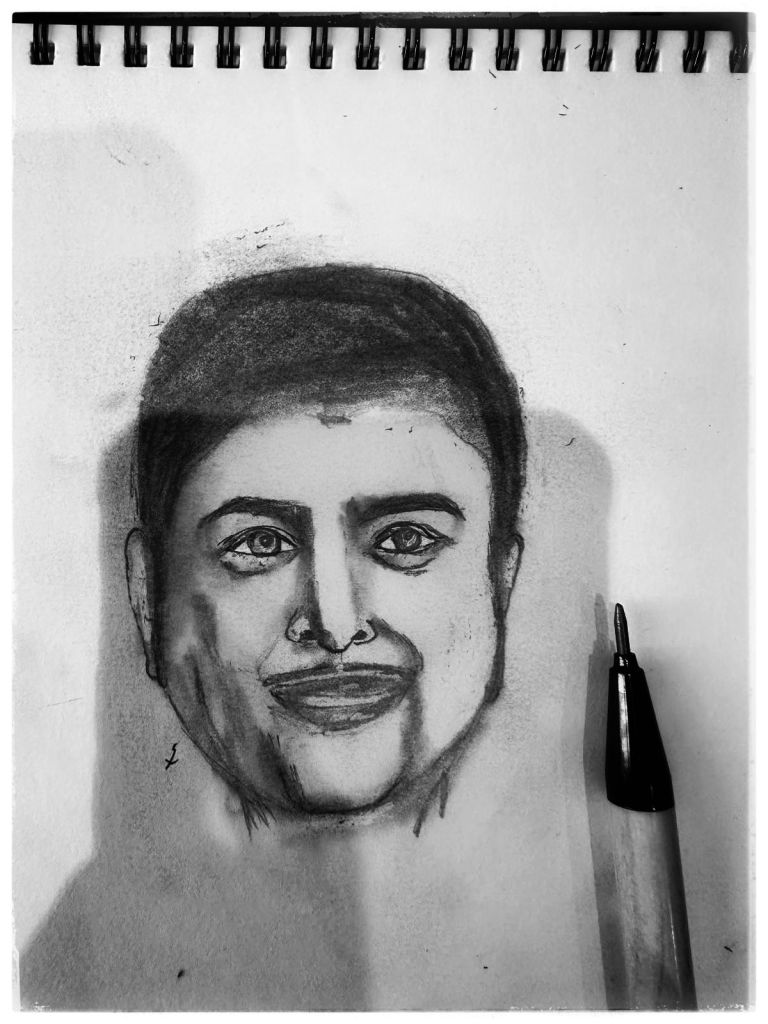
Practice makes most things better! Like this sketch of birthday celebrity Azim Hashim Premji which was made in a hurry during travel but because of practice it came out ok!
Bagrationi dynasty is a royal dynasty which reigned in Georgia from the Middle Ages until the early 19th century, being among the oldest extant Christian ruling dynasties in the world!
This is the dynasty which ruled Georgia first!
The nation of Georgia was first unified as a kingdom under the Bagrationi dynasty by the King Bagrat III of Georgia in the early 11th century, arising from several successor states of the ancient kingdoms of Colchis and Iberia.
The Kingdom of Georgia flourished during the 11th and 12th centuries under rulers such as King David IV the Builder and Queen Tamar the Great.
The kingdom fell to the Mongol invasion by 1243, and after a restoration under George V the Brilliant it fell again to the Timurid Empire in 1403.
Georgia was finally annexed by the Russian Empire in the 19th century. After a brief period of independence as Democratic Republic of Georgia, the country soon ended up being a Soviet Republic until the dissolution of the Soviet Union. The current republic of Georgia has been independent since 1991!
The whole history of Georgia can be seen in its churches and caves! The Mongolian invasion, the Russian influence and the Christian churches!
A beautiful city with a great history! A great historical figure also was birthday celebrity Bal Gangadhar Tilak.
A quick sketch on a busy day of travel!
The time difference is not much so it does not cause much affect on the sleep time!
Years back when we used to go to this horse riding school in Secunderabad, the constant smell of horse manure stuck to us!
Before we started the whole show, there was this kid who had a broken hand and a plaster! Now the next day we had the first class and then our mutual friend introduced us to this other boy who was our neighbor but we still did not meet him officially.
He was apparently injured and our friend had got a couple of colour pens to show his artistic skills on his other friend’s plaster!
So we (my brother and me!) tagged along for extra art! While making a rough version of the Fido Dido which was the craze at the time, I simply asked him how he got hurt.
He told that he was an expert horse rider but one fine day, a horse which was named B (it was some other name but let sleeping horse’s lie!) who kicked him with his legs and he broke his hand!
That was a shock for us both since we had the first class the next day! Then the kid told us that there would be three horses but only one of them is the actual horse which would be tall and majestic and proud and a kicker! But there would be two other horses which were actually shorter and more tame and in fact they were mules!
So mentally we decided to take the mule!
During the class we always used to pick the mule who was an obedient horse! He would make nice couple of rounds and come back! He would obey our pulling of the reins and he would not canter (its the horse riders lingo for galloping!).
This was fine because only the B was the real horse and he was always in demand with the serious riders! But one fine day the trainer saw through our act and made me sit on B! I reluctantly sat on her and held on to her saddle and my life!
Now the first two rounds were smooth! But the moment it came to the third one, the B ran like no tomorrow! Galloping at full speed and all I could do was hold! I was not riding her, she was taking me! It reached the trainer and stopped almost suddenly and I was glad to get off carefully avoiding her hind legs! I could almost swear that she was smiling!
Now coming to the Jenny!
My favourite riding companion was not a horse but a mule! So the mule is a domestic equine hybrid between a donkey and a horse. It is the offspring of a male donkey (also called a jack!) and a female horse (a mare!).
The horse and the donkey are different species, with different numbers of chromosomes; of the two possible first-generation hybrids between them!
Mules vary widely in size, and may be of any color. They are more patient, hardier and longer-lived than horses, and are perceived as less obstinate and more intelligent than donkeys!
The mule is easier to obtain and more common than the hinny, which is the offspring of a male horse (a stallion) and a female donkey (also called a jenny!). The hinny is distinct from the mule both in physiology and temperament as a consequence of genomic imprinting and is also less common.
The mule inherits from the donkey the traits of intelligence, sure-footedness, toughness, endurance, disposition, and natural cautiousness. From the horse it inherits speed, conformation, and agility.
Many times mules are preferred since they are more sturdy than a horse and more fast than a donkey! The best of both!
Unfortunately though, mules are infertile!
Another more sturdy animal which is like the horse and the donkey and has been tried to be ridden is the zebra!
Everyone knows about the Zebra because of the famous zebra crossing which actually has nothing to do with the zebra!
It is generally attributed to British MP James Callaghan who, in 1948, visited the country’s Transport and Road Research Laboratory which was working on a new idea for safe pedestrian crossings. On being shown a black and white design, Callaghan is said to have remarked that it resembled a zebra!
Despite their superficial resemblance to horses, zebras possess several characteristics that make domestication extremely challenging because of several reasons like Zebras are naturally aggressive, making them difficult to handle and train, also they have a strong ducking reflex, complicating efforts to lasso or restrain them. Finally Unlike horses, zebras do not have a clear family structure or social hierarchy, which is crucial for domestication.
Practically also Zebras have not evolved to support the weight of a human rider comfortably. Their backs are not strong enough to carry heavy loads or to be saddled. For all the majestic nature of the horse, you may not find a Zebra who listens to you! That shows its nature! I am glad that my trainer never thought of training a zebra! Of course birthday celebrity like Mukesh is a majestic horse when it comes to skill!
Even a Guru can learn by looking at the kid’s smiling face!”
Guru devo bhava, which means Guru is like God but remember that the emphasis is on “LIKE”.
The very problem with the statement is that you have to put or place them on a pedestal!
But that is the difference! If you treat anyone who teaches you anything as Guru that is ok! But do not treat them as God!
why?
Read on!
The very fact that you are comparing anyone to God comes with some serious issues! The issue is that when you think he or she is akin to God then he or she must not be like a human being!
The central point of any human is that he or she is a flawed individual! You have subconsciously accepted that! It can be anyone, even your friend, parent or partner or even children! Once you accept that he or she is a human then you do not have that disappointment when he or she does something human!
Of course when he or she does something Humane then you will feel happy and that is natural! When someone constantly does something great or amazing, then you have a tendency of elevating him or her to God status! Like Sachin being God of cricket! He is a great player and maybe one of the best ever but God by definition does not have any flaws! In the same way we have always been advised to never meet your heroes!
This is because you have elevated them on a pedestal and that is not good.
Now coming to Guru!
The conventional Guru of the past were ascetics and people with so much knowledge that they were like Gods! But even then Gurus like Drona showed that he may be a great guru to Arjun but he was a mortal when it came to Eklavya. A better example of an almost Godly Guru would be Kautilya or Chanakya! Now he was the one who imparted him teaching and retired peacefully without any pomp or money.
A true Guru would be impartial and clean but they are hard to find unless they are your parents or children!
The basic rule then is that you do not have to elevate anyone to the level of God but the most important thing is that all your life you must remain a Student!
The moment you stop learning is the instant you stop living!
So learn! Like Ranchordas chanchad says, “You have knowledge everywhere! just collect!”
I have tried to learn from everyone and I have also had some great actual teachers in my school and colleges and hospitals. I have had teachers and Gurus who played favourites, taught wrong stuff, were really small and bad humans and who simply were bad! From them I learnt what NOT to do!
Every medical personnel usually needs a mentor and someone who is great. If you are lucky to find such Gurus, then your life is done!
The only point to remember is that he or she is a human being! And that is perfectly all right! Also remember that getting inspired is the key! DO NOT COPY! Make your own path and it may not be perfect but it is your own! A great human also was birthday celebrity Anand Bakshi!
On this day of Guru Purnima I pay my respects to my Gurus, my parents, my family and my friends and also my patients! All I want to be is a student for life!
Now the best teaching is to sleep on time so do that!
It was the swaying of muleta which gave him the ire!”
I love sketching in Black and White since I only have time for a quick sketch everyday! Also I like to still believe that things and people are still black and white in nature with shades of grey! Then again if that statement sounds prejudiced then that was unintentional.
Practically though even if you do not have any such thoughts inside you and you are liberal, colors do play an important part in our life! And people do favor color! Not the colour of skin but color of things!
Intrigued?
read on!
As a child I used to like some parties especially since we also knew that the dessert to be served was to be rajbhog! This was like the yellow version of Rasagulla but more sweet and creamy! Or maybe it tasted the same but the colour really made a difference!
If you do not believe me then one day when I was young (er!) my mother announced that she made lemon rice! To our surprise though it was white in colour! It tasted the same! Sour and salty and of course tasty but still something was missing! The colour! There was not turmeric in the house and the rice was no yellow! So in spite of it tasting like lemon rice, it did not look like one so we did not eat it!
Even now if there is no turmeric in the house, even if we have lemon; I do not make any lemon rice!
It is also the same with Dosa! and Idli!
The other day my wife who likes to make only healthy things to eat announced that she was making a special dosa for us that Sunday!
Holiday is the time for indulgence and eating leisurely and that day was no different! The aroma from the kitchen was really nice of hot ghee though I prefer sesame oil in my dosa! Now that is the topic of another blog!
Now my wife then laid the table with steel plates (no plastic or other plates when she is uncharge!) and placed the hot dosa! The dosa was a black color thing! I was too shocked to say anything! Of course, with the groundnut chutney (another misdirection!), the “dosa” did taste good! But it was no dosa! It was a healthy variant made with Ragi! I have now strictly told her that the next time she makes this black “dosa”, please call it Ragi Dosa or Ragi Roti! Anything but dosa which it is not because dosa is white or a little golden brown! But certainly not black! I do not think I need to tell about the black Ragi Idly right!?
Of course the next time we buy curtains and I causally mention that you can buy any color and it does not matter, the look my wife gives me is the same look I gave her when I got the Ragi dosa!
It is the same with coffee and tea! Many people see the colour! If you add too much milk or too little decoction or powder then the coffee is light which is ok for kids and those who do not drink it regularly!
But someone who drinks coffee especially filter coffee regularly then even if the taste is good, the colour must be perfect! A whitish coffee can never be a degree filter coffee! or even a Kadak chai!
In Kerala and in many other places, you get something called the milk tea! That is essentially tea with more milk but the way it is recognized is that the color is more white than the brown tea!
It is the same with coffee! Forget the taste, the color is the one which determines the first impression!
Even a well cooked dish is mainly determined by the color! How do you know the fritter or bajji or bonda is fried properly or not? Well, it is the color! Now the difference between the Bajji and Bond and pakoda is…the topic for another blog!
If you go to a shop and get a vada which is fair and not brown, I am sure you will think it is not cooked well or you may not even eat it!
It is the same with Rava Kesari! Mentally for me it is always yellow or orange! But when I see a white one, even if it tastes good, I would think the colored one tastes better!
Now you talk about Rosogulla and not talk about Gulab Jamun?! How can that be possible! In Gulab Jamun also there are two varieties! One is brown or golden brown or other variants of brown while the other is black! I like the brown variant! The black jamun is actually having a similar taste but they are generally more sweet since some sugar is added to the dough. This added sugar makes the caramelization and the balls are fried longer. The syrup is also mostly dry! But the chief reason I do not like them is that mentally I know they have to be brown and I have always eaten the brown jamun! So if someone tells me that they are serving Gulab Jamun and give me black dry balls then please excuse me if I do not like them! Of course there are people who like the black one more!
I still remember this variant of a popular cola company which was launched during this World Cup of cricket and since Indian team used to wear blue dress, it was blue in color! It was famous till Indian team was having the chance of winning the cup! But the moment India was out of the World Cup the demand for this cola disappeared! With that the cola also disappeared from the market soon! The only difference between the taste of the drinks was in the color!
Some time back one of our old hospitals where I used to work some years back suddenly came up with a brainwave possibly cooked up by some management dude who would have joined recently and to justify his pay would have come up with this mind shattering idea! The conventional dress of all surgeons which is the OT dress is almost everywhere green or blue in color; this self proclaimed Einstein got a new design made in Brown color which made us look like a cross between a sanitation worker and a post man (or woman!). Needless to say, it was not accepted by doctors but then they did not have any choice since whatever comes from the upper floors are usually taken up without a word by the ‘workers’! Luckily the national level accredit-ion inspection which happened soon after blasted the management for the color and the design and we were back to the green!
So color is really important though lets limit it to food and things! A colour ful poet also was birthday celebrity Gopaldas Saxena aka Neeraj!
Now allow the sweet colour of darkness to overcome your eyes and sleep!
“T’was a sweet sound so nice and clear Heard all over, far and near He couldn’t speak or sing that nice Which is why he whistles by choice!”
I have always been able to whistle! Not the high decibel one in which you have to put fingers on your mouth but the more gentle kind with rhyme and rhythm! But whistling was frowned upon while growing up so I used to do it only rarely or when alone! My mother used to tell that if you whistle, snakes will come! Strangely there was a time when getting whistled on was a compliment!
Intrigued? Read on!
Some amazing songs start with a whistle and one of my favorite ones is a song called patience by the Guns and Roses (Now that was a band which broke too soon after some amazing songs to boot!).
Then of course if you are a rock song listener you would probably have Winds of change by the scorpions in your list of whistle song!
There are some bits and pieces in many other songs in many languages but these two really elevated the whistle to another level! This is a big issue if you are in a band and you have to play these songs! Most of the times the whistle part in many open concerts are usually synthesized by the keyboard since in that noise it is difficult to whistle or the whistle to be audible to everyone!
Another familiar tune which is like a group whistle is the song from the amazing movie called The Bridge on the River Kwai. This whistle tune may be one of the best and most popular group whistle tunes ever. When the whole platoon comes marching and whistling this amazing tune, you are simply amazed at the level of direction! No words are spoken and a whistle makes them seem so professional!
There are professional whistlers of course who do whistle in a good tune and they even have competitions for that! There are certifications awarded and it is a respectable training and trait to have!
Now whistling is just like singing though! You just cannot start somewhere inappropriate
Whistling as a song or in a tune is usually safe and decent and the time whistling becomes a point of contention is when it’s used for Eve teasing.
One of the most commonly heard whistle and maybe something which almost everyone has heard at some point of his or her life and maybe even tried it is this whistle! In that a particular type of whistling gets the most blame and it is linked to an animal! Yes! That is called the wolf whistle!
Wolf whistle is seldom considered decent! Apparently there was a time in the past when whistling was like a compliment and it was intended like that only but a wolf whistle is frowned upon most of the times!
The name comes from the Wolf character in the popular 1943 Tex Avery cartoon Red Hot Riding Hood who whistles in this way at the sexy female character Red! He whistles at her in several other subsequent cartoons. The term appears in North American newspapers as early as 1943. It appears in British newspapers from 1949 onwards.
But did you know that one of the other origins of the wolf whistle was actually as a part of the calls of alarm in a ship?!
So one theory is that the wolf whistle originates from the navy General Call made with a boatswain’s pipe. The General Call is made on a ship to get the attention of all hands for an announcement. Sailors in harbour would whistle the General Call upon seeing an attractive woman to draw fellow sailors’ attention to her!
It was eventually picked up by passers-by, not knowing the real meaning of the whistle, and passed on! Of course whatever be the explanation when Jim Carrey as the Mask does his whistle in an obvious intention of expressing desire, he is shown as a wolf! Now this story may not be true but then it is not important since there is no statistics involved! Thinking about stats and research brings into mind birthday celebrity Harsha Bhogle!
Now I know snakes may not come when you whistle but still why take a chance! So don’t whistle and sleep! Shubh Ratri!