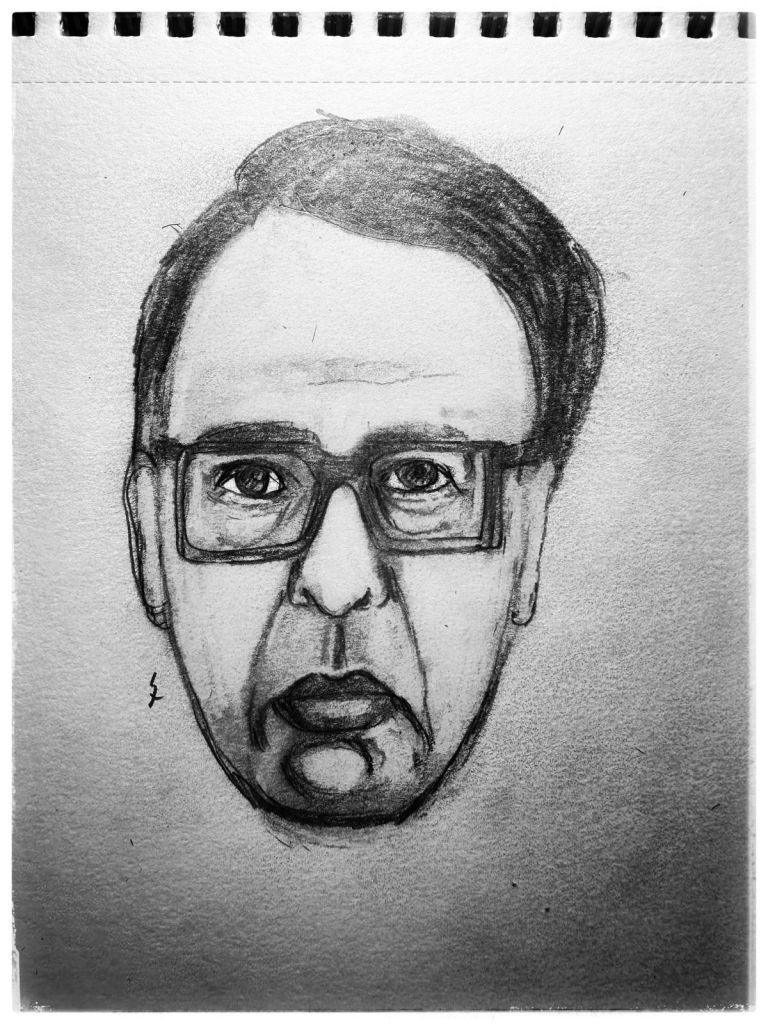
Relatively speaking!

“He chalked up the board with numbers and letters for all

As an educator he looked like he was standing tall!

He did ponder at the hidden truth which no one can see!

No one understood the subject and neither did he!”

The theory of relativity usually encompasses two interrelated physics theories by Albert Einstein: special relativity and general relativity.

At the time of proposal it was stipulated that there were only three people in the whole world who actually understood this theory! 

The three people who understood General Relativity at that time were Albert Einstein, David Hilbert, and Hermann Minkowski! They all contributed significantly to the development and understanding of this theory! Even now the number of people who truly understand this theory is less!

Now both theories of relativity explore Newton’s concepts in relation to the laws of motion and gravity, demonstrating that Newton’s ideas specifically failed to hold up in the presence of particularly powerful gravitational fields. Since its inception, the theory has seen diverse practical use, from the atomic bomb through to modern-day GPS systems! 

Einstein became a household name so much so that if you want to go as a scientist then his get up is the default! If you ask anyone to name any scientist he or she can remember then Einstein’s name is one of the commonest to come! 

Yes, I know you are waiting for the twist! 

Well though Einstein is credited with explaining the theory of relativity, he did not discover it in the sense that the original thought process and physics was worked up by several others before him and if you have to select one person as the true ‘discoverer’ of theory of relativity then the prize would go to James Clerk Maxwell! 

James Clerk Maxwell was one of the foremost mathematicians of the 19th century. His work on electromagnetism created the foundation on which Einstein’s theories were built, a fact Einstein himself was quick to recognize!

James Clerk Maxwell was a Scottish physicist and is regarded by most modern physicists as the scientist of the 19th century who had the greatest influence on 20th-century physics, and he is ranked with Sir Isaac Newton and Albert Einstein for the fundamental nature of his contributions!

The concept of electromagnetic radiation originated with Maxwell, and his field equations was in turn based on Michael Faraday’s observations of the electric and magnetic lines of force.

Maxwell’s ideas also ushered in the other major innovation of 20th-century physics, the quantum theory. His description of electromagnetic radiation led to the development (according to classical theory) of the ultimately unsatisfactory law of heat radiation, which prompted Max Planck’s formulation of the quantum hypothesis—i.e., the theory that radiant-heat energy is emitted only in finite amounts, or quanta!

The interaction between electromagnetic radiation and matter, integral to Planck’s hypothesis, in turn has played a central role in the development of the theory of the structure of atoms and molecules!

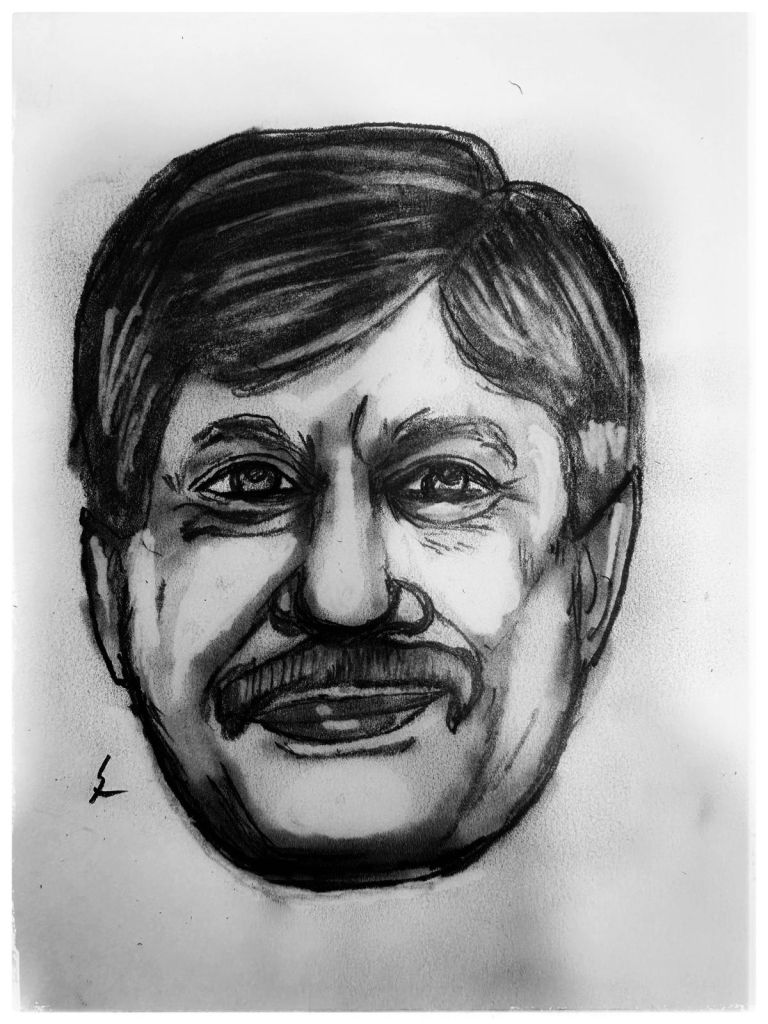
Of course Maxwell was limited by the science and tech of his times which is why he did not reach the destination of relativity. It has been said, if he’d lived past the age of 48, Maxwell may well have gone on to develop his theories to the same conclusions Einstein reached following Maxwell’s death! It is also been said that birthday celebrity Hariharan Anantha Subramani is one of the greatest singers of our time relatively speaking of course! 

Now leave physics and concentrate on the biology of rest!

Shubh Ratri!

Exponential greatness!

“There are many things which are strong or weak but this one is both!

You may want it to love or sometimes even loath!

Protect it with your life body and soul if you must!

It is not a glass or metal or even a jewel, it is  Trust!”

When we hear the word What ‘exponential?’, we are adapted to think big! The word literally triggers an ‘explosion’ in our minds!

Of course in simple terms exponential means very rapidly. 

But the law of equality ensures that when this word is put in front of something negative then the result is also explosively negative! This rapid decrease in the value or importance of a substance is known as exponential decay! 

Of course we are used to listen to this word in relation with the physics of radiation and atomic energy but according to this novel Algorithms to live by; the computer science of Human Decisions by Brian Christian and Tom Griggiths; this term is something which we see and can use in our life!

The term is actually a part of your life without you knowing it like the status of your relationship is under exponential decay when your wife catches you with your girlfriend! There of course you will be more worried about the biology rather than physics!

One of the commonest and frequent real-life example exponential decay is the depreciating value of a vehicle especially a car! In fact this starts as soon as your car leaves the showroom! Factors such as wear and tear, technological advancements, and changing market demands are held responsible but you do get an idea when you look at the IDV or the insured declared value of your car! In fact at some point if it is not worth as an antique, the car’s value reaches a point where it’s better to scrape it off than to maintain or sell it!

Even health wise by studying the exponential decay process of various drugs, researchers have suggest dosing regimens, determined drug efficacy, and this has ensure the removal of drugs from the body to avoid potential toxicity with maximum efficacy! 

A similar phenomenon is seen when an endangered species faces threats such as habitat loss, climate change, or poaching, its population size decreases over time. This decline also follows an exponential decay pattern and that is the reason why if an endangered species is identified, quick action must be taken so that this rapid decline can be managed! It is literally a time bomb in every sense!

The authors also state how a computer also uses exponential decay to manage multiple processes and this is the reason why sometimes when the work is delayed it is always better to reset and start over! 

They have also suggested to use exponential delay in your life routines! Like for example if you have a friend who does not reply or come to your invitations, the solution is not to suddenly stop inviting him or her! You must use exponential decay and sequentially increase the time gap of your invitation which ensures that you do invite him or her occasionally but do not get frustrated if he or she does not come! If he or she does accept your invitation then that is the reset point!  Then you can invite him or her to all subsequent events! And the cycle continues! Exponential increase and not decay is the legacy of music and the divinity of classical music especially the foremost stalwart and maestro Thyagaraja!

A quick scribe during a busy travel is my humble dedication to the legend.

Now see the exponential decay of your alertness in your sleep!

Shubh Ratri!

Line the assembly!!

“You can color your hair and make it black!

That’s just a look, not a life hack!

So wisdom is not dependent on your hair which is white!

But by the experience, knowledge and your foresight!”

It’s better to feel wise after a fool’s day!

In the early 20th century, a groundbreaking innovation changed the landscape of manufacturing forever: the assembly line. In this system, a product moves along a line, with each worker performing a specific task, ultimately leading to the completion of the final product. It broke down complex processes into smaller, specialized tasks!

In fact the assembly line is the cornerstone of efficiency and professionalism.

While the assembly line is synonymous with Henry Ford and Model T cars, he built upon others’ work. So who invented the assembly line? The concept actually dates back to at least the Industrial Revolution! But if you stick to the modern definition then get ready to pay a ransom! 

Sorry for that pun! The credit is often given to Ransom Eli Olds!

Ransom is one of the forgotten masters of the early century, the man most credited with bringing mass-production to Detroit and largely establishing the auto industry. The Oldsmobile Curved Dash was, for a time during the nineteen-ought’s, the best-selling car in America and is considered the first mass-produced vehicles in history, selling 5,000 units in 1904! When it involves such a huge number then it is understood that there was some kind of mass production system behind it!

Ransom put in place much of what we recognize as the modern assembly line today, defined repetitive operations, fixed stations and parts delivered to the worker!

By 1905 Olds had moved back to Lansing and was building 5,000 cars a year!

So why does the credit for the invention of the assembly line often goes to Henry Ford! It is because of one very critical addition, Ford put the cars on a conveyor of sorts, creating the all-important moving assembly line! Now there may be a doubt on who started the assembly line but there is no doubt that birthday celebrity 

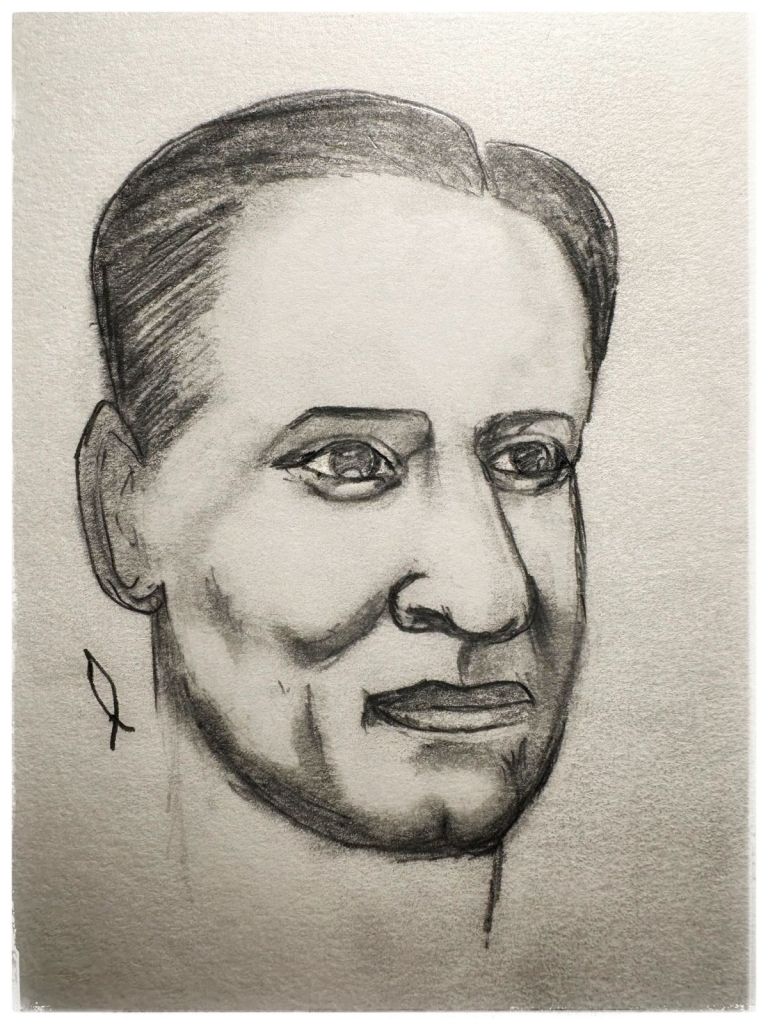
Devika Rani Chaudhuri is the first lady superstar of Indian cinema!

Now take a break from the assembly line of life and sleep!

Shubh Ratri…

Pasta is a crop!


“She laughed and he also laughed it away
He said don’t take it seriously, it is April fools day!
Then again if you make an honest try
Lips may be silent but the eyes do not lie!”

A news report appeared this day in 1957, and presented a family in the canton of Ticino in southern Switzerland gathering a bumper spaghetti harvest after a mild winter and “virtual disappearance of the spaghetti weevil”.

Footage of a traditional “Harvest Festival” was aired along with a discussion of the breeding necessary to develop a strain to produce the perfect length of spaghetti.

The editor of Panorama, Michael Peacock, told the BBC in 2014 how he gave de Jaeger a budget of £100 and sent him off. The report was made through its voice-over by respected broadcaster Richard Dimbleby.


At the time, 7 million of the 15.8 million homes (about 44%) in Britain had television receivers. Pasta was not an everyday food in 1950s Britain, and it was known mainly from tinned spaghetti in tomato sauce and considered by many to be an exotic delicacy.

An estimated eight million people watched the programme on 1 April 1957, and hundreds phoned in the following day to question the authenticity of the story or ask for more information about spaghetti cultivation and how they could grow their own spaghetti trees; the BBC told them to “place a sprig of spaghetti in a tin of tomato sauce and hope for the best!

Did you understand what was going on?!
So growing Spaghetti on trees did not set you off!

In the days before net and the famous WhatsApp university! This was how false news was spread!

This prank is said to be one of the biggest April Fool’s joke ever!

Panorama cameraman Charles de Jaeger dreamed up the story after remembering how teachers at his school in Austria teased his classmates for being so stupid that if they were told that spaghetti grew on trees, they would believe it! It did happen and how!

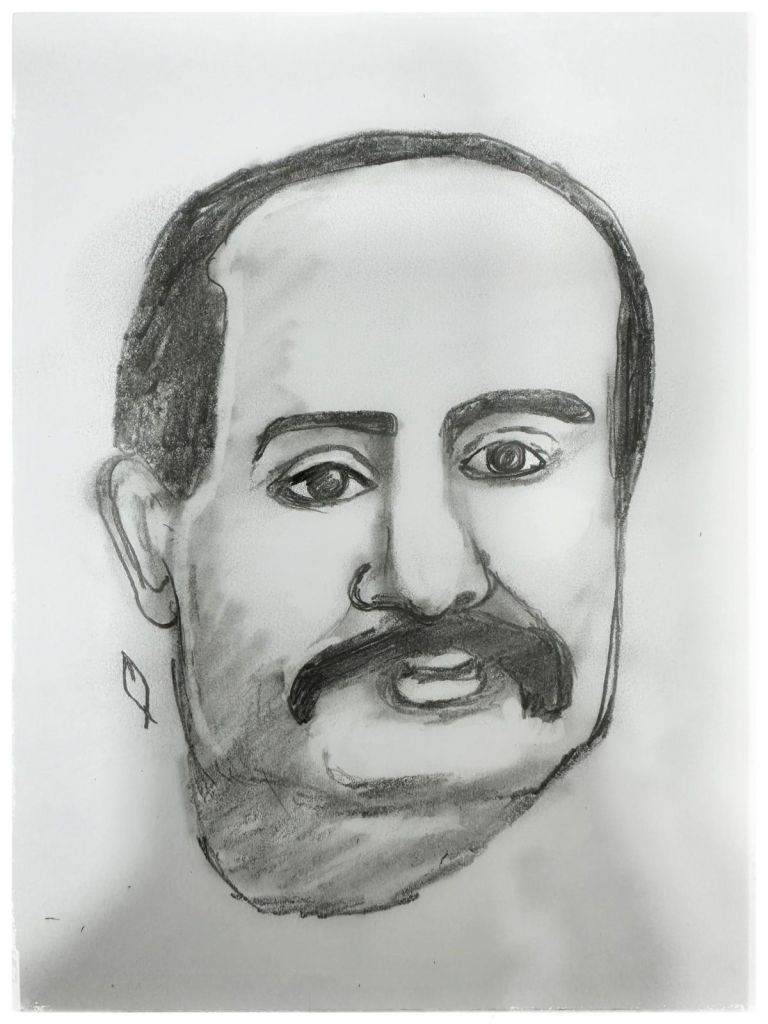
With sufficient amount of time and money it goes to show that you can prove anything you want! Even if it is for one day! Now although is my birthday on the first of April, it is better to have a proper celebrity sketch! Utpal dutt with his mischievous smile and comic timing fits the bill perfectly!

Now do not try to think of some elaborate hoax to pull up on the first!
Money does not grow on trees! (wink wink!)
Suprabhatam!
Have a great day!

A rat not afraid of the cat!

“A thousand shows for you to see

But the lack of a good one worries me!

Only one channel and show it used to be one day!

All of us used to watch the Cat and the cute mouse play!”

If you ask someone which is your favorite cartoon show when you were young (er!) then if it an avid animation fan like me then his or her list will be huge! But for those who watch just for a while and for fun and passing time, rest assured that more often than not, their choice would be Tom and Jerry!

The original toon is so good that even now you can watch and enjoy it to your heart’s content! Of course you root for Jerry all the way but many time you definitely feel bad for Tom and this balance of emotion keeps the show going! In real life though if the cat smells a rat then rest assured most cats which have not been trained or tamed or spoilt would immediately grab the rat and they are in fact amazing and successful hunters! Personally though I am a dog lover and I am terrified of cats! Like Jerry or a typical mouse or rat!

But do you know that there is a condition which makes the rats lose their fear of cats and in fact get attracted to them! 

There is this parasite which actually needs the gut of the cat to reproduce! So when they are present in the rat body, they make sure they get a Prime delivery to the cat! 

The parasite is called Toxoplasma gondii!

The microbe is a single-celled pathogen that infects most types of mammal and bird, causing a disease called toxoplasmosis. But its effects on rodents are unique; most flee cat odour, but infected ones are mildly attracted to it! 

A new research showed that even months after infection, when parasites are no longer detectable, the effect remains! 

This of course raises the possibility that the microbe causes a permanent structural change in the brain! To put it in biological terms this is thought to be an evolutionary adaptation to help the parasite complete its life cycle: Toxoplasma can sexually reproduce only in the cat gut, and for it to get there, the pathogen’s rodent host must be eaten!

Even in humans, studies have linked Toxoplasma infection with behavioral changes and schizophrenia. These include an increased risk of traffic accidents in people infected with the parasite while another found changes in responses to cat odour! 

People with schizophrenia are more likely than the general population to have been infected with Toxoplasma, and medications used to treat schizophrenia may work in part by inhibiting the pathogen’s replication!

Schizophrenia is thought to involve excess activity of the neurotransmitter dopamine in the brain. This has bolstered one possible explanation for Toxoplasma’s behavioral effect: the parasite establishes persistent infections by means of microscopic cysts that grow slowly in brain cells. It can increase those cells’ production of dopamine, which could significantly alter their function. Most other suggested mechanisms also rely on the presence of cysts! 

The observation is that the infected rodents actually show a much more comprehensive decrease in general anxiety and reduced aversion to a wide range of threats! One study have shown that 

T. gondii causes a phenomenon known as ‘fatal attraction’ in infected rodents!  

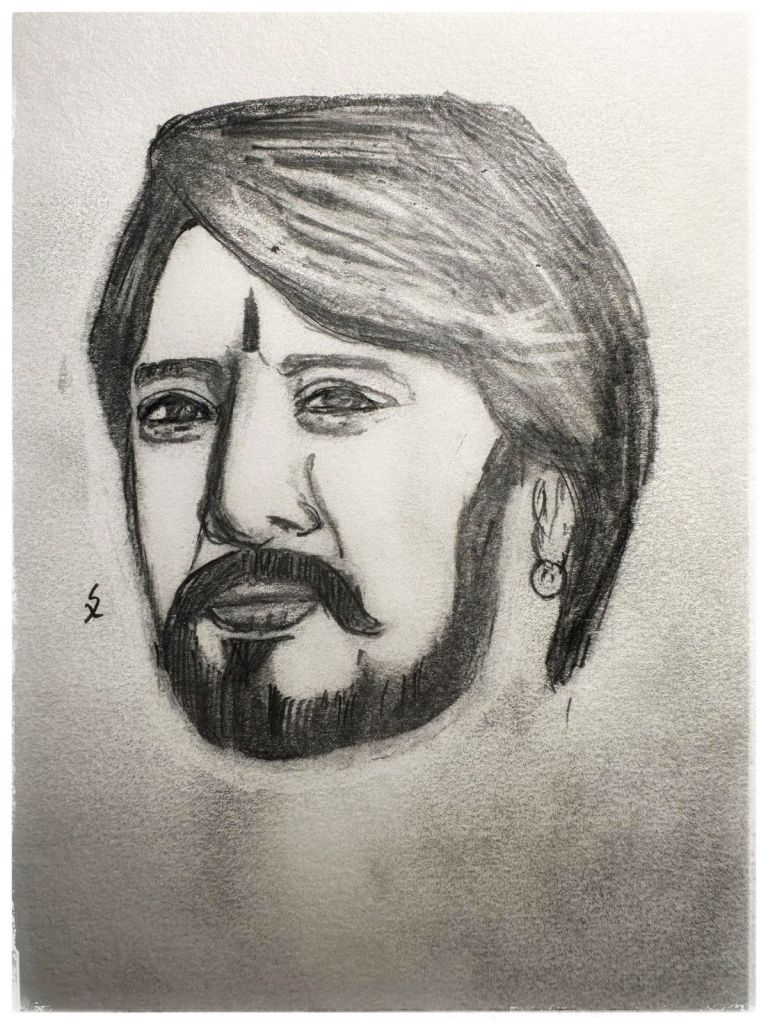
So if you have had a fear of cat and now do not have that fear or if you see a rat trying to woo a cat; rest assured that it is time for a check up! Unless of course you are watching a movie with a cat or a tiger and the rat gets some magic potion! Tiger reminds me of birthday celebrity Tiger Prabhakar and his action stunts much like the Tom and Jerry toons!

Now try to catch up some old toons and sleep!

Shubh Ratri!

Laughter is a good medicine…best is to cry!

“He told a joke and it made her laugh so loud!

It was of course a lie ’cause he was too proud!

He was sad but to hide that was his usual style

All he wanted to do was to make her smile…”

When you start sketching you will realise that if you sketch someone who is known to be good looking or even recognizable then if you do not get the proportions right then you will get an embarrassing sketch! 

Then again you can take that sketch with the long nose or the disproportionate eyes or the bad nose and mention that it was supposed to be a cartoon or funny sketch of the person! That is one sure fire way of saving whatever little grace you have left!

Of course it may not work all the time and like me if your natural tendency is to get the proportions wrong then it is a difficult task to make the sketch as real and unfunny as possible! 

If you think about it though, some of most talented artists like my favorite RK Laxman used their funny sketches to actually tell you the truth! In fact they are like the jesters of the kings who use fun and humor to tell the truth! Jesters like Tenali Raman (yes, I am called Raman by many! But then!…); were actually super intelligent beings who would challenge the kings and even brave punishments to tell the truth! 

So the question ‘Who drew the first cartoon?’ can never be answered as the comic and satirical art can be traced back to ancient times as above! 

But you can search Google with the question ‘Who drew the first comic or satirical drawing to be called a cartoon?’ and it is possible that you will come across this amazing sketch by John Leech!

It is also possible to date this drawing to July 15th, 1843, when it was published in Punch magazine with the caption: ‘Cartoon No.1: Substance and Shadow’. John Leech was also the first artist to be called a ‘cartoonist’! 

The irony is that the sketch tells how you can read the first page for free but if you do not subscribe then the next pages will be in Latin; and the webpage which you click also does the same 200 years later! It will show the home page but you need to subscribe to read more! This really cracked me up!

Founded in 1841, the magazine’s name was hit upon at an early meeting – an attendee remarked that the publication should be like a good Punch mixture – nothing without Lemon, referring to editor Mark Lemon, whereupon founder Henry Mayhew declared ‘A capital idea! Let us call the paper Punch!’ The title was also inspired by the provocative glove puppet, Mr. Punch, of Punch and Judy!

Acclaimed for its acerbic wit, Punch captured life during the 19th and 20th centuries in astute detail and became one of the most illustrious publications of its time. Staff met every Wednesday to discuss material for the next edition, which was decided over a convivial dinner. The drawings, also referred to as cartoons or ‘cuts’ had to be completed by Friday night, when they were sent to the engravers.

Punch is credited with coining the term ‘cartoon’ as we know it today. In addition, the periodical also attracted great comic writers and poets over the years, including William Thackeray and my favorite (till I realized that he only wrote about the Upper society and about a certain ‘Group’ of people…) P.G. Wodehouse!

This also gets us to the recent trend of stand up comedy! Now I am a big fan of this genre but if you are going on the stage and only using expletives to tell a joke and talk dirty to be funny then it is just akin to a small kid tell “Butt” jokes! If you cannot tell a clean joke to make everyone laugh then it is not funny, it is just embarrassing and dirty humor which of course is a big rage now! 

Then again these shows get you to laugh and that is regenerative to your body and mind right there! Laughter is a good medicine (yes, it is not the best!); and you must take it as and when you can! Good comedy reminds me of Birthday celebrity Jagdeep and since it is a comedian, also allowed me some leverage to draw the sketch a tad cartoonish!

Now stop watching the reels which make you smile and sleep!

Shubh Ratri!

Is your poem a ballad!?


“The sun may be covered for a while
And darkness may mask your smile!
But if you are bright do not fret’ ’cause you will shine!
Some things take work while others take time!…”

Thanks to everyone for bearing my blog and more recently, my short poems! Do you know the longest poem?

And did you know that the above poem which is one of the most common form of poetry is called a Quatrain!

Come to think of it, if you are an avid reader of poetry then you will realize that there are so many different types of poems according to the publishers at the Penguin Book House!

One of the smallest poems is called the Haiku which is an ancient form of Japanese poetry that has become very popular all over the world. Renowned for its small size, haikus consist of just three lines (tercet); the first and third lines have five syllables, whereas the second has seven. Haikus don’t have to rhyme and are usually written to evoke a particular mood or instance! So no need to rhyme! Just pass your time!

Free verse is a more popular style of modern poetry, and as its name suggests there is a fair amount of freedom when it comes to writing a poem like this. Free verse can rhyme or not, it can have as many lines or stanzas as the poet wants, and it can be about anything you like! So, while free verse may sound simple enough, the lack of rules makes this form of poetry tricky to master! When there is no rule then you have a big chanced to get over ruled!

The types of Poems I usually do not understand are the old Sonnets! This very old form of poetry was made famous by none other than William Shakespeare, but the sonnet actually originated in 13th century Italy where it was perfected by the poet Petrarch. The word ‘sonnet’ is derived from the Italian word ‘sonnetto’ which means ‘little song’. Traditionally, sonnets are made up of 14 lines and usually deal with love. As a rule, Petrarchan (Italian) sonnets follow an ABBA ABBA CDE CDE rhyme scheme, whereas Shakespearean (English) sonnets are typically ABAB CDCD EFEF GG! Who would have thought that even poems are actually bounded by rules!

Acrostic is a type of poetry that spells out a name, word, phrase or message with the first letter of each line of the poem. It can rhyme or not, and typically the word spelt out, lays down the theme of the poem.

Another older form of poetry is the villanelle that came from France and has lots of rules! It is made up of 19 lines; five stanzas of three lines (tercet) each and a final stanza of four lines (quatrain). There is a lot of repetition throughout the villanelle and the real challenge is to make meaning out of those repeated lines!

Limerick is also actually a type of poem! They are funny (and sometimes rude!) poems which were made popular by Edward Lear in the 19th century! The last line is often the best and the punchline!

Now if you want to praise someone or if you have forgotten your wife’s birthday then you can try the Ode which is one of the oldest forms of poetry and believed to have come from ancient Greece. The word ‘ode’ is derived from the Greek word ‘aeidein’ which means ‘to sing or chant’, and these poems were originally performed with a musical instrument.

Then you have the dark and depressing Poetry called the Elegy which
doesn’t have rules like some of the other forms of poetry but has a fixed subject; death! They are usually written about a loved one who has passed away, but can also be written about a group of people, too. Of course it is up to you to make this one dark or hopeful!

Finally you have the old and traditional poetry called the Ballad that typically tells a dramatic or emotional story. Most modern pop songs you hear nowadays can be referred to as ballads! In fact most song lists in your favorite music app is called the pop or rock Ballads!

Now where is Quatrain you may ask!? Well it follows a set of definitions like Stanza is a set amount of lines in poetry grouped together by their length, meter or rhyme scheme. Then you have the Couplet which is a two-line stanza, a Tercet which a three-line stanza and our favorite Quatrain!
It is understood that Cinquain would then be a five-line stanza and Sestet is a six-line stanza!

According to the Guinness Book of Records, the world’s shortest poem is a one-letter poem by Aram Saroyan comprising a four-legged version of the letter “m”!

So which is the longest poem? Well it is closer home! With more than 220,000 (100,000 shloka or couplets) verses and about 1.8 million words in total, the Mahābhārata is one of the longest epic poems in the world! And here you were scratching your head to write a four line poem! Thinking about head (more accurately hair!) reminds me of Birthday Celebrity Akshaye Khanna!

Now say the shortest poem and sleep!
Shubh ratri!

First is the best! Car, I mean!

‘He said this to his friend, “Do not be rough, and treat her well

If you don’t then I will give you hell”

Now don’t think too much or too far!

He was just talking about his beloved car!’

Growing up one of the biggest satisfaction is when you get a driving license and two wheeler! I am a big fan of two wheelers and my trusty Luna was my companion for two glorious years! Then of course if got upgraded to my Hero Honda bike! Oh the fun we had! But both were given by my dad and got from his hard earned money! 

So the best joy and satisfaction is when you buy a car with your own money! 

My swift has taken me to places and we have done stuff! When I got it though I simply wanted a car to own! I did not know the first thing about a Hatchback or a Sedan! Time for knowledge! 

A sedan is defined as a 4-door passenger car with a trunk that is separate from the passengers with a three-box body: the engine, the area for passengers, and the trunk. Throughout the generations, the definition of a sedan has been the same. 

Sedan cars generally look different to hatchbacks or estate cars, with a more pronounced ‘three-box’ shape, with separate ‘boxes’ for the engine at the front, the passenger compartment in the middle and the boot at the back.

Cars such as the BMW 3 Series and Audi A4 have a classic saloon look. Some saloons like the Jaguar XE have a sleeker look and could be mistaken for hatchbacks. And some hatchbacks look more like saloons  – the BMW 4 Series Gran Coupe for example!

Regardless of how they look, the defining characteristic of a sedan is a boot that’s separate from the main passenger area of the car, whereas a hatchback has a full-height boot lid that includes the back window.

Sedan and saloon are just two variations of describing the same type of car – a long, executive vehicle which generally prioritizes luxury over practicality. The term ‘sedan’ is often used in American English, whereas in British English the same vehicle is described as a ‘saloon’ 

The word ‘saloon’ comes from the French ‘salon’, which means a large room. The term ‘saloon car’ was originally used to refer to the luxury carriages on a train. It was adopted by British carmakers in the early part of the 20th Century to describe cars with an enclosed passenger compartment!

The definition of a hatchback was traditionally a two or four-door vehicle with a tailgate that would flip upwards called a hatch. While the present-day description of a hatchback would be a vehicle with four doors and a hatch at the rear-end that flips up, based on a two-box body for the engine and passengers or cargo!

You can actually have some variation in this with significant overlaps!

If you focus on the rear design according to the shape and slope of the rear section of the car you can have three types of cars!

Like a fastback Saloon the slope stretches’ from the roof to the base of the boot.

In a notchback saloon the boot lid and the roof are parallel to the ground. The lid actually extends back horizontally from the rear windscreen. 

Finally in a true hatchback saloon, the boot lid covers the entire rear! The rear windscreen lifts up the with the lid!

Practically a small car is most probably a hatchback while a bigger one is a saloon or a sedan and you may feel like a king with a crown! In fact Toyota has a tradition of using the word “crown” in most of their cars! The Japanese word for crown is, you guessed it; ‘Camry!” But do not worry if you have a hatchback since the chief reason why they were made with this compact design was to make them easier to park! Now thinking about my Swift gives me a smile cause she was my first…car of course!! And one of the most recognizable smiles on the national television was the smile of Birthday celebrity Renuka Shahane! 

Now hatch, err I mean latch your back…and front to the bed and sleep!

Good Night!

Those who can’t… preach!

“This endless desire to fight and win
May give you victory but not within
Once in a while it is good to lose
Happy or sad, sometimes you can choose…”

Peter principle is a book by Book by Laurence J. Peter but you do not have to read the book to know what it is!

Imagine a cricketer who is a great batsman, he or she would be promoted higher up the order and finally may even be made the captain! But it is seen that as he or she gets promoted higher and higher, he or she will finally reach a position where he or she will actually underperform!

Even in an office, you can have a person who is doing a great job at entry level! Then as and when he or she is promoted, he or she will reach a peak and then he or she will get a job in which he or she may not do a good job!

It is like the credit card scam! Your credit limit is at first a very low but easily achievable limit! You are then given an option to slowly and steadily increase your spending limit! Till you reach a point when you can no longer pay the limit! That is when they pounce on you!

Even in government jobs it is seen that a person who has been appointed because of a certain skill is given more and more responsibilities but then finally it will reach a point when the work suffers and how!

A person is good in a job then he is promoted to a better position till he or she reaches a plateau! or actually starts performing worse at the elevated position!

These are examples of Peter Principle which actually notes that every employee tends to rise to his or her level of incompetence! It actually concludes that every job in a hierarchical organization will be filled by a person who is incompetent!

The Peter principle hence states that a person who is competent at their job will earn a promotion to a position that requires different skills. If the promoted person lacks the skills required for the new role, they will be incompetent at the new level, and will not be promoted again.
If the person is competent in the new role, they will be promoted again and will continue to be promoted until reaching a level at which they are incompetent. Being incompetent, the individual will not qualify for promotion again, and so will remain stuck at this final placement or Peter’s plateau!

This outcome is inevitable, given enough time and enough positions in the hierarchy to which competent employees may be promoted. The Peter principle is therefore expressed as: “In a hierarchy, every employee tends to rise to his level of incompetence.”
This leads to Peter’s corollary: “In time, every post tends to be occupied by an employee who is incompetent to carry out its duties.”

Now this is not a new thing! In the 1910s one Spanish philosopher told that every public servant must be demoted to his or her immediate lower position or rank so that he or she can do that work most effectively!

The simplest analogy is a juggler! You go on giving him or her a ball to juggle and steadily he or she will juggle them and take one more till the limit is reached and the balls all crumble down! Then the penultimate number of balls is his or her capability or capacity says the Peter Principle!

In fact it has been seen that companies tend to promote their least-competent employees to management roles where they are least likely to interfere with production! So if you want to be a manager then you must become incompetent! Irony is that all the so called managers who get amazing prefixes are actually those who have shown incompetence at various levels of production!

It is like the adage, “Those who can’t do, teach!” and interestingly that quote is by G B Shaw in the 1900s! Of course some exceptional managers are also there who go against the Peter Principle and make for great and talented CEO’s! Talent does not follow any principle! A big bag of talent also was Maharajapuram Santhanam who with his dedication and devotion to Carnatic music will remain in our memories forever!

Now show your competence in the bed…I meant sleep of course!
Shubh ratri!

Stupidity or…

“He looked at me and shouted in fear!
I had a tong and I was putting it in his ear!
Fret not, he had put in his ear; a Thermocol ball
Just removing that since ‘am a doctor you all!”

In the book called Algorithms to live by; The computer science of Human Decisions by Brian Christian and Tom Griffiths tell about this amazing word! At first the word sounded so close to the word, STUPIDITY that I did not give much attention to it! But when they told about the amazing phenomenon the word represents, I was amazed!

At some time in my previous blogs I have covered these inventions; have a look at these and try to find out the common link between them!

The Post-It Note, which emerged after 3M scientist Spencer Silver produced a weak adhesive, and a colleague used it to keep bookmarks in place on a church hymnal!

Silly Putty, which came from a failed attempt at synthetic rubber!

The microwave oven. Raytheon scientist Percy Spencer first patented the idea behind it after noticing that emissions from radar equipment had melted the candy in his pocket! I had written an extensive blog on this some time back!

The polymer teflon, which Roy J. Plunkett observed forming a white mass inside a pressure bottle during an effort to make a new CFCs refrigerant! and finally one of the most famous example of this phenomenon; the discovery of Penicillin!

Alexander Fleming returned from a vacation to find that a Petri dish containing staphylococcus culture had been infected by a Penicillium mold, and no bacteria grew near it!

You may have got it by now! These are examples of amazing discovery which happened accidently and there are in fact so many examples of this! So much so that the it is the word I mentioned above!

The word has been exported into many other languages, with the general meaning of “unexpected discovery” or “fortunate chance”.

The first noted use of “this word” was by Horace Walpole on 28 January 1754.
In a letter he wrote to his friend Horace Mann, Walpole explained an unexpected discovery he had made about a lost painting of Bianca Cappello by Giorgio Vasari!

Horace was actually referring to a Persian tale of three princes who were always making discoveries, by accidents and sagacity, of things which they were not in quest of!

The name comes from Serendip, an old Persian name for Sri Lanka (Ceylon), hence Sarandib by Arab traders! But it is still not done! The name is actually derived from Sanskrit! It is a combination of the word for Sinhalese and island and called
Siṃhaladvīpaḥ (Siṃhalaḥ, Sinhalese + dvīpaḥ, island).

So did you get the final word?
Well, the Sanskrit origin Sinhalese inspired Persian language Horace named word for amazing accidental discoveries is SERENDIPITY!
Now Sanskrit reminds me of Sanskriti and a true connoisseur of art Shri Mangalampalli Balamuralikrishna! Being a singer of his caliber though is not Serendipity but hard work and dedication!

Now go for a serene deep rest aka sleep!
Shubh ratri!