Nacre

Do you know what is Nacre?

Well it is also called the Mother-of-pearl…

And no! It is not the pearl as such! This is a naturally occurring organic-inorganic composite secreted by the epithelial cells of the mantle tissue of certain species of mollusk. They are made of hexagonal platelets of aragonite, between 10 and 20 microns wide and less than a micron thick, arranged in a continuous parallel lamina.

This is known as the toughest material on Earth! If humans could mimic it, it could lead to a new generation of ultra-strong synthetic materials for structures, surgical implants and countless other applications!  For now though we can’t replicate the kind of nano-engineering that mollusks have achieved!

Because of its almost mystical characteristics, mother of Pearl is revered for its metaphysical properties, believed to harness the energy of the ocean and the moon, bestowing upon its wearer a sense of calm, balance, and emotional clarity. It is often associated with the divine feminine energy, nurturing the soul and promoting inner peace!

Buttery smooth with rainbow glisten, no two nacre patches are alike because the colour changes depending how light falls on it when viewed from different angles!

For instance, it could look green from one angle, and turquoise from another. As a material, the mother-of-pearl was stereotyped for feminine watch dials, till recently when brands have broken the rule and are using it in watches showcasing moon phase displays, retrograde calendars and even tourbillons.

Now of course your next question is what is tourbillons?
It is a type of watch so called not only because of the constant dance of whirling motion that defines it and gives it its name (tourbillon means ‘whirlwind’ in French) but also because of its prestigious place in the history of watchmaking!

Mother-of-pearl needs skilled watchmakers who are equipped to use the extreme care required when shaping the material. If properly made and assembled, mother-of-pearl dials can last long and retain their lustre. The entire manufacturing process involving a mother-of-pearl dial can take between four and six weeks!

This process starts with finding the right shell. Mother-of-pearl is procured from different molluscs; the highest quality being the Pinctada family of largest and rarest pearl oysters. The shells are pounded, made into 0.2mm-0.5mm thin sheets, cut into circular blanks according to the desired dial measurement and then applied to the dial. It is finished with either engraving or patterning. They can be coloured, both back and front, with a variety of lacquers and paints. The dials are further enhanced using painting, varnishing, and lacquering. The end result: a luminous dial that is always intriguing to look.

The best thing of course is the limited edition nature since no piece will look exactly the same, but all are guaranteed to be beautifully iridescent and naturally scratch-resistant!

And army officials like Yogendra Singh Yadav are the real diamonds and limited edition pearl!

With Indian army always!

Jai hind!

A real diamond

It is thought diamonds were first discovered in India around 2,500 years ago in the Golconda region, between the Godavari and Krishna Rivers. At this early stage, cutting and polishing had yet to be mastered, so diamonds retained their natural outer skin.

Textural and touchable, rough diamonds were kept as talismans and only later incorporated into jewellery, which initially only men were allowed to wear!

A majority of these early stones were transported along the network of trade routes that connected India and China, commonly known as the Silk Road. At the time of their discovery, diamonds were valued because of their strength and brilliance, and for their ability to refract light and engrave metal.

Diamonds were worn as adornments, used as cutting tools, served as a talisman to ward off evil, and were believed to provide protection in battle. In the Dark Ages, diamonds were also used as a medical aid and were thought to cure illness and heal wounds when ingested.

And then you have the Diamond ring of commitment!

The use of rings as a symbol of commitment dates back to ancient history, specifically to the betrothal (truth) rings of the Romans. These early rings, often formed from twisted copper or braided hair, were worn on the third finger of the left hand. The placement of the ring was significant, as Romans believed that a vein in the third finger (vena amorous) ran directly to the heart. For Romans, betrothal rings were given as a sign of affection or friendship, and did not always represent the rite of marriage.

The history of the engagement ring began in 1215, when Pope Innocent III, one of the most powerful popes of the Middle Ages, declared a waiting period between a betrothal and the marriage ceremony. The rings were used to signify the couple’s commitment in the interim. It was around this same time that rings were introduced as a major component of the wedding ceremony, and it was mandated by the Roman government that all marriage ceremonies be held in a church. In addition to serving as symbols of an intention to marry, these early rings also represented social rank; only the elite were permitted to wear ornate rings or rings with jewels!

Then again if it is commitment then it does not matter if the ring is made up of Diamond or even a piece of thread! In fact as far as the history goes, we have been wearing a ring of protection mentally more powerful than even the diamond! Rings made from Darbha grass, known as Darbha Pavitram, are worn by priests and individuals during prayer rituals. These rings are believed to shield the wearer from negative spiritual energies and enhance the effectiveness of their prayers.

A prayer is effective only when the motive is true and when the soldiers of your country are fighting, you must support them by Praying for them! Remember that they are the reason why you even have a normal life in the first place.

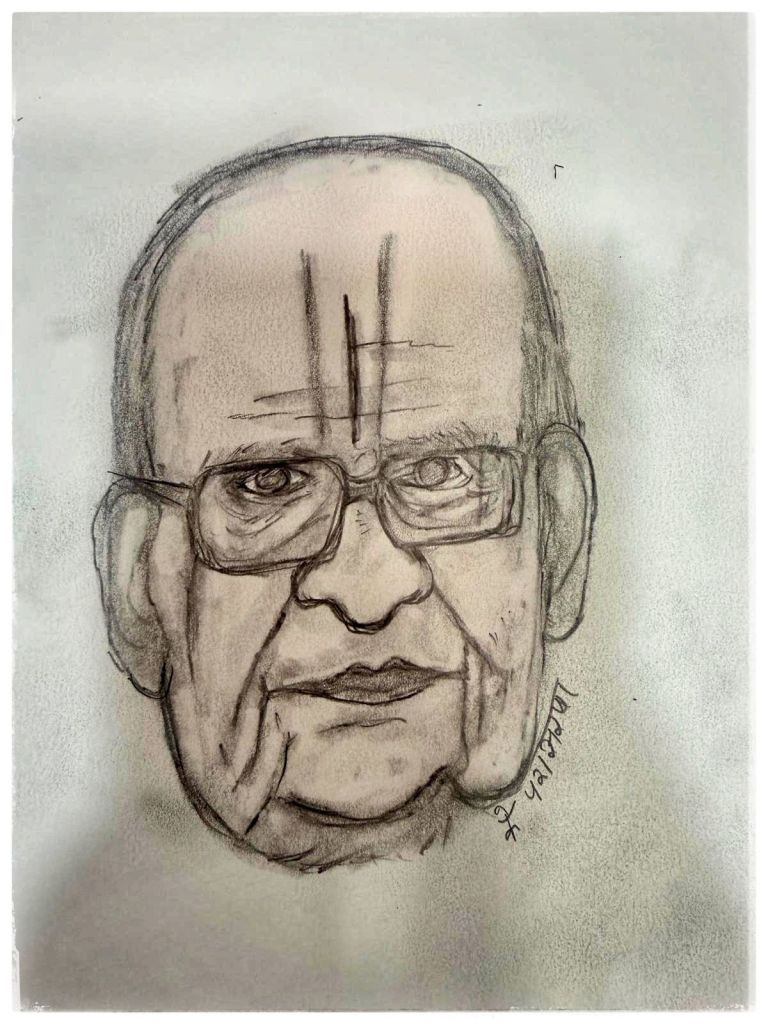
A sketch of the Chief Of Army Staff General Upendra Dwivedi, PVSM AVSM to show my prayer and support. We are with you sir.

Jai Hind…

Altruism

Altruism means a selfless concern for the well-being of others and a true form of altruism is really difficult to see since by definition it has to be hidden!

Richard Dawkins has a rather grim take on the altruism of humans so much so that he called them selfish and wrote a whole book called the selfish gene! The first and most and many times the only thing that anyone does is to make sure that he or she survives or takes steps to survive!

Of course you do have altruism in nature and rarely among human beings too!

In that one of the most altruistic behaviour is of the worker bee who works for his companions his whole life and when an attack is imminent then he uses the sting for defence which inevitably makes him set for the end! The nectar is saved which he will never enjoy!


Some wildlife researchers believe that altruism is a well-documented behavior. Those who say animal altruism exists cite examples such as dolphins helping others in need or a leopard caring for a baby baboon!

In fact, in 2008, a bottlenose dolphin came to the rescue of two beached whales in New Zealand and led them into safe waters. Without the dolphin’s guidance, the whales surely would have died.

In another incident in New Zealand, a group of swimmers were first surprised when dolphins began circling around them, tighter and tighter, splashing in the water. The swimmers initially thought the dolphins were displaying aggressive behavior, but it turned out that they were warding off sharks. Now just because these two incidents happen in New Zealand does not mean that it is the center of altruistic behaviour!

This remarkable ape Orangutan whose name means ‘old man (or person) of the woods’ is one of the most expressive of mammals!

Youngsters are with the mother for an incredible 5 years, on average, during which time they learn all the skills necessary for adult life in the jungle forests. Mothers are extremely attentive to their babies’ needs, risking their lives to protect them from predators and guarding precious space when others threaten. It’s this level of selfless care and disregard for self that suggests the orangutan is capable of altruistic behaviour when the need arises.

Another altruism is exhibited by the octopus. The ordinary octopus is a very intelligent creature with an ability to express great care for its young. The mother, laying between 50,000 and 200,000 eggs, shows real dedication during the 8 weeks of her life when she protects her potential babies.

Once the eggs have been laid in a safe place she will push currents of water over the eggs so they get enough oxygen, keeping them alive. So busy is the female octopus her food intake lowers and often mothers just fade away to nothing in an effort to keep the babies alive. Once they have hatched out she will die!

A similar act is of the unknown Soldier who sacrifices his or her life so that we enjoy the comfort the home! The one who stands at the border and thinks only of his or her country! The unknown soldier is the one who is always respected first in any defence ritual and he or she is the one who is a testimonial to true altruism of the homo sapien…

The time now is for all professionals to support his or her country! Do your job and be with your country!

Jai hind!

PVC


There is a fruit which was once so revered that if you had one then you were almost a king! Now of course this very fruit might get you arrested in Italy apparently if you try to put pieces of it on your Pizza!

Yes it is Pineapple!

What do you get when you remove B from Bananas!? Well, Pineapple!

Think a little about that joke! Do not pretend that you understood it!

Now apparently symbols have always been used to signal one’s status. But for about 250 years, many signposts of wealth and good breeding were ably fulfilled by the pineapple!

The country’s must-have accessory graced the table at the very richest aristocrats’ social gatherings!

But apparently the scaly sweet was too valuable to eat – a single fruit was worth thousands of pounds and often the same pineapple would be paraded from event to event until it eventually went rotten!

Later, a roaring trade in pineapple rental developed, where ambitious but less well-off folk might hire one for a special event, dinner party or even just to jauntily tuck under an arm on a show-off stroll.

King Charles (do not ask me which one! As far as I am concerned all of them are the same ‘skirt’ wearing Bumpkins!)  was so taken with pineapples that he commissioned a portrait of himself being presented with one!

In the American colonies in the 1700s, pineapples were no less revered. Imported from the Caribbean islands, pineapples that arrived in America were very expensive—one pineapple could cost as much as $8000 (That can get you a car today!).

This high cost was due to the perishability, novelty, exoticism, and scarcity of the fruit. Again as above affluent colonists would throw dinner parties and display a pineapple as the centerpiece, a symbol of their wealth, hospitality, and status, instantly recognizable by a party’s guests. Pineapples, however, were mainly used for decoration at this time; they were only eaten once they started going rotten!

The fruit evoked such jealousy among the poor, pineapple-less plebs that people could, if they wished, pay to rent a pineapple for the night. Before selling them for consumption, pineapple merchants rented pineapples to people who couldn’t afford to purchase them. Those who rented would take the pineapple to parties, not to give as a gift to the host, but to carry around and show off their apparent ability to afford such an expensive fruit!

Throughout the 1700s and 1800s, artists depicted pineapples to symbolize hospitality and generosity. Napkins, tablecloths, wallpaper, and even bedposts were decorated with drawings and carvings of pineapples to make guests feel welcome. If people couldn’t afford to buy or rent the real fruit, they bought porcelain dishes and teapots in the shape of a pineapple, which became hugely popular starting in the 1760s!

Now of course that is not the case! You can have Pineapple just like that! Then someone used the freely available Pineapple pieces and put them on the sacred Italian Pizza! Which lead to the social media story of Pineapple pizza Prohibition!

The Prohibition of Pineapple on Pizza (PPoP) is an international legal norm from which no derogation is allowed. It is considered a barbaric practice that violates the very essence of morality, humanity, culinary dignity of all Peoples and good taste!

So next time you want to feel like an aristocrat or a king, just hold a pineapple! But the next time you are in Italy, do not try to ask for Pineapple as a topping!

All that is joke but this is serious…

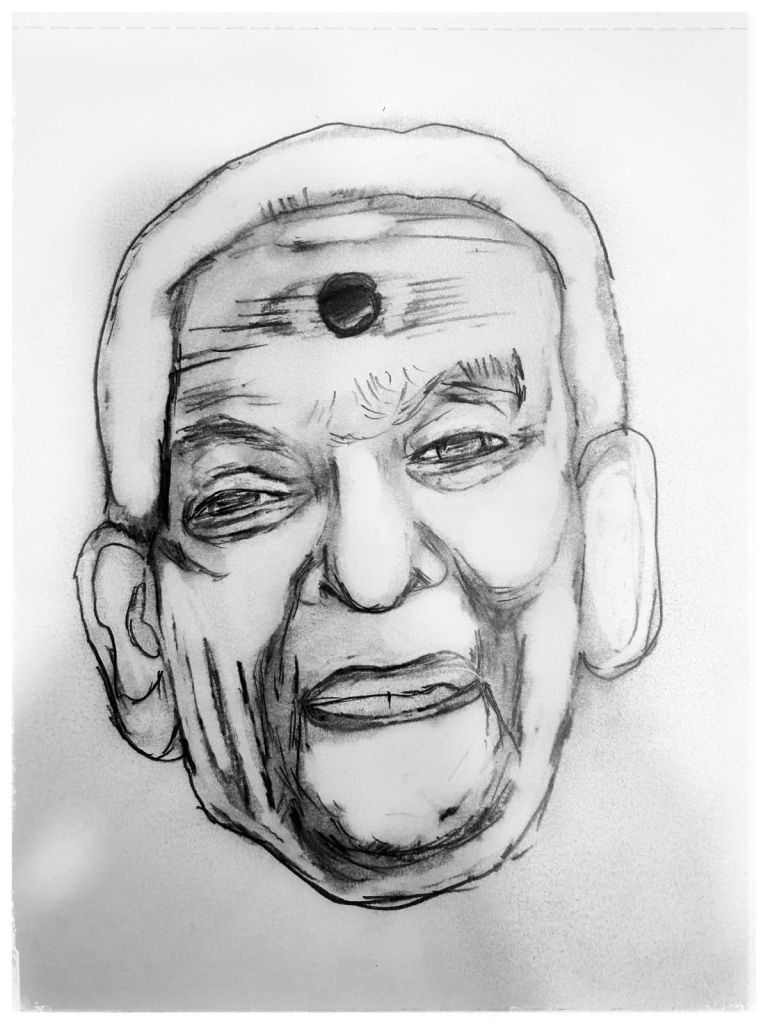
For reasons known to everyone, my own personal ode to our army. This is Captain Gurbachan Singh Salaria! One of the only 21 people to have awarded the Param Veer Chakra! Proud and hopeful of our great country!

Jai hind!

Peter principle!

The world as we know it is made up of people and then you have the Peter Principle!

Introduced in a Book of the same name by Laurence J. Peter and R Suttton!

It is an interesting principle which effectively states that everyone in an organization reaches to his or her own level of incompetence and peaks!

There are plenty of examples of this and it is very interesting to say the least!

Imagine a cricketer who is a great batsman, he or she would be promoted higher up the order and finally may even be made the captain! But it is seen that as he or she gets promoted higher and higher, he or she will finally reach a position where he or she will actually underperform! Which is the chief reason why once you are at the top, you must quit!

It is like the credit card scam! Your credit limit is at first very low but an easily achievable limit! You are then given an option to slowly and steadily increase your spending limit! Till you reach a point when you can no longer pay the limit!

Even in government jobs it is seen that a person who has been appointed because of a certain skill is given more and more responsibilities but then finally it will reach a point when the work suffers and how!

The Peter principle is therefore expressed as: “In a hierarchy, every employee tends to rise to his level of incompetence.”

This leads to Peter’s corollary: “In time, every post tends to be occupied by an employee who is incompetent to carry out its duties.”

The corollary applies to the managers of big firms and the officials in a government place! So the chief and the heads are actually reached point in which they are actually incompetent!

The best solution suggested by the author is that the person in such a position must be offered the position just one level below the current position and he or she will be competent in that!

So if you have been routinely and regularly being promoted and getting skill upgraded and have reached a top position then the  best position for you is one step below than the top! That is the position you will shine!

Do remember that Human body is not a machine, there are parts you cannot replace and you do not have a check engine light! In spite of ‘service’ there is no guarantee that you will ‘run’ or ‘work’ for another 10000 km! So when you realise that you have reached the top then step down!

Which is why many actors do not like the Lifetime achievement award! It is like a sentence which states that, “You have done enough! Please stop!”

Then again you have actors like Tammareddy Chalapathi Rao who proved the Peter Principle wrong by being the best even at the top!

Now you reached the Plateau of your day! The only way to go now is down! To the bed that is!

SHubh ratri!

Not funny!

One of the most difficult things to do is to make someone laugh!

Of course it is also difficult to make someone cry! Making someone sad or angry is easy though! But humans nowadays do not like to cry! One of the few traits which is actually human is something which humans do not like to do in case other people realise that they are human!

Anyway; the popularity of stand up comedians is testimonial to the fact that laughter is serious business!

Then again some comedy like the slapstick ones, the laughter is more to do with actions rather than words while the stand up acts rely more on the words.

If you include garbage and cuss words and talking ‘dirty’ then it is much easier to make someone or at least a group laugh! But the real art is to make someone laugh with pure wit and intelligence!

In fact in the past, the court jesters like Tenali Raman were actually some of the most cleverest people in the court who used to use humour to make their point. Now it has been seen that communication needs intentionality and making someone laugh needs more grades of intentionality!

So although laughter is probably of deep evolutionary origin, the telling of jokes, being language-based, is likely to be of more recent origin within the human lineage.

In language-based communication, speaker and listener are engaged in a process of mutually understanding each other’s intentions (mindstates), with a conversation minimally requiring three orders of intentionality.

Mentalizing is cognitively more demanding than non-mentalizing cognition, and there is a well-attested limit at five orders in the levels of intentionality at which normal adult humans can work!

Within this limit the quality of jokes appears to peak when they include five to six levels of intentionality, which suggest that audiences appreciate higher mentalizing complex!

Meaning clever jokes are more funny or some jokes can only seem funny to clever people! I still remember one Joke I told in my grade 8 about a talk between The plump Churchill and the slim G B Shaw! I found it so hilarious! But when I told it, no one laughed! This included my teacher! Which is when I comforted myself that you need a level of intelligence to get that one! It can also be that it was a bad joke! You decide!

‘Winston Churchill came upon George Bernard Shaw at a cocktail party and greeted him by saying ‘Looking at you, one would think there is a famine in England’.
Shaw, whose 1926 Nobel Prize was awarded for ‘stimulating satire’, replied ‘looking at you, one would think you caused it’!

Now I am not saying that if you found the joke funny then you are intelligent, you may be street smart and not find it funny!

Now a joke can be funny or not depending on your situation and mood which is the same with song (not funny but good or bad!). Speaking of song reminds me of Gulshan Kumar Dua!

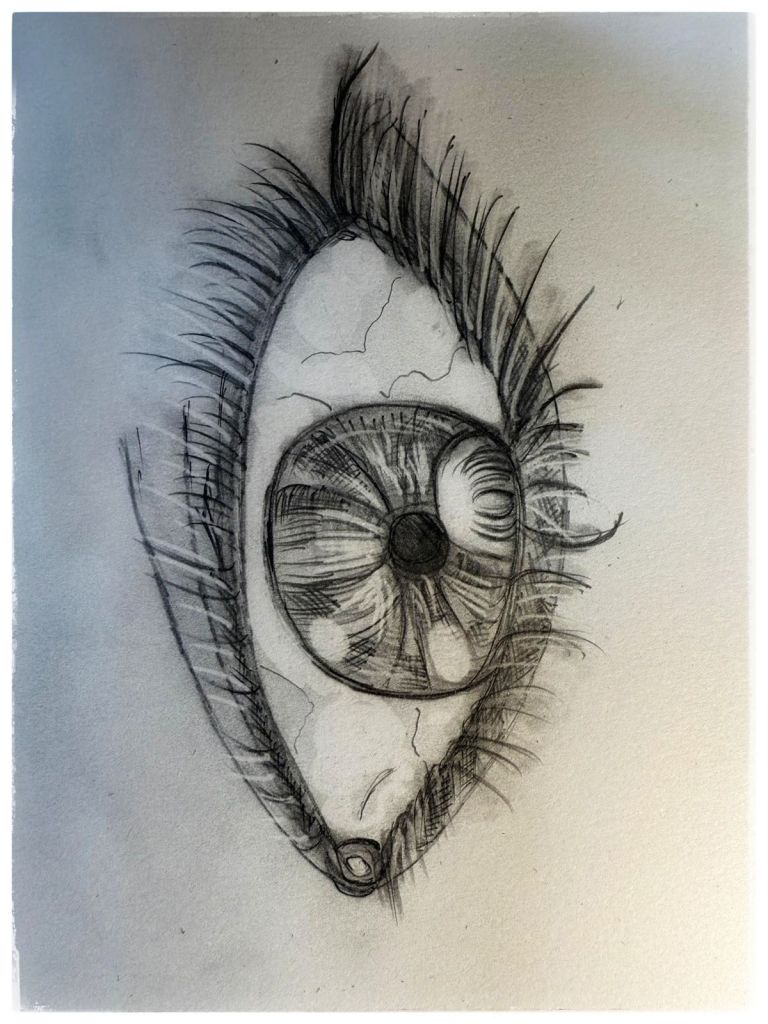
Felt good after the sketch! Especially his eyes!

Shubh ratri!

The golden egg!

Read about Gold and then the Golden egg to the Golden Egg which broke the internet! The last line is just a saying! Internet is not broken!

You have a Golden heart! The Jewels are Gold and silence is Golden! Gold is the first medal and Gold is the top!

Gold is gold not only because it does not react with anyone or anything but also because it is supposedly very OLD!

The gold chain you are wearing right now is may be as old as the universe and will remain long after you have gone, may be till the end of time!

Did you know that Gold is even linked to the creation of life!? Also it is the root behind the terminology of ACID TEST!

Now Gold is thought to have been produced in supernova nucleosynthesis, and from the collision of neutron stars and to have been present in the dust from which the Solar System formed!

Because the Earth was molten when it was formed, almost all of the gold present in the early Earth probably sank into the planetary core!

The symbol Au is from the Latin: aurum, the Latin word for “gold”. The ancestor of aurum meant “glow”.
This word is derived from the same root  as the ancestor of the Latin word Aurora, “dawn”.
This etymological relationship is presumably behind the frequent claim that aurum meant “shining dawn”!

Gold is insoluble in nitric acid, which dissolves silver and base metals, a property long used to refine gold and giving rise to the term ACID TEST! So you can pass the test only if you are pure GOLD!

The Hiranyagarbha Sukta in the Rig Veda, the Vayu Purana, Bhagavata Purana and Brahmanda Purana mention the golden womb, the Hiranyagarbha or Brahmanda, the Cosmic Egg – that is sometimes interpreted as the golden foetus or embryo – that, floating in a dark void, contracted and gave birth to the universe and all that’s part of it – containing both male and female principles in union!

Another Purana called the Matsya-purana, after the great dissolution of the universe, the SWAYAMBHU (the self manifested being), arose. It created the primordial waters first and placed the seed of creation into it, which turned into a golden womb, the Hiranyagarbha! The Golden Egg or Hiranyagarbha floated around in the ocean of non-existence till it broke into two and that is how Life began!

This complex theme of the Golden egg was re-imagined by a painter with more golden marvels!

Around the year 1740, a painter from the hills of Guler (Himachal Pradesh) created a painting featuring an “egg”. Today, this hologram-like artwork is heralded as one of the masterpieces of Indian art.

In January 2019, an egg broke the internet to become the “most-liked” picture on Instagram!

So what is so impressive about this painting?

Well the answer lies in the way Manaku executed this artwork.
So In April 2018, The Heritage Lab worked with the acclaimed scholar, Prof. B.N Goswamy on his book ‘Readings in Indian Art’ revealed a unique feature of this painting!

When laid flat, the egg in the painting appears brown; once it is held in hand to be viewed, it gleams golden!

Doesn’t it sound a lot like one of those holograms you might have played with as kids? The only difference is that this 3-d effect was created more than 200 years ago – by hand! Is that not mind blowing!?

Manaku created the perfect balance between the swirls of the ocean in the background (movement) and the stillness of the perfectly oval Golden Egg in the foreground!

Golden are also those old movies like Goopy Gyne Bagha Byne! It’s bengali! But amazing is that one of the assistant directors of that was
Virender Raj Anand! You may know him as Tinnu Anand!

Now hope you also know that not only silence but sleep is also golden!

Shubh ratri!

May day!

Did you enjoy the labour day the other day!?

Lucky you!

Then again you have to thank stonemasons and a riot for your holiday!

So apparently on 21 April 1856, Australian stonemasons in Victoria undertook a mass stoppage as part of the eight-hour workday movement.

This started to become a yearly commemoration, inspiring American workers to have their first stoppage.

Then again the whole thing started to commemorate the 1886 Haymarket affair in Chicago. That was another strike which became chaos!

In that year beginning on 1 May, there was a general strike for the eight-hour workday. On 4 May, the police acted to disperse a public assembly in support of the strike when an unidentified person threw a bomb. The police responded by firing on the workers. The event led to the deaths of seven police officers and at least four civilians; sixty police officers were injured, as were one hundred and fifteen civilians.
Hundreds of labour leaders and sympathizers were later rounded-up and four were executed by hanging, after a trial that was seen as a miscarriage of justice! The jury and the judges were blamed to be very unfair and biased!

The following day on 5 May, in Milwaukee, Wisconsin, the state militia fired on a crowd of strikers killing seven, including a schoolboy and a man feeding chickens in his yard

In 1889 an international federation of socialist groups and trade unions designated May 1 as a day in support of workers, in commemoration of this Haymarket Riot in Chicago .

Five years later, U.S. Pres. Grover Cleveland, uneasy with the socialist origins of Workers’ Day, signed legislation to make Labor Day—already held in some states on the first Monday of September—the official U.S. holiday in honour of workers. Canada followed suit not long afterwards.

The Haymarket tragedy inspired generations of labour leaders, leftist activists, and artists and has been commemorated in monuments, murals, and posters throughout the world, especially in Europe and Latin America.

In 1893 the Haymarket Martyrs Monument was erected in a cemetery in the Chicago suburb of Forest Park. A statue dedicated to the slain police officers, erected in Haymarket Square in 1889, was moved to the Chicago Police Department’s training academy in the early 1970s after it was repeatedly damaged by leftist radicals.

Now that is history! Which leads to May day or Labour day! Some lucky ones get a holiday while many like us fake a smile and move on!

May day is thus a celebration of the work done by workers all over the world and a reiteration of the 8 hour a day work and six days in a week work rule!

Of course not everyone and every country has to follow the day! Though they do follow the 8 hour work rule most of the time!
A rule breaker of sorts also was Aruna with her unique roles!

Now you may not have had a holiday on may day, you can make tomorrow the star wars day!
Since then you can say MAY The fourth be with you!

Shubh Ratri!

latrine fall


Have you heard of a ‘latrine fall’? Or more accurately Erfurt latrine fall?

Yes, it is both what you are thinking and not what you are thinking!

Of all the ways to go, this is certainly not Noble!

Also remember that a petty fight can lead to a fall into the latrine!

Do read the blog only after taking some antacids!

So In July 1184, King Henry VI of the Hohenstaufen dynasty, who was ruler of Erfurt and the future Holy Roman Emperor, convoked a ‘Hoftag’, or informal assembly.

This was within the Petersberg citadel at Erfurt (in modern-day Germany).

The gathering aimed to address a dispute between the Archbishop of Mainz, Conrad of Wittelsbach, and Ludwig III, Landgrave of Thuringia.

The precise origins of the two men’s fight may not be known but people can fight over anything though land dispute seems to be the prime suspect! Closely followed by politics! Guess the world has not changed much for so many years!

Determined to mediate and resolve the feud, Henry summoned dozens of aristocrats and high-ranking officials from across the empire to attend a meeting! A Noble deed indeed!

The Hoftag commenced on the morning of 26 July, with many delegates arriving the day before, but it was not long before disaster struck.

The ancient wooden floor of the church collapsed under the combined weight of the nobles, and they were sent plummeting to the floor below! It of course did not help that the Nobles were in the prime of health and well fed!

Below waiting for them was the building’s fetid cesspit. Medieval latrines, primitive and often perilously constructed, were a far cry from the luxuries of modern sanitation, often amounting to nothing more than large pits where sewage was gathered. Erfurt was about to give a stark lesson in the dangers of such basic facilities!

Revolting and tragic in equal measure, an estimated 60 to 100 nobles perished: either crushed by the falling woodwork, drowned in the horrific contents of the latrine, or asphyxiated by the unholy fumes emitted by the rotting sewage!

Yet in spite of the huge death toll, all the key players in the dispute miraculously survived. King Henry and Archbishop Conrad escaped death by clinging to iron window railings.

Henry’s survival that day ensured that his reign dramatically reshaped politics in Europe. This might have taken a different turn had he perished in Erfurt’s cesspit.

Now in spite of the stink, I am sure everyone would be wondering whether the original dispute resolved? Well, the shocking event with toxic smell rendered any attempt of peace void in every sense!

It appears the enmity between Ludwig III and Archbishop Conrad may have persisted, but no Noble ever tried to intervene again especially indoors!

Hygiene was never a priority in this period, but the Erfurt Latrine Disaster stands as one of medieval Europe’s most bizarre and stomach-turning incidents! Luckily since ancient times, Hygiene has been given major importance in Bharat!

More importantly, any such dispute would have most probably solved by a discussion under a tree where the only risk would be an occasional bird dropping! A much better alternative to the  Erfurt latrine fall!

Now that was a tragedy but later on it did get a humorous angle. Humor reminds me of Mario Miranda! My natural talent is being a Cartoonist which is why if I do not concentrate fully, the sketch has a very high chance of looking cartoonish! Then again being a huge comic book nerd I love cartoons especially the ones by R K Laxman who is my top favorite! Love Mario Miranda’s sketches too since they are typical! A normal sketch with exaggerated nose eyes or other face features!

The sketch though is real! Not cartoonish! I hope!

Shubh ratri!

Dialetheism

Dialetheism is the view that there are statements which are both true and false. More precisely, it is the belief that there can be a true statement whose negation is also true. Such statements are called “true contradictions”, dialetheia, or non dualism

A dialetheia is a sentence, such that both it and its negation, are true. If falsity is assumed to be the truth of negation, a dialetheia is a sentence which is both true and false. Such a sentence is, or has, what is called a truth-value glut, in distinction to a gap, a sentence that is neither true nor false.

Dialetheism is the view that there are dialetheias’. If we define a contradiction as a couple of sentences of which one is the negation of the other, or as a conjunction of such sentences, then dialetheism amounts to the claim that there are true contradictions. As such, dialetheism opposes—contradicts—the Law of Non-Contradiction (LNC), sometimes also called the Law of Contradiction.

Aristotle was the one who introduced (what was later to be called) the LNC as “the most certain of all principles” in the book—firmissimum omnium principiorum, as the Medieval theologians said.

Dialetheism  was the viewpoint as mentioned in the book ‘In Contradiction’ by Graham Priest, who is credited with giving the first substantial argument for glut theory, and for its defense. (Priest, along with Richard Sylvan, née Routley, coined the neologism ‘dialetheism’, though there is no similar neologism coined for gap theory.)

Ambiguous situations may cause humans to affirm both a proposition and its negation. For example, if John stands in the doorway to a room, it may seem reasonable both to affirm that John is in the room and to affirm that John is not in the room!


The Jain philosophical doctrine of anekantavada—non-one-sidedness—states that all statements are true in some sense and false in another!
Simply put what looks like six to you may be nine to someone else!

In the end it’s a point of view!

Being right is only a time dependant factor! So if you are in an argument remember Dialetheism!

Of course there is no argument that people like Anand Gopal Mahindra are important for atma nirbhar bharat!

It is night but Dialetheism means that it is day somewhere else!

You make your choice! I have made a choice to sleep!

SHubh Ratri!