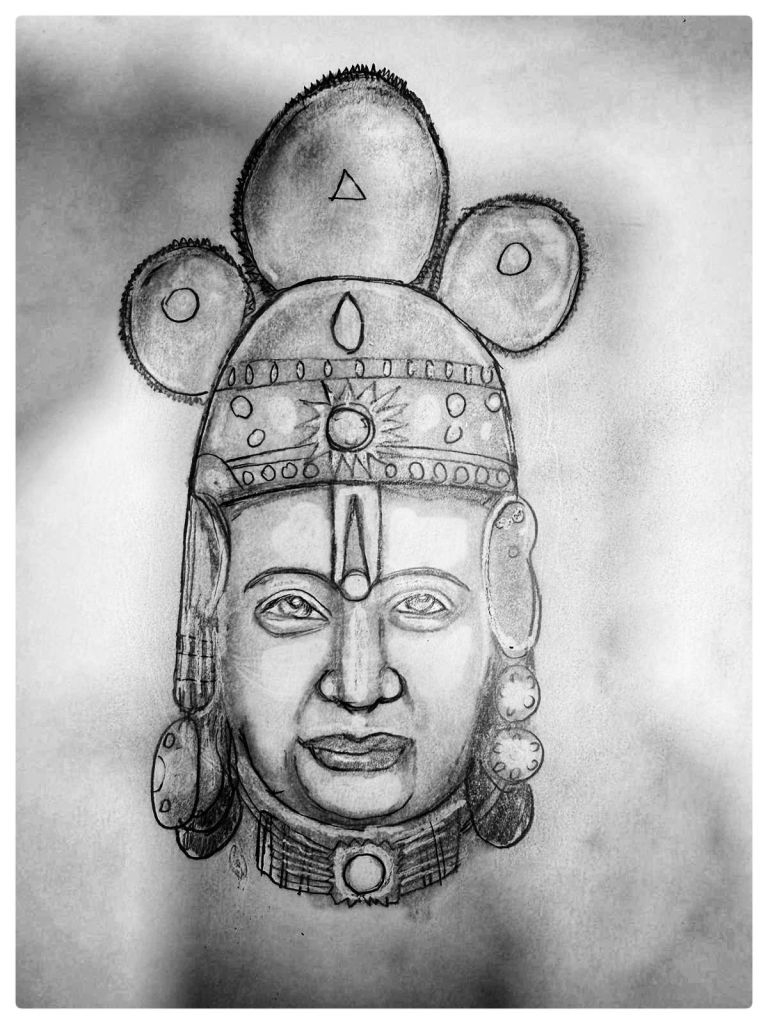
Jai Sri Ram!

If you happen to read Nexus or Twenty Lessons or Homo Deus by Yuval Noah Harari, you will be shocked that there are jobs which are soon going to be taken over by the AI!

The top three shockers in his estimates were Taxi drivers, postal workers and Pilots!
Yes! Pilots in the list is pretty shocking! We will come to that soon!

In a recent list by the Forbes though, Pilots are safe! For now at least!

They have included jobs which are going to be taken over by AI which actually have higher probability to be gone by 2025!

According to their ‘expert’ analysis which of course was done by a human (with help from the AI!) states that there are areas which could be better handled by the AI or by automation! These are manufacturing jobs (machine operation, product handling, testing, packaging, testing, etc.) and retail and commerce roles (customer service, inventory management, fraud analysis)!

Not to forget the Basic data entry, analysis, and visualization jobs
Financial analysis and projection roles and also travel agents and itinerary providers and Translators!

When you go through the list you would realise that most of the above list is already true! Even when I get stuck with a patient who speaks a different Arabic than routine, I used to call the translator some years back! Now all we both do (the patient and me!) is whip up our phones and get the Google translate!

The shocker ( at least for me!) in the list was the fact that human drivers are being replaced through autonomous vehicles, such as what we’re already seeing with Waymo!

Driverless cars will soon be the norm while mails will be completely automated!

You would think that your job or talent is something which a bot can never get then well, you may soon be proven wrong!

Like in Isaac Asimov’s I, Robot; the lead (Will Smith in the movie version!) asks the rogue Robot if it can write a symphony or paint a masterpiece!
The intelligent and more evolved robot fires back much to the shock of will “can you?”! It is not easy to make Will speechless!

If you are then planning to make your son or daughter a pilot then do it soon! Yuval states in the books that apparently pilots use the autopilot in the plane most of the time!

The onboard computer takes into note of the weather, altitude and distance and does the rest! In fact the only chief time when pilots are really needed is landing and take off! That’s the reason why they announce and do it I guess! But many automated machines are being taught to do even that!

Talking about Drivers and Pilot reminds me of this scene from amazing work of Goswamy Tulsi das, the Ram Charit Manas; When the driver of the Boat refused money from Bhagwan Ram he said that; “People belonging to the same profession do not charge each other for the same service!”

Sri Ram asked him, “How can we have the same profession?”

The boatman said, “We are similar Sri Ram! I am the guide of this small boat and river, while you are the guide of the whole universe!”

Luckily the AI can never understand the emotions behind those lines!

Wish you all a very Happy Ram Navami!

Jai Sri Ram!
Shah

Animals see colours differently than we do!

Even with all the colours in front of our eyes we see only what we want to see! This is because our eyes are not that developed but our brain is!

We actually have some of the weakest eyes! (Mental and physical!)

Even an average Octopus has eyes larger than its brains!

Go small! Take the Horsefly! They have massive eyeballs that join at the top of the head, and the horsefly males have two different sized ommatidia (the photoreceptor units that form insects’ compound eyes).

The larger ommatidia at the top of the eye are more sensitive to UV light, and help him spot the fast-flying female flies, while the smaller ommatidia help him hone in on details! Wish an average man had that and he would notice the new hair cut done by his wife!

Then you also have the California purple sea urchin which is so packed with photoreceptors on its surface that its body has been described as a single functional eye! Because nearly the entire sea urchin is sensitive to light, it can ‘see’ in every direction. Researchers have suggested the sea urchin uses its spines to block out some of the light hitting it, to help focus the light for better vision!

Or you can look at the average Chameleons who have some of the strangest eyes on the planet, which are able to move independently of each other. This results in almost 360-degree vision! The next time you have been instructed to watch the gas and as well as the kids, you may need this!

The reptile though can also switch between monocular vision – when both eyes are used separately – and binocular vision, when both eyes are used to look at the same scene!

Technically, rods interpret light, and cones interpret colors. These are the receptors in our eyes which ‘detect’ light!

Now Animals that are truly colorblind completely lack cones, and animals that can only see during the day completely lack rods!

But these extremes are uncommon, and most animals have a combination of cones and rods.

Now meet the Mantis Shrimp!

Now compared to humans’ measly three color-receptive cones, the mantis shrimp has 16 color-receptive cones, can detect ten times more color than a human, and probably sees more colors than any other animal on the planet!!

They can see in ultraviolet, infrared, and even polarized light. Not only that, but their eyes are on separate stalks and are able to move independently of each other, meaning they’re able to keep an eye watching out for predators and prey in two different directions at once! They are the only animals known to be able to see circular polarised light! Experiments suggest they may use this to send messages to each other – for instance, ‘this burrow is occupied’.

See the power of the rods and cons!? Though practically speaking the final image is actually ‘seen’ by your brain! Which is why the brain can sometimes be tricked to ‘see’ even objects or person which is not there!

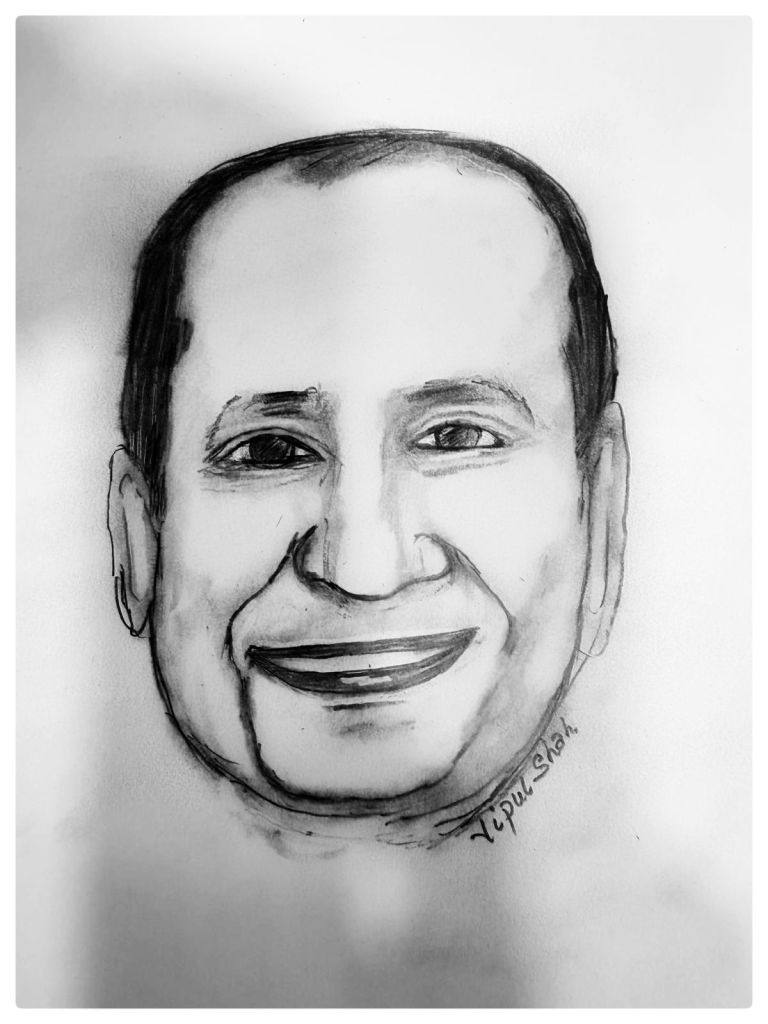
Which is also the reason why the human is so developed in spite of having weak eyes! His or her brain can cook up stuff even if it is not real! Real and reel also is the deal with humans who can make movies for you! Like the producer Vipul Amrutlal Shah!

Now close those eyes and try to shut down the brain or atleast put it to sleep!
Shubh Ratri…

KPR ‘appa’

Think of this and you can imagine a person who wants to have fun and dance!!

The actual meaning was a person who is very rude, loud, or stupid!

Then again it was only an acronym for a much bigger full form!

Then again it was short lived just like the shout!

Enough suspense! It was YAHOO!

You may think that the site was named after a bunch of nerds who were secretly fans of Shammi Kapoor and his dance moves and catchphrase!

Why secretly then since the nerds did actually call Shammi when it was launched in India! This was because the name and the shout was already popular here!

But (then again what is a blog without a single but! with a single t!); the name was actually based on Yahoo as defined in the novel Gulliver’s travels!

There are races of fictional beings in the novel (most beings in that novel except the human were fictional of course!) who were an unsophisticated, rural Southerners! The general definition being bunch of rude rowdies! Like ‘some yahoo cut me off in traffic’ or ‘a bunch of yahoos were making noise outside’!

Then again it was not even called that! The first name when Yahoo! was founded in January 1994 by Jerry Yang and David Filo, who were electrical engineering graduates at Stanford University was “Jerry and David’s Guide to the World Wide Web”!

The Guide was a directory of other websites, organized in a hierarchy, as opposed to a searchable index of pages!

In April 1994, Jerry and David’s Guide to the World Wide Web was renamed “Yahoo!”.

Finally what did the full form stand for you may ask if you are crazy or gone Yahoo!  Well, it was “Yet Another Hierarchically Organized Oracle” or “Yet Another Hierarchical Officious Oracle.” Take your pick and say Yahoo!

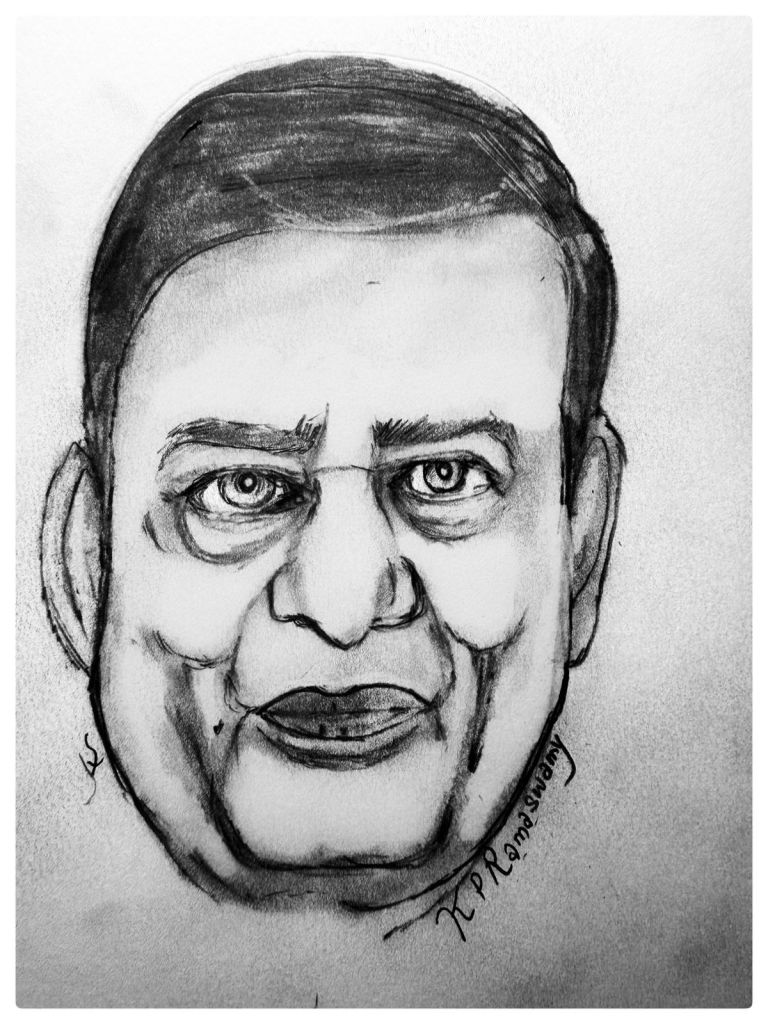
After that you must read about the inspiring tale of K.P. Ramasamy!

He is known as appa (father) that his employees refer to him!

Today, some 27,000 women have completed their education, even earning an MBA in many cases, while working at the Coimbatore and Tirupur-based KPR Mill. Some have become nurses in nearby hospitals, a few work at IT firms and many have returned to work at KPR Mill!

When factories across the country sent away their labourers during the nationwide lockdown in 2020, KPR Mill gave its workers a choice: If you stay, we will provide you food, shelter, full salary and entertainment. Each of their 12 factories has a cinema hall, sports facilities and an auditorium. “100 per cent of the people said we will stay here only,” says KPR. The company has around 25,000 employees!

Now here’s the staggering numbers – In the last several years over 24536 girls have finished their 10th, 12th, UG, PG courses!

They have their alumni in almost all hospitals where the girls are working as Nurses, school teachers, some have joined the Police force and the list goes on and on!

In a recent convocation over 350 girls received their degrees and out of which 20 of these girls are TN Open University Gold Medalists.
They received their degrees and Gold medals from the TN Governor!

In the Forbes List Of India’s 100 richest people, one of the faces include the now 74-year-old KP Ramasamy. He has secured the 100th position on the list with a net worth of ₹19,133.7 crore!

Now you definitely can say YAHOO! With pride and joy of course!

Shubh ratri…

From sextant to the GPS!

The days after the Sextant and before the GPS!

One fine day I was to leave the college for good and had packed my bags and stuff and got a bus ticket for the night! Only one thing left to do!
Collect my 1000 INR from one of my seniors!

He was a scary guy and I could never say no to him! Then again it was not the first time he borrowed and he usually gave it back in a couple of months!

Now since I was leaving college; it was time to close the deal!

He was a chronic and no one knew where he lived except for one junior who felt pity on me!

Now he had no idea about the address since he had gone only once! So he gave us a direction! It may be vague or accurate depending on your intelligence!

He said, take a right after a bakery and keep going for around 2 km and then after a bend you would see a tree placed oddly in the road and then take the second left after that tree and after a while you would get a small crossing from which you have to take a right and then you would get a field with a single house of two storeys! The house would be locked from outside but someone will be there!

Now of course he said stuff a little different than this but you get the gist! Remember that it was around 25 years back and my memory is not  eidetic!

In spite of the vague direction, the most surprising thing is that we reached the house and rang the bell! It was locked but my senior’s sister did answer from inside! He was not there apparently!

In spite of our luck of finding the house, we were unlucky!

Years later I managed to track him in Orkut! I messaged him and asked for the money and was very happy when he replied by asking me my account details! By the time I replied, the partial luck ran out again! Orkut was out and FB was in!

Will let you know if I could contact him on FB!

Still I am thankful to my Junior who gave me the coordinates! Now of course I would have just asked for the location! Imagine travelling by the ship in the olden days without the GPS!

Apparently they used to use a device called the Sextant. Sextants were used by explorers like Edmund Shackleton to navigate across the oceans. This tool uses a two-mirror system to measure the angle of a celestial body such as the sun in relation to the horizon. Despite being relatively simple, sextants were incredibly accurate!

All it is is a device that measures the angle between two objects.

The sextant makes use of two mirrors. With this sextant, one of the mirrors  is half-silvered, which allows some light to pass through. In navigating, you look at the horizon through this mirror. The other mirror is attached to a movable arm. Light from an object, let’s say the sun, reflects off this mirror. The arm can be moved to a position where the sun’s reflection off the mirror also reflects off mirror A and through the eyepiece. What you see when this happens is one object (the sun) superimposed on the other (the horizon). The angle between the two objects is then read off the scale!

What makes a sextant so useful in navigation is its accuracy. It can measure an angle with precision to the nearest ten seconds. (A degree is divided into 60 minutes; a minute is divided into 60 seconds.)!

If you understood the above then you are really clever! The direction on how it works was similar to the direction given by my junior! Destination attained though!

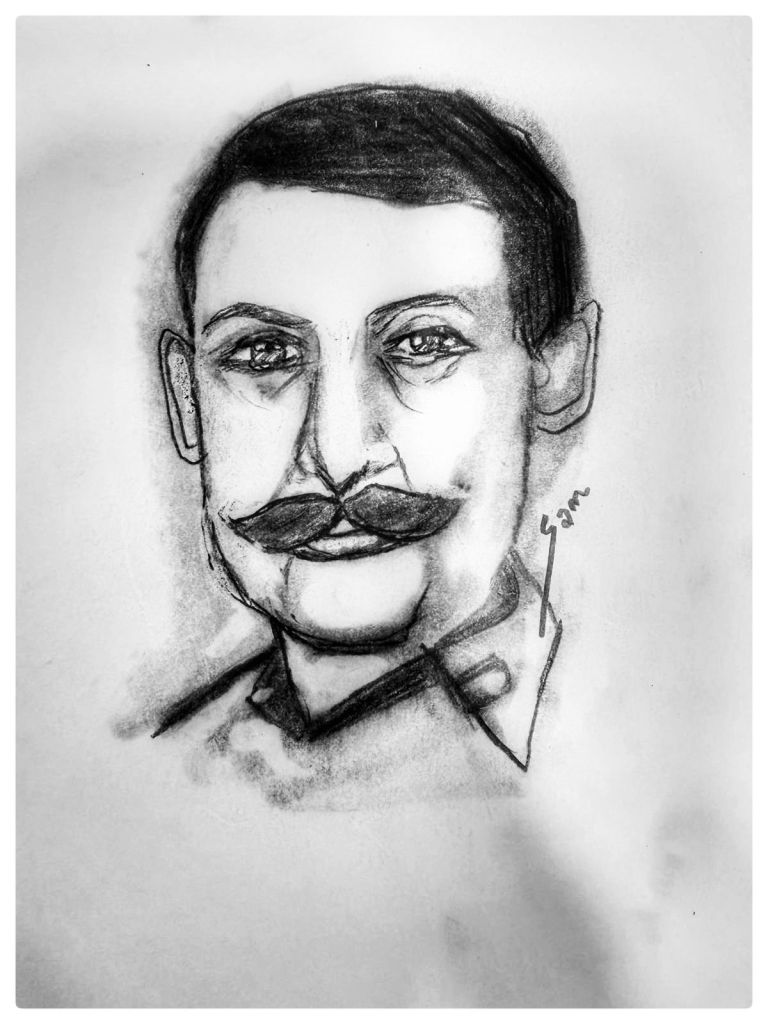
Now now do not worry! Just call Sam! In this case, Sam Bahadur aka Field Marshal Sam Hormusji Framji Jamshedji Manekshaw MC! He will show you the direction of victory!

Jai hind..

SHubh ratri…

Val kilmer


He was inspired by none other than one of the greatest detectives ever and named after a great sportsman and later on went on to become the inspiration for a search engine name!

He was also inspired by the author’s own valet!

As far as Valets go, the most famous before Batman’s Valet AKA Alfred was most definitely JEEVES!

Jeeves was your go to guy for any problems in life!

By the way be informed that Jeeves is a valet, not a butler; that is, he is responsible for serving an individual, whereas a butler is responsible for a household and manages other servants!

On rare occasions he does fill in for someone else’s butler. According to Bertie Wooster (his ‘master’), he “can buttle with the best of them”.

Those were the times of the rich and the high society (read white!); and to have some other guy as your manservant may be considered well, in my daughter’s words; cringe!

Then again the stories also used to show how the Valet was much clever and better and well informed than the ‘master’! 

If you take out the obvious racism; they were a great read specially when you wanted a quick laugh! The Jeeves one liners are among the best and funniest one liners ever!

If you liked such novels then a serious version could be The Remains of the day by Kazuo Ishiguro. Here also you actually have ‘masters’ who try to show off their respective ‘valets’ or ‘Butlers’! On how knowledgeable they were or how well read they were!

If treated with good pay and respect then it is more of less the job of a wise counsel!

The most important thing was that you could ask Jeeves anything! And he will not judge you (at least not openly!) and try to answer your questions (no matter how dumb they were!!) in the best possible way possible!

Which is probably why one of the best search engines of the past was called ASK JEEVES! Of course it could not handle the Google tsunami! No search engine can actually come close to Google since it already has a huge search database and well, experience! Then again even Nokia fell!

“There are moments, Jeeves, when one asks oneself, ‘Do trousers matter?'”

“The mood will pass, sir.”!

That was one of my favourite ones!

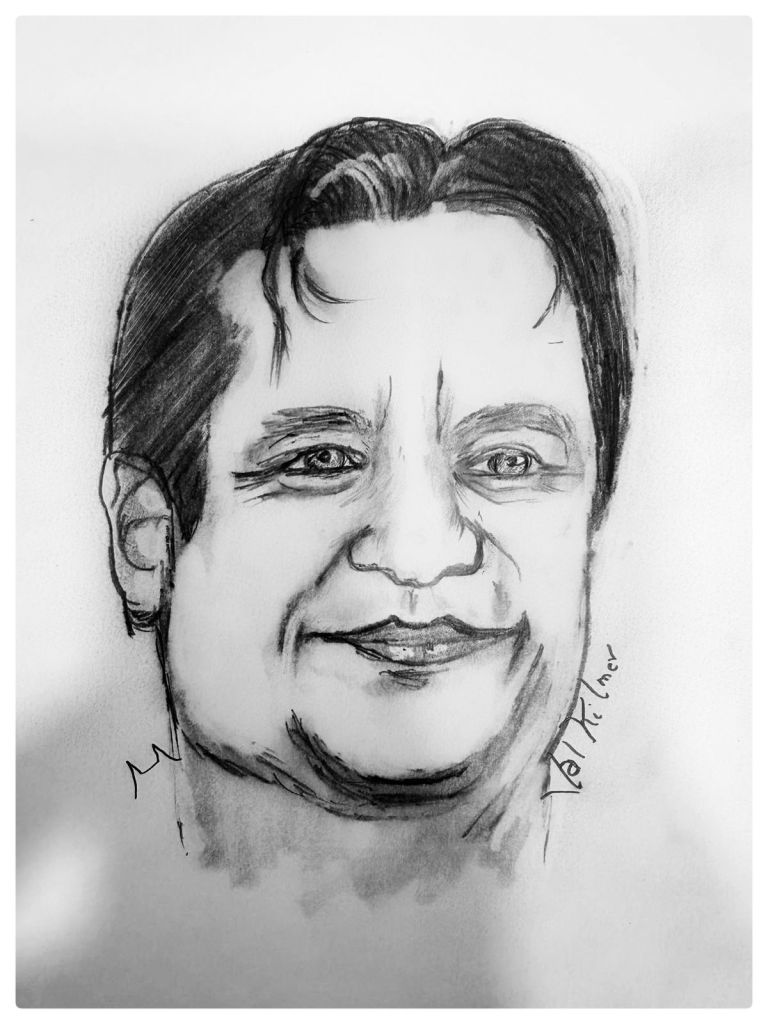
Mentioning Butler or Valet and Jeeves and Batman; you must remember Val Kilmer aka ICEMAN! All said and done, he was actually right when he said that Maverick is well, Maverick!

Of course he was super cool in Batman and the Saint…Val Edward Kilmer you will be missed.

Peek a boo!

The other day we were going through our favourite past time! Seeing our old snaps in the slide show on TV!

It is always fun to see how you used to look and most of the time when you see old snaps you would be amazed at the changes in yourself and others!

I am of course telling about the external changes!

One video was of us playing “peek-a-boo” with my son!

Apparently the game “peek-a-boo” is actually a very impactful game!

The game is linked to a phenomenon called the Object permanence!

Object permanence describes a child’s ability to know that objects continue to exist even though they can no longer be seen or heard. If you have ever played a game of “peek-a-boo” with a very young child, then you probably understand how this works.

When an object is hidden from sight, such as by covering it with a blanket or another object for example, infants under a certain age often become upset that the item has vanished!

This is because they are too young to understand that the object continues to exist even though it cannot be seen.

Now most children if they are young would not know that the object is still there! They would assume that the object has gone!

In a study to see if object permanence was present, researchers would show a toy to an infant before hiding it or taking it away. In one version of the experiment, researchers would hide a toy under a blanket, then observe to see if the infant would search for the object.

Some of the infants would appear confused or upset by the loss while other infants would instead look for the object. The researchers believed that the children who were upset that the toy was gone lacked the understanding of object permanence, while those who searched for the toy had reached this developmental milestone! Which meant that the child had grown!

One consequence of the development of object permanence is the emergence of separation anxiety. Once infants know that objects and people persist when they are no longer in sight, they often become upset when parents and caretakers are no longer visible!

Which is why when you say “peek-a-boo” and ‘appear’ and ‘disappearing’ then most of the time your child feels happy (he or she has to be your child and/or you must be familiar to the child or at least pleasant looking by the way!)! This reinforces the belief that you may go for a moment but you will always come back!

That’s a beautiful thing to know!

Ending a colourful day with a splash of colour!

Shubh ratri!

No laughing matter!

A friend of a dentist getting hurt in a party leads to the use of this as an anesthetic agent!

If you are amazed then its ok! If you laughed, well that is ok too!

In the basement of the building, a large-scale machine was producing a gas under the supervision of a young Humphry Davy, who was encouraged to experiment with new gases for patients to inhale.

The first important work of Davy was examination of this gas and the publication of his results in the book: Researches, Chemical and Philosophical (1800). In that publication, Davy notes the analgesic effect of this gas and its potential to be used for surgical operations.

One of the effects of the inhalation was that it caused the person to laugh at even a bad joke! Now now, I hope the stand up comedians of today do not get any ideas!

The gas was thus called “laughing gas”!

Yes! That was the common name for nitrous oxide!

Despite Davy’s discovery that inhalation of nitrous oxide could relieve a conscious person from pain, another 44 years elapsed before doctors attempted to use it for anaesthesia. 

The initial use of nitrous oxide was as a recreational drug at “laughing gas parties”, primarily arranged for the British upper class and this became an immediate success! Guess the British Upper class would do anything to make them laugh! Even if it is not true!

While the effects of the gas generally make the user appear stuporous, dreamy and sedated, some people also “get the giggles” in a state of euphoria, and frequently erupt in laughter!

During one such party when, nitrous oxide was strictly still a party toy and people wanted to laugh like a Hyena; there was an interesting observation. 

A friend of a dentist took too much of the stuff at a laughing-gas stage show and gashed his leg real bad! Normally he would have howled in pain like a, well Hyena! But in this case he was not responding normally! 

The friend hadn’t realized he’d hurt himself since he had no pain!

The dentist then realised that it could be used as and analgesic anesthesia!

The dentist was Horace Wells who used nitrous oxide for the first time as an anaesthetic drug in the treatment of a patient and in dental surgeries.

Today, nitrous oxide is used in dentistry as an anxiolytic, as an adjunct to local anaesthetic.

Nitrous oxide was not found to be a strong enough anaesthetic for use in major surgery in hospital settings, however. Instead, diethyl ether, being a stronger and more potent anaesthetic, was demonstrated and accepted for use in October 1846, along with chloroform in 1847. But the fact that a gas can be used as an anesthetic agent was first demonstrated by the laughing gas! 

And all that happened when an overdosed guy in a stage party hurt himself! Of course let that not be a point in favour of overdosing and getting wild at a party! 

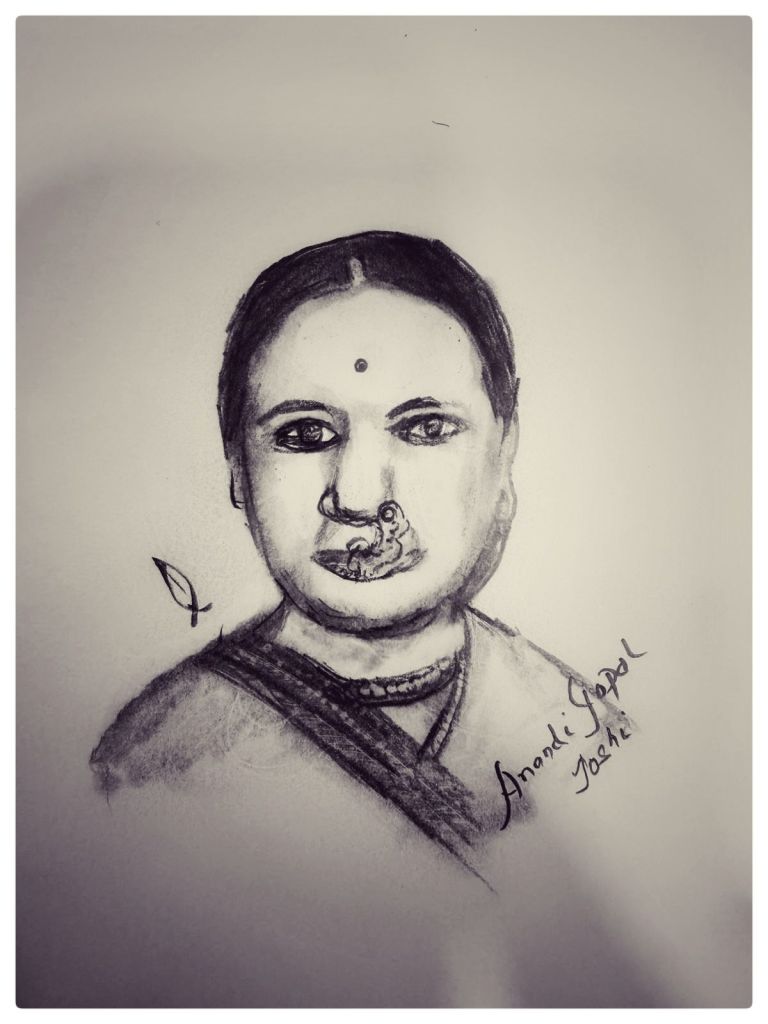
Be like the doctor who turned even an accident into a investigation! Talking about doctors do read about the first lady doctor Anandibai Gopalrao Joshi…

An inspiring life indeed…

Now go for the non anesthesia induced natural sleep!

Shubh ratri 

The Checklist Manifesto

The Checklist Manifesto by Mr (dr) Atul Gawande. It is surprising that many surgeons like to be called by their names while physicians always prefer Dr!

E book

rating- 4.5/5


Non fiction self help book with special relevance to the field of medicine and surgery but can be applied to every field!

The book starts with two very interesting cases which feel like an episode of Gray’s anatomy but with better ending and more human touch.

After that we get to know that the author is an accomplished surgeon with special interest in cancer surgeries. Then he tells us about the fact that most average patient in the ICU gets so many decisions made which make a big difference to his or her life! There are over 176 or more decisions to be made everyday by everyone in and around that it is mind boggling!

Then he tells about the crux of the matter! The checklist! Imagine how when a patient comes to meet you and in between the talk with the bystanders and other issues, you forget to even check his or her pulse!

That normally does not happen since the measurement of vital signs is a big and important measure in every patient management!

The checklist for health was the vital signs! A blessing in disguise! This simple start actually can make your diagnosis and treatment in most of the times! How medications has to be given to the patient normally depend on a coordination between the nursing staff and this is the backbone of any hospital management!

Like every great and important thing though even the measure of vital signs was not accepted initially but later this simple maneuver had wide acceptance and then revolution!

So in spite of the seriously medical input in the first couple of chapters, the book is actually about increasing efficacy in your professional world!

He tells how the age of specialisation has grown so much that one fine day you would have a doctor who has specialised in the RIGHT ear while another one in the LEFT! You can imagine the same with the eyes!

For now the average Otologist is specialised in both the ears so you are safe!
But this craze for specialisation is well, crazy!

This complex specialisation brings about the very big problem of selection! Atul then tells about this great air competition with Boeing and the US army! One of the airplane was so complex that the pilot just could not handle it and crashed!

This is when the mandatory checklist system was introduced! You must remember that human brain though an amazing creation with amazing power is still mortal! If it has to process too many things then it gets very difficult!

The solution is to have a checklist! Now you have this standard checklist before any flight which is why aviation has become so safe!  Everything starts with a simple thing which makes a big change! The first place where the checklist was introduced was the aviation industry and Atul went and met the person responsible for the same! Every cockpit of every flight now has a checklist for each situation! What to do in case of every possible problem and how! If you actually follow the checklist then you have a very high possibility of tackling most problems!

In fact he also gives a couple of great examples for the same! Nail biting by the way! Do not read them if you have a long flight coming up!

The next area where checklists are the backbone is the making or construction industry!

All over you, you can see the concrete jungle! The remarkable thing is that they stand so tall and do not fall! We add somewhere around seventy thousand new commercial buildings and one million new homes each year as mentioned by Atul!

But “building failure” —defined as a partial or full collapse of a functioning structure-is exceedingly rare, especially for skyscrapers. According to a 2003 Ohio State University study, the United States experiences an average of just twenty serious “building failures” per year. That’s an annual avoidable failure rate of less than 0.00002 percent!

And, Atul was explained by his friend that although buildings are now more complex and sophisticated than ever in history, with higher standards expected for everything from earthquake proofing to energy efficiency, they take a third less time to build than before and they are more safe! All because of the checklists made and followed at every stage! With every checklist in place, the whole complex building steadily comes in place and fits together like a jigsaw puzzle!

The next place he tells about the checklist involved the emergency management done by walmart. How this private company took the initiative when the government was locked in red tape! How the civic authorities failed miserably even though they had the resources but lacked coordination! While Walmart with their own checklists and protocols showed the way and how!

An amazing story he tells was about the rock band Van Halen! Their insistence on no brown Mand M’s in the dressing room was a clever one! You must read that one to enjoy the power of checklist!

Now David Lee Roth’s notorious insistence that Van Halen’s contracts with concert promoters contain a clause specifying that a bowl of M&M’s has to be provided backstage, but with every single brown candy removed, upon pain of forfeiture of the show, with full compensation to the band!

And at least once, Van Halen followed through, peremptorily canceling a show in Colorado when Roth found some brown M&M’s in his dressing room. This turned out to be, however, not another example of the insane demands of power-mad celebrities but an ingenious ruse!

As Roth explained in his memoir, Crazy from the Heat, “Van Halen was the first band to take huge productions into tertiary, third-level markets.
We’d pull up with nine eighteen-wheeler trucks, full of gear, where the standard was three trucks, max. And there were many, many technical errors-whether it was the girders couldn’t support the weight, or the flooring would sink in, or the doors weren’t big enough to move the gear through.

The contract rider read like a version of the Chinese Yellow Pages because there was so much equipment, and so many human beings to make it function!

So just as a little test, buried somewhere in the middle of the rider, would be article 126, the no-brown-M&M’s clause!

So if the band member walks backstage and saw a brown M&M in that bowl then he would line-check the entire production!

There would be a high chance that there will be a technical error!
The mistakes for not following the whole protocol could be life-threatening!

In Colorado, the band found the local promoters had failed to read the weight requirements and the staging would have fallen through the arena floor!

The whole Idea was to make sure that the organisers have seriously gone through the list of technical specifications given to them and they have been taken seriously since a single misfire would have been catastrophic!
And like always, the non brown M&M’s saved the day!

The next place where checklists are a part and parcel of the team is the restaurant! You go to any food joint during the rush hour and you would be amazed at the speed and efficiency by which the work gets done! The orders get prepared like an assembly line and the food is delivered on time and with the same taste each time with very few misses! How the author’s friend mentioned that all her staff has to do is follow the recipe! Follow the checklist, suggest some modifications if you feel it is better then test the modifications and if better, incorporate them in the checklist and the cycle continues!

Atul was later contacted by the WHO for finding out the checklist for surgery. The amount of surgery has grown by a lot and there has to be a protocol or rather a checklist so that the whole system is effective and monitored.
Though the incisions have become smaller, the recovery has become faster, the complication has increased. The major part of the rest of the book was how the surgical checklist used by almost all the hospitals in and around the world was formed!

Then a landmark study which was found to happen in Karachi Pakistan, so they were increase rate of infection, diarrhoea, skin diseases, and of course death. So one of the investigators who tried to change the whole problem or system understood that the problem is huge. Just get water, clean water, drinking water or even proper water at every house or household was going to be a big issue Facing with such major problems, they came out with a very simple solution SAOP! ONE MUST BE REMEMBER THAT EVERYONE HAD SOAP, BUT WHEN THE RESEARCHERS GAVE SOAP, THEY ALSO INSTRUCTED WHEN AND HOW TO USE SOAP THAT WAS THE CHECKLIST!


We do before any surgery, a checklist is done, and until the nurse gives the checklist done, it is not ready for takeoff! That was a very effective motto! Of course initial reluctance was there but later on it has become a part of the standard protocol in most all operation theatre!

What is the Self Help book not talking about Warren buffet! Though Atul tells us about one very rich guy and his partner or partners who have inspired by Warren but they have deduced that Warren may not have have checklist since he has more mistakes! They however use a checklist and do not go with their gut! In fact when they have followed their checklist, it has always been a profitable investment!

The final chapter are five amazing examples of using the checklist including one close one! Those five examples are the best indicators of the fact that the check list works!


So!

Make a checklist!

Make sure they are specific and not vague!

The items in the checklists are not supposed to be technical, they are only to remind you of the completion of the activity in a proper way!

The items are supposed to be simple and direct!

You can make multiple ones for different actions and frequently revisit them for any modifications or changes.

Most important of all, remember that you are not a multitasker! You are a mere mortal and you make mistakes! So if you want to do a job properly especially one that has many steps then make sure you have a checklist and FOLLOW THEM!

The final verdict! Loved it!

Endowment effect

Remember when you were younger and then you go to someone’s house and you play with a toy. Then after some time you are supposed to return the toy and you start crying! 

That is how any trial software or product works! This is called the Endowment effect!

Both Daniel Kanheman in thinking fast and slow and Dan Ariely in the book Predictably Irrational talk about endowment effect!

When  you get a upgrade package to try or you get trial offer for free then you will realise what it means! Once you accept the trial offer for free then it becomes your property! And when the free period ends you would not like to give it away since that would emotionally conflict with your ownership! 

Many companies use this as a marketing tool! This is because if you use a product even for a little while and get used to it, more often than not you feel that you are the owner of the product and the little child in you does not want to let go!

Another issue with the endowment effect describes a circumstance in which an individual places a higher value on an object that they already own than the value they would place on that same object if they did not own it.

This is like you already have a car or a mobile and you would have paid a bomb to get it! Then when you try to sell it, you would shockingly realise that only you feel that your phone or your car is having a high value while practically speaking the market value would be much less!

Endowment effect can be clearly seen with items that have an emotional or symbolic significance to the individual.

Research has identified “ownership” and “loss aversion” as the two main psychological reasons causing the endowment effect.

The endowment effect is closely tied to marketing in which companies often try to take advantage of this cognitive bias. This is true specially for products which you may not need but they add only a little value to you. But when you get used to it, the product is yours and then you do not want to give it back or rather you would do anything to keep it!

This is also true for products which you get in installments and by paying just a part of the payment. 

So next time you are ‘offered’ a product for trial or under easy installment or just a little down payment; just know that more often that not you WILL end up buying it for sure!

Of course if you wanted it in the first place then just go with it!

Then again ownership is something which is more mental! You feel that it either belongs to you or you belong to it! Like where ever you go, you will always remember your country and state!

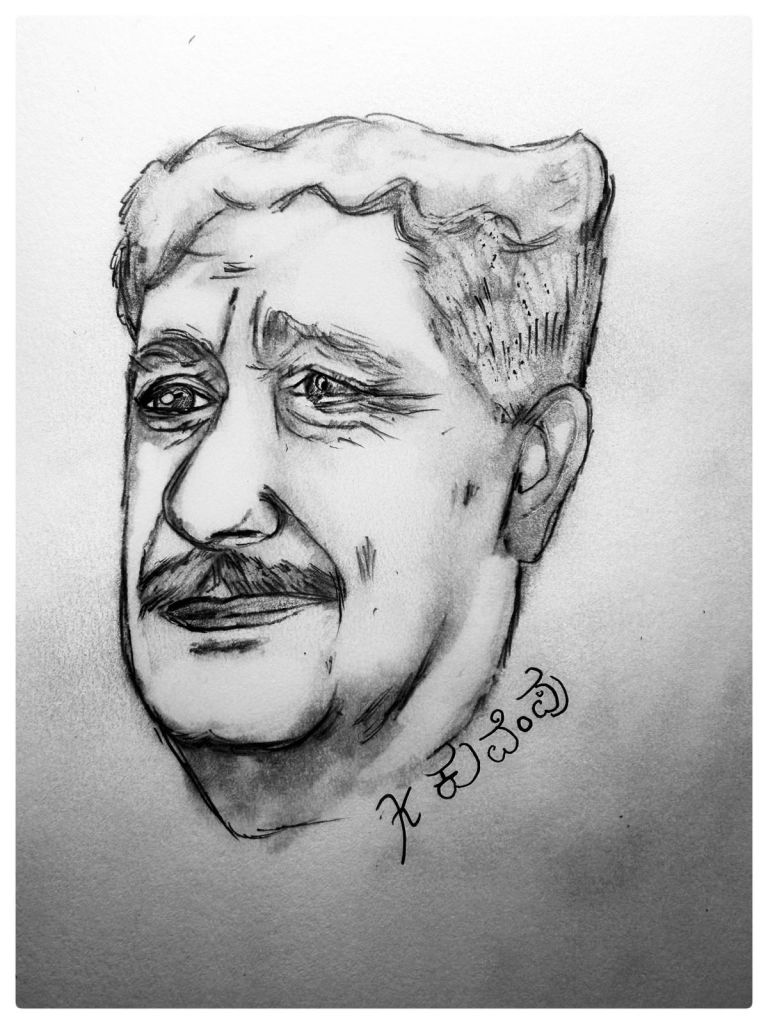
Especially when it’s festival time! Sketching a great from my state Shri Kuppalli Venkatappa Puttappa, popularly known by his pen name Kuvempu!

Wish you all a very happy Ugadi! 

Shubh ratri! 

Vital signs!

One of the scenes common in the black and white era was when a lady was feeling a little weak and the ‘doctor’ would hold her wrist and apparently feel for pulse! That was really ok but what used to come later was definitely shocking and hilarious!

The doctor would announce that, “Congratulations, you are pregnant!”

Of course you cannot confirm the pregnancy by measuring Pulse!

Then again this is one very important sign in many disease! In fact if you include the history and the measurement of Vital Signs; you can reach a diagnosis and define treatment more than 90 percent of the time!

Of course the concept of measuring your ‘vital’ signs has always been the routine for doctors and healers throughout history and in most civilisations but the proper differentiation and characterisation was not very uniform.

The variations in Pulse and temperature was  of course really important though these were largely ignored or not taken much seriously for documenting as a VITAL sign.

Officially with the publication of “Pulse-Watch” by Sir John Floyer in 1707 that the first scientific report pertaining to the pulse rate came to light.

Ludwig Taube published the first-ever plotted course of fever in a patient circa 1852, adding respiratory rate to the list of human vital signs trackable at the time. Subsequent improvements in the thermometer and clock solidified the heart rate, respiratory rate and body temperature as the standard vital signs monitored by medical professionals of the time.

In 1896 the first ever ‘sphygmomanometer’ (blood-pressure cuff) was introduced to the medical world, which added a fourth vital sign, arterial blood pressures, to patient monitoring procedures.

The next step in patient monitoring was to devise a system that allowed medical professionals to monitor all four vital signs (heart rate, respiratory rate, temperature, and blood pressure) at once, and over an indefinite period of time.

Now the spectrum of vital signs is much more though the basic four remain the same! You also now have blood oxygen level added which became very popular with the COVID! (popular for general public that is! Doctor’s used to measure anyways!). I still remember a duplicate Sat meter recording 100 percent oxygen! So what you say!? Well I had placed it on a pencil!

You also have Blood Glucose level as one of the chief vital ‘Signs’

Then for routine purposes the weight is one of the vital signs while in emergency we would see the PUPIL.

Remember that though they are relatively simple to measure; each one when is in the normal range then you have a very high chance of being normal! At least physically and at least for the time being since health is actually a constantly changing modality! This is what I tell my patients!

Once a patient comes back to me stating that her ear pain has come back! I looked at my notes and saw that she saw me one year back!

For one year she had no pain in the year and now she is coming back to me saying that my treatment was ineffective since it came back after one year!

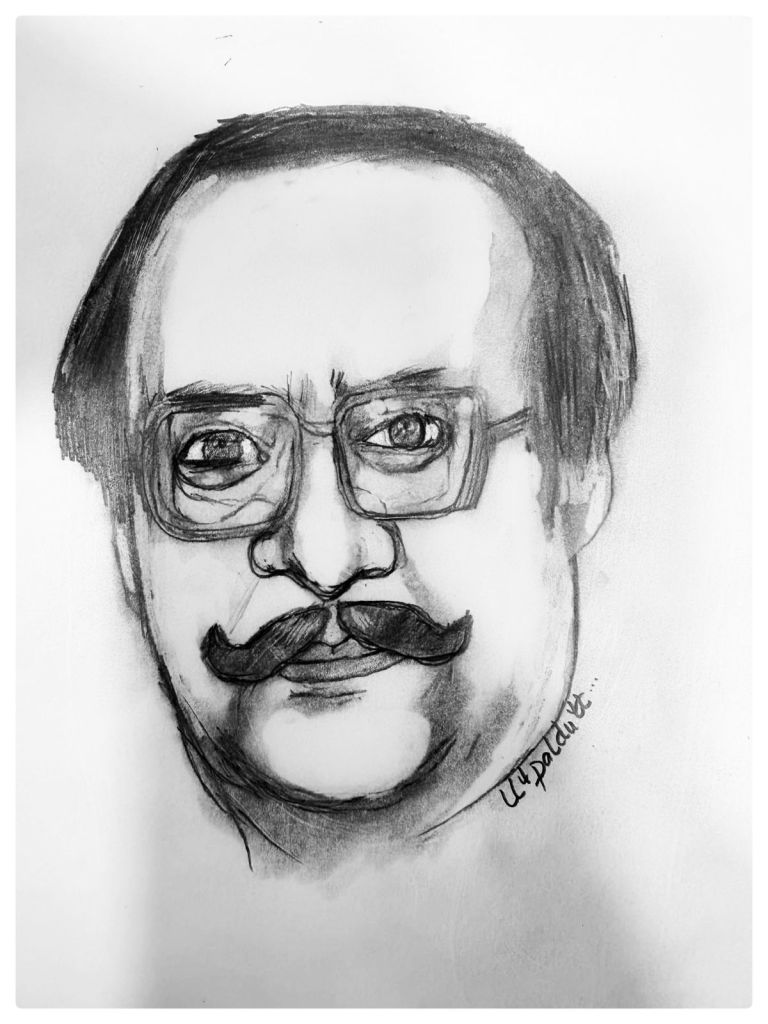
You may laugh but she was serious! Laugh reminds me of the character who used to make me laugh by being serious! Our Utpal Dutt!

Now assume that your vital Signs are ok and sleep!

Shubh Ratri!