The trolley problem

A form of trolley problem you may always face in your life or some interview!

Do read the whole thing…lemme know what you would do …

The classic trolley problem is also frequently asked question in brain teasers and psychological assessments!

Most of the times the choice is pretty straightforward but then comes the complications!

Robert Sapolsky discusses the “train track question,” formally known as the trolley problem, in his book Behave to illustrate the complex interplay of neuroscience, emotion, and utilitarian reasoning in human morality!

The problem is usually asked in many variations!

The classic “trolley problem” presents two main scenarios:

The Switch Case: A runaway trolley is headed toward five people tied to the track. You are standing next to a lever. If you pull the lever, the trolley will divert onto a side track, where it will kill one person.

Most people (around 70%) say they would pull the lever, sacrificing one person to save five, which is a utilitarian decision (the ends justify the means).

The Footbridge Case (or “Fat Man” Case): The trolley is still headed for five people. This time, you are on a footbridge above the tracks, next to a large man.

The only way to stop the trolley is to push this man onto the tracks, killing him, but saving the five people. Far fewer people (around 25%) say they would do this!

Another variation is that the Fat Man is actually the person who is responsible for the tying the people on the track and is actually evil! Then almost 100 percent would tell that they would push him!

The distinction in people’s responses highlights a tension between immediate, emotional aversion to personally causing harm (pushing the man) and abstract, cognitive calculations of the greater good (pulling the lever).

Sapolsky notes that individuals with damage to the prefrontal cortex, a brain region critical for emotional regulation and decision-making, are more likely to make the purely utilitarian choice to push the man in the footbridge scenario.

Your choice would also be influenced if you know the person or persons involved! If you are too anxious you may not even make a choice and simply close your eyes to the whole problem!

A recent modification of the same problem is like this:

There are two tracks; one is broken and the other is good but there are a group of children playing on the good track while there is a handicapped kid playing on the damaged track.

You cannot call out to them so what would you do!?

Do not worry!  The correct answer is not to divert the train on to the one handicapped child on the broken track! This is wrong since you would then be putting the whole group of people in the train at risk!
The child who was playing in the damaged track was not doing anything wrong! He never expected a train to come there! So he does not deserve any punishment!
The kids playing in the normal track should not have been playing there! In any case they can easily see the train coming and move away!

The correct answer here is that you do not have to do anything!

Rest assured life is not a simple train trolley problem! Our decisions are complex and unpredictable and well, Human! Just that it must also be Humane is the only hope!

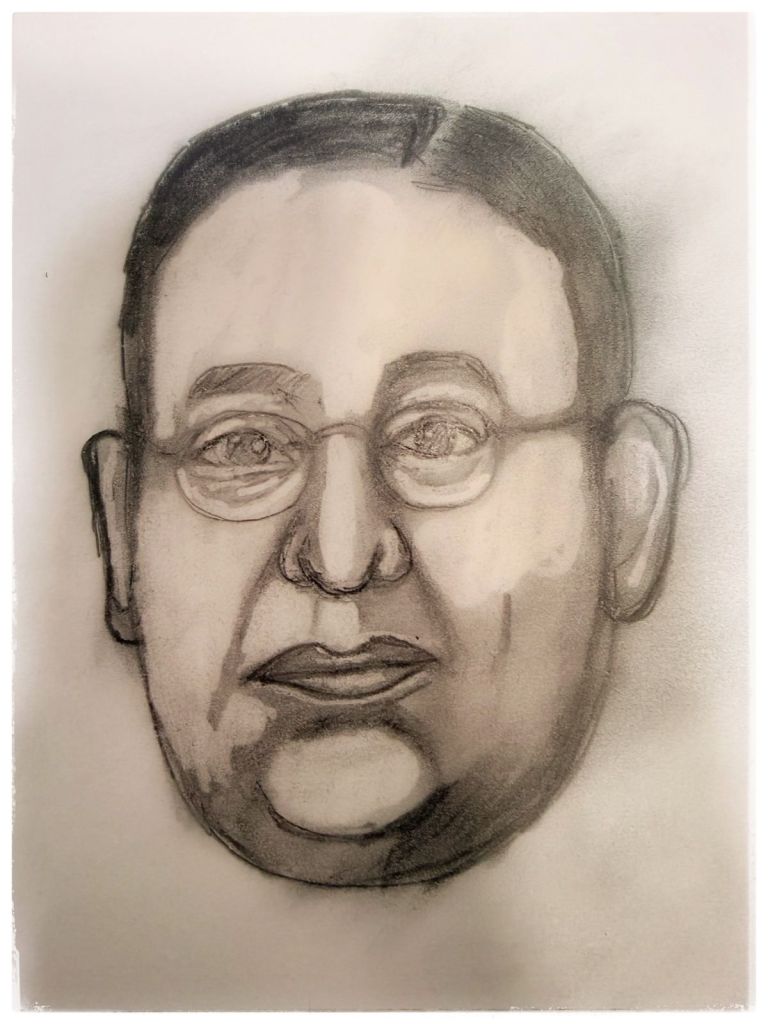
An absolutely amazing human also is Krishnamachari “Kris” Srikkanth!

Now don’t worry too much about the track!

Shubh ratri!

Not robot but expert…


Who or which is the only ‘robot’ to have defeated both Benjamin Franklin and Napoléon Bonaparte?

The game in which they got defeated was the Chess by the way!

Then you would think what is so great about it! There are modern computer which can defeat anyone!

But this was in the 1770s or so!

So there was a ‘chess’ playing ‘robot’ which could defeat anyone!

Without much beating around the, well board! Lemme tell you that the ‘robot’ was called the  “Mechanical Turk”!

The formal name was actually Kempelen’s “Mechanical Turk” which was an 18th-century chess-playing automaton, presented by Wolfgang von Kempelen in 1770!

What amazed audiences is that it was seen to play chess autonomously!

In its feats it when on to defeat everyone! Even fooling Benjamin Franklin and Napoleon!

It was actually an elaborate hoax!

The device concealed a human chess master inside to control the moves, sparking early debates about artificial intelligence and automation while fooling figures like Napoleon Bonaparte!


A wooden cabinet with a life-sized, turbaned figure (the “Turk”) was seated behind a chessboard. Then a skilled chess player hid inside the cabinet, controlling the Turk’s arm via levers and pulleys!

In fact the doors were opened to show complex clockwork, and a candle was lit to prove no one was inside, but the operator was in a hidden compartment, tracking moves on an internal board and communicating via brass discs!

The hidden player could play a strong game, defeat opponents, and even perform the Knight’s Tour, convincing many it was a true machine!

After Kempelen, it was toured by Johann Mälzel and played against famous figures, including Benjamin Franklin and Napoleon.

Finally writer Edgar Allan Poe correctly deduced it was a hoax in 1836, publishing his analysis! Brain is better than Brawn as always!

The original Turk was destroyed in a fire in 1854, but its story inspired fascination with automation and the concept of thinking machines!

This proves that not everything can be done by machines! Like act for example!
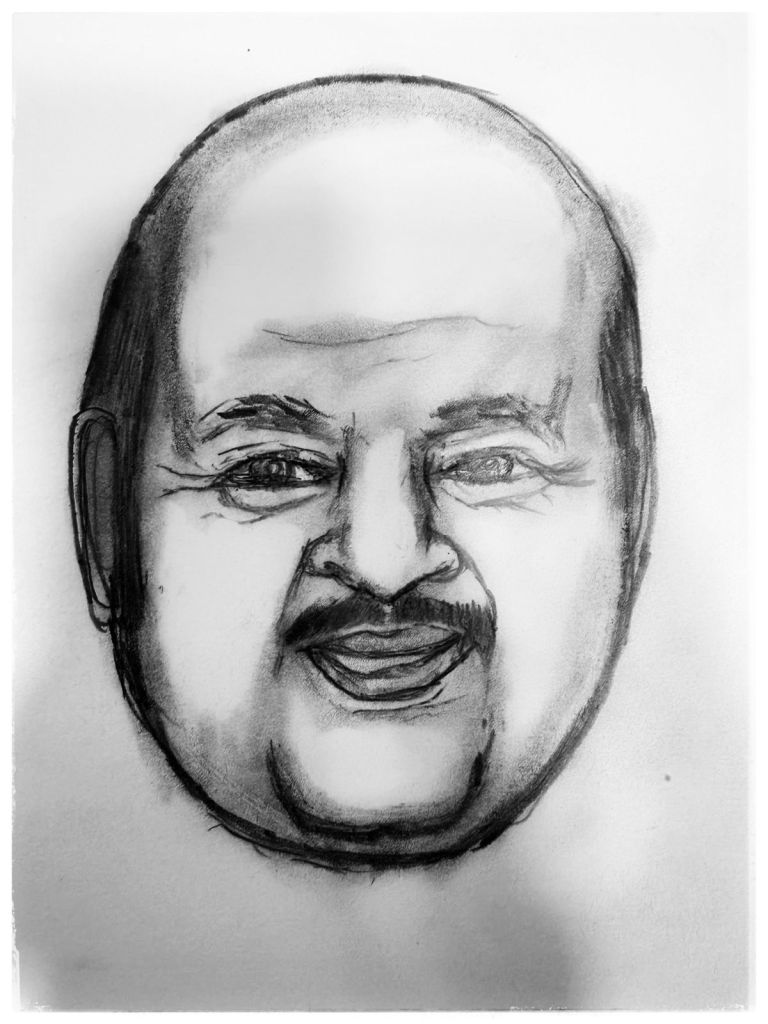
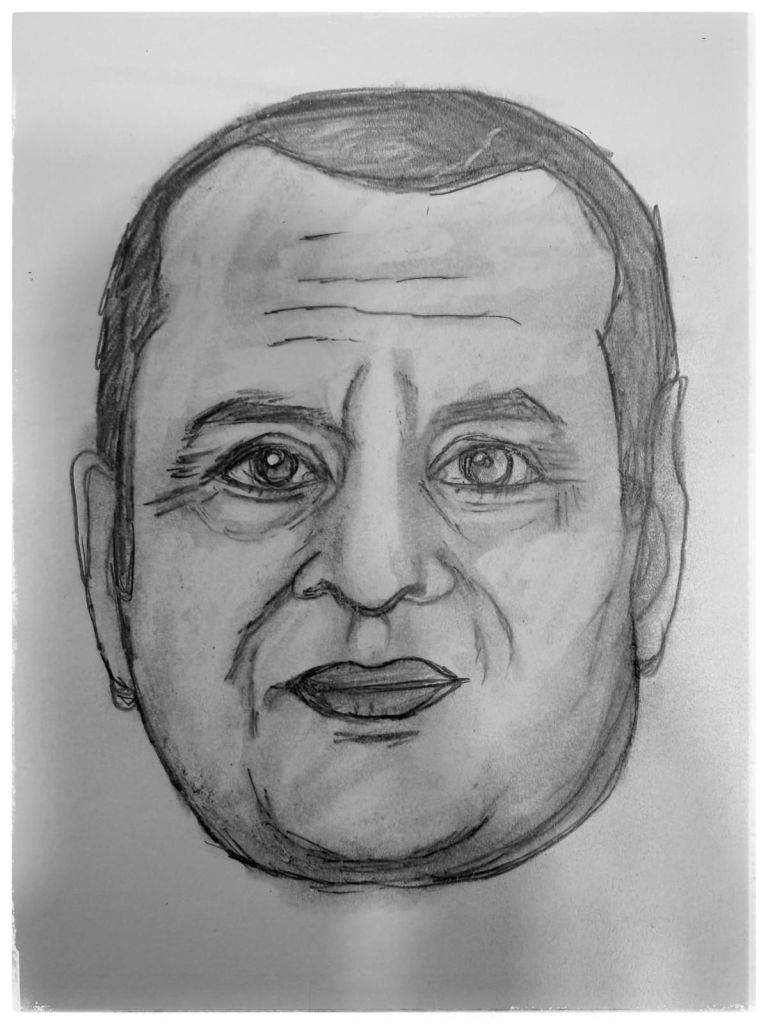
One word for acting which is right there on the top is Sreenivasan!

A very quick sketch since am under the weather but could not leave without a dedication since he deserved much more!

Sreeni eta you will be missed! Your legacy will continue for ages though!

Heartfelt condolences…
Om shanti

Pathology in altruism…

In the novel called Bellvue (The name gave me nostalgia since I used to work in a hospital by the name in Kolkata! Those were the days of Bhel puri and rosogulla!) by Robin Cook tells about an intern in his first posting! That bought back memories! It was also like his earlier novel called the year of the intern but with some twists!

Anyway Robin shows how overworked and underpaid the typical intern is! The standard story of every intern!

So in this age when sometimes when the trust for a doctor is shaky; you have a common phenomenon where the doctor or the health care professional sacrifices his or her own sleep or health to take care of the patient!

When it occurs so much that it causes health issues then it is called Pathological altruism!

Pathological altruism refers to a pattern of behavior in which the sincere attempt to help others results in unanticipated and often severe harm to the self, the recipient, or society.

Unlike healthy altruism, which is rooted in mutual respect and clear boundaries, pathological forms are often compulsive, maladaptive, and driven by underlying psychological issues such as guilt, fear of rejection, or a need for validation!

The chief features here is that they usually prioritizing others’ needs to a degree that causes physical or psychological harm to oneself.

They also help in behaviors that inadvertently support destructive habits in others, such as covering for a loved one’s addiction or shielding them from the consequences of their actions.

These also stem from a conviction that one’s actions are morally superior, which can lead to ignoring practical evidence of the harm being caused.

A severe form of Pathological altruism is to use self-sacrificing acts to control, punish, or induce guilt in others. The altruist seeks to be viewed as a martyr to exert manipulative power.

Healthcare professionals who neglect their own health to an extreme degree, eventually becoming unable to provide care effectively.

I once read about some intern who had non stop duty for 2-3 days! Not only it is a stress on the physical and mental aspect of the healthcare professional; I am unsure what kind of effective help can the intern provide in his tired state of body and mind!

So once in a while if you have a patient who promptly arrives the perfect time you are leaving; if he or she is not having any emergency you can tell him or her to come the next day! You would see him or her properly and not in a hurry and then would actually provide a proper well rested care. Even the patient must sometimes realize that it is better to be seen by a doctor properly and slowly rather than in a hurry!

Altruism only works if your doctor or the health care provider is himself healthy both mentally and physically! Let it not become pathological!

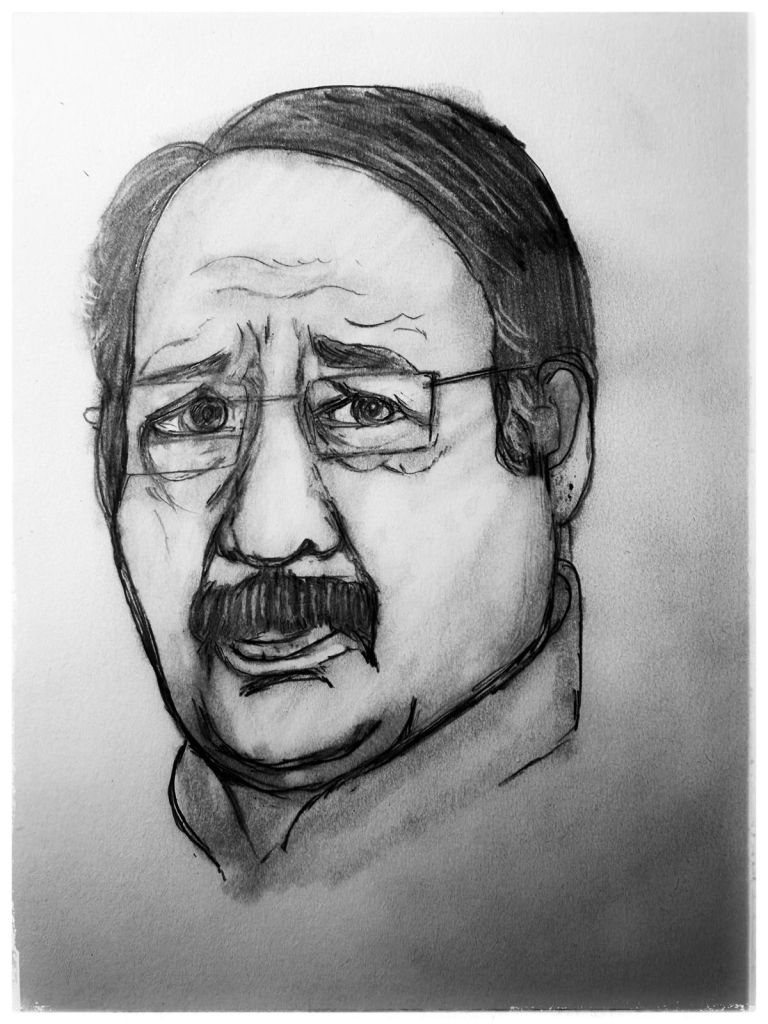
Your doctor can not solve all the problems of your life! He is not Jijaji! Like Om Prakash in Chupke chupke!

Now give some well deserved rest to your body and sleep!

Shubh ratri…

Mirror neurons…

It is a complicated issue! If you read and supposedly understand only one book like say a nursery book which has all the alphabets so in fact has everything! Then you do not have any doubts! You feel like you know everything and everything is clear!

The more you read is when you realize that what you know is so less! There is so much knowledge to get!

So while the Novel Mastery by Robert Greene tells about the work of  V.S. Ramachandran and ‘mirror neurons’ (we will come to this!) in a positive light; while the novel Called Behave by Robert Sapolsky states how it is overhyped!

So two amazing books having opposing viewpoints! Now do not feel bad! That is how research must be! That is how knowledge is gained!

By not simply nodding your head just because one book says so! You must also use that ‘Matter’ between your ears!

Now whether they agree or not, the fact remain Then again the mirror neurons sound interesting!

Mirror neurons are a specialized class of brain cells that fire both when an individual performs a specific action and when they observe another person performing that same action!

It is like the neuron responsible for Sympathy, empathy and compassion! (They are all different but then that is the blog for another day!)

This dual firing apparently allows the brain to “mirror” others’ behaviors as if the observer were acting themselves!

They were first identified in the 1990s by researchers at the University of Parma, led by Giacomo Rizzolatti, while studying the premotor cortex of macaque monkeys and have been subsequently also found in birds, mice, and of course humans!

In primates, they are primarily located in the ventral premotor cortex (area F5) and the inferior parietal lobule. In humans, activity consistent with mirror neurons has also been detected in the supplementary motor area and primary somatosensory cortex!

They have been theorized to provide a “felt understanding” of others, although many of these roles remain subjects of scientific debate!

The neurons apparently also facilitate learning by observation, especially in infants, by mentally rehearsing observed movements.

Of course the chief focus is that some researchers believe they are the neural basis for empathy, as the same brain regions for feeling an emotion (like disgust or pain) activate when seeing someone else experience it~

It was once widely proposed that mirror neuron dysfunction caused the social deficits in autism, but more recent evidence suggests this link is likely oversimplified or unsubstantiated.

Some scientists argue that their importance is overhyped and that mirror-like activity might simply be a byproduct of learned associations rather than a distinct class of specialized cells.

Then again many researchers like V.S. Ramachandran are exploring “action-observation” therapies to help stroke victims regain motor functions by leveraging the mirror system’s ability to trigger motor pathways through sight!

Whether the Mirror Neurons have some ‘great power’ or not is debatable but then do try to make the man or woman in the mirror happy!

Mirror also is shown to the society when you make movies like one made by Neeraj Pandey!

Now stop staring at the mirror and sleep!

Shubh ratri…

Microvesicles…

The Robin Cook novel called the Manner of Death tells about this supposed cutting edge technique for early cancer detection!

In the novel though the technique causes several false positives and complications leading to, well the novel!

But even though the novel may not have a ‘novel’ view of the test; the real world scenario is quite interesting!

In fact they are the new age leading tools for early cancer detection!

Exosomes and microvesicles (collectively known as extracellular vesicles or EVs) are leading tools for non-invasive cancer detection because they carry a genetic and proteomic “fingerprint” of their parent tumor cells.

In 2025, these vesicles are increasingly utilized in liquid biopsies to detect cancer at its earliest, most treatable stages by analyzing samples such as blood, urine, and saliva.

Their lipid bilayer protects delicate cargo (DNA, RNA, proteins) from degradation in the bloodstream.

The core point to note is that ‘tumor’ cells shed significantly more EVs than healthy cells, making them easier to detect than rare circulating tumor cells (CTCs).

Now unlike traditional biopsies that sample one site, EVs provide a comprehensive molecular profile of the entire tumor and its metastases.

These biomarkers are site and tumor specific like Glypican-1 (GPC1) which is a highly sensitive surface protein found on pancreatic cancer-derived exosomes, enabling detection even in pre-cancerous stages!

Then you have the “Lab-on-a-chip” devices which rapidly isolate and analyze EVs from microliters of fluid, drastically reducing processing time!

You also have the electrochemical Biosensors which are portable sensors which detect cancer-specific exosome binding through electrical signal changes, offering potential for point-of-care diagnostics.

Finally like all the field where innovation is the key word, you have AI models which are now used to interpret complex exosome data, enhancing classification accuracy between different cancer subtypes!

Of course like every new technology; even this needs to get fine tuned to become effective in early cancer detection and mainly reduce the false positives.

But the premise is promising! Promising and good delivery was also the feature of Suresh Oberoi!

Now tell your AI enabled smart display to set an alarm and sleep!

Shub ratri!

Lie or Lie!?

How do you become a good businessman? Well; it is simple!

You have to become a good liar!

Have you heard of the Pinocchio syndrome!?

Not apparently the Korean drama which Google thinks is more important but this interesting case of a Businessman who used to have a fit when he had to lie!

In the book Behave by Robert Sapolsky he mentions about the specific centers in the brain which gets activated when you lie!

You would think that so what! It is just a lie! What you do not realize is that telling a lie is actually a very complex and sophisticated cognitive task!
It is simple to tell the truth since, well it is the truth! But to tell a lie involves planning and careful analysis!

You need to be very careful on what you say and then say it! Give only information which supports your lie and that is not a simple task!

You also must remember the sequence of your lie for future references and be consistent! Which is probably why you may not remember the many times Yudhishthira told the truth and may remember the one statement he made about the Ashwatthama elephant which was in fact not a lie!

But as a Businessman you may twist and feel awkward but the fact of the matter is that if you want to be a good businessman then you have to tell a lie here and there!

So in this case you had  a 51-year-old high-ranking official experienced seizures and lost consciousness when he attempted to lie for business reasons.

Before losing consciousness, the patient experienced an epigastric constriction (stomach discomfort) and a hot flush sensation rising to his head, followed by auditory and visual illusions and intense anxiety!

This was of course not beneficial to him! Here you have a glaring open alarm that the person is lying! That was not good for business!

The person was investigated and found to have a tumor in his brain!

The tumor was believed to increase the excitability of the amygdala, causing it to trigger seizures when the patient attempted a sophisticated cognitive task like lying!

So the good kind doctors removed the tumor!

Voila! The seizures stopped! The patient’s fits completely disappeared, and he was able to resume his professional duties and presumably tell a lie without having a seizure!

The case was colloquially known as the Pinocchio syndrome! The case also gave insights on the role of Amygdala in lying!

Who says that lying does not help! He or she is definitely lying!

Of course it is not a lie when you tell that Bhaichung Bhutia is an amazing football player!

Now LIE! Down on the bed that is!

Shubh ratri!

Emily and grace the twins…


If you liked the movie Karz or Karan Arjun then you must check out the story of EMILY and GRACE!

It is a screenplay right out of a mystery novel but sometimes real life can sound so fictional!

The case is of twin girls way back in 1957-58

So in 1857 twins Joanna Pollock  and Jacqueline Pollock were travelling in a car and met with an accident! Unfortunately they both lost their lives.

Then one year later the Pollock family had a miracle! They had another set of twins! Even they were girls! They were Emily and Grace! or Formally June and Jennifer Pollock!

The real miracle though was when they were getting older!

June and Jennifer Pollock, began speaking of their “past lives” as Joanna and Jacqueline as toddlers!

They described details of the crash, recognized their deceased sisters’ toys, and identified places they’d never visited, like their old home and school!

They even exhibited specific fears (like cars) and preferences matching their deceased sisters!

In fact they even preferred to sit in the same seats in the car as their sisters! They even used to play and speak in a similar way! Talk as if the accident was just an incident in their lives and the life is simply going on as  Joanna Pollock  and Jacqueline!

Psychologist Dr. Ian Stevenson studied them, finding their memories hard to explain conventionally!

Many of course were skeptical and suggested that since the learning environment and the whole story was ‘common’ knowledge; the ‘new’ twins could have got influenced! The parents though always told that they had never mentioned the old stories to the new twins since it was too painful for them!

Other skeptics of course suggested parental influence or subconscious cues.

Remember that the older twins also had a short life only! So whatever memory they would have had would be limited!

In any case the initial intense memories faded as the twins grew older, leaving the case a compelling mystery in reincarnation studies!

Then again the human brain or for that matter any brain is an amazing creation of nature! It is the one single thing which can give and solve mysteries each and every day!

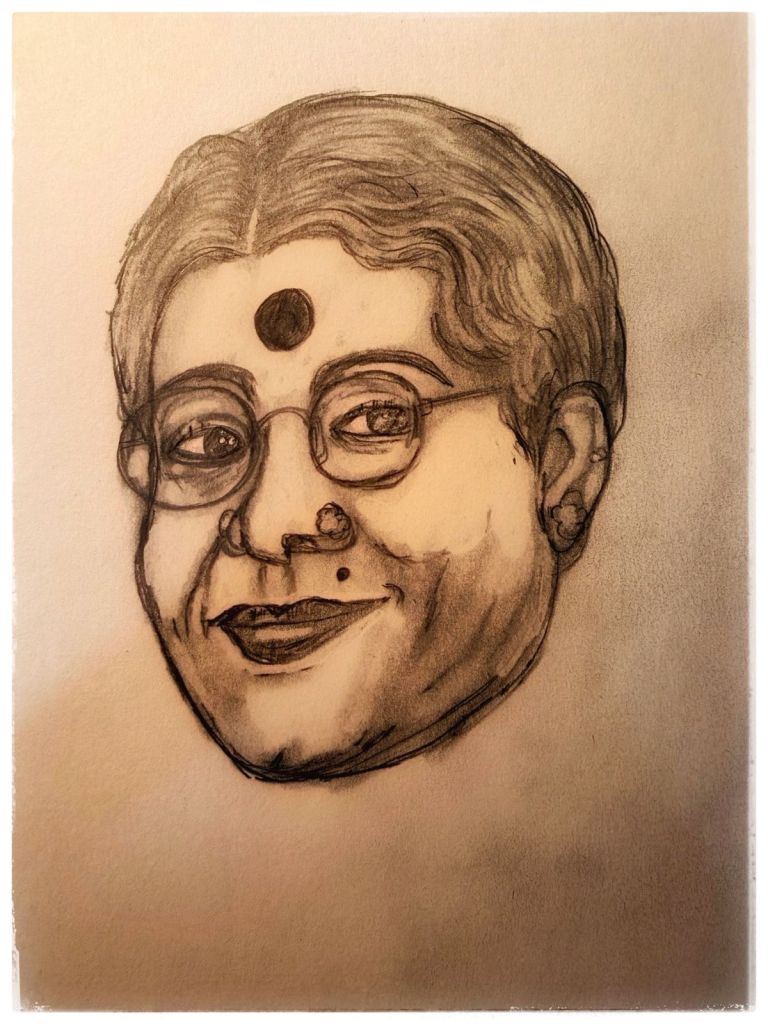
Mystery also is how one family can have so much talents! Like the mangeshkar family!
One of them is Usha Mangeshkar!

Now don’t think about re incarnation and live this life the fullest!

Shubh ratri!

The humanity of the firing squad!

A firing squad or the lethal injection has been typically used for executions!

Did you know that even there the human ‘morality’ is tried to be kept relatively ‘safe’!?

In the book Behave, Robert Sapolsky uses the example of a firing squad to illustrate the psychological concept of diffusion of responsibility and challenge our assumptions about free will and morality!

Now if you do read my blogs then you may remember one called the Rhythm 0!

In this humanity is tested and it fails!

The scariest thing in the world is that the average human is capable of gross acts of cruelty if he or she is faced with circumstances! You cannot forget that the primitive ‘man’ or ‘woman’ were once even cannibals! Which is why your every action shows how ‘developed’ you are! This can be with the dress you wear to the food you eat! Most importantly though it is by how you ‘BEHAVE’!

Now why a firing squad is used to execute is that if it is one to one shooting then the human may feel guilt (if some humanity is left that is!) even if the person who is to be shot ‘deserves’ it! So when you are a part of the squad then the morality is safe (r)!

Sapolsky states that humans have a deep-seated aversion to killing another person up close (hip hip hurrah! Some humanity!)

So to counteract the psychological trauma and moral responsibility of an execution, historical firing squads employed specific practices:

One is like above; using multiple Shooters: Instead of one executioner, a team (typically five or more) fired simultaneously. This allowed each shooter to feel they were only one-fifth responsible, a comforting but irrational thought!

There is another key tactic also! Which is the Blank Cartridge!

A key historical tactic was giving one random member of the squad a blank cartridge instead of a live bullet. This provided every shooter with a psychological “out”—the ability to believe, with some plausible deniability, that “I may not even have shot him or her”!

No one is told who gets the blank and those with conscience get some comfort!

Even in the case of lethal injection; some states employ two injectors!

Both press the button and only one goes to the convict! One is diverted to a waste bucket!

Here also the person does not know whose ‘injection’ went into the convict and whose got waste! That is decided randomly by the computer and the ‘decision’ is immediately erased!


Sapolsky uses these powerful example to support his broader arguments in the novel!


A simple action like pulling a trigger is influenced by a vast web of factors, from brain chemistry and personal history to culture and situational forces. The firing squad setup highlights how situational design can drastically alter behavior and the perception of moral responsibility.

Sapolsky also states that any human, given the same powerful situational forces, is capable of performing both the best and the worst deeds. The design of the firing squad manipulates those forces to make an otherwise difficult act possible for ordinary individuals!

In some customs when the cartridges could only be loaded at a time and guns had only single shots; if the firing squad ‘missed’ the convict, he or she was usually left free! The belief was that if he or she was innocent; ‘God’ would protect him or her and the squad will ‘miss!’

Of course if you know everyone in the firing squad then that would also ‘help’!

Finally the conclusion is that the behavior of the soldiers is heavily shaped by external and biological factors beyond their conscious control, making the concept of individual, ‘blameless’ responsibility problematic.

All the development on one side and we still need some stops to be called Human! ‘Humane’ is the key word here though!

One way is by calming your mind with meditation and yoga!

Who better for that than the legend Yogacharya B.K.S. Iyengar!

Now let the dreams fire! Shub ratri!

Rajni Zero!

Practically if you see the difference between say 12, 102 and 1002 is only; ZERO!

That is also the contribution of Bharat to the world! ZERO!

A thing which we take for granted now was so confusing in the past till we made the confusion disappear like it never existed!

Now can you imagine how it would have been when there was no term or even the number zero!?

Some people managed without zero by using placeholder concepts like spaces or symbols (Babylonian wedges, Mayan shells) to show an empty value in positional systems!

People in ancient Egypt & the Greeks used to use distinct symbols for different powers of ten (e.g., symbol for 9, another for 90, another for 900)!

Babylonians apparently used a positional system but initially left a blank space for absence, later adding wedges, though it wasn’t a true number.

The ancient Romans relied on the absence of a symbol in a position (like ‘I’ for 1, ‘V’ for 5) and avoided complex math by using abacuses!

The Mesoamericans developed a base-20 system with a shell-like glyph for zero as a placeholder in their calendar!

Around AD 650, the use of the number was common in Indian mathematics
Indian mathematicians such as Brahmagupta, Mahavira, and Bhaskara used
zero in mathematical operations!

Brahmagupta was the first to treat zero as a number in its own right, defining rules like \(0+0=0\), \(a+0=a\), \(a-0=a\), \(a\times 0=0\), and even discussing division by zero in the 7th century.

The idea of “emptiness” or Shunya in Indian philosophy provided a conceptual framework for understanding nothingness as something significant.

The Bakhshali Manuscript may be the first documented evidence of zero used for mathematical purposes!

So it was in ancient India that the mathematicians first treated zero (from “sunyata” – nothingness) as a number, establishing rules for operations like addition and subtraction!

Arabic scholars like Al-Khwarizmi adopted this system (Hindu-Arabic numerals) and made it central to algorithms, spreading it through their texts.

Remember that starting from a kid in a nursery school to the most complex computers in the world; everyone needs ZERO!

The impact of true zero allowed for complex equations and concepts like limits, making modern science and engineering possible!

In fact it is the core of the modern computing as the binary system (0s and 1s) is the foundation of all digital technology!

So when next time even if someone says that your contribution to a project or work is actually ZERO; you can still take some pride in that!

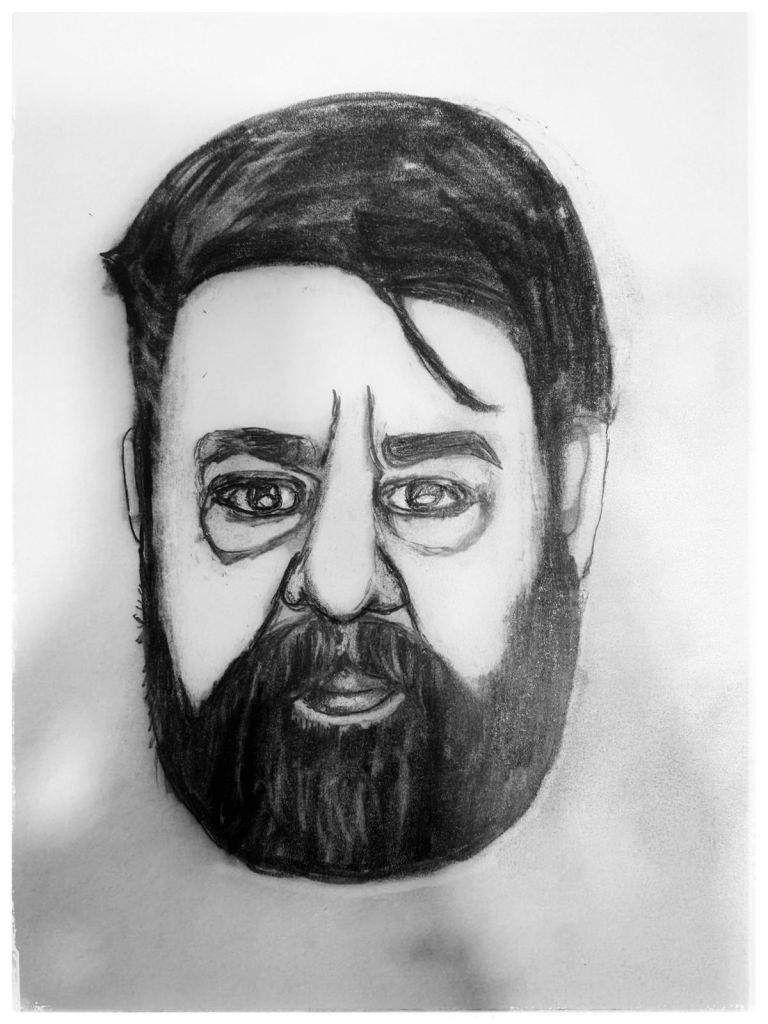
Then again there is one who can never be zero! It’s our own Rajnikant!

Now zero in on the bed and sleep!

Shub ratri!

Organon..

Do you know what is an Organon?

The practitioners of Homeopathy will know that for sure! But overall the most famous is the one by Aristotle!

So basically Organon is a general term for a system of principles or methods used for philosophical or scientific investigation and for acquiring knowledge.

There are three very popular ones!

Aristotle’s Organon The most famous historical use refers to the collection of Aristotle’s six works on logic, compiled by his followers into a single body of work.

Novum Organum Sir Francis Bacon later published his Novum Organum (“New Organon”) in 1620, in which he detailed a new system of logic (the Baconian method/inductive reasoning) that he proposed as superior to Aristotle’s methods!

A sort of remixed version!

Then you have the

Organon of Medicine which is the foundational book for homeopathy, written by its founder Dr. Samuel Hahnemann. It serves as the core “instrument” or guide for homeopathic physicians, detailing the doctrines, principles, and practical instructions for practicing the art of healing!

Without inviting controversy, I would not dream of touching the latter two Organon!

The safest to talk about is the Organon of Aristotle!

The goal of Aristotle’s Organon (Greek for “instrument” or “tool”) is to provide a comprehensive system of logic and a formal method of reasoning that serves as the necessary foundation and tool for all other philosophical and scientific inquiry.

Aristotle did not view logic as a separate science in itself, but rather as a preparatory discipline and an “intellectual toolbox” that enables clear thinking, valid argumentation, and the acquisition of true, demonstrable knowledge (known as episteme) across all fields, from physics and ethics to metaphysics.

The specific goals addressed within the different works of the Organon include:

The first goal was to divide into Categories! Or Groups! This is to establish a basic vocabulary for philosophical analysis. The ten fundamental groups were substance, quantity, quality, relation, place, time, position, state, action, and passion!

Then to analyze language and semantics, one must focusing on how terms are combined into propositions (statements that are either true or false) and exploring concepts like affirmation, negation, and modality!

Then he introduced the theory of the syllogism—a structured form of deductive reasoning (inference from general rules to particular cases) and the core of Aristotelian logic.

Ultimately, the Organon (the one by Aristotle that is!) aims to equip individuals with the intellectual rigor and integrity needed to discern truth from falsehood, engage in sound scientific investigation, and arrive at wisdom!

Of course wisdom is the knowledge that Dame Judith Olivia Dench is a great actress! The sketch has loads of face lines which makes it a great sketch! Each line is an experience!

Enough ‘organon’ for today!

Shubh ratri!