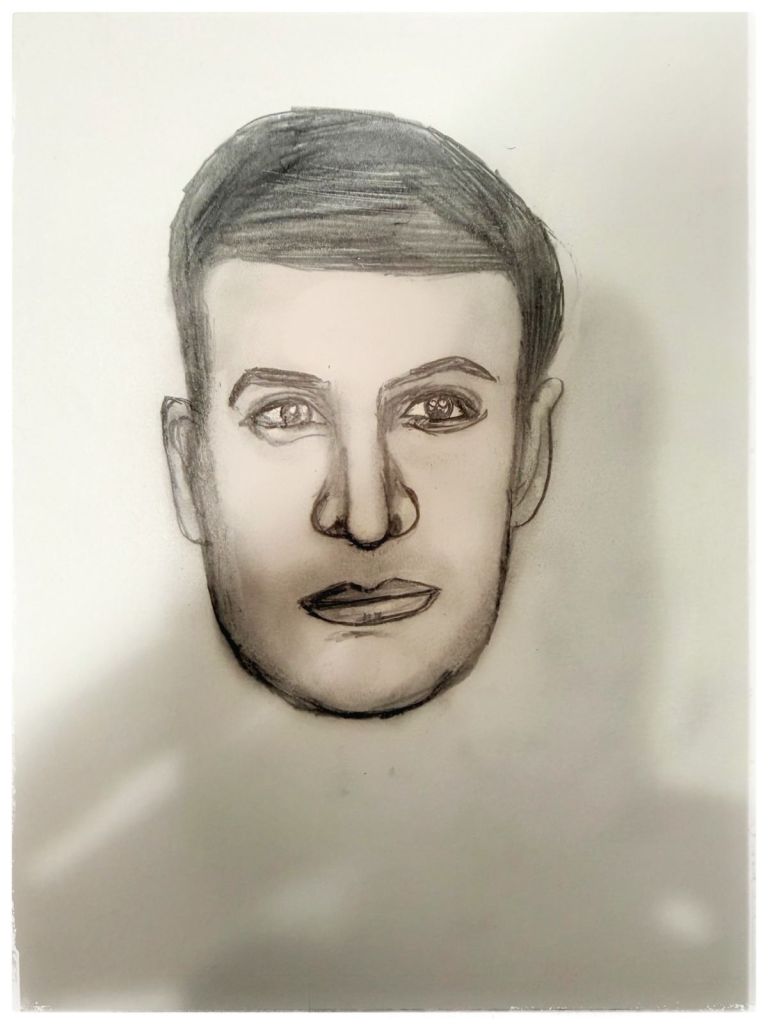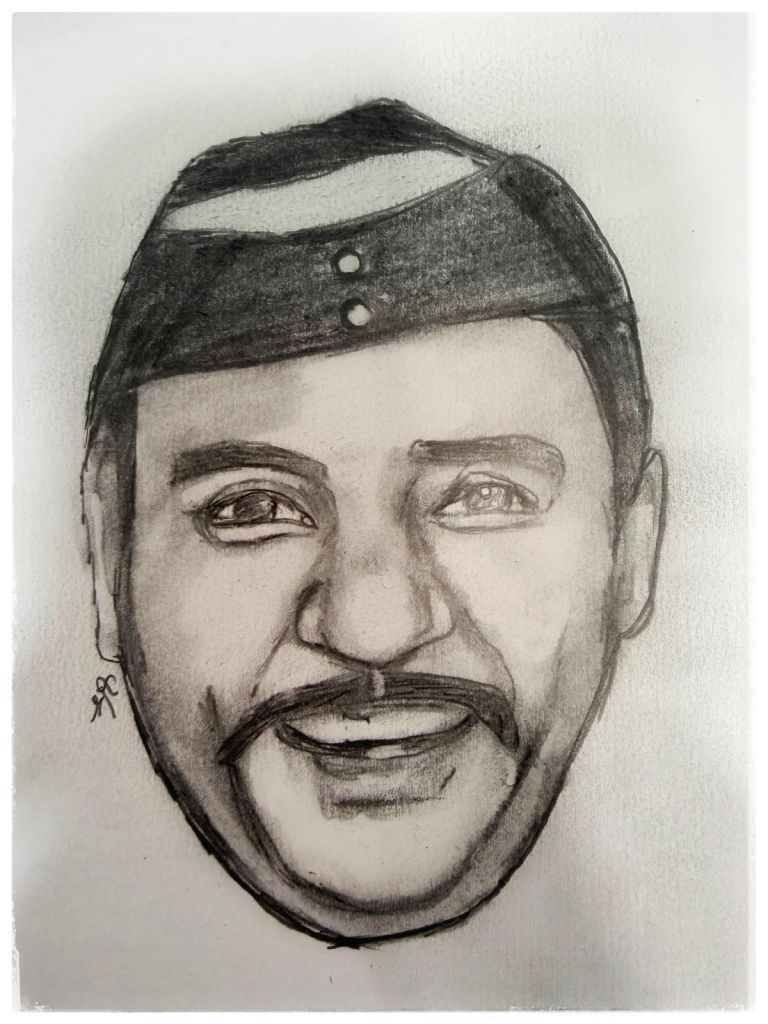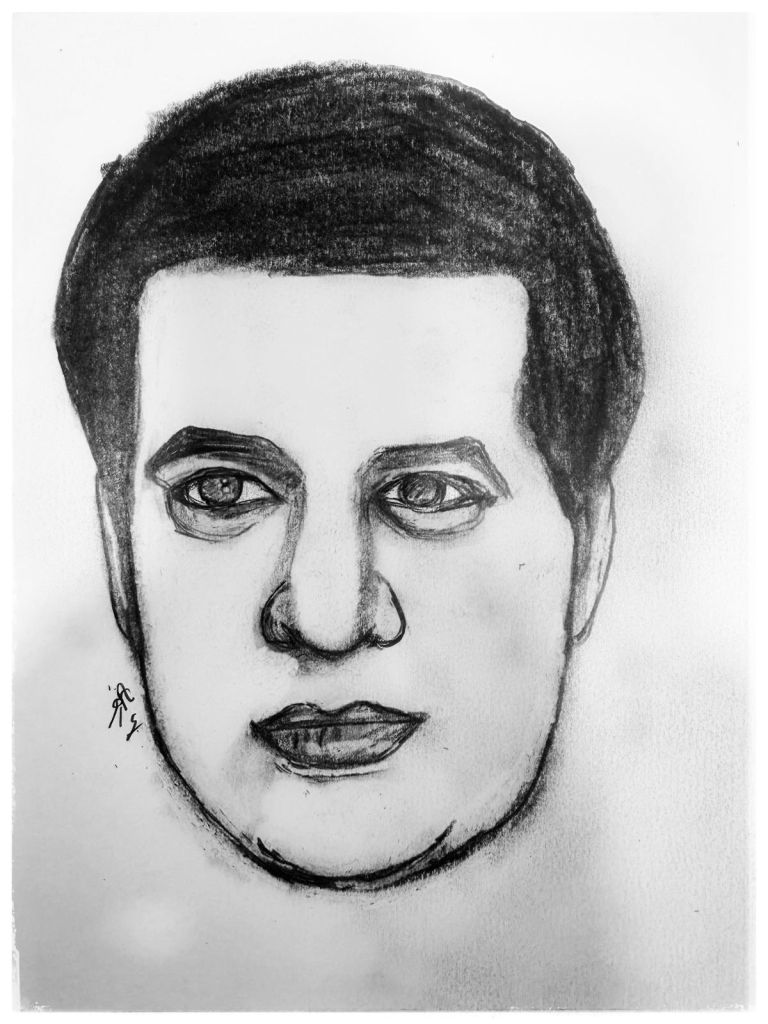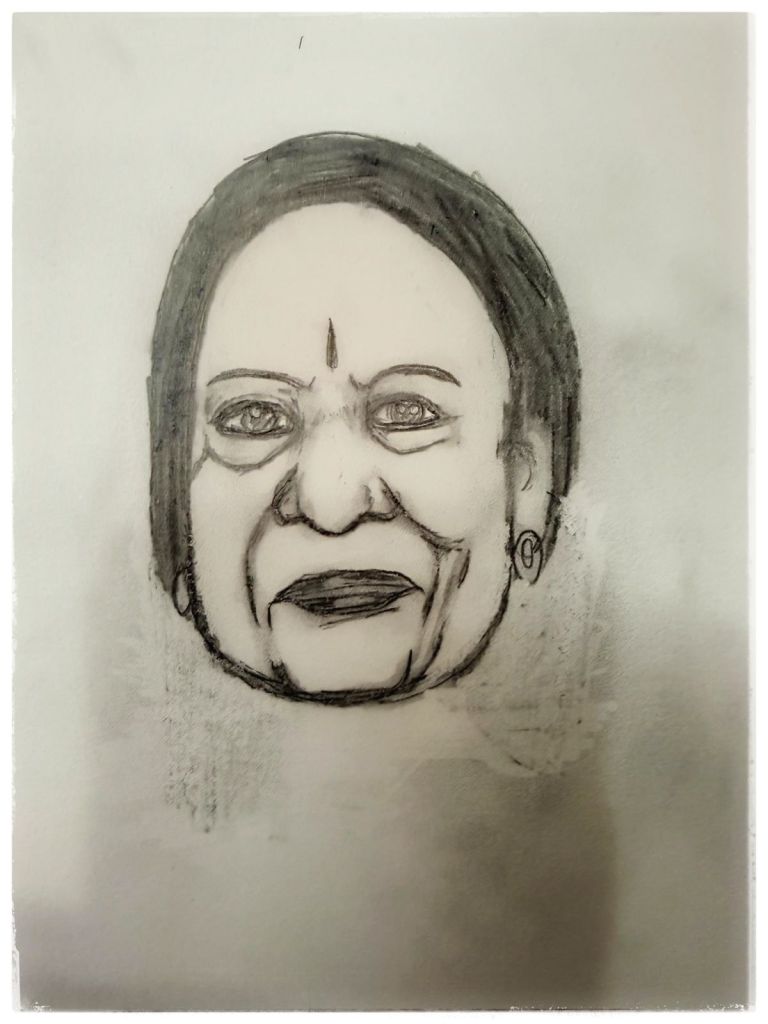
Eye of the elephant!

Do you know that Elephants do not play chess?

Now before you start thingking out loud; what a stupstupid question!?
The term is title of a very a very famous paper written by Rodney Brooks of the MIT Artificial Intelligence Laboratory. Brooks introduces Nouvell AI, also called fundamentalist AI!

In the paper Brooks challenged the traditional symbolic approach to Artificial Intelligence (AI) and proposed an alternative based on physical grounding and interaction.

He argued that the traditional approach, built upon the “symbol system hypothesis” which assumes intelligence operates on a system of symbols, had limitations. Brooks’ alternative, which he dubbed “Nouvelle AI”, emphasizes building intelligence from individual behavior-generating modules that interact with the real world through sensors and actuators.

He argued that this approach removes the need for symbolic representations because the world itself serves as the best model

Like you; the whole thing went over my head like a hot knife goes over a wad of warm butter!

So the simplest way of expalining the concept is that even the best ROBOTS of today may have supreme intelligence but don’t have the dexterity of a two year old kid!

We recently got a new Toy which is a case in point! To escape the hassle of a real pet, this was a toy doggie with more than sixty sounds and actions! This inlcudes eye movements and neck movements! But all said and done, it is still a toy! To replace the real thing will take ages or may be never!

One real thing I simply love which is human and not AI are the eyes! Of course some eyes I love more than the other! Even if I am an ENT specialist; I do believe that eyes are the mirror to your soul!

Another beautiful eye!


Now close yours!

Shubh ratri!

Kalam ka Kamal!

One Nobel laureate’s discovery would save the life of another who would later get a Nobel prize himself!

Sounds like a script of a Manmohan Desai!?

Well sometimes real life stories are so amazing!

The story starts with a Banter; I mean Banting!

Frederick Banting, was a Canadian surgeon interesting in Diabetes!

In 1920, Banting had a 25-word hypothesis about isolating a substance from the pancreas to treat diabetes, which he presented to Professor J.J.R. Macleod who then gave Banting a lab at the University of Toronto.

Sure enough Banting and his assistant, Charles Best, began experimenting with pancreatic extracts on dogs. Finally by the spring of 1922, they had purified a usable insulin extract with the help of James Collip.

The major impact was that this Insulin allowed people with diabetes to manage their blood sugar levels, transforming the disease from a death sentence into a manageable condition!

Banting and Macleod were awarded the Nobel Prize in Physiology or Medicine in 1923 for the discovery!

Now lets go to the next Noble Nobel!

George Richards Minot was born in a family of doctors!

His father was a physician,  also his uncle and his great grandfather were the founder of a Hospital!

So you would think; wow now that’s a chair ready to sit! His road to being a physician was ready! He did become one but then came the bad news!

He was diagnosed with diabetes which at that time was a sure death sentence! If you want to know the horror stories of children with Diabetes you can just Google!

Even for adults it was a terminal illness! Not like now when it is just a condition!  People with severe disease usually succumbed in a year!

Luckily Banting discovered insulin as you had already read above!
Minot was treated and went on to win his own Nobel! He treated another terminal illness at the time!

He with his team all discovered an effective treatment for pernicious anemia, with liver concentrate high in vitamin B12, later identified as the critical compound in the treatment!

Banting thus saved so many life and he was altruistic as well!
Banting, in a spirit of altruism, sold the patent for insulin to the University of Toronto for just $1 so it could be distributed wide!

Altruism and dedication also was the middle name of Avul Pakir Jainulabdeen Abdul Kalam! Huge respect for him!

Shubh ratri!

Since Dan Brown’s novels are filled with facts in spite of being fiction; I got the audible version for revision!

In his latest novel called the Secrets of the Secrets; He mentions (Rather she but lets not get specifics since that part is fiction!)

In an attempt to explain the Noetic science; the speaker tells about the famous Hermann grid!

If you have not seen this image yet in the social media it most likely means that you DO NOT have a smart phone!

Google it and see the image and get back to the blog!


So for those who do not have the smart phone lets begin!

The Hermann grid is an optical illusion where viewers perceive grey or dark spots at the intersections of a white grid on a black background. These “ghostlike” spots disappear when you look directly at them because the illusion is caused by the way the human visual system processes light and edges, a phenomenon known as lateral inhibition. The spots are more apparent when viewed from the periphery of the vision, as your eyes are more sensitive to the contrast between the intersection and the surrounding white lines!

The whole phenomenon happens because of sound principles!

One of this is called the Lateral Inhibition in the Retina and Neural processing which happens when light hits your retina, neurons send signals to the brain.

Lateral inhibition occurs when a neuron that is stimulated by light also “inhibits” or dampens the signal from its neighboring neurons.

At the intersections, the white light hits the receptive fields of the neurons and also their neighbors. The neighbors’ inhibitory effect on the central neuron is stronger, which “turns down” the signal from the center. This makes the intersection appear darker!

Along the white lines though in the middle, away from the intersections, the signal from a neuron is not as strongly inhibited by its neighbors, so the line appears brighter!

Finally the illusion is strongest in our peripheral vision because there is a gap between the actual neurons and the points we are looking!

There is no magic in the FACT that the dots appear and reappear! They are always there! We see but only OBSERVE occasionally!

Now if you observe that being old and feeling old is not the same! This is so true in the case of Prof. Calyampudi Radhakrishna Rao who retired at the age of 70 then made several contribution in the world of statistics to be awarded the International Prize in Statistics, an award often touted as the “statistics’ equivalent of the Nobel Prize at the age of 102 years!

Sending both the sketch and the Hermann grid for your amusement till you sleep!

SHubh ratri!

Have a bit of QUBIT…

Do you know what is a QUBIT?

It is not a bit of the queue! But it is definitely in the queue to revolutionize quantum computing!

In his latest Novel called the Ayodhya Alliance by Ashwin Sanghi; they tell about this revolutionary concept of QUBIT!

Of course for most physicists and for many computer nerds it is old news! But for common folk like us it is something new and exciting!

So lets gets back to the QUBIT in a bit!

A qubit (short for quantum bit!) is the fundamental unit of quantum information, serving as the quantum counterpart to a classical bit.

Unlike classical bits, which can only represent a 0 or a 1, a qubit can exist in a superposition, meaning it can be a 0, a 1, or a combination of both simultaneously until measured.

This quantum phenomenon, along with entanglement, allows quantum computers to process information with exponentially greater complexity, enabling them to solve specific problems that are intractable for even the most powerful classical supercomputers!

Qubits are physically realized through various two-state quantum systems, such as the spin of an electron, the polarization of a photon, or the energy levels of trapped ions or superconducting circuits. 

Without getting technical which really goes over my head! There are some key characteristics of the QUBITS…

One is called the Superposition where a qubit can be in a combination of both its basis states (0 and 1) at the same time.

Another property is called the entanglement which is when two or more qubits become entangled, their fates are linked, even when separated by large distances. Measuring the state of one entangled qubit instantly influences the state of the others, a property crucial for advanced quantum computations!

All these properties are important because of the exponential growth in information since as the number of qubits increases, the amount of information they can represent grows exponentially. For instance, while two classical bits can represent one of four states, two qubits can be in a superposition of all four states simultaneously!

These unique properties of qubits enable quantum computers to perform calculations that are impossible for classical computers. They hold the potential to revolutionize fields such as medicine, materials science, artificial intelligence, and cryptography! Now that is huge BIT!

Huge is also the contributions of Keshava Parasaran!

Now put your eyes to the shut down mode and sleep!

SHubh Ratri!

Cricket temperature calculator!

How do you know the temperature normally?

Pick up your phone or ask Alex/Siri/ Google in that order!

If you are a nature enthusiast then you can simply listen and use the Dolbear’s Law!

All you need is a relatively quiet place and crickets! Not the sports but the insect! You also need good hearing and patience!

The law itself is a formula that approximates the air temperature based on the rate of a cricket’s chirps!

The law works because crickets are cold-blooded animals, meaning their metabolic rate and muscle contractions—which produce chirps—are directly influenced by the external temperature!

So as the temperature increases, a cricket’s chirping speeds up; as it drops, the chirping slows!

Can we use the same logic for and find the temp with rate of teeth chattering!?

Cold causes teeth to chatter because the body’s muscles, including those in the jaw, involuntarily contract and relax to generate heat, a process called shivering. This involuntary shaking is the body’s natural response to a drop in core temperature to prevent hypothermia! But that works only in the cold and the rate is different for everyone so stick to the phone!

Anyway the Dolbear’s law was first published the observation in 1897, although similar findings were reported earlier. 

The formulas can vary slightly depending on the species of cricket and the desired temperature scale.

For Fahrenheit the most commonly cited version is a simple formula based on chirps per 15 seconds: 

Count the number of cricket chirps in 15 seconds  and then you simply add 40 to that number!

For Celsius the formula is based on counting chirps in 25 seconds dividing by 3, and adding 4! Now let that not complicate your mind!

For instance, 48 chirps in 25 seconds would approximate (48/3+4=20 degree C). 

The accuracy varies from species to species in that for the snowy tree cricket (Oecanthus fultoni), sometimes called the “thermometer cricket”; the count and measurement is really accurate!

However, the chirping of common field crickets is less reliable!
Unfortunately here also you have a class divide! Common folks are not elite!

Similar conditions and similar laws apply to different insects! Different insect species have different formulas.

The formulas are also not accurate at extreme temperatures where crickets stop chirping or cannot survive. Other variables, such as the cricket’s health, age, or the presence of other crickets, can also affect the chirping rate!

So when it comes to theory, Dolbear’s law  is good but for all practical purposes just look at you smart watch or phone!


There’s a joke somewhere there! Of course if it’s satire then it could be Srinivasa Iyer “Cho” Ramaswamy!

Now stop listening to crickets and sleep!

Shubh ratri…

The andon cord!

The Phoenix Project: A Novel About IT, DevOps, and Helping Your Business Win
by Gene Kim, George Spafford, and Kevin Behr talks about something called the Andon Cord!

Though introduced as a innovative device, it has now become an industry standard!

An Andon cord is a system in manufacturing, particularly associated with the Toyota Production System, that allows any worker to pull a cord or press a button to immediately signal a problem on the production line.

Pulling the cord triggers a visual or audible alert, such as a flashing light or siren, to notify supervisors and other workers to stop the line or address the issue to prevent defects from progressing.

The system is a key part of the principle of Jidoka, or “automation with a human touch,” which empowers employees to take ownership of quality control and continuous improvement. 

The idea is actually in its extreme simplicity! A worker pulls the cord or presses a button when they encounter a quality issue, defect, safety problem, or other abnormality.

The line may be stopped, or the problematic section halted, to prevent the production of more defects.

The next step is for a team leader or supervisor who comes to the worker’s station to help identify and resolve the root cause of the issue.

The chief aim here is that this system empowers all workers to be proactive in maintaining quality and efficiency, rather than waiting for a supervisor to find a problem. 

Though this may lead to waste in time and stall in the production; in the long run it has been found that it leads to more defect detection and greater production value which of course raises the brand value and the only thing the bosses worry about; PROFIT!

The modern adaptations now replaces the traditional cord with buttons, switches, or other digital interfaces to improve safety and workplace tidiness.

The system has also been adapted for use in other fields, such as software development, using digital tools to manage defects.

The core principle of using automated systems to detect and signal problems is also seen in advanced systems like Netflix’s “Chaos Monkey,” which intentionally breaks parts of their own systems to find vulnerabilities and correct them at the primary or root level!

Of course not many vulnerabilities can you find in a SS Rajamouli movie!

Now give rest to another cord! Vocal this time and sleep!

Shubh ratri!

Bee careful in the dark!

You know the most important species in the world cannot drive in the night!

It is not human of course! Of course even humans cannot drive in the night without assistance! In fact the average human cannot do much without his or her tools!

The species is the bee!

Most bees, including honey bees and bumble bees, cannot fly at night!
They are diurnal, meaning they only fly and pass along pollen during the day.
Bees can however crawl at night.

The issue is reliance on the sun!
Bees, have amazing compound eyes! Now more the complexity of the camera or eyes; the more light you need!

Which is why the bees , need sufficient light to see and locate resources like flowers and water. So like many navigators use the stars and the night sky for navigation, the bees use the sun’s position and even polarized light as a guide for their flights, which is unavailable at night.

This is why the moment the light is gone; they literally stop flying!

The sudden cessation of flight in darkness is a safety feature, preventing them from becoming lost, potentially starving, or being eaten by predators in the absence of visual cues.

While they can’t fly, bees are still able to move by crawling, which allows them to navigate short distances within their hive or on the ground.

Like good kids; they stay in the house or the hive!

Inside the Hive the young bees perform essential housekeeping duties at night, while older bees rest or stay in the hive.

Of course like everything there are some exceptions to the rule; So while uncommon, some species are nocturnal or crepuscular (active at dawn and dusk), allowing them to forage in low-light conditions.

This can happen under a half-full or larger moon, where some specific species of honeybees have been observed to forage at night.
So if you want to escape from a bee; turn off the light!

And if you want to escape boredom read some works by R K Narayan!

Shubh ratri! BEE careful!

Tulip mania!

The NYT quick crossword yesterday had an interesting clue about the flower which caused the first ever economic bubble in the 1630s!

So if you have not solved it yet; you can solve it and then read the blog! It was yesterday’s crossword though! So if you have not been able to get into it then let it go!

The flower is Tulip!

I did not know it at first but since I got the first and last letter; the answer was clear!

Of course that line was enough to investigate! A flower causes an economic bubble!

First you must know what is an economic bubble! 

Of course many of your financially literate folks out there know it too well but for people like me here it goes!

An economic bubble is a period of rapidly rising asset prices that significantly exceed their intrinsic value, followed by a dramatic collapse known as a “bubble burst”. 

So coming back to the Tulip induced economic bubble which was also known as Tulip Mania!

Now, Tulips were introduced to the Netherlands in the late 16th century and quickly became prized luxury items, especially rare varieties with vivid colors!

This demand led to a speculative market where bulbs were traded at increasingly higher prices, with many trading contracts (futures) for bulbs that would be delivered in the future! It is like selling the ticket on the space ship to Mars in the future!

Now as the prices skyrocketed, people from all social classes bought bulbs not for their beauty but for the expectation of reselling them at even higher prices, a concept known as the “Greater Fool Theory”! 

Yes that is a concept like that which is familiar to people who invest regularly!

For others like me! The theory is a speculative investment strategy where one buys an overvalued asset, believing they can sell it to a “greater fool” for a higher price. This strategy focuses on the hope of finding a buyer willing to pay more, rather than on the asset’s fundamental value, and is often associated with market bubbles that eventually burst, leaving the last buyer holding a worthless asset! 

Anyway at the height of the mania in 1637, a single tulip bulb could sell for more than the price of a house! The bunch of Tulips in front of your house could have bought a Villa in a prime locality!

Then as usual, after every rise comes the eventual fall!

With severe loss of confidence, eventually, buyers stopped paying the inflated prices, leading to a drastic price drop over a short period!

The market crash resulted in many speculators who had borrowed money to buy bulbs going bankrupt! 

But still it was a historical lesson! The Tulip Mania serves as the first recorded example of an asset bubble, demonstrating how speculation and irrational exuberance can drive prices to unsustainable levels!

In short, Tulips were not worth the hype! Try Rose next time!? 

The flower in English made those who followed the trend a flower in Hindi (Fool!)! 

Then you have one who can fool (the angrezi one!) you with his impeccable acting skills! That is Sanjay Mishra!

Now if you have some Tulips then if it was 1635; you are a millionaire! Stop dreaming! Then again, its sleeping time; so start dreaming!

Shubh ratri!

GNR deserves your Hug…

Do you know hugs are amazing!

In fact the Jadu ki jhappi is a great way to promote healing!

Then again there are many who may not like the traditional hug!

For them you have the squeeze machine! or the Hug Box!

In the novel Key to mastery by Robert Greene he talks about several successful people and one of them is a lady called Temple Grandin.


As a teenager, Grandin spent time at her aunt’s ranch in Arizona. There, she noticed that cattle confined in a squeeze chute for vaccinations became noticeably calmer after pressure was applied to their bodies.

Grandin, who sought deep pressure to soothe herself but found human hugs overstimulating, realized that a similar effect might help her with her own anxiety!

She urged her aunt to test the machine on herself and found that it was incredibly soothing! It was what she craved for years! The machine though made for cattle made her incredibly calm and reduced her anxiety levels!

Taking inspiration from that experience she at the age of 18, created the first prototype of her machine. Her science teacher at her boarding school encouraged her to develop the idea and research its therapeutic effects!

The device, typically V-shaped and padded, uses side panels to apply steady, gentle pressure to the user’s body. It is designed so the user can control the amount of pressure and exit the machine at any time, giving them a sense of control that they may not have with a human hug!

Grandin used the machine regularly to relieve her anxiety, which allowed her to become more tolerant of physical contact with others!

The squeeze machine operates on the principle of deep-touch pressure, which activates the parasympathetic nervous system. This can have a calming effect on individuals who are overstimulated or experiencing anxiety.!

Many individuals experience sensory processing differences, including hypersensitivity to touch. The hug box allows them to seek the deep pressure they crave in a controlled way, without the overwhelming sensory input of a human embrace.

The therapeutic benefits of deep pressure stimulation are now widely recognized. Concepts inspired by Grandin’s work are used in other products, such as weighted blankets, vests, and pads, which have a calming effect on most who crave for the human touch or a hug without any conditions!

Or next time you or someone is anxious you can try hugging if you know them closely enough! For everyone else try the Hug Box! Do not read the ‘hug’ though in Hindi; then you may end up in complications!

Complications and complicated and absolutely amazing were the discovery and contributions of Gopalasamudram Narayanan Ramachandran, or G. N. Ramachandran! He was an Indian physicist who was known for his work that led to his creation of the Ramachandran plot for understanding peptide structure!
He was the first to propose a triple-helical model for the structure of collagen!
He subsequently went on to make other major contributions in biology and physics.

He in fact deserved the Noble prize!

Hug on that information and sleep!

Shubh ratri!

Beri beri rice!


Have you seen a case of Beri Beri!?

You must count your lucky stars to have been born in this generation!
But did you know that the cure was discovered because chickens received left over polished rice!

Sometimes if your objective is true, all you need is a good and open mind to find the correct thing which may not be what you were looking for!

There was a time when in the late 1880s, the neuromuscular disease beriberi was a widespread problem in the Dutch East Indies (now Indonesia). The official scientific view, influenced by Robert Koch’s germ theory, was that beriberi was caused by a microorganism! The whole scientific community was trying to find out the bacteria which caused Beri Beri!

In 1886, Eijkman, a Dutch physician and pathologist, was sent to Batavia (now Jakarta) to investigate the disease. He established a laboratory and began trying to isolate the specific bacterium he believed was responsible for beriberi.

So Eijkman’s lab kept chickens for his infectious disease experiments. For several months, some of the chickens developed a form of polyneuritis (nerve inflammation) that was strikingly similar to human beriberi, with symptoms like muscle atrophy and paralysis!

One of the chief observation here was that the chickens had been fed leftover military-grade polished white rice! It was more costly and apparently more tasty!

Then came the twist! All because of a cook who liked to follow rules!

A new cook came aboard and refused to give military rice to non-military animals!
Poultry and Military may sound similar but as the cook asserted; they are not the same!

So the non military chickens were switched to a diet of unpolished “civilian” rice!
The real surprise was now!

To Eijkman’s surprise, the sick birds made a rapid and complete recovery!
Eijkman correctly deduced that the rice’s diet was the cause of the disease, and that something in the bran of unpolished rice was the preventive factor. He proved that the disease was not caused by infection or environmental factors.

However, his initial hypothesis was wrong. He incorrectly theorized that polished rice contained a nerve poison and that the rice bran provided an antidote to this toxin! But he had good friends who had good sense!

It was Eijkman’s colleague, Gerrit Grijns, who would later offer the correct interpretation: beriberi was not caused by a toxin but by the lack of an essential substance in the diet!

After Eijkman returned to the Netherlands due to illness, his friend Adolphe Vorderman, the Chief Medical Officer in Java, confirmed Eijkman’s findings. Vorderman conducted a large-scale study on prisoners in 1897, finding that beriberi was rampant in prisons where inmates were fed polished rice but nearly nonexistent where unpolished rice was served! Interestingly, the polished rice is actually more costly and ‘fancier!’

Eijkman’s work demonstrated for the first time that diseases could be caused by dietary deficiencies, a concept that paved the way for Casimir Funk’s discovery of “vitamines,” now known as vitamins. The missing substance was eventually isolated and identified as vitamin B1 (thiamine)!

For his pioneering research, Eijkman shared the Nobel Prize in 1929 with Sir Frederick Gowland Hopkins, who independently discovered growth-stimulating vitamins! The story about Gowland is, well for another blog!

But hope you understood what unpolished rice did to chickens! Think about it when you dig into white polished vitamin less rice! So many times what is fancy and costly may not be better! Some routine stuff are many times better ! Like character actor roles in movies like Dhoni and Khosla played by Rajesh Sharma!

Now ‘polish’ that dinner and sleep!

Shubh Ratri!