Turn back time!


“FB steals it from you and you feel it’s free!
You tube takes another chunk without a bell or chime!
Whatever is left is taken by the Gram, WhatsApp and the (e) X!
Not talking about money but your precious Time!”

I am a gadget lover! I would buy anything with a bluetooth! I have bluetooth speakers, watch, lamp, table, neck massager, keyboards and mouse! Not to mention a bluetooth helmet! And my prized possessions; my Bluetooth sunglasses and reading glasses! I can simply wear them and listen to the phone or even speak in WhatsApp and no one would get to know!

The next gadget I have always loved since the time I was young (er!) is the watch! My nephew also has this obsession with the clock! Though clocks also are high in my list of things to buy and own; the wrist watches are a big thing for me!

My first watch which used to work like a normal watch was an HMT classic! Before that as kids we used to love wearing the plastic watches and showing around! Of course those watches only showed one time! We used to ask our elders the latest time and ‘adjust’ it with our fingers every time! The bigger plastic hand was usually the first one to fall and later the smaller one followed! The flimsy plastic strap used to break and all the rubber bands in the world could not keep the watch from literally disintegrating to pieces! That was time lost in every sense!

The HMT was my prized possession till one day one of my relatives gently mentioned that it was a ladies watch! Of course since my wrists were small (they still are!); it would be odd wearing watches which were big and bulky! The battle between wearing a ladies watch versus wearing a big one was finally won when the young skinny me got an electronic watch!

I distinctly remember how my parents told us to stay in our room in the transit camp of Guwahati and they went to buy the digital watch from the ‘Chinese market’ there!

Our imaginations were flying high and I soon wanted a digital watch with a calculator and a maybe with a speaker and a feature to call! By the way that was in 1988-89!

Of course I was heartbroken when I got a single line bulky digital watch which showed only time! How boring! Later of course it was a great possession for showing off till the battery gave away and those days once the battery is dead it may not be replaced for some time!

For a long time then I never had a watch till the Board exams when my dad got us the HMT watches and this time they were men’s! They were of course standard size which in my case were too big for my skinny wrists!

The standard metal straps were soon replaced by better looking ones and I held on to that watch for a pretty long time till I got into the medical college!

Now those watches were a joy to have since you have to put the key every night! They used to get ‘recharged’ by turning the crown till you get a resistance! If you need to change the time you need you pull the crown a little and change the time! If you keep the crown in the same position then the watch will stop! And if you twist the crown too much then the spring inside will not function properly!

It was this time when there were guys who had the automatic watches which did not have to be ‘charged!’ The movement of your hands would charge the spring inside! My dad had one such watch and they were the ones which made you wide eyed with wonder!

Then came the digital and the smart watches and that is a blog for another day!

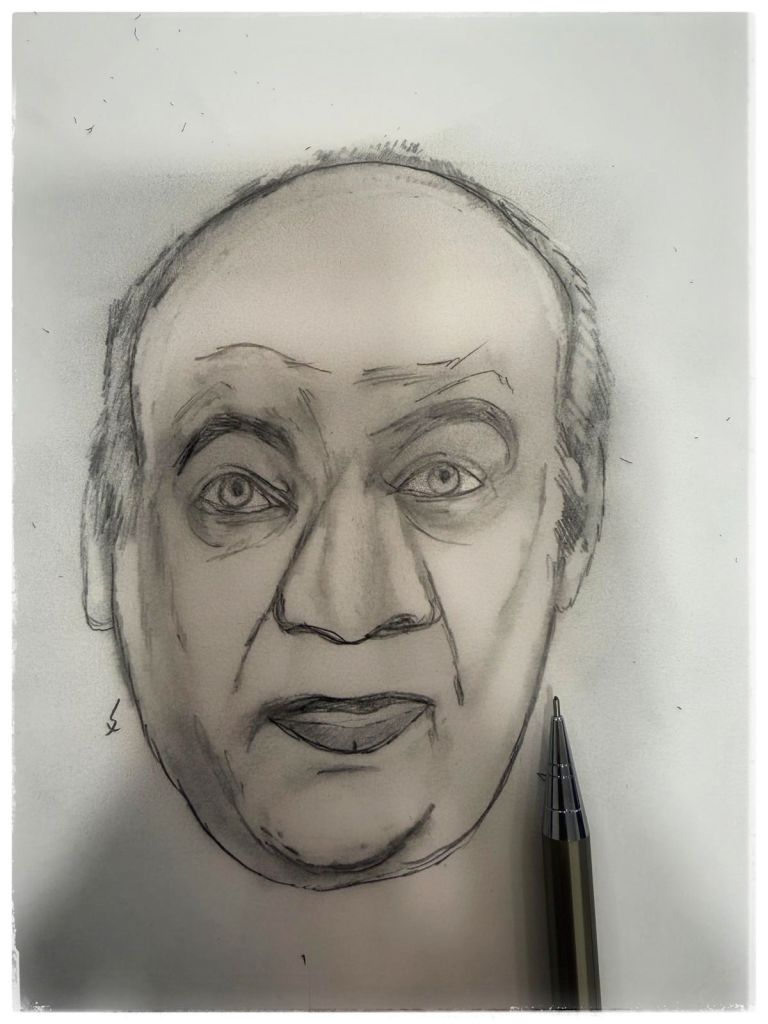
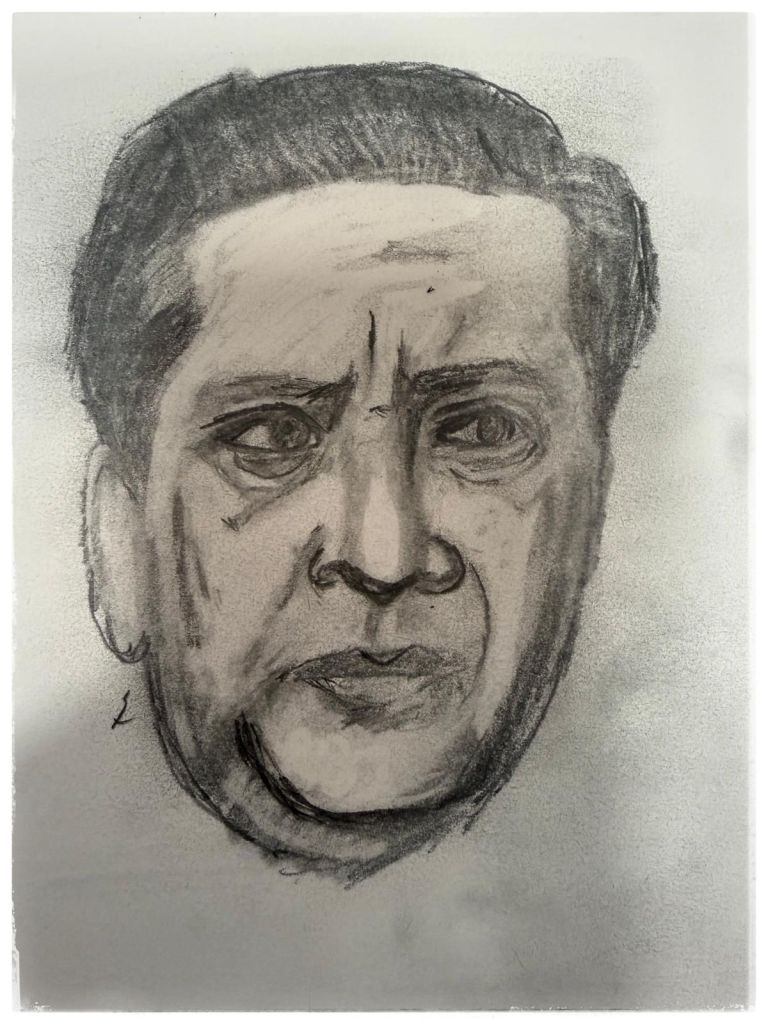
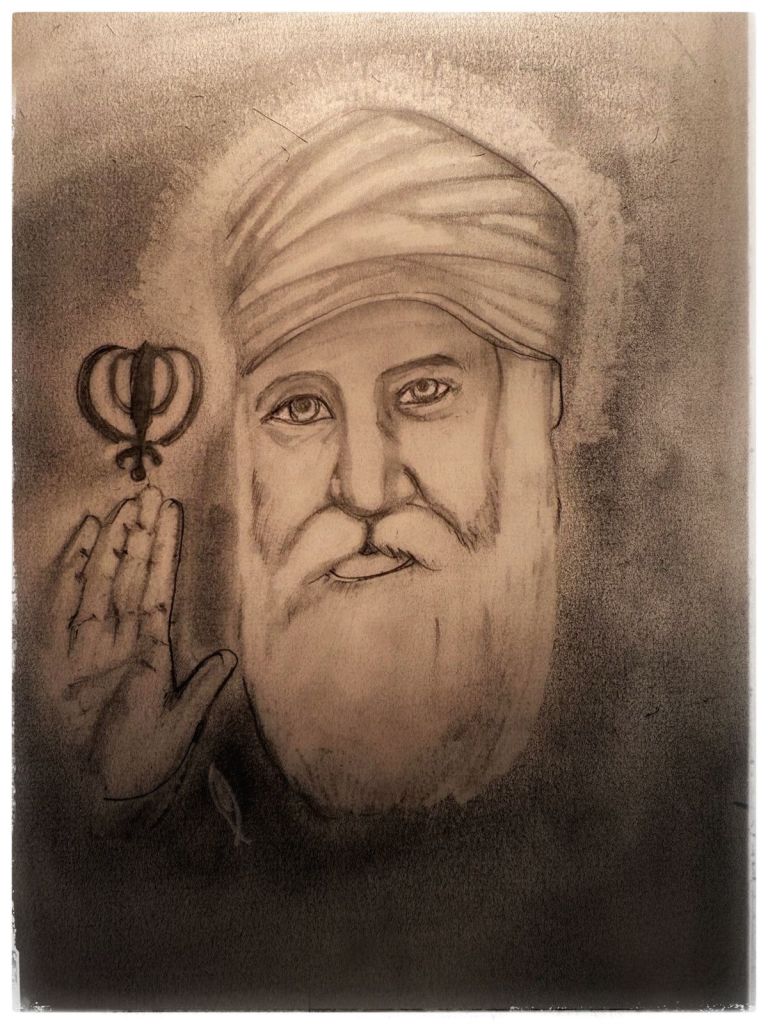
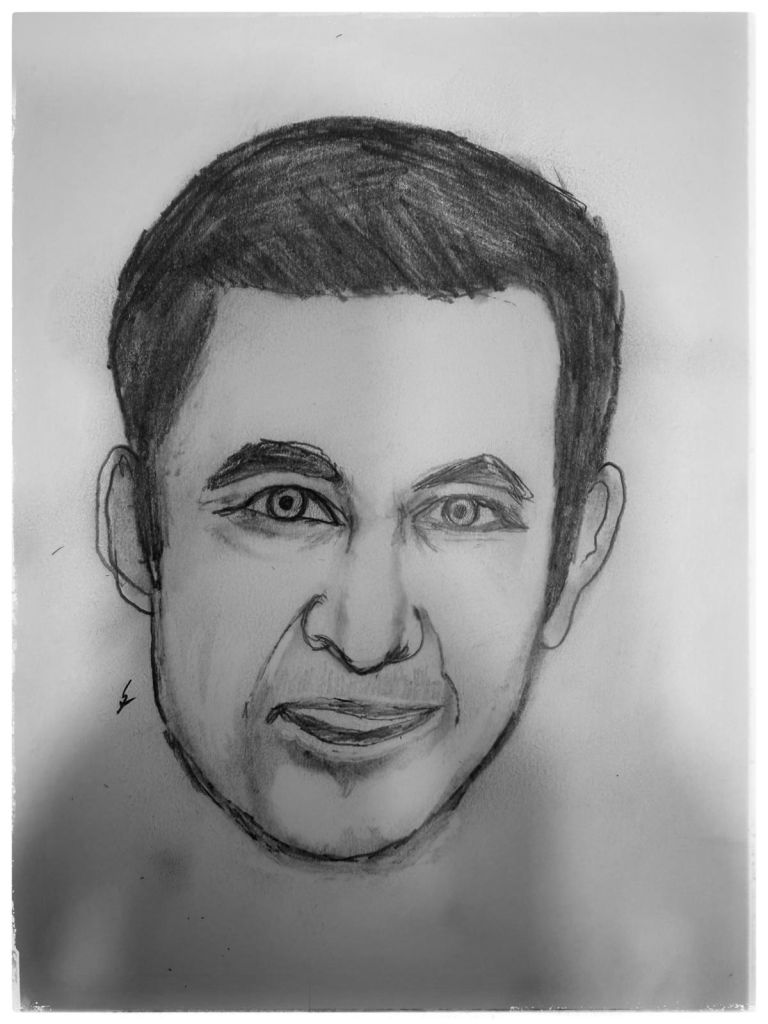
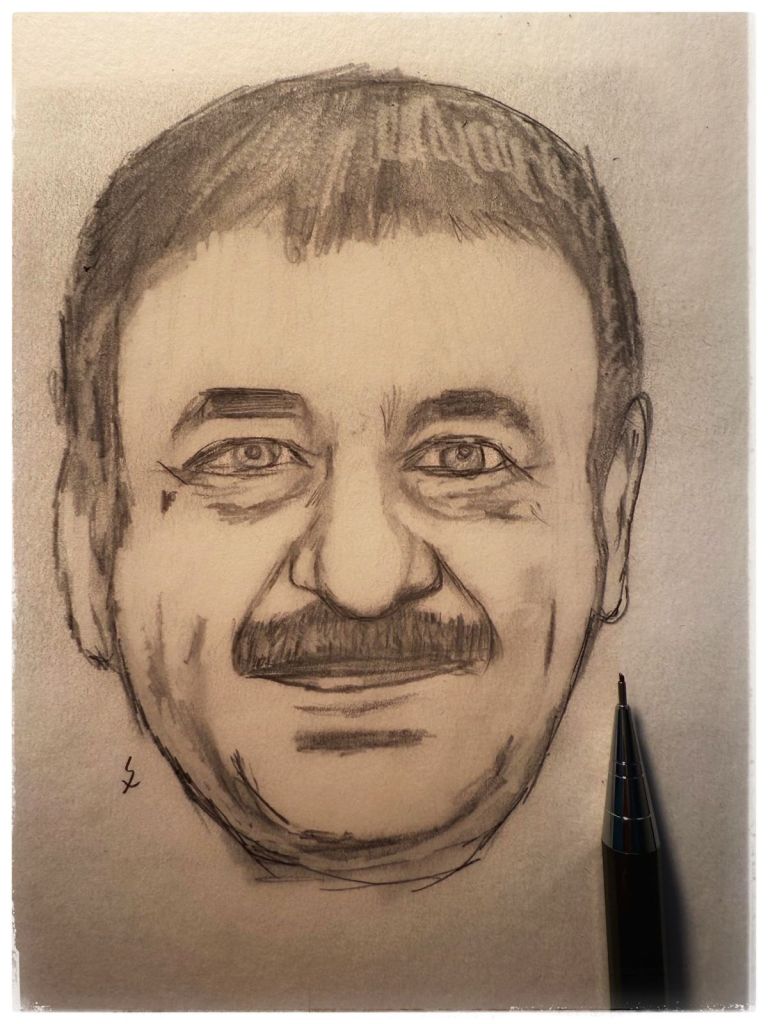
Even though they are not comfortable or common, I adore pocket watches! For now of course my Apple Watch can call, has calculator and even GPS and heart rate measuring capacity! Even then my dream is to one day get a limited edition pocket watch and when someone asks for the time, take it out of my pocket and tell him or her! Of course it may be the wrong time but I am sure by then the person would not mind so much about the time! One can only dream or think about the lovely moments of childhood! One of them was Wagle ki Duniya starring birthday celebrity Anjan Srivastav! Oh those were the days when the time was slow and steady and fun!

Now tell Alexa or Siri or yourself to set the alarm and sleep!
Shubh ratri!

Game of life!!


“Sing along and say your name!
Dance the way you want ain’t no shame!
Scream and laugh and make everyone insane!
Be like a child always! ’cause life is a nice game!”

This may be one of the first game every child plays! One of the few games which is so simple to learn and can be played without any limitation of age!
The amazing thing is that even an illiterate person can play the game and win it! Though some amount of luck is required to win it, most of the time simple strategies and placing the first point makes or breaks the game!

You can play it on paper or without one!
Rich or poor, everyone has to play the same way and this may be one game which is seen all over the world with variations in name and points used!

You would have played it with your father and child or even grand father!
The very simple but interesting game called; Tic-tac-toe!

Now the very first traces of tic-tac-toe go back to Egypt, which has remnants of 3×3 game boards on roofing tiles from 1300 BCE. Other variations included the terni lapilli
(three pebbles at a time) from the Roman Empire, three men’s morris from various
parts of Asia, and Picaria from Native Americans.

The game’s grid markings have been found chalked all over Rome. Another closely related ancient game is three men’s morris which is also played on a simple grid and requires three pieces in a row to finish and Picaria which is a game of the Puebloans.

The first print reference to “noughts and crosses” was as a British name which appeared in 1858, in an issue of Notes and Queries.
While the first the first print reference to a game called “tic-tac-toe” occurred in 1884, but referred to “a children’s game played on a slate, consisting of trying with the eyes shut to bring the pencil down on one of the numbers of a set, the number hit being scored”.
“Tic-tac-toe” may also derive from “tick-tack”, the name of an old version of backgammon first described in 1558.

In 1952, OXO (or Noughts and Crosses), developed by British computer scientist Sandy Douglas for the EDSAC computer at the University of Cambridge, became one of the first known video games. The computer player could play perfect games of tic-tac-toe against a human opponent!
Of course as mentioned in an earlier blog, ‘Tennis for two’ was the official first video game though in 1948, ten years before Higginbotham’s Tennis for Two, Thomas T. Goldsmith Jr. and Estle R. Mann patented the “Cathode-Ray Tube Amusement Device,” making this currently the earliest-documented video game predecessor! OXO could be the practical second video game ever produced! Then again it is more popular as a non video game!

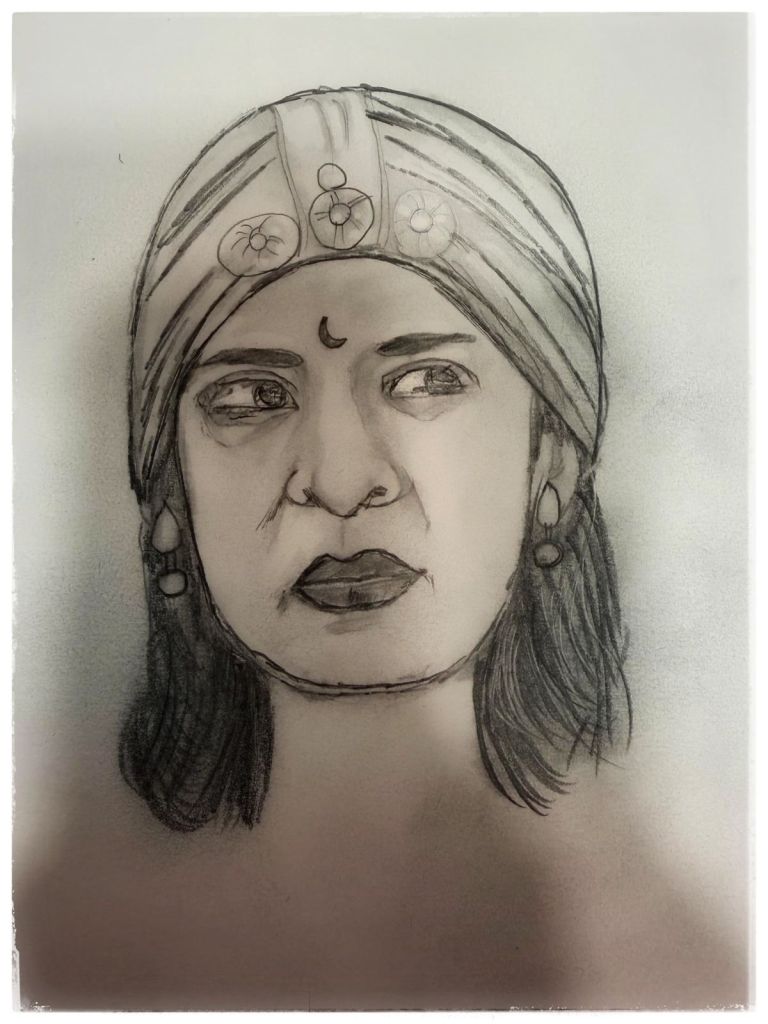
In 1975, tic-tac-toe was also used by MIT students to demonstrate the computational power of Tinkertoy elements. The Tinkertoy computer, made out of (almost) only Tinkertoys, is able to play tic-tac-toe perfectly! On a dull day our school book’s last pages were full of these games! Youth of course were spent listening to the songs! One such album was Alaipayuthey starring birthday celebrity Ranganathan Madhavan! Recently saw the movie Shaitaan starring Maddy! The ending was good but I felt that he would have been better in the role of Ajay and Ajay should have played Maddy’s role!

Now listen to some old Maddy songs and sleep!
Shubh Ratri!

A man’s best friend is a woman’s better one!

“He listens to me with a stare so cute!

He tries to catch his tail like a race!

He may not tell me what is going on inside his mind!

But I know what my pet feels; just look at his face!”

In the whole history of Human civilization, the Homo Sapien has the distinct honor of domesticating fully only one animal! Of course other animals are also domesticated but the complete domestication means that this animal has the life and time completely dependent on the human! 

Yes! The dog! The menace of stray dog notwithstanding which is a different matter altogether, all said and done, many of the modern dog species cannot survive without a human feeding clothing and vaccinating! Cats do come close but you can never actually ‘Tame’ a cat or ‘bell’ a cat! In fact in one of the recent comments by an experienced observer was of a sketch of a cat and the first thing which was asked was how did the cat allow the ‘collar’!

Both Yuval and Desmond in their books have mentioned about this the way how these wild species finally became the best friend of the man (or woman!) is an interesting story!

It is not certain exactly when our ancestors first began to domesticate this valuable animal, but it appears to be at least ten thousand years ago! 

The wild, wolf-like ancestors of the domestic dog must have been serious competitors with our hunting forebears. Both were co-operative pack-hunters of large prey and, at first, little love can have been lost between them. But the wild dogs possessed certain special refinements that our own hunters lacked. They were particularly adept at herding and driving prey during hunting maneuvers and could carry this out at high speed. They also had more delicate senses of smell and hearing. 

If these attributes could be exploited in exchange for a share in the kill, then the bargain was a good one. So an association with them would be beneficial to both! A perfect symbiosis if there ever was one!

Somehow an inter-specific bond was forged. It is probable that it began as a result of young puppies being brought in to the tribal home base to be fattened as food! Yes! Even the cute dog puppies you like to love and cuddle nowadays would have been eaten by the early Homo Sapien! 

Then the value of these creatures as alert nocturnal watch-dogs would have scored a mark in their favor at an early stage! Those that were allowed to live in a now tamed condition and permitted to accompany the males on their hunting trips would soon show their paces in assisting to track down the prey. Having been hand-reared, the dogs would consider themselves to be members of the naked-ape pack and would co-operate instinctively with their adopted leaders!

Selective breeding over a number of generations would soon weed out the trouble-makers and a new, improved stock of increasingly restrained and controllable domestic hunting dogs would arise. Basically the old adage of get in line or get out!

It has been suggested that it was this progression in the dog relationship that made possible the earliest forms of ungulate prey domestication. The goats, sheep and reindeer were under some degree of control before the advent of the true agricultural phase, and the improved dog is envisaged as the vital agent that made this feasible by assisting large-scale and long-term herding of these animals!

During more recent times, intensified selective breeding has produced

a whole range of symbiotic dog specializations. The primitive all-purpose hunting dog assisted in all stages of the operation, but his later descendants were perfected for one or other of the different components of the overall behavior sequence. So now we have specialized dogs, their contribution being confined largely to their skill sets like rounding up of domesticated prey are the sheepdogs while others, with a superior sense of smell, were inbred as scent-trackers (hounds). Then again we have the those with an athletic and were employed to chase after prey by sight have now become racing dogs like the greyhounds!

Another group were bred as prey-spotters, their tendency to ‘freeze’ when locating the prey being exploited and intensified (setters and pointers). Yet another line was improved as prey-finders and carriers (retrievers). Small breeds were developed as vermin-killers (terriers). The primitive watch-dogs were genetically improved as guard-dogs (mastiffs!)

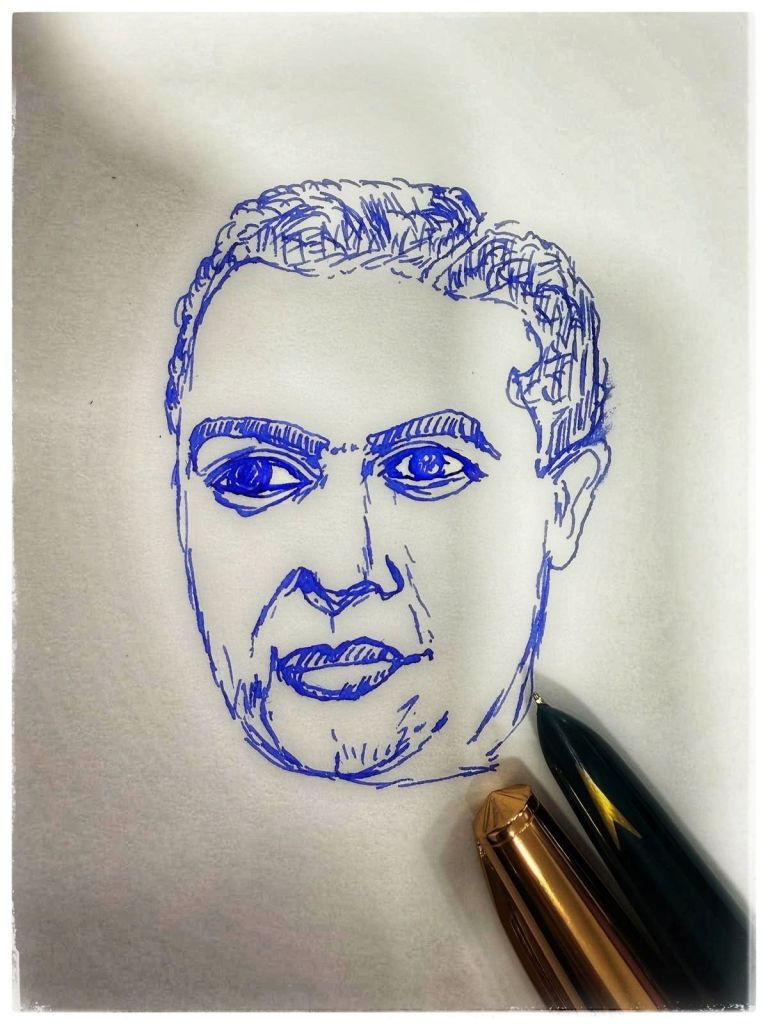
Now you also have the guide dogs and the K9 units all over the world who aid their best friends in many possible ways! Of course the most common ones are the cute and cuddly ones who are just happy to see you and wag their tail and fetch! With their keen sense of smell and the relation with the humans these amazing creatures are truly the super star of pets! A true super star of the Telugu Film industry also was birthday celebrity Ghattamaneni Siva Rama Krishna Murthy aka Krishna! If you think Mahesh Babu looks good, you must check out his stylish and smart father Krishna and you will realise that the apple did not fall too far from the tree!

Now check out some old Krishna hits (actor or God, your choice!) and Sleep!

Shubh ratri!

The master and the pet!

“You get food for him, you take him places!

You love his face and the tail he chases!

He gets the best food and a cosy bed u bet!

You may be the master, but he is your pet!”

In the book The Naked ape by Desmond an interesting analysis was done about the favourite animal which bought into light many findings!

This was based on a survey done for both boys and girls in different groups and the results were surprising! 

If you split the age groups from young to old it has been seen that the favourite animals change as the age progresses! 

The chief determinant here is unexpectedly not the ‘cute’ or ‘sweet’ criteria but the size! Yes size apparently does matter! So the younger children prefer the bigger animals and the older children prefer the smaller ones!

To illustrate this we can take the figures for the two largest of the top ten forms, the elephant and the giraffe, and two of the smallest, the bushbaby and the dog. The elephant, with an overall average rating of 6 per cent, starts out at 15 per cent with the four-year-olds and then falls smoothly to 3 per cent with the 10-14 year-olds. 

The giraffe shows a similar drop in popularity from 10 per cent to 1 per cent!

The bushbaby, on the other hand, starts at only 4.5 per cent with the four-year-olds and then rises gradually to 11 per cent with the fourteen-year-olds. The dog rises from 0.5 to 6.5 per cent. The medium-sized animals amongst the top ten favourites do not show these marked trends!

In all these the medium sized normal routine animals remain constant! 

The authors had an interesting conclusion on these findings which may or may not be relevant for today!

They proposed two principles. 

The first law of animal appeal states that ‘The popularity of an animal is directly correlated with the number of anthropomorphic features it possesses.’ 

The second law of animal appeal states that ‘The age of a child is inversely correlated with the size of the animal it most prefers.’!

In simpler terms the preference is based on a symbolic equation and the simplest explanation is that the smaller children are viewing the animals as parent-substitutes and the older children are looking upon them as child-substitute!

So a young kid would like an animal which is big and possibly strong like his or her father while an older kid would like a animal to treat as a ‘child’ or ‘pet!’

When the child is very young, its parents are all-important protective figures. They dominate the child’s awareness. They are large, friendly animals, and large friendly animals are therefore easily identified with parental figures!

As the child grows it starts to assert itself, to compete with its parents. It sees itself in control of the situation, but it is difficult to control an elephant or a giraffe.

The preferred animal has to shrink down to a manageable size!

The child, in a strangely precocious way, becomes the parent itself! The animal has become the symbol of its child. The real child is too young to be a real parent, so instead it becomes a symbolic parent!

The author has advised that parents should be warned from this that the pet-keeping urge does not arrive until late in childhood! So it is a grave error to provide pets for very young children, who respond to them as objects for destructive exploration, or as pests! 

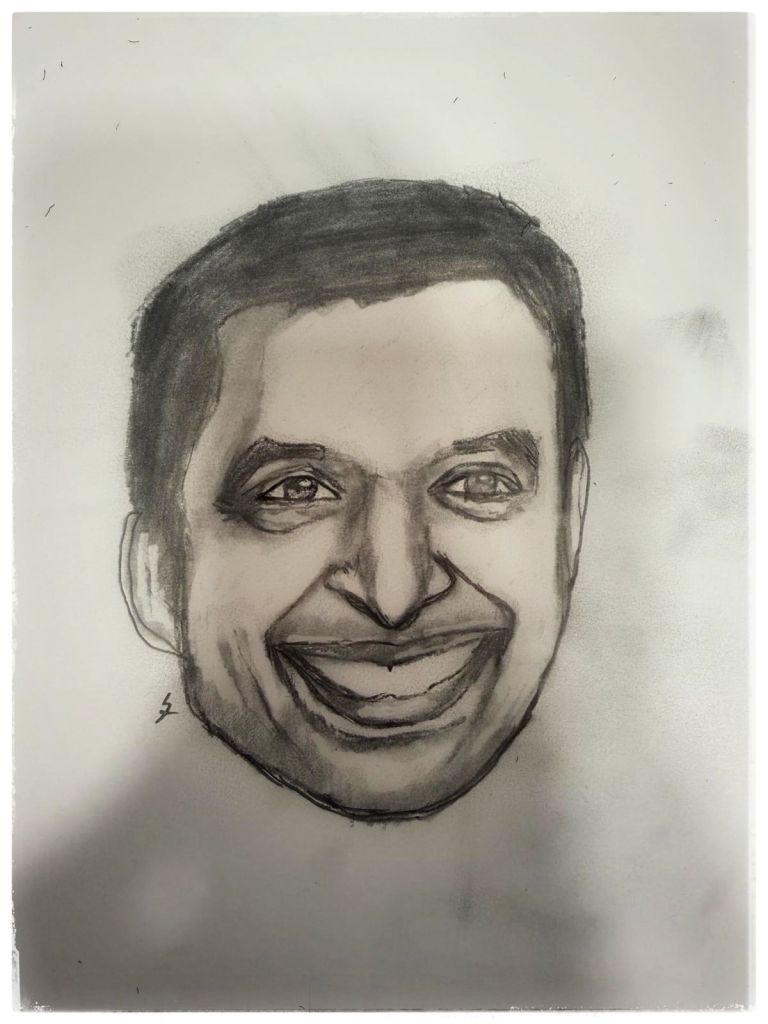
We have seen this too often when a child simply grabs the tail of any grab worthy part of the pet and it can actually lead to serious issues if the pet is not docile or domestic enough! Then again this was in 1960s! The amount of reels of young kids with pets may paint a different picture! Now thinking of picture reminds me of birthday celebrity K. S. Ravikumar  and his very entertaining movies!

Now pet…I mean put yourself to sleep!

Shubh Ratri!

As tall as Everest!

“The little mouse tells to the tall mountain!

Oh how tall you are! Reaching for the sky!

The mountain replied sadly!

Oh what I would not give to move like you, let alone fly!”

At one point in the world, Kangchenjunga, was the official tallest mountain of the world! At the height of  8,586 m, it stood kissing the skies!

I still remember the view of the majestic Himalayas from the flight on the way to Ladakh! Words can’t describe the view!

So coming to the tallest mountain!

In the 19th century the Great Trigonometric Survey of British India, identified “a stupendous snowy mass” through surveying instruments from above the hill resort of Darjeeling, over 140 miles away!

The peak was initially named “Gamma” and then subsequently changed to “peak b” in 1847; it was suspected that “peak b” also called “XV ” might be the highest mountain in the world!

During the time the mountain was allowed to be measured by the surveyor General of India who unfortunately was not Indian or Nepali! So in 1831, George Everest, the Surveyor General of India, was in the pursuit of a mathematician who had specialised in Spherical Trigonometry, so that they could be a part of the Great Trigonometric Survey which could calculate the actual height of this tall mountain and officially claim the feat to be the tallest in the world! 

Everest had begun his search for a mathematician, and soon enough, John Tytler, a professor of Mathematics at the Hindu College, now known as the Presidency College, recommended his 19-year-old pupil, Radhanath Sikdar!

Radhanath, a student of the college since 1824, was one of the first two Indians to read Isaac Newton’s Principia and by 1832; he had studied Euclid’s Elements, Thomas Jephson’s Fluxion and Analytical Geometry and Astronomy by Windhouse! 

Radhanath started measuring the height of mountains. The brilliant mathematician, who had perhaps never seen Mount Everest compiled data data about Mount Everest from six observations and he eventually came to the conclusion that it was the tallest in the world!

It was during the computations of the northeastern observations that Radhanath had calculated the height of Peak XV at exactly 29,000 ft (8839 m)! , but his senior Waugh added an arbitrary two feet because he was afraid that the Sikdar’s figure would be considered a rounded number rather than an accurate one!

He officially announced this finding in March 1856, and this remained the height of Mount Everest till an Indian survey re-calculated it to be 29,029 ft or 8848 m in 1955! 

From the plains of India it is only one among many conspicuous peaks, and its distance from the Indian frontier across the whole width of Nepal often prevents its being seen at all. The first names proposed were the Nepalese names Devadhunga and Gaurisankar. The first, however, was found to be non-existent as a peak name in Nepal, and the second belongs to another peak. There was no entry of the surveyors into Tibet in those days, and, in the lack of Indian and Nepalese names, it was necessary to find a title for the peak. 

In the early 20th century, the acclaimed Swedish explorer Sven Hedin uncovered the centuries-old Tibetan name of Cha-mo-lung-ma,” which in fact had been published on a map in Paris in 1733 by the geographer D’Anville! Therefore, the historic, local Tibetan name for Mount Everest is Chomolungma, also spelled Qomolangma, meaning “Goddess Mother of the World.” Chomolungma is pronounced “CHOH-moh-LUHNG-m?.” 

The Nepali name for Mount Everest is Sagarmatha, meaning “Goddess of the Sky.” Some refer to the entire massif of peaks as Qomolangma (Everest, Nuptse and Lhotse), reserving the name Mount Everest for the highest peak!

The name “Mount Everest” nevertheless persists as the most universally recognized name throughout the world and of course it was done in 1865 by naming it after Sir George Everest, of the Trigonometrical Survey of India! 

Now of course it feels bad that it was not given a local name and fame but it has been told that even Everest did not want the peak to be named after him but with a local name instead! Then again, the mountain is the tallest in the world, whatever you may call it! Sometimes fame does not even need or is not even dependent on a name! Some people though have fame which is as tall as the Everest and maybe more! One such is the birthday celebrity Malavalli Huchchegowda Amarnath known by his screen name Ambareesh!

Now start preparing for Sagarmatha or Everest base camp by sleeping well!

Shubh Ratri!

Life is not a game!

“The life was hanging in a delicate balance
The health was left only for the sake of name!
The boss was beating him black and blue!
Fret not! It’s not real yet! It’s only a video game!”

Many older folks may have the memory of playing this game in the computer which is one of the oldest video games ever! Not the Prince of Persia which used to come shipped with the old Windows computers by default! I have played the modern versions of Prince of Persia starting from the Prince of Persia 3D and later ones like the Sands of time but even now the first game is one of the most difficult ones to finish! The Prince dies so many times even before you finish the first level!

But the game I mention here is not that! This game involves just a bad with a ball! Of course later on there have been so many versions of the game!
But the basic premise is of a bat in the lower end of the screen and a ball coming from above! You had to hit the ball and there were many challenges along the way! In the later modifications of the game and copies of the game you had the bat getting magnetic or sticky or getting multiple balls and so forth! That first game which has the distinction of being the very first video game is called the Pong!

But even though it is one of the first video game, there has been much debate over the identity of the first video game.
Now Pong was the first commercially available video game and launched a revolution that has seen the industry become enormously successful in the modern age.!
But a similar game had two bats which was called Tennis for Two and may also have the honour of being the first game since it had arrived on the gaming scene much before pong but did not have a general public release!

But even here the story does not end since there was another game which was sort of like a precursor to even the Tennis for Two and this was basically the cathode ray tube amusement device!

This machine used to let players control a light beam from a cathode ray tube using a knob. The player was tasked with lining the beam up with an object on the screen, often added using an overlay sheet in a similar fashion to how the Magnavox Odyssey operated. This device received its patent in 1948, a full decade before the creation of Tennis for Two and almost 24 years before Pong made an appearance. Yet the device is rarely credited as the first game by any but the most dedicated gamers! The uncredited inventors were Thomas T. Goldsmith Jr. and Estle Ray Mann!
Now of course the first or the rest does not matter if the game is the best! First time a telugu actor became a chief minister and a good one at that also is the example of birthday celebrity Nandamuri Taraka Rama Rao!

Now stop playing video games and sleep!
Shubh ratri!

Animalcule!

“They hit him with pain and agony!

And they sat back and watched in glee!

All he could do was cough and cough!

They were the enemies you can’t see!”

With all the wild imaginations we see nowadays, I wonder the time when someone many centuries back imagined that there are small organisms which are not visible to the naked eyes which actually cause disease! 

The amount of imagination required for this would be immense! Remember that he or she has not seen any organism but theorized that they are all over us and cause disease!

Of course the description may not be accurate at first but the first step was very essential! They were initially called the ‘Animalcule!’ 

Read on!

So Animalcule (Latin for ‘little animal’; from animal and -culum) is an archaic term for microscopic organisms that included bacteria, protozoans, and very small animals. 

Though it gained momentum only later, the concept seems to have been proposed at least as early as about 30 BC, as evidenced by this translation from Marcus Varro’s Rerum Rusticarum Libri Tres:

“Note also if there be any swampy ground, both for the reasons given above, and because certain minute animals, invisible to the eye, breed there, and, borne by the air, reach the inside of the body by way of the mouth and nose, and cause diseases which are difficult to be rid of!”

The person though responsible for seeing these for the first time and later called the father of Microbiology was not even a science guy but a person who had special interest in the making of lens! 

Antonie Philips van Leeuwenhoek was raised in Delft, Dutch Republic, and worked as a draper in his youth and founded his own shop in 1654. He became well-recognized in municipal politics and developed an interest in lens making. 

Using single-lensed microscopes of his own design and make, Van Leeuwenhoek was the first to observe and to experiment with microbes, which he originally referred to as dierkens, diertgens or diertjes.

He was the first to relatively determine their size. Most of the “animalcules” are now referred to as unicellular organisms, although he observed multicellular organisms in pond water. He was also the first to document microscopic observations of muscle fibers, bacteria, spermatozoa, red blood cells, crystals in gouty tophi, and among the first to see blood flow in capillaries. Although Van Leeuwenhoek did not write any books, he described his discoveries in letters to the Royal Society, which published many of his letters in their Philosophical Transactions!

Leeuwenhoek was one of the first to conduct experiments on himself. It was from his finger that blood was drawn for examination, and he placed pieces of his skin under a microscope, examining its structure in various parts of the body, and counting the number of vessels that permeate it! 

Leeuwenhoek diligently began to search for his animalcules.He found them everywhere! In rotten water, in ditches and on his own teeth! Which made him rub his teeth with salt every morning! 

Van Leeuwenhoek has been recognized as the first person to use a histological stain to color specimens observed under the microscope using saffron!

Even during the last weeks of his life, Van Leeuwenhoek continued to send letters full of observations to London. The last few contained a precise description of his own illness. He suffered from a rare disease, an uncontrolled movement of the midriff, which now is named van Leeuwenhoek’s disease! He died at the ripe old age of 90! His contributions to Microbiology though are immeasurable!  Immeasurable also are the contributions to cinema by birthday celebrity Gopishantha aka Manorama who had done over 1000 movies in her lifetime!

Now reduced the animalcules in your mouth by brushing your teeth and sleep!

Shubh ratri!

Shake your hands!

“He lifted his hands to shake! 

But it was dipped in red

He now had no enemies now!

Only friends which he dread!”

How often you shake your hands with anyone you meet and how would you feel that this is one of the biggest mode of submission in the history of the Homo Sapiens! The very act of bending down and moving your hand forwards has roots in an act of bending or bowing down by a weak Gorilla to the alpha male of the pack! It is ok! You can still shake your hands since even the person who is shaking it with you does not know what it signifies!

Read on! 

In the book The Naked Ape by Desmond Morris; he talks about the extreme posturing of animals to show their anger or dominance over his group! You may have noticed that normally I would always write His or her! But in animals the posturing and dominance is exclusive to the males!

The male of a group especially the primate like the Gorilla or the chimp have to assert their dominance by an open challenge! The posturing can be a loud noise or thumping or in some animals, standing on two legs to increase height! In some they make the hair stand out or the wings out! The mean posturing is supposed to look scary and overwhelming to the opponent!

A fear is generated and this is enough most of the times since an actual fight is not going to be beneficial to any of the party!

A show of might or more power is all that is required!

If the animals do fight then it can lead to the severe injury and even death of one but even the winner gets hurt and may not recover many times! So for all the parties concerned even in animal world, most of the times, warning does the trick! It works most of the time because the thumping, growling and the scream is so scary with some animals standing tall and high to show their increased height! Some other animals and birds increase their wingspan or plumage to make them seem more huge and menacing and most of the times it works!

Then there is submission! 

The act of submission is indicated by different methods and it can differ from species to species! In fact in some species, the tail is literally deposited between the legs and the animal beats a hasty retreat! Reminds me of a Santhosh Pandit dialogue from his first malayalam movie!

As far as our ancestors are concerned; chimpanzees appease by holding out a limp hand towards the dominant individual. We actually share this gesture with them, in the form of the typical begging or imploring posture. 

Like mentioned above we have also adapted it as a widespread greeting gesture in the shape of the friendly handshake!

Friendly gestures often grow out of submissive ones!

Other response can be a timid smile or laugh both of which, incidentally, still appear in appeasing situations as the timid smile and the nervous titter which are also submissive!

Handshaking occurs as a mutual ceremony between individuals of more or less equal rank, but is transformed into bowing to kiss the held hand when there is strong inequality between the ranks!

With increasing ‘equality’ between the sexes and the various classes, this latter refinement is now becoming rarer, but still persists in certain specialized spheres where formal dominance hierarchies are rigidly adhered to! 

In certain instances handshaking has become modified into self-shaking or hand-wringing.

In some cultures this is the standard greeting appeasement, in others it is performed only in more extreme ‘imploring’ contexts.

There are many other cultural specialities in the realm of submissive behaviour, such as throwing in the towel or showing the white flag!

Now of course the handshake has existed in some form or another for thousands of years and this is  one explanation! 

Other popular theory is that the gesture began as a way of conveying peaceful intentions. By extending their empty right hands, strangers could show that they were not holding weapons and bore no ill will toward one another. Some even suggest that the up-and-down motion of the handshake was supposed to dislodge any knives or daggers that might be hidden up a sleeve! Yet another explanation is that the handshake was a symbol of good faith when making an oath or promise. When they clasped hands, people showed that their word was a sacred bond!

Now, remember the other part of the submission especially when it involves two party where one party was all ready to spend his or her anger! If the anger then is not spent on the person then the things like vase or a nearby glass gets the brunt! The author say that when a wife is breaking a vase in anger, it actually was originally directed to the Husband’s skull! It is in fact the Husband’s skull which is lying in pieces on the kitchen floor! 

Think about that when you have an angry wife or husband! Hand over a vase and run away! Now with all these it may be better to just say namaste and not fight with the wife! Just like how birthday celebrity Dilip Joshi aka Jethalal does! 

Now submit yourself to the dream and sleep!

Shubh Ratri!

Double trouble!

“He was looking at the sky happy and sad!

Delirious with joy ’cause it drove him mad!

She was riding in the wheels made by him!

He forgot though to install the brake in a whim!”

Most researchers or inventors want to invent to discover something by which they will be remembered for ages! Some though are plagued by bad discoveries and may not want the world to remember them by those!

One is Alfred Nobel who discovered Dynamite but made amends by pledging his wealth to make the coveted Nobel Prize!

Another such inventor may want the world to forget he invented this or discovered not only one but two inventions which are now destroying us! The first one destroyed the environment while the second one almost destroyed the planet! 

Read on!

One fine day ages back, inventor Thomas Midgley Jr. poured a lead additive over his hands and then proceeded to inhale its fumes for about a minute! 

Big mistake! 

Midgley was this prolific inventor! Super intelligent and a genius but unfortunately he could not predict how his inventions would cause more harm than good!

Very soon Midgley needed medical treatment for chemical inhalation and respiratory issues!

Basically though his intention behind the invention was really good! 

One of the biggest issues plaguing the automobile industry was the issue of knocking. So engine knocking, or tiny explosions in car engines used to happen due to the low quality of gasoline that resulted in an annoying sound and potential damage. 

Under the direction of Charles Kettering, another influential American inventor and head of research at GM, Midgley worked his way through thousands of substances — including arsenic, sulfur and silicon — in a quest to find one that reduced knocking when added to gasoline.

He eventually landed on tetraethyl lead, a lead derivative that was marketed simply as Ethyl. 

It did solve the problem of knocking but it knocked the lungs of those who inhaled it for long especially children! 

In spite of the toxic effects, it was banned only slowly and by that time the harm was done. In fact only in 2021 Algeria the last country to use lead banned it! The damage this has done to the environment is yet to be accounted completely…

Just when you thought it cannot get any worse, his next invention did!

Here also the invention was to make things better! Midgley was asked to find a solution to a problem: the need to replace the noxious and flammable gases used in refrigeration and air conditioning. 

He found that CFCs, or chlorofluorocarbons, were an ideal substitute and harmless to humans. Of course everyone now knows about the harmful effects of the gases to the ozone! They turned out to be deadly to the ozone in the atmosphere, which blocks dangerous ultraviolet radiation that can cause skin cancers and other health problems, as well as harming plants and animals.

One hundred years after that stunt before the press in 1924, the planet is still recovering from the ill effects of both of Midgley’s inventions. The ozone layer will need another four decades to heal fully, and because leaded gasoline was still sold in parts of the world until 2021, many continue to live with the long-term effects of lead poisoning. So remember that when you feel bad that you do not invent or discover something! It is better to not discover something so dangerous! That of course does not take away the fact that Midgley is a great discoverer of two innovative things! Two reminds me of the two sons of Sivakumar, one of them who is the birthday celebrity Karthik Sivakumar known as Karthi!

Now turn off or reduce that non CFC AC and sleep!

Shubh Ratri!

Agar art!

“Everyone liked it so much it was epic!

The colour, the rendition ’twas magic!

He clapped along with all to be safe!

Though he did not understand which was tragic!”

Being a Portrait sketch artist (self proclaimed!); abstract paintings and sketches are not usually my cup of coffee (I drink coffee everyday and like to keep my tea on special days!). 

Now you have a group of art which are not only abstract but also have their culture! Bacterial culture by the way! In fact there is a whole group of people who use bacterial culture for abstract art in petri dishes! 

It is known as Agar art! 

Read on!…

Now firstly have you heard of Agar Agar? Well those are the common culture media used in labs all over the world! 

So Agar has a long tradition in food applications. 

The discovery of it being a culture media itself is a story like the discovery of Penicillin! 

Apparebntly, in the 17th century, a Japanese innkeeper named Minoya Tarazaemon, noticed that some leftovers of a seaweed soup gelled, after being thrown away during a cold winter night. 

Its industrialization as a dry and stable product started, in Japan, at the beginning of the 18th century. Later, in the first years of the 20th century, it was introduced into the West and its production by industrial freezing was initiated! 

In the beginning, the agar industry mainly relied on naturally grown biomass while now, cost-effective cultivation of red seaweeds enabled the expansion of agar and carrageenan industries. About 90% of the agar produced is for food applications, the remaining 10% being for bacteriological and other biotechnology uses!

We all (most at least!) know how the agar is used for the culture and growth and study! Well starting from Alexander Fleming himself, the culture is now used as an art!

Creators use either naturally colorful microbes, like the red bacteria Serratia marcescens, or genetically modified microbes, like the yeast Saccharomyces cerevisiae transformed with violacein genes, as ‘paint’ and various types, shapes and sizes of agar as a ‘canvas.’ In fact, the original agar artist was none other than Alexander Fleming himself!

In order to preserve a piece of microbial art after a sufficient incubation, the microbe culture is sealed with epoxy.

Microbe species can be artistically chosen for their natural colors to form a palette. Suitable species of bacteria, Yeast species – which are fungi – used in microbial art include Saccharomyces cerevisiae (yellow–white) Aspergillus flavus (yellow–green spores), Aspergillus ochraceus (yellow), Aureobasidium pullulans (black), Candida albicans (whitish buff) and Protist species used in microbial art include Euglena gracilis (photosynthetic, green) and Physarum polycephalum (yellow–green)! 

The biochemist Roger Tsien won the 2008 Nobel prize for chemistry for his contributions to knowledge of green fluorescent protein (GFP) that has been used to create art-like works! In fact just like the normal art competition, there are many Agar Art competition all over the world! Now that may be music for many microbiologist all over or may make some normal people sick! Music of course reminds me of birthday celebrity Rajesh Roshan!

Now reduce the bacterial culture in your mouth by brushing your teeth and sleep!

Shubh Ratri!