Say hello or Namaste!

True expression of gratitude is rare! You may get thanked sometimes for just showing up while many times you may be thanked (not on your face of course!) for leaving!

Still thank you is a great word which is after you meet while hello is when you meet! Did you know that there are at least seven ways to thank in Japanese! Well, hold on to your breath, there are also at least six ways to say just a simple Hello in Bharat!

Expression of gratitude is a big deal in Japan who are known to go to great length not to owe anyone anything!

It of course starts with what many know! Arigato gozaimasu!

Which is; hold your breath; A simple Thank you! You can use this in your average mechanical interaction in the Pizza place or petrol station!

The grade and gratitude of thanks increases from now onwards…

The next grade is Domo arigato gozaimashita or Thank you very much
Followed by Hontoni arigato gozaimasu or Thank you so much!
Want more!? Well you also have Arigato gozaimashita  or Thank you (Past)! And then you have Iroiro Arigato gozaimashita or Thank you for everything!
and Finally you have Sumimasen which is actually Sorry! And Ie ie / No, no. (Not at all/No problem)!

Thank you is thus a result of the interaction while Hello or Namaskar or Namaste is a hope! When you say Namaste you assume that he or she would  give you the same respect you have given to him or her!

It is believed that everyone has some goodness or Divinity inside him or her and you are actually bowing to that Divinity!

Then again depending on your reverence or respect, you can have grades of salutations rather than a simple hello (which many times sounds and feels HOLLOW!)!

Abhinandana (Sanskrit: अभिनन्दन, lit. congratulations) – bending forward with folded hands touching the chest; this is the simplest form!

The most common form we use is the Namaskara (Sanskrit: नमस्कार, lit. adoration) folded hands touching the forehead while standing or sitting.

Now as the respect increases, the ‘bend’ increases! In a way you demonstrate your true ‘Bowing’!

So we have the Dandavat (Sanskrit: दण्डवत्, lit. stick): following four parts of body touching the ground simultaneously, bowing forehead down to ground while being on knees with knees, feet, forehead & hands touching the ground.

If you add one more part touching the ground which is the chest, then it is the next stage in Salutation! Panchanga (Sanskrit: पञ्चाङ्ग, lit. five parts), also called “Panchanga!

If you have six parts of body touching the ground simultaneously which is  toes, knees, hands, chin, nose and temple then you have the Shashthanga (Sanskrit: षष्ठाङ्ग, lit. six parts)! Most of the times this is the final salutations which is reserved for people like great men and leaders and your parents and elders!

Then if you are a believer of God then you submit to the absolute power in the next Namaskara in which you more or less submit your whole body to the supreme! This is called the Ashtanga (Sanskrit: अष्टाङ्ग, lit. eight parts), also called “Ashtanga Dandavat”!

Here you have almost all parts of body touching the ground simultaneously, Uras (Chest), Shiras (Head), Drishti (Eyes), Manas (Attention), Vachana (Speech), Pada (Feet), Kara (Hand), Jahnu (Knee)!

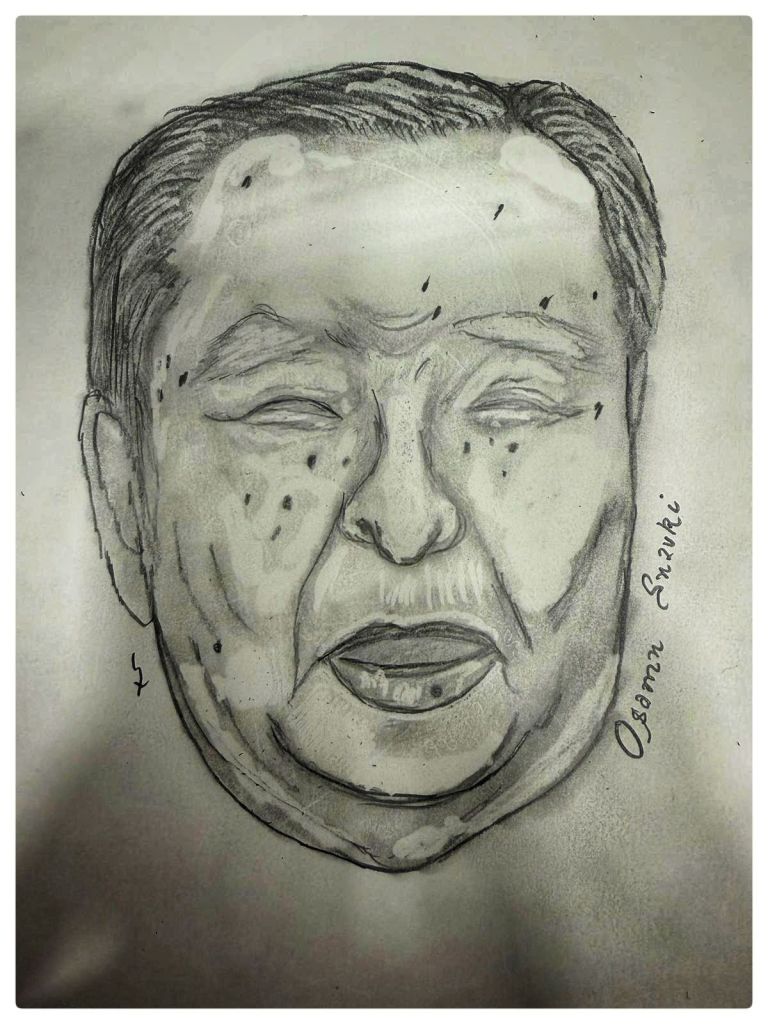
In all these remember that, without both Thank you and Hello coming straight from the heart, your words and actions do not mean anything! Talking about Japanese and thank you; the GOI has done the job by giving Osamu Suzuki the Padma! A well deserving recipient indeed!

Every average Indian’s first car is usually a Maruti Suzuki! Thank you for that!

Now best to say Shubh ratri and sleep!

Bhimavva


Just when you thought that you are comfortable and life is good, it throws you dominos to keep you running and jumping! At some point in your life all you crave is routine! A disturbance in that will make you restless or feel bad!

If you feel bad then do not do so! As a human, change is the only thing which is constant! If you get too comfortable in your shade and do not invent or create challenges or even deal with challenges then you might as well be dormant!

If you are not still convinced do not be a DODO! Well, actually read about how they became extinct and try to learn from them! It is amazing how much we learn from failures rather than success!

The Dodo is a lesson in extinction. Found by Dutch soldiers around 1600 on an island in the Indian Ocean, the Dodo became extinct less than 80 years later because of deforestation, hunting, and destruction of their nests by animals brought to the island by the Dutch!

Now the Dodo had it all! At one point it might have been slim and fit and even could fly! Then later they got an abundance of food without much work and more importantly they had no natural predators! In short, they had all the comfort in the world and no worries!

All they had to do was sit and eat! Then that made them fat and slow and finally the Dodo grew larger and became flightless!

The big fat birds also trusted everyone and did not run away when approached! Now whether they were too fat or lazy to run was anyone’s guess but the fact of the matter is that it was really sad that all dodo did was trust humans! Big mistake!

When approached by a human, dodo did not run away and the human slowly without any rhyme or reason killed the bird into extinction!

The last known dodo was killed and stuffed and put in a museum. And when the curator thought it was occupying waste space, he ordered it to be thrown and burnt!

All that remains of the dodo is a head and foot at Oxford, a foot in the British Museum, a head in Copenhagen, and skeletons, more or less complete, in various museums of Europe, the United States, and Mauritius! And of course an everlasting testimony of the fact that if you trust humans blindly, more often that not, you may go extinct!

Another thing which is nearing extinction is the art of Puppetry!
Luckily we have people like Padma award winner Bhimavva Shillekyatar who in spite of being over 96 years old, still keeps this art alive!

It is heartening to see such people get the Padma and not those who simply apply a liberal dose of Butter!

Shubh ratri!

Ajith Kumar


Many time it is not advisable to reinvent the wheel or take new paths when the proven path is fine! Of course there are exceptions and that is the norm of new inventions but before you try to change the course of nature, take a deep breath and read about the Donner Party!

Morgan Housel in his novel Same as ever where he tells about the Donner Party in an aim to warn people to not to stray from the usual! Not to take a short cut which would very well cut short your joy!

So the Donner Party originated from Springfield, Illinois, and departed Independence, Missouri, on the Oregon Trail in the spring of 1846, behind many other pioneer families who were attempting to make the same overland trip.

The journey west usually took between four and six months and that was usual, but the Donner Party made a bad decision of taking a ‘Short cut’ and not following the established route and instead crossed the Rocky Mountains’ Wasatch Range and the Great Salt Lake Desert in present-day Utah!

The route turned out to be more tough and more long!
By early November, the migrants had reached the Sierra Nevada but became trapped by an early, heavy snowfall near Truckee Lake (now Donner Lake) high in the mountains.

They were supposed to cross this by fall and not peak of winter. What happened later is a gut wrenching account of human survival; killing, looting and even cannibalism…

By early November, the migrants had reached the Sierra Nevada but became trapped by an early, heavy snowfall near Truckee Lake (now Donner Lake) high in the mountains. Their food supplies ran dangerously low, and in mid-December some of the group set out on foot to obtain help. Rescuers from California attempted to reach the migrants, but the first relief party did not arrive until the middle of February 1847, almost four months after the wagon train became trapped. Of the 87 members of the party, 48 survived.

If you read this gut wrenching tale you would get to know with a shudder the things they had to eat to stay alive starting from OX hide and skins to even human meat. At first of the ones who died because of the cold and later those who were ‘taken care’ of. The apparent solace was that people were not ‘served’ meat taken from ‘their own relatives’ but ‘relatives’ of the others! When the question is of survival then the human becomes the true animal which he or she always was…

Historians have described the episode as one of the most fascinating tragedies in California history and in the record of American westward migration. Fascinating indeed; for those who go for trek and mountaineering especially to remote places, this is a lesson in survival.

Survival lesson and experience is also the hallmark of padma awardee Ajith Kumar…

Hearty congratulations

Shubh ratri…

Cherian…

There is a an amazing novel by the Carl Sagan called the Pale blue dot! Yes! In the wide or broad scheme of things, the Earth is simply a small blue colour speck in the Solar System! In fact the whole solar system is a small part of dust in the constellation of stars!

Now now, do not feel down! This is the only ‘dot’ which is blue! And this is the only blue dot with life which is human! Of course it also gets inhuman sometimes!

The novel though talks about this fear or the unknown which causes more damage than the fear itself!

This is the story of the Marsh of Camarina!

Camarina was a city in southern Sicily, founded by colonists from Syracuse in 598 B.C.  It was surrounded by a dirty Marsh!

It was suspected that the marsh was the source of the strange illness and the idea of draining the marsh to end the epidemic became popular (the germ theory of disease was very far along but it did make common sense to associate a dirty stinky marsh with disease! Like my Grand doctor Mama used to say, “Common sense is not that common!”)

Now with the thought of getting rid of the stinky thing in mind, the ‘wise’ old  town oracle was consulted.

Surprisingly in a rare twist of events, the oracle advised the leaders not to drain the marsh, suggesting the plague would pass with time! It could also be a ploy to get the cleaning contract later for the Oracle’s brother or just a ‘GUT’ feeling though!

But the discontent was widespread and the most important factor was the thing which spreads so fast that no one can stop it!
Yes! Fear! The fear of a danger is more dangerous sometimes than the fear itself! So the so called leader took a mammoth effort and collected men and machines to start the clearing and draining of the Marsh!
Amist cheer and fanfare and some mild hiccups, the Marsh was finally drained! The joy of clean and non stinky air was short lived though!

Once it was dry, there was nothing stopping the Carthaginian army from advancing. In 552 B.C., a Syracusan force crossed over the dry land where the marsh had been, slaughtered every man, woman, and child, and razed the city to the ground in level with the Marsh! The oracle may have escaped though!

But, from then on, the marsh of Camarina thus became proverbial for eliminating a perceived danger in such a way as to usher in another bigger and real danger!

Now danger is not unfamiliar to the heart surgeon when he or she is racing against time to make the heart beat again! That is why Kotturathu Mammen Cherian is the pioneer who performed the India’s first coronary artery bypass surgery and first heart-lung transplant and was of course a pioneer Pediatric cardiac surgeon in the country!

He will me missed but his legacy will never be forgotten!

A great son of this amazing soil of Bharat!
A very great Republic day to dear Indians in the country and out!

Shubh ratri!
Jai Hind!

Kavitha manoranjini

This is case of Stockholm syndrome going cellular!


Imagine long long ago a human cell kidnapped a bacterium and made it a prisoner! It made that bacterium work for it!


Over some time the Bacterium became a part of the cell but still had some difference showing that it’s always ready to go! Like different replication rate and a different gene separate from the gene of the cell!

The Bacterium now has become an organelle of the cell and makes energy for it!
This is one of the theory of that cell organelle known to us as the Golgi apparatus!

One of the smallest functioning unit of our body is a clear example of unity in diversity! Though of course like most such victims; the Golgi now is a whole and soul part of cell unless when it escapes and wrecks it!

Now that’s a vivid imagination!

Imagination also is the hallmark of celebrity actress Kavitha Manoranjini! You know her as Urvashi!

A quick sketch and a blog!

Subhash Ghai

Ārybahaṭa I, the great Indian wrote this “As a man in a boat going forward sees a stationary object moving backward just so in Sri-Lanka a man sees the stationary asterisms (stars) moving backward exactly toward the West.”


About one millennium after this Copernicus said, “For when a ship is floating calmly along, the sailors see its motion mirrored in everything outside, while on the other hand they suppose that they are stationary, together with everything on board. In that same way, the motion of the earth can unquestionably produce the impression that the entire universe is rotating.”

This similarity between statements is intriguing to say the least!

All said and done; many a story told is a retelling of a tale already said! Many discovery are simply rediscovery! An advice given to you was given ages back!

Of course you need revision which is the only way to go!

Once in a while though you do get good vision which is original! A great director and visionary is also Subhash Ghai!

A quick sketch and blog on a hectic day!
Shubh ratri!


Yellapragada Subbarow,


Apparently there is an animal is very large but no one can see them alive!

Do you know this animal is the one with the largest eyes in the animal kingdom?
And one of the largest marine creature!
And an animal which has never been seen by anyone alive!?
But you can see them washed ashore.


Bill Bryson states this though a recent Google search can give two search by National geo of rare live squid videos!

But still mere mortals usually cannot see one of the largest animals alive!

But as far as it is publicly known, the colossal squid has never been observed alive in its natural, deep-water habitat, although a number of such recordings of the giant squid have been made in recent years!

You would think how such a big creature cannot be seen so commonly!

Or maybe you don’t notice it! Of course it’s difficult to differentiate them sometimes!

It’s like how you may see something everyday but never notice it that much!

Like on a very busy day you may not notice how many messages are in WhatsApp! Or the fact that even if you do not see them, life simply moves on!

In the same way you must know about the celebrity of today…


Yellapragada Subbarow, an often overlooked yet monumental figure in biomedical research, made groundbreaking contributions that have profoundly shaped modern medicine.

Born in Andhra Pradesh, Subbarow’s journey from humble beginnings to a pioneering biochemist is a testament to his intellectual prowess.

His discoveries, including the elucidation of adenosine triphosphate (ATP), the development of folic acid, and the introduction of methotrexate and tetracycline antibiotics, have had a lasting impact on various fields such as biochemistry, oncology, and infectious disease treatment!

Think about that!

Shubh ratri!

Pradeep Rawat

“That blue colour line on the skin so fine!
You need them clean to get an IV line!
The bulge in the middle is a fear!
Then the line is not in but near!”

Getting the vein was a pain!

Gave some blood for tests today and was pleased to see how easy it was to collect!

Once you are in, the syringe automatically gets locked and the prefilled bottles depending on the tests required are simply inserted and voila it’s done!

I still remember during our residency the blood collection was the biggest challenge! Especially after the chief rounds in the medicine department you would get a huge list! And we like Draculas or vampires in white coats would walk around with our small ampoules and the salts to prevent clotting! We would get one syringe and the blood has to be filled in that!

Then after carefully calculating the amount of blood to be distributed, each small ampoules would get the blood ranging from 2_5 ml! The dread was when the lab used to return the sample saying that the sample is inadequate!

Another terror was one with chubby skin! When we used to meet a slim and muscular personal with thick prominent veins we used to feel so happy!

Worst was in the pediatric posting! Oh the kids used to cry and silently so did we!

The baby fat would make sure the vein was so difficult to get! And then the normal syringe may not help so we used to break the tip and use only the needle!

Then the kids would always move at the last moment! No amount of cajoling would work!
One fine day in the ped posting I got a big list from our professor!

Luckily I got the blood in the first attempt! The kid was not very fussy but very young and the mother was very tensed. I carefully put all the blood in the ampoules and was pretty happy with the results! In fact for the first time I may even have surplus blood and that too in pediatrics!

Then suddenly the baby streched and his legs fell on the ampoules on the bed! They dropped down and the whole blood just leaked out! I was so upset! Luckily two ampoules were already labelled and full! So I readjusted the blood and fervently hoped that the lab does not send them back with ‘inadequate sample!’ reason!

It did not happen! Maybe the lab tech was having a good day!

Getting the vein is an art and that too in the first try is the best! Guess more tech would be to make sure this happens more seamlessly in the future!

That would be great! Great also was Pradeep Rawat in many movies and series!

Plus he has such prominent veins!

Ok that’s really insane! Must be the sleep creeping in!

Sbuhbh Ratri…

The Indian spy!

“Shake it and the air starts to fly!
Then the cap stops it with a sigh!
Then again when the cap is gone!
The fizz from the can goes to Town!”


Fermentation is a natural metabolic process whereby microorganisms convert
sugars like glucose into other organic molecules and gases, including alcohol.


Fermentation within cells dates back to the age of anaerobic (oxygenless)
respiration more than 3 billion years ago, but it also occurs in single-celled
eukaryotes and more complex multicellular organisms that have evolved and
thrived in Earth’s more recent oxygen-rich environment.

It is perhaps not difficult to imagine that some late Neolithic (Stone Age) farmers or others who observed bubbles fizzing out of rotting (fermenting) stores of fruit or grain might have wondered what was going on and investigated further.

This investigation would have lead them to a by product of the rotten grains!

Then there would have been another maverick who would have got bored and thought, “now that is a liquid which I must taste!” Or maybe it was a part of a Neo lithic game of truth or dare!

Anyway there would have been several who would later tasted the liquid and then would have felt something warm or nice! Or it could have been just the desperate attempt of a homeless and hungry and thirsty man or woman who would have felt warm and ‘nice’ drinking that product!

And that’s how my friends, the first beverage or spirit was prepared and ingested!

Of course for a teetotal like me, that’s just a nice piece of interesting history! History and historical also is our own real life James bond Ajit Kumar Doval!

Now drink, some warm water and sleep!
Shubh ratri!

Soumitra da…

“The winds blow over the wall

The mountains run so tall! 

The rivers run so fast

Nature oh you are a blast!”

Alok Kumar in his book called Ancient Hindu science states this, “Caraka, Suśruta, and Kauṭilya documented chemical transformations where oxidation, reduction, calcination, distillation, and sublimation were explained. Caraka, in his Caraka-Saṁhitā, lists gold, copper, lead, tin, iron, zinc, and mercury in making drugs.

The Iron Pillar near in New Delhi is a testimony to the metal forging of the ancient indians. 

The pillar, although about 1600 years old and weathering the heat, humidity, and rain in the open air, is still rust-free!

In fact there are countless such examples all over our country! 

In another novel called the technology of the Gods by David Hatcher; he talks about the incredible metallurgical skills of the ancient Indians including even how they could extract rare metals from their ores!

With a history like that, all we need now is sustenance! Keeping up the great work started many ages back! Talking about great work brings to mind Soumitra Chatterjee, the great Bengali super star!

A quick sketch on the scribe!

Shubh ratri!