Bee the honey!

This may be the only food in the world which can never go bad!

It is also the word which your spouse can occasionally call you when she is ready to forgive you for her mistake!

No no! Stop imagining some animal!

It is Honey! The former one that is! the latter I am more or less sure!

Honey has been called the only food that truly lasts forever, thanks to its magical chemistry and the handiwork of bees. The nectar from flowers mixes with enzymes inside the bees that extract it, which changes the nectar’s composition and breaks it down into simple sugars that are deposited into honeycombs. Fanning action from the bees’ wings and the enzymes from their stomachs create a liquid that is both highly acidic and low in moisture!

Which is why it is so lucky that the Bees did not take after their ancestors!

Evolution wise bees and the wasps were actually cousins! Both Bees and Wasps have evolved from single ancestor; the Hunting wasps!

Bees evolved from hunting wasps more than 100 million years ago and it can be hard to tell the two apart!

One way to do this could be to take them out for dinner, as in general bees are vegetarian and wasps are carnivorous!

Only honey bees make large quantities of honey and wax. Bumblebees make a small amount of both, but not on the same commercial level. There are eleven species of honeybees, also known as ‘Apis’, worldwide but ‘Apis mellifera’ is the most productive honey producing species.

All bees forage for protein-rich pollen and sugar-rich nectar from flowers. Honeybees convert nectar into honey so that it can used as a source of food through the winter, when nectar is scarce. The honey has a higher calorific value than pure nectar and can be stored for longer as it is more resistant to bacterial degradation. A healthy colony can produce two or three times the amount of honey it needs.

Now the issue is that the wings of the Bees are actually smaller for their bodies and feels like a misfit! But nature is the perfect engineer!

Scientists used to think that a bee’s wings were rigid, making bees kind of like little planes that moved hard wings up and down. But bee wings are fairly small for their body size, so even at 230 beats per second, rigid wings wouldn’t be able to let bees fly!

Using high-quality video that could show the bee wing beats in slow motion, they finally figured the secret. Their wings are not rigid, but twist and rotate during flight. Bee wings make short, quick sweeping motions front and back, front and back.

This motion creates enough lift to make it possible for bees to fly. Scientists think that this inefficient style of flying bees lets them carry heavy loads when needed. That ability comes in handy a lot for honey bees, who carry nectar and pollen from flowers back to the hive! Bees of course are the most important species of the world!


Social bees protect themselves and their colonies by stinging, but you are unlikely to be stung unless you disturb a nest or handle a female bee roughly.

Most bee stings are very mild, but can be extremely dangerous if you are allergic to bee venom.

Bee venom is most potent in summer when protein-rich pollen is freely available.

Male bees, like the male Red mason bee, ‘Osmia bicornis’, don’t have a sting!
There are also many species of stingless bees.

You may have heard the phrase ‘the bee’s knees’; the saying means an outstandingly good person or thing! Like “all this car needs is a little fine tuning to make it the bee’s knees” but did you know that bees don’t actually have knees?

Bees have a rigid exoskeleton, a hard covering that supports and protects their bodies, rather than internal bones. They don’t have kneecaps, but they do have leg joints between the femur and tibia.

Then again the work they do make them outstanding! It is estimated that around 70% of the crops we eat rely on the interplay of plant and bee and they are one of the most important species on the Earth!

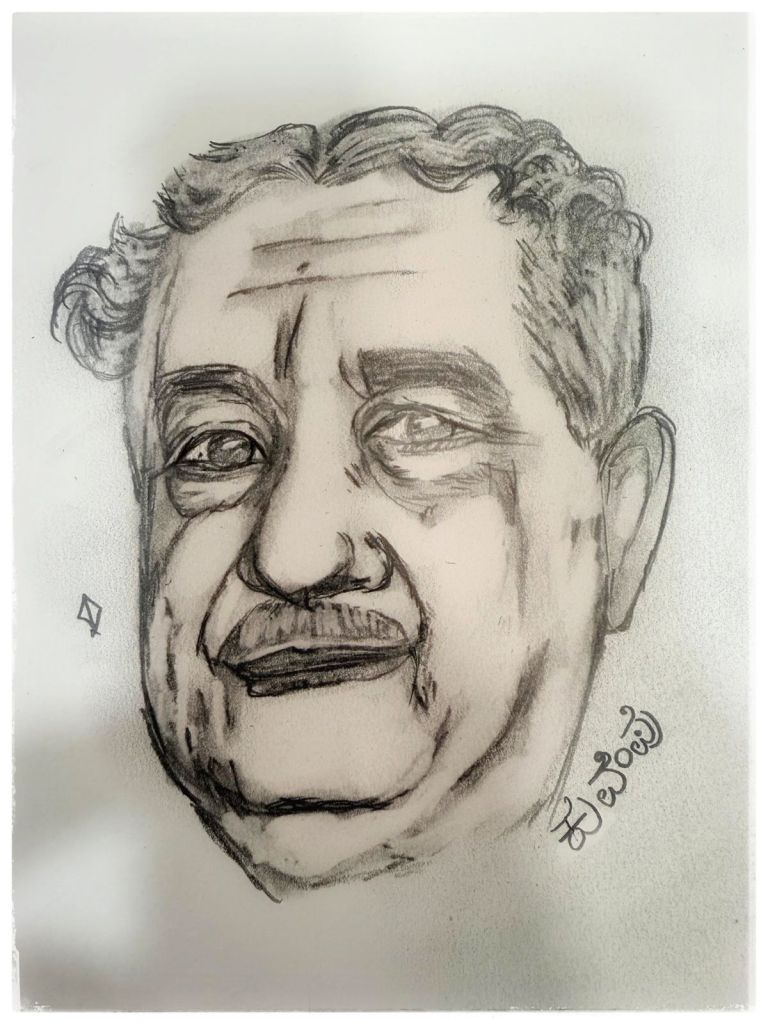
Important also are those who give everything to art! Like Chris bale!

A quick sketch but do concentrate on the blog! Honey!

Shubh ratri…

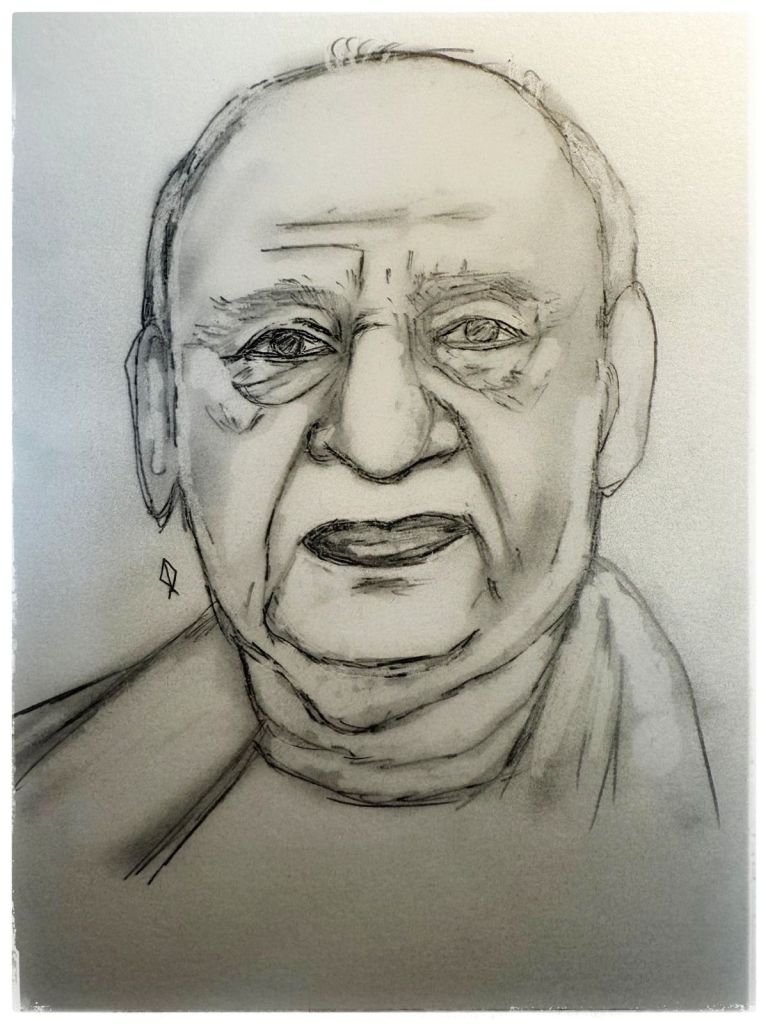
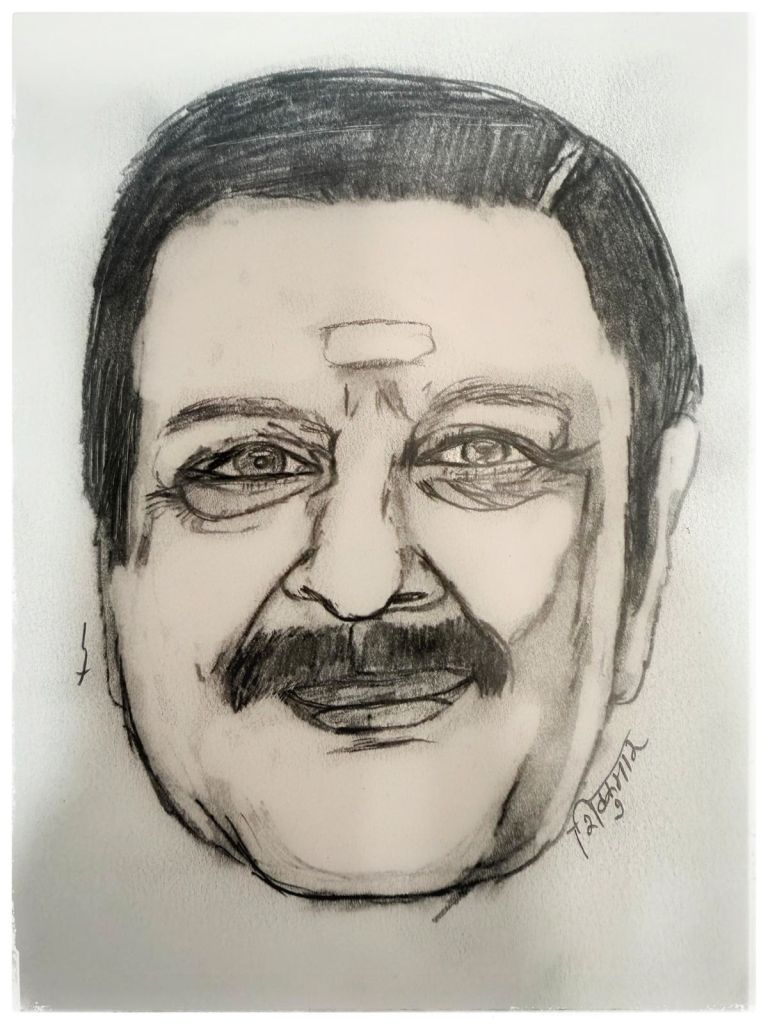
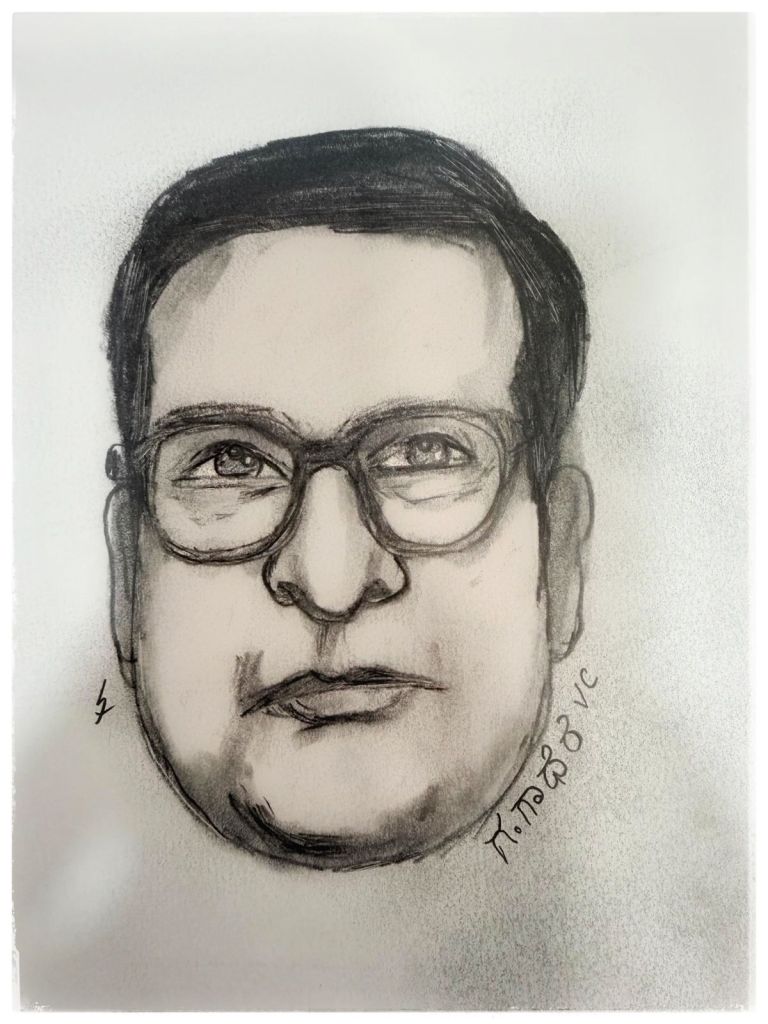
The legend ENT prof

Sometimes you do things only to make a show! It is done only for satisfaction! Absolutely nothing is changed but the person who demands or requests these changes feels better!

An interesting story in the book 48 laws of power tell about how once Michelangelo was showing his latest statue to a patron who was in all fairness not artistically inclined!

From afar he saw the statue and told Michelangelo that the nose was a little big! Michelangelo had a little hammer with him and his hands were dusty with the marble dust since he was working. He told the patron to come up while he made the necessary corrections.

He took the hammer and corrected the nose! Now the patron was happy with the final outcome!

So what you may ask!?

well! As the patron came close Michelangelo in fact he did nothing! He simply made an act of ‘modification’ and that’s that!

The patron simply saw the dust on Michelangelo’s hands and thought that some work was done!

All when Michelangelo did actually do nothing other than pamper the ego of a critic who had no inkling of art! Sometimes the best way to do stuff is to pretend to do it!

Once while working in a company as a medical writer, our senior whose knowledge of ‘medicine’ and ‘English’ was questionable asked me to rewrite the document with ‘his’ modifications; I simply made an act of rearranging the sentences! In fact I had changed only the first and last line of the whole document! I also remarked how ‘his’ ‘observation’ was spot on! This was because he was less qualified than me and he of course needed an ego boost! Though I did not know the law of power at that time, I at least knew the laws of corporate life! He was happy and I was spared for another day!

This is actually a very common occurrence all over the market! When you send the food to make the taste a little better or when you tell the dress to be altered just a little bit! Or when you tell the barber to trim a little bit more! By and large, the ‘modifications’ done would be so minute or in many cases none! The whole show is only to pamper your senior and his or her fragile ego!

Then once in a while you have seniors who make you be yourself! They like your honest opinion; in fact they want to listen to your opinion! They do not need an ego boost! They may not even appreciate your praise thinking it is a butter attempt! They read a lot and are knowledgeable but still are eager to learn everyday!

One such legend was Dr N K Majumder; I used to eagerly wait for his replies in our Whatsapp group since it would be full of his wide experience but his humorous take on everything was the cherry on the cake! Once while mentioning about the Cochlear Implant program and stating that there is a need for more rehab teachers he mentioned how, “Wishes can be enormous but they should have wings to fly!”

Well read and articulate with a command over language which would even make Tharoor proud! All when he was only 90 years…young!

There would be no ENT who does not know him! He will be missed but his legacy will be forever!

Heartfelt condolences to Professor Nirmalaya Kumar Majumder!

Om Shanthi…

Chasmology

Do you know what is Chasmology?

Now before you think, “Oh no! another boring blog! Time for me to YAWN!” well, you are close!

The book 48 laws of power by Robert Greene talks about the power of yawning! It makes your opponent calm and less aggressive! A typical yawn lasts for around 6 seconds and your heart rate significantly increases during that time!

And yes! The study of yawning is called chasmology!

It’s no surprise that People yawn more when shown a pattern of boring colors than when shown a 30-minute rock video!

Yawning usually happens in fits of two or three with increasing intensity.
A fetus starts yawning in the uterus at 12 weeks after conception. A fetus yawns around 25 times per day, and the frequency of yawning tends to decrease with age! Now now, it may not be because a typical mother has a relatively quiet and boring life!

Luckily though Humans cannot claim Yawning to be ‘human’ since it isn’t unique to humans!
Almost all vertebrate animals, including mammals, birds, reptiles, amphibians, and even fish, experience yawning. So if a radioactive fish does bite you then your super power may be; well you can yawn underwater!

There are three main hypothesis on why we yawn!

To “wake up” your brain is the idea behind the ‘arousal hypothesis’ which  states that yawning activates your brain. This theory is tied to the fact that tiredness and boredom tend to trigger yawning the most.
So, your body uses yawning to keep yourself awake. Several of your facial muscles tense and stretch during a yawn, which may also help wake you up.

Another theory is to fool…er I mean cool, you brain! The brain-cooling hypothesis suggests that brain temperature decreases with yawning due to the intake of excess air and changes in facial blood flow! Studies in both animals and humans show that yawning occurs before, during and after instances of abnormal thermoregulation, like heat stress and hyperthermia (high body temperature).

Then to bring in the fact that you need to communicate since you and me are social animals! It may be an act of communication! The communication hypothesis is based on the contagiousness of yawning. Researchers who support this theory think that yawning functions as a communication or group synchronization function. They think it might serve to signal boredom or feelings of stress to others around you.

Yawning of course is contagious but interesting is that yawns are most contagious among your closest friends. Researchers have discovered that the closer you are to someone genetically or emotionally, the more likely it is that you’ll ‘catch’ their yawn!

So the next time you see your wife or husband ‘YAWN’ you better do it! It may be that he or she has read my blog and is testing you!

If that made you smile then that reminds me of the mischevious smile of zohra sehgal!

Now stop yawning and sleep!

Elegant worm!


Do you know this, yes ‘this’ is the reason because of which people have got at least 4 Nobel prize!

It was also named because it is very ‘Elegant!’

Now Before you run your imaginations wild let you pop your enthusiasm bubble (I hate it when someone does that though!) and inform you that ‘it’ is a worm!

Now, this is no ordinary worm!

It is so popular among Nobel Laureates that they even shout out its name in their Nobel acceptance speech! That is an accolade few ‘humans’ get!

The worm is called Caenorhabditis elegans, a 1 millimetre nematode that’s been extensively studied as a model organism!

One of the winners of this year’s Nobel Prize in Physiology or Medicine, molecular biologist Gary Ruvkun, lauded the species with its highest honour so far, recognizing it as “badass” (now it is not confirmed whether a ‘worm’ can have an ‘ass’ though!)

The one-millimeter nematode has helped scientists understand how healthy cells are instructed to kill themselves and how the process goes awry in AIDS, strokes and degenerative diseases. (That work was the subject of the 2002 Nobel Prize in Physiology or Medicine!)

Self-proclaimed “worm people” were recognized by the Nobel committee in 2006 for discovering gene silencing, which became the basis for an entirely new class of drugs. Two years later, the chemistry prize went to scientists who used nematodes to help invent cellular “lanterns” that allowed biologists to see the inner workings of a cell!


For each prize, a laureate made sure to thank the worm for its contributions, though perhaps the most famous nod came from Sydney Brenner, who won the first “worm Nobel.”

“Without doubt, the fourth winner of the Nobel Prize this year is Caenorhabditis elegans,” he said in his lecture in Stockholm!

Now since the worm is like a saint of sorts, it apparently ‘refused’ any monetary gain was the ‘official’ statement!

Dr. Brenner, often thought of as the father of C. elegans research, is the closest thing there is to a worm celebrity. He is credited with popularizing C. elegans in laboratories worldwide, after spending almost a decade hunting for the perfect research model!

C. elegans is named after the Latin word for “elegant” because of the way it moves in graceful, sinusoidal waves. One of the animal’s virtues is its simplicity, which allows scientists to test hypotheses about fundamental biological concepts in a model that is easy to understand.

The nematodes have just 959 cells — a remarkably manageable number, compared with our trillions of cells — each of which scientists have named and charted from fertilization to death.

The destiny of each cell is easy to map, since the worms become translucent under the light of a microscope and cycle through all developmental stages in about three days.

The nematode was the first animal to have its genome entirely deciphered — in 1998, years before scientists were able to do the same for flies and mice. The worm is also inexpensive, easy to store and entirely self-sufficient when it comes to reproduction; female C. elegans have functional sperm that allow them to inseminate themselves!

Now that is a scary level of women’s rights or not depending on which side you are!
So the next time you have the enthusiasm of getting Noble and getting a Nobel; think ‘elegantly’!

Then again one elegant actress with great  mother roles is Saranya Ponvannan!

Now worm yourself to sleep!

Shubh ratri!

The third chimp…

Jared Diamond in his book “The Third Chimpanzee” tells us about the this species which is very close to the chimpanzee!

The chimpanzee immune system is surprisingly similar to this species!
Like most viruses that cause diseases like AIDS and hepatitis can infect chimpanzees too. But chimps don’t get infected by the malaria parasite Plasmodium falciparum, which a mosquito can transmit through its bite into this species blood. A small DNA difference makes this species red blood cells vulnerable to this parasite, while chimp blood cells are resistant!

So which is that species which is so similar to chimpanzee but worse than them since unless there is a risk of life or death, even a typical chimp would not kill another unarmed chimp!

Yes! Jared Diamond’s third Chimp is the Human!

Jared mentions how similar taxonomically chimps and humans are, as their genes differ by just 1.6%! In fact the chimps and gorillas differ by 2.3%!

Thus the chimp’s closest relatives are not the other apes with which it is classed, but the human.

In fact, the chimpanzee-human difference is smaller than some within-species distances! Going by genetic differences, humans should be treated as a third species of chimpanzee Or possibly the chimpanzee’s scientific name should be Homo troglodytes instead of Pan troglodytes.

But you may wonder If human and chimp DNA is 98.8 percent the same, why are we so different?

It is because of the play of numbers you see! Each human cell contains roughly three billion base pairs, or bits of information.

So a difference of just 1.2 percent of that equals about 35 million differences! Then again that is the Gene level! A difference of 1.2 percent makes the human, well human! Of course it may take a Noble prize worthy investigation to find out how to make him or her more HUMANE!

So don’t be very upset if someone calls you a monkey or a chimp! It’s just our distant cousin! Of course with the way the ‘Third Chimp’ is behaving, the chimp may take offense if it is compared to a human!

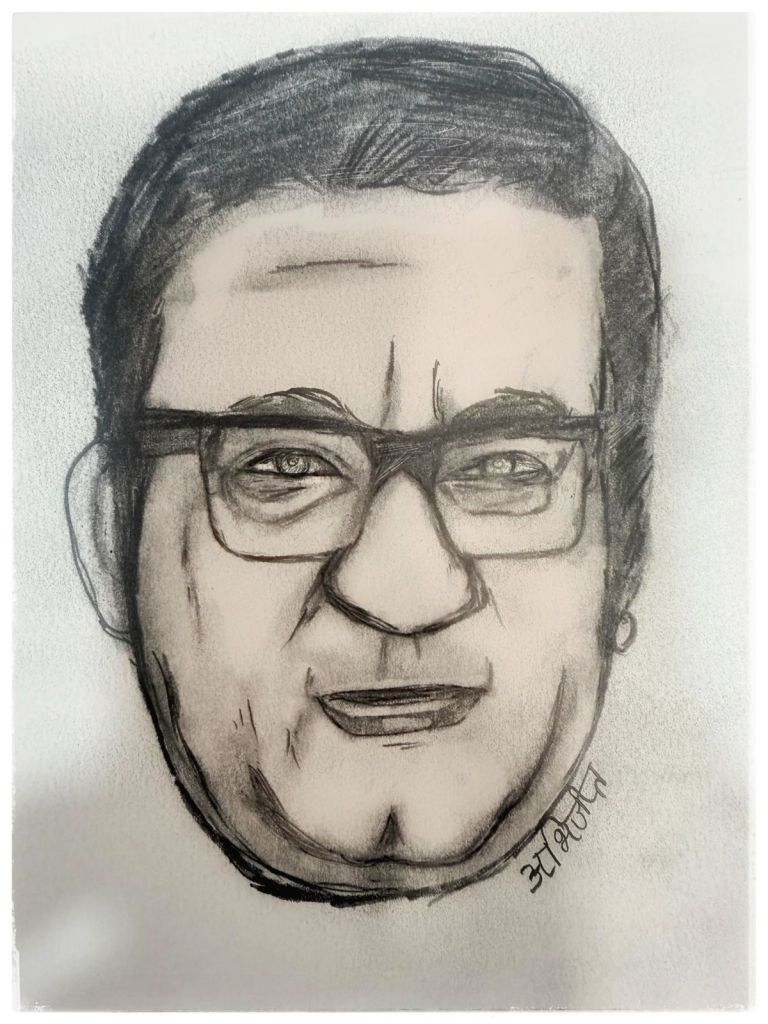
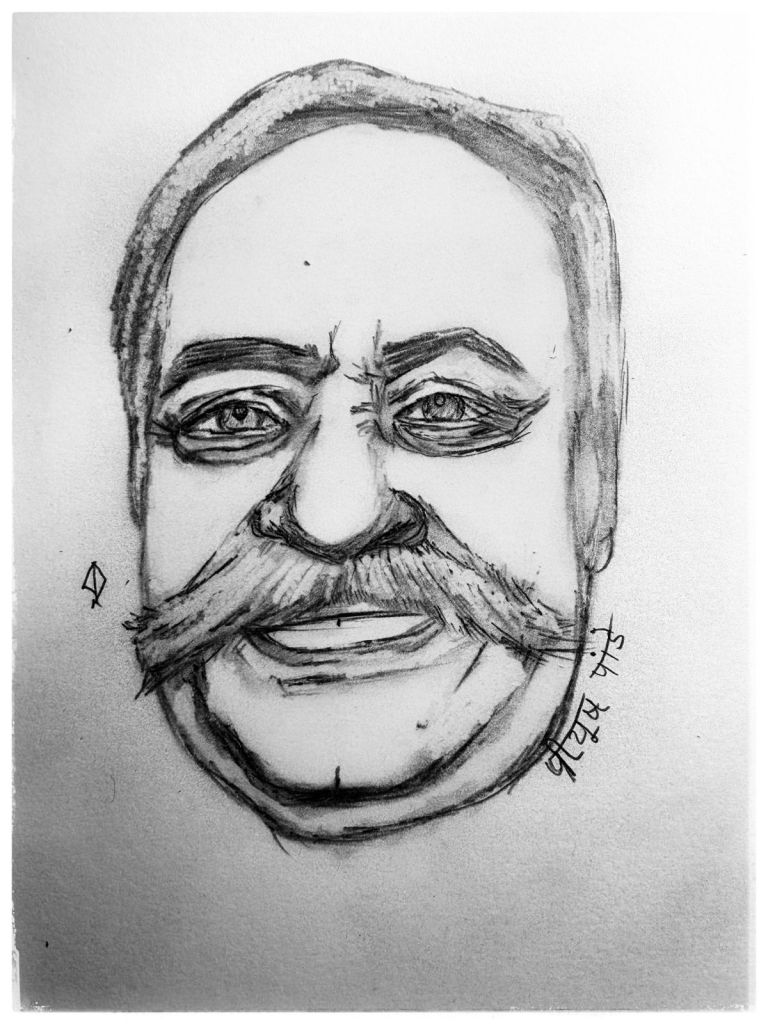
Of course there are some humans who are so artistic and talented that you know they are special! Do read about the artist Teejan bai…

A quick sketch with a dab of colour for a change…

Shubh ratri…

Scavengers clean…

The scene of a vulture in front of a dying person waiting for him to die is so heartbreaking but even the Vulture waits for the person to die since it cannot eat anything else and it does not have any choice.

One of the most dirtiest jobs but the most important are done by scavengers.

Scavengers play an important role the food web. They keep an ecosystem free of the bodies of dead animals, or carrion. Scavengers break down this organic material and recycle it into the ecosystem as nutrients.

Vultures only eat the bodies of dead animals.

Vultures have many biological adaptations that make them well-suited to being scavengers. Most have excellent eyesight and a strong sense of smell. They use these keen senses to locate rotting carrion while they are soaring high over land. Unlike raptors, or birds that hunt, vultures have weak talons and beaks. Raptors use sharp talons and beaks to kill, while vultures do not need to overpower or secure their prey. Many vultures are also bald, meaning they have no feathers on their head. This prevents bits of carrion, which can carry toxic bacteria, from sticking to feathers and infecting the bird.

Some mammals are scavengers. Hyenas are often thought of as scavengers, but are also traditional carnivores. A lone hyena feeds mostly on dead animals. In fact it also can eat alive ones with one of the strongest bites; also known as the laughing hyena, the spotted hyena (Crocuta crocuta) has the strongest-recorded bite of all carnivorous mammals—4,500 Newtons or 1,011 pounds of force!

They can even eat decaying putrid flesh without any issues. This is because they have strong stomach acids that break down virtually any pathogen, and their immune systems are resistant to the toxins produced by bacteria!

Then again these so called ‘animals’ do not have the superior ‘brain’ of the ‘human’. Which is ironic since they eat only the dead and eat only to live! They do not kill for pleasure or with an agenda.

When you can mercilessly kill an innocent unarmed person with an agenda then frankly think who is the real ANIMAL?

In fact those ‘humans’ are worse than the putrid skin eating bacteria since at least they have some ‘real CULTURE!’

Feeling extremely sad to be part of this supposedly intelligent creature which kills it’s one without any rhyme or reason…

At least there are some great human beings though who were both human and humane.
Like Our Dr Rajkumar…

Prayers for my brethren at Pahalgam…

Sir shankarannnair…

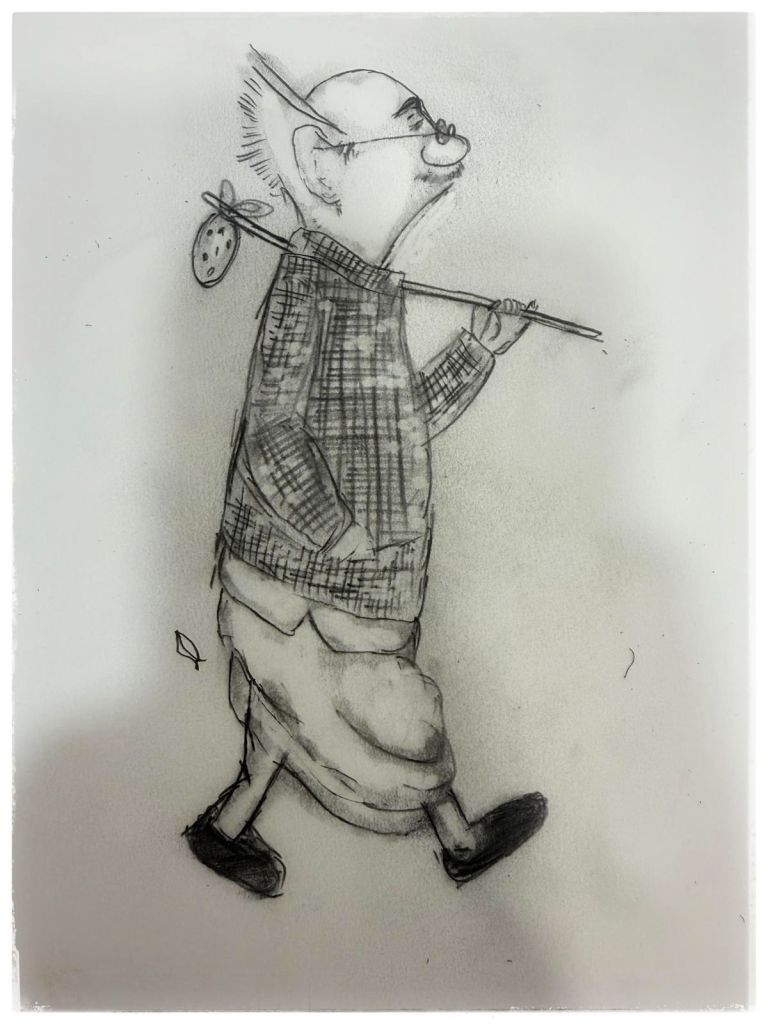
He took on the whole British Empire and literally told them to get out of our country!

Though crowned a Knight, he preferred to be an Bharatiya!

That is the amazing story of Sir Sankaran Nair.

An amazing lawyer and well read too who started small and down south in Madras way back in 1880. Till 1908, he was the Advocate-General to the Government and an Acting Judge from time to time. In 1908, he became a permanent Judge in the High Court of Madras and held the post till 1915.

In his best-known judgment, he upheld conversion to Hinduism and ruled that such converts were not outcasts. He founded and edited the Madras Review and the Madras Law Journal!

In the meantime, in 1902, the Viceroy Lord Curzon appointed him Secretary to the Raleigh University Commission. In recognition of his services, he was appointed a Companion of the Indian Empire by the King-Emperor in 1904 and in 1912 he was knighted!

All was going well till one inhuman act by the British changed it all forever!

The Jallianwala Bagh massacre is one of the biggest crimes committed by the British Empire when this Major and General shot at a meeting of unarmed people including women and children.


Sankaran resigned from the Viceroy’s Council in the aftermath of Jallianwalla Bagh massacre on 13 April 1919.

Sankaran believed in India’s right to self-government. In 1919, he played an important role in the expansion of provisions in the Montagu-Chelmsford reforms which introduced a system of dyarchy in the provinces and increased participation of Indians in the administration. Following the massacre of Jallianwala Bagh, he resigned from the Viceroy’s Council in protest.

In 1922, Sankaran published Gandhi and Anarchy, a book in which he spelt out his critique of Gandhi’s methods of non-violence, civil disobedience, and non-cooperation.

He also accused Michael O’Dwyer, who was Lieutenant Governor of Punjab at the time of the massacre, of following policies that led to the deaths.

O’Dwyer sued Sankaran for defamation in England, expecting the English court to side with him. The trial before the King’s Bench in London went on for five and a half weeks. It was the longest-running civil case at the time.

The 12-member all-English jury was presided over by Justice Henry McCardie, who made no attempt to hide his bias toward O’Dwyer. The jury sided with O’Dwyer by a majority of 11 against 1, the lone dissent coming from the Marxist political theorist Harold Laski.

Sankaran was ordered to pay £500 and the expenses of the trial to the plaintiff. O’Dwyer said he would forgo the penalty if Nair apologised. Sankaran the nationalist who was not scared refused it on his face which was like a slap to the real criminal!

The trial had a resounding impact on the British empire in India. At a time when the nationalist movement was gaining momentum, Indians saw in the judgement the clear bias of the British against them and an effort to shield their own!

The trial and the massacre made the country united and made them realise that our country is only for Indians! The British Empire would always put themselves first!

The freedom we achieved is thus a collective of all these great nationalists, many who were not even mentioned in our textbooks! 

Then again everyone knows the first man to climb Mt Everest! The other one was also very much the first! Tenzing Norgay!

Praying for the poor souls martyred in Pahalgam…

Heartfelt condolences…

The bulb who!

This was a remixed version which became popular and is still in use!

But it was not the original!

Edison and the light bulb!

The electric light, one of the everyday conveniences that most affects our lives, was not “invented” in the traditional sense in 1879 by Thomas Alva Edison, although he could be said to have created the first commercially practical incandescent light!

To credit one person as the sole ‘inventor’ of the light bulb would be a disservice to close to over 20 inventors of incandescent lamps prior to Edison’s version.

Then again, there is a difference between the first and the best!

Three things made Edison’s bulb the best at the time; an effective incandescent material, a higher vacuum and a high resistance that made power distribution from a centralized source economically viable.

But if you talk about earliest light bulb then that was close to 80 years before Edison which was in 1802 by Humphry Davy. Davy experimented with electricity and invented an electric battery. When he connected wires to his battery and a piece of carbon, the carbon glowed, producing light. His invention was known as the Electric Arc lamp. Unluckily it was short and well, not that sweet!

Over the next seven decades, other inventors also created “light bulbs” but no designs emerged for commercial application.

Some notables were like the British scientist Warren de la Rue who in 1840  enclosed a coiled platinum filament in a vacuum tube and passed an electric current through it. The design was based on the concept that the high melting point of platinum would allow it to operate at high temperatures and that the evacuated chamber would contain fewer gas molecules to react with the platinum, improving its longevity! It did work but this was really costly! Platinum does not grow on trees you see!

Then ten years later an English physicist named Joseph Wilson Swan created a “light bulb” by enclosing carbonized paper filaments in an evacuated glass bulb. The development of better vacuum pumps made his invention better and more effective so much so that In 1878, Swan developed a longer lasting light bulb using a treated cotton thread that also removed the problem of early bulb blackening.

On July 24, 1874 a Canadian patent was filed by a Toronto medical electrician named Henry Woodward and a colleague Mathew Evans. They built their lamps with different sizes and shapes of carbon rods held between electrodes in glass cylinders filled with nitrogen. This was really good!
Which is why Edison who was more a successful businessman bought their patent!

Then in 1878, Thomas Edison filed his first patent application for “Improvement In Electric Lights” and by Nov 4, 1879, he filed another U.S. patent for an electric lamp using “a carbon filament or strip coiled and connected … to platina contact wires.”

Although the patent described several ways of creating the carbon filament including using “cotton and linen thread, wood splints, papers coiled in various ways,” it was not until several months after the patent was granted that Edison and his team discovered that a carbonized bamboo filament could last over 1200 hours!

This discovery marked the beginning of commercially manufactured light bulbs and in 1880, Thomas Edison’s company, Edison Electric Light Company began marketing its new product; the light bulb!

Then again when you see the result, no one cares about the journey which is actually really important! Of course for people like B R Chopra with the magnum opus Mahabharata; his journey and the final result will be remembered for a long time!

SHubh ratri…

Teacher and teaching


There are teachers and there are teachers!
Now anyone who teaches you something is a teacher right!? That is an oversimplification!

When you see the classification of teaching styles or teacher world over, you may have three or four! Did you know we have six!

That was a teachable moment!

For ages we have been accustomed to the didactic method of teaching. In most schools at the primary and secondary levels this is the way you have been taught while later on you get on to the socratic method!

So then what are Didactic and Socratic?

Well, the socratic is eliciting information from students through a direct line of reasoning. The tutor endeavors as much as possible to avoid giving information away. The Socratic Method involves a shared dialogue between teacher and students. The teacher leads by posing thought-provoking questions. Students actively engage by asking questions of their own. The discussion goes back and forth and then knowledge is gained or shared!

The didactic tutoring style has the tutor beginning with an explanation of the material the student should learn followed by questioning that plays more of a role of drawing the student’s attention to the information that the tutor has already explained rather than eliciting this information from the student.
Basically in Didactic teaching, teachers create structured lessons that focus on lectures. Teachers can use different teaching methods depending on the needs of their students, their personal preferences and other factors. Didactic teaching is often well-suited for teaching basic subjects and instructing students who thrive with structured directions.

The didactic method works at the lower level when the teacher in effect knows everything! When a teacher knows everything then it means that he or she can only be as good as the teacher while in Socratic method the teacher may try to make the student even better than the teacher!

Now of course in school you have a combination of these two techniques and a new one is called the heuristic method.

A heuristic method of teaching is an instructional approach that emphasizes the use of problem-solving and discovery-based learning as well as experience-based learning  to facilitate student learning. Heuristic basically means any method or process that helps in problem-solving, self learning, and discovery. Heuristic teaching approach means the teacher acts as more than an instructor  and encourages students to explore concepts, ideas, and problems. Teacher poses open-ended questions, encourages student participation, and guides students towards the results.

Now coming to our old age classification of teachers seen in the Gurukools!

The classification here is based on the effect the teacher has on you!

If your teacher gives you direct and new knowledge but no explanation then he or she is an Adhyapak!

If the teacher gives you both knowledge and information which means that he or she explains them some more then he or she is an Upadhyaya!

Then there are teachers who after giving you knowledge and information, give you or teach you new skills then he or she is an Acharya!

Then you have those who are very knowledgeable in a subject and they can give you deep insight into that subject; he or she is then a Pandit!

Then again you meet teachers who make your own thoughts come out and give you a goal or a vision! Make you follow your vision and shows what you can do in a visionary manner! Those gems are called a Dhrista!

Finally the teacher who awakens your wisdom and leads you from darkness to light like Krishna did to Arjuna. The one who makes you realise that you have knowledge and you can now understand that even though you are knowledgeable, you are simply a speck in the big Universe!  The one who makes you bright, knowledgeable but humble in spite of the knowledge is called the GURU!

So you do see that the teacher is defined not only by his or her teaching, but also by what he or she can make you achieve! Now if you are in a cop show then you cannot get a better senior and GURU like Shivaji Satam!

Now remember  your Gurus and Acharyas and sleep!

SHubh ratri…

The inkblot test!


Many times when you would be scrolling your social media feed, you would come across an image!

On that it would be written, if you see a horse you are something and if you see a giraffe you are something else! Of course many times I would see a monkey and wonder what that means!

Jokes apart! Yes that was a joke! I do not see monkey all the time! Sometimes I see frogs too!

If these results are pushed into the feed of a psychologist or a psychiatrist he or she would gently touch his or her chin and say, Huh! Then of course the psychoanalysis would start!

After so many years of clinical practice I have often realised that most patients need someone to talk to and more importantly someone to listen! Most importantly they actually need a consultation of the mind kind.
Social media tries to show how people have perfect lives when in fact if it was true then they actually would not have time for social media since their social life would be so busy!

Now coming back to the images; many times you would see at least in movies and TV on how people with some mental issues are presented with cards and the psychologist would then go on to assess him or her!

That test is called the inkblot test! Now it is so famous but when it was created, the creator had so much difficulty in publishing them that he would have had to go in for a consult!

So in 1921, after studying 300 mental patients and 100 control subjects, in Hermann Rorschach wrote his book Psychodiagnostik, which was to form the basis of the inkblot test.

After experimenting with several hundred inkblots which he drew himself, he selected a set of ten for their diagnostic value.

Although he had served as Vice President of the Swiss Psychoanalytic Society, Rorschach had difficulty in publishing the book and it attracted little attention when it first appeared.

It has been suggested that Rorschach’s use of inkblots may have been influenced by German doctor Justinus Kerner who, in 1857, had published a popular book of poems, each of which was inspired by an accidental inkblot.

The usual Rorschach test employs a series of ten bilaterally symmetrical inkblot cards, of which some are black or gray, and others could contain applications of color.

The test taker is asked to provide their perceptions or perspectives on the presented ambiguous inkblot images.

This test was designed to look for patterns of thought disorder in schizophrenia and has evolved to include other areas, like personality, emotional disorders, and intelligence.

The Rorschach has been standardized using the Exner system and is effective in measuring depression, psychosis, and anxiety!

Apparently it has been found that historically the Interpretation of inkblots was central to a game called  Gobolinks! Using interpretation of “ambiguous designs” to assess an individual’s personality is an idea that goes back to Leonardo da Vinci and Botticelli!

Apparently Rorschach never intended the inkblots to be used as a general personality test, but developed them as a tool for the diagnosis of schizophrenia. It was not until 1939 that the test was used as a projective test of personality!

It’s basically, you are given an image and asked; what do you see!?
Your answer give some insights into your personality and thought process!

So be very careful on what you say though the idea is to actually say the first thing that pops in your mind!

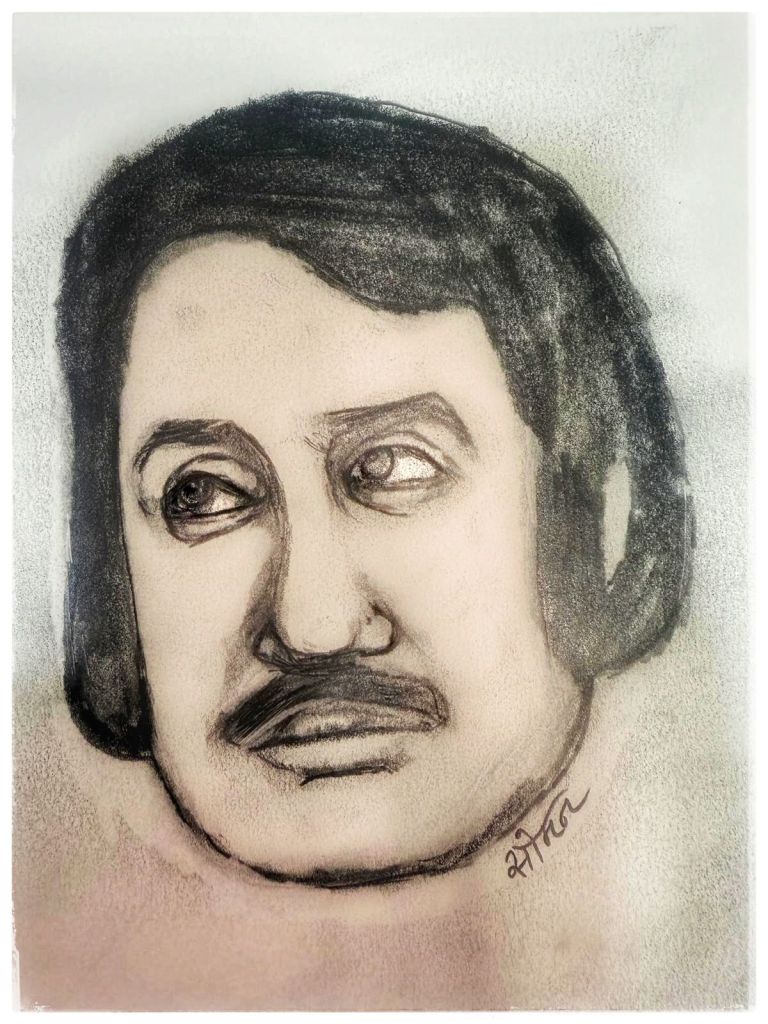
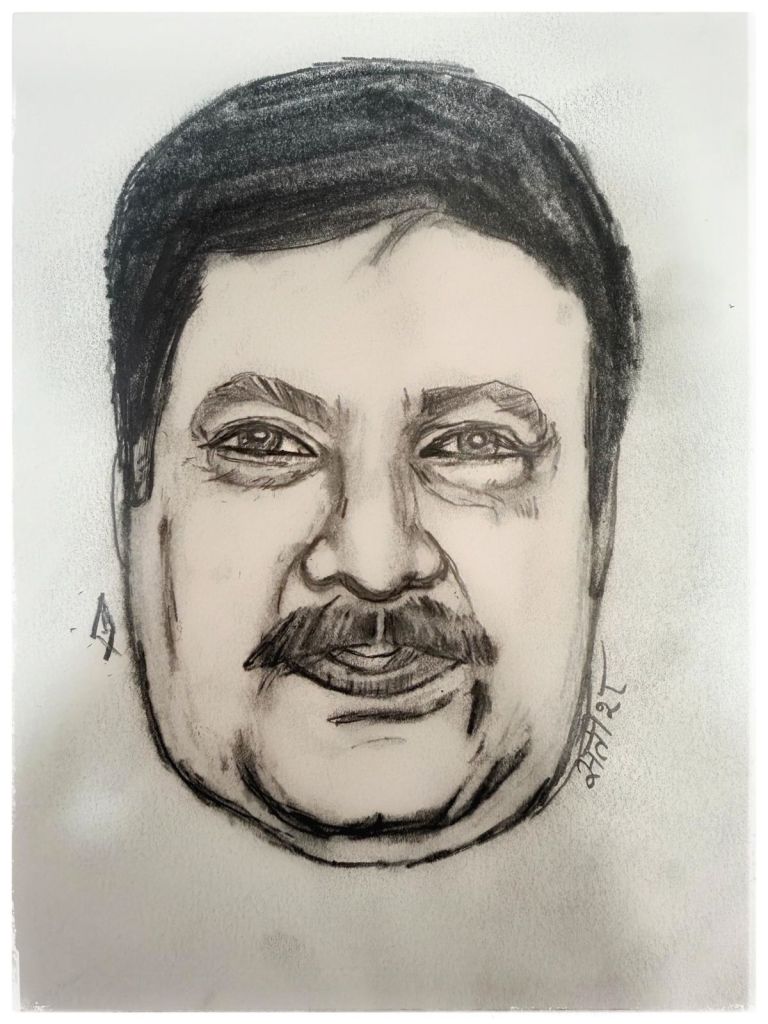
Same thing with the sketch! It’s sketchy since am under the weather but it’s Mukesh Rishi!

Shubh ratri…