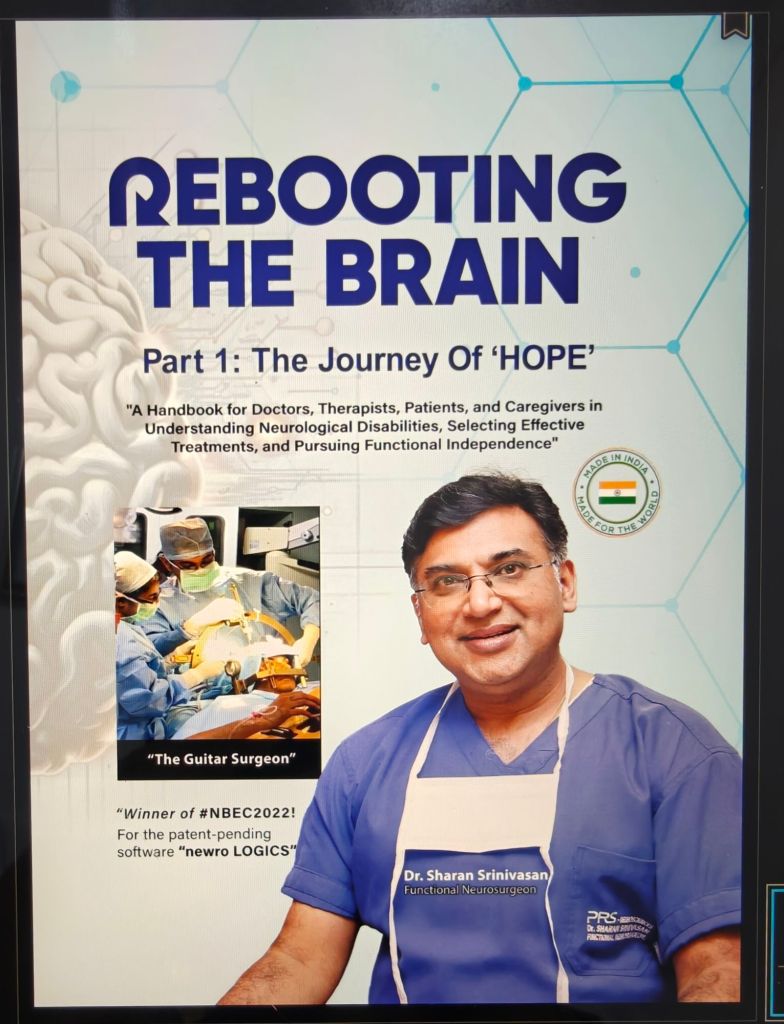
Rebooting the brain by Dr Sharan Srinivasan and Dr Pratibha Sharan

Rebooting the brain: part 1: The journey of Hope by Dr Saran Srinivasan and Dr Pratibha

This is probably one of the first and finest books on Neurorehabilitation and Neurological disorders which is midway between a textbook and a novel!

The stories of the patients are real and that is what makes this a unique experience! Since this is a book summary, I have not shared the complete stories but only trailers! The summary is for those who may not read the book and a preview for those who would!

Starts with an introduction of how he wanted to be NS since young!
The added benefit of paying Paltry fees for medicine and speciality resonated for people like me who also paid less than 3k per year for MBBS seat! It is simply unbelievable on how we get the best education in the best price in the world!

His first and interesting patient was called Nina! He then describes on how she inspired his journey!

Dr Sharan says that of all the organs in the body, the Brain does not have a back up! It is gone then it is Pack up!

He actually comes from a line of inventors and pioneers! His Father Senior Sinivasan made the first ever made in India Helmet!

Listen to this one line and you will get the flow of the book!

“Do you think neurological disorders or dysfunctions happen only after having a stroke, Cerebrovascular Accident (CVA), or a brain attack? Oh no, darling, not at all! Try riding your bike without a helmet, under the influence of alcohol, or at high speed, and I can assure you that you’ll end up being my next patient”

He tells about his center the PRS Neurosciences, where they have been attempting to provide hope to people when they think they have lost everything. Here, tradition and innovation converge in an evidence-based setup, constructing a track forward that delivers a comprehensive and holistic nature of healing. It is a journey that recognizes the mind-body connection, weaving together the threads of ancient practices of Ayurveda and yoga with the cutting-edge techniques of modern neuro rehabilitation. In this ‘Samanvaya’ or synthesis, we discover a comprehensive approach that leaves no stone unturned, addressing not only the symptoms but the very core of neurological disabilities – which is functional independence!

In “Rebooting The Brain” he tells about how Neurons that fire together wire together!

He mentions about this special package offered by them called th CAREPa-Re. This is the acronym for clinical, anatomical, radiological, etiopathological and finally rehabilitation. Here the CAREPa determines the Re!

They also use new techniques along with Atma Nirbhar bharat tech!

Moreover they developed New frontier in Neurosciences called the Functional Neurosciences!

In between he tells about three amazing stories of patients which pushed him from surgery to rehab! Yes! You have to read those stories yourself!


In between he does throw in some facts and literally mind boggling trivia! Like how the human brain is estimated to have 100 billion neurons, and each of these can make 10,000 connections. So, the capacity of the human brain becomes 100 billion to the power of 10,000, literally limitless! Imagine 100 billion 10000!

He says how, when you come across patients who have lost all their known skills and come down to square one, the baby phase, where they are unconscious and incompetent, it is difficult to figure out which parts of the functional brain circuits are damaged. The entire discovery depends on the skill of the caregivers!


In between he also mentioned that divorce rate among doctors was highest among neurosurgeons! Which is why he did not want to be a part of the statistic!

He tells about gobi manchurian! Which is actually not a Chinese dish! So in India we innovate and make it Indian!

A whole section is on neuromodulation where he starts starts with the amazing story of the Police writer Lokesh! There was a time when he could not write! And how the team treated him and now he is back and how!

Dr Sharan mentions how movements disorders are like that one uncle at a family reunion who just cannot stop dancing even though the DJ has packed and gone home!

Under promising and over delivering is the mantra of the team! This is really good since expectations reduces joy! It is better to promise silver and then deliver gold!

A chapter then tells about Shivanna who becomes the first patient in the world with Park to undergo staged bilateral lesioning v3.0 surgery!

Even the story on how he met his mentor and guru by chanting the guru stotram mantra by shankaracharya is both amazing and divine!

A section on Parkinson’s disease including explanation, patient stories and amazing treatment outcomes!

The same with dystonia with special emphasis on Intrathecal Baclofen, Deep Brain surgery. You must check out the story of the businessman with dystonia who could not pose for a photograph since he could not look straight! And yes! He did get treated by the team and posed straight!

There was in between the story of Tarun the kid in coma who recovered slowly and the algorithm of spasticity which includes the good and the bad spasticity.

One chapter on pain management gets very personal when he tells about his own father’s battle with chronic pain!
He ends that chapter with several examples of people with headache who must get a scan done! He states that we must never neglect pain! It is a fifth vital sign!

The difference between a CT and MRI for stroke and stroke management as such has been elaborated! Though Dr Sharan has made it as simple as possible, the layman may not enjoy it much! Medical professionals would love this section to the core!

In the section of stroke he starts by telling about Dr Jill Bolte Taylor a neuroanatomist and his book “My stroke of insight” documenting her experience of recovery and transformation in her book!

He further mentions that the ones who recover from stroke are not stroke survivors but stroke warriors!

A list of people who make the recovery possible including pain therapist, speech language pathologists to name a few. He gives each one a separate space and credit and even chance to tell his or her point of view!

The best part of the book is the fact that he tells us about the unsung heroes of the whole process! The Bystanders!

In the section of road trauma he tells about how there were 7 million COVID death in three years and while there 1.3 millions every year in RTA!

The head banging story of the story of the CA who met with an with accident by not wearing helmet and after big surgery and great recovery is seen riding without a helmet!

With the added advantage of true stories and experiences, you are in for a treat! So on one side you have the spinal cord injury and Monish and the other you have the grit and determination of Savita!

Story of Christopher Reeve with a beautiful quote by him has also been added!

The author categorically mentions that in any trauma you “MUST NOT MOVE A PERSON WITH ANY SUSPECTED SPINE INJURY!”

The final end points gives another well deserved mention bystanders and how it is very important to have health insurance.

Dr Sharan then tells about his amazing foundation called The Swaasthya Aarogya Foundation; the NGO which helps with patients and even sometimes takes care of the finances.

The final chapter is aptly called the Conclusion which starts with a saying by confucius which perfectly describes the whole book and the recovery after a neurological issue; “It does not matter how slowly you go as long as you do not stop!”

Do you know these Stats? 100 millions people in the world have neurological issues! While there are 20,000 cases of spine injuries! That is huge!

The best for the last!
An amazing story of a patient bedridden with MND but with grit determination and technology can now communicate and have hope…

Every page is a story and there is a story in every other page! The text shows his wide experience and his service mindedness! Plus it is so heartening to see his support system! If you want motivation, simply grab this one!

Thank you Dr Sharan and Dr Pratibha for this!
Like a moth to the flame!

The flame says to the moth, do not come close to me! You will also burn like me!

That is deep! Of course that is only an angrezi translation of the lines from the famous song, “Pyar dewaana hota hain!”

We have seen how Moths rush to the flame? When they see the light they just don’t see anything else and literally set themselves on fire!

Now there are so many explanations about this odd behaviour which is a great fodder for scientists and poets albeit for different reasons! The poet would like to see the love while the scientist would like to know why! While of course for the moth or the insect, he or she does not care!

Now it is sure that moths are not inherently drawn to flames in the sense of a conscious desire to get burned. It is an amalgamation of light, navigation, and potentially mistaken cues!

When you know there are many theories to explain the why, then it is sure that no one is cent percent sure! Since the moth may not be of much help!

One theory explains the use of dorsal light. Many insects, including moths, use a “dorsal light response” to navigate. They orient their bodies so their backs are facing the source of light, which they perceive as being overhead (like the sun or moon). Artificial lights can disrupt this natural orientation, causing moths to spiral towards the light instead of flying away from it! So it can be just a stubborn Moth or Man who does not want to ask for directions!

An extension of this is the lunar or stellar guidance since moths have evolved to use the moon or stars as navigational cues. Artificial light sources can mimic these natural light sources, leading moths to mistake them for their usual navigational landmarks! So the rest stop which the moth thought as a place for taking a break, fried it away!

Other theories involve both UV and Infra red radiation!

UV light plays a role in the behavior of moths, including pollination and mating. Some moths may be attracted to UV light because they perceive it as a signal related to these behaviors.  Also flames emit infrared radiation, which is a form of heat. Some moths may be attracted to the heat, or they may mistake the infrared radiation for the infrared reflections from moth pheromones! The flame is mistaken as a ‘hot’ friend perhaps!

It has also been suggested that they are simply avoiding predators and for this the moths may try to fly upwards towards light sources, mistaking them for the rising sun, in order to find a place to hide from predators during the day.

Some studies suggest that moths may be attracted to the scent of certain plants and flowers, and that some artificial light sources, such as lamps, may emit a similar scent, further contributing to their attraction to light!

In the novel called the Selfish Gene (or was it the Blind watchmaker!? I frankly do not remember but that is not the point!); Richard Dawkins states that it is because the Moths can’t differentiate between light! They think it’s the moon which is just in their vision and is at infinity! It’s like their brain is programmed in that way! They are just flying towards that far away light completely unaware that it’s close and it will burn them! Of course majority still fly towards the moon and live another day! The flame rushers are actually rare!

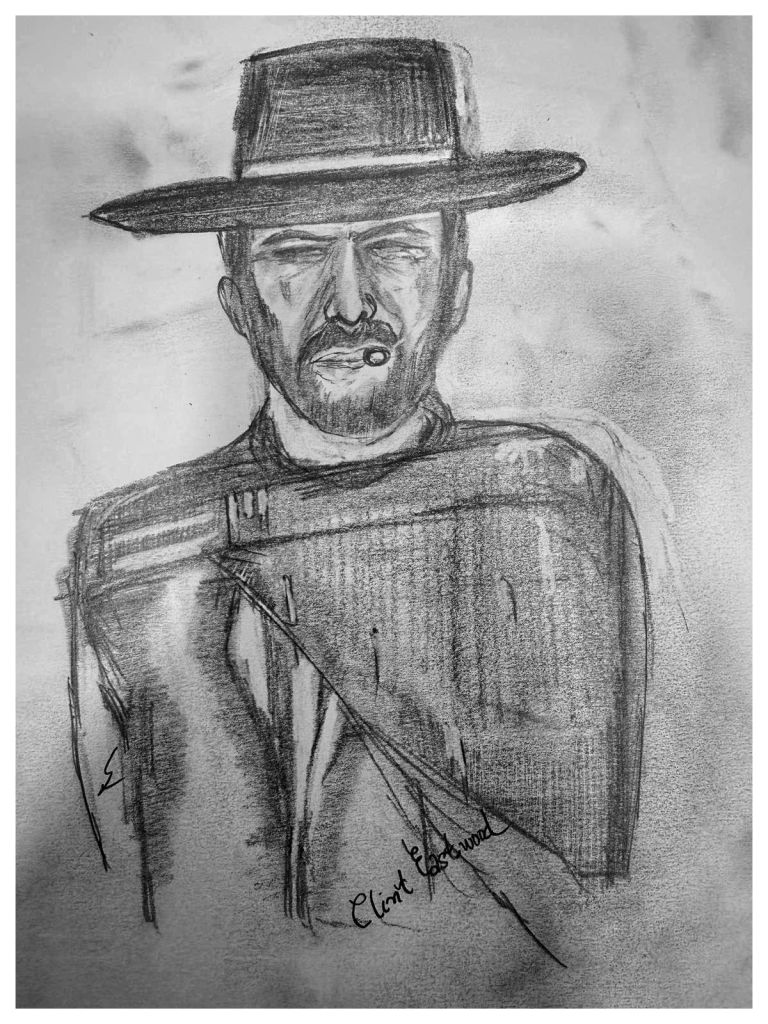
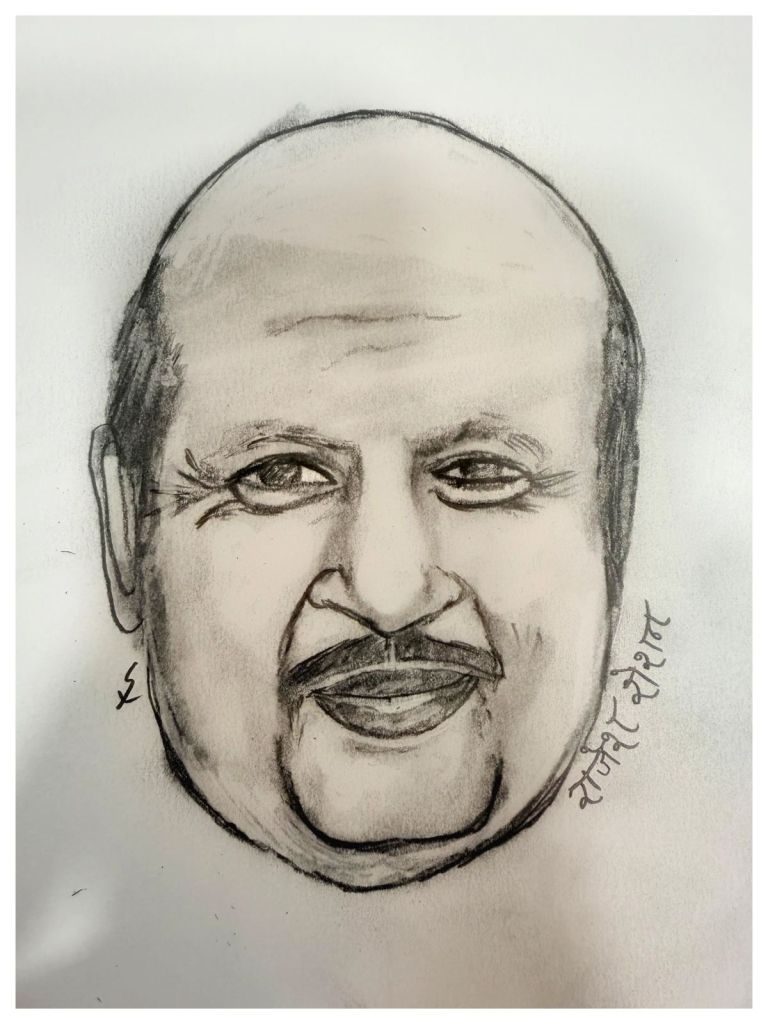
Rare also is to be a legend and still go on for the last 70 years! That’s Clint Eastwood! From the western to dirty Harry and to the oscars! A legend forever! An ode sketch to the best cowboy out there!

GOOD night
BAD is to sleep late
UGLY is only a point of view!

Shubh ratri!

Ahilyabai holkar

Every other day FB would tell you that you have been friends with this person for this many years! So how about celebrating the friend anniversary! Of course since FB itself is not that old, most of the times you would have been friends for much longer time that what FB may claim!

Then again did you know that there is a mutual friendship which is over 600 million years old and still continues to this day!? FB may not show that one though! And of course if you have a close friend (lucky you!) then this is the friendship to beat!

Now one of the oldest confirmed symbiotic relationship dates back 520 million years and involves two species of marine worms. These worms were discovered in fossils from China and show one species with smaller worm-like animals attached to its outer surface, suggesting a symbiotic interaction!

But there is another friendship which has lasted even longer and stays even to this day!

The Lichen! This is a fungus-algae partnership, with evidence dating back 600 million years. Lichen is a symbiotic relationship between a fungus and algae or cyanobacteria. Fossils show evidence of lichen-like symbiosis dating back 600 million years!

Lichens are a complex life form that is a symbiotic partnership of two separate organisms, an animal like fungus and an plant like alga.

The dominant partner is the fungus, which gives the lichen the majority of its characteristics, from its thallus shape to its fruiting bodies. The alga can be either a green alga or a blue-green alga, otherwise known as cyanobacteria. Many lichens will have both types of algae.

This is a ‘perfect’ husband wife relationship though and much more than ‘mere friendship!’ so if that particular fungus or algae tells you that they are ‘just friends!’ do not believe them!

The fungi benefit from the carbohydrates produced by the algae or cyanobacteria via photosynthesis. The algae or cyanobacteria benefit by being protected from the environment by the filaments of the fungi, which also gather moisture and nutrients from the environment, and provide an anchor to it.

Both partners gain water and mineral nutrients mainly from the atmosphere, through rain and dust. The fungal partner protects the alga by retaining water, serving as a larger capture area for mineral nutrients and, in some cases, provides minerals obtained from the substrate. If a cyanobacterium is present, as a primary partner or another symbiont in addition to a green alga as in certain tripartite lichens, they can fix atmospheric nitrogen, complementing the activities of the green alga!

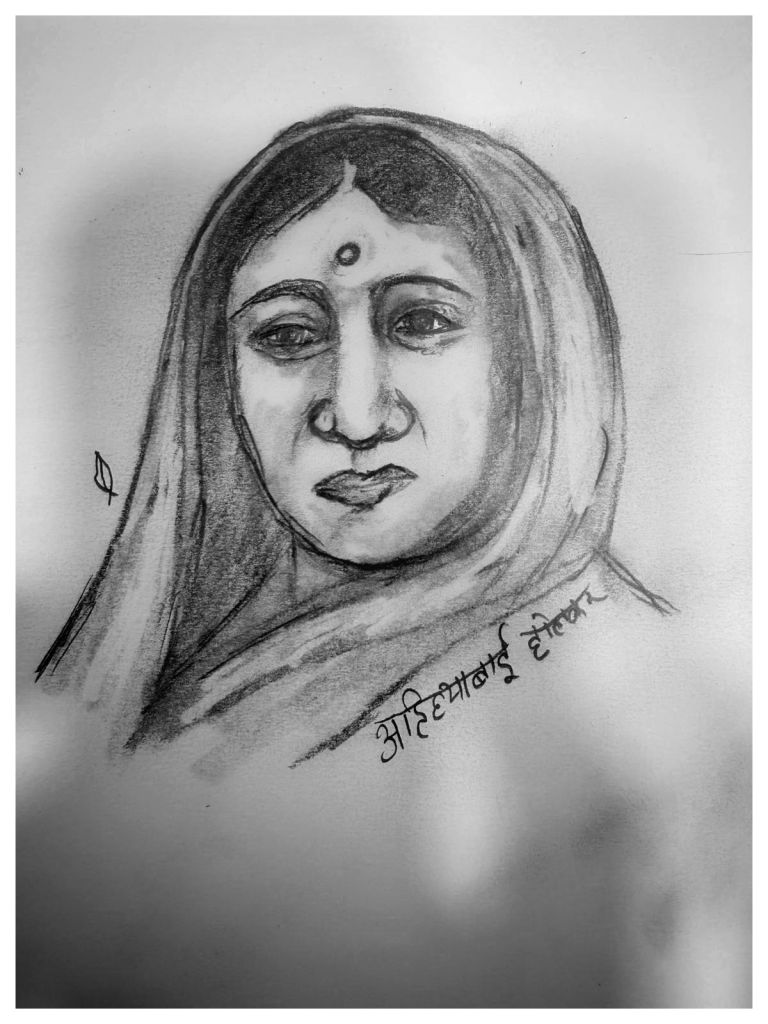
No dowry, no alimony! Only pure love! That is the Lichen! Friendship and companionship must be like the Lichen! Only then there will be peace all over! Then again you need leaders like Ahilyabai Holkar who was the Rajamata and later the ruling queen of Indore within the Maratha Empire! She contributed to the growth of Indian architecture through the commission of various temples, Ghats, and Dharmshalas spread across bharat!

Do read about her…
Jai hind…

Prince rupert!

This is a drop but named a Prince though shaped like a young frog!

Now it may not be the Frog prince so do not try to kiss it!

But it is one of the strongest substance known!

The full name of this is Prince Rupert’s Drop! They are also known as Dutch tears or Batavian tears!

It does look like a tear but more closely a young frog or Tadpole!

So the tadpole-shaped glass bead is created by dripping molten glass into cold water, which causes it to solidify rapidly. The drop exhibits a paradoxical combination of strength and fragility; the head is very strong, while the entire drop will shatter explosively if the tail is broken!

Yes! Prince Rupert’s drops have remained a scientific curiosity for nearly 400 years due to the two unusual mechanical properties: when the tail is snipped, the drop disintegrates explosively into powder, whereas the bulbous head can withstand compressive forces of up to 664.3 kilonewtons (149,300 lbf)!

One of the few examples where the head is literally headstrong!

The explosive disintegration arises due to multiple crack bifurcation events when the tail is cut – a single crack is accelerated in the tensile residual stress field in the center of the tail and bifurcates after it reaches a critical velocity of 1,450–1,900 metres per second (3,200–4,300 mph)!
Given these high speeds, the disintegration process due to crack bifurcation can only be inferred by looking into the tail and employing a high-speed camera. This is perhaps why this curious property of the drops remained unexplained for centuries!

The second unusual property of the drops, namely the strength of the heads, is a direct consequence of large compressive residual stresses⁠—up to 700 megapascals (100,000 psi)⁠—that exist in the vicinity of the head’s outer surface!
This stress distribution is measured by using glass’s natural property of stress-induced birefringence and by employing techniques of 3D photoelasticity. The high fracture toughness due to residual compressive stresses makes Prince Rupert’s drops one of the earliest examples of toughened glass!

Now if you are as curious or inquisitive as me then you would probably ask who is this Prince Rupert!? Now although Prince Rupert did not discover the drops, he was responsible for bringing them to Britain in 1660. He gave them to King Charles II, who in turn delivered them in 1661 to the Royal Society for scientific study! Now that is luck! Like how the amazing thing is finally named after the one who simply delivered the news! Like how Mt Everest got its name from the person who simply was in the right place at the right time!

There is also an Indian connection by the way (always love those!); In 1994, Srinivasan Chandrasekar, an engineering professor at Purdue University, and Munawar Chaudhri, head of the materials group at the University of Cambridge, used high-speed framing photography to observe the drop-shattering process and concluded that while the surface of the drops experiences highly compressive stresses, the inside experiences high tension forces, creating a state of unequal equilibrium which can easily be disturbed by breaking the tail!

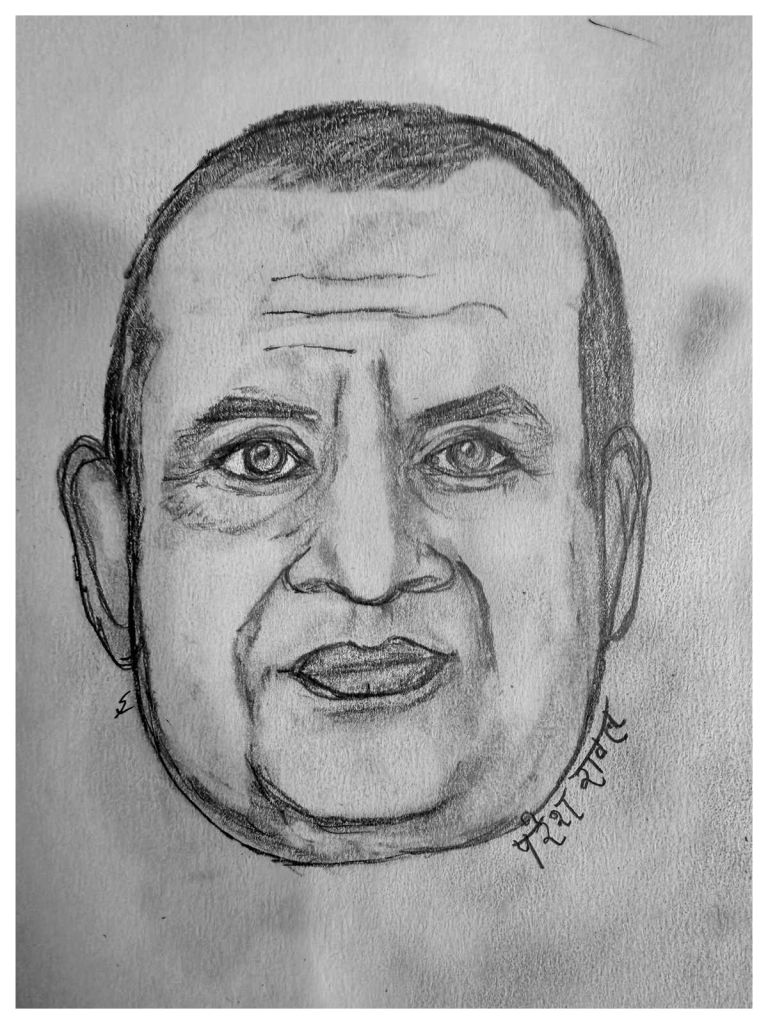
Prince of comedy also is Paresh Rawal! And a strong actor too like the glass drop!

Now remember that even the front of a high flying aircraft with unbelievable pressure and speed is actually glass!

Don’t lose your sleep over it!

Shubh ratri!

Second victim syndrome

Do you know what is Second Victim syndrome?

It is a mostly silent issue which the victim has to face by herself or himself and he or she cannot seek or does not seek a cure! There is no doctor to take care of the second victim syndrome since the victim here is the doctor himself or herself!

There is this amazing novel called the The Checklist Manifesto by Mr (dr) Atul Gawande in which he tells about one case.

While doing a routine case which he had done so many times he became a little complacent and nicked a vessel. What followed was of course a dance of control and capture. The complication was controlled but the patient did go in for extended stay and recovery with some residual issues. The author remembers this case plain as day in spite of the many successful cases he may have had!


Starting from the very first posting to the time when you are at the peak of your career as a doctor or a surgeon; you are always scared! Not for the fact that a wrong decision would make the patient sue you! Yes, that fear is always there! But the bigger fear is that you feel that your decision has caused trouble to the patient! After all, each and every doctor out there is a human! A mere mortal! When a patient returns within a few days of medication and you see his or her face you can know that your ‘treatment’ has not worked!

When you have a complication in the surgery for which you can blame a million things, you still feel for the patient! You may forget all your good cases or routine cases, but you would never forget your slips and complications!

The fact of the matter is that each and every doctor or health care practitioner has a slip once in a while!

My chief used to say that if you do not have complications or failures in your cases then you are not doing enough cases! Failure is a vital part of the learning curve and each time you fail, you MUST learn something! But the emotional toll is real!

So the second victim syndrome (SVS) is defined as the health care practitioner (like the doctor or the nurse as the case may be) who commit an error and are traumatized by the event manifesting psychological (shame, guilt, anxiety, grief, and depression), cognitive (compassion dissatisfaction, burnout, secondary traumatic stress), and/or physical reactions that have a personal negative impact.

It has been suggested that the SVS has very similar signs and symptoms with acute stress disorder and a medical trauma requiring a psychological emergency care.

These “emotional tsunamis” can last for weeks or up to several years depending on the nature of the case and severity of injury to the patient, and even cause long-term consequences similar to posttraumatic stress disorder (PTSD)! This is sure to take a toll on the doctor and his or her practice! But most just keep it inside and move on!

Many such smiling doctors with frown lines are wearing a MASK and it is not N95!
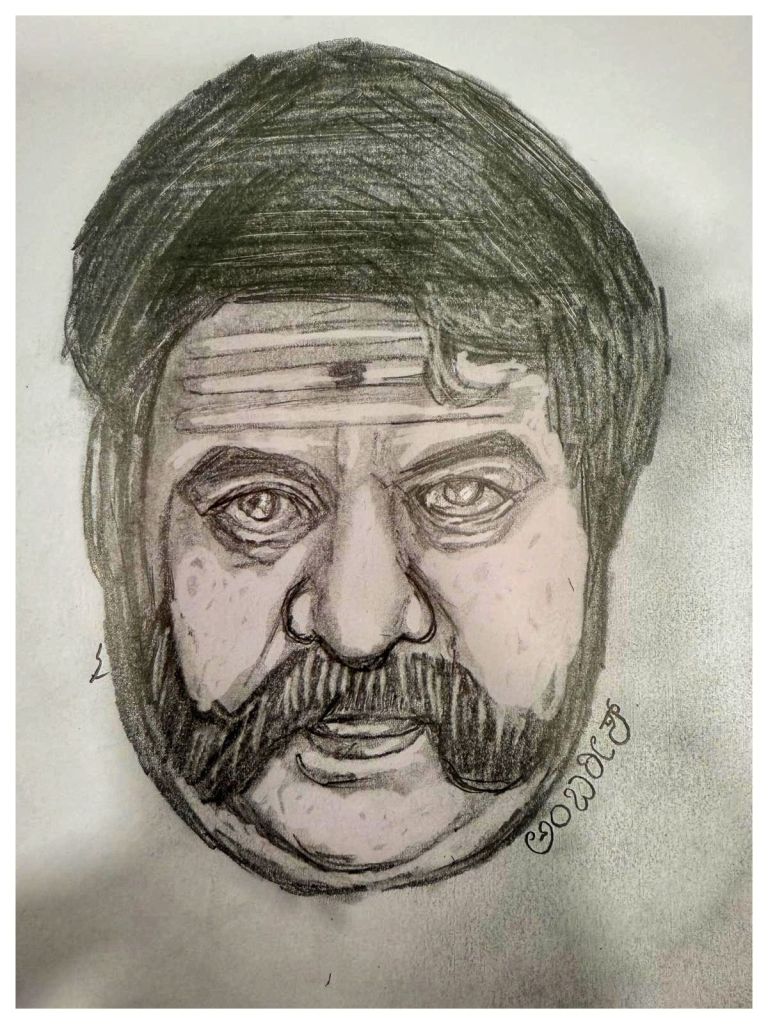
Talking of doctors and stuff reminds of this old Kannada movie starring Ambareesh as a doctor! It was well, inspiring!

One song in the movie though was very catchy…

Magnifera indica!


This is often called the king of fruits and there are so many varieties that you would get mad!

There is no Indian who does not love this fruit so much so that the latin name of the tree ends with the name of India!

Then again you also have a very popular magic trick which has been named after this fruit and tree! So much so that the most popular Magician Houdini used it in his shows (by changing the fruit since it was available only in India those days!)

Then there are a group of people who would love to eat the raw form of the fruit while many like it ripe and sweet as sugar!

Though it is named after the male gender (that’s a pun in case you did not get it!); it is loved by both!

Without further ado! The name is MANGO!

The mango, is believed to have originated in the region encompassing southeastern Asia, specifically India and Myanmar. The mango tree is officially called the Mangifera indica!

No one likes the summer too much but the two great things about them are the summer vacations and then the MANGO!

The moment you start seeing the Totapuri raw mango in the streets you know that the mango season is near!

Then during the peak season you have the whole street in orange colour! Baskets and boxes of mangoes are bought and given!

The pickling of raw mangoes would start everywhere while many would simply cut and add some chilli powder and salt and snack away!

You start getting mango rice and mango bhel and mango aam ras!

Did you know that there is a world famous trick which is name after the mango tree?

It is called the The Indian Mango Tree trick!

This is an amazing trick of generating a mango tree from a seed within few minutes. The mango seed is placed in an empty pot under a tripod formed by three sticks. The tripod is then covered with a sheet after which the pot with the seed is taken out and filled with soil. Water is poured into it and the pot is again placed under the covered sticks. Onlookers are asked to look under the cloth from time to time. After a while the performer opens out the cloth and takes out a mango plant. Then the plant seems to grow bigger under the cloth and ripe mangoes start falling and rolling out through this tent. Finally the magician removes the cloth to show a full-grown mango tree laden with fruit!

The way the sapling comes from the seed is dependent on two things though! The seed of the mango is big and the saplings of the mango tree are very flexible!


The magician takes out a mango seed from his pocket and circulates it among the viewers. Now that particular seed is genuine! But the ‘seed’ he removes is the one he had ‘planted’!

The magician has already taken a mango seed and carved the inner parts out and inserted a mango sapling in it!The seeds of some mango trees are big and the mango leaves and saplings do not show any signs of wear and tear when inserted into small spaces and then unfolded!

This is the reason why mango trees and seeds alone are always used in this trick. The sapling with the leaves are carefully folded into the seed and extracted by the magician as he works the magical rites under the cloth covering it!

Of course theory is something and practical is something else! It takes practice and timing and of course deception! If you already know the trick then it does not feel ‘magic’! The later part of the trick has been deciphered by many but some knowledge is better to be hidden!

For now just appreciate the effort of the magician and do not forget to clap! Also be proud that there are so many magic tricks named after and originating from India! Maybe take a bite of the sweet and a little sour mango while you are watching the Mango trick!

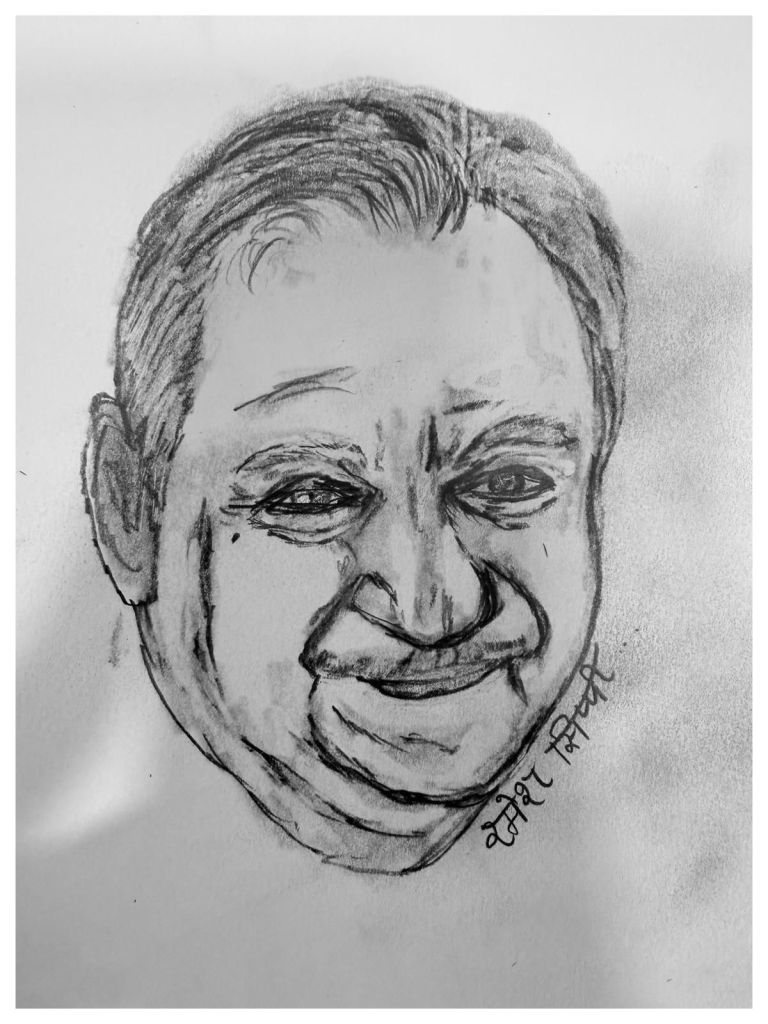
Like the mango is the national fruit of India; if there’s a national movie it could be Sholay! A quick sketch of Ramesh Sippy! It’s fifty years of Sholay!

Watch Sholay while eating mango and don’t miss the mango shooting scene!

Shubh ratri!

Chimera

Do you know who is Lydia Fairchild?

In 2002, after applying for government assistance in the state of Washington and she had two children. A DNA test was done to confirm the same but surprisingly the DNA did not match!

Of course that was not surprising! And though it’s mysterious it is not the script for a soap Opera!

Lydia knew that she was the mother! But the state accused Fairchild of fraud and filed a lawsuit against her!
Now she had to prove that she was the mother of her children but even repeated DNA tests proved her wrong!

Enter CHIMERA!

Chimera is a fire-breathing she-monster in Greek mythology having a lion’s head, a goat’s body, and a serpent’s tail! But that is history!

Also No! That is not the name of an fancy lawyer who can win any case! But a condition!

So when Lydia Fairchild was told that her two children were not a ‘genetic’ match with her and that therefore, biologically, she could not be their mother.
She accepted and went through the whole situation scientifically!

Further research later determined that the genetic mismatch was due to in fact due to chimerism, a condition in which two genetically distinct cell lines are present in one body!

A cervical swab eventually revealed Fairchild’s second distinct cell line, showing that she had not genetically matched her children because she was a chimera. Fairchild’s case was one of the first public accounts of chimerism and has been used as an example in subsequent discussions about the validity and reliability of DNA evidence in legal proceedings within the United States!

Human chimerism occurs when an individual possesses two distinct sets of DNA within their body, often due to prenatal events or medical interventions. Examples of human chimerism include individuals who were part of fraternal twin pregnancies where one embryo died early on, and the surviving twin absorbed some of the deceased twin’s cells. Additionally, individuals who have undergone bone marrow transplants are also considered chimeras, as their blood cells will have the donor’s DNA, while other tissues retain the recipient’s DNA!

In nature though genetic chimerism or chimera is a single organism composed of cells with more than one distinct genotype. In other words; an individual with two types of DNA!

Animal chimeras are produced by the merger of two embryos. In plant chimeras, however, the distinct types of tissue may originate from the same zygote, and the difference is often due to mutation during ordinary cell division. In contrast, an individual where each cell contains genetic material from two organisms of different breeds, varieties, species or genera is called a hybrid! In this case though the being would have only one DNA or genomic sequence.

This is important since DNA analysis of the crime scene is an important investigating tool now!
Just when you thought that DNA evidence is the Gold Standard, there comes the fire breathing dragon CHIMERA! Then again exceptions are not examples! If the video and audio and the DNA evidence also says that you are the criminal then crying CHIMERA may not help you always!

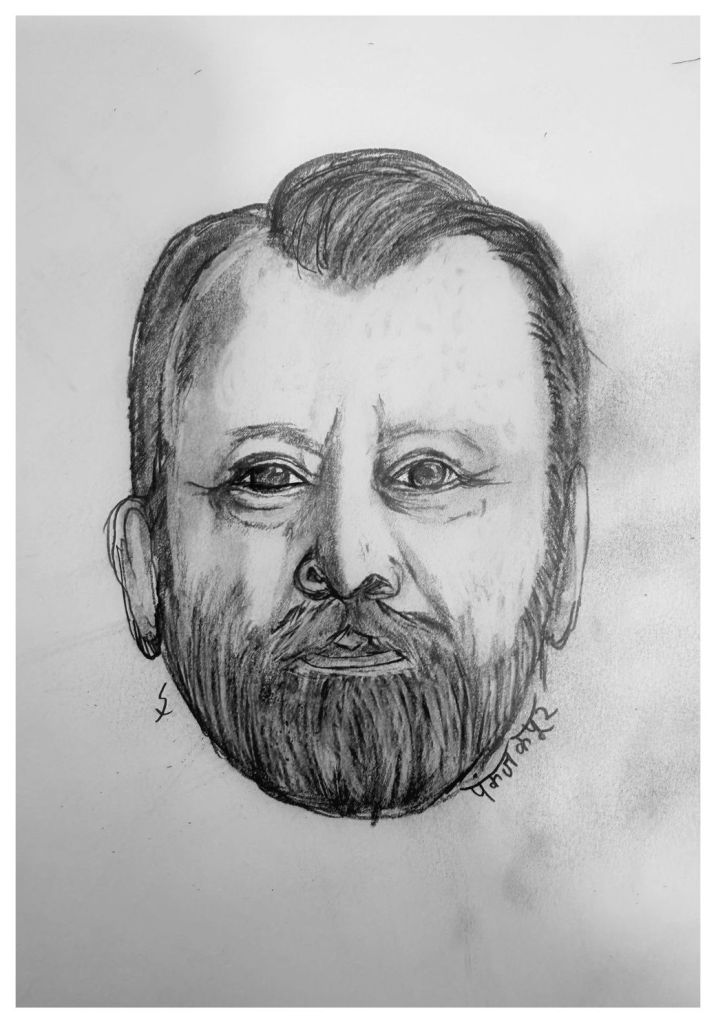
Of course many times you do not need any DNA test to know whether one is your offspring or not! Like you know Shahid Kapur has the acting DNA of Pankaj Kapur!


Now don’t think about any Chimeric stuff and sleep!

Shubh ratri!

Laughter is first aid!


Remember those small boxes with the Bandages and some Dettol and some medications!? The humble first aid kit!

Now of course most schools have nurses and nursing station with loads of instruments and a trained nurse! We used to have the first aid box if we are lucky with some dettol and some bandages!

The sticker ones were the first to go or get used! While the messy Iodine cream would always leak! The case would smell of a combination of dettol and iodine! If the box was metal then it would most definitely be rusted!
But still to get hurt and get treated by the first aid kit was an achievement!

Now of course you would have the first aid kit in every nook and corner! IN major places like the airport and railway station you would also have a proper clinical set up! And to think that this actually started in the train!

The story told many times in the history of first aid kits involved Robert Wood Johnson, the founder of the Johnson & Johnson medical supply company!

The story of the First Aid Kit begins with a conversation on a train. The people involved were Robert Wood Johnson, and the Chief Surgeon of the Denver & Rio Grande Railway Company.

In 1888, the Chief surgeon explained to Robert the many dangers of railroad construction and the lack of medical supplies to treat industrial injuries miles away from any hospital.

In the early days, untrained laborers cared very little for hygiene. Still, they were the first to take action when accidents occurred. Unfortunately, they did more harm than good as their clumsy and unhygienic handling of the injured often caused the spread of infections and exacerbated injuries.

The ever-enterprising Johnson saw this as an opportunity !
Not only would he solve a growing problem, but he would open a new avenue of business for his fledgling company. After careful consideration, J&J’s Chief Pharmacist Fred Kilmer introduced the company’s inaugural medical kit.

First-generation First Aid kits were packaged in durable wooden/ metal boxes. It consisted of various existing J&J surgical products such as gauze, bandages, and sutures. Since the equipment was made specifically for the railroad industry, it also contained supplies specific to the industry. Furthermore, the company understood the importance of educating the public.

In 1901, Johnson & Johnson published the Handbook of First Aid. The text became the United States’ first comprehensive and commercially available guide to First Aid!

The boxes were often decorated with bright colors!


In the late 1910s, 1920s and 30s, other companies began to produce their own First Aid kits customized to specific organizations such as the Boy Scouts. Other customized kits included the Auto-kits which were the First Aid kits designed for early automobiles and the Air-kits designed for aircraft.

The modern first aid medical center is of course a much more complex entity! The clinic would not only have the first aid kits but also something called the crash cart with a variety of medications and injections to be used in case of emergencies and also instruments like the monitors and AED or An Automated External Defibrillator (AED) which is a portable, electronic device used to restore a normal heart rhythm in someone experiencing cardiac arrest. It automatically analyzes the heart’s rhythm and, if necessary, delivers an electric shock (defibrillation) to help the heart restart! Of course it has to be used only in specific conditions and by trained professionals.

From the humble first aid kit to the AED; first aid has progressed by leaps and bounds!
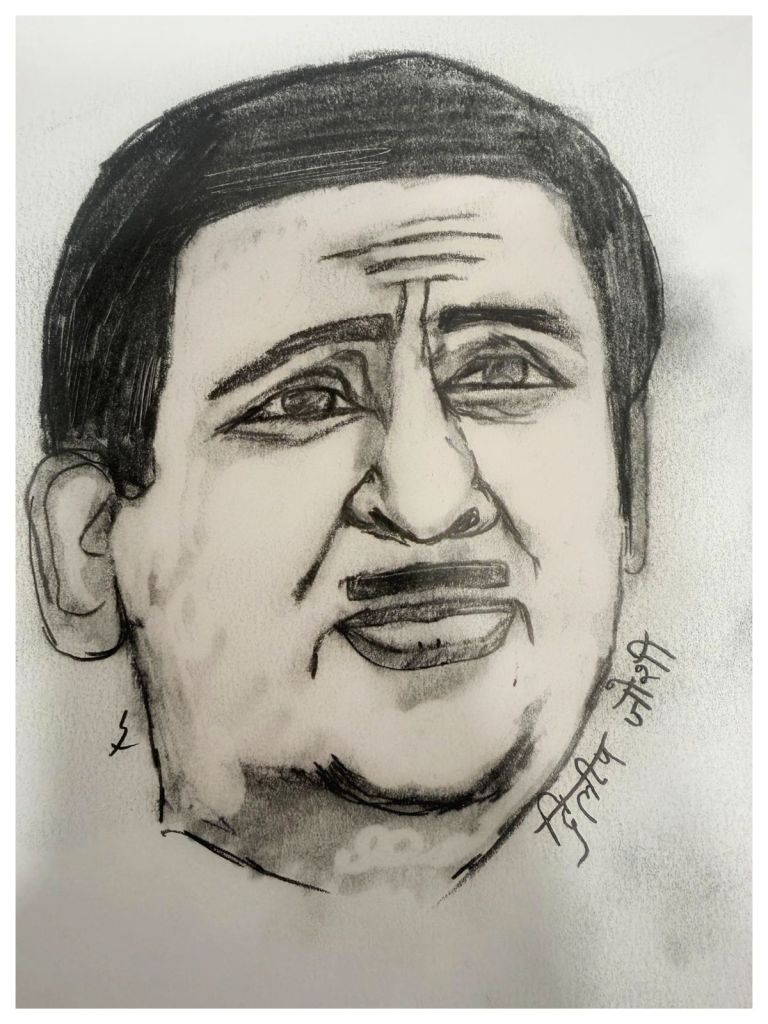
Then again some say laughter is the best medicine but don’t take that literally! Laughter reminds me of jethalal Dilip bhai!

Shubh ratri…

Tasseography

Many remember the future predicting Octopus! He used to predict the football world cup results with great accuracy!

If you think that is, well different, then do you know what is Tasseography?

Have a tea and then I will tell you! Actually that is literal!

So, Tasseography, also known as tea leaf reading or tasseomancy, is a form of divination that involves interpreting patterns and shapes found in tea leaves, coffee grounds, or wine sediments!

It’s a method of fortune-telling that seeks to reveal insights into the past, present, and future by analyzing the markings left behind after a beverage is consumed!

Tasseography is rooted in the belief that the patterns formed by the tea leaves, coffee grounds, or wine sediments can be interpreted to understand the meaning of specific circumstances in one’s life, similar to other divination practices like tarot reading.

The shapes and patterns are considered symbols, and the reader (or “tasseograph”) interprets these symbols based on established meanings or personal intuition.

Tasseomancy followed the trade routes of tea and coffee and was practiced by both Baltic and Slavic nations. It is closely related to the Romani people, whose nomadic lifestyle contributed to the spread of the practice.

While tea leaf reading originated in China, likely soon after the creation of tea, various regions practice it with slight variations. Indicating that this form of divination was an oral tradition.

So after a cup of tea has been poured, without using a tea strainer, the tea is drunk or poured away. The cup should then be shaken well and any remaining liquid drained off in the saucer. The diviner now looks at the pattern of tea leaves in the cup and allows the imagination to play around [with] the shapes suggested by them.

They might look like a letter, a heart shape, or a ring. These shapes are then interpreted intuitively or by means of a fairly standard system of symbolism, such as: snake (enmity or falsehood), spade (good fortune through industry), mountain (journey of hindrance), or house (change, success).

The image look is then interpreted by the diviner in different ways!
Then again if tea leaves and stains could predict our future then what about those who drink only…well…milk!

The unpredictability of the future is what makes it life right?
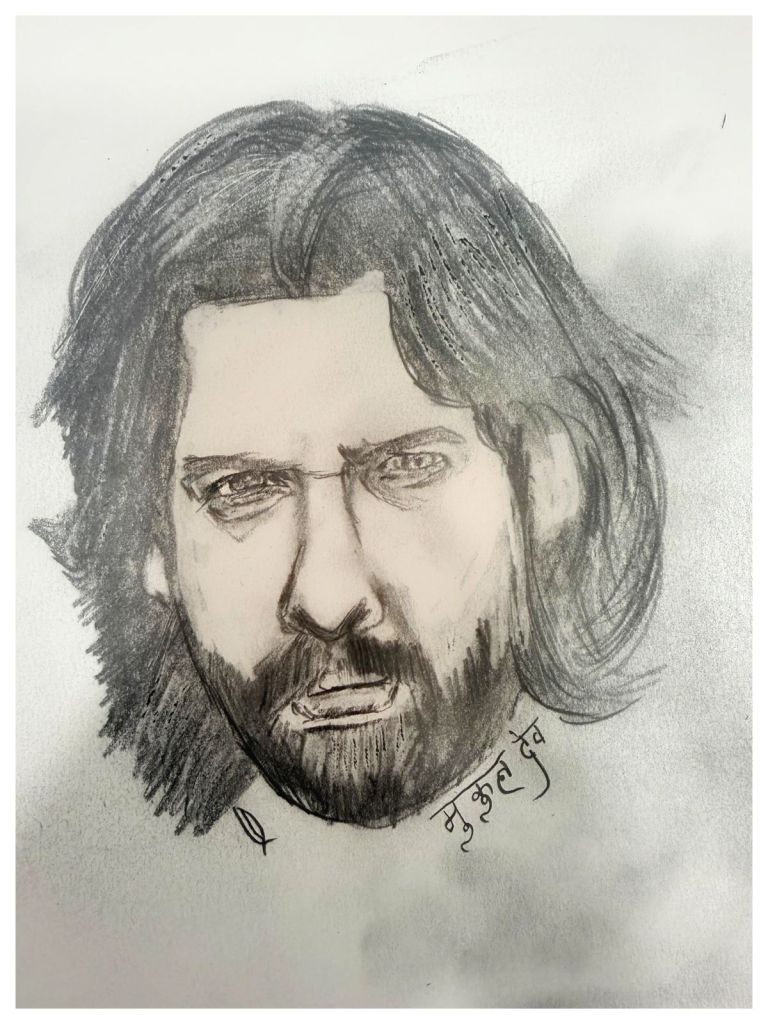
Like who could predict the sudden demise of Mukul Dev.
He will be missed…

Om shanti…

Atash Behram agni dev!

Do you know what is Atash Behram? It is based on an important source of energy!

The energy is known as one of the greatest invention for the man(or woman!)kind!

There is a legendary holy book which is dedicated to this great energy!

There are places in which this energy is continuously present for ages and is worshipped by many!

The chief difference between an average Human and the animals is the fact that we cook our food!

Of course now we do have many means of cooking but none can match up to the real original thing!

Without further ado, it is AGNI or FIRE!

Even now when you cook a meal, there is an added taste if you get it smoked! Or used charcoal! The smell of wood fire stimulates your taste buds which goes all the way back when your ancestors used to use wood for fire! Which is why you get hypersalivation when you get the charcoal or ‘Barbequed’ smell and taste!

In fact in one of the most holy books in Sanatana Dharma, the Rig Veda; the most prominent deity praised is Indra, followed by Agni, the sacrificial fire!
When you do a Puja with Yagna in your house, the smell of burnt wood and Ghee stays for a while and you feel blessed! I simply love that smell! In fact, in most traditions and religions, fire is an integral part! Remember that fire is the creator and fire is the destroyer!

Then you have the Atash Behram!

An Atash Behram, meaning “Victorious Fire,” is the highest grade of fire in Zoroastrianism, enshrined in sacred fire temples. It is a continuously burning flame, purified from sixteen different sources and consecrated in a complex ritual. Only nine Atash Behrams exist globally, primarily in India and Iran!

The continuously burning flame is a symbol of divine light, truth, and the eternal struggle of good over evil! The daily rituals and ceremonies within the temple, performed by priests (mobeds), are a vital part of the Zoroastrian faith.

The fire is created from sixteen different sources, including lightning, cremation pyres, and fires from various trades. Each of the sixteen fires undergoes a purification ritual before being blended. The complex consecration ceremony involves 32 priests and can take up to a year to complete!

Incidentally the fires are located majorly in India, primarily in Gujarat!
The Iranshah Atash Behram in Udvada, Gujarat, is one of the oldest and most important Atash Behrams in India and the world!
While the Atash Behram in Yazd, Iran, is also a significant temple.

The continuously burning fire represents the eternal struggle of good over evil. From darkness to light! From andhera or darkness to light or Roshan!

Which reminds me of Rajesh Roshan!

Shubh ratri…