Doc day!


We all know that the middle finger (don’t worry; it is not going the PG18 WAY!); is the longest of all the fingers! It is not the first finger and not even the second! But it is the longest! This is normal!

But (ah! the return of the but!); as far as the toes are concerned, the big toe is not only the biggest, it is also the longest! In majority of course! In many people though the big toe is shorter than the second toe!

Those ‘rare’ people are supposed to be more beautiful and ‘lucky’!

The Ortho doc may not agree though! Well, then you can show him or her the Statue of Liberty!

Did you know that the Statue of Liberty has a longer second toe; sculptor Frederic Bartholdi studied Greek and Roman sculptures, modeling the statue’s feet to define her heritage from the earliest days of civilization!

The anatomical, political and ethnic logic for classic artists starts and ends with the presence of longer second toes in a portion of the population.

In fact, many Roman statues have this!
Dudley Joy Morton first evaluated a second longer toe as a medical condition in 1927, calling it “Metatarsus Atavicus.” or in simple terms Morton’s toe or Greek toe! It is thought to be a divine trait though it can cause more toe problems!

In many cases, Morton’s foot is asymptomatic. However, the altered weight distribution can lead to increased pressure on the second metatarsal, causing pain, calluses, and other issues like Morton’s neuroma or bunions!

You may think is is rare but it is not that rare! Morton’s foot is estimated to affect a significant portion of the population, with estimates ranging from 4% to 30%!

This foot shape, was seen in classical art and architecture, particularly sculptures like the Venus de Milo, as a symbol of beauty, creativity, and the Golden Ratio.
Ancient Greeks, known for their appreciation of beauty and mathematical harmony, associated the longer second toe with ideals of aesthetic perfection!

They believed this foot shape reflected the Golden Ratio, a mathematical proportion considered to embody ideal beauty and balance. The presence of “Greek toes” in famous sculptures like the Venus de Milo and Michelangelo’s David further solidified its association with classical ideals; not to mention the statue of Liberty!

Morton’s foot is associated with conditions like metatarsalgia (pain in the ball of the foot), increased risk of stress fractures in the second metatarsal, and potential for over-pronation. So if you do have a longer toe then do meet your doctor after you have done admiring its beauty!

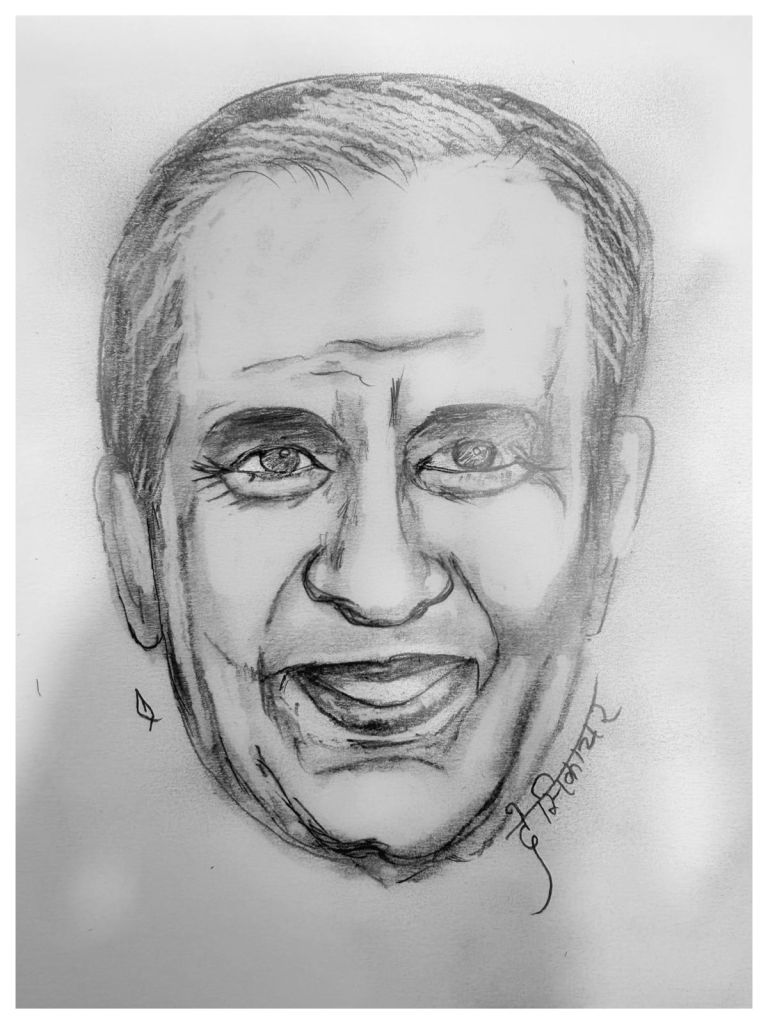
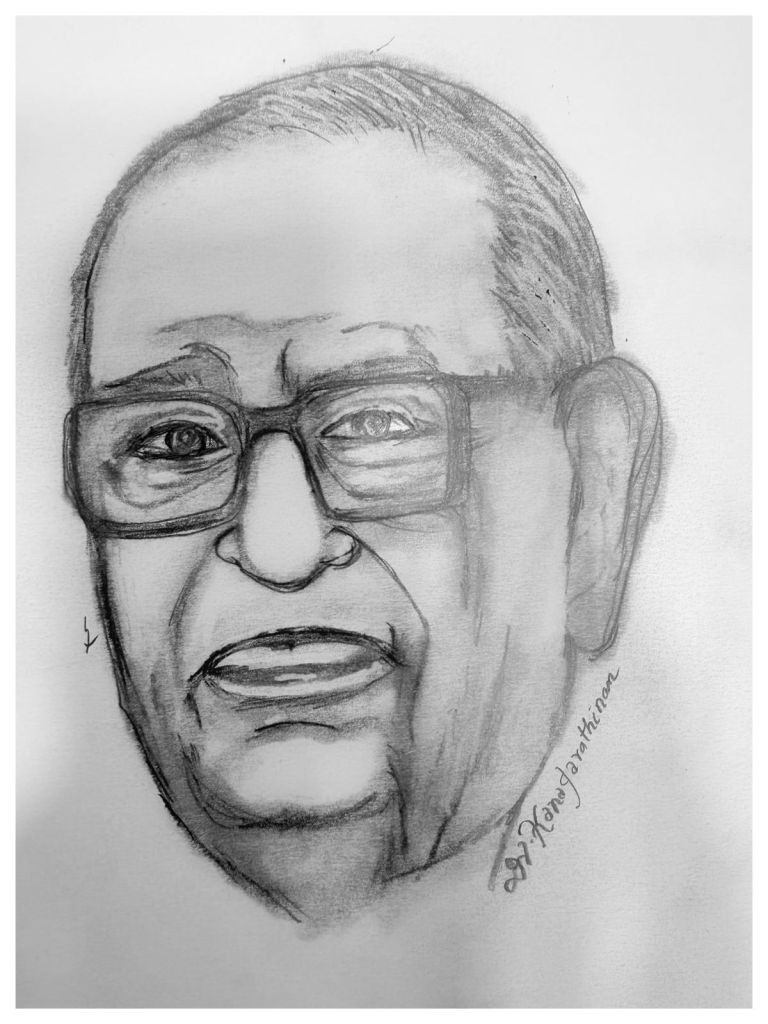
But do pay for his or her consultation since only then you will get a good treatment that works! If it is free then it is not going to work! Even a token amount would do! Though not everyone can be like the ten rupee doctor Dr T A Kanagarathinam!

Shubh ratri…
Happy doctor’s day dear friends… and a big thanks to those who wished us…
Don’t forget to forget!

So you forget once in a while!

That is ok!

Then again you forget that you forgot! That is not ok!

This double forgeting is the lifestyle of a parrot!

When you have a busy life then automation sets in! You may think that you forgot to lock the car but in fact you have forgotten something else!

You may forget that you have locked the car!

It is the same with examination for us clinicians! The examination is routine for us ENT. I always start with the nose then the throat and then the ears and finally the chest! Whatever the complaint may be! In fact most of the times the patient would be wondering that he or she told me that his or her right EAR is paining but this doctor is checking the nose and the throat! “Guess this ENT must get his hearing tested!”

Then I would explain that all are linked so I need to examine everything!

Suddenly though after full examination of when I would be writing the prescription he or she would ask, “Doctor how is my chest? or how is my nose!?”

Now of course we would have examined all but we would have forgotten that!

This is because unless there is a finding or something different, you would not resgiter a ‘normal’ ear or nose! A senior doctor would simply claim that everything is ok! I normally examine the part again so that both of us would be more satisfied!

This is also important since even the patient would have ‘forgotten’ that even though he or she had specific complains, I did in fact examine everything else! Many times he or she would even forget that I had examined the other normal ear!

Now listen about the kākāpō!

The kākāpō, also known as owl parrot, is a species of large, flightless, nocturnal, ground-dwelling parrot!

According to the evolutionary biologist Douglas Adams, these birds have wings but with such a stout and fat body, they really can’t fly!

Apparently their ancestors could but these birds have forgotten that! Which means that at one time their great great grandfathers used to fly but then decided that it is not necessary! Or worth the effort!

The more interesting thing about this is that they have forgotten that they have forgotten to fly!

So once in a while they jump down from a tree to soar up in the sky only to fall down on the bushy grass like a brick! And get up with whatever pride they have left till the Amnesia strikes again! Or they reach a tree or cliff which is high with a view great for a flight!

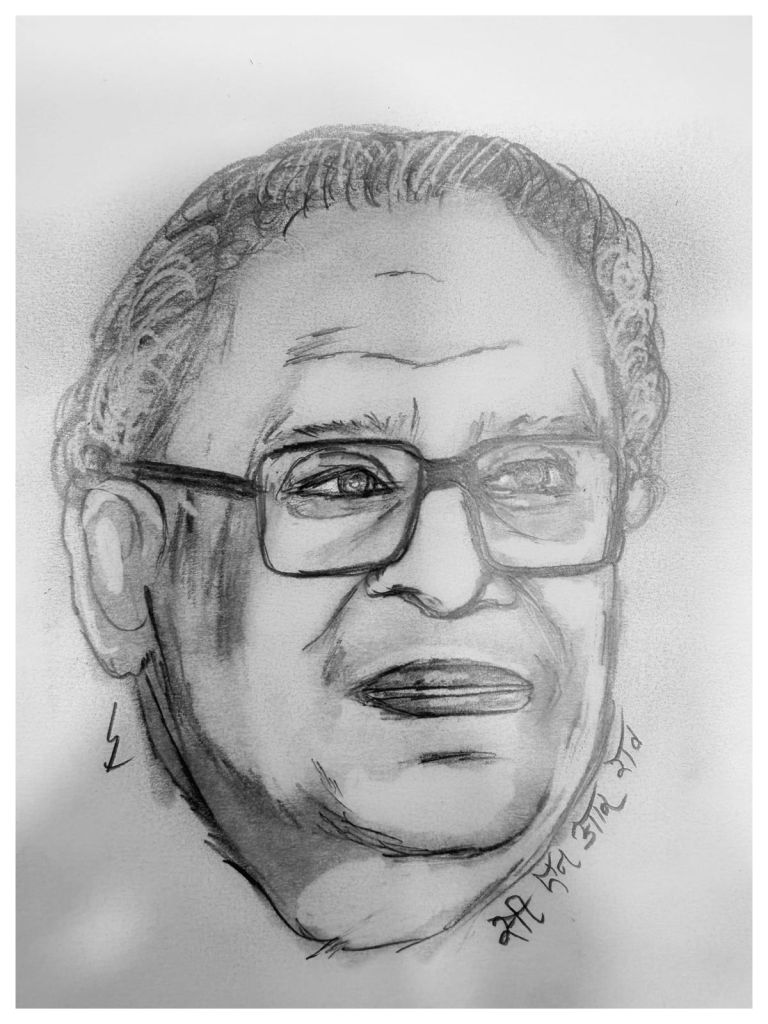
Flight assessment needs physics and who else to remember by that other than C N R Rao!

Now don’t forget to place the alarm before you sleep!

Shubh ratri!

Horsing around!


There was a famous GB Shaw joke!

A beautiful woman once told George Bernard Shaw ‘Wouldn’t it be great if we got married and had a child with my beauty and your brains?’

Shaw, who let us just say that was not a very good looking man, replied: ‘That would be wonderful indeed, but what if our child had my beauty and your brains?’

It is funny but there seems to be some practicality in the combination!

Children are in fact a mixture of their parents and then some!

How every parent states his or her child acts or looks like him or her!

Then gain what if you have this ability of selecting the best of both parents and making the perfect combination? It is like an RPG where you get a character and you can mix and match his or her qualities! Some strength, some speed, some magical ability and voila; a perfect match!

Ethically though it cannot (officially at least!) be done in humans but this is a universal appeal in the animal industry!

Which is why you have the prized bull or the prized stud! In fact this is why you had the donkey in the first place! A donkey is a hard working horse without the attitude! What is you have an intelligent donkey! Well that’s a mule!

In fact the equine industry is full of such mix and match!

A mule is the offspring of a male donkey (jack) and a female horse (mare). Horses and donkeys are different species, with different numbers of chromosomes. Of the two first-generation hybrids between these two species, a mule is easier to obtain than a hinny, which is the offspring of a female donkey (jenny) and a male horse (stallion)!

The size of a mule and work to which it is put depend largely on the breeding of the mule’s mother (dam). Mules can be lightweight, medium weight, or when produced from draft mares, of moderately heavy weight.

Mules are more patient, hardy, and long-lived than horses, and are described as less obstinate and more intelligent than donkeys!

So if you are someone who has the horse as parent; don’t try to be another horse! Try to be a mule

Then again if you run like Pilavullakandi Thekkeparambil Usha then horse is your choice!

Shubh Ratri!

A sapien polyglot!


When you see the gene then you know its the same!

It has been said that all matter is atom and all are same or even similar!

The same atom which makes you, also makes the trees and also makes the animals!

In fact those very atoms also make a table or a car! It is all in the atom! Of course the difference lies in the organic and inorganic nature.

In our philosophy also it has been mentioned that all of us are the same!

Hindu philosophy says that all matter is fundamentally the same, originating from a single, un manifested source, often referred to as Prakriti. This source, in its purest form, is considered formless, attribute less, and eternal. Through various processes, this primordial matter differentiates into the diverse forms and qualities we perceive in the universe. Essentially, different names, shapes, and attributes (Naama, Roopa, and Vyavahara) distinguish the various forms of matter, but their core essence is the same!

Now if you ever have a doubt about how any two animal is actually related to each other just remember a common thing and your doubt will melt!

As Richard Dawkins puts in his book ‘Greatest show ‘ which is an extension of his other books and goes one step further.

He tells about many examples of different but same!

Like the bat which can fly like a bird but is an animal like a rat! A buttery is actually a flying worm! 

When you think like that you can see that a dolphin is not a fish!

So the Dolphin is like a fish but it is actually a mammal and it does not swim in the conventional sense but it gallops in the water! Yes! It is a horse in the sea!

Then you have another fish on land! The slimy snake! Have you seen how a snake ‘walks’ on land? In fact a snake does not gallop or walk on land, in fact it remembers it’s ancestor in water and actually swims on land!

Then again you have the multi talented animals who have taken the traits of both land and water! The mighty croc!

A crocodile mostly swims or walks like a lizard but sometimes it apparently gallops and it does it fast!

Finally you have the Homo Sapien! He or she can walk, run, gallop and even swim! Of course he or she cannot do it as well as others!

But there is no competing the average human in speaking! And when you have someone who is a polyglot like Overview
Pamulaparthi Venkata Narasimha Rao who spoke 17 languages then there no competition at all!

Now sleep like a human!

Shubh ratri!

Tenet mukesh!


In the movie TENET there is a strategy called the Temporal pincer moment!

You basically pince both the side temporally!

It is a complex methodology and needs lots of planning and imagination!

It’s a modification of attacking from two ends and squeezing or pinching the enemy in the middle! Of course when you have the time also as a component then you have temporal pincer!

Essentially, the idea is that if you wanted to execute a plan at 5pm, you have half your team initiate their actions at 4.30pm while the other half starts at 5.30pm, but they’re inverted and moving backwards. The advantage is that those moving backwards already know how everything is going to go down! It’s like how you have the control of the beginning and of the end!

As depicted in the movie Tenet, it is a military strategy that utilizes time inversion to attack an objective from two directions simultaneously, one moving forward in time and the other moving backward. This involves one group of people experiencing events normally while another group inverts themselves to experience the same events in reverse, using information from the other group to coordinate the attack.

The concept is adapted to incorporate time inversion. One team (the “blue team”) moves forward in time, experiencing an event normally. They then brief another team (the “red team”) who have inverted and are moving backward through the same event. Of course the colour does not matter but here is the pincer or special part! It is called the LOOP! The red team, having been briefed by the blue team, can then act based on this future knowledge. After the red team’s experience, they can brief the blue team before the event begins, creating a loop of information and action!

In the movie, this strategy is used in the final battle at Stalsk-12. The blue team moves forward in time, experiences the battle, then inverts to brief the red team moving backward through the same battle. The red team uses this information to fight their way through the battle, then briefs the blue team, who then invert to fight their way through the battle again!

Of course the most important aspect here is to get a device to essentially go back in time! Then again if you are going back it is not time travel but time inversion; you may get a sense of what is going to happen but you have to prepare yourself!

Of course this is a fictional concept for now! But the concept highlights the potential for using knowledge of future events (or simulated future events) to influence present actions, creating a complex strategic advantage.

Now even if you know the future; the effectiveness of the temporal pincer relies on the accurate exchange of information between the two teams, allowing them to coordinate their actions and exploit the knowledge of the other team’s experience.

So even if you know the future, remember that cooperation is the key!

Now time to sleep! Maybe listen to ‘so gaya’ by Nitin Mukesh if you are not feeling sleepy and sleep!

Shubh ratri!

Phlebotomy


When you get your blood tested; the technician who takes your blood is called a Phlebotomist!

Did you know that it means vein cutter!? or the fact that at one time letting out your blood was a treatment of choice!?

The science was called phlebotomy — from the Greek words phlebos, meaning “vein,” and temnein, meaning “to cut” — or bloodletting!

Nowadays of course the term phlebotomy refers to the drawing of blood for blood tests and related procedures.

Bloodletting, the practice of draining blood from a patient, has a long and complex history, spanning over 3,000 years and practiced in various cultures. Initially believed to be a way to balance the body’s “humors” and treat various ailments, it was a common medical practice for centuries but has since been discredited by modern medicine.

Greek physicians like Hippocrates and Erasistratus believed in the four humors (blood, phlegm, yellow bile, and black bile) and that imbalances caused illness. Bloodletting was one method to restore balance. A similar imbalance was also postulated and still practiced in Ayurveda!

Ayurvedic medicine is based on the idea that the world is made up of five elements — aakash (space), jala (water), prithvi (earth), teja (fire), and vayu (air).
A combination of each element results in three humors, or doshas, known as vata, kapha, and pitta. These doshas are believed to be responsible for a person’s physiological, mental, and emotional health.

In modern medicine though the factors responsible for any disease is another combination of THREE! The agent, the host and the environment! But lets us not digress for now!

Getting back to the BLOOD!

Starting from the Greeks and Romans, bloodletting spread to the Arabs, Asians, and eventually throughout Europe during the Middle Ages and Renaissance.

The people who were entrusted on this important ‘treatment’ were the first surgeons! The barbers! Since they were skilled with blades and they often performed bloodletting procedures this lead to the association of barbers with medical practice!


Bloodletting was widely used for various ailments, from the plague and smallpox to epilepsy and gout. Not to leave out fevers, asthma, pneumonia, cancer, jaundice, seizures, the plague, and even mental illness. In some cases, bloodletting was employed before surgeries or childbirth to prevent inflammation!

By the way it was also used to address issues like excessive menstruation, nosebleeds, and even heartbreak!

Blood and heartbreak go hand in, well glove apparently!

Development was swift in such that new tools like the scarificator (a spring-loaded device with blades) and thumb lancets were developed!
Even European medicinal leech was put into commission!

The leech though now is a good treatment in transplant and plastic surgery but then that is a whole different topic!

It took the death of a president that made a downfall on its popularity! The death of George Washington, who lost a significant amount of blood through bloodletting, contributed to the growing skepticism about the practice.

There still remains a legacy though! The barber pole, with its red and white stripes representing blood and bandages, serves as a visual reminder of bloodletting’s historical connection to barbering! Barbaric you may say now though!

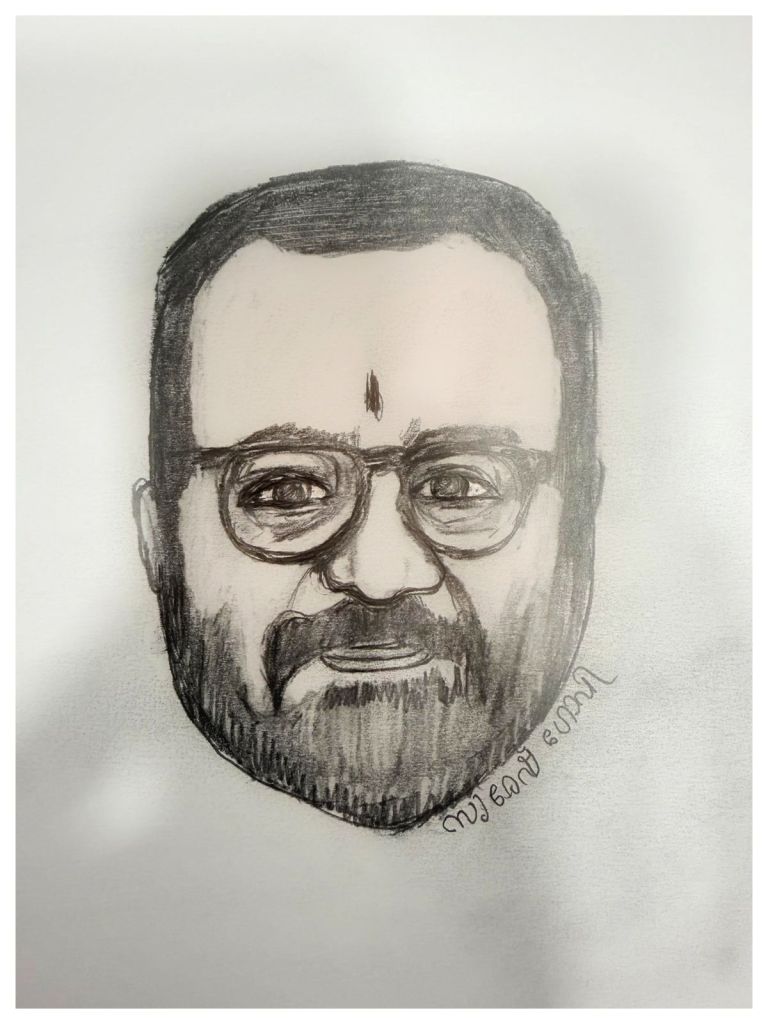
Whatever you say, say it with force and power like Nariman aka Suresh Gopi!

Now before the blood pressure increases take rest!

Shubh ratri!

Spider…ape!


What do you get when you get bitten by a radioactive spider?

In reality it will be poisoning and probably pain and complications!

In Marvel Universe you will become Spiderman! You can swing from one building to another and well have a spider sense!

Do you know that like always, the monkeys have already got there! Also the females have already taken the lead there!

Presenting the Spider…Monkey!

If you have seen Mission Impossible 3 then you would know the power of arc or a swing! You can see the same in MI4 also! Then again not everyone can swing like Tom!

Not every man (or woman for that matter!); so nature gives us a Monkey!

One of the most defining characteristics of the spider monkey is its long prehensile tail. The tail is strong and well-developed for arboreal life — and is often described as an extra limb and are longer than their bodies — some are as long as 35 inches!

Rather than leap from tree to tree, spider monkeys are specialists at swinging from limb to limb, and can clear great distances in a single swing.
Spider monkeys also create rich nesting sites by pooping below where they sleep! When large groups of spider monkeys converge in a region, the feces they leave behind is rich in seeds and nutrients to help grow more trees!

This pattern not only creates more food for the spider monkeys, it improves the tropical ecosystem for all creatures in the area.

Just when you thought it cannot get better and more modern; spider monkey troops are matriarchal, meaning the females play a leadership role. Females actively choose their mates when breeding, which, in the case of white-bellied spider monkeys, leads to less aggressive behavior among males. The alpha female of the troop also tends to be the decision-maker, leading the group to feeding areas and determining the ultimate size of the group!

So the males do not have to fight or be aggressive! The female would select the sensitive one who ‘listens’! It is monkey talk though!

Another unique adaptation of spider monkeys as compared to other primates is their lack of opposable thumbs on their hands. Their hands have only vestigial thumbs, the tiny nub left over from their ancestors, who did have thumbs. The absence of this extra digit gives the spider monkey a more hook like hand with long, slender fingers, providing a better grip to swing from branch to branch in its arboreal abode! So remember that thumb is not everything!

Do not say that in the biometric department though!
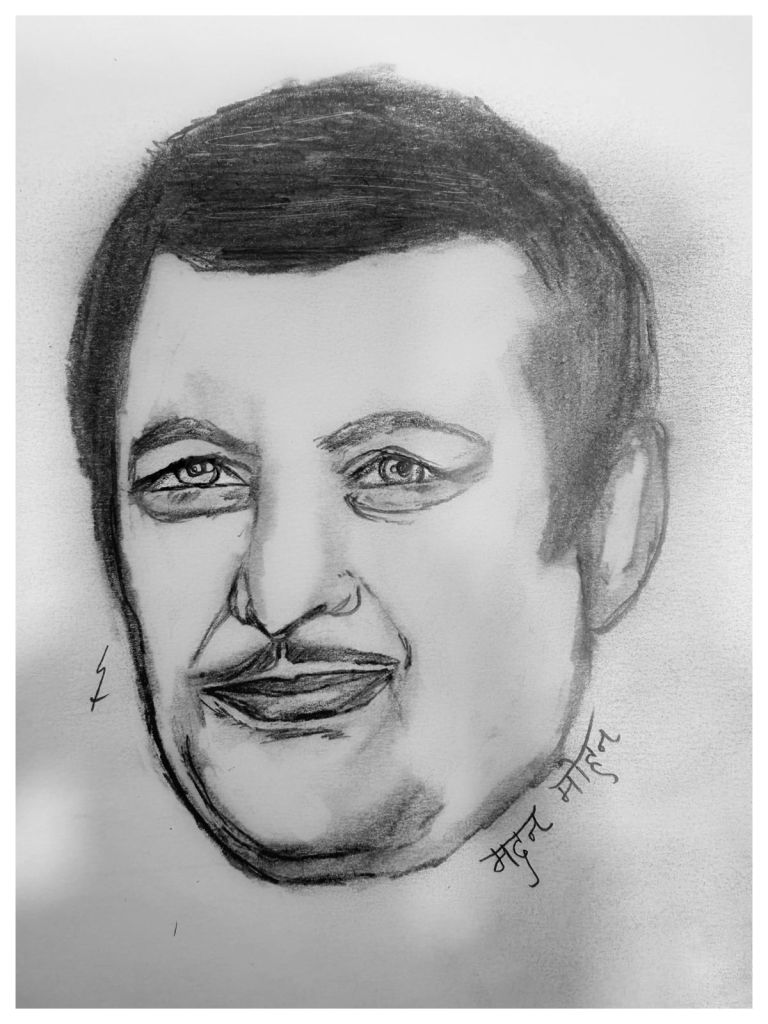
For now forget about spider sense and listen to the sense of hearing! Maybe some song by Madan Mohan…

Shubh ratri…

Non leaking writing stick!


Do you know what is a non leaking high altitude writing stick?

If you must know, it is a patent!

And if you are patient I will tell you!

Also many times the first may not be the best! It will be the original but not the best!

So if you are not first do not feel bad! Then again fame is when it is a success!

Now, ‘a non leaking high altitude writing stick’ is nothing but a ball point pen!

Even I had written a blog on the supposed inventor of the ball point pen! ‘Supposed’ because he was not the first!

The ballpoint pen, in the present form was invented by Hungarian journalist László Bíró in 1938. He was inspired by the quick-drying ink used in newspaper printing and the rolling action of printing press rollers.

A ball point pen is probably one of the best inventions of the modern world since the fountain pens were a pain! They used to constantly smudge and leak and were a messy affair! I love my fountain pens but they are only when you have time and space and stability!

You can use them only to make a statement and I have an assortment of fountain pens only to either use the Pilot pen or the ball point pen when in need!

Now the story of the ‘famous’ inventor of ball point pen has the ‘inventor’ László Bíró’s. Biro was also frustrated with his fountain pen’s smudging, and aimed to create a pen that used quick-drying ink. He combined the rolling ball concept with a new, viscous ink, resulting in a pen that could write smoothly and consistently. This was in 1938!

Early ballpoint pens faced issues with ink flow and clogging. Bíró’s design, though a significant improvement, still needed further development to become widely accepted. Bíró’s invention gained traction after he and his brother fled to Argentina due to World War II. They patented their pen in Argentina and later in the US and Europe. The British Royal Air Force adopted it for its reliability in aircraft.
Bíró’s pens, initially sold as the “Eterpen” and “Birome,” eventually led to the global popularity of ballpoint pens. The pen’s affordability and ease of use made it a revolutionary writing instrument, replacing fountain pens for many! Even now these pens are famous and with more refinements and improvements they are here to stay!

All that is hunky dory but (you guessed it!) the one with the original patent and design for the pen and also being the first was John Jacob Loud who was an American inventor known for designing the first ballpoint pen which was much ealier in 1888!

His patent was for a similar design and was for coarse writing! The same tube with the ball in the end and a reservoir for ink! Unfortunately the patent and the invention was not commercially viable and lapsed into oblivion along with the invention only to be ‘rediscovered’ 22 years later!

So the next time you write with a ‘Biros’ pen; do spare a thought for John Jacob Loud; you do not have to do it LOUDLY!

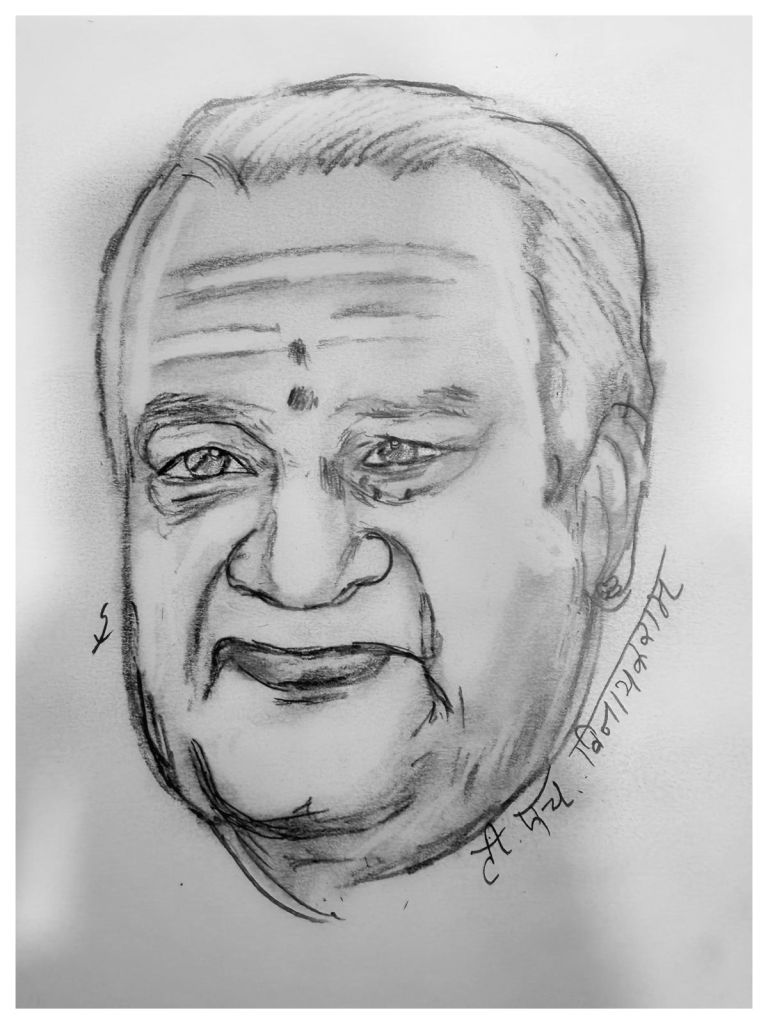
You can listen to some nice music though loudly! Like ghatam by T H Vinayakram!

Shubh ratri!

Murmuration…


Many of divine beings are shown as blue since the sky and the water is blue! It represents the vastness of universe and nature!

But did you know that the colour blue is actually very rare in nature?

Then you have a bird which not only lays blue eggs but also forms a group of millions which can fly along each other without a fuss! The sheer number can make you dizzy but they can fly like a well oiled machine! The display is a sheer magic of nature called as murmuration!

In many ways Starlings have got serious style!

Not only can they lay blue eggs, recognize each other from their chirps alone, but the short-tailed birds can also put on an aerial display to thrill you!

Known as starling murmurations (due to the sound produced by the multiple wingbeats involved), this sky dance sees flocks gather together, swooping and twisting across the sky in one spectacular swarm.

Consisting of at least 500 starlings, these formations have been known to feature up to a million birds in the UK.!

And this number can be up to five million! And they do not crash because the birds have incredibly good social-distancing instincts!

A murmuration is also a collective noun for a group of starlings.

The reason why they do this is many! The first is safety in numbers! Murmurations provide protection against predators, making it difficult for a single bird to be targeted.

The next is heat or warmth since Starlings roost together at night, and the sheer number of birds helps to conserve heat.

Just when you though that conferences are only limited to humans the starlings also use the murmurations for Information exchange and the flocks can help birds share information about good feeding areas!

If you see the murmurations you would be shocked at the sheer number! But the pattern is based on simple rules apparently. Starlings follow simple rules based on the movement of their nearest neighbors.

Each starling seems to adjust its flight direction and speed based on the actions of its seven closest neighbors. So all they have to do is take care of the closest seven neighbors and the exponential effect can translate to millions! With each bird taking care of its own area, the whole group feels and looks like a single gigantic bird flying in the sky!

This also creates a ripple effect, with changes in direction and speed spreading throughout the flock, resulting in the mesmerizing patterns!

So the world is so beautiful and all we humans do is try to destroy it…
Hope sense prevails…

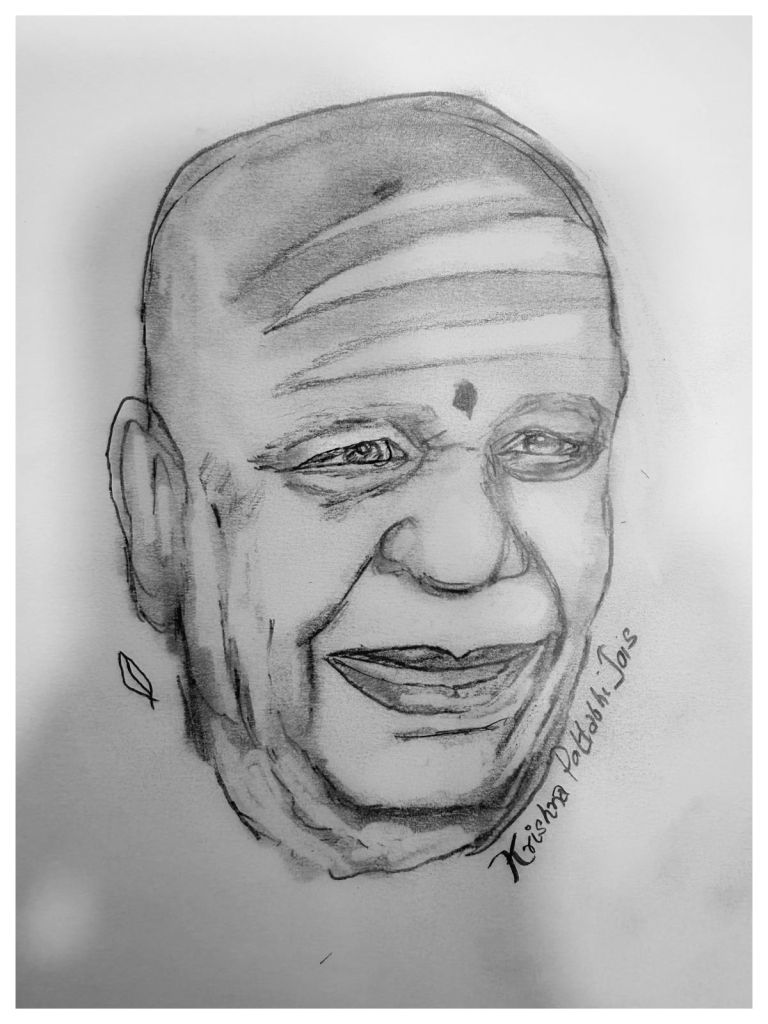
Maybe a good body mind and soul is a good start…start by yoga as taught by greats like K. Pattabhi Jois

Shubh ratri…

Chaturanga!


Chaturanga! If you know Sanskrit or even a little Hindi then you would know the literal meaning of this term!

But did you know that it is also a type of Yoga pose?

Or that the term actually refers to a game which is the predecessor of the game in which Indians are now the top!

No; it is not Kabaddi! But CHESS!

For now look at Chaturanga as a Board Game!

The Chaturanga is a two-player strategy board game that is believed to be the origin of chess. The name “Chaturanga” translates to “four limbs” or “four divisions” in Sanskrit, referring to the four parts of an army: infantry, cavalry, elephantry, and chariot.

In fact it also been suggested that Chaturanga is the common ancestor of  not only chess but also many other games all over the world including  xiangqi (Chinese), janggi (Korean), shogi (Japanese), sittuyin (Burmese), makruk (Thai) and ouk chatrang (Cambodian)!

Chess historians suppose that the game had similar rules to those of its successor, shatranj. In particular, there is uncertainty as to the moves of the gaja (elephant). In fact some versions also have confusion in the movement of the knight or Bishop as you may call it!


Sanskrit caturaṅga is a bahuvrihi compound word, meaning “having four limbs or parts” and in epic poetry often meaning “army”.
The name comes from a battle formation mentioned in the Indian epic Mahabharata. Chaturanga refers to four divisions of an army, namely elephantry, chariot, cavalry and infantry.

An ancient battle formation, akshauhini, is like the setup of chaturanga! There are many such formation all determined to finally save the king! One such formidable formation was the Chakravyuh which translates to circular battle formation or labyrinthine formation. The goal is to trap and surround the enemy, making it difficult to penetrate or escape. It’s also known as Padmavyuha due to its lotus-like, layered structure!

The game spread from India to Persia in the 7th century then the game  spread to southern Europe, reaching western Europe by about 1000 CE.  In the second half of the 19th century, modern chess tournament play began, and the first official World Chess Championship was held in 1886. The 20th century saw great leaps forward in chess theory and the establishment of the World Chess Federation!

Now everyone who plays chess has the same question!? Why the king is so weak!?
Though many others ask why the queen is so powerful?! But the latter is the question no one asks openly!
One of the main reason the king is made weak is because it would be harder to deliver a checkmate on a king that is powerful! Also the king by nature must not do much work! He or she (yes, a king can be a she!) must make minimum effort and the actual work must be done by people surrounding him or her!

What is the point in being a king if you have to do all the work!
Now do not fret! I did not forget about the other meaning!

In yoga, Chaturanga Dandasana, also known as Four-Limbed Staff Pose, is a transitional pose in various styles of yoga, particularly Ashtanga and Vinyasa, and is a low-plank position. This is not a complex pose and most Yogis can get the pose; the issue in Yoga is maintenance!

Also, do remember that the exercise is only a part of the yogic training! The practice of yoga is a combination of both diet and exercise!

Think about then you must know Tirumalai Krishnamacharya Venkata Desikachar, better known as T. K. V. Desikachar, son of the pioneer of modern yoga as exercise, Tirumalai Krishnamacharya.

Now play mental chess and sleep!

Shubh ratri!