Shruthi and smruthi…

The Bhopa people are the priest-singers of the folk deities in the state of Rajasthan, India.

They perform in front of a scroll, known as phad (par in the Rajasthani language) that depicts the episodes of the narrative of the folk deity and functions as a portable temple!

As William Darlymple narrates in his book called ‘nine lives’; (if you simply ignore the abysmal Indian diction that is!) Bout the most famous Bhopa artist called Mohan Bhopa who used to perform continuously and even over night!

His narrative is continuous and absolutely flawless! He does not forget his lines and there are no prompts! What is so great about that you say!?

He used to remember his lines when in fact he was illiterate!

This type of memory is called Shruthi! In fact you can find this all over our local traditions and art including the most important ones! Another form of memory is called the Smriti.

Shruti (“that which is heard”) and Smriti (“that which is remembered”) are the two primary pillars of indian scriptural authority.

Shruti refers to eternal, infallible divine revelations (Vedas, Upanishads), while Smriti consists of traditional, human-authored texts (Epics, Puranas, Dharmashastras) that interpret and apply these truths to daily life.

Shruti is “that which is heard” by the ancient sages (rishis) directly from the divine source while Smriti is “that which is remembered” or recorded by sages based on their understanding of the revelations.

Since here also source is important; Shruti is considered the highest, absolute authority (canonical) while Smriti holds a secondary authority, deriving its validity from its alignment with Shruti.

Shruti is believed to be eternal and impersonal (authorless) while Smriti is considered authored, flexible, and evolving with time!

Even in your examinations, you have an interplay of Shruti and Smriti! What your teacher tells you and you repeat is Shruti and what you read and understand is Smriti! Here, also, what the teacher tells has authority!

Then again when it comes to dance and direction; for authority you have Remo Gopi D’Souza!

Now remember what your teachers says!

Shubh Ratri!
Bust the block!

Made in America is a novel by Bill Bryson where in one of the chapters he talks about the contribution of war!

Practically, the war is a big waste of money, time, resources, and humanity!

But did you know the term blockbuster was actually used in a war first?

By the mid-1950s, the term transitioned into Hollywood jargon to describe films that were massively successful, figuratively “busting the block” with long ticket lines and high revenue!

The latest ‘blockbuster’ Dhurandhar has actually rewritten indian movie returns and how!

To use a term used in war first, well seems almost prophetic!

It actually has wartime Origins from the second world war; 1942–1945. The term was used in media reports to describe high-explosive, large-capacity bombs used by Allied forces!

These massive Royal Air Force bombs were literally capable of destroying an entire city BLOCK!

The term slowly began to be used figuratively for anything with massive impact. By 1954, it was commonly used by film industry trade publications and executives, such as United Artists’ Max E. Youngstein, to describe high-budget, high-grossing movies.

Early usage in film was highlighted in 1944 when Variety predicted the film Brazil would be a “block-buster at the wickets” (theater ticket offices).

The term gained its final modern and solidified meaning in the 1970s, particularly following the massive success of JAWS!

Some early interpretations suggested the term referred to long lines of moviegoers that stretched around the block!

In the 1950s, the term was also used to describe block-busting in real estate, where brokers would prompt an exodus from a neighborhood!

I sincerely thank heavens and God that the recent major conflict did not introduce any new term like citybuster or country buster!

Humanity did not get BUSTED!


Better always to watch a movie blockbuster like Pusha though I would prefer Allu Arjun’s Arya anyday!


Praying for a blockbuster peace!

Subh ratri!

Gospel of wealth?!… Health…

Have you heard of “The Gospel of Wealth”?

Now there are a lot of books which will tell you on how to get rich like the ‘rich dad, poor dad’ or ‘how to win friends and influence people’ and of course many many more!
The gospel of wealth is for people who are already rich, and it was written by a person who at that time was one of the world’s richest human!


“The Gospel of Wealth” is a foundational essay written by steel magnate Andrew Carnegie in 1889.

In it, Carnegie argues that extremely wealthy individuals have a moral obligation to use their fortunes for the “general good” of society rather than hoarding them or passing them down as inheritance

His most famous quote from the essay is, “The man who dies thus rich dies disgraced”. He believed surplus wealth should be distributed during one’s lifetime to ensure it is used wisely!

Carnegie viewed the wealthy not as owners of their money, but as “trustees” for the poor. He believed that those with the talent to accumulate wealth also possessed the superior “wisdom, experience, and ability” to administer it for the public’s benefit.

He strongly criticized leaving large fortunes to children! arguing that it often leads to squandered wealth and does not benefit the state or the recipients.

Carnegie also opposed “indiscriminate charity,” which he felt encouraged dependency. Instead, he advocated for providing “ladders upon which the aspiring can rise,” such as free public libraries, universities, and parks.

The “Gospel of Wealth” remains a blueprint for modern large-scale philanthropy, influencing figures like Bill Gates and Warren Buffett!

Like mentioned before, Carnegie was at one point, the richest man in the world! But he followed what he spoke!

Carnegie lived his philosophy by giving away roughly $350 million (about 90% of his fortune), funding over 2,500 public libraries and establishing institutions like Carnegie Mellon University and the Carnegie Corporation of New York!

The practical key point here is that you must make sure that even if you have money, your children must learn the value of hard work and integrity

You must only give them a scaffolding or Support for their own success!

Once they get away from the shade of comfort, they would reach better and greater heights! Like Hariharan Anantha Subramani who did not need any support since he had ample talent!

Praying for peace and nothing else…

God bless…

Ant optimization…

Determined: A Science of Life Without Free Will is a book by Robert Sapolsky where among other things, the author talks about how ants get food!

Actually, the numbers would shock you! Depending on the size of an average and colony, it would take 360,000 ways if there are 10 sites to get food.!

Do you know what happen if there are 15 sites!?
There is at least 80 billion ways of getting the food!

So how do ants get it?

They do and very effectively in fact! When this is used  to solve problems it is called swarm or ant optimisation!

Ant Colony Optimization (ACO) is a nature-inspired metaheuristic algorithm used to solve complex computational problems by finding optimal paths through graphs.

It was introduced by Marco Dorigo in the early 1990s and is a key part of the broader field of swarm intelligence.

The algorithm mimics the foraging behavior of real ant colonies. When searching for food, ants initially wander randomly. Once food is found, they return to their nest while depositing a chemical substance called pheromone on the ground.

Other ants are attracted to these trails. Shorter paths allow ants to return faster, leading to a quicker buildup of pheromones, which in turn attracts more ants.

Over time, the pheromone trails evaporate. This “forgetting” mechanism prevents the colony from getting stuck on a single suboptimal path and encourages the discovery of new, potentially better route!

ACO translates these biological behaviors into a computational framework using “artificial ants”.

This actually has many common applications!

Like the Traveling Salesman Problem (TSP)! one can use Ant Colony Optimization (ACO) to find the shortest route to visit multiple cities and return home!

We can also use it for Network Routing by Optimizing data traffic and identifying the fastest paths in communication networks!

Another area is for Scheduling! You can assign tasks or resources efficiently (e.g., job-shop or hospital scheduling).

The Ant Colony Optimization (ACO) can also be used for vehicle Routing and to determine the best paths for a fleet of delivery vehicles!

See what a colony of ants can do? They can make sure your Amazon prime delivery comes on time!

Ok that may be a bad joke but if you want a good one then check Sreenivasan’s movies!

or watch how an ant finds food!

your choice!

Shubh ratri…


Cellular automata…

Determined: A Science of Life Without Free Will is a book by Robert Sapolsky talks about CA!


Now CA doesn’t mean charted accountant at least this context!

It actually means cellular automata!

This whole concept was way over my head, but still is important to understand how replication occurs in machines!

Cellular automata (CA) were conceived in the 1940s by John von Neumann and Stanislaw Ulam at Los Alamos National Laboratory to model biological self-replication and complex systems.

Originally designed as discrete, 2D, multi-state systems, they evolved into simpler models like Conway’s “Game of Life” (1970) and 1D systems studied by Stephen Wolfram in the 1980s.

John von Neumann, prompted by Ulam, created the first cellular automaton to explore self-replicating machines. His model was a 2D grid with 29 states per cell, capable of universal computation.

In the 1960s; researchers began exploring CA as computational models of physical systems.

In the 1970s, John Horton Conway introduced Game of Life, a 2D, two-state automaton, which became incredibly popular because complex, life-like patterns could emerge from simple rules.

The original purpose was to understand how machines could build copies of themselves.

Simple local rules can lead to complex global patterns and it was seen that certain CA can simulate any computer algorithm!


The basic summary is that using simple rules, the patterns are estimated, but minor changes in the rules can lead to major changes later on!

It is like the butterfly effect, and this is the basis of chaos theory!

Then again, that also is something way over my head!

Though  no amount of theory can explain why humans do certain things!

Like war to the point of destruction! Then again if you have war then you must have Sam Bahadur as your chief and you will be ok!

Praying for peace…

Positive punishment or negative reinforcement??


In the opening scene of the 1984 film Ghostbusters, Bill Murray’s character, Dr. Peter Venkman, famously claims to be studying the effect of “negative reinforcement on ESP ability”!

When you listen to such technical and supposedly scientific terminology in a movie you would get up and notice!

Then again like all movies who get the medical and scientific terminology wrong even this was completely wrong for a scientist but for a layman it was alright!

In fact this scene has been used to actually reitirate the proper terminology even in science themed shows like big bang theory!

The proper terminology which should have been used must be Positive Punishment and Not Negative Reinforcement.

Venkman is shown administering electric shocks to a male student whenever the student guesses a card incorrectly.

In behavioral psychology, adding an unpleasant stimulus (the shock) to decrease a behavior (incorrect guesses) is defined as positive punishment.

While the male student is repeatedly shocked, the female student, Jennifer, is given positive reinforcement in the form of praise and “warm” encouragement—even when she guesses incorrectly! Venkman clearly ignores his own “experiment” to flirt with her.

True negative reinforcement involves the removal of an unpleasant stimulus to increase a desired behavior (e.g., stopping a loud noise when a subject performs a task).


So positive Punishment decreases behavior by adding or removing stimuli, whereas negative reinforcement increases behavior by removing an unpleasant stimulus.

Punishment (e.g., fines, time-outs) penalizes unwanted actions to stop them, while negative reinforcement (e.g., seatbelt alarms, reducing chores) strengthens desirable actions to avoid unpleasantness.

Punishment aims to decrease a behavior. Negative reinforcement aims to increase a behavior.

Punishment thus leads to the cessation of a behavior. Negative reinforcement leads to the repetition of a behavior.

Now using these terminologies one fine day we can also revaluate what one country is doing to another country because a third country is attacking it!

Whether it is positive punishment or negative reinforcement a simply INSANITY!

Then again no terminology can ever justify war!

War though reminds me of the movie border! The first one we watched just one day before a major exam! It was worth it!

Akshay Khanna has matured from that one to the latest blockbuster!

Praying for peace …
Subh ratri….

Jai shree Ram…

ANIMALS continuously exposed to a uniform damaging stimulus at first display the symptoms of the ‘alarm reaction’ and later pass into a resistant phase.

The hypothetical measure of an individual’s capacity to resist stress is adaptation energy according to Maxwell Maltz


In this work, notably Psycho-Cybernetics and Psycho-Cybernetics and Self-Fulfillment, Dr. Maxwell Maltz describes adaptation energy (also referred to as “life force”) as the “propelling fuel” that drives a person toward their goals!

It is like a  Each person is believed to have a finite amount of adaptation energy, which is used to cope with different types of stress.

Energy expended to cope with one type of stress, such as staying up late, results in less being available for other stresses, such as training.

When adaptation energy is low, a person is more likely to suffer from stress-related diseases and conditions known as burnout and rundown!

In short anything which increases your adaptation energy will increase your healing power! 

Maltz compares a human without adaptation energy to a car without gasoline; it is the energy required for the subconscious “Automatic Success Mechanism” to function and move toward a target.

Maltz suggests that this energy is used to cope with stress. He argues that mental attitudes—specifically a positive self-image—can influence how this energy is spent, thereby affecting the aging process and general vitality.

While not explicitly called “adaptation energy” in every context, Maltz’s famous observation that it takes a minimum of 21 days for a new mental image to “jell” is a practical application of this concept. He noted this 21-day window in patients adjusting to physical changes (like surgery or limb loss) and in himself when forming new habits! This adjustment time of 21 days is actually very personal and effective! Will write about that sometime!

Maltz emphasizes that because adaptation energy is finite and can be drained by “crisis thinking” or “stress,” individuals should use techniques like mental relaxation and visualization to gently reprogram the self-image rather than trying to “bully” themselves into change!

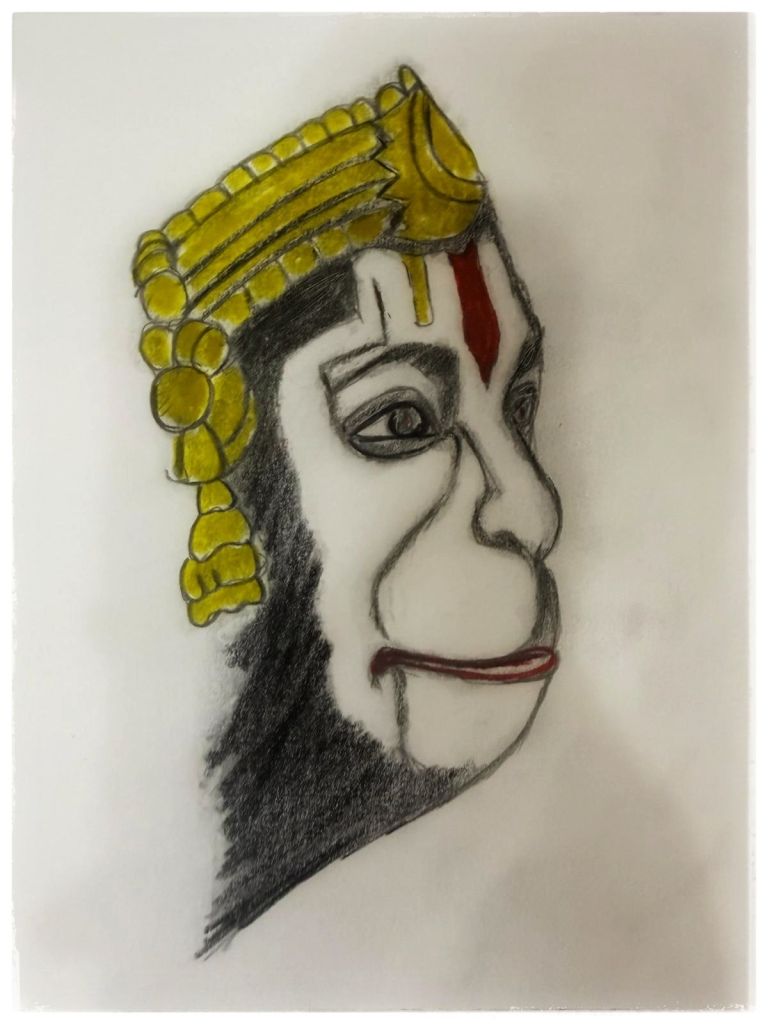
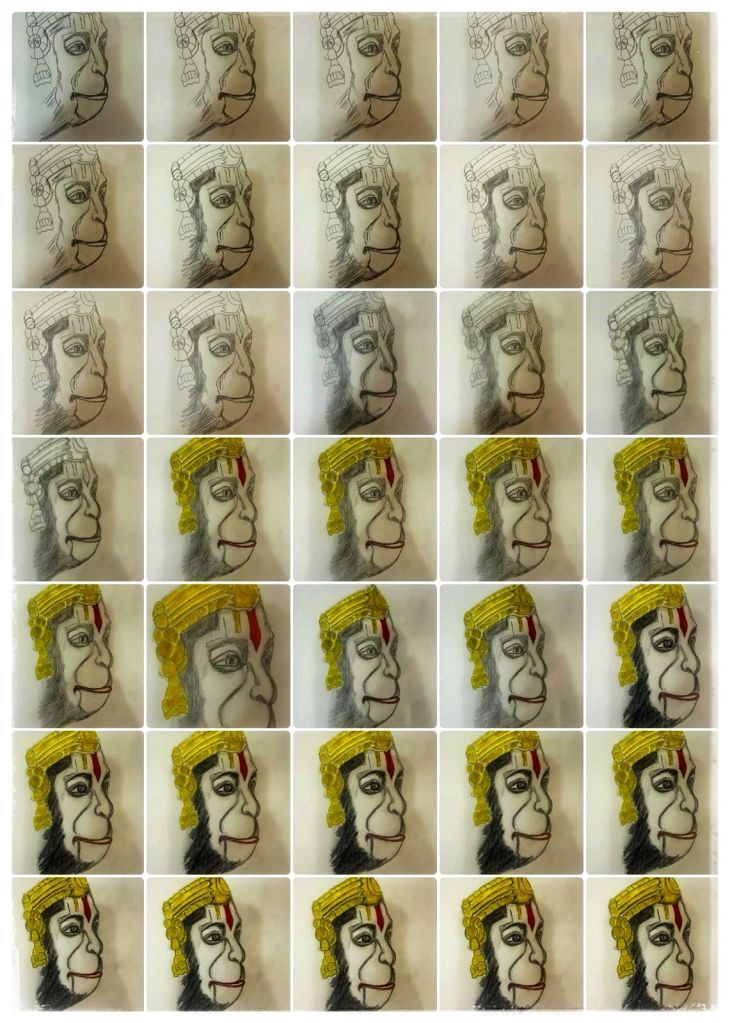
In short there is no shortcut for success you have to work slowly steady to build up both your body and mind! Remember that Hanuman ji is not only a very powerful being but also very knowledgeable! Which is maybe why most Indian wrestlers pray to him before they start their wrestling journey!

Wish your mental and physical journey be blessed on this day of Hanuman jayanthi…

Praying for peace…

From tire to star!


If you love cooking, then you will love cooking shows, and if you love cooking shows, then you will love the show, MasterChef!

If you know about MasterChef, then you will know about this Star rating of hotels and restaurants all over the world!

But did you know that this rating was only a side-effect or Side bonus to make you get out of your house and drive your car and finally make sure your tires get worn out more!

So French tire manufacturers André and Édouard Michelin wanted to encourage more driving and boost tire sales!

But  in 1900, there were fewer than 3,000 cars in France. The Michelin brothers needed to boost car ownership and driving to increase tire demand!

So they introduced the Michelin guide!

The original free Guide Michelin offered travel tips, maps, and restaurant listings!
The brothers created the free “little red book” packed with practical info (maps, hotel listings, gas stations, tyre repair tips) to motivate motorists to travel, thus wearing out their tires!

The guide became popular, and they noticed people used it to find restaurants, prompting them to start listing fine-dining spots!

Then in 1926 they introduced a star rating system for fine dining!

In the Beginning the Guide began awarding a single star to fine dining establishments.

Later on in 1931 a hierarchy of zero to three stars was introduced and finally in 1936 came the Standardization which was the criteria for one, two, and three stars. This  remains similar to this day!

One Star: A very good restaurant in its category.
Two Stars: Excellent cooking, worth a detour.
Three Stars: Exceptional cuisine, worth a special journey.

The system grew to rely on anonymous inspectors, cementing the Guide’s status as a prestigious, independent authority in gastronomy, despite its roots in marketing!

And now having a Michelin star rating for your restaurant is a matter of pride and honour and chefs would go to any length to get it!

All this Because two brothers thought that your cars need new tires more frequently!

So have you ever driven your car to a Michelin star rated restaurant?


Frankly, though I love the taste of the roadside Dhaba! Has to be clean though!

Clean also were movies starring Devika Rani Chaudhuri!

Think about one Michelin star restaurant you want to go to!

Good night…

The great war!

You know there was this war which was called a great war!


Now it gets me thinking; can any war be great?

The very fact that there is war implies that there is no peace!

Then again, there are so many war related nuggets and with the ongoing war this may be the best time to know about them!

While commonly called “The Great War” between 1914 and 1939!

The whole world knows this war as World War I!
But it was like that only after the second world war!

World War I was first termed the “First World War” by German philosopher Ernst Haeckel in September 1914. However, the title did not become official or commonly used until the outbreak of World War II in September 1939 necessitated separating the two global conflicts!


So you can realise that you can name a war only after it’s over! Like the hundred years war!


Then again, when you realise so many terms which we use so frequently, nowadays were actually derivatives of wars!


Among the native-born terms that are not self-evident, bazooka was called after a comical stage prop – a kind of homemade trombone – used by a popular comedian named Bob Burns!

Now every soldier, especially an American soldier is called a GI. In fact, there is a popular show and series named after GI!

It’s interesting to know that the terminology also came from war!

GI stands for general issue, the initials stamped on all military property!

No one knows quite when GI was first applied to soldiers, but GI Joe can be dated with certainty.

He first appeared in the 17 June 1942 issue of Yank, the armed forces newspaper, in a cartoon drawn by Dave Berger!


So one possible, good effect of war is that you get new words!

Then again, I’m sure there are better ways to get them!

Let’s have war and villians only in movies!
Like Tiger Prabhakar!

Praying for peace!
Subh ratri…

NINTENDO EFFECT


NINTENDO EFFECT


If you are a gamer or if your children are, then you would know what’s an Nintendo

But do you know what’s an Nintendo effect?

There are two definitions. The first one is very simple and clean while the second one is a wake up call to humanity…

The FIRST “Nintendo Effect” generally refers to the phenomenon where the company’s unique, accessible, and often nostalgic games or hardware revitalize older franchises, drive massive sales, and normalize gaming through high-profile, CC mainstream popularity.

It frequently highlights how Nintendo’s brand and portability turn niche or older games into popular, must-own, “portable” hits!

All okay, you say, but then you have the Nintendo effect of the war! Being in the middle of one, this is the best time to tell about this…

The “Nintendo Effect” in war refers to the sanitization and gamification of military conflict, particularly how precision-guided warfare in the 1990-1991 Gulf War was presented to the public, resembling a video game!

News media, supplied with Pentagon footage, showed nighttime, black-and-white, high-tech weaponry (cruise missiles and laser-guided bombs) hitting targets with extreme precision, creating a “virtue-less” view of combat.

This presentation, often described as a “Nintendo War,” altered public perception by making warfare seem clean, precise, and low-cost in human life, according to analysis of that era.

BUT THIS IS A CATASTROPHY!

This trivializes the conflict!

Modern interpretations of this phenomenon suggest that portraying military actions via gaming-style interfaces or “stylized” media can sanitize the brutality of war!

The “Nintendo Effect” highlights the tension between the reality of war and its representation in media, often reducing complex and devastating human events into simplified, sanitized, or “gamified” narratives!

Basically, a person sitting in a close room, much away from the battle in just in front of the TV screen can just push a button and thousand can be killed! But he or she would not even see or feel the human aspect!

As far as she or he is concerned, he or she, Might as well, be playing a game!

That is in short, the Nintendo effect!

When will we wake up and smell the coffee and realise that war is not a game?

Or sleep away silently as lives are lost and peace gets rare…

Or listen to some nice songs say by Sujatha Menon…

Your choice…
Humanity or insanity…