Kpop from ayodhya!

If you like K pop then this may be good news! Indians have a cool connection with Korea! One of the Queens maybe from Ayodhya!

Surreal!

Do you know what is the word for mother and father in Korean?

Well, it is ‘amma’ and ‘appa!’ By the way the word for grass is ‘pul’ and do day is ‘nal!’ Rice is called ‘Sooru!’

Where have you heard these words before!?

Well, if you are a South Indian or more accurately Tamilian then it is deja vu!

These are the same words! Tamilians also use the same words! In fact we were watching this Korean/English series called the Kim’s convenience and we were pleasantly surprised when we heard these words!

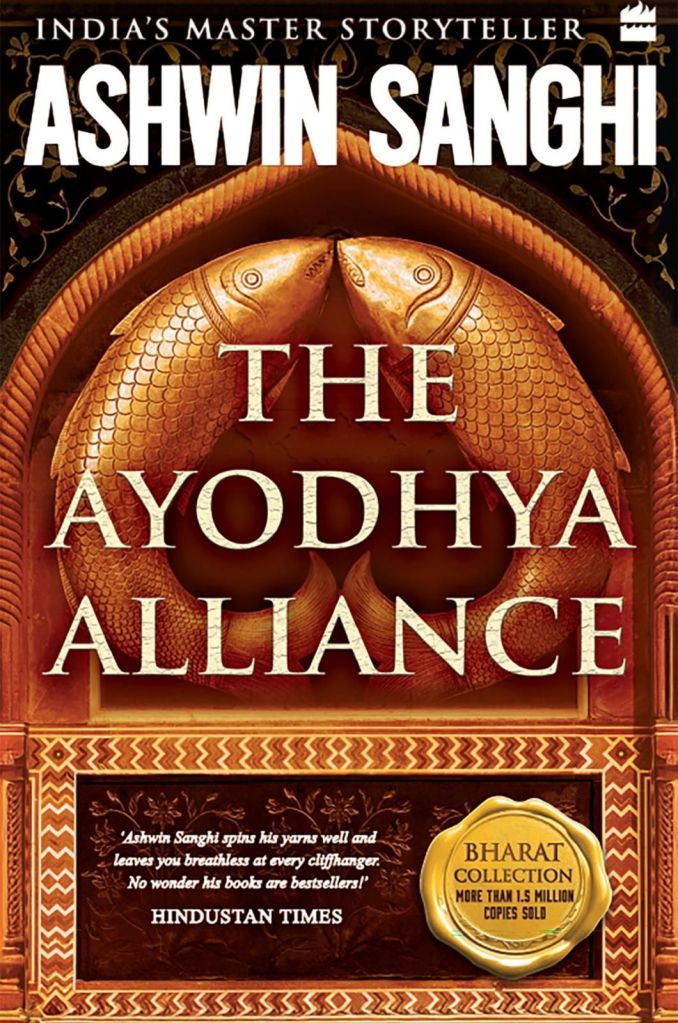
In his latest Novel called the Ayodhya Alliance by Ashwin Sanghi there is a mention of a queen or a princess who came from Ayodhya!


The queen was Heo Hwang-ok also known as Empress Boju was a legendary queen mentioned in Samguk yusa, a 13th-century Korean chronicle. According to Samguk Yusa, she became the wife of King Suro of Geumgwan Gaya at the age of 16, after having arrived by boat from a distant kingdom called “Ayuta”!

The India-South Korea connection revolves around the legend of Queen Heo Hwang-ok who is also known as Princess Suriratna! The legend is the she is said to have traveled from the ancient Indian city of Ayodhya to Korea in the 1st century CE to marry King Suro, the founder of the Karak Dynasty of Geumgwan Gaya!

This story, forms the basis for strong cultural and historical ties between the two nations, symbolized by a dedicated memorial park in Ayodhya and shared cultural heritage between millions of descendants in South Korea!

She married King Suro at the age of 16, and together they founded the Geumgwan Gaya kingdom in what is now Gimhae, South Korea! Many Koreans claim genealogical ties to Queen Heo, viewing Ayodhya as their ancestral home!

In fact there are ongoing efforts to develop Ayodhya and Gimhae as sister cities! Morover a memorial park dedicated to Queen Heo Hwang-ok was inaugurated in Ayodhya in 2001 and has been expanded and upgraded since!

As far as the lineage goes; more than six million present-day Koreans, especially from Gimhae Kim, Gimhae Heo and Incheon Yi clans, trace their lineage to the legendary queen as the direct descendants of her 12 children with King Suro! Now SURO sounds like Sriram! Just saying!

Just saying in words or a short song is also the trademark of the wedding singer aka Adam Sandler!

Now stop listening to K Pop and instead listen to your POP and sleep!

Shubh ratri!

You are being watched!

Rules make you and me human! Otherwise we are no better than animals! Though some animals behave better than us!

That is the bitter truth!

Places where crime is less are the ones where the punishment for the said crimes are severe! We follow even the basic traffic sense and decency only when we are being watched!

If you realize that no one is monitoring or policing you then you are more likely to break the rules or your integrity!

Have you heard of the Honesty box experiment? It was mentioned by Daniel Kahneman in his book; Thinking; Fast and Slow.


A 2006 study from Newcastle University found that displaying images of watching eyes in a canteen “honesty box” nearly tripled the amount of money contributed by staff. When a poster featuring eyes was alternated with one showing flowers, payments were significantly higher during the weeks with the eye image!

Researchers concluded that the feeling of being observed, even by an image, can trigger unconscious, automatic reactions that promote honest and cooperative behavior!

A university canteen used a long-running “honesty box” system for staff to pay for their drinks. The Intervention was that for 10 weeks, an A5 poster was placed above the box. Now the test was that every other week the poster displayed either a pair of flowers or a pair of eyes looking directly at the observer!

Remember that; in both cases no one is actually looking! There is no camera but only EYES!

But in spite of this; the study found that on the weeks when the eye image was displayed, staff contributed 2.76 times more money than during the weeks with the flower image!

The payments consistently increased when the poster changed to eyes and decreased when it reverted to flowers.

It was finally concluded that the eye images triggered an unconscious, mental reflex, not a conscious thought of being watched!

It was found that human brains are highly attuned to cues indicating potential social consequences, especially cues related to eyes and faces. This suggests that cues of being watched can encourage pro-social and cooperative behaviors, with implications for addressing anti-social behavior in real-world setting!

This means that people behave more civilized or decently when they have a feeling that they are being watched! It is the same with Cameras! Even if the CCTV or other cameras are not working; the mere presence of such devices or even a warning that you are being watched can make humans behave more decently!

Many times offices and firms who actually cannot afford a proper camera have used such ‘dummy’ cameras or signs to give an impression of being watched or monitored! These are enough for making people behave more human in the proper sense! Ironical how an AI (CCTV!) can make you human!
Ironical also how with such amazing ability to act Deepak Dobriyal gets very few roles!

Now imagine that the traffic camera is working and behave!

SHubh ratri!


Irritated ads!


This invention is so common that you cannot escape them! They hit you when you least expect it and they are so difficult to get rid of!

In fact the inventor of this invention even apologized for creating this nuisance!

In fact now you have a series of inventions which specifically are aimed at tackling this invention! Still many times it finds its way!

Now now; don’t get mad! It is only ad! Or more specifically Pop up ads!

The creator of this very irritating invention is Ethan Zuckerman. So while working as a programmer at Tripod dot com in the mid-1990s, he developed the code to launch a separate browser window for an advertisement!

His original intentions were far from malicious though! It all started with a genuine client concern and requirement for ads! So a major car company that advertised on Tripod was concerned its ad might appear on a webpage with sexual content!

To avoid this association, Zuckerman created a new window that was not directly tied to the webpage’s main content! The basic idea was to keep the advertising separate from the webpage’s core content, which he believed would be better for both the brand and the user! Unfortunately ad makers quickly caught on to this idea and the pop ups literally became a rage! This was especially if you visit questionable websites! The most difficult part was that these pop ups used to come like shots from a pistol! So many and with the close ad button so small and many times if you click on those, you may open up another site or pop up!

The invention was hated so much since it quickly became a disliked form of online advertising! In a 2014 essay for The Atlantic, he described advertising as “the internet’s original sin” and said of his invention, “I’m sorry. Our intentions were good”!

Now many times pop ups are still used for form filling and getting on to another site using the link and in those cases you need to disable the pop up blockers! By and large though Pop-up ads are widely considered annoying because they interrupt the user experience, cause security concerns, and can slow down devices!

However, pop-ups remain common because, from an advertiser’s perspective, they can be highly effective at grabbing attention and driving conversions. In fact pop ups can actually be useful in capturing leads and building email lists. Many websites use pop-ups to offer a discount code, an e-book, or exclusive content in exchange for your email address. This offers clear value and gives you a reason to subscribe.
They even aid in providing urgent, contextual information and user guidance!
Sometimes a non-intrusive pop-up might ask for quick, valuable feedback on your experience.

The crux of the matter should be that the pop ups must be non intrusive with a clear cancel or close button which gets pressed in the first attempt even with someone with a huge thumb! Then pop ups can be tolerated!

You can also tolerate such gems like Pankaj Tripathi!

Look at the eclipse and the red moon and sleep!

Shubh ratri!

I see your past!

When you see the Facebook or Google memories you are looking at a piece of your past! Every snap and every video would become a part of your past which is frozen in time!

But you do not need these apps to see the past!

You can literally look up the sky in the day or the night to see the past!

Apart from the sky; whatever you see in the sky is the past! Like like a delay telecast; you are seeing what was the sky some time back!

Even the moon you see so clearly is how it was some seconds back and not how it is right now! Of course when I am writing this blog, it is day and I cannot see the moon at all! But even the sun which I see is how it was some minutes back! If the sun is gone; I have around 8 minutes to act till I realize that it is no longer there!


Every time you look at the night sky, you are seeing the past!

This is because it takes time for the light from distant celestial objects to travel across space and reach your eyes. The farther away an object is, the longer its light takes to reach Earth, so the further back in time you are observing.

Everything of course depends on the speed of the light!

Light, which travels at a constant, finite speed of about 300,000 kilometers (186,000 miles) per second, is the fastest thing in the universe for now! Though apparently your mind and thoughts are faster than the light but lets not digress!

Now even though light is fast; the distances between celestial objects are so vast that light can take years, centuries, or even millennia to complete its journey to Earth!

So the sky you see is a Google memory of the past! How far or back into the past you see depends on the object you are observing!

So our closest celestial friend, the  Moon with an average distance of about 384,400 km, its light takes just over 1.3 seconds to reach us. So, you are seeing the Moon as it was a little over a second ago!

Then we have our dear Sun which is about 150 million km away, so its light takes approximately 8.3 minutes to travel to Earth. When you look at the Sun (with proper protection), you see it as it was 8.3 minutes in the past! So when you say it is a sunny day, the correct statement is that it was sunny 8 minutes back!

Then you have the nearest star!

The closest star system to our own, Proxima Centauri, is 4.24 light-years away. This means its light takes 4.24 years to reach Earth, and you see it as it appeared 4.24 years ago! How cool is that!

Still cooler is if you have access to the powerful telescopes like the Hubble and James Webb Space Telescopes! If you do please allow me to see!

For now just know that astronomers can capture light from galaxies that are billions of light-years away. This allows them to see the universe as it was when it was still very young!

This time delay is very cool since you can study the past!

In fact even the light from a “dead” star takes so long to get here, so it’s possible that a star you see in the sky has already died!

The “light” of its death—a supernova—would not reach us until the appropriate number of years later!

What is thus seen is the cosmic time machine and by studying objects at different distances, astronomers can piece together the history of the universe. The farther they look, the further back in time they see, allowing them to witness the evolution of galaxies and the universe itself!


Then you can see some system with life and say Koi mil Gaya! Which reminds me of Rakesh Roshan!


Now look into the past and sleep!

Shub ratri!

Teachers day2025…

Born in 371 BC, Chanakya has been traditionally identified as Kautilya or Vishnugupta.

Chanakya’s ‘Arthashastra’ is a treatise of economic research and personality development!
It gives a set of ideas and statements  which give valuable tips on how to lead a good and productive life even in this day and age!

Chanakya helped Chandragupta form a small army, and entered Pataliputra, the capital of the Magadha kingdom and ignited a civil war there, using his intelligence network.

Chandragupta eventually won over the throne in 322 BC, ending the Nanda dynasty and beginning the rule of his Maurya dynasty.

Considering the challenges faced by the rulers of those times, he has included recommendations on law, prisons, taxation, fortification, coinage, manufacturing, trade, administration and spies.

But the best thing about Chanakya and especially on this teacher’s day is that he was only the king maker! He never aimed for the throne, he never had any personal gain apart from the avenging of his insult and the only thing he did was make his student the king!

On this teacher’s day I wish everyone gets a teacher like Chanakya who will protect and guide him or her without any prejudice or greed.

And I hope everyone thinks of herself and himself as a student for life since there is no age to learn something new!

Let no one ever think that he or she knows everything or more than someone else! Since knowledge is relative! Everyone knows something that no one else knows! That is normal! If he or she is willing to teach you then he or she is a teacher!

He or she can be as old as the oldest person you know or a new born baby! All you need to do is learn!

Happy teachers day! Happy Onam! Happy Vamana Jayanthi!

Shubh ratri…

Domino effect!

A small ball in one of Enid Blyton’s novels about naughty kids leads to a big accident! That’s geometric progression in the negative direction! But a similar progression has now become the most precious treasure in the country of Spain!

This was a novel I read in my fifth grade called A Book of Naughty Children! Since that was a long (long!) time ago, I remember this story where a kid is told to not play with a ball on the street and he does! That leads to a load of crashes and accidents! It was like a horror story for me!

That is the power of Dominos!

In the novel The ONE THING by Gary Keller and Jay Papasan; the authors tell about the Domino effect!

They say that all great things have small beginnings. Every masterpiece has its first brushstroke, every building its first brick and every life its first breath.

Like every journey begins with a single step!

In a pictorial depiction in the novel it is shown how on its own, a domino isn’t much!
It’s about two inches tall and weighs about as much as a small box of matches. But with the domino comes a force. In fact, one domino has the capability of knocking down another one that is 1.5x its size. This seemingly infinitesimal ability compounds to produce incredible outcomes!

Then it is shown how one domino lying in the front albeit a little bigger can be toppled by the preceding one and the one getting toppled can topple a bigger one and so on! Even if the first domino is simply a two inch one; by progression it can topple much bigger ones! So much so that by the 18th step it can topple a domino which is as tall as the leaning tower of Pisa (it may not need much effort to fall though!) and by 25th it can even topple the Eiffel Tower! In fact by 51 the height of the domino it can topple is taller than the Mt Everest and by 57th it can reach the height so tall that it can reach the moon!


The concept thus is that the path to great achievement is often lined with steps that are aligned with one another. No matter how small the first step is, the power generated from that first activity compounds into something much greater!

So in the year 2004, Robert Weisberg of Temple University put together a case-study of Pablo Picasso’s masterpiece Guernica and found that even the greats don’t rely on “strokes of genius”!

On first inspection, it certainly looks like the result of a sudden flash of inspiration. However, Weisberg’s analysis identified core pieces of his painting in his previous work, suggesting the masterpiece was actually the culmination of long chain of dominos that were knocked over continuously throughout his career~

Instead of coming up with one idea after the other, Picasso began with a simple vision and pursued it from a small starting point. His first sketch began with the end in mind and formed an extremely rough outline of a woman, a horse, and a bull – his first domino. From there he continued to knock over domino after domino, focusing on the outline, each character and object individually and, with few exceptions, sequentially. After 45 sketches and nearly a month’s time, he had more or less created Guernica with no guesswork involved!

Guernica is a masterpiece now! The harrowing scene includes a gored horse, a screaming mother holding her dead baby, a dismembered soldier, a bull, and a terrified woman trapped in a burning building!

The massive oil-on-canvas mural measures 3.49 by 7.76 meters (11 ft 5 in by 25 ft 6 in)!

The painting, which hangs in the Museo Reina Sofía in Madrid, became a universal symbol for peace and a condemnation of the devastation of modern warfare!

To think that it all began with a single domino or sketch! In fact even great actors career like Ananth Nag just began with a single act!

Now begin to lie down and domino to sleep!

Shubh ratri!

Six degrees separation!


Separation is usually sad! But do you know what is six degrees of separation!?

Though the context is separation; the concept is actually very cool and mostly happy!

This theory suggests that every person in the world is connected to every other person through a chain of no more than six acquaintances, or “friends of friends”. The concept implies a short average path length between any two individuals within a social network, making global interconnectedness possible!

Any two people in the world can be linked to each other by no more than six degrees! You can try to with anyone and everyone!

You can connect to any person by following a chain of social connections, where each link is a “friend of a friend”. The theory suggests that the longest chain needed to connect any two people will not exceed six steps!

It is also known as the six handshakes rule!

The concept has roots in earlier works, with the 1929 short story “Chains” by Frigyes Karinthy exploring the idea of connecting people through five or fewer intermediaries. In this story a group of people play a game of trying to connect any person in the world to themselves by a chain of five others!

The concept has been formalized  by mathematicians by showing how a network of many nodes (people) can have a short average path length, even if the network is large!

There are even social experiments such such as sending emails to a target person through a chain of friends, which confirmed the concept in practice!

This actually inspired a game called Six Degrees of Kevin Bacon or Bacon’s Law which is a parlor game where players challenge each other to arbitrarily choose an actor and then connect them to another actor via a film that both actors have appeared in together, repeating this process to try to find the shortest path that ultimately leads to prolific American actor Kevin Bacon!

Like say Kevin and Val Kilmer!
Now Val worked with Tom Cruise in Top Gun and Tom Cruise worked with Kevin in A few Good Men! That’s taken from Will and Grace!

Even the way your social media suggests you ‘friend’ is by following this algorithm among many! It will first seek out Mutual friends! Then it will try to link your liking and your place and maybe your profession! Finally suggestions are made for you to accept! If you actually think in terms of Six degrees of separation, then in the digital world, each and every member is actually linked to you and is your friend!

At least online!

One of the commonest complains I get is that there is absolutely no connection between the blog and the sketch! That is actually done by choice! Unless there are some exceptional days!

With the theory of six degrees of separation to link two people; linking a sketch to any blog is relatively easy! That’s the chief aim when I select a topic everyday which is random and try to link it to my sketch which again is not directly related to the topic! Everyone and everything is connected to each other in some way! Connecting them then becomes a mental exercise after dinner or at the end of the OP!

This is also important since I do not use the AI for any help with my blog! Of course the standard information and technical points are taken from various sources but the writing is mine! Now how would you connect Kevin Bacon to my sketch of the day!? I challenge an AI to do it! Now when the AI does it, it will use the six degrees of separation algorithm to get the link!

This is what Gemini did!

Uttam Kumar and Anil Chatterjee: Uttam Kumar costarred with Anil Chatterjee in several Bengali films, including the 1974 bilingual film Amanush.

Anil Chatterjee and Anupam Kher: Though they did not work together directly, both were prolific actors in Hindi cinema

Anupam Kher and Bradley Cooper: Anupam Kher and Bradley Cooper costarred in the 2012 American film Silver Linings Playbook.

Bradley Cooper and Kevin Bacon: Bradley Cooper costarred with Kevin Bacon in the 2003 American film My Name Is Bill and the 2006 American film The Darkest Hour.

And this is how I link Kevin to Uttam da! Kevin was radical in the movie Footloose! The concept of dancing to glory was really unique and different! Unique, different and also radical was the potrayal of Byomkesh da as a smoker in Chiriyakhana (the best Byomkesh film though!) by Uttam da!

Now that is the Ram degree of separation!

Shubh ratri!

The one thing’ by Gary Keller and Jay Papasan


‘The one thing’ by Gary Keller and Jay Papasan

Audiobook

Self Help category

A summary of the essence of the book and since it is a non fiction; there are no spoilers!

Human beings like to multi task just like computers which is a big hoax according to this book!

Apparently even the computer known for multitasking can only write one code at a time! It can of course do lots of processes but the doing multiple tasks is difficult even for a computer at the same time!

It is like how you speak and drive! You think that it does not matter but in the book it has been said that speaking on the phone or texting and driving is similar to drinking and driving! You can never give full attention! And this is a task which needs your full attention!

It is the same with the lists apparently! You simply cannot do all the work at the same time!  The principle of the book is that you can do only ONE THING at a time with full attention! Only after you complete that can you give your full attention to another!

The book states that they studied people who were known to multitask! It was found that though they are doing lot of work at the same time; they are apparently doing mediocre multiple work rather that doing a good single work!


The book cites Clifford Nass, a professor a Stanford University, who set out to study multitaskers as he realized he did not possess the skill. “I was sure they had some secret ability,” he said, but at the end of the study, multitaskers “were outperformed on every measure. Although they’d convinced themselves and the world that they were great at it, there was just one problem… multitaskers were just lousy at everything.”

“The truth is multitasking is neither efficient nor effective.”

The authors even give some examples on how multi tasking can never work!

One simple exercise is this!

Count from one to seven!

Now tell all the colors of the rainbow in order!

All ok for now!?

Now alternatively tell one number and one color in order!

Saw how the mighty multitasker falls!?

Of course this does not mean that you must not do lots of different work! Take lots of work, then select the top thing to do! And only after you finish that must you move on to the next thing!

They even say how when you are speaking to your spouse and he or she is texting on the phone; she or he just nods along! It goes without saying that He or she has not heard or understood a word you said!

about the harms of multi tasking and the need to focus on just one thing at a time!

He says that one of the chief mantras of Success is to learn how to say NO!

The author says that the only way you can have success of focus is to start saying NO!

In fact the famous comedian Bill Cosby once said that “I don’t know the key to success, but the key to failure is trying to please everybody.”

In the book the authors mentions that there are Four Thieves of Productivity or four obstacles that can steal focus!

The first one is the inability to say no!

The last three are the fear of chaos which happens when you are focusing on one priority and this may cause less important tasks to pile up! Another major issue is poor health habits and the neglect of physical and mental health will drain energy.! And the third thing is to maintain good habits which is very crucial for peak performance!

They also made an excellent point about the word PRIORITY!

The interesting thing here and according to the authors is that for over 500 years or so it remained a singular word, referring to the single first or most important thing. Which means that when you say Priority then there is no confusion! It is the most important thing! You do not need a prefix!

This means that for over five centuries when a work or something is given the title PRIORITY then that thing is the first! There is no other thing for you to think or imagine to be more important!

The fact of the matter is that if a thing is Priority then you do not have to think about anything else! Now since we try to do a lot of things, we need to add highest or topmost to Priority which dilutes the power of the word!

They also tell about the Pareto Principle

It was developed by Italian economist Vilfredo Pareto in 1896. Pareto observed that 80% of the land in Italy was owned by only 20% of the population!

He also witnessed this happening with plants in his garden—20% of his plants were bearing 80% of the fruit! The 80-20 rule maintains that 80% of outcomes comes from 20% of causes! It is also called Law of the vital few and the Principle of factor sparsity.

The 80/20 rule is not a formal mathematical equation, but more a generalized phenomenon that can be observed in economics, business, time management, and even sports and even in nature.

80% of a company’s profits come from 20% of customers that 20% of players result in 80% of points scored! The principle of the 80-20 rule is to identify an
entity’s best assets and use them efficiently to create maximum value!

In the novel the authors use this principle to state how 20 percent of your efforts leads to 80 percent of your success!

They also tell about this incredible thing called the domino effect where a simple 2 inch domino can go on toppling one bigger domino than the other! In that line you have stuff that can topple the leaning tower of PISA and the Eiffel tower and go all the way to the moon! The significance is that a small effort compounded over a period of time can give you huge result! All you need is focus and consistency!

The authors also state how time blocking is very crucial for your success!

Then you have this repeated line which gets irritating over a while but is very important! What is the one thing I need to do right now in compounding variable! Which goes like What is the one thing I need to do right now; daily; monthly; yearly; five years! To reach my SOMEDAY goal!

All in all an amazing book! You can check it out even if it is the ONE THING you do this week!

Priority!

Sometime the addition of a prefix defeats the purpose! Then again purpose is not everything!

In the novel the One thing by Gary Keller and Jay papasan; the authors talk about the word Priority! We will come to that with priority!

When you see the roots you would notice that the word “priority” entered Middle English around the 14th century, derived from Latin prioritas and Old French priorité, meaning “first in order or rank”.

The interesting thing here and according to the authors is that for over 500 years or so it remained a singular word, referring to the single first or most important thing.
The plural form “priorities” began to appear and gain traction in the 20th century, coinciding with a shift in the concept of what “priority” could mean.


This means that for over five centuries when a work or something is given the title PRIORITY then that thing is the first! There is no other thing for you to think or imagine to be more important! Of course it can also be the fact that there were not too much work being done those days for you to be giving a number to the work!

The fact of the matter is that if a thing is Priority then you do not have to think about anything else!

Then came the modern era when multitasking and getting or having to do too much became the norm! We started having too many things on our plate! We are spoilt for choice! An employee is given too many things to do and then he or she has to now give the rank to the most important thing! It is the same with anyone! You have a ton of things to do and you need to do the one thing which is most important!
In fact even the employers and boss know this now so when they instruct you or mail you the tagline gets the prefix!

Which is how the ‘Priority’ which should not have needed any prefix becomes, TOPMOST  Priority or HIGHEST Priority! The Priority thus becomes a king who needs to be called out! A forgotten champion who needs a label!

Of course the aim of the author was to point out the fact that at any time of the day, if you want to achieve your aim then you must concentrate only on ONE THING at a time! That must be your only Priority! Highest and topmost are not necessary! For a husband wife is the priority; for a father his children are the priority and for a son or a daughter his or her parents are priority! Highest and topmost are needed when there are more than one in each case!

Now finding which is your ‘Topmost’ priority must become your Priority!
Now make your Priority to watch the top three Pawan Kalyan movies according to me which are better than their other versions! Thammudu; Gabbar Singh and Atharintiki Daaredi!

Now make it your Priority to sleep!

Shubh ratri!

Advisor prima

Who is your advisor is one of the most important aspect of your life!

In fact even in medical practice or any practice your first boss is very important on how you progress in life or work!

Your boss can propel you to greatness or make you stay in the same place, bitter and alone!

Then again you can still take advise from those around you with more experience and life sense! They do not have to be your senior by the way!

In olden days the kings would always look at his or her advisors for making the proper decision! In modern times the whole cohort of secretaries and officials are actually the advisors to the chief or Prime ministers of the country! The decision taken is a whole sum of the advise!

Even in a small forum or a what’s app group with a leader; the final decision is usually taken with the consult of a group of people called the advisors!

According to the puranas though there are three broad type of people!

The first are uttama purusha-are exemplary folks who discuss and seek the counsel of great men They use this advice after weighing the pros and cons of the
circumstances and take action relying on grace!
Remember that here also the final decision is his or her, but he or she has taken enough time to consider the advise of many wise people involved! These people make good leaders and boss!

By the way here the Purusha is not only for the man! “Purusha” (पुरुष) is actually a complex Sanskrit term meaning man, person, self, or spirit. In many sense it is not limited to gender! So these classification is for both man and woman alike!

The second are madhyama purusha-they are the mediocre or average folks who are lone rangers with independent thinking and who do not seek advice from anyone. They arrive at their own conclusions. With great faith in their own abilities and launch themselves into action! But still in these cases they actually have the ability to lead! These are the people who turn out to be great entrepreneurs!

Finally the adhama purusha–they are the vilest of people who do not heed any advice, do what they like and do not rely on anybody. They take arbitrary decisions
without considering the pros and cons and end Up procrastinating on the implementation of their decisions and fail!  The biggest trouble is that they like to blame everyone else on their failure including circumstances!

Of course in real life you must be a good mixture of the first two and try to not be a adhama purusha! One great uttama purusha also was Pranab Kumar Mukherjee!

Now take my sound advice and sleep!

SHubh ratri!