Have you seen a case of Beri Beri!?
You must count your lucky stars to have been born in this generation!
But did you know that the cure was discovered because chickens received left over polished rice!
Sometimes if your objective is true, all you need is a good and open mind to find the correct thing which may not be what you were looking for!
There was a time when in the late 1880s, the neuromuscular disease beriberi was a widespread problem in the Dutch East Indies (now Indonesia). The official scientific view, influenced by Robert Koch’s germ theory, was that beriberi was caused by a microorganism! The whole scientific community was trying to find out the bacteria which caused Beri Beri!
In 1886, Eijkman, a Dutch physician and pathologist, was sent to Batavia (now Jakarta) to investigate the disease. He established a laboratory and began trying to isolate the specific bacterium he believed was responsible for beriberi.
So Eijkman’s lab kept chickens for his infectious disease experiments. For several months, some of the chickens developed a form of polyneuritis (nerve inflammation) that was strikingly similar to human beriberi, with symptoms like muscle atrophy and paralysis!
One of the chief observation here was that the chickens had been fed leftover military-grade polished white rice! It was more costly and apparently more tasty!
Then came the twist! All because of a cook who liked to follow rules!
A new cook came aboard and refused to give military rice to non-military animals!
Poultry and Military may sound similar but as the cook asserted; they are not the same!
So the non military chickens were switched to a diet of unpolished “civilian” rice!
The real surprise was now!
To Eijkman’s surprise, the sick birds made a rapid and complete recovery!
Eijkman correctly deduced that the rice’s diet was the cause of the disease, and that something in the bran of unpolished rice was the preventive factor. He proved that the disease was not caused by infection or environmental factors.
However, his initial hypothesis was wrong. He incorrectly theorized that polished rice contained a nerve poison and that the rice bran provided an antidote to this toxin! But he had good friends who had good sense!
It was Eijkman’s colleague, Gerrit Grijns, who would later offer the correct interpretation: beriberi was not caused by a toxin but by the lack of an essential substance in the diet!
After Eijkman returned to the Netherlands due to illness, his friend Adolphe Vorderman, the Chief Medical Officer in Java, confirmed Eijkman’s findings. Vorderman conducted a large-scale study on prisoners in 1897, finding that beriberi was rampant in prisons where inmates were fed polished rice but nearly nonexistent where unpolished rice was served! Interestingly, the polished rice is actually more costly and ‘fancier!’
Eijkman’s work demonstrated for the first time that diseases could be caused by dietary deficiencies, a concept that paved the way for Casimir Funk’s discovery of “vitamines,” now known as vitamins. The missing substance was eventually isolated and identified as vitamin B1 (thiamine)!
For his pioneering research, Eijkman shared the Nobel Prize in 1929 with Sir Frederick Gowland Hopkins, who independently discovered growth-stimulating vitamins! The story about Gowland is, well for another blog!
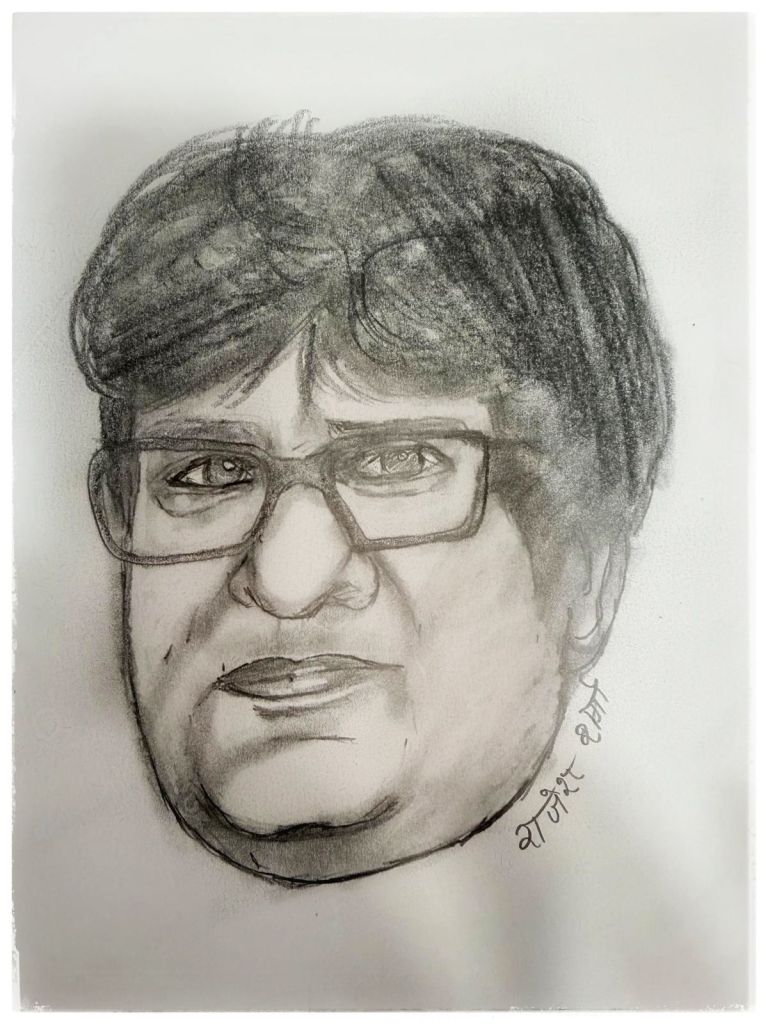
But hope you understood what unpolished rice did to chickens! Think about it when you dig into white polished vitamin less rice! So many times what is fancy and costly may not be better! Some routine stuff are many times better ! Like character actor roles in movies like Dhoni and Khosla played by Rajesh Sharma!
Now ‘polish’ that dinner and sleep!
Shubh Ratri!
 ramadocblog