A movie I saw recently called Mahavatar Narsimha! Apart from the amazing graphics and story telling and of course the mind blowing climax; I was particularly enthralled by the imagination of the director and the story teller!
Now we all know the story already and of course some creative liberties are allowed, what sets the movie apart is the fact that the level of thought process you need is reallyt magnificent! You need to imagine the grandeur and the power of Bhagwan and show that to the world!
But then do you know that there are some who cannot do that! Not direct or make an great movie, but not imagine!
Now remember how when sometimes you are told to imagine a picture or an image in your mind and many times you just can’t! There are a group of people who can never do it!
There are many of course whose sense of imagination is limited and everyone has his or her own limits but then there are some who simply cannot imagine and that condition is called Aphantasia which is the inability to create mental imagery!
Aphantasia, is derived from the ancient Greek word phantasia which means “imagination”, and the prefix a which means “without”! The phenomenon was first described by Francis Galton in 1880! Now though the word was only discovered in 1880, am sure people would have had this issue, but they could not imagine a word for it!
Technically Aphantasia is a characteristic where individuals are unable to create mental images voluntarily. This means that when prompted to visualize something, like a red apple or a friend’s face, aphantasics don’t experience the mental picture that most people do.
Now while the initial focus has been on visual imagery, research suggests that aphantasia can extend to other sensory modalities as well. Some individuals with aphantasia report difficulty with imagining sounds, tastes, smells, and even bodily sensations. This broader impact on sensory imagination has led to discussions about using the term “aphantasia” in a wider sense, potentially with specifiers for specific modalities (e.g., “auditory aphantasia”).
It’s important to understand that aphantasia is not considered a disorder or a disability. Instead, it’s viewed as a variation in how the brain processes information, similar to being left-handed. While it can present some challenges in areas like memory and learning, most individuals with aphantasia lead successful and fulfilling lives when in fact they may not even know that they have this condition!
Individuals with aphantasia often develop ways to manage in a world that often assumes visual thinking. They might rely more on verbal and conceptual processes, develop strong logical reasoning, or succeed in fields like mathematics or coding which don’t depend on mental imagery. External aids like notes, sketches, or photography may also be used to help with memory and creative tasks.
Aphantasia can influence how individuals process emotions and relationships. While emotional connections are possible, the lack of vivid mental imagery may make recalling past events less intense or make it hard to visualize loved ones who have passed away. There are of course therapies to take care of this so do not imagine anything worse!
Though recognized and known from 1880, the phenomenon remained largely unstudied until 2005, when Professor Adam Zeman of the University of Exeter was approached by a man who seemed to have lost the ability to visualize after undergoing minor surgery!
The phenomenon is now widely studied and researched. But don’t worry, a positive thing is that those with aphantasia were also found to have “significantly elevated” IQ levels!
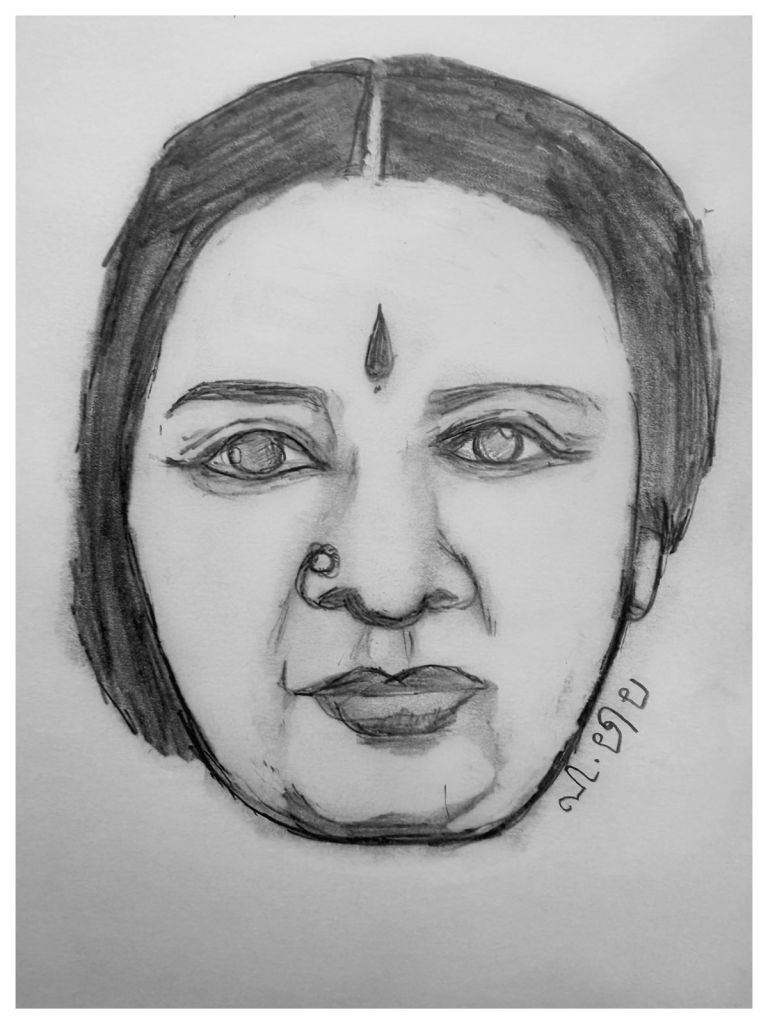
Then again artists like P Leela normally have not only a great imagination but also an elevated IQ!
Now don’t imagine too much and sleep!
Shubh ratri!
 ramadocblog