Do you remember how on your visit to the village you would take leaves?
You have probably seen some ants carrying bits of plants?
You of course were taking them to feed the cows! Now know that even the ants do not eat the leaves! They also were taking them to feed their own ‘cows’ or more accurately ‘crops’!
Now even though the ‘cows’ of the ants can be mainly white or sometimes a little black, they are not usually seen above the ground! Also they are closely related to an infection which usually takes a lot of persistence to cure!
The ‘cows’ or ‘crops’ of the ants are actually a type of fungus!
The ant–fungus mutualism is a symbiosis seen between certain ant and fungal species, in which ants actively cultivate fungus much like humans farm crops as a food source.
In some species, the ants and fungi are dependent on each other for survival. The microbes’ ability to convert the plant material into a food source accessible to their host makes them the ideal partner. The leafcutter ant is a well-known example of this symbiosis.
Researchers have now used DNA analysis to uncover just how long ants have been farming fungi and it turns out these insects have been some of the world’s tiniest farmers for 66 million years, thanks in part to the asteroid that struck Earth and set off a chain of events that led to the demise of the dinosaurs!
The ancestors of modern leaf-cutters and other fungus-farming ants also diversified around this time, and they appeared to evolve in tandem with the fungi over the years to the point that some ants “domesticated” species of fungi that today are only found in the ants’ nests.
This shared evolutionary history appears to have benefited both the ants and the fungi in what’s called mutualism. The ants get food, and the fungi get room and board, plus careful tending by the ants and the chance to spread as the insects stake out new territory!
“When a daughter queen gets ready to leave her mother’s nest and start her own nest, she takes a little bit of her mother’s fungus in her mouth,”
It is like the parting gift from a mother to a daughter to ‘start’ a new family of her own! And you thought ‘dowry’ was a human or rather inhuman thing!
In case you are wondering who did it first, well
“Humans have been practicing agriculture for 12,000 years,” while “Ants have been ‘farming’ for 66 million years.”
The ants employ helpful bacteria to keep their fungal crops healthy from disease and appear to have more success than human farmers often do with their crops!
So not only they are senior agriculturists, they are also leading antimicrobial specialists!
Everyone knows how we are dealing with antibiotic resistance and trying to find new antibiotics to overcome that! If we could be guided by these ‘ant microbiologists’ we could really improve the practice of human agriculture and develop better antibiotics!
By the way if you want, you can also ask the same questions to some other bugs! Like a mutualism with fungi is also noted in some species of termites in Africa!
So if someone asks who is the earliest farmer on the earth then the answer is ant or termites! At least for them, their ‘crop’ is a very sacred and closely guarded ‘treasure’. So it is pertinent that even humans develops things to guard their treasure! One which was the recently successful Akash missile defence system!
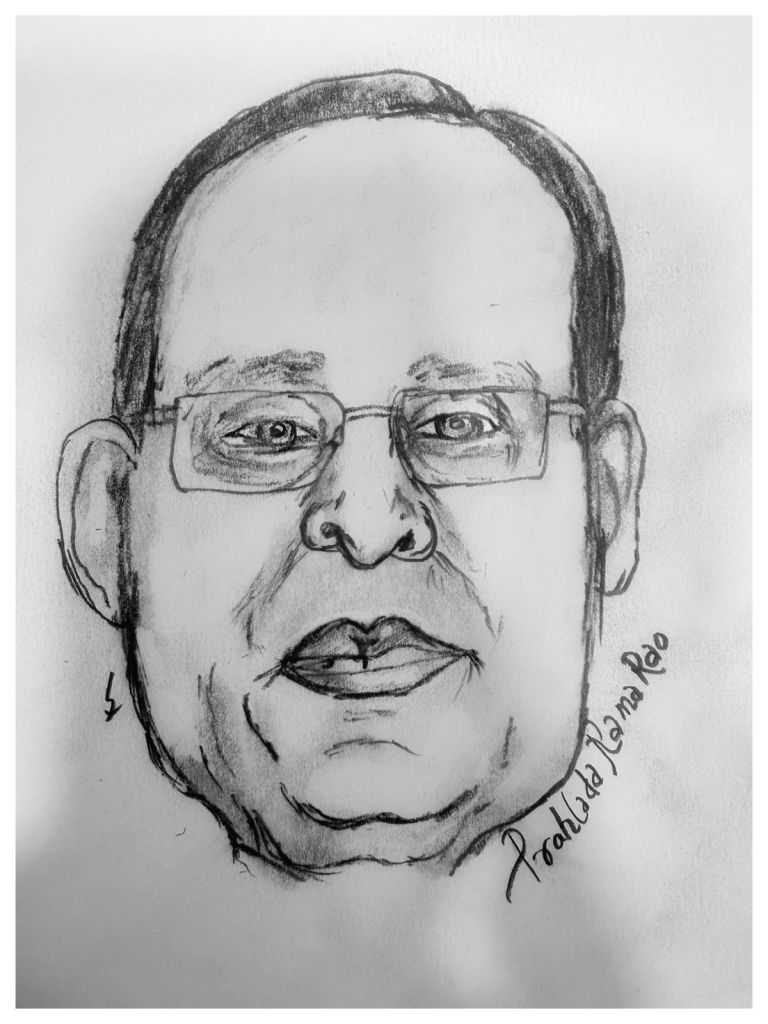
Long before the Akash missile defence system etched its name into India’s military history, Prahlada Ramarao had already built his legacy! Personally chosen by India’s ‘Missile Man’ Dr A P J Abdul Kalam in the early 1990s, Ramarao was appointed as the youngest project director at just 35 to lead the Akash programme. At the time, Kalam was heading the Defence Research Laboratory (DRL) in Hyderabad – much before he became the scientific adviser to the defence minister and later the President of India! Now that is a real diamond!
We are proud of those responsible to keep us safe!
Jai Hind!
 ramadocblog