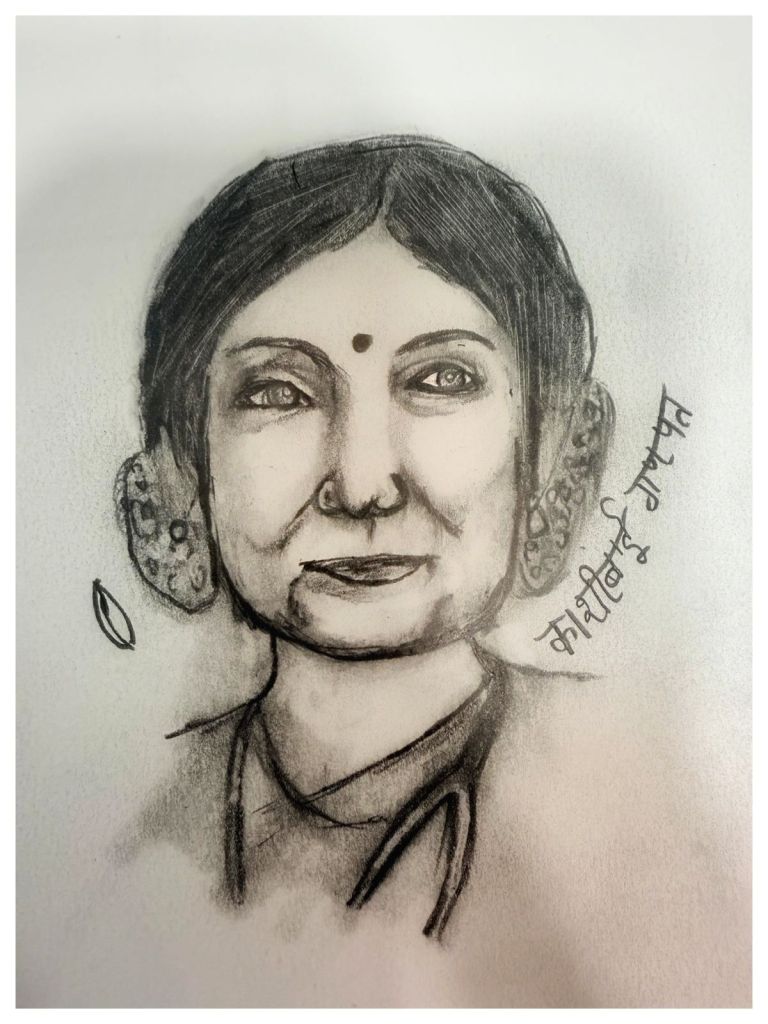
Do you know who is Kashibai Ganpat?
No! Not the Kashibai who was Baji Rao’s wife though am sure she was also a great lady just like Kashibai Ganpat who is actually a legend!
The blog has excerpts from this amazing article by Shubhada Sakurikar called Nursing in India.
If it is history and historical then India and Indian will be there for sure! One of the few countries in the world which not only has a bright future but also one of the richest history ever!
So when it comes to Nursing, Bharat was right there on the top!
The recorded history of nursing in Bharat dates back to about 1500 BC in the Atharva veda which deals with medicine and identifies the causes of disease as living causative agents. It is recorded that chikitsalaya (halls of healing) were existing by about 700 BC!
Susrata (500 BC) and Charaka (300 BC) were the leading authorities of ayurveda (the science of life). The modern age mistakes Ayurveda as a treatment modality while in fact it is a way of life! The medications and drugs are only a small component of the treatment process! This actually aligns with the modern medicine aspect of ‘LIFESTYLE MODIFICATIONS’ which is actually the real treatment!
The ayurvedic teachings were preserved in samhitas (treatises) and it laid more emphasis upon the prevention of disease than upon its cure. Doctors were well versed not only in medicine and surgery but in measures for the prevention of disease. Amongst various remedies were practiced including inoculation for smallpox!
The books of the ayurveda are in eight parts. They cover the whole field of medicinal science, including nursing treatment. There are more details of nursing in the old Indian records than in those of any other country in the world. Susrata defined the ideal relations of doctor, nurse, patient and medicine as the four feet upon which a cure must rest!
The Charaka Samhita described the function of a nurse as “knowledge of the manner in which drugs should be prepared or compounded for administration, cleverness, devotedness to the patient waited upon, and purity (both of the mind and body), are the four qualifications of the attending nurse.” This is of course in line with the modern guideline of Nursing system!
Practice of medicine rose to a great height in the reign of Asoka (304 BC–232 BC). Compassion for all living creatures, which was an essential part of the creed of Buddha, showed itself in ministration to all sufferers. As mentioned in the Novel the Golden Road, Buddhism and its spread was in parallel to the spread of compassion and care for all living thing!
In the rule of life of a Buddhist monk assistance to the sick was a part. Asoka established a large number of hospitals. Nursing-homes were also built for housing the sick.
With the disintegration of Gupta Empire (647 AD) and arrival of Huns, a deterioration of Tradition set in, from which it would take centuries to recover.
The preponderance of preventable diseases and conditions emphasizes the nurse’s role as a health teacher both in the hospital and the community; infant and maternal mortality indicate a need for improved midwifery practice as well as promotion of maternal and child health.
Any modern medicine practice needs a good nursing staff for the proper function and maintenance of the whole ecosystem of which Nursing staff is a vital cog!
The Jamsetjee Jeejeebhoy (JJ) Hospital was first to train nurses in Western India. The first Indian lady to come forward for nursing training was Bai Kashibai Ganpat in 1891 in Bombay.
Happy nurses day to my dear sisters! We are forever indebted to you!
A quick sketch on how Bai Kashibai Ganpat may have been since there is no actual poper photo.
Shubh ratri…
 ramadocblog