One of the scenes common in the black and white era was when a lady was feeling a little weak and the ‘doctor’ would hold her wrist and apparently feel for pulse! That was really ok but what used to come later was definitely shocking and hilarious!
The doctor would announce that, “Congratulations, you are pregnant!”
Of course you cannot confirm the pregnancy by measuring Pulse!
Then again this is one very important sign in many disease! In fact if you include the history and the measurement of Vital Signs; you can reach a diagnosis and define treatment more than 90 percent of the time!
Of course the concept of measuring your ‘vital’ signs has always been the routine for doctors and healers throughout history and in most civilisations but the proper differentiation and characterisation was not very uniform.
The variations in Pulse and temperature was of course really important though these were largely ignored or not taken much seriously for documenting as a VITAL sign.
Officially with the publication of “Pulse-Watch” by Sir John Floyer in 1707 that the first scientific report pertaining to the pulse rate came to light.
Ludwig Taube published the first-ever plotted course of fever in a patient circa 1852, adding respiratory rate to the list of human vital signs trackable at the time. Subsequent improvements in the thermometer and clock solidified the heart rate, respiratory rate and body temperature as the standard vital signs monitored by medical professionals of the time.
In 1896 the first ever ‘sphygmomanometer’ (blood-pressure cuff) was introduced to the medical world, which added a fourth vital sign, arterial blood pressures, to patient monitoring procedures.
The next step in patient monitoring was to devise a system that allowed medical professionals to monitor all four vital signs (heart rate, respiratory rate, temperature, and blood pressure) at once, and over an indefinite period of time.
Now the spectrum of vital signs is much more though the basic four remain the same! You also now have blood oxygen level added which became very popular with the COVID! (popular for general public that is! Doctor’s used to measure anyways!). I still remember a duplicate Sat meter recording 100 percent oxygen! So what you say!? Well I had placed it on a pencil!
You also have Blood Glucose level as one of the chief vital ‘Signs’
Then for routine purposes the weight is one of the vital signs while in emergency we would see the PUPIL.
Remember that though they are relatively simple to measure; each one when is in the normal range then you have a very high chance of being normal! At least physically and at least for the time being since health is actually a constantly changing modality! This is what I tell my patients!
Once a patient comes back to me stating that her ear pain has come back! I looked at my notes and saw that she saw me one year back!
For one year she had no pain in the year and now she is coming back to me saying that my treatment was ineffective since it came back after one year!
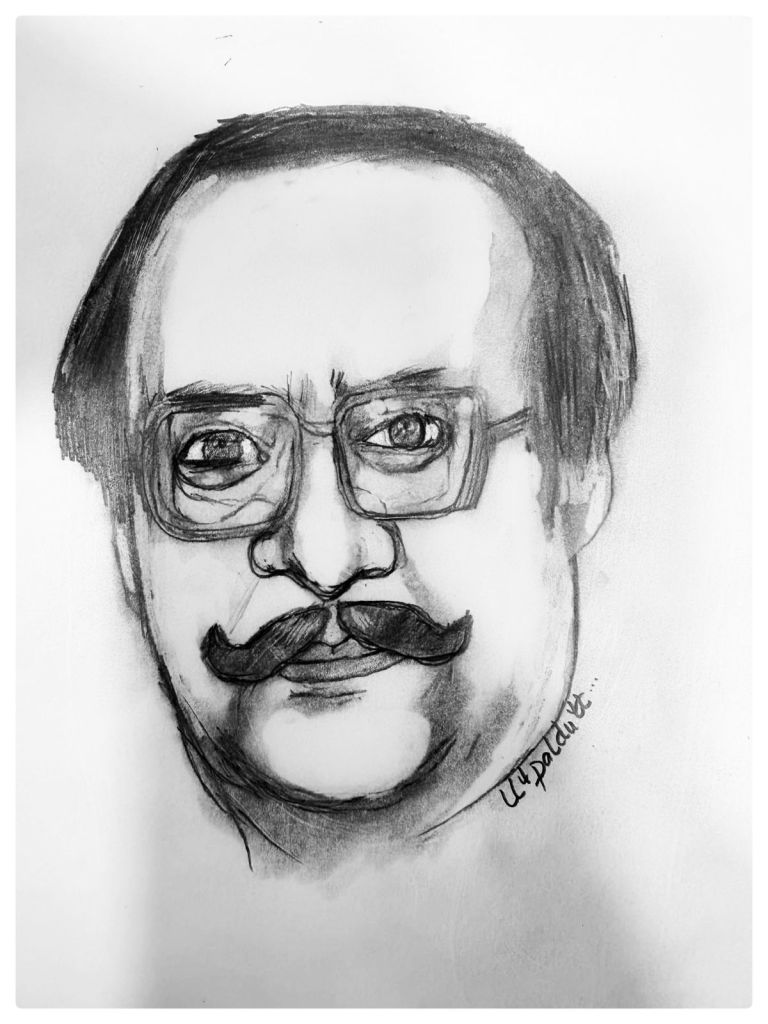
You may laugh but she was serious! Laugh reminds me of the character who used to make me laugh by being serious! Our Utpal Dutt!
Now assume that your vital Signs are ok and sleep!
Shubh Ratri!
 ramadocblog