True expression of gratitude is rare! You may get thanked sometimes for just showing up while many times you may be thanked (not on your face of course!) for leaving!
Still thank you is a great word which is after you meet while hello is when you meet! Did you know that there are at least seven ways to thank in Japanese! Well, hold on to your breath, there are also at least six ways to say just a simple Hello in Bharat!
Expression of gratitude is a big deal in Japan who are known to go to great length not to owe anyone anything!
It of course starts with what many know! Arigato gozaimasu!
Which is; hold your breath; A simple Thank you! You can use this in your average mechanical interaction in the Pizza place or petrol station!
The grade and gratitude of thanks increases from now onwards…
The next grade is Domo arigato gozaimashita or Thank you very much
Followed by Hontoni arigato gozaimasu or Thank you so much!
Want more!? Well you also have Arigato gozaimashita or Thank you (Past)! And then you have Iroiro Arigato gozaimashita or Thank you for everything!
and Finally you have Sumimasen which is actually Sorry! And Ie ie / No, no. (Not at all/No problem)!
Thank you is thus a result of the interaction while Hello or Namaskar or Namaste is a hope! When you say Namaste you assume that he or she would give you the same respect you have given to him or her!
It is believed that everyone has some goodness or Divinity inside him or her and you are actually bowing to that Divinity!
Then again depending on your reverence or respect, you can have grades of salutations rather than a simple hello (which many times sounds and feels HOLLOW!)!
Abhinandana (Sanskrit: अभिनन्दन, lit. congratulations) – bending forward with folded hands touching the chest; this is the simplest form!
The most common form we use is the Namaskara (Sanskrit: नमस्कार, lit. adoration) folded hands touching the forehead while standing or sitting.
Now as the respect increases, the ‘bend’ increases! In a way you demonstrate your true ‘Bowing’!
So we have the Dandavat (Sanskrit: दण्डवत्, lit. stick): following four parts of body touching the ground simultaneously, bowing forehead down to ground while being on knees with knees, feet, forehead & hands touching the ground.
If you add one more part touching the ground which is the chest, then it is the next stage in Salutation! Panchanga (Sanskrit: पञ्चाङ्ग, lit. five parts), also called “Panchanga!
If you have six parts of body touching the ground simultaneously which is toes, knees, hands, chin, nose and temple then you have the Shashthanga (Sanskrit: षष्ठाङ्ग, lit. six parts)! Most of the times this is the final salutations which is reserved for people like great men and leaders and your parents and elders!
Then if you are a believer of God then you submit to the absolute power in the next Namaskara in which you more or less submit your whole body to the supreme! This is called the Ashtanga (Sanskrit: अष्टाङ्ग, lit. eight parts), also called “Ashtanga Dandavat”!
Here you have almost all parts of body touching the ground simultaneously, Uras (Chest), Shiras (Head), Drishti (Eyes), Manas (Attention), Vachana (Speech), Pada (Feet), Kara (Hand), Jahnu (Knee)!
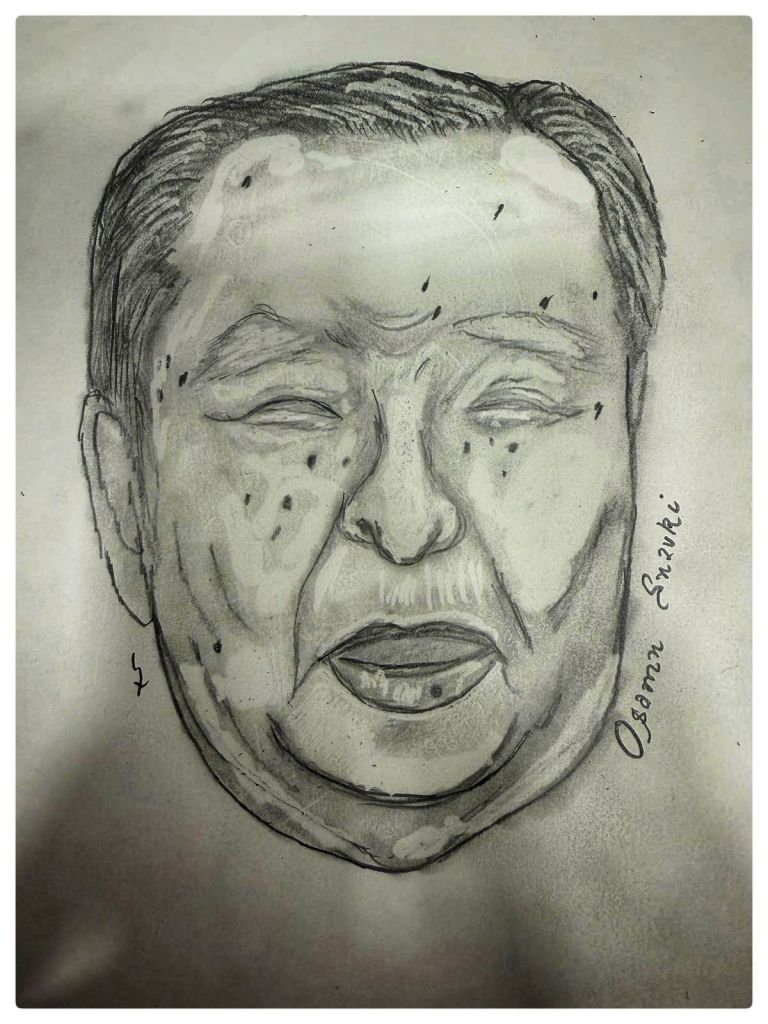
In all these remember that, without both Thank you and Hello coming straight from the heart, your words and actions do not mean anything! Talking about Japanese and thank you; the GOI has done the job by giving Osamu Suzuki the Padma! A well deserving recipient indeed!
Every average Indian’s first car is usually a Maruti Suzuki! Thank you for that!
Now best to say Shubh ratri and sleep!
 ramadocblog