“He screamed at the poor old bloke
In a language only he spoke!
Still the guy felt sad!
Its the tone and not the language which is bad!”
What is the connection between the Periodic table and Sanskrit!?
That is for you to know and me to explain!
read on!
Who does not know the periodic table! Some may even remember the elements on the table!
Most remember the order of at least the first twenty or forty elements though during schooling years, it was imperative to know the whole list!
Lanthanides and actinides who were mentioned separately were a big bore though! It was so difficult to remember their names!
I had learnt a Mnemonic to get the elements by remembering their symbols and it really worked! During one physics test I was so happy when questions like write the atomic number and Names were asked! Then when I heard couple of my classmates ask for the log book I was so surprised since that question was in the end!
Then I realised that the Log book which we used to use also had a section where the periodic tables were mentioned! All that memorisation for nothing!
It also had a couple of other ‘information’ which could ‘help’ us in the questions! Guess studying and memorising is good! But being smart is better!
Now the person who created or the founder of Periodic Table was Dmitri Ivanovich Mendeleev!
He also went further in conceptualizing periodicity as a fundamental law governing the nature of the elements. Based on that insight, whenever the properties of a given element didn’t fit the overall pattern, he famously left an empty spot in his table for an as yet undiscovered element!
In spite of the critics at the time, the missing spot ‘elements’ were discovered later with the said properties validating Dmitri!
He was puzzled about where to put the known lanthanides, and even predicted the existence of another row to the table which were the actinides which were some of the heaviest in atomic weight and even these were found later and shifted to another block just as predicted!
Now the more interesting point here is that he used the prefixes eka, dvi, and tri, Sanskrit for the numbers one, two, and three, to name these hypothetical elements, referring to the number of places they were from a known, lighter element in the same group!
Have you heard these names before!? Well yes! They are Sanskrit!
Let that sink in. Not Greek. Not Latin. Not even German, the lingua franca of science in continental Europe and of Dmitri at the time.
But Sanskrit!
Before you start to think why let us know about Otto von Böhtlingk who was a Russian-German Indologist and Sanskrit scholar. His magnum opus was a Sanskrit-German dictionary. During that time he was preparing his second edition of his book on Panini!
Now who was Panini!? If you are an Bharatiya, you would know or at least heard of him somewhere! Even then just know that Pāṇini or Sanskrit: पाणिनि, was a Sanskrit grammarian, logician, philologist, and revered scholar in ancient India, between the 7th and 4th century BCE
With his most notable work, the Aṣṭādhyāyī, Pāṇini has been considered the “first descriptive linguist”, and even labelled as “the father of linguistics”.
His approach to grammar influenced many foundational linguists in the modern time like Otto von Böhtlingk!
Finally let us see the explanation!
By using Sanskrit prefixes to name “missing” elements, Mendeleev may have recorded his debt to the Sanskrit grammarians of ancient India, who had created theories of language based on their discovery of the two-dimensional patterns of speech sounds (exemplified by the Śivasūtras in Pāṇini’s Sanskrit grammar!).
Mendeleev was a friend and colleague of the Sanskritist Otto von Böhtlingk, who was preparing the second edition of his book on Pāṇini at about this time, and Mendeleev wished to honor Pāṇini with his nomenclature!
That my friends is the complete picture!
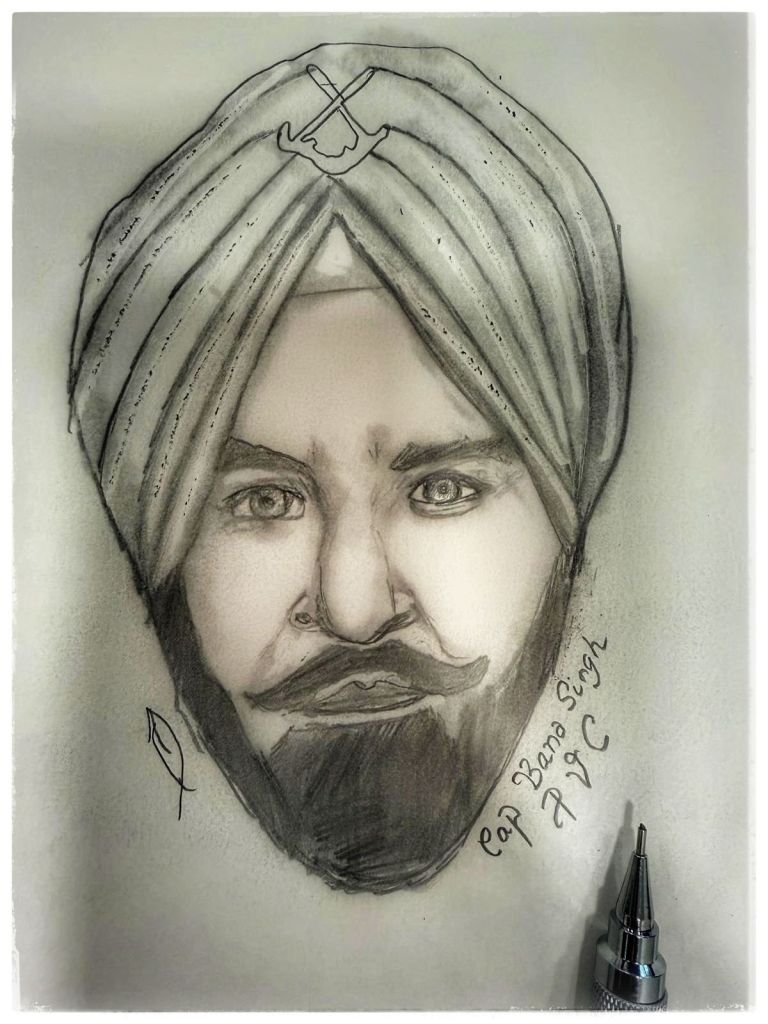
Another picture which is not only complete but also amazing would be the life story of our celebrity! Captain Bana Singh PVC! Just listening to his saga of his part played in the Capture of Siachen post will make you feel so proud! Do read about him if you can, thats written in English or any language, not necessarily sanskrit!
SHubh ratri!
Jai HInd!
 ramadocblog