“It comes and goes but then never comes back!
You have to get through just pick up the slack!
One time it’s dark and then you get the ray!
Of course the dark is night and the light is day!”
This was first ten and then became 12!
Then again it can be based on the sun or the moon!
Every other year or so you get something extra!
Intrigued!?
read on!
The Month of December is always chill! Cold and slow and all you want to do in the night is to curl up in the cozy warm bed and and sleep!
Of course the name December is an ode to the fact that it was the DASHA or Tenth month of the calendar! That was the time when the calendar had only ten months!
The old calendar had only ten months! It started with March and the end of march was a celebration which is followed even now in many places!
Then the latest months of the year was added which were January and February!
With the amount of edits and misinformation which has crept into WikiPedia, it is difficult to know what is truth! In fact from becoming a free encyclopedia of knowledge and ‘fact’; wiki has now become a repository of free for all ‘fiction’! Which is why it cannot be told for sure when the ten months was turned into 12!
The story goes that around the year 700 BCE, the Roman king Numa Pompilius is said to have added the two winter months!
January was called mensis ianuarius, the month of Ianus, the ancient Roman god of beginnings, of passage, and time itself.
January initially had 29 days and came after December!
In 154 BCE, a rebellion forced the Roman senate to change the beginning of the civil year from March to January 1! With this administrative reform, January officially became the first month in the year 153 BCE! This is WIKI information which may or may not be true!
The above calendar system is based on the movement of the SUN! In many parts of the world including India, we have the LUNAR calendar.
The Hindu calendar system is based upon the motion of the moon. Each lunar year comprises twelve months. The lunar year comprises 354 days, compared to 365 ¼ days of the Gregorian calendar, which is based on the solar system.
This gap increases to a month over a period of three years. For this reason, the Hindu lunar calendar has an extra month every three years, named Adhik! So while Solar calendar has an additional day, the Lunar has an additional month!
The month of Adhik is considered to be more auspicious, and is referred to as the month of Purushottam, Bhagwan.
The Hindu calendar year is based on the Vikram era, after King Vikram of Ujjain. The system is still widely used in Northern and Western India. The calendar began in 57-56 BCE.
The twelve months of the year are lunar-based, where each month is divided into the bright half (waxing of the moon), known as the ‘shukla’ or ‘sud’, and the dark half (waning of the moon), known as the ‘krishna’ or ‘vad paksh’. The 15th day of the sud half (full moon), is known as Punam, while the last day of vad half (new moon), is known Amãs.
Now practically this calendar is not completely Lunar since there are adjustments made to align with the Solar calendar! So these are actually called a lunisolar calendar!
A lunisolar is a calendar in many cultures, incorporating lunar calendars and solar calendars. The date of lunisolar calendars therefore indicates both the Moon phase and the time of the solar year, that is the position of the Sun in the Earth’s sky. If the sidereal year (such as in a sidereal solar calendar) is used instead of the solar year, then the calendar will predict the constellation near which the full moon may occur.
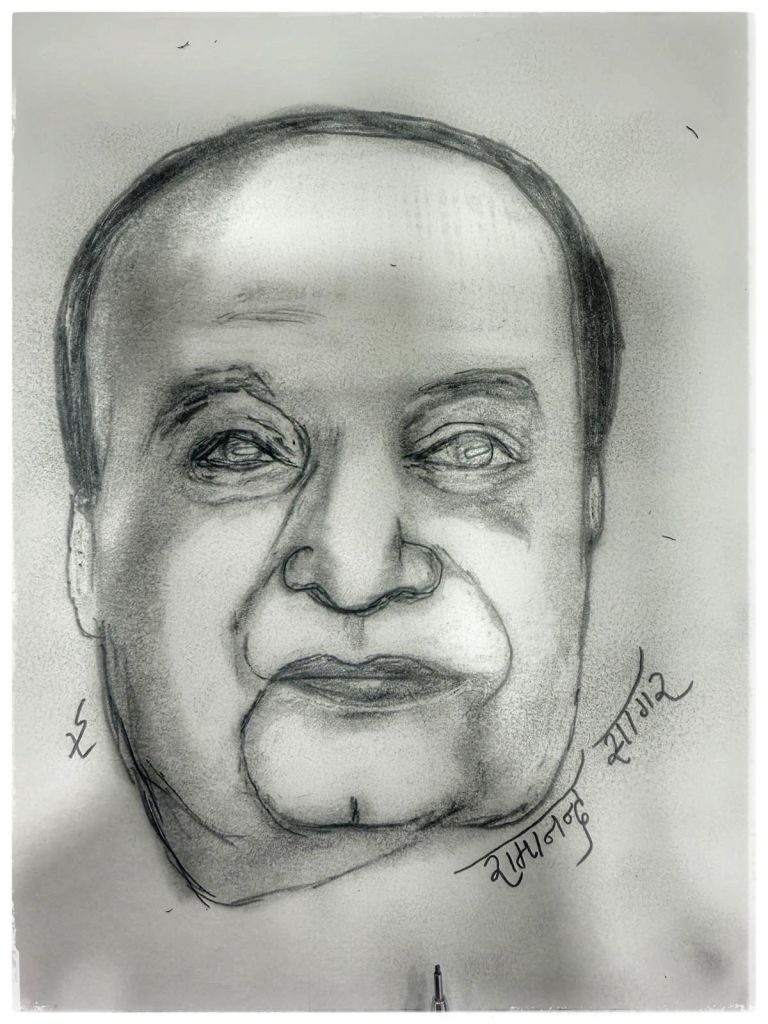
Of course moon or sun, the day will pass! You can simply learn Itihaas! Speaking of which reminds me the first mega epic on the TV! Ramayan! Directed by celebrity Ramanand Sagar!
Now get ready for the last two days of the calendar year!
Shubh ratri!
 ramadocblog