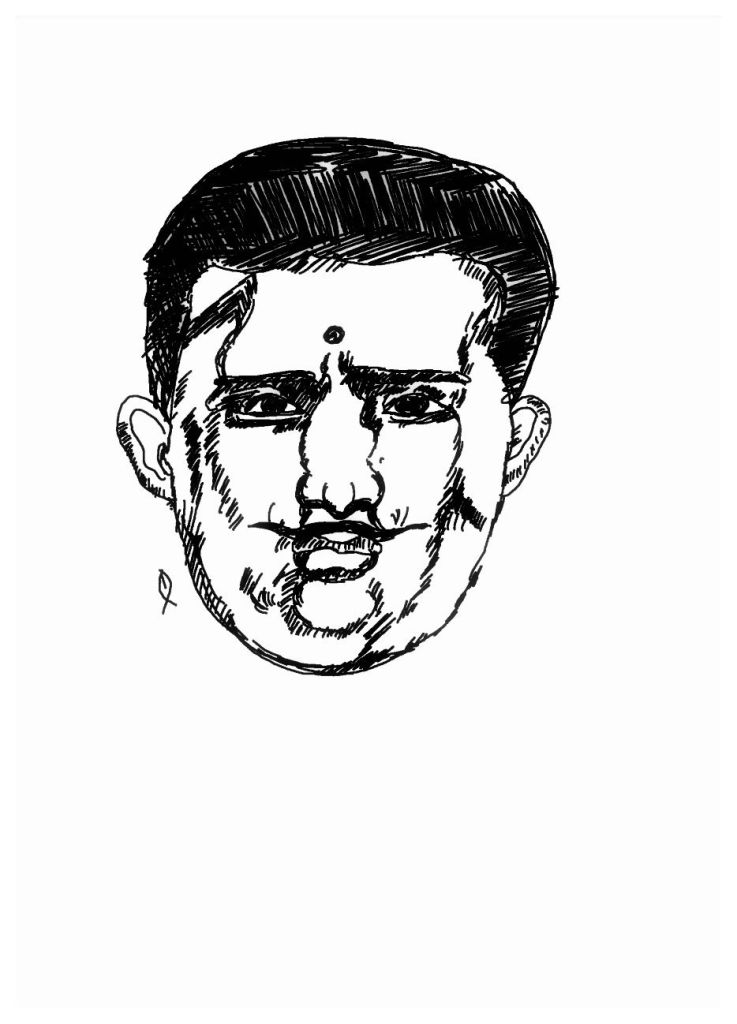
“वो सिर्फ क्रांतिकारी नही, महान कलाकार भी थे
एक वार गोली से और दूसरा कलम से करते थे!
कितने नेता याद आए और कितने भूला दिए गए
मगर राम प्रसाद बिस्मिल के कारनामे हमको रुला दिए गए!
It is amazing how we have accepted so many rules in English and we just carry on without a thought! There are some rules which we follow and we just do it!
Some time back I was the scientific content editor of a medical drug index and my boss was a guy who had English as his third language! My immediate superior was another guy who spoke English in an ‘accent’! Which one is for me to know and you to guess! Needless to say, it was not a good time to be writing in English since their ego was bigger than the Grammar!
Read on!
For every point you write, you can write the same thing in two different ways and both can be right!
Like say I have written; “Raju owned a big red ball!”; my superior would cancel this and rewrite it as; “A big red ball was owned by Raju!”!
Of course this is just an example since the statement would be something else but the fact of the matter is that if you want to find out an error then even diamond can have rust!
An issue in the English language is the letter ‘S’ (it may be the first letter of my name but then that is just a completely different matter!).
But this ‘S’ becomes a challenge when we have to deal with possessives. It’s a rule that an apostrophe followed by ‘s’ shows possession. But what about words ending with ‘s’? Do we add another ‘s’ or just an apostrophe? For example, is it James’s car or James’ car? Apparently both are acceptable, but it’s best to stick to one style!
Now do you remember this this rule in school: “I” before “E” except after “C”! You would have wasted hours trying to memorize this but actually there are many exceptions to this rule! Consider ‘weird’, ‘seize’, ‘neighbour’ and ‘height’. It’s a rule that seems to be broken more often than it’s followed!
Another crazy word which I like to avoid since I am not sure of its usage is the he word ‘none’! It is often treated as a plural because it seems to suggest more than one thing!
However, ‘none’ is singular and takes a singular verb. For example, it’s correct to say, “None of the cake is eaten”, not “None of the cake are eaten”. But, in informal English, ‘none’ can be used with either a singular or plural verb!
English is also full of homographs — words that are spelled the same, and even often pronounced the same, but mean different things.
Like you have tear (to rip) and tear (as in crying)!, bass (a type of fish) and bass (a low sound), bat (a piece of sports equipment) and bat (an animal), bow (a type of knot) and bow (to incline) to name a few! These are just a few!
It’s perhaps one of the hallmarks of English that words can be spelled similarly with absolutely no guarantee of sharing a similar pronunciation. Think: cough, rough, though and through! These remind me of Dharam paji in Chupke Chupke!
If you clip something, are you cutting it or attaching it together? If something is transparent, is it invisible or obvious? The answer, confusingly, could be either one!
A “contronym” is a word that has two contradictory meanings, and the English language is full of them!
There are some words (like “record”) that mean two completely different things when used as a noun versus a verb. And on top of that, we use different stress patterns when we say them out loud: “REcord” for your Dad’s old Beatles album, and “reCORD” for when you’re leaving a voicemail!
Then we have 16th century academics to thank for some more confusion! Words like “debt” and “doubt” inherited a “b” as a reminder that they came from the Latin debitum! But the b is just a silent reminder!
But on top of this, some spellings were changed to match completely unrelated Latin words. The Old English “iland” became “island,” for example, as a nod to the Latin word insula! So some letters now just stand a silent testimonials to their once glorious past maybe!?
Although there are a ton of such things lets end with the word “queue.”! Each and every letter after Q is just a symbol of the wastage of a line! You have added five letters when none was needed!
Of course now that is English! Today’s intro though was written in Hindi as an ode to the great birthday celebrity, Freedom fighter and a legend Shri Ram Prasad Bismil…
My humble Kindle scribe of him which came out well showing the amount of respect I have for him.
Listen to his quote before you sleep!
“सरफ़रोशी की तमन्ना, अब हमारे दिल में है. देखना है ज़ोर कितना, बाज़ु-ए-कातिल में है?”
“वक़्त आने पर बता देंगे तुझे, ए आसमान, हम अभी से क्या बताएँ क्या हमारे दिल में है खेँच कर लाई है सब को क़त्ल होने की उमीद, आशिक़ोँ का आज जमघट कूच-ए-क़ातिल में है सरफ़रोशी की तमन्ना अब हमारे दिल में है.”
Jai Hind…Shubh ratri!
 ramadocblog