“The bell has to go ding dong!
Any other way is wrong!
The horse may not dance and hop!
But the Hooves always go clip clop!”
Any speaker of basic english (like most of us!) actually follow this rule without a thought! Now just think for yourself! When you describe the clock, you would always say tick tock! Have you ever said or hear anyone say tock tick?! How we always say Fiddle-faddle and never faddle fiddle?
There are numerous examples all over and we just follow it! It is always Chit Chat! No one usually says Chat chit! The big gorilla is King Kong and never Kong King! Unless of course you are master Yoda that is!
This rule is called the Ablaut reduplication!
READ ON!…
How does Ablaut reduplication work?
So, to explain the rule: if you have three words, then the vowel order has to be I, A, O. In the case of two words, the first is almost always an I and the second is either an A or O. For example, Mish-mash, chit-chat, dilly-dally, tip-top, hip-hop, flip-flop, tic tac toe, sing-song, ding-dong, King-Kong, ping pong!
Another interesting grammar rule that we implement subconsciously applies when we describe things such as the name “little red riding hood”. Adjectives in English absolutely have to be in this order: opinion-size-age-shape-colour-origin-material-purpose-noun.
Here are some examples! They have a lovely old red post-box! or I bought some charming Victorian silver ornaments at the flea market! If you try to change the order (try it mentally!), it may still convey the meaning you want like a toddler learning to speak! But it does not feel right!
This explains why we would say little green men instead of green little men!
There are exceptions to the adjective rule as the I-A-O rule takes priority over everything else. An example: Big bad wolf. This rule is deeply rooted in our language, and it defies logic too. If we think about it, a horse’s four hooves make exactly the same sound as they hit the ground but to describe the sound we say clip-clop. Or It is always The little Red Riding hood! Never any other way!
Now of course this rule is not only in English but in most languages! This is because the Ablaut reduplication isn’t seen just in English. This is because of the letter e! This is the most commonly used letter in the English language!
So taking that into consideration, the letter e and the various derivations of the sound e are also essential in Indo-European languages. English also belongs to this language group. The words within this language group, generally speaking, follow specific patterns – usually consonant – vowel – consonant. So this rule also applies in Indo-European languages, and it also behaves similarly.
Here we also should know what are known as the Ablaut grades.
So Ablaut is the name of the process whereby the core vowel, which is almost always an e as mentioned above, would either be lengthened, altered to an o, altered and lengthened, or completely removed, known as the zero grade (an example of a zero grade: does not – doesn’t).
This results in five ablaut grades overall: full grade (e), altered grade (o), lengthened grade (ee), altered length grade (oo), and zero grade (nothing). The first vowel is almost always a high vowel. This is then followed by the repetition of a lower vowel in relation to the first vowel. This is why the order is I, A, O!
These grades give us patterns like sing-sang-sung outcomes in English, although we don’t use this process anymore to make new words but these matter when you use reduplication!
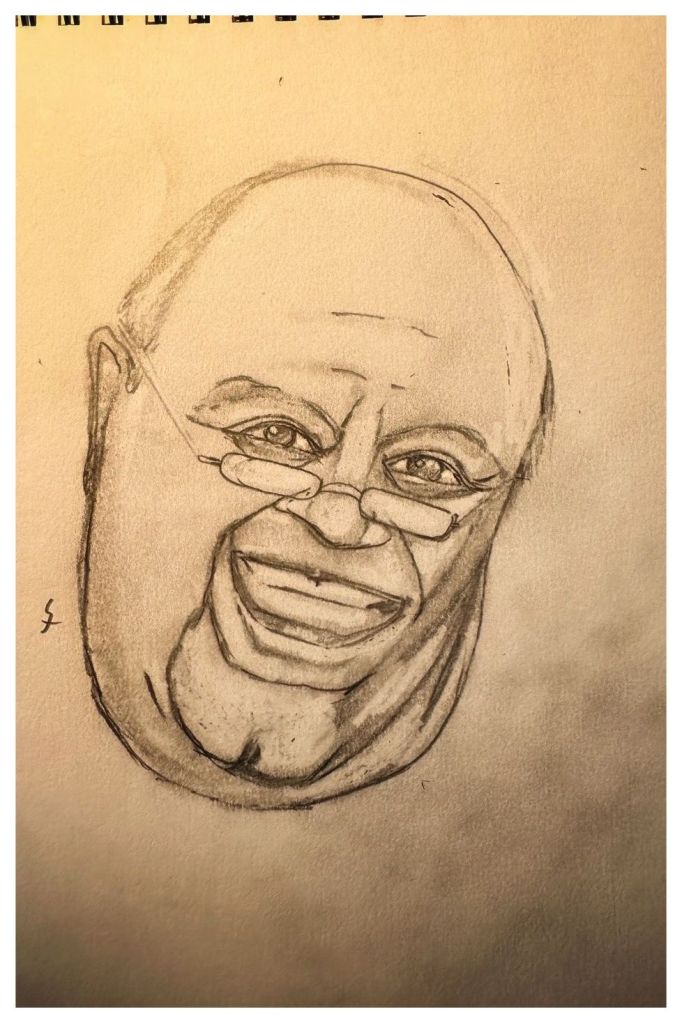
You will never eat a Kat Kit bar. The bells in Frère Jaques will forever chime ‘ding dang dong’! There are similar unwritten rules to be followed when telling things like black and white! It cannot be white and black! Does not sound right! Like the name of today’s birthday celebrity is Dinyar Contractor and not Contractor Dinyar! Still remember his spectacle movement scenes with the simultaneous movement of ears! It used to be so smooth and funny!
Now brush your teeth and sleep! Not the other way around!
ratri shubh…I mean Shubh Ratri!
 ramadocblog