“One saw the skies so blue and the sun so bright and red!
Another one saw the forest maybe in the shade or in his head!
The flight of imagination may throw some potshot!
It was just the repercussion of abstract art!”
The concept of art became clear to me when I saw the first Bonsai tree! When I was young (er!), my mother had attended a Bonsai cultivation training in which they were trained in the cultivation and production of these small ornamental trees which looked just like the real big tree!
They were not dwarf of the tree which we will discuss later but smaller version of the whole tree! They were not like the bigger trees which were more stable but needed more tending and caring just like a small plant but they were more resilient! We had a Non flowering non fruiting Bonsai tree which did survive for a long time!
Now of course it did not give any flower or fruit or shade! It looked nice and did not give anything (in material or measurable terms that is!) in return! That was art for me!
Like mentioned above, they are not dwarf trees! The practice of bonsai is sometimes confused with dwarfing, but dwarfing generally refers to research, discovery, or creation of plants that are permanent, genetic miniatures of existing species. Plant dwarfing often uses selective breeding or genetic engineering to create dwarf cultivars. Bonsai does not require genetically-dwarfed trees but rather, depends on growing small trees from regular stock and seeds. Bonsai uses cultivation techniques like pruning, root reduction, potting, defoliation, and grafting to produce small trees that mimic the shape and style of mature, full-size trees!
Looking at the wiki history we see that Bonsai is officially the Japanese art of growing and shaping miniature trees in containers, developed from the traditional Chinese art form of penjing!
While both penjing and bonsai involve the cultivation of miniature trees, they differ in that penjing overall aims to showcase “wilder,” more naturalistic scenes and encompasses a wider range of styles and designs, and may include various elements such as rocks, water features, and figurines, creating a more elaborate and dynamic scene; on the other hand, bonsai is more restrictively focused on a single tree or a group of trees of the same species, with a higher level of aesthetic refinement!
Purposes of bonsai are primarily contemplation for the viewer, and the pleasant exercise of effort and ingenuity for the grower.
In contrast to other plant cultivation practices, bonsai are not grown for the production of food or for medicine though apparently you can still eat the fruit of the Bonsai tree and if your expectations of size and tastes are low, you are safe!
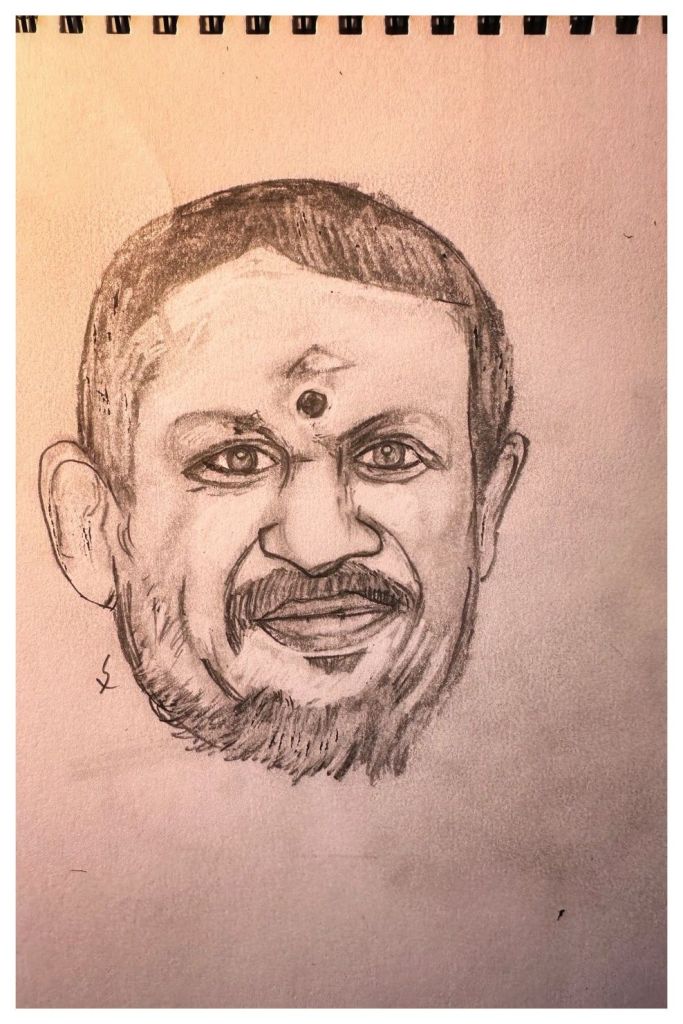
Some say that looking at the Bonsai or tending for it makes you calm or serene but then I think a book would do the same to me! Or better yet, some melodious music! Apparently even the trees and plants like them but then that is the blog for another day! Of course if you mention music then you have to mention birthday celebrity R. Gnanathesigan aka Ilaiyaraaja! His achievements are huge and not dwarf or Bonsai!
Now listen to the Melodious song ‘Ilaya Nila’ and sleep!
Shubh Ratri!
 ramadocblog