“You get food for him, you take him places!
You love his face and the tail he chases!
He gets the best food and a cosy bed u bet!
You may be the master, but he is your pet!”
In the book The Naked ape by Desmond an interesting analysis was done about the favourite animal which bought into light many findings!
This was based on a survey done for both boys and girls in different groups and the results were surprising!
If you split the age groups from young to old it has been seen that the favourite animals change as the age progresses!
The chief determinant here is unexpectedly not the ‘cute’ or ‘sweet’ criteria but the size! Yes size apparently does matter! So the younger children prefer the bigger animals and the older children prefer the smaller ones!
To illustrate this we can take the figures for the two largest of the top ten forms, the elephant and the giraffe, and two of the smallest, the bushbaby and the dog. The elephant, with an overall average rating of 6 per cent, starts out at 15 per cent with the four-year-olds and then falls smoothly to 3 per cent with the 10-14 year-olds.
The giraffe shows a similar drop in popularity from 10 per cent to 1 per cent!
The bushbaby, on the other hand, starts at only 4.5 per cent with the four-year-olds and then rises gradually to 11 per cent with the fourteen-year-olds. The dog rises from 0.5 to 6.5 per cent. The medium-sized animals amongst the top ten favourites do not show these marked trends!
In all these the medium sized normal routine animals remain constant!
The authors had an interesting conclusion on these findings which may or may not be relevant for today!
They proposed two principles.
The first law of animal appeal states that ‘The popularity of an animal is directly correlated with the number of anthropomorphic features it possesses.’
The second law of animal appeal states that ‘The age of a child is inversely correlated with the size of the animal it most prefers.’!
In simpler terms the preference is based on a symbolic equation and the simplest explanation is that the smaller children are viewing the animals as parent-substitutes and the older children are looking upon them as child-substitute!
So a young kid would like an animal which is big and possibly strong like his or her father while an older kid would like a animal to treat as a ‘child’ or ‘pet!’
When the child is very young, its parents are all-important protective figures. They dominate the child’s awareness. They are large, friendly animals, and large friendly animals are therefore easily identified with parental figures!
As the child grows it starts to assert itself, to compete with its parents. It sees itself in control of the situation, but it is difficult to control an elephant or a giraffe.
The preferred animal has to shrink down to a manageable size!
The child, in a strangely precocious way, becomes the parent itself! The animal has become the symbol of its child. The real child is too young to be a real parent, so instead it becomes a symbolic parent!
The author has advised that parents should be warned from this that the pet-keeping urge does not arrive until late in childhood! So it is a grave error to provide pets for very young children, who respond to them as objects for destructive exploration, or as pests!
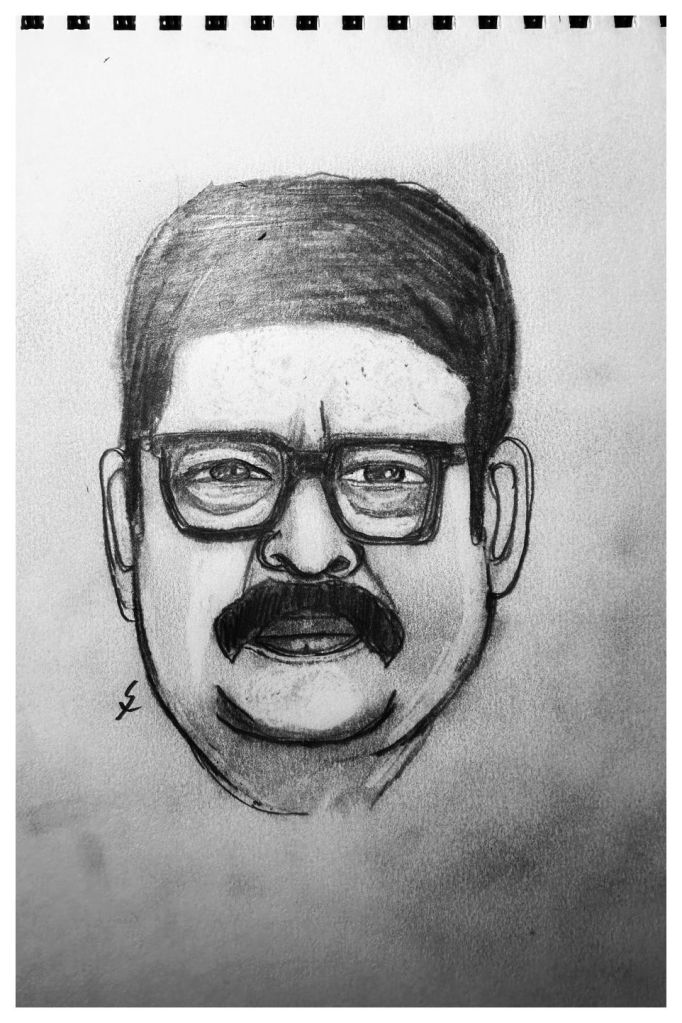
We have seen this too often when a child simply grabs the tail of any grab worthy part of the pet and it can actually lead to serious issues if the pet is not docile or domestic enough! Then again this was in 1960s! The amount of reels of young kids with pets may paint a different picture! Now thinking of picture reminds me of birthday celebrity K. S. Ravikumar and his very entertaining movies!
Now pet…I mean put yourself to sleep!
Shubh Ratri!
 ramadocblog