Did you know that this creature can predict future? and is also one of the most efficient hunters in the universe!?
A lengthy but interesting blog so please bear with me!
The answer to the above question is not a human who to be frank and without his or her tools would be a very poor hunter and predictor! It is also not that famous octopus or parrot who used to “correctly” predict which team would win the world cup!
With over 97 percent success rate which is unheard of in the natural world, the most efficient hunter is so accurate and effective that there is no equal!
This hunting machine also studies the pattern of flight and movement of other insects and thus can actually predict with amazing accuracy on the next movement of the prey!
It is a matter of great luck that this is a tiny animal or else we would be in trouble!
Undaunted by swarms of potential distraction, they hunt within visually cluttered environments like the riverbanks they call home. What’s more, they do all this while performing aerial acrobatics!
The champion in question is that whose body shape has actually inspired several machines and a legendary creature of the myth!
In spite of all these features, its small size makes it non threatening so much so that children (human this time!) play with them!
The humble and quirky Dragon Fly!
How do they achieve the kill rate though?
Researchers in an attempt to study this probed the optic lobe, an area of the insect brain responsible for processing visual information.
With glass electrode tips 1500-times thinner than a single strand of human hair, they found neurons responsive to prey-like targets, including one called ‘Centrifugal Small-Target Motion Detector 1’, or ‘CSTMD1.’
A comparison here is that humans have around 86 billion neurons while the insect’s small brain has around 2 million neurons!
The first property mentioned above is ‘prediction.’
When a prey-like target zips across the dragonfly’s visual field, some neurons encode the area ahead of the target, exhibiting an enhanced sensitivity in this region and suppression elsewhere. This likely prepares the dragonfly to respond to an imminent target and forms a prediction of the prey’s trajectory, even if it becomes obstructed (such as when it flies behind the leafy branch of a tree)! A feat which even Google’s GPS maps may not be able to match!
To understand the second property let me tell you of a competition we faced in a mall in Malaysia! There was a hanger with six cylindrical objects falling one by one in random. Three on either side! We could get only a couple! That is when my ex army officer father told me that no one can get all! So you must concentrate only on one side and you can get at least three! Try it! Dragon fly does exactly that! It is called
‘Selective Attention.’!
When presented with a pair of rival targets moving on different trajectories, a dragonfly must choose only one for lunch, or risk missing both. In a winner-takes-all manner, CSTMD1 responds to just one of the rival pair, encoding the target’s trajectory in a train of electrical impulses, ‘spikes’, unperturbed by the presence of the rival distractor!
Of course dragonfly being the best predator takes it one step further!
When a pair of rival targets are presented together, the dragonfly brain generates an independent ‘spotlight’ of enhanced sensitivity for each target, complete with prediction, regardless of which is selected!
Though initially this predictive enhancement for the rival distracter does not influence CSTMD1’s response to the chosen target, it becomes apparent when the chosen target disappears! Attention is then able to quickly and easily switch to the previously ignored target, without a period of confusion, delay, or the need to ramp up a second response!
This ‘preattentive’ tracking of non-selected targets could be critical in allowing the dragonfly to keep track of other potential prey or predators while engaged in an active pursuit for one target, allowing the dragonfly to freely switch targets with ease.
Encoding and prediction of the original target trajectory becomes less sensitive as the system ‘locks-on’ to the new target, reminiscent of the ‘Inhibition of Return’ previously only observed in human, primate, and avian research!
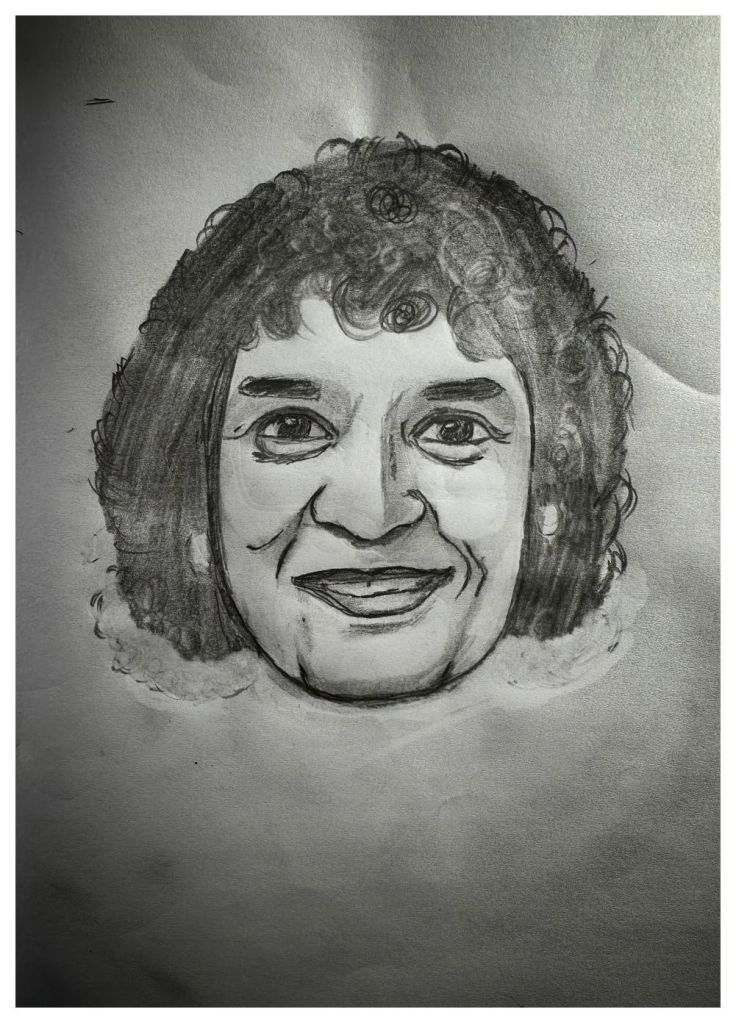
The dragonfly’s ability to effectively encode the trajectory of multiple targets and switch with minimal loss of time or delay is the 97 percent! The research to these can one day give us better self driven vehicles and drones! All from a fly! Now precision and speed and accuracy also is the hallmark of birthday celebrity Zakir Hussain and being a Tabla Player myself (I mentioned I can play Tabla! Now good or bad you have to decide!), I think of him as my guru since it was his effortless rendition which inspires me even now!
Now dream like a fly and you will fly (at least in your dreams!)
Good Night!
 ramadocblog