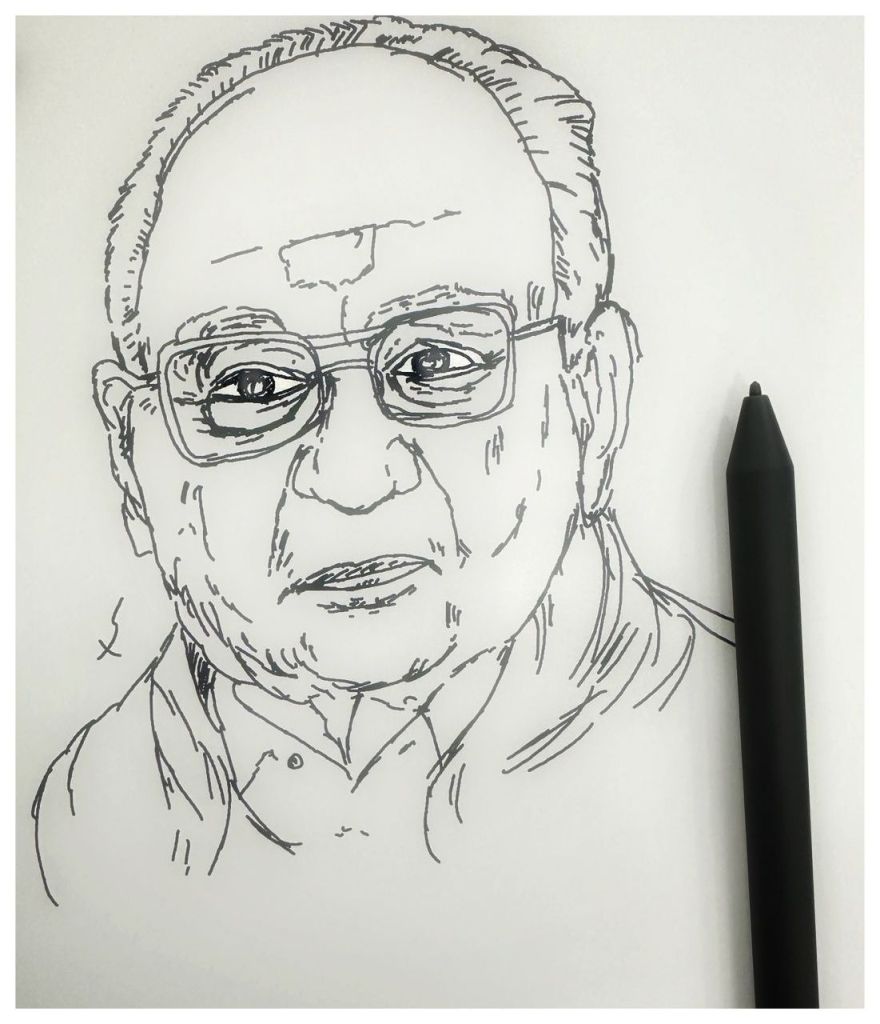
A fast scribe sketch! Happy with the outcome since I can’t shade or erase!
This particular fruit is one of the most commonly used in Indian cooking! The sambar and the most rasams (or Saru!) of the south to the chutney in the north Indian chats cannot be done without this!
When this fruit came to Persians and the Arabs; they looked at its shape and appearance and called it “tamar e hindi” (Indian date, from the date-like appearance of the dried pulp!),
Unfortunately or (fortunately for that matter); if they thought that it is like a date then they were mistaken from the first bite! Like some songs and people, the sour taste of this fruit may not make you like it at first but then when you go on tasting it, it grows on you and you cannot do without it!
The fruit is so commonly used in Tamil Nadu that there is a whole rice dedicated to it and when you make it with Sesame oil, the taste is high!
Being rich in polyphenols and flavonoids, this has been shown to decrease LDL cholesterol and increase HDL cholesterol, thereby lowering the risk of atherosclerosis. The dried pulp was also found to have anti-hypertensive effects, reducing diastolic blood pressure. Of course it is effective only if you take in the right quantity! One of the few fruits which has a high beneficial Magnesium level!
Other possible benefits of eating this fruit are that it may have an anthelminthic potential, it may be an antioxidant, it can also be a carminative (relieves gas) and may be a laxative (cures constipation). Like a double edge sword though, higher quantities may increase gastritis! Remember that even nectar is bad in large quantities and this is after all a fruit!
The best way to take the essence of this fruit is to soak it in hot water and squeeze! My mother used to use the left over squeezed pulp to clean the lamps! It used to give them a good shine! The pulp can thus also be used as a metal polish. It contains tartaric acid, which helps remove tarnish from copper and bronze!
The leaves and flowers are used as a mordant in dyeing. The seeds produce an amber-coloured oil that is used as lighting fuel and for varnishing dolls and idols. The hard, heavy timber is used to make furniture, boats and tool handles. The wood is also valued as a fuel as it gives off an intense heat and makes high quality charcoal for use in gunpowder!
Of course the self proclaimed intelligent people would want to anglicize the name so that it would sound wise! (at least to them!); so the “tamar e hind” was simplified and is now known worldwide as…Tamarind!
The thought of tamarind chutney with hot samosa and maybe aloo tikki is music to my ears! Nice music and great lesson is also the hallmark of movies like Shankarabharanam and Sagara Sangamam by Birthday celebrity Kasinadhuni Viswanath popularly known as “Kalatapasvi”! Have some tamarind rice or bisi bele bath and check them out!
Now stop eating chats in the night and sleep!
Good Night!
 ramadocblog